| Canterbury Scene | Crossover Prog | Eclectic Prog | Extreme Prog Metal | Folk Rock | Heavy Prog | Jazz-Rock Fusion | Krautrock | Neo Prog | NON PROG | Northern Prog | Post Metal | Post Rock | Prog Related | Progressive Electronic | Progressive Metal | Psychedelic Rock | Rock Progressivo Italiano | Space Rock | Symphonic Rock | Zeuhl |
Progressive Rock World


662 Reviews - 379 Artists - 93 Detailed biographical profiles - 26 Prog Meteors - 22 Progressive Rock Subgenres
The "Italian Jazz-Rock" of Arti & Mestieri.
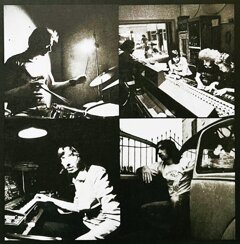
Arti & Mestieri are one of the most important bands in Italian Progressive Rock and jazz-rock. Founded in Turin in 1974, the band was formed from the meeting between Furio Chirico (coming from The Trip) and the musicians of the jazz group Sogno di Archimede, among whom were Gigi Venegoni (guitar) and Beppe Crovella (keyboards). Their debut took place in 1974 at the Festival del proletariato giovanile at Parco Lambro (Re Nudo), followed by the release of their first beautiful album, characterized by the fusion of progressive rock and jazz, Tilt (Immagini per un orecchio), an absolute masterpiece.
Giro di valzer per domani followed in 1975 and is a move towards more jazz-rock sounds, an excellent album followed by Quinto stato in 1979, an album engaged with social themes and some finely crafted albums that would not reach the heights of the first two legendary records: Acquario, in 1983 and Children's Blues in 1985.
In the 2000s, after about 15 years of silence, they returned with new lineups and new works:
Murales in 2001, which marked the reunion of much of the original lineup (including Chirico, Gallesi, and Venegoni) and is a predominantly jazz-rock fusion album, characterized by extremely high technical quality and very complex rhythms, typical of Chirico's "hyper-rhythmic" style
Estrazioni in 2005, with a sharper and more contemporary sound, with a strong contamination between classic progressive and solutions close to modern jazz.
Then in 2015 came Universi Paralleli, a grand return, which compared to the jazz-fusion experiments of the early 2000s, marks a clear return to the progressive rock of their beginnings, an album highly appreciated in Japan, where the band enjoys cult status.
The lineup has seen numerous talents come and go, but has maintained a historic core of musicians who have defined the band's sound from 1974 to today.
Furio Chirico (Drums): Leader and founder, he is one of the greatest drummers in the world. His style is centered on the technical and muscular use of the drums.
Gigi Venegoni (Guitar): Guitarist and key composer for the first two albums (Tilt and Giro di valzer per domani), he later founded Venegoni & Co., periodically collaborating with the band on recent projects.
Beppe Crovella (Keyboards): The backbone of the group, he has overseen the production of many historic and recent albums. He is known for his masterful use of Mellotron and Hammond organs.
Giovanni Vigliar (Violin, Vocals): His violin defined the lyrical and progressive melodies of the debut.
Marco Gallesi (Bass): Bassist of the original lineup, he contributed to the jazz-rock groove of the early records.
Arturo Vitale (Winds): Saxophonist and clarinetist of the original core, essential for the jazz-rock textures of the '70s.
Over the years, other musicians have joined the band, especially during reunion phases and international tours:
Corrado Trabuio (Violin): Active member since the revival phase in the 2000s.
Lautaro Acosta (Violin): Musician who has accompanied the band in recent live performances, including their success in Japan.
Roberto Puggioni (Bass): Bassist present in the most recent lineups and on the latest album D-BRANE (2025).
Piero Mortara (Accordion, Keyboards): He has enriched the group's sound with ethnic and classical nuances.
In March 2025, the band's fiftieth anniversary was celebrated, confirming their status as a legend of Italian jazz-rock.
The current lineup in 2026 continues to see Furio Chirico as artistic director and rhythmic engine, surrounded by historic collaborators and new talents who carry on the "Music Without Borders" project.
The concept of "Music Without Borders" is the philosophical and artistic synthesis that accompanies their latest album D-BRANE, released in 2025 to celebrate the band's 50th anniversary.
It is a concept that is articulated on three fundamental pillars:
Transcending genres: The band sees music as a universal language that breaks down barriers between progressive rock, jazz-rock, and academic music. It is a vision that sees sound as a continuous and creative flow of energy, capable of uniting different styles into a single "force of nature".
Multidimensional Vibration: The term is directly linked to the title of the album D-BRANE, referring to String Theory. In this vision, music is a "dynamic object" that propagates through space-time and vibrates across various dimensions, expanding infinitely like sound particles without physical or conceptual limits.
Cultural and Educational Openness: Under the guidance of drummer Furio Chirico, the band has promoted for decades an approach that involves musicians from different backgrounds, transforming the group into an entity in constant renewal. The concept also reflects a commitment to inclusivity and the sharing of a language that transcends linguistic and cultural barriers.
Today, this philosophy continues to guide the group's activities, engaged in tours and performances that celebrate their historic career and the new "cosmic" direction taken with their latest productions.
Their sound is characterized by odd time signatures, and a splendid fusion between compositional rigor and improvisation with an energetic and technically complex sound, led by the virtuosity of drummer Furio Chirico.
It is a complex fusion of symphonic jazz-rock and progressive rock with extremely high instrumental technique that has characterized their work from their debut in 1974 up to the productions of 2026
The central pillar is the hyper-technical style of drummer Furio Chirico, known for his virtuosic use of odd time signatures and polyrhythms. Unlike traditional jazz-fusion, the band uses symphonic harmonies and arrangements reminiscent of classical music and European progressive rock. The violin plays a fundamental role, leading the main melodies in a way similar to a lead guitar or synthesizer. Their discography is predominantly instrumental but when present, the voice is often used as an added instrument rather than as a central element as in pop music.
Unlike many historic bands that have remained anchored to the past, Arti & Mestieri have continued to produce relevant music in the new millennium and as seen in the album "Diario di bordo" by Gianmaria Zanier in the track "Energia nuova da bruciare", the members of Arti & Mestieri put their experience at the service of modern prog-songwriter projects. The educational aspects are important, through Furio Chirico's drum academy (Accademia Musica Moderna), the method and approach of Arti & Mestieri to polyrhythm are passed on as a true school of musical thought.
The Discography and the Reviews

Tilt - Immagini Per Un Orecchio - 1974
Giro Di Valzer Per Domani - 1975
Quinto Stato - 1979
Acquario - 1983
Children's Blues - 1985
Murales - 2001
Estrazioni - 2005
Universi Paralleli - 2015
D-Brane - 2025
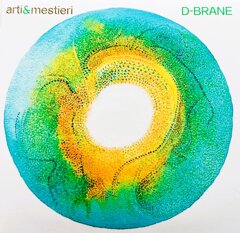
D-BRANE - 2025
Note: the links to the pages of the artists and bands mentioned here and their albums are available on the"Artists" page or using the TAG Arti & Mestieri