| Canterbury Scene | Crossover Prog | Eclectic Prog | Extreme Prog Metal | Folk Rock | Heavy Prog | Jazz-Rock Fusion | Krautrock | Neo Prog | NON PROG | Northern Prog | Post Metal | Post Rock | Prog Related | Progressive Electronic | Progressive Metal | Psychedelic Rock | Rock Progressivo Italiano | Space Rock | Symphonic Rock | Zeuhl |
Progressive Rock World


Cervello, pioneers of “No-Keys” Prog
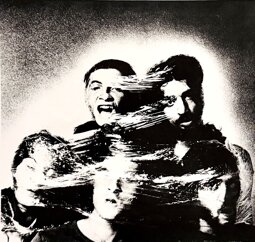
Cervello, an Italian progressive rock band born in Naples in 1970, was founded by multi-instrumentalist Corrado Rustici. Their sound represents one of the pinnacles of experimentation in Italian progressive rock. Unlike bands such as Banco del Mutuo Soccorso or PFM, Cervello stood out for the almost total absence of keyboards. To create harmony, they used an interweaving of four flutes played simultaneously by the band members, generating an ethereal and at times unsettling sound. Their sound blended jazz-rock with the complexity of odd time signatures and improvisations, classical music with the symphonic construction of the pieces, for music inspired by the cultured tradition but with a Neapolitan soul that emerged in the melodies. A fundamental characteristic was the use of the voice as an added instrument, that of Gianluigi Di Franco, a true wind instrument, with his acrobatic vocalizations and timbres ranging from operatic to experimental registers, perfectly integrated with the guitar of Corrado Rustici, who led the group, younger brother of Danilo from Osanna.
The group was made up of musicians of exceptional technical talent. Here is a brief summary of their biographies:
Corrado Rustici, guitarist, flutist, and vibraphonist, was a true enfant prodige, being only 16-17 years old at the time of Melos. He is the member who achieved the greatest international success. After Cervello, he founded Nova in London and then moved to the United States, becoming one of the most influential record producers in Italy, collaborating with artists such as Zucchero, Elisa, Francesco De Gregori, and Ligabue.
Gianluigi Di Franco, singer and flutist, possessed an extraordinary voice. In the 1980s, he collaborated closely with Toni Esposito, lending his voice to the famous hit “Kalimba de Luna.” Besides music, he successfully dedicated himself to music therapy. Unfortunately, he passed away prematurely in Naples in 2005.
Giulio D’Ambrosio, saxophonist and flutist, remained a prominent figure in the Neapolitan music scene. In 2017, he participated in the historic Cervello reunion in Tokyo. In 2025, he returned to the studio with Rustici and Spagnolo to record the album “Chaire.”
Antonio Spagnolo, bassist, acoustic guitarist, and flutist, was part of the historic core that relaunched Cervello’s live and recording activity in recent years, contributing to the recovery of unreleased tracks from the 1970s.
Remigio Esposito, drummer and vibraphonist, was a fundamental member of Melos’s percussive sound. After the group disbanded, he maintained a more reserved profile compared to his colleagues, while remaining a cult figure for fans of the genre.
Renato Lori and Pino Prota were part of the project from the beginning (1970), but were replaced by Di Franco and Esposito before the recording of the first album.
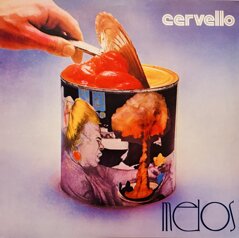
Their only studio album from the historical period, “Melos,” is a concept album inspired by Greek mythology. Famous for its original cover, depicting a can of peeled tomatoes, the record is characterized by Mediterranean atmospheres and complex jazz-rock structures. Often compared to the more complex works of King Crimson (Lizard period) for its complexity and extraordinary use of wind instruments, “Melos” is considered a classic of Italian prog.
Released by Dischi Ricordi, the album is characterized by a complex fusion of styles, including ethnic, jazz, and classical influences. Famous for this unique album, Cervello had a brief initial life, disbanding in 1974, a year after the release of Melos, mainly due to the lack of commercial success, Corrado Rustici’s international ambitions, and the decline of prog that at that time afflicted many bands in the Italian and international scene, but especially those just starting out, lacking the push from public response to trigger subsequent works.
The name “Cervello” chosen for the band perfectly reflected the intellectual nature and complexity of their musical proposal. The group wanted to break with the beat and light pop of the time, creating “thought-out,” cerebral, and technically demanding music that required active and attentive listening. “Cervello,” in particular, immediately evoked the image of an avant-garde sound laboratory, in line with the group’s prog identity.
Unlike Osanna, the band led by brother Danilo, Cervello, a name also chosen to emphasize a stylistic difference, stood out for the almost “surgical” and mathematical precision of the arrangements, in contrast to the visceral, theatrical, and dark folklore approach of Osanna.
The cover of Melos depicted the “content” of the brain (the music) as a product canned in a tin of tomatoes, an ironic contrast between intellect and consumerism.
Despite its great artistic value, Melos was too complex and avant-garde for the charts of the time, with sales insufficient to support the band. The guitarist and leader, Corrado Rustici, felt suffocated by the Italian music scene and, shortly after the breakup, moved to London to found Nova, a jazz-rock project that allowed him to achieve greater international visibility. In the mid-1970s, the Italian record market shifted towards lighter pop and the emerging disco music, relegating experimental and technically refined groups like Cervello to the margins of the music industry.
After the breakup, the members of Cervello pursued different professional paths and the band remained officially inactive for over four decades, until the live reunion in 2017 in Tokyo, organized by Corrado Rustici. This historic concert in Japan was immortalized in the album Live in Tokyo 2017 and more than fifty years after their debut, they returned with Chaire, a new studio album that includes previously unreleased vocal recordings by the late Gianluigi Di Franco, who passed away in 2005.
The legacy of Cervello, though short-lived, had a profound impact on the perception of prog as a cultured and avant-garde art form among fans of the genre.
Pioneers of “No-Keys” Prog, they had the ability to create complex progressive rock without synthesizers or organs. The band was the springboard for Corrado Rustici, one of the most important Italian musicians internationally. Without the technical audacity of Cervello, we probably wouldn’t have had the international sound of Nova nor the excellent productions that have modernized Italian pop-rock over the last thirty years.
The album “Melos” has become a global cult object, regularly reissued in Japan and South Korea, where Cervello are rightly considered masters of the fusion between classical, jazz, and Mediterranean folklore. Gianluigi Di Franco, with his innovative approach to the voice as a pure instrument, left a legacy that continued in his collaborations with Toni Esposito and in his pioneering work in music therapy.
With the release of the album “Chaire” in 2025, the band has shown that their intuitions from fifty years ago are still relevant, integrating vintage tapes with modern recording technologies.
The Discography and the Reviews
619 Reviews - 354 Artists - 85 Detailed biographical profiles - 26 Prog Meteors - 22 Progressive Rock Subgenres
Melos (1973)
Live in Tokyo 2017 (2019)
Chaire & Live at Pomigliano d'Arco 1973