| Canterbury Scene | Crossover Prog | Eclectic Prog | Extreme Prog Metal | Folk Rock | Heavy Prog | Jazz-Rock Fusion | Krautrock | Neo Prog | NON PROG | Northern Prog | Post Metal | Post Rock | Prog Related | Progressive Electronic | Progressive Metal | Psychedelic Rock | Rock Progressivo Italiano | Space Rock | Symphonic Rock | Zeuhl |
Progressive Rock World


The hypnotic and cryptic language of COS
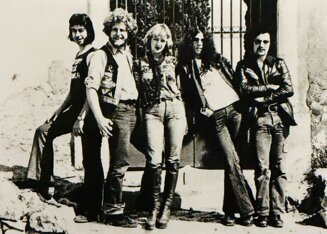
COS was one of the most innovative and original bands on the Belgian progressive rock and jazz-rock scene of the 1970s. Founded in 1973, with strong jazz-rock influences, they were part of a notable scene of Belgian rock bands active at the time.
I was impressed by Fluid Records' presentation of the band, which I find particularly thorough, translated here from the liner notes for the album VIVA BOMA.
“A LOOK AT COS
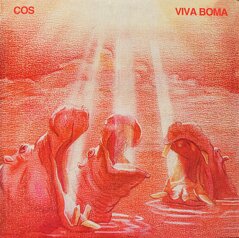
From the depths of Zeuhl, Canterbury jazz, progressive rock, and more, Cos emerges and enchants with a hypnotic, cryptic language that demands deciphering, leaving the listener momentarily stranded, somewhere between Boma and Bomma, just like an opium smoker or the hippos on the Boma River, or both…
Unique and truly Belgian, with a hint of defiant humor, but with an uncanny finesse, Cos pronounces the word aptly, often without any words at all, through a rich texture of pulsating, elastic bass lines, magical farsifa organ, intricate drums and percussion, and the ever-present, lightning-fast duality of Shell and Son. Son almost completely discards language, using the voice as a new instrument. Schell reinvents language with his subtle, punctuated guitar phrases…
Fluid Records”
With a sound that blended influences from the Canterbury scene, Zeuhl (Magma-style) and avant-garde music, are best remembered for their creative use of the voice and the complexity of their sonic textures. Their compositions incorporated electronic music and complex arrangements, featuring flutes, synthesizers, large drums, and Pascale Son's distinctive voice. Son used her voice as an instrument, often singing nonsense syllables or invented phonemes to create rhythmic and surreal textures. Their repertoire ranged from spatial minimalism to jazz fusion.
Daniel Schell's compositions were particularly creative, with complex arrangements that uniquely utilized musical modes, including the Locrian and Dorian modes, on several tracks.
For the uninitiated (like me), I did some research and verified that the Locrian mode is known for its instability, due to the fact that its diminished fifth creates a tritone interval (an interval containing three tones). It is a mode that is rarely used as a principal mode because it is considered disharmonious. The Dorian mode is a minor mode with a sad but not gloomy atmosphere. Its main characteristic is the major sixth degree, which makes it more "bright" and interesting than the natural minor scale.
This complex explanation, which unfortunately doesn't help me understand more than listening to this band's tracks, tells me first of all that the compositional style and complexity arise from great knowledge and admirable application of technique, which is not trivial.
In the late 1960s, guitarist and flutist Daniel Schell (née Schellekens) founded a group called Classroom. Despite their intense touring activity, Classroom never released official material until they became COS in 1974. The name "COS" was chosen because it incorporated three letters from "Classroom" and sounded like a universal word in several languages. The band centered around Daniel Schell and his wife, singer and oboist Pascale Son. Among the many notable musicians who played with them were Marc Hollander (founder of Aksak Maboul), keyboardist Charles Loos, and drummer Philippe Allaert.
The COS lineup has undergone several changes, but their identity has remained firmly rooted in the vision of leader Daniel Schell and the unmistakable voice of Pascale Son.
Daniel Schell, guitarist, flautist, and electronics manipulator, was the "brain" of the group. A cultured musician and trained mathematician, he brought a rigorous yet creative approach to COS. After his experience with COS, he became one of the world's leading experts on Touch Guitar, string instruments played with the tapping technique.
Pascale Son, singer and oboist, was the band's magic element. She didn't use her voice to sing traditional lyrics, but rather as a wind instrument. His style alternated between childlike vocalizations, operatic warblings, and abstract phonemes, often in a fictional language, giving COS the surreal, fairytale-like aura that made them unique.
COS has collaborated with some of the best talents in the European avant-prog and jazz scene, hailing from the Belgian music scene. Among the band's members are prominent figures such as Marc Hollander, keyboardist and saxophonist, founder of Aksak Maboul and the Crammed Discs label. Hollander enriched COS's sound with Dadaist influences and a folk aesthetic. Charles Loos, a highly talented jazz pianist, brought a more technical and harmonically complex approach to albums like "Postaeolian Train Robbery." Alain Goutier, bassist on the band's early works, contributed his pulsating, geometric style, essential to the jazz-rock structures. Philippe Allaert, an extremely versatile drummer, is capable of alternating complex odd time signatures with more linear, "new wave" rhythms on his latest albums. Finally, Nicolas Fiszman, who joined the band at a very young age (just 13 or 14 years old!), has since become an internationally renowned session musician, playing bass and guitar.
Their discography demonstrates an evolution from experimental jazz-rock to sounds closer to new wave and avant-garde pop.
Postaeolian Train Robbery (1974): Their debut album, characterized by complex jazz-rock and heavily influenced by the Canterbury scene.
Viva Boma (1976): Widely considered their masterpiece, this album blends vocal experimentation, hypnotic rhythms, and horn and keyboard interventions.
Babel (1978): A transitional album that maintains the "Zeuhl" and experimental approach, while introducing more linear rhythms, at times approaching disco.
Swiss Chalet (1979): Marks a shift toward shorter structures and a drier sound, typical of the late 1970s.
Pasiones (1982/1983): Their final studio album, in which the band explores synth-pop and avant-garde territories less closely tied to their early progressive roots.
COS disbanded around 1985 due to artistic evolution and the members' desire to pursue solo careers. Daniel Schell, leader and founder, distanced himself from the rock structure, studying mathematics applied to music and founding the Sangit Academy. Many members were engaged in other projects: Marc Hollander with Crammed Discs and Aksak Maboul, Schell with the Ensemble Karo. The changing musical landscape, with the shift from progressive jazz-rock to experimental pop and new wave, marked the end of the band's life cycle. Pascale Son's absence from the final album, Pasiones, altered the group's sonic identity. More than a breakup, it was a transformation toward academic, solo, or production careers, leaving COS as a legacy of Belgian progressive rock.
Two of their albums are true milestones of European progressive and experimental rock.
"Viva Boma" (1976), their absolute masterpiece, defines the band's sound and represents one of the pinnacles of Belgian prog. It blends the complexity of jazz-rock with the surreal madness of the Canterbury scene. Pulsating bass and synthesizers create sonic backdrops over which Pascale Son's voice expresses itself unpredictably.
"Posteolian Train Robbery" (1974), their jazz-prog gem, is their debut album, closer to the sounds of Soft Machine and Caravan. Less experimental than its successor, it is technically impeccable. Rich in complex rhythmic interplay and flute and guitar melodies reminiscent of the finest jazz.
For collectors, the posthumous collection The Approaching Storm (2003) is available, containing rare recordings from 1969–1973, when the band was still called Classroom.
The Discography and the Reviews
619 Reviews - 354 Artists - 85 Detailed biographical profiles - 26 Prog Meteors - 22 Progressive Rock Subgenres
.jpeg "whatsapp image 2025-10-22 at 10.01.07 (1).jpeg")
Postaeolian Train Robbery (1974)
Viva Boma (1976)
Babel (1978)
Swiß Chalet (1979)
Pasiones (1982)
Pas de deux (1983) – Mini-album/EP
Hotel Atlantic (1984)
The Approaching Storm (2003) - Compilation