| Canterbury Scene | Crossover Prog | Eclectic Prog | Extreme Prog Metal | Folk Rock | Heavy Prog | Jazz-Rock Fusion | Krautrock | Neo Prog | NON PROG | Northern Prog | Post Metal | Post Rock | Prog Related | Progressive Electronic | Progressive Metal | Psychedelic Rock | Rock Progressivo Italiano | Space Rock | Symphonic Rock | Zeuhl |


FrancescoProgressive Rock World
629 Reviews - 359 Artists - 85 Detailed biographical profiles - 26 Prog Meteors - 22 Progressive Rock Subgenres
Dream Theater, a saga of technical ambitions and creative contrasts
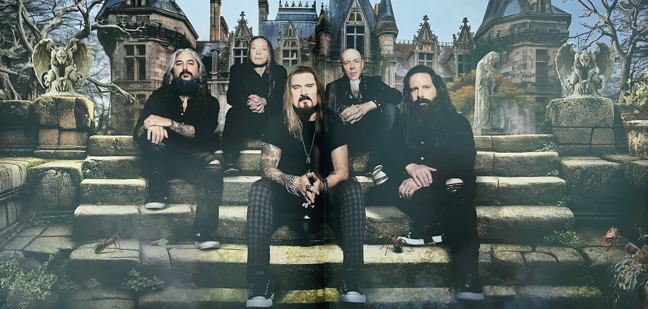
Dream Theater is one of the most influential progressive metal bands in the world.
The band was founded in 1985 in Boston by John Petrucci, Mike Portnoy, and John Myung, initially as "Majesty," a name inspired by the majesty of Rush's songs. The initial lineup included Kevin Moore on keyboards and Chris Collins on vocals, but Collins was soon replaced by Charlie Dominici, with whom they recorded their debut album, When Dream and Day Unite, in 1989.
The evolution of Dream Theater's lineup was marked by strategic changes in three key roles: vocals, keyboards, and drums. A saga of technical ambition and creative contrasts that defined and, over time, redefined a genre, with each change not only replacing a musician but revolutionizing the band's entire sound by introducing new influences and shifting the balance between melody, technique, and aggression.
Majesty was formed in 1985 with the core group of John Petrucci, John Myung, and Mike Portnoy, joined by keyboardist Kevin Moore.
In 1986, Chris Collins joined as the band's official lead vocalist, soon replaced by Charlie Dominici. The band felt Collins's "sharp" style was too limited for the direction they were taking and sought a more versatile singer. With him, the sound shifted toward a more structured, Rush-influenced progressive rock, bringing a melodic, classic rock sensibility that defined their debut album.
In 1988, the band officially changed its name to Dream Theater and released their first album, When Dream and Day Unite, in 1989. This immature but already complex album drew inspiration from '70s progressive rock (Rush, Yes).
In 1990, Charlie Dominici left the band, deeming him too pop-rock-oriented and lacking the power needed for their heavier, more progressive sound. He was then fired and the band began searching for a new frontman, who arrived in 1991 with James LaBrie.
Of 200 audition tapes, LaBrie's power and vocal range stood out, and he joined just in time to record the masterpiece Images and Words, released in 1992.
With the arrival of James LaBrie, modern progressive metal was born, a sound balanced between virtuosity and passionate melodies.
In 1994, at the end of the recording of Awake, keyboardist Kevin Moore left the band, a shocking departure. Moore felt a growing musical and personal disconnect from the band and preferred a more atmospheric, indie approach. He left to pursue solo projects, and Derek Sherinian took his place.
The band lost its dark, melancholic poet, and Sherinian brought a vintage rock vibe with a greater focus on Hammond organs, making the band sound more akin to a traditional '70s prog-rock lineup.
In 1994, Awake was released, their darkest and most introspective album to date. The guitars were heavier and the lyrics darker. It was also Kevin Moore's creative peak.
In 1995, Derek Sherinian, initially hired as a session musician, became an official member of the band on keyboards.
In 1997, Falling Into Infinity was released, an album with a more commercial and radio-friendly sound dictated by the record company. Derek Sherinian made a significant contribution, introducing vintage and rock sounds.
In 1999, the band decided to replace Sherinian. Although Sherinian was a solid performer, Petrucci and Portnoy felt a greater musical connection with Rudess after working with him on the Liquid Tension Experiment project. They fired Sherinian and hired Rudess for his superior technical fluency. This lineup lasted about 10 years and marked a leap in technical quality, a true revolution. Petrucci and Portnoy had a virtuoso partner capable of matching their extreme technical speed. The sound became more technically dense and more orchestral, the songs longer and more complex, and the masterpiece Metropolis Pt. 2: Scenes from a Memory was born, released in 1999, a concept album that redefines the complexity of the band's sound.
This was followed by Six Degrees of Inner Turbulence in 2002, a thoroughly experimental album with influences ranging from pop to classical orchestral music, and then Train of Thought in 2003, the band's most metal and aggressive album, inspired by their tours with Metallica, with an almost brutal, fast style and sparse use of melodic keyboards.
The next album, Octavarium (2005), is a highly orchestral homage to the band's prog roots.
In 2010, another major shakeup occurred with Mike Portnoy leaving the band. Exhausted after 25 years as the band's manager, Portnoy asked for a five-year break. The rest of the band refused, wanting to continue. Portnoy withdrew, and the Drummer Auditions began, a world-class audition won by Mangini thanks to his extreme precision.
Its impact was enormous, with its mechanical perfection allowing for previously impractical odd time signatures, which led to a shift in sound, becoming less "raw" and more technically driven, less passionate.
Further albums were released:
2011's A Dramatic Turn of Events, a return to the classic structures of Images and Words, with Mike Mangini introducing mathematical precision and almost impossible rhythmic interlocks.
2016's The Astonishing, a monumental rock opera and the least metal-based and most narrative and orchestral album of their career.
Distance Over Time was released in 2019, featuring a return to shorter, more direct, and heavier songs, written together to revitalize the group's energy.
2023 saw another major change. In October, the band announced the return of Mike Portnoy, reestablishing the group's most iconic lineup. After years of mending friendships (and after Portnoy had reunited with Petrucci on several solo albums), the band decided to reunite the "classic" lineup for their 40th anniversary. Mangini stepped down to allow for the return of the original vision and the realization of the desire to celebrate the 40th anniversary with the original "creative engine."
The 2025 album Parasomnia marks a return to the collaborative, jam-based songwriting style that characterized their peak in the 1990s.
Current Band Members (2024-2026 Lineup)
Vocals: James LaBrie (since 1991)
Guitar: John Petrucci (founding member, 1985)
Bass: John Myung (founding member, 1985)
Keyboards: Jordan Rudess (since 1999)
Drums: Mike Portnoy (founding member, 1985–2010 and since 2023)
Dream Theater helped define Progressive Metal by combining the power of metal with the complexity of classic progressive rock.
Each member is a master of their instrument and shares the ability to express themselves in ultra-fast passages, particularly when played simultaneously on guitar and keyboard. John Petrucci and Jordan Rudess frequently engage in solo duels based on complex scales and advanced techniques, with phrasing requiring extreme difficulty, technique, and speed. The use of odd time signatures and sudden tempo changes within the same song is striking. The songs often exceed 10 minutes, are divided into multiple movements, and are included on concept albums.
The influences are varied, ranging from the metal of Metallica and Iron Maiden to the prog of Rush, Yes, and Pink Floyd, all the way to classical music and jazz fusion. A sound built on contrasts between aggression and melody, ranging from heavy metal riffs to acoustic piano ballads. The drummers have made a huge impact, with Mike Portnoy giving the band a more rock and "dirty" soul, focusing on groove and creative direction, while Mike Mangini has pushed the group towards mathematical polyrhythmic precision.
The Discography and the Reviews
When Dream and Day Unite - 1989
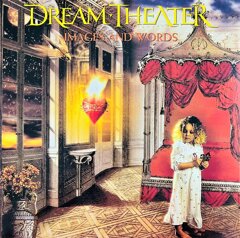
Images and Words - 1992
.jpeg "whatsapp image 2025-10-21 at 18.07.35 (4).jpeg")
Awake - 1994
Falling into Infinity - 1997
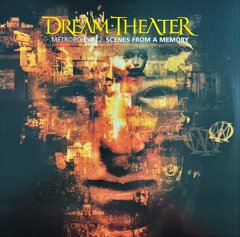
Metropolis Part 2 - Scenes from a Memory - 1999
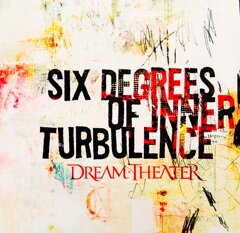
Six Degrees of Inner Turbulence - 2002
Train of Thought - 2003
Octavarium - 2005
Systematic Chaos - 2007
Black Clouds & Silver Linings - 2009
A Dramatic Turn of Events - 2011
Dream Theater - 2013
The Astonishing - 2016
Distance over Time - 2019
A View from the Top of the World - 2021
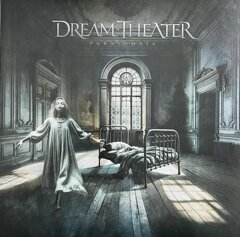
Parasomnia - 2025
Note: the links to the pages of the artists and bands mentioned here and their albums are available on the" Artists" page or using the TAG Dream Theater