| Canterbury Scene | Crossover Prog | Eclectic Prog | Extreme Prog Metal | Folk Rock | Heavy Prog | Jazz-Rock Fusion | Krautrock | Neo Prog | NON PROG | Northern Prog | Post Metal | Post Rock | Prog Related | Progressive Electronic | Progressive Metal | Psychedelic Rock | Rock Progressivo Italiano | Space Rock | Symphonic Rock | Zeuhl |
FrancescoProgressive Rock World
632 Reviews - 359 Artists - 85 Detailed biographical profiles - 26 Prog Meteors - 22 Progressive Rock Subgenres
Gong, the Life and Death of Daevid Allen and Gilli Smyth
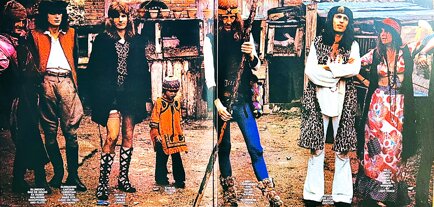
The idea to combine Gong and Allen's biographical notes with a focus on his tragic passing was born from a touching quote Dave Sturt said about the album Rejoice! I'm Dead!…: "Inspired by the light, love, and passing of our dear friend and inspiration, Daevid Allen."
Daevid Allen was born in Melbourne on January 13, 1938, and was an influential Australian guitarist, singer, songwriter, poet, and performer, co-founder of two iconic progressive rock bands: Soft Machine and Gong.
The story goes that Allen moved to Europe in 1960, coming into contact with beat culture. In London, he met Robert Wyatt and Hugh Hopper, with whom he formed the Daevid Allen Trio, a free jazz group.
But let's take a step back to understand how this meeting came about and begin the intricate and wonderful story of a man, the bands he founded, and the one he most identified with.
In the mid-1950s, a group of students from Simon Langton Primary School in Canterbury met. This group included brothers Hugh and Brian Hopperr, Robert Wyatt, Dave Sinclair and Mike Ratledge, and their friendship developed around music, spending entire afternoons at Robert Wyatt's house listening to jazz and playing his most famous songs.
In 1960, an Australian boy named Daevid Allen rented a room in Wyatt's house. He had a nonconformist lifestyle and a huge passion for jazz, which immediately influenced the other boys and roommates.
At the end of 1962, still at the Wyatt house, the first recordings of the group's first nucleus began. The two Hoppers participated: Brian on guitar and saxophone, Hugh on bass, Wyatt on drums, and Ratledge on piano.
Allen, who had meanwhile moved to London, invited Wyatt to join him in 1963, and after a while, Hugh Hopper joined them: together they formed the Daevid Allen Trio, which performed in England, alternating free jazz pieces with readings of beat poetry.
Ratledge occasionally joined the trio's concerts as a guest, such as the June 1963 date at London's Marquee Club, a recording of which was released in 1993 by Voiceprint Records as Live 1963. The lack of bookings caused the group to lose confidence, and they disbanded after a few weeks.
Daevid moved to Deià on the island of Mallorca, where a community of Beat Generation artists had resided for years, and where many of the Canterbury musicians would often stay as well, making it considered the birthplace of Gong and Soft Machine.
Here he was joined by Wyatt and Ayers with whom he spent a busy summer filled with musical evenings. Around the same time, Hugh, his brother Brian, and fifteen-year-old Richard Sinclair officially formed the Wild Flowers, which, with the return of Wyatt and Ayers, took the name Wilde Flowers in homage to the Irish writer Oscar Wilde. The Wilde Flowers' recordings became more frequent and involved more and more musicians. They remained active until 1969, and their only album, The Wilde Flowers, was released in 1993. With the departure of Ayers, followed by that of Wyatt, who went on to form Soft Machine in 1966, the Wilde Flowers were dominated by the members who left in 1968 to form Caravan.
As mentioned, in 1966, Allen, Wyatt, Kevin Ayers, and Mike Ratledge formed Soft Machine, one of the pioneering bands of the Canterbury scene. Allen participated in their first single, but his tenure in the band was short-lived. In 1967, during a tour in France, he was denied re-entry into the United Kingdom due to visa issues, forcing him to leave the group.
Stranded in France, Allen settled in Paris and founded Gong with his partner, singer Gilli Smyth. They quickly gave the band a unique, eclectic sound, a fusion of psychedelic rock, jazz fusion, and space rock. The sound centered on a complex science fiction mythology, which included characters like Zero the Hero and the "Pot Head Pixies," and imaginary broadcasts from "Planet Gong," which gave rise to the conceptual trilogy Radio Gnome Invisible between 1973 and 1974.
Gong is now a legendary band with an ever-evolving lineup, rooted in the Canterbury scene and featuring longtime members like Steve Hillage, Pierre Moerlen, and Pip Pyle, —a band born out of exile.
The early years saw the release of Magick Brother, Mystic Sister (1969) and one of their finest albums, Camembert Electrique (1971), but it was with the Radio Gnomee trilogy that the "classic" lineup—Allen, Smyth, Steve Hillage, Pierre Moerlen, Tim Blake, Mike Howlett, and Didier Malherbe—released Flying Teapot (1973), Angel's Egg (1974), and You (1974), three masterpieces.
Psychedelic rock and space rock combined, dreamy atmospheres, free jazz influences, and the extravagant and wonderful "space whispers" of Gilli Smyth, who is indeed remembered as the "space whisperer."
The lyrics were imbued with esoteric concepts, encounters with aliens, and anarchic ideas, with a rebellious spirit.
Allen and Smyth left the band in 1975 due to internal tensions, after which drummer Pierre Moerlen led a jazz-rock incarnation known as Pierre Moerlen's Gong, entirely instrumental and far removed from psychedelic mythology. Meanwhile, Allen and Smyth pursued various spin-off projects such as Planet Gong, New York Gong, and Mother Gong.
Allen devoted himself to a prolific solo career and in 1981, returned to Australia, settling in Byron Bay, where he continued to work on poetry and improvised music, also organizing healing festivals. He eventually returned to lead the reunited Gong in the 1990s, releasing further albums that continued the Radio Gnome mythology, such as Shapeshifter (1992) and Zero to Infinity (2000).
Daevid died on March 13, 2015, at the age of 77, in Byron Bay, Australia, following a tough battle with cancer. In June 2014, he underwent surgery to remove a cyst from his neck, which was found to be cancerous. In February 2015, Allen announced in a public statement that the cancer had returned and spread to his lungs. He was given approximately six months to live, and he consciously chose not to undergo further surgery or treatment, opting to face the disease with serenity.
Daevid left several touching messages, both to his fans, in which he accepted his terminal condition with serenity, and a more specific and private one, shortly before his death, addressed to the band Gong, which would continue his artistic legacy.
Message to Fans (February 2015) When he announced that the cancer had returned and would not last long:
"I'm not interested in endless surgeries, and it was actually a relief to know the end is near. I'm a great believer in 'Wishing It the Way It Is,' and I also believe it's time to stop resisting and denying and just surrender to the way it is. I can only hope that during this journey, I have somehow contributed to the happiness of someone else's life. I believe I've done my best to heal, dear friends, and you have been tremendously helpful in supporting me during this time. So thank you SO MUCH for being with me, for the Ocean of Love. And now, most importantly, thank you for beginning the process of letting go, of grieving, and then transforming and celebrating this approaching death: that's how you can contribute, and that would be a great gift from those who are emotionally and spiritually involved with me. I love you and will always be with you."
Message to the Band (Shortly Before His Death) In a final message sent directly to the Gong members who would continue his vision, Allen gave them his blessing and full support:
"I can simply say that it's super clear to me that Kavus, you are the perfect fit with Dave, Ian, and Fabio, and that Cheb, you are the perfect fit with Kavus! I feel like you are all equally on the brink of a new Gong era, musically, lyrically, and spiritually, and that almost everything you've done so far has been preparation for this moment. I want you to know that I'm 100% behind you with this project and wish you tremendous success in any way you choose to measure it. I'm truly proud to have laid the foundation for the Gong tradition and have done my best to make it as layered, expansive, and open as possible, so that almost anything is possible as a result. I'm finally free to let it go, so now it's up to you guys to take it forward to new heights and depths." unknown, far beyond anything I could ever imagine. Thank you for being there and for trying, and may the rewards be incredibly powerful for each of you! Love and big, soulful hugs. Daevid"
His passing marked the end of an era for the psychedelic and progressive music scene, but his artistic legacy and the spirit of the band live on through the musicians he inspired. Per Allen's wishes, the band continues to perform and record new music with a stable lineup of musicians he handpicked, including Kavus Torabi and Fabio Golfetti. The current lineup released Rejoice! I'm Dead! in 2016 and Unending Ascending in 2023, keeping the band's unique legacy alive.
And Gilli Smyth? His beloved space whisperer died on August 22, 2016, at the age of 83.
She passed away in a hospital in Byron Bay, Australia, just over a year after Daevid's death from pneumonia.
Her son, Orlando Monday Allen, announced her death on social media, saying that his mother died peacefully surrounded by her loved ones, reading poetry and singing. A peaceful death, like Daevid's. United by nonconformism and rebellion, but also by peaceful resignation to the inevitable, because one can fight for the world, but not against the very nature of life in the world, which finds its natural fulfillment in death.
His unique vocal style remains unmatched, characterized by ethereal whispers and immersive sounds, which helped define the psychedelic and spacey atmosphere of Gong's music.
The idea to combine Gong and Allen's biographical notes with a focus on his tragic passing was born from a touching quote Dave Sturt said about the album Rejoice! I'm Dead!…: "Inspired by the light, love, and passing of our dear friend and inspiration, Daevid Allen."
Daevid Allen was born in Melbourne on January 13, 1938, and was an influential Australian guitarist, singer, songwriter, poet, and performer, co-founder of two iconic progressive rock bands: Soft Machine and Gong.
The story goes that Allen moved to Europe in 1960, coming into contact with beat culture. In London, he met Robert Wyatt and Hugh Hopper, with whom he formed the Daevid Allen Trio, a free jazz group.
But let's take a step back to understand how this meeting came about and begin the intricate and wonderful story of a man, the bands he founded, and the one he most identified with.
In the mid-1950s, a group of students from Simon Langton Primary School in Canterbury met. This group included brothers Hugh and Brian Hopperr, Robert Wyatt, Dave Sinclair and Mike Ratledge, and their friendship developed around music, spending entire afternoons at Robert Wyatt's house listening to jazz and playing his most famous songs.
In 1960, an Australian boy named Daevid Allen rented a room in Wyatt's house. He had a nonconformist lifestyle and a huge passion for jazz, which immediately influenced the other boys and roommates.
At the end of 1962, still at the Wyatt house, the first recordings of the group's first nucleus began. The two Hoppers participated: Brian on guitar and saxophone, Hugh on bass, Wyatt on drums, and Ratledge on piano.
Allen, who had meanwhile moved to London, invited Wyatt to join him in 1963, and after a while, Hugh Hopper joined them: together they formed the Daevid Allen Trio, which performed in England, alternating free jazz pieces with readings of beat poetry.
Ratledge occasionally joined the trio's concerts as a guest, such as the June 1963 date at London's Marquee Club, a recording of which was released in 1993 by Voiceprint Records as Live 1963. The lack of bookings caused the group to lose confidence, and they disbanded after a few weeks.
Daevid moved to Deià on the island of Mallorca, where a community of Beat Generation artists had resided for years, and where many of the Canterbury musicians would often stay as well, making it considered the birthplace of Gong and Soft Machine.
Here he was joined by Wyatt and Ayers with whom he spent a busy summer filled with musical evenings. Around the same time, Hugh, his brother Brian, and fifteen-year-old Richard Sinclair officially formed the Wild Flowers, which, with the return of Wyatt and Ayers, took the name Wilde Flowers in homage to the Irish writer Oscar Wilde. The Wilde Flowers' recordings became more frequent and involved more and more musicians. They remained active until 1969, and their only album, The Wilde Flowers, was released in 1993. With the departure of Ayers, followed by that of Wyatt, who went on to form Soft Machine in 1966, the Wilde Flowers were dominated by the members who left in 1968 to form Caravan.
As mentioned, in 1966, Allen, Wyatt, Kevin Ayers, and Mike Ratledge formed Soft Machine, one of the pioneering bands of the Canterbury scene. Allen participated in their first single, but his tenure in the band was short-lived. In 1967, during a tour in France, he was denied re-entry into the United Kingdom due to visa issues, forcing him to leave the group.
Stranded in France, Allen settled in Paris and founded Gong with his partner, singer Gilli Smyth. They quickly gave the band a unique, eclectic sound, a fusion of psychedelic rock, jazz fusion, and space rock. The sound centered on a complex science fiction mythology, which included characters like Zero the Hero and the "Pot Head Pixies," and imaginary broadcasts from "Planet Gong," which gave rise to the conceptual trilogy Radio Gnome Invisible between 1973 and 1974.
Gong is now a legendary band with an ever-evolving lineup, rooted in the Canterbury scene and featuring longtime members like Steve Hillage, Pierre Moerlen, and Pip Pyle, —a band born out of exile.
The early years saw the release of Magick Brother, Mystic Sister (1969) and one of their finest albums, Camembert Electrique (1971), but it was with the Radio Gnomee trilogy that the "classic" lineup—Allen, Smyth, Steve Hillage, Pierre Moerlen, Tim Blake, Mike Howlett, and Didier Malherbe—released Flying Teapot (1973), Angel's Egg (1974), and You (1974), three masterpieces.
Psychedelic rock and space rock combined, dreamy atmospheres, free jazz influences, and the extravagant and wonderful "space whispers" of Gilli Smyth, who is indeed remembered as the "space whisperer."
The lyrics were imbued with esoteric concepts, encounters with aliens, and anarchic ideas, with a rebellious spirit.
Allen and Smyth left the band in 1975 due to internal tensions, after which drummer Pierre Moerlen led a jazz-rock incarnation known as Pierre Moerlen's Gong, entirely instrumental and far removed from psychedelic mythology. Meanwhile, Allen and Smyth pursued various spin-off projects such as Planet Gong, New York Gong, and Mother Gong.
Allen devoted himself to a prolific solo career and in 1981, returned to Australia, settling in Byron Bay, where he continued to work on poetry and improvised music, also organizing healing festivals. He eventually returned to lead the reunited Gong in the 1990s, releasing further albums that continued the Radio Gnome mythology, such as Shapeshifter (1992) and Zero to Infinity (2000).
Daevid died on March 13, 2015, at the age of 77, in Byron Bay, Australia, following a tough battle with cancer. In June 2014, he underwent surgery to remove a cyst from his neck, which was found to be cancerous. In February 2015, Allen announced in a public statement that the cancer had returned and spread to his lungs. He was given approximately six months to live, and he consciously chose not to undergo further surgery or treatment, opting to face the disease with serenity.
Daevid left several touching messages, both to his fans, in which he accepted his terminal condition with serenity, and a more specific and private one, shortly before his death, addressed to the band Gong, which would continue his artistic legacy.
Message to Fans (February 2015) When he announced that the cancer had returned and would not last long:
"I'm not interested in endless surgeries, and it was actually a relief to know the end is near. I'm a great believer in 'Wishing It the Way It Is,' and I also believe it's time to stop resisting and denying and just surrender to the way it is. I can only hope that during this journey, I have somehow contributed to the happiness of someone else's life. I believe I've done my best to heal, dear friends, and you have been tremendously helpful in supporting me during this time. So thank you SO MUCH for being with me, for the Ocean of Love. And now, most importantly, thank you for beginning the process of letting go, of grieving, and then transforming and celebrating this approaching death: that's how you can contribute, and that would be a great gift from those who are emotionally and spiritually involved with me. I love you and will always be with you."
Message to the Band (Shortly Before His Death) In a final message sent directly to the Gong members who would continue his vision, Allen gave them his blessing and full support:
"I can simply say that it's super clear to me that Kavus, you are the perfect fit with Dave, Ian, and Fabio, and that Cheb, you are the perfect fit with Kavus! I feel like you are all equally on the brink of a new Gong era, musically, lyrically, and spiritually, and that almost everything you've done so far has been preparation for this moment. I want you to know that I'm 100% behind you with this project and wish you tremendous success in any way you choose to measure it. I'm truly proud to have laid the foundation for the Gong tradition and have done my best to make it as layered, expansive, and open as possible, so that almost anything is possible as a result. I'm finally free to let it go, so now it's up to you guys to take it forward to new heights and depths." unknown, far beyond anything I could ever imagine. Thank you for being there and for trying, and may the rewards be incredibly powerful for each of you! Love and big, soulful hugs. Daevid"
His passing marked the end of an era for the psychedelic and progressive music scene, but his artistic legacy and the spirit of the band live on through the musicians he inspired. Per Allen's wishes, the band continues to perform and record new music with a stable lineup of musicians he handpicked, including Kavus Torabi and Fabio Golfetti. The current lineup released Rejoice! I'm Dead! in 2016 and Unending Ascending in 2023, keeping the band's unique legacy alive.
And Gilli Smyth? His beloved space whisperer died on August 22, 2016, at the age of 83.
She passed away in a hospital in Byron Bay, Australia, just over a year after Daevid's death from pneumonia.
Her son, Orlando Monday Allen, announced her death on social media, saying that his mother died peacefully surrounded by her loved ones, reading poetry and singing. A peaceful death, like Daevid's. United by nonconformism and rebellion, but also by peaceful resignation to the inevitable, because one can fight for the world, but not against the very nature of life in the world, which finds its natural fulfillment in death.
His unique vocal style remains unmatched, characterized by ethereal whispers and immersive sounds, which helped define the psychedelic and spacey atmosphere of Gong's music.
The Discography and the Reviews
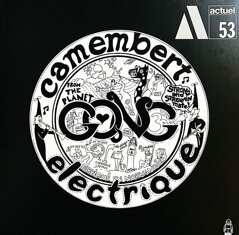
Camembert Electrique - 1971
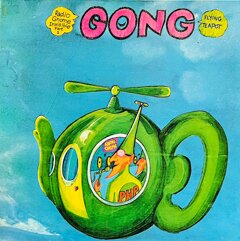
Flying Teapot (Radio Gnome Invisible Part 1) - 1973
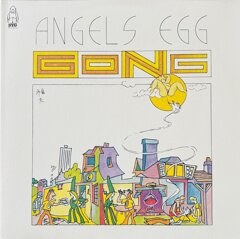
Angel's Egg (Radio Gnome Invisible Part 2) - 1973
.jpeg "whatsapp image 2025-06-22 at 22.06.05 (1).jpeg")
You - 1974
Shamal - 1975
Gazeuse! - 1976
Live au Bataclan 1973 - 1990
Zero To Infinity - 2000
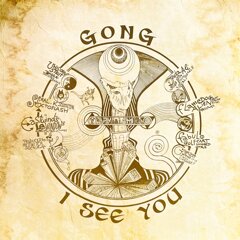
I See You - 2014
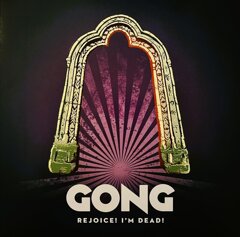
Rejoice! I'm Dead! - 2016
The Universe Also Collapses - 2019
Unending Ascending - 2023
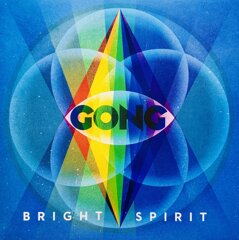
Bright Spirit - 2026