| Canterbury Scene | Crossover Prog | Eclectic Prog | Extreme Prog Metal | Folk Rock | Heavy Prog | Jazz-Rock Fusion | Krautrock | Neo Prog | NON PROG | Northern Prog | Post Metal | Post Rock | Prog Related | Progressive Electronic | Progressive Metal | Psychedelic Rock | Rock Progressivo Italiano | Space Rock | Symphonic Rock | Zeuhl |
Progressive Rock World


Kraftwerk, the founding fathers of modern electronic music
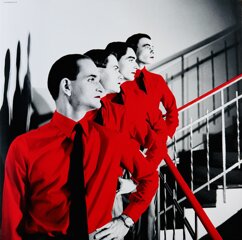
Kraftwerk, founded in Düsseldorf in 1970 from the meeting between Ralf Hütter and Florian Schneider, are considered the founding fathers of modern electronic music.
Famous for their innovative use of synthesizers, drum machines, and vocoder, their robotic and avant-garde style has deeply influenced genres such as synth-pop, electro, and hip-hop, redefining the standards of popular music with iconic albums like Autobahn and The Man-Machine. The name “Kraftwerk”, which in German means “power station”, perfectly reflects their artistic vision, focused on the interaction between man and technology.
Hütter and Schneider, trained at the Düsseldorf conservatory, joined forces in 1970 to found the group, creating an “industrial” aesthetic that materialized in their recording studio, the Kling Klang Studio.
Here, Kraftwerk built their sonic identity, characterized by rhythmic minimalism and a constant exploration of the possibilities offered by technology. It was a “headquarters” where they perfected their sound in total isolation. The first three albums (Kraftwerk, Kraftwerk 2, and Ralf & Florian) belong to the German experimental scene, with a still partial use of acoustic instruments such as flute and drums.
Kraftwerk’s Golden Age began with the release of Autobahn (1974), which marked their international breakthrough. The 22-minute title track mimics the rhythm of a highway journey, becoming a worldwide hit.
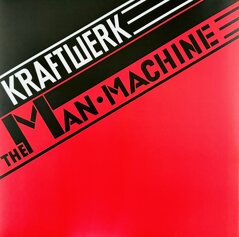
Seminal albums such as “Radio-Aktivität” (1975), focused on radio and nuclear themes; “Trans Europa Express” (1977), an anthem to European train travel; “Die Mensch-Maschine” (1978), which introduced the iconic robot image; and “Computerwelt” (1981), which prophetically anticipated the era of global digitalization, have influenced generations of musicians and paved the way for genres like techno and hip-hop. These albums marked the career of Kraftwerk and an entire musical genre. During their most successful period, the group also included Karl Bartos and Wolfgang Flür. The man-machine aesthetic became a central element of their communication, culminating in the use of real robots during concerts and the personification of androids in tracks like “The Robots”.
In the 1980s and 1990s, the original members began to leave: Flür in 1987 and Bartos in 1990. Co-founder Florian Schneider officially left in 2008, before passing away in 2020. In 2021, Kraftwerk were inducted into the Rock & Roll Hall of Fame. Under the guidance of the last original member, Ralf Hütter, the band continues with avant-garde audio-video performances that celebrate their historic catalog. Their legacy is comparable to that of the Beatles for rock music, marking the transition to modern electronic music.
Kraftwerk, in fact often called “the Beatles of electronic music”, have left an indelible mark on almost all contemporary musical genres. Their “man-machine” approach transformed the synthesizer from an experimental curiosity to a fundamental element of modern pop. They deeply influenced Synth-pop and New Wave, inspiring groups like Depeche Mode, New Order, The Human League, and Gary Numan with their minimalist melodies and systematic use of electronic rhythms. Hip-Hop and Electro Pop have also been influenced by them, as demonstrated by the track “Planet Rock” (1982) by Afrika Bambaataa, which sampled “Trans-Europe Express” and “Numbers”, blending European electronics with American urban rhythms and giving birth to the Electro genre. Techno and House also owe much to their style, with Detroit techno pioneers (such as Juan Atkins and Derrick May) citing Kraftwerk as the main source of inspiration for their robotic aesthetic and hypnotic loops. Their technical innovations popularized the use of the vocoder (to create robotic voices) and custom electronic percussion, anticipating modern digital production techniques by decades. Moreover, they introduced hypnotic repetition and sonic subtraction, breaking with the classic verse-chorus structure of traditional rock. Their immense legacy continues to influence today’s music.
Prog or not Prog, the eternal debate around bands like this that transcend genres.
Kraftwerk, while being associated with progressive rock for their experimental roots and conceptual approach, are more properly defined for their early albums in the Krautrock genre. In their first three albums, “Kraftwerk”, “Kraftwerk 2”, and “Ralf & Florian”, they used instruments typical of progressive rock and the avant-garde, such as flute, guitar, violin, and acoustic drums, manipulated with electronic effects. Their music, at this stage, was distinguished by long free-form improvisations and unconventional structures.
Tracks like Autobahn (1974), with its duration of over 22 minutes, follow the structure of prog rock suites, occupying an entire side of a vinyl to develop a single narrative and sonic theme. Like all great prog groups, Kraftwerk based their albums on philosophical and technological concepts (radioactivity, trans-European transport, man-machine interaction), elevating pop music to an intellectual and complex art form.
Their desire to push the boundaries of sound through the use of then cutting-edge synthesizers (such as the Moog) rightfully places them in the “progressive” music stream, understood as a constant search for the future. The subgenre of Prog in which they are placed, in my opinion rightly so, is Progressive Electronic.
The Discography and the Reviews
Kraftwerk – 1970
Kraftwerk 2 - 1972
Ralf & Florian - 1973
Autobahn - 1974
Radio-Activity (Radio-Aktivität) - 1975
.jpeg "whatsapp image 2025-09-08 at 13.35.40 (1).jpeg")
Trans-Europe Express (Trans-Europa Express) – 1977
619 Reviews - 354 Artists - 85 Detailed biographical profiles - 26 Prog Meteors - 22 Progressive Rock Subgenres
The Man-Machine (Die Mensch-Maschine) - 1978
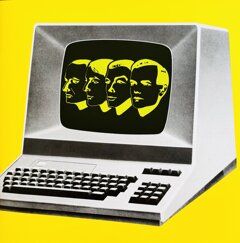
Computer World (Computerwelt) - 1981
Electric Café (Techno Pop) – 1986
Concert Classics – 1998 - Live
Tour De France Soundtracks - 2003