| Canterbury Scene | Crossover Prog | Eclectic Prog | Extreme Prog Metal | Folk Rock | Heavy Prog | Jazz-Rock Fusion | Krautrock | Neo Prog | NON PROG | Northern Prog | Post Metal | Post Rock | Prog Related | Progressive Electronic | Progressive Metal | Psychedelic Rock | Rock Progressivo Italiano | Space Rock | Symphonic Rock | Zeuhl |
Progressive Rock World


The Magma and the Kobaïan Saga

Magma Magma are a French band formed in Paris in 1969, thanks to the vision of drummer and composer Christian Vander. Vander, inspired by a vision of humanity's spiritual and ecological future and by the passing of jazz saxophonist John Coltrane, created something truly unique. Initially, their music was influenced by 20th-century classical composers such as Carl Orff and Igor Stravinsky, but they evolved to become pioneers of the Zeuhl genre.
One of the most interesting things about Magma is their use of Kobaïan, an artificial language invented by Vander himself. Imagine a universal language, an extraterrestrial language spoken by the inhabitants of the imaginary planet Kobaïa! Almost all of Vander's songs are sung in this language, which is not just a set of meaningless sounds, but a real language with its own syntax, grammar, and dictionary.
Their albums tell the "Kobaïan Saga," which begins with their self-titled debut album (later reissued as Kobaïa). The story is about a group of people who escape from a dying Earth to find a new home on the planet Kobaïa. The following albums continue this adventure, exploring spiritual and environmental themes.
Zeuhl, Magma's genre, is a fascinating fusion of jazz-rock, symphonic rock, and avant-garde music. Think of repetitive and intense rhythms, dramatic vocals, choral arrangements, and powerful bass lines. The term "Zeuhl" in Kobaïan means "celestial," and perfectly describes this unique style that has influenced many other bands, even today.
Over the years, Magma have had several lineup changes, but Christian Vander has always remained the beating heart of the band. Among the most important former members are bassist Jannick Top and violinist Didier Lockwood.
Magma, a band that made music history, released their first album, "Kobaïa," in 1970. Three years later, in 1973, they created their masterpiece, "Mëkanïk Dëstruktïẁ Kömmandöh." After releasing "Merci" in 1984, the band broke up, but in 1996 they reunited and have been active ever since.
Magma's musical legacy is truly monumental. They created an entire musical subgenre, Zeuhl, which has influenced generations of artists around the world thanks to their alien and rigorous aesthetic. Zeuhl did not remain confined to Magma, but became an international movement that includes groups such as Zao (founded by former Magma members), Eskaton, Dün, and Art Zoyd, who carried on Vander's dark and martial sounds. Japan has also enthusiastically embraced Zeuhl, giving rise to key bands such as Tatsuya Yoshida's Ruins and Kōenji Hyakkei, who use invented languages and hyper-complex rhythms similar to Kobaïan. In Italy, Magma's influence can be found in bands such as Universal Totem Orchestra and Sonota Islands Kommandoh.
Magma have been a true school for musicians. Internationally renowned artists such as violinist Didier Lockwood and bassist Jannick Top began or consolidated their careers in the group, later influencing European jazz and fusion. In short, Magma are not just a band, but a true cultural phenomenon that continues to inspire musicians all over the world.
Magma embraced the concept of "Total Music," demonstrating that a rock band can create a complete narrative and linguistic universe (world-building), anticipating many concept sagas of modern music. Christian and Stella Vander, through their label Seventh Records, have created an autonomous system to preserve and release not only Magma's material, but also solo projects and related bands, thus ensuring the longevity of their vision.
The band continues to be an active and influential force. In 2026, Magma will celebrate over half a century of activity with a tour, and an unmissable date will be March 6 at the Auditorium Parco della Musica in Rome. I'll be there, and I can't wait!
The Discography and the Reviews
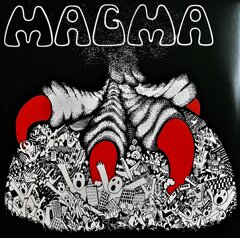
Kobaïa (1970)
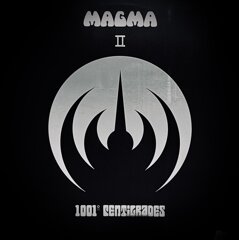
1001° Centigrades (1971)
.jpeg "whatsapp image 2025-10-17 at 15.17.33 (6).jpeg")
619 Reviews - 354 Artists - 85 Detailed biographical profiles - 26 Prog Meteors - 22 Progressive Rock Subgenres
Mëkanïk Destruktïw Kommandöh (1973)
Ẁurdah Ïtah (1974)
Köhntarkösz (1974)
Üdü Ẁüdü (1976)
Attahk (1978)
Merci (1984)
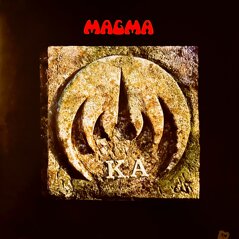
K.A (Köhntarkösz Anteria) (2004)
Ëmëhntëhtt-Ré (2009)
Félicité Thösz (2012)
Rïah Sahïltaahk (2014)
Šlaǧ Tanƶ (2015)
Zëss (2019)
Kãrtëhl (2022)
Concerts
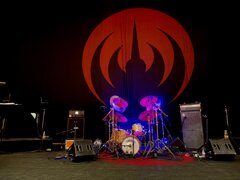
Magma in Concert, Friday, March 6, 2026, Rome