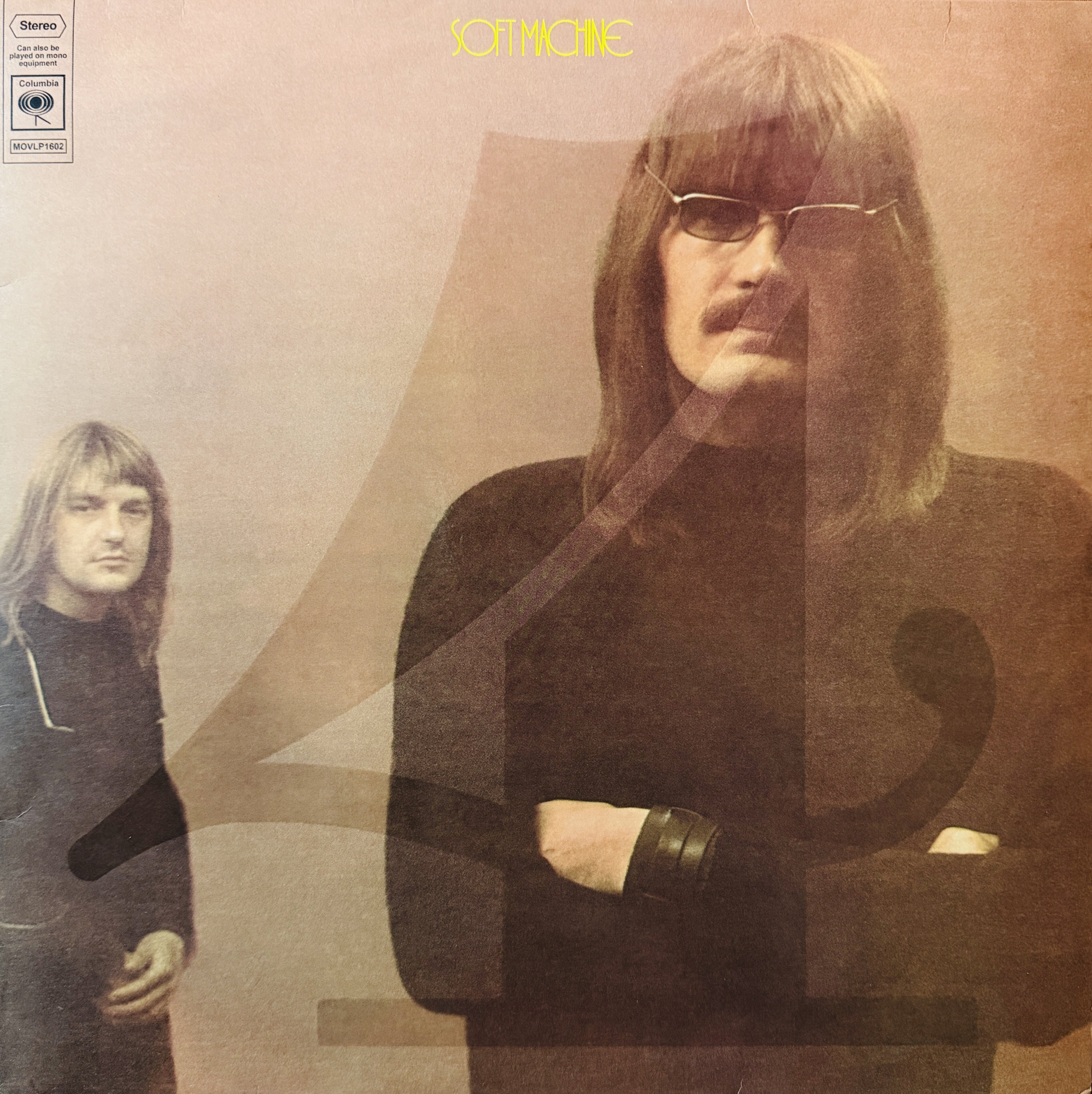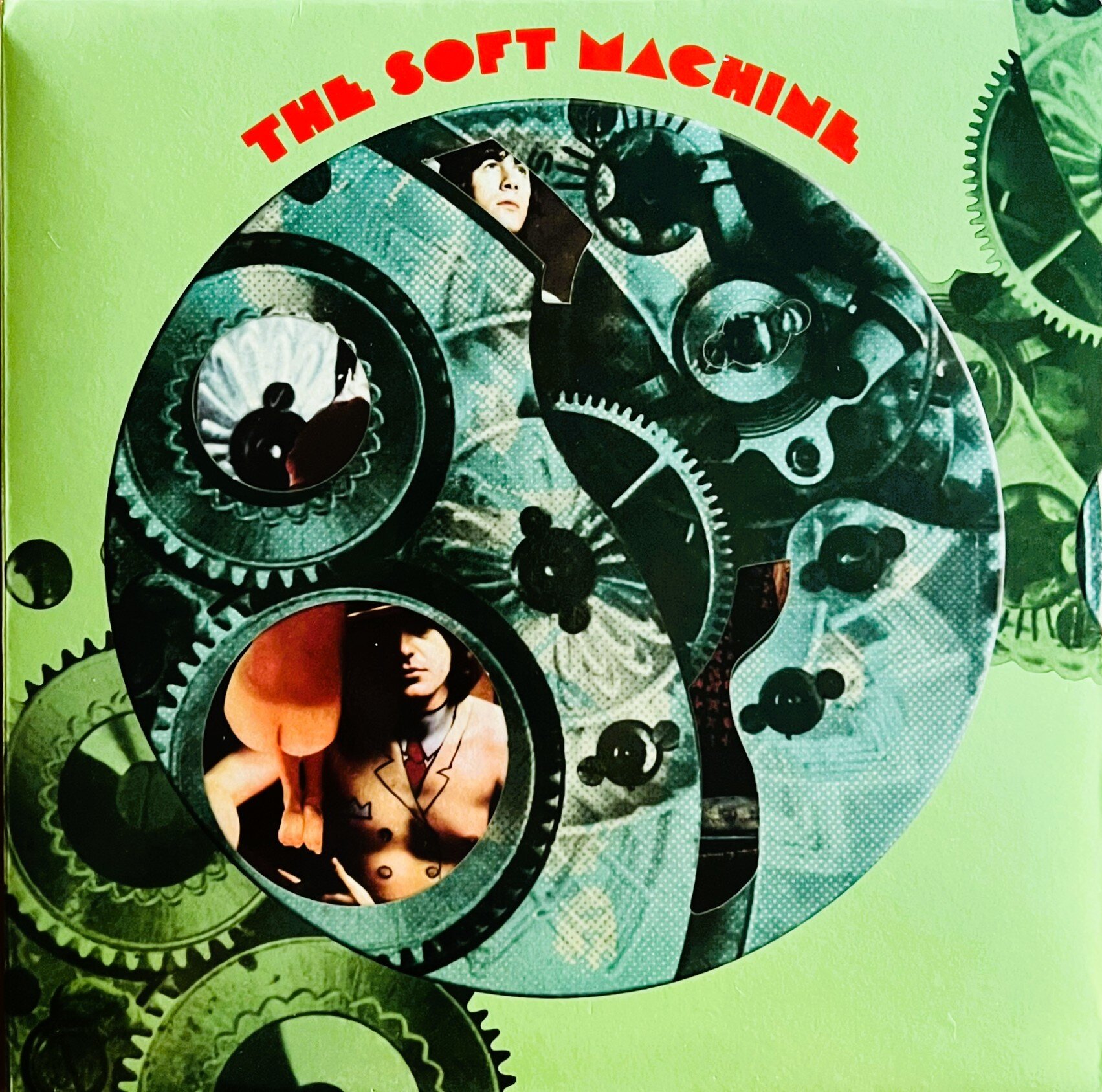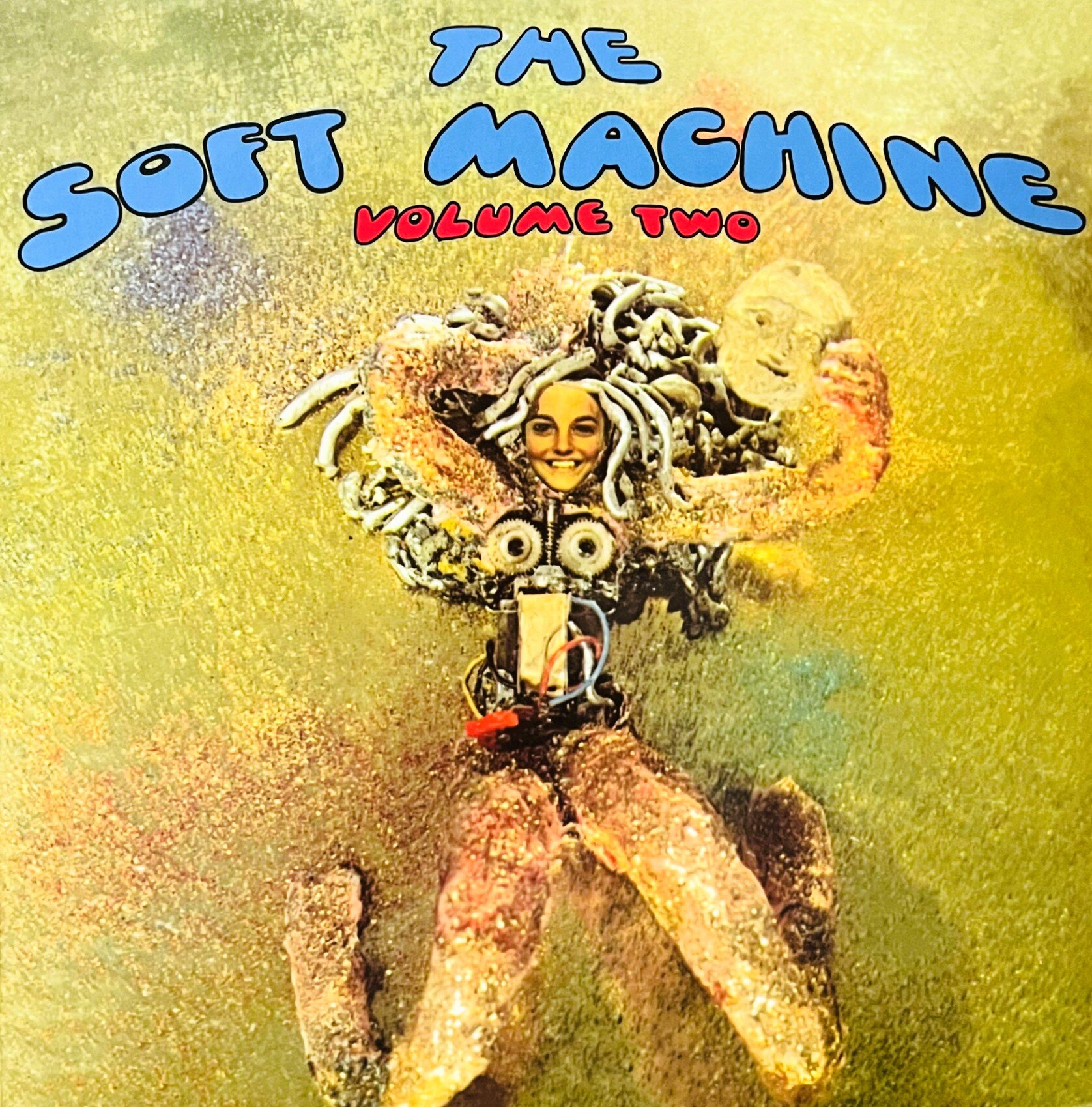
Volume Two, Soft Machine's 1969 album.
We've discussed Soft Machine in the articles on Wilde Flowers and Matching Mole, but it's worth remembering that they are a pillar of British avant-garde music, the founders and pinnacle of the Canterbury scene. The band formed in 1966 and from then on led the evolution from psychedelic rock to progressive rock, eventually becoming pioneers of jazz fusion. The original lineup formed in Canterbury in August 1966, and their name was inspired by the novel The Soft Machine by William S. Burroughs. The original lineup included:
Robert Wyatt on drums and vocals, Kevin Ayers on bass and vocals, Mike Ratledge on keyboards, and Daevid Allen on guitar.
The lineup and musical style underwent numerous changes, from the initial Psychedelic period from 1966 to 1968 with their self-titled debut The Soft Machine (1968), an album influenced by psychedelia and Dadaism, to a Jazz-Rock turn from 1969 to 1971 with the departure of Ayers and the arrival of Hugh Hopper. During this period, their masterpiece, the double album Third (1970), which contained Wyatt's wonderful "Moon in June," was released. An Instrumental period followed from 1971 to 1984, after Wyatt's departure and the addition of musicians of the caliber of John Marshall, Karl Jenkins, and the great guitar virtuoso Allan Holdsworth. The band subsequently split up several times and formed side projects (such as Soft Machine Legacy), only to reunite in 2015. Since then, it has remained active, with a lineup that includes John Etheridge, Theo Travis, Fred Baker, and Asaf Sirkis.
Over a span of over fifty years, they have produced seminal albums for progressive rock, from their debut with The Soft Machine (1968), a milestone in psychedelia, to Volume Two (1969), filled with experimentation and a Dadaist spirit, to Third (1970), a monument to jazz-rock and progressive rock, to Fourth (1971), which completed the transition to avant-garde jazz, and Bundles (1975), which introduced Holdsworth's guitar fusion.
Volume Two was an innovative album, a fusion of psychedelic rock, Dadaist humor, and jazz-rock, a complex album that also serves as a benchmark for the sound of the Canterbury scene.
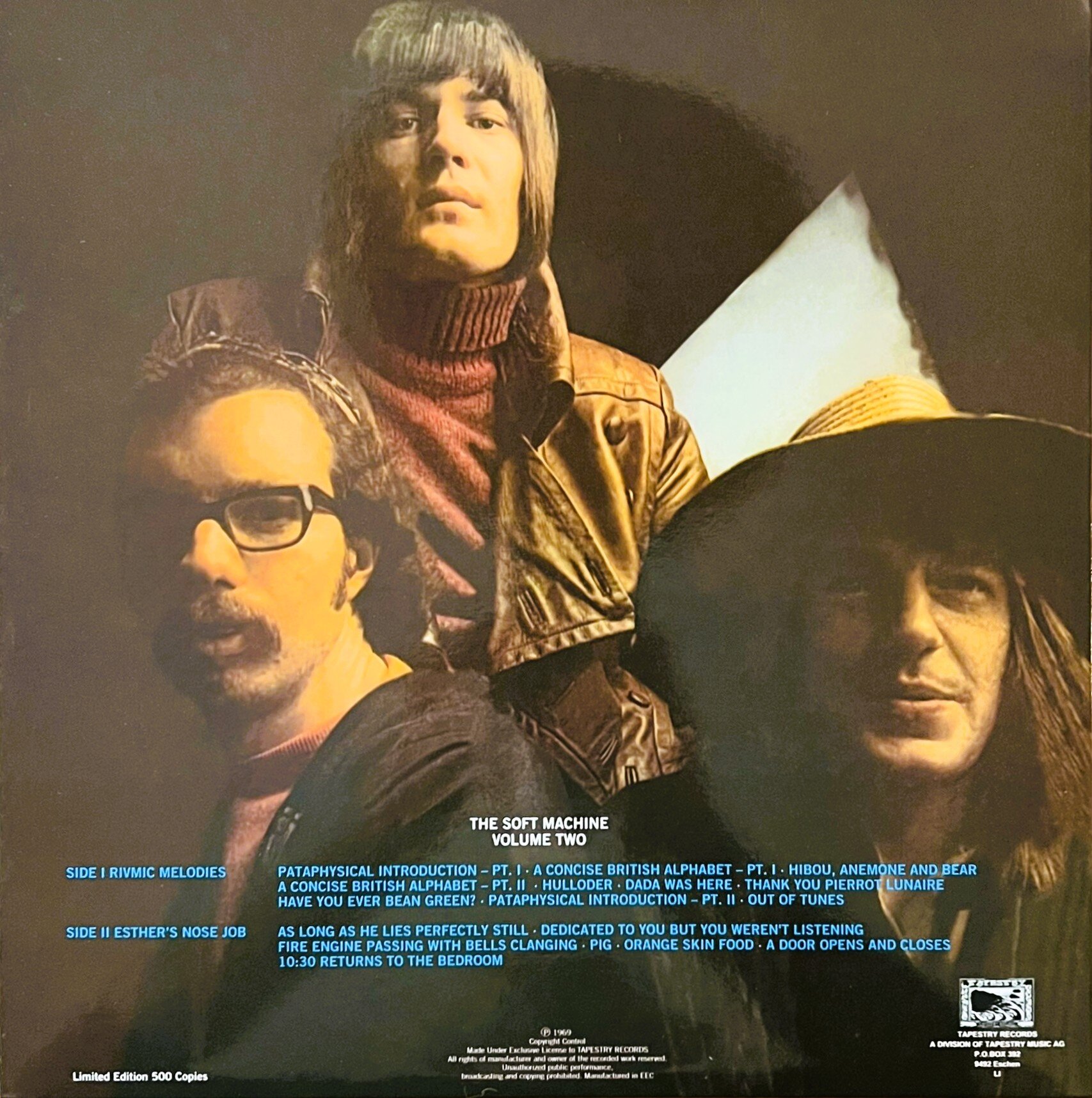
It consists of two suites, one for each side of the vinyl, "Rivmic Melodies" and "Esther's Nose Job." These suites offer great jazz and improvisation, thanks in part to the presence of Hugh Hopper on bass, whose fuzz bass had a fundamental impact.
Robert Wyatt's performance on drums is also impressive, with great jazz technique and vocals, an additional instrument whose "musical" use was a key aspect of his later musical production. Mike Ratledge on organ and piano, often distorted, outlines the abstract compositions, influenced by 20th-century classical music and free jazz. Absurd humor is central to the often surreal lyrics and is reflected in the song titles, another characteristic of the Canterbury scene.
The tracks are beautiful, some of them truly exceptional, like "Hibou Anemone and Bear," a composition in 13/8 time with a remarkable organ solo by Ratledge; "As Long As He Lies Perfectly Still," a tribute to Kevin Ayers with a complex 7/4 rhythm; "Pig," a short, humorous piece with powerful fuzz bass; and "10:30 Returns To The Bedroom," which closes the album, a taste of post-metal with heavy bass and magnificent drum and organ solos.
The more I listen to their early records, the more I realize how this band was a laboratory, a hotbed where ideas were forged and made accessible not only to the audience of the time, unaware of their future significance, but also to the global music scene.
The band was "forced" (thank goodness, I say) to reunite to honor their contract. Ayers refused to return and was replaced by Hugh Hopper, who had already played on a track on the previous album and was the band's road manager, and it was he who steered the band toward the sound that would later define them.
Wyatt provided the arrangements and wrote many of the lyrics, which he also performed.
The album represents the first fusion of rock, psychedelia, jazz, and avant-garde ever achieved by any musician, a masterpiece and a piece of history.
Note: All links to the musicians' works are in the TAGS under the article title or on the "Artists" page.
Tracklist
Side A - Rivmic Melodies:
1. Pataphysical Introduction Pt. I (1:00)
2. A Concise British Alphabet Pt. I (0:10)
3. Hibou, Anemone and Bear (5:58)
4. A Concise British Alphabet Pt. II (0:12)
5. Hulloder (0:52)
6. Dada Was Here (3:25)
7. Thank You Pierrot Lunaire (0:47)
8. Have You Ever Bean Green? (1:23)
9. Pataphysical Introduction Pt. II (0:50)
10. Out of Tunes (2:30)
Side B - Esther's Nose Job:
11. As Long as He Lies Perfectly Still (2:30)
12. Dedicated to You But You Weren't Listening (2:30)
13. Fire Engine Passing With Bells Clanging (1:50)
14. Pig (2:08)
15. Orange Skin Food (1:52)
16. A Door Opens And Closes (1:09)
17. 10.30 Returns to the Bedroom (4:14)
Duration 33:20
LineUp
- Mike Ratledge - piano, Lowrey Holiday Deluxe organ, Hammond (3), harpsichord (12), flute (3, 10)
- Hugh Hopper - bass, alto saxophone (3, 14-16), acoustic guitar (12)
- Robert Wyatt - drums, percussion, vocals, arrangement (2, 4-8)
Featuring:
- Brian Hopper - tenor saxophone (3, 9, 10, 14-16) and soprano saxophone (15, 16)


.jpeg "PROFILE - The Wilde Flowers: The Origins of the Canterbury Scene")