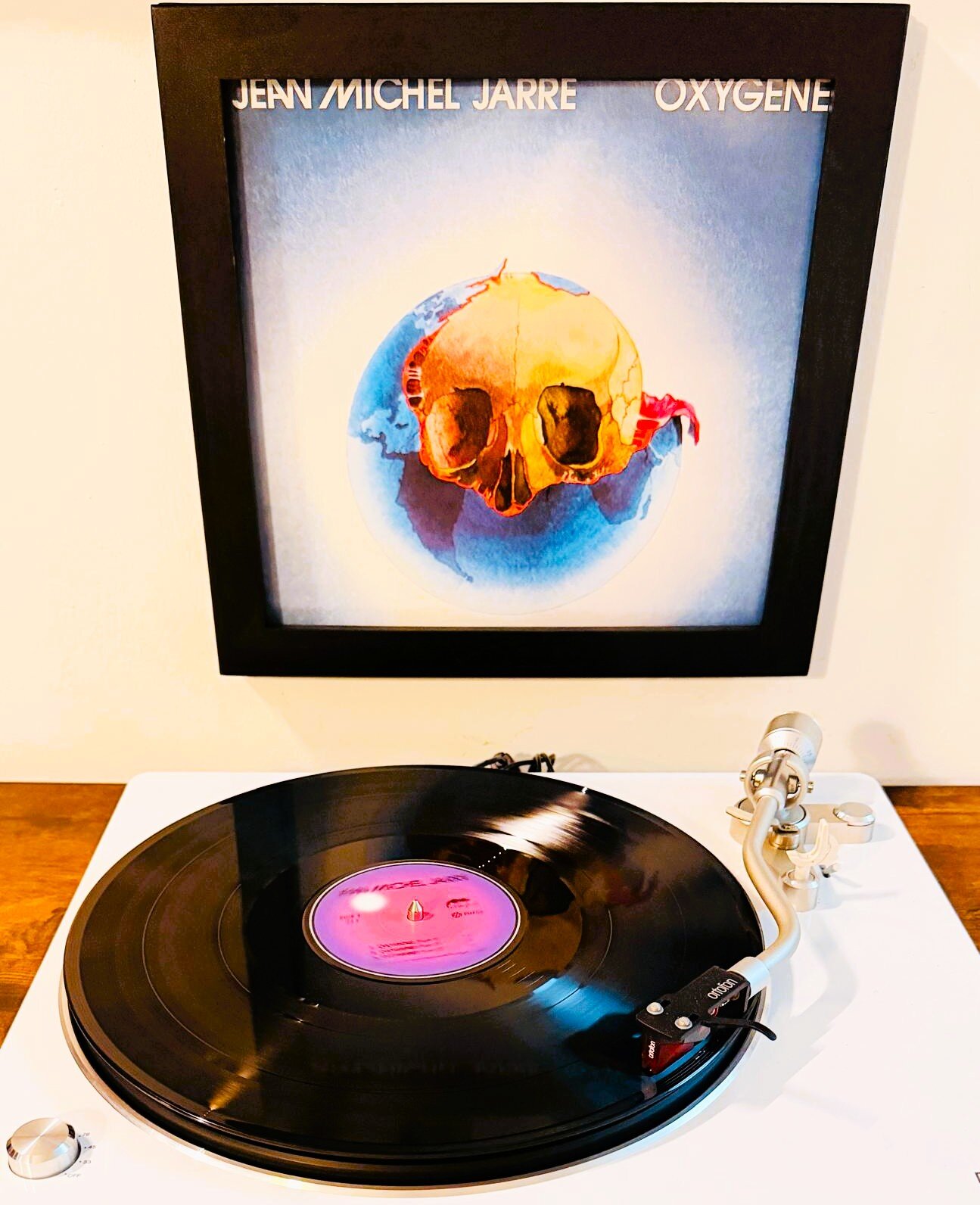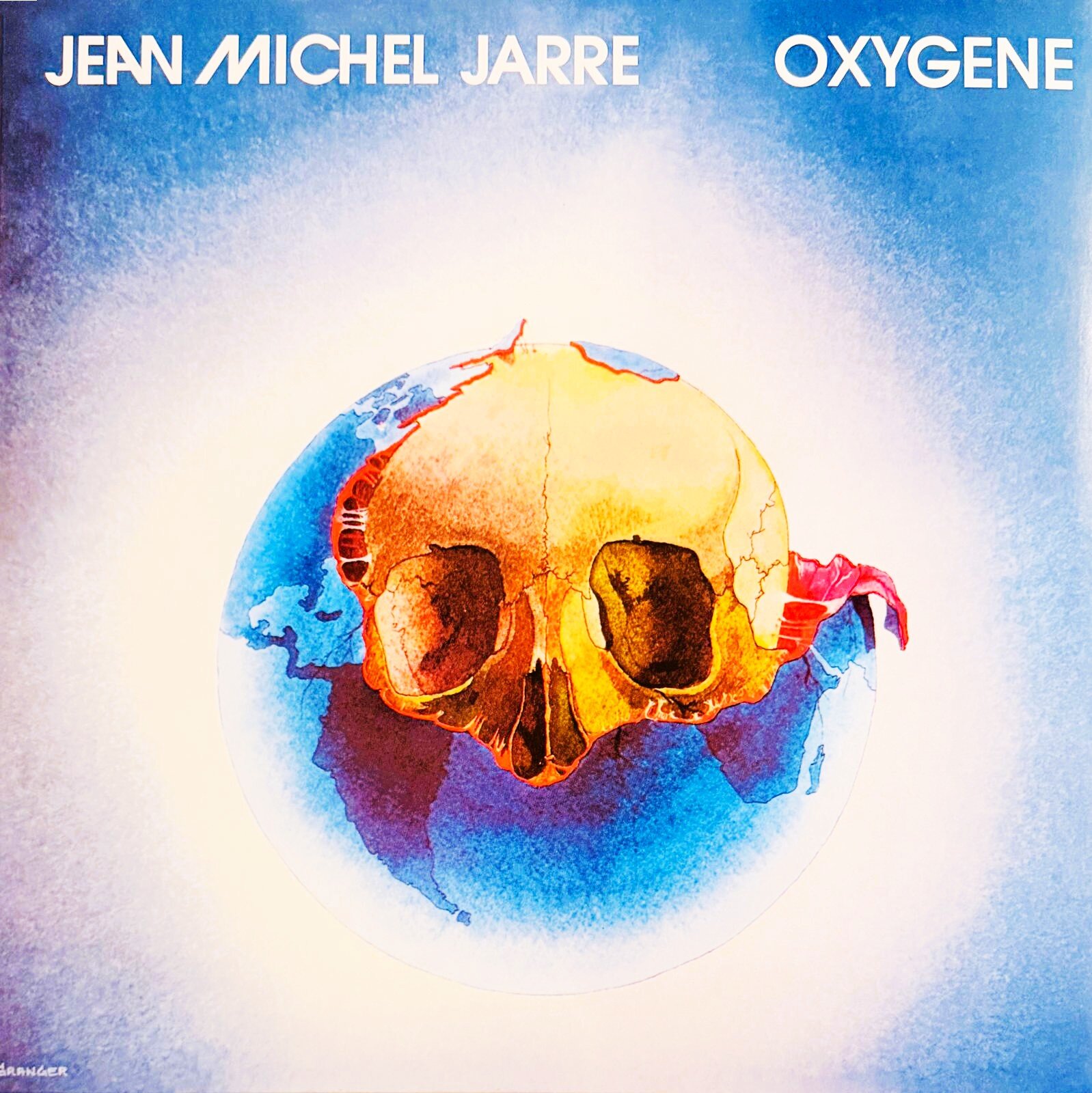
Oxygène by Jean-Michel Jarre, from 1976.
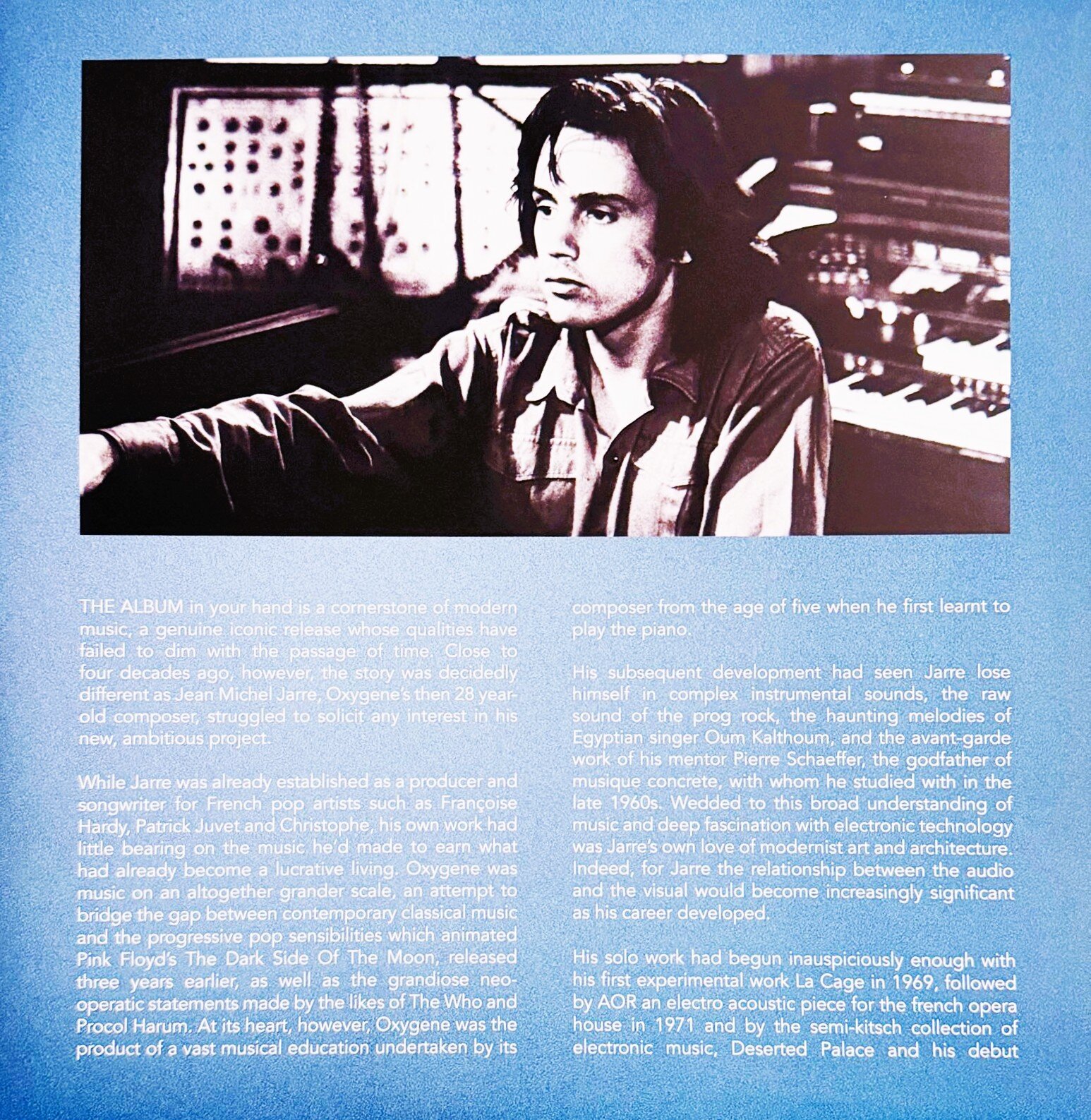
This album is a milestone in electronic music, born in a context of almost total isolation and skepticism from the music industry.
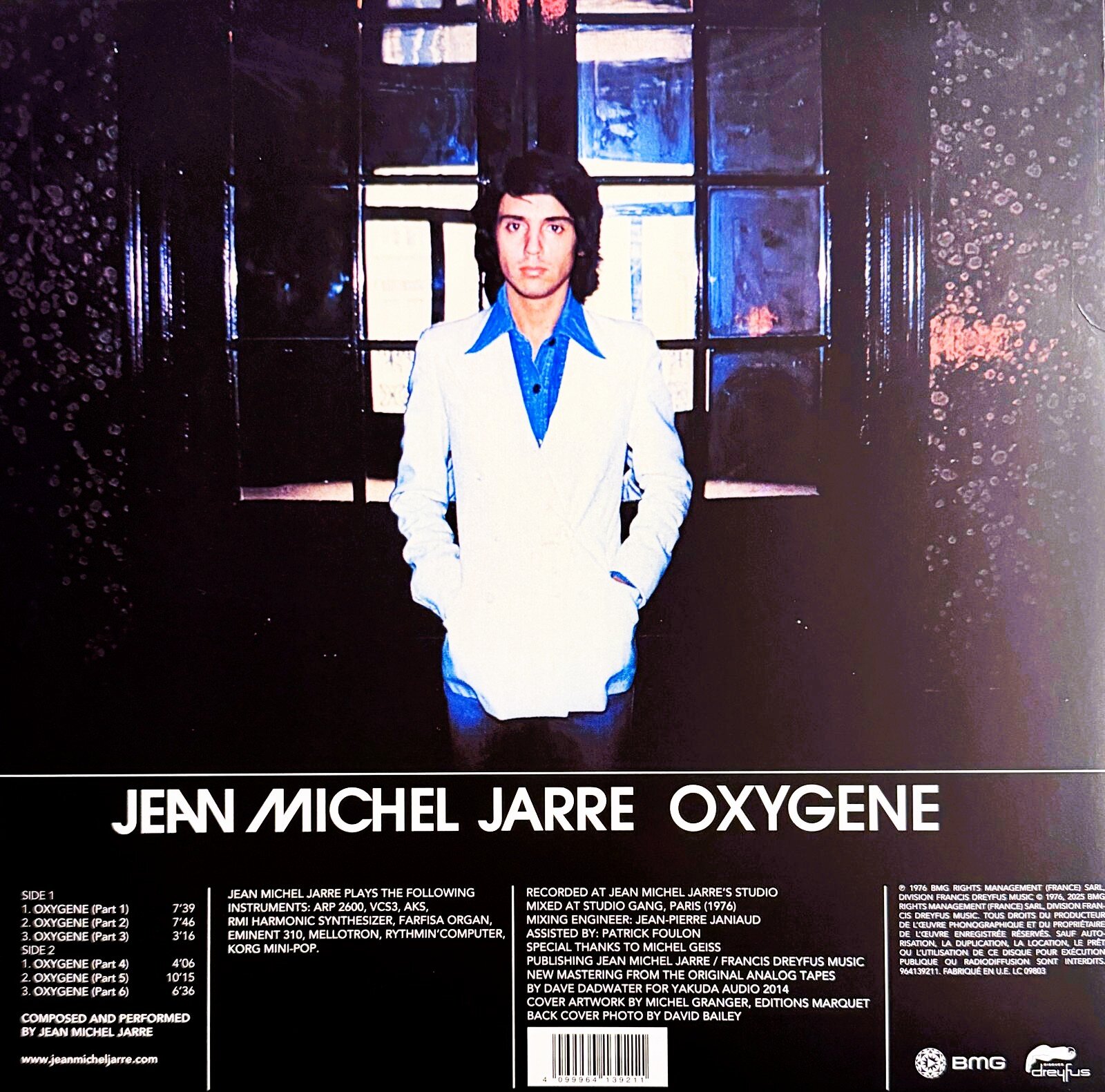
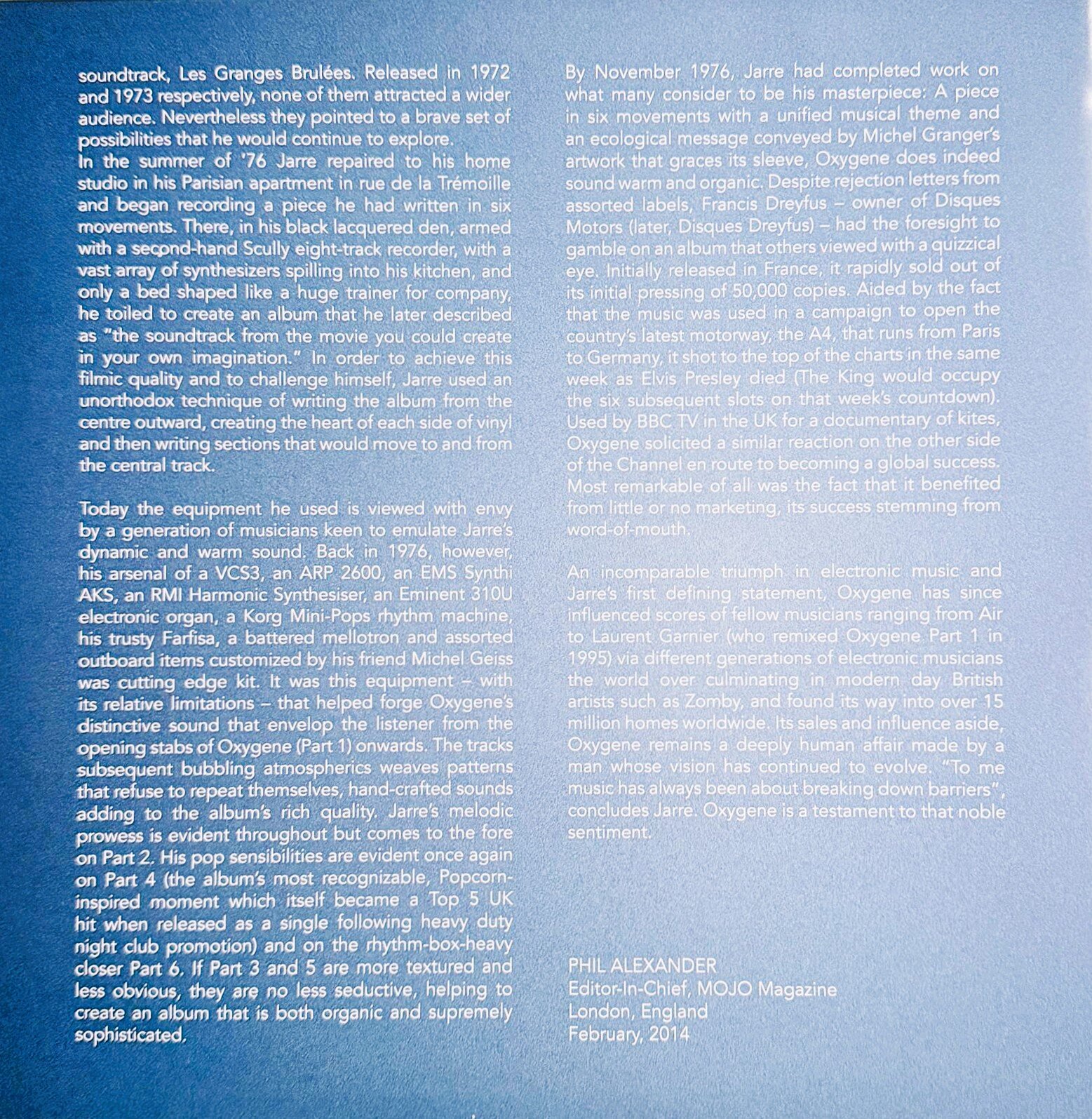
As sophisticated as it is, it is a home project born in an improvised studio. Jarre actually recorded the entire album in the kitchen of his apartment in Paris, transformed into a "do-it-yourself" recording studio, with a very small budget and used a Scully eight-track recorder and now historic analog machines such as the EMS VCS3 and the Eminent 310U organ. To create innovative rhythms, he used adhesive tape (simple scotch tape) to force a Korg Mini-Pops drum machine to play two presets simultaneously, such as "rock" and "slow rock" in Oxygène Part IV.
Jarre's goal was to create a bridge between the experimental music of Pierre Schaeffer's GRM (Groupe de Recherches Musicales) and pop melody, making synthesizers "human" and organic.
Many labels rejected the album claiming that "it had no drums, no singer, and wasn't radio-friendly," but it was eventually released by the small label Disques Dreyfus (originally Disques Motors) of Francis Dreyfus, becoming a global phenomenon, an overwhelming success, selling over 18 million copies worldwide.
It is part of a trilogy that developed from 1976 to 2016 with Oxygène 7-13 in 1997 and Oxygène 3 in 2016, released for the 40th anniversary and completing the saga with parts 14 to 20.
It is the album that brought synthesizers to the general public, transforming electronics from experimentation to a global pop phenomenon.
Unlike his German contemporaries (such as Kraftwerk, focused on mechanical rhythm, or Tangerine Dream, oriented towards cosmic improvisation), Jarre introduced a typically French and European sensibility, with "catchy" melodies using only oscillators and white noise.
Great is the ability to make the sound of the machines "breathe," through reverb and delays, echo effects, which give a spatial depth that evokes air, wind, and water, in line with the album's title.
The transitions between the various "Parts" are imperceptible and the recording on only 8 tracks is a miracle of sound engineering.
Oxygène was one of the first albums to address the theme of the planet's fragility, a message that gives the album a cultural importance that goes beyond simple musical composition.
The album is composed of six movements, simply numbered I to VI; I mention some that I consider fundamental.
Among these, the very famous Oxygène Part IV, the best-known track by Jean-Michel Jarre and one of the most recognized instrumental themes in the world, characterized by a hypnotic rhythm generated by the Korg Mini-Pops drum machine and a synthesizer melody (played on the Eminent 310) that seems to "whistle," used in countless television programs, documentaries, and commercials, the perfect balance between electronic avant-garde and pop catchiness.
Also splendid is Oxygène Part II, with fast and "spacey" sequences obtained with the ARP 2600 synthesizer, which gives the sensation of flight, of an interstellar journey.
Oxygène Part I, which opens the album, is the one that established the album's style, with the sound of wind and sea blending the tracks, an ambient piece that creates a sense of immersion.
Oxygène Part VI closes the album, bringing back the sounds of the ocean and wind that slowly fade away.
The artwork is a work by artist Michel Granger entitled "Oxygène," depicting a skull emerging from the flaked planet Earth, an iconic image now a symbol of environmental fragility.
Oxygène is a must, with its sounds that today are "vintage" but for the quality of the composition make it an album that, fifty years after its release, continues to be a frequent listen and that paradoxically sounds "like the future imagined in the past."
Note: All links to the musicians' works are in the TAGS below the article title or on the "Artists" page
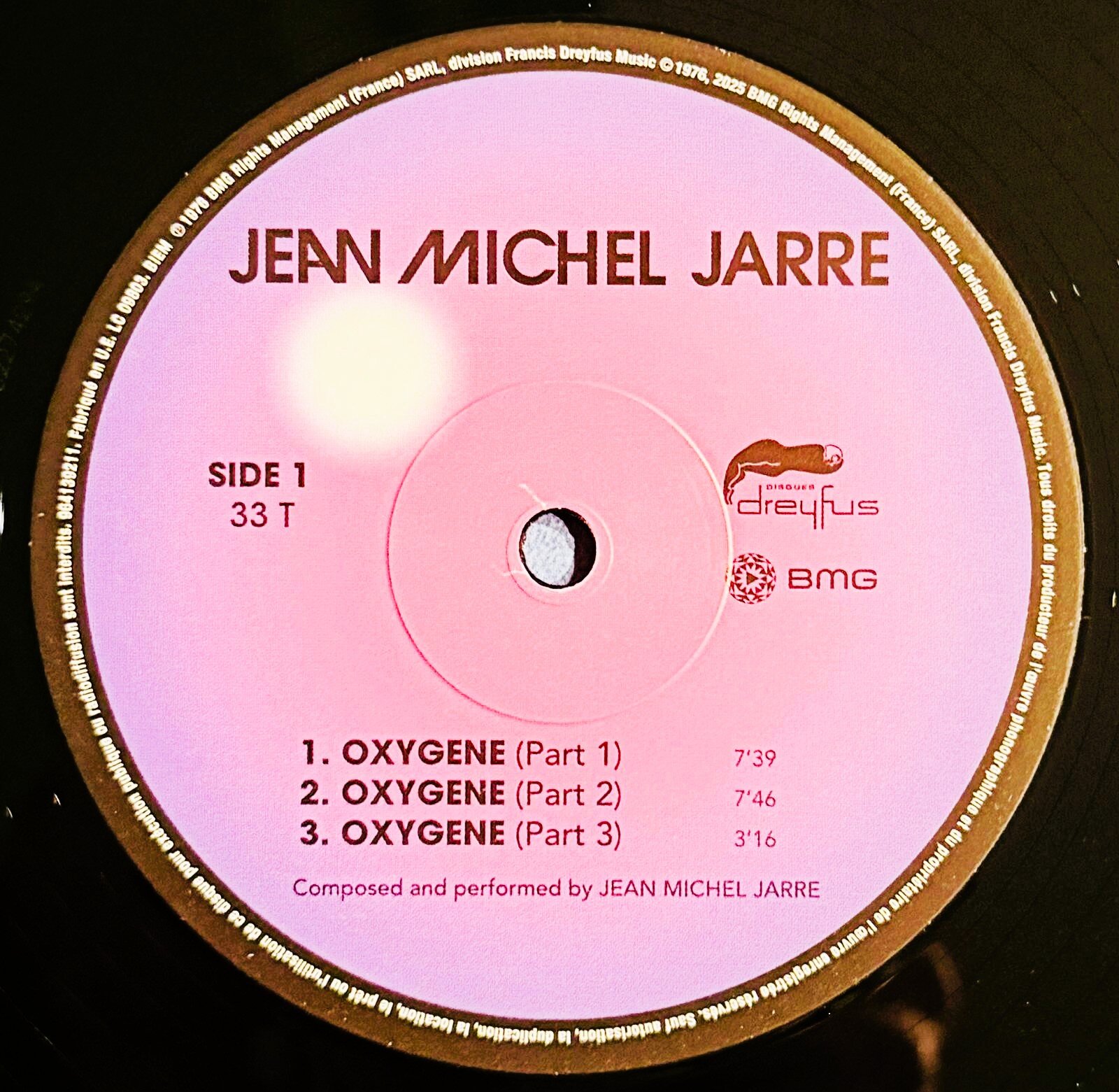
Tracklist
1. Oxygene, Pt. 1 (7:40)
2. Oxygene, Pt. 2 (8:08)
3. Oxygene, Pt. 3 (2:54)
4. Oxygene, Pt. 4 (4:14)
5. Oxygene, Pt. 5 (10:23)
6. Oxygene, Pt. 6 (6:20)
Duration 39:39
LineUp
- Jean Michel Jarre - synthesizers (ARP Omni-2, AKS, VCS-3, RMI Harmonic), Mellotron, Farfisa organ, Eminent, drum programming (Korg Mini-Pops), producer