Three of a Perfect Pair by King Crimson, a 1984 album.
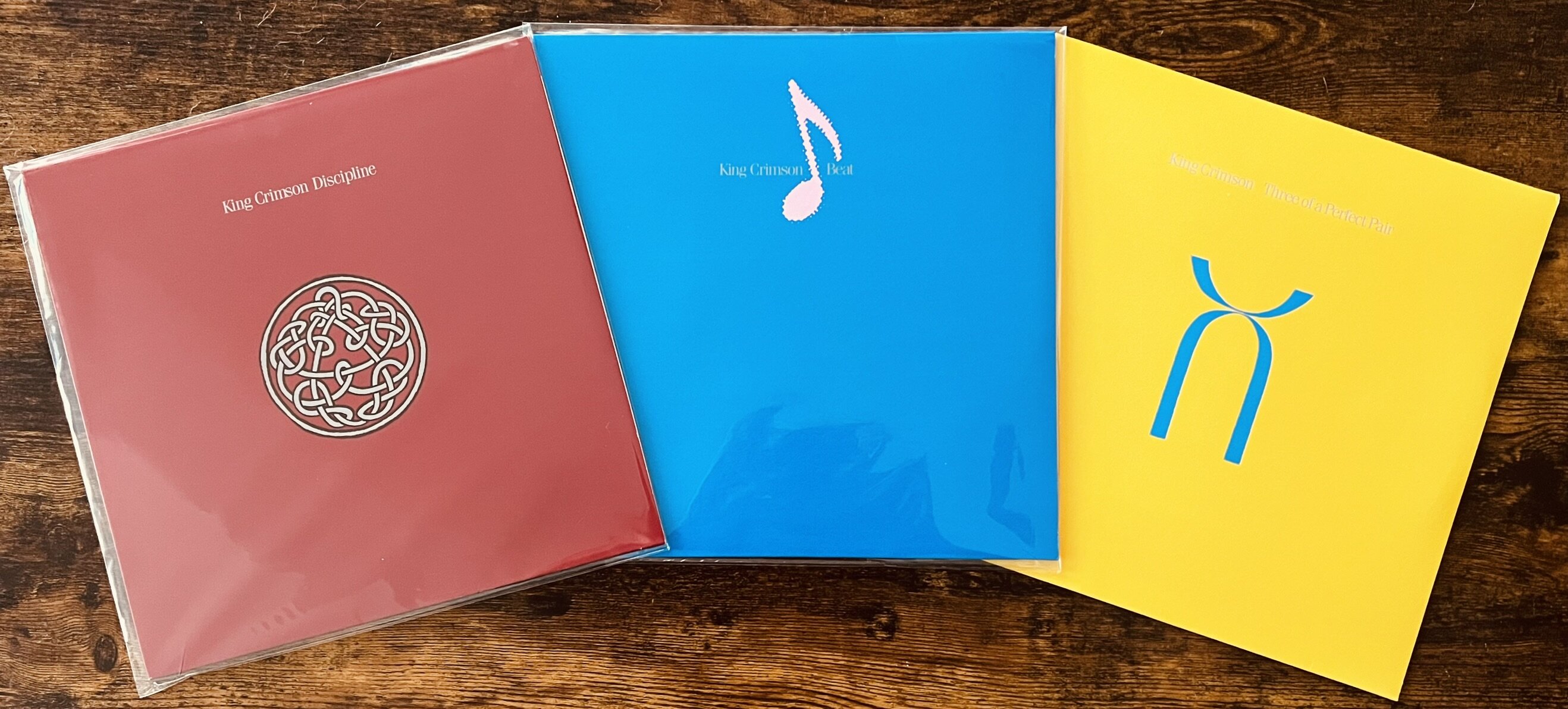
The run-up to the BEAT concert in Perugia on 4 July continues, retracing the story of the three albums that form the basis of the show.
Three of a Perfect Pair, the third and final album of the “trilogy of the ’80s” (which also includes Discipline from 1981 and Beat 1982), the last album recorded by the historic four-piece lineup before a long breakup that lasted a decade.
The lineup combined British experience with the freshness of the American avant-garde scene. Robert Fripp played guitar and used the Frippertronics electronic devices. Adrian Belew, former collaborator of Frank Zappa, David Bowie and Talking Heads, handled lead vocals and guitar. Tony Levin played bass, sang backing vocals and mainly used the Chapman Stick. Bill Bruford, finally, played acoustic and electronic drums, almost without using cymbals.
Making this album was quite an intense adventure, with the disagreements that had emerged during the making of Beat resurfacing in the studio. Bill Bruford described the process as a time when the band had to “get their hands dirty” on the rehearsal-room floor to bring the music to life. Basically, the core of the conflict was finding a balance between the pop, catchy soul driven by Belew’s sensibility, and the avant-garde, mathematical and experimental structures that Fripp loves so much.
To overcome this dualism, Robert Fripp opted to split the vinyl into two clearly distinct sides, both in style and concept:
Side A, or “The Left Side”, features the more direct and easy-listening tracks. The title track “Three of a Perfect Pair”, along with “Model Man” and “Man with an Open Heart”, blends pop rock with new wave, taking cues from Talking Heads. There’s also “Sleepless”, with Tony Levin’s gripping slap-bass line, which even became a pop hit thanks to later remixes.
Side B, or “The Right Side”, is the more intricate and over-the-top part. It opens with the hypnotic, industrial “Nuages”, then dives into noisy avant-garde territory with “Industry” and “Dig Me”. The record closes with “Larks’ Tongues in Aspic (Part III)”, an instrumental piece with extreme odd meters and sharp, metallic guitars.
The Larks’ Tongues in Aspic suite is one of the most interesting instrumental sagas in progressive rock, born in 1973 and developed over thirty years through five parts and four different albums. The idea for this suite came to Robert Fripp in 1972, after disbanding the previous King Crimson lineup, the Islands one, and rebuilding a completely new one. Fripp hired highly talented musicians: bassist and singer John Wetton, drummer Bill Bruford, violinist David Cross and percussionist Jamie Muir. Muir himself coined the title, imagining the music as something delicate (a lark’s tongue) but trapped in a solid form (aspic, a savory gelatin).
The self-titled record, released on March 23, 1973, opened and closed with the first two parts of the suite:
Part One is a complex, experimental track, divided into various movements. It begins with an ethereal sound of percussion and kalimba, then explodes into sharp guitar and violin riffs, alternating total improvisation with obsessive rhythmic structures.
Part Two is more linear, aggressive and powerful. Marked by hard, geometric riffs, it became the suite’s most famous composition and is considered a pillar of progressive rock.
In the following years, the suite was revisited in the band’s different lineups:
Part Three (1984), included right on the album Three of a Perfect Pair, while keeping the original DNA, adapts it to the new new-wave sonics and the circular guitar interlocks of the ’80s.
Part IV (2000), split into three subsections on the album The Construction of Light, features the fragmented, electronic and dark sonics typical of the lineup called the “Double Trio”.
The saga officially ended (even if the title changed for stylistic reasons) with the track Level Five, included on the album The Power to Believe. Even though it isn’t called Larks’ Tongues in Aspic, Robert Fripp has always considered it Part Five, a brutal, modern piece that ideally closes the circle opened thirty years earlier.
The complete suite has never been played live as one long performance, but its various parts have often been performed on different tours, becoming true reference points in the band’s discography.
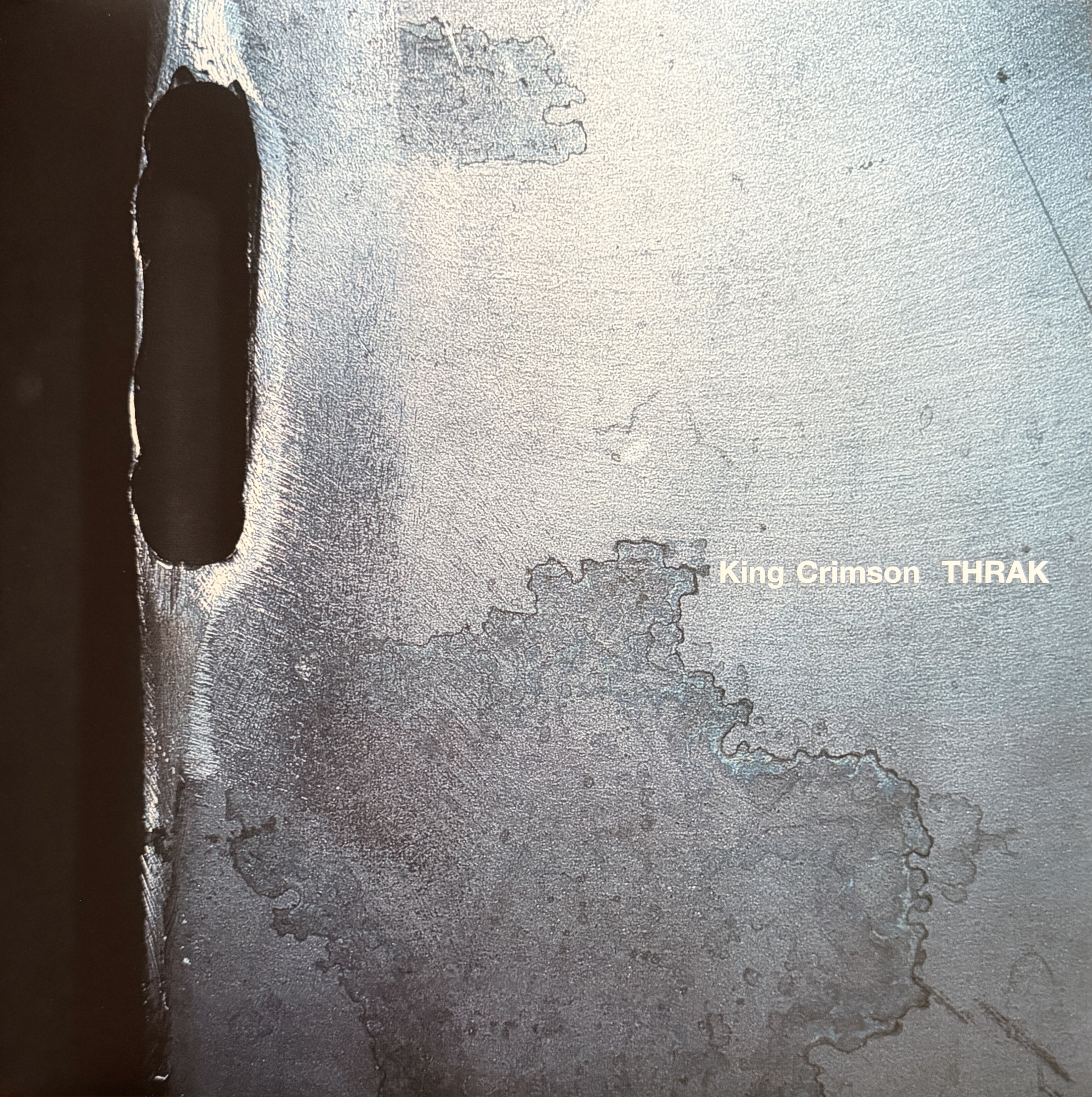
As soon as the album came out, King Crimson launched into a promotional tour that took them to Japan, the United States and Canada. After the final date in July 1984, Robert Fripp decided to break up the band again, so the members could devote themselves to their solo projects. This recording silence lasted until 1994, when the same lineup reunited, becoming the “Double Trio” for the album THRAK.
Three of a Perfect Pair is an album that blends the geometric tension of New Wave with the unbridled improvisation of Progressive Rock. The title itself, speaking of an “balance between opposites”, gives us an idea of what to expect: a “pair” made of three elements, a bit like a perfect triangle. This duality is also felt in the record’s structure, split into two clearly distinct sides. The Left Side is all light, order and commercial accessibility, while the Right Side takes us into darkness, chaos and industrial experimentation.
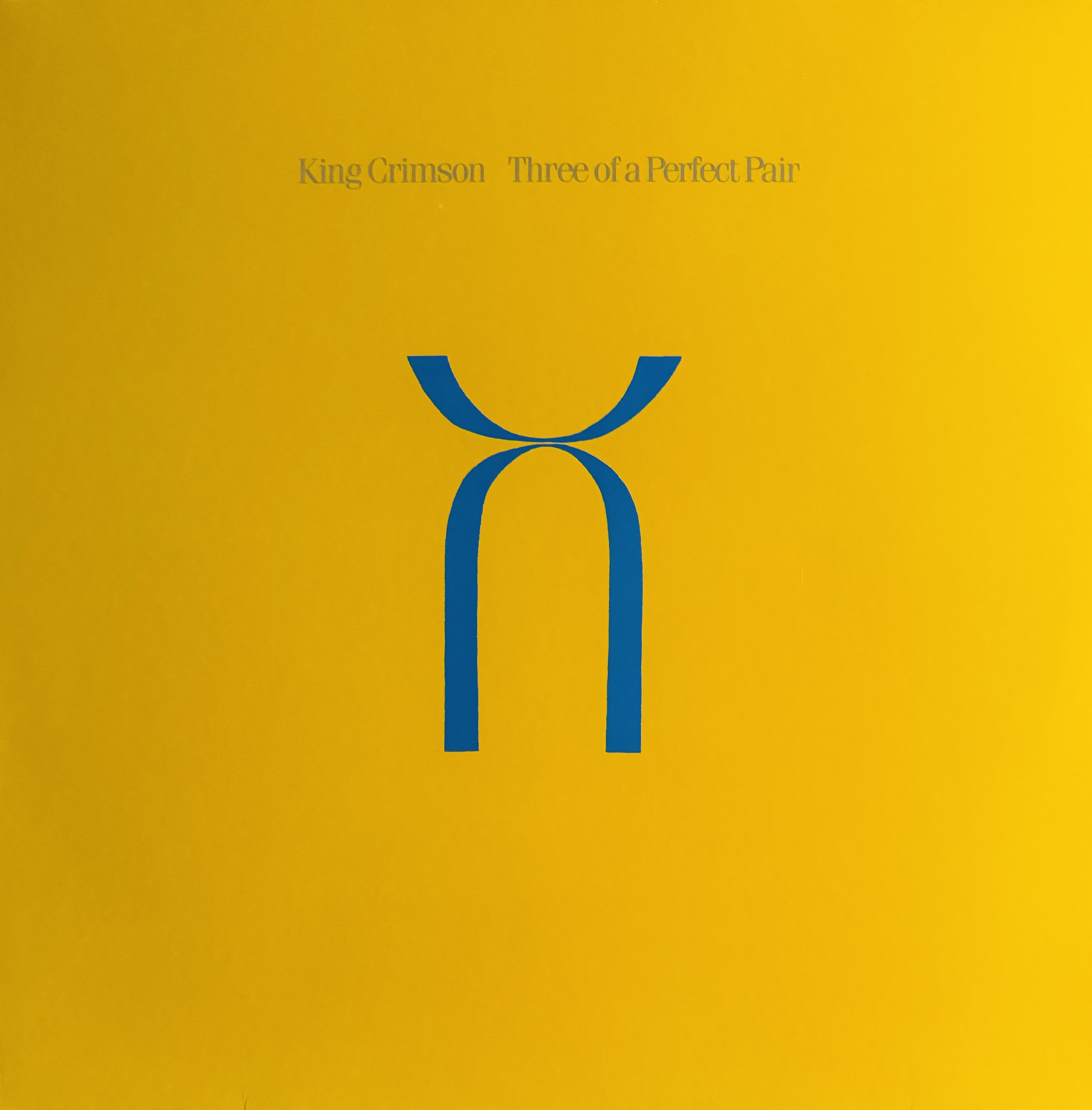
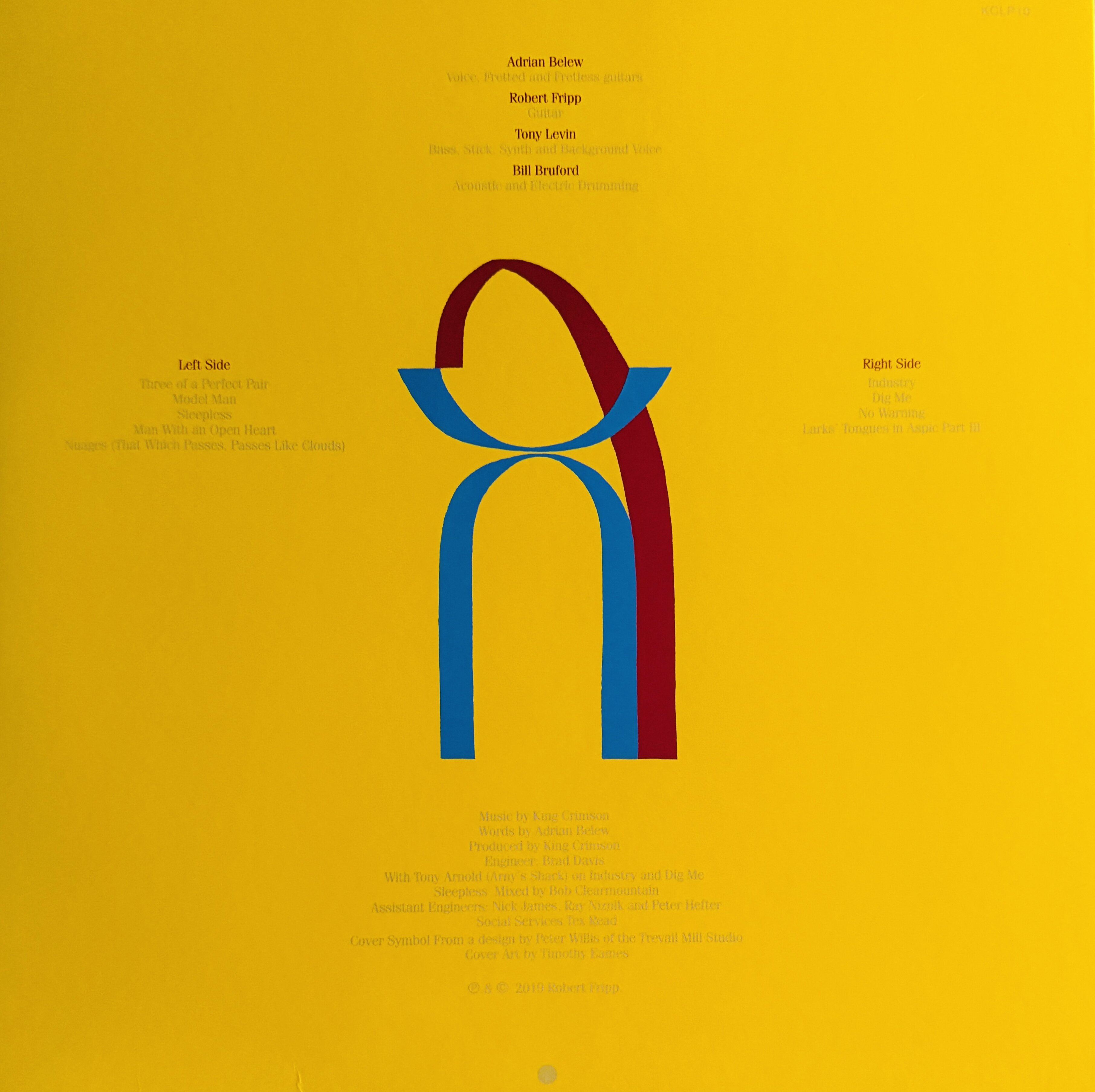
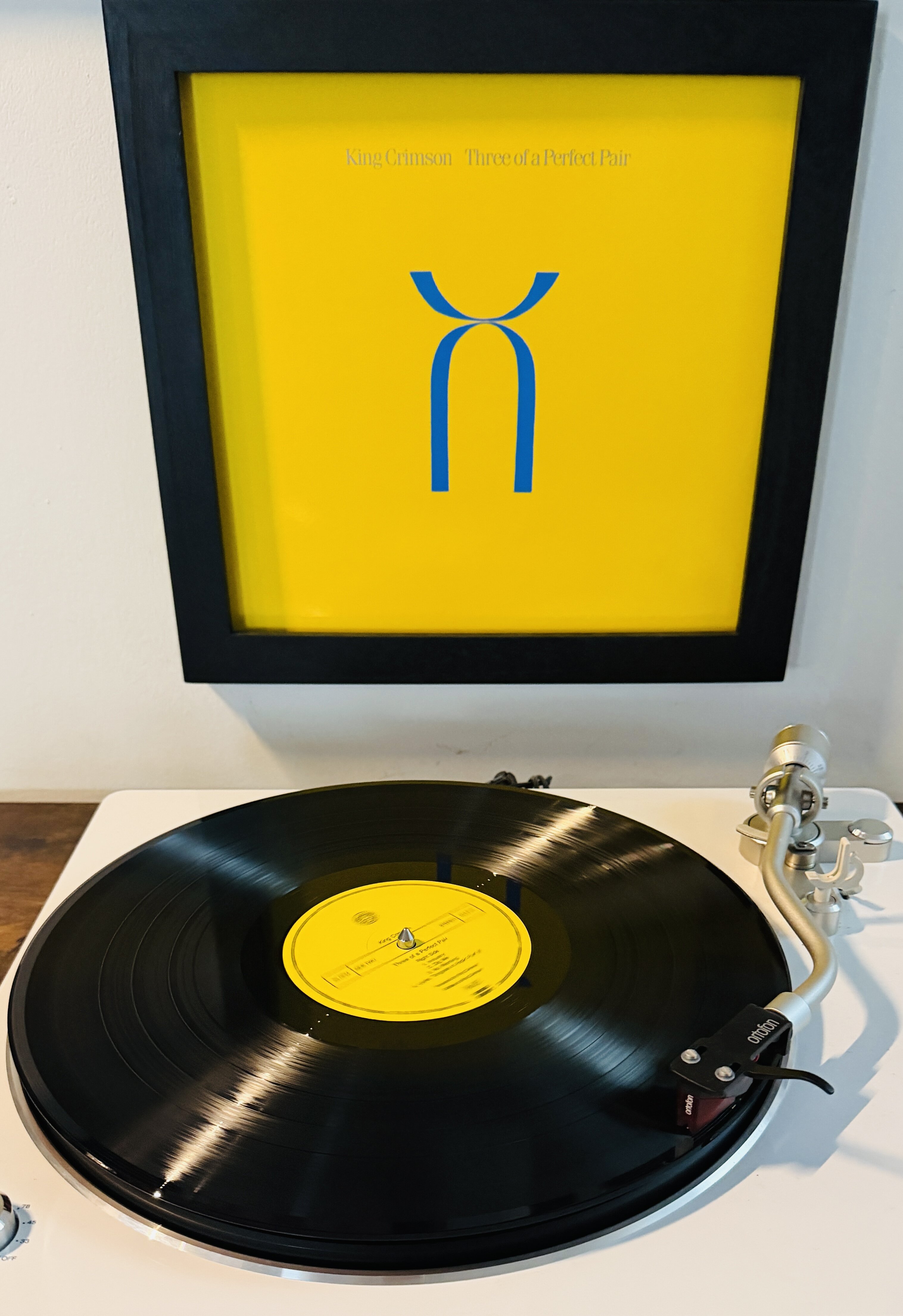
The cover, better than Beat’s anonymous one but never as beautiful as the unreachable Discipline, is a masterpiece in capturing the spirit of the record: two separate geometric shapes that merge into a third sacred object, symbol of the impossible union between these two very different souls.
Musically, the album is a journey through different sounds, pushing to the extreme the elements we already knew from the two previous works.
Robert Fripp and Adrian Belew outdo themselves with the guitar frippertronics technique, creating intricate, clean interlocking guitar parts that recall Steve Reich’s minimalism, but in a rock version.
Side B, instead, takes you into a darker, more experimental world, anticipating sounds that would later explode in industrial rock.
I have the 200-gram 2019 vinyl reissue (KCLP10), pressed from the “30th Anniversary Series” masters approved directly by Robert Fripp.
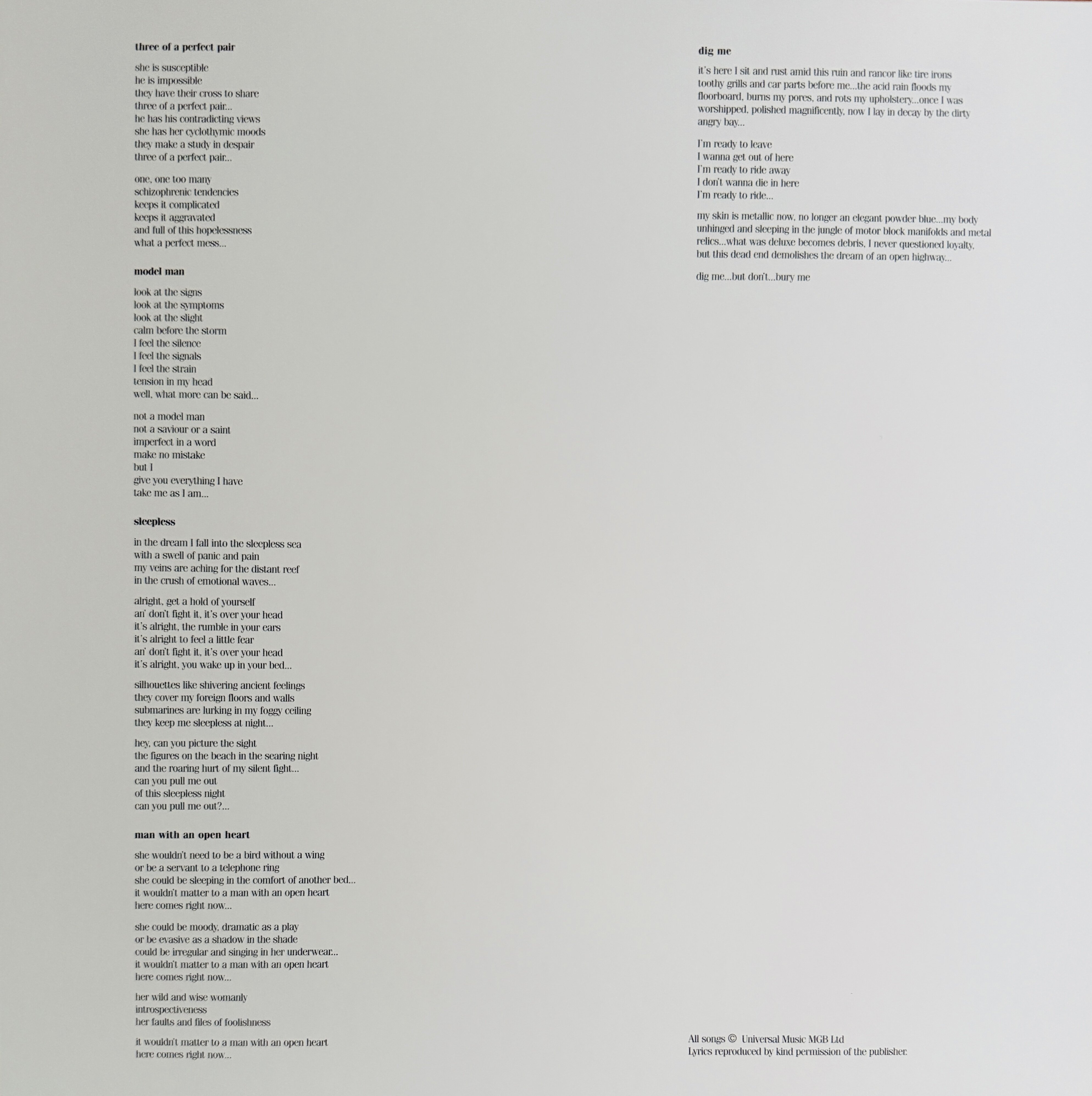
“Three of a Perfect Pair” is a track that blends new wave, pop and intricate sound geometries. The chorus, surprisingly melodic for Crimson, creates an intriguing, slightly off-kilter atmosphere. The asymmetric interlock between the guitars and the chorus’s circular riff are really spot on, and Adrian Belew’s vocal performance is charismatic and expressive, with support from Robert Fripp’s clean notes.
“Model Man” is the album’s most pop and radio-friendly piece, a rock ballad with a refined harmony. The contrast between the tense verses and the liberating chorus is exactly what makes it special. Bill Bruford keeps time with a solid, precise groove, while Tony Levin adds a deep, enveloping bass.
“Sleepless” is a real gem of the ’80s trilogy, a burst of energy for alternative dance floors, full of tension and adrenaline. The opening with the bass and the driving beat are the highlights. Tony Levin is the star with an iconic slap-bass line, played with drumsticks, followed by Bill Bruford with his Simmons electronic percussion.
“Man with an Open Heart” is a light, carefree track, with an exotic touch that recalls the world music of Peter Gabriel and Talking Heads. The floating sound textures of the guitar synths are really beautiful. Adrian Belew uses the guitar-synth to create Eastern sounds, while Robert Fripp adds sharp guitar accents.
“Nuages (That Which Passes, Passes Like Clouds)” is an ambient, cinematic and hypnotic instrumental track that makes you picture black clouds moving across the sky. The rarefied atmosphere and the absence of a rigid beat are its strengths. Robert Fripp lays down his sound drones, while Tony Levin experiments with the Chapman Stick.
“Industry” is an intense instrumental suite that depicts an alienating assembly line with distorted, gloomy sounds. The slow, unsettling dynamic build is its strong point. Bill Bruford simulates the noises of industrial machinery, while Tony Levin produces very low, menacing notes.
“Dig Me” is a really peculiar song that starts with a verse full of chaotic sounds, then turns into a cheerful, choral pop chorus, before returning to the initial chaos. The sudden shift between verse and chorus is exactly what makes it special. Adrian Belew portrays an abandoned car with a funny lyric and plays guitar in an energetic, experimental way, while Robert Fripp coordinates this whole mix of sounds.
“No Warning” is a piece born from improvisation; it doesn’t follow a precise melody and isn’t meant to be a commercial hit. Its strengths are the sudden volume changes and the unpredictability of the sounds. The whole band works together in perfect harmony, exploring the limits of their electronic instruments.
“Larks’ Tongues in Aspic [Part III]” closes the album and the trilogy, updating the instrumental saga of the ’70s to the sound of the ’80s. Its strengths are the fast riffs and the unusual time changes. Robert Fripp delivers a powerful, exciting guitar performance, while Bill Bruford shows his incredible jazz-prog polyrhythmic technique, ending the album in spectacular fashion.
Within the trilogy, this third album is the most daring and fragmented work, but also the bravest. If the whole trilogy represents the perfect fusion between progressive’s mathematical precision and New Wave energy, this chapter takes its premises to their extreme consequences, marking the end of an era.
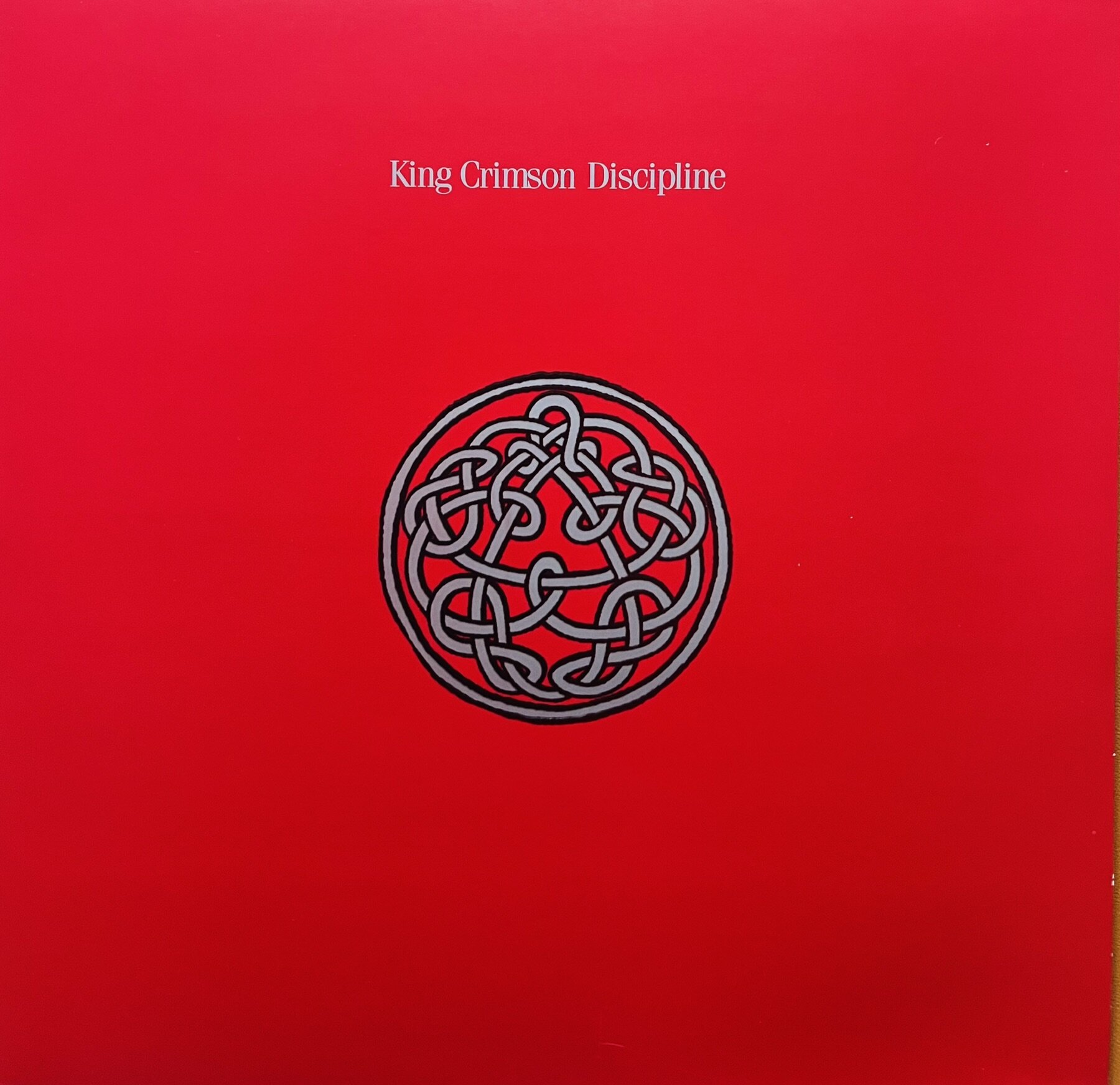
Discipline (1981) remains the unreachable masterpiece, a true cultural earthquake. It presented a regenerated, fresh and innovative band, with a geometric, revolutionary sound based on the millimetric interlocks between Fripp and Belew’s guitars. It was an incredibly balanced album, where every track was a little gem.
Three of a Perfect Pair doesn’t have the same tightness as Discipline. If the 1981 record fused pop and experimental music in every single song, the 1984 chapter sharply separates the two souls across the two sides of the vinyl. Discipline remains superior in historical importance and flow, but Three of a Perfect Pair dares much more on the front of pure noise and the avant-garde.
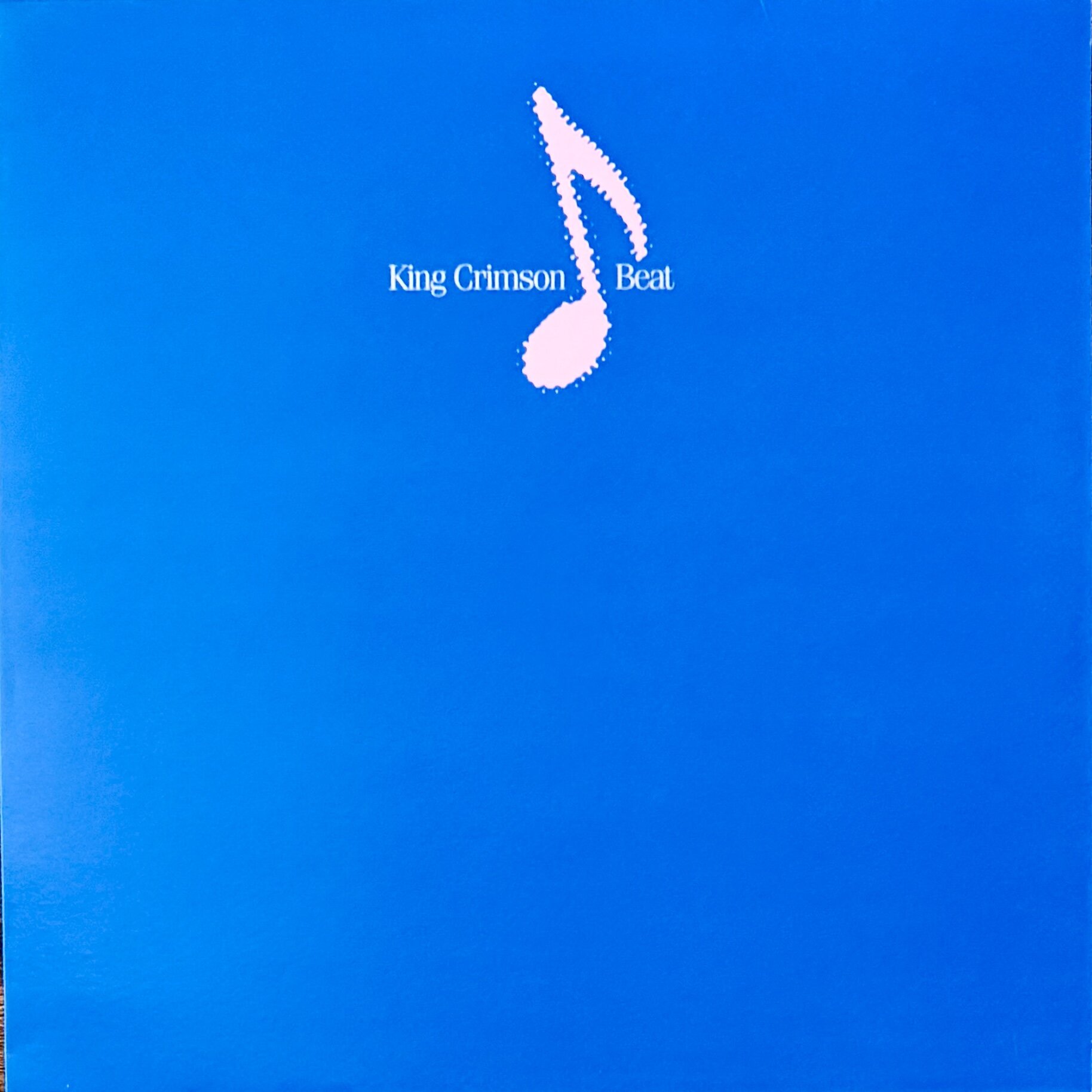
Beat (1982) is instead the pop and conceptual soul of the trilogy, a much more accessible album, dominated by the song form and by Adrian Belew’s artistic leadership, who had smoothed its edges in favor of more radio-friendly and romantic atmospheres (as in Heartbeat). Fripp, at the time, felt almost like a “session man” in his own band.
Compared to Beat, Three of a Perfect Pair wins for courage and sonic power. If Side A of Three continues Beat’s pop trail (but with more bite, thanks to a heavy hitter like Sleepless), Side B completely destroys any commercial concession. Compared to Beat’s partial shyness, the 1984 record scratches much harder and reasserts Robert Fripp’s control over the band’s coordinates.
“Three of a Perfect Pair” remains without a doubt a key album for understanding King Crimson’s evolution in the ’80s. It’s the record of a band that, even while going through a period of crisis and division (hence the split into Left Side and Right Side), manages to turn internal tensions into a creative drive.
Side A shows that King Crimson could be modern, catchy and even danceable, without ever giving up their musical intelligence.
Side B, instead, is a true precursor: it anticipates industrial rock, noise and the fragmented structures of modern math-rock by almost ten years, reaching the power of “Larks’ Tongues in Aspic (Part III)”.
In the trilogy, “Three of a Perfect Pair” sits in my personal ranking between “Discipline” and “Beat”, essential to understand how King Crimson redefined avant-garde rock before taking a long break. Excellent!
My Version
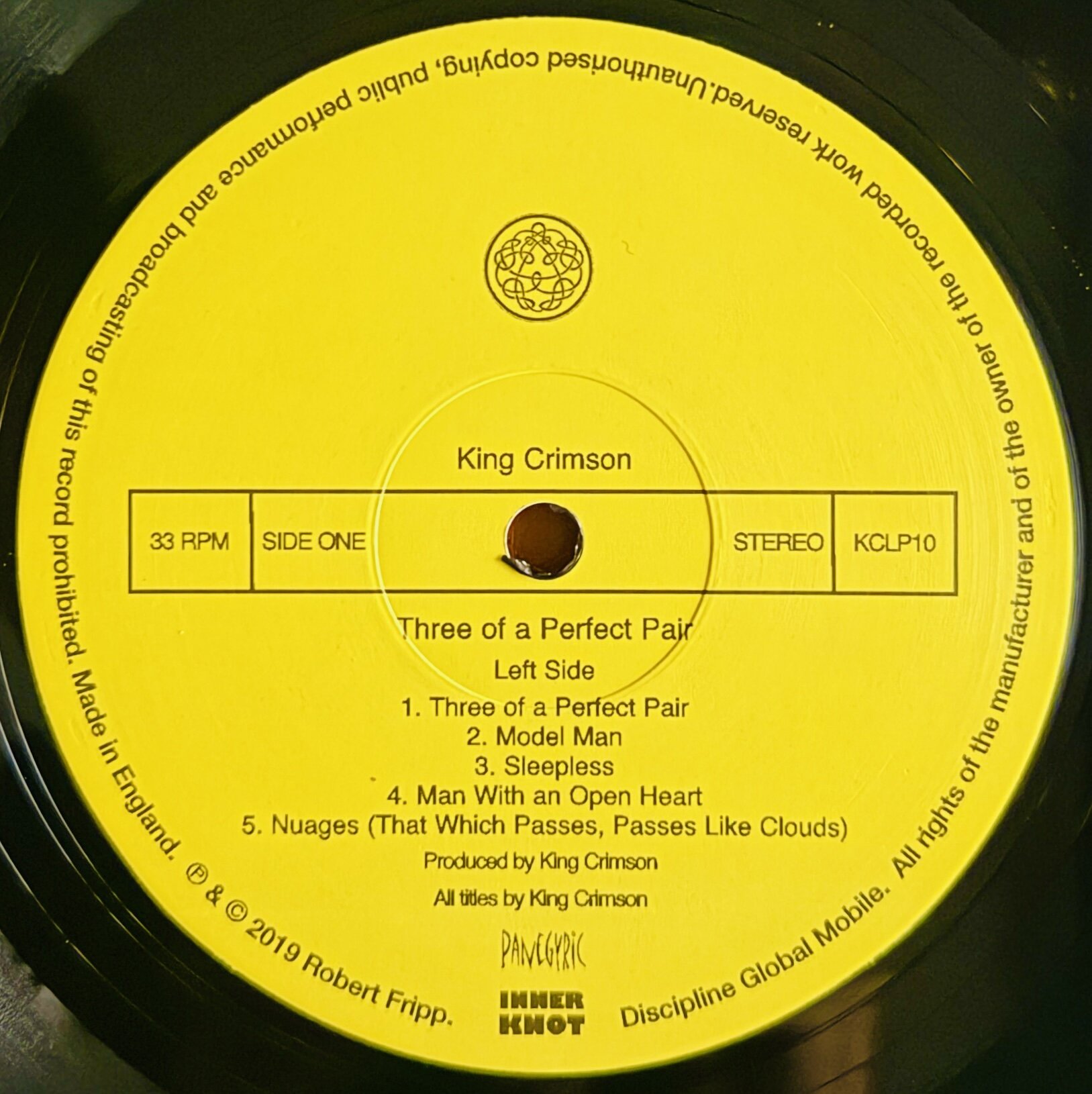
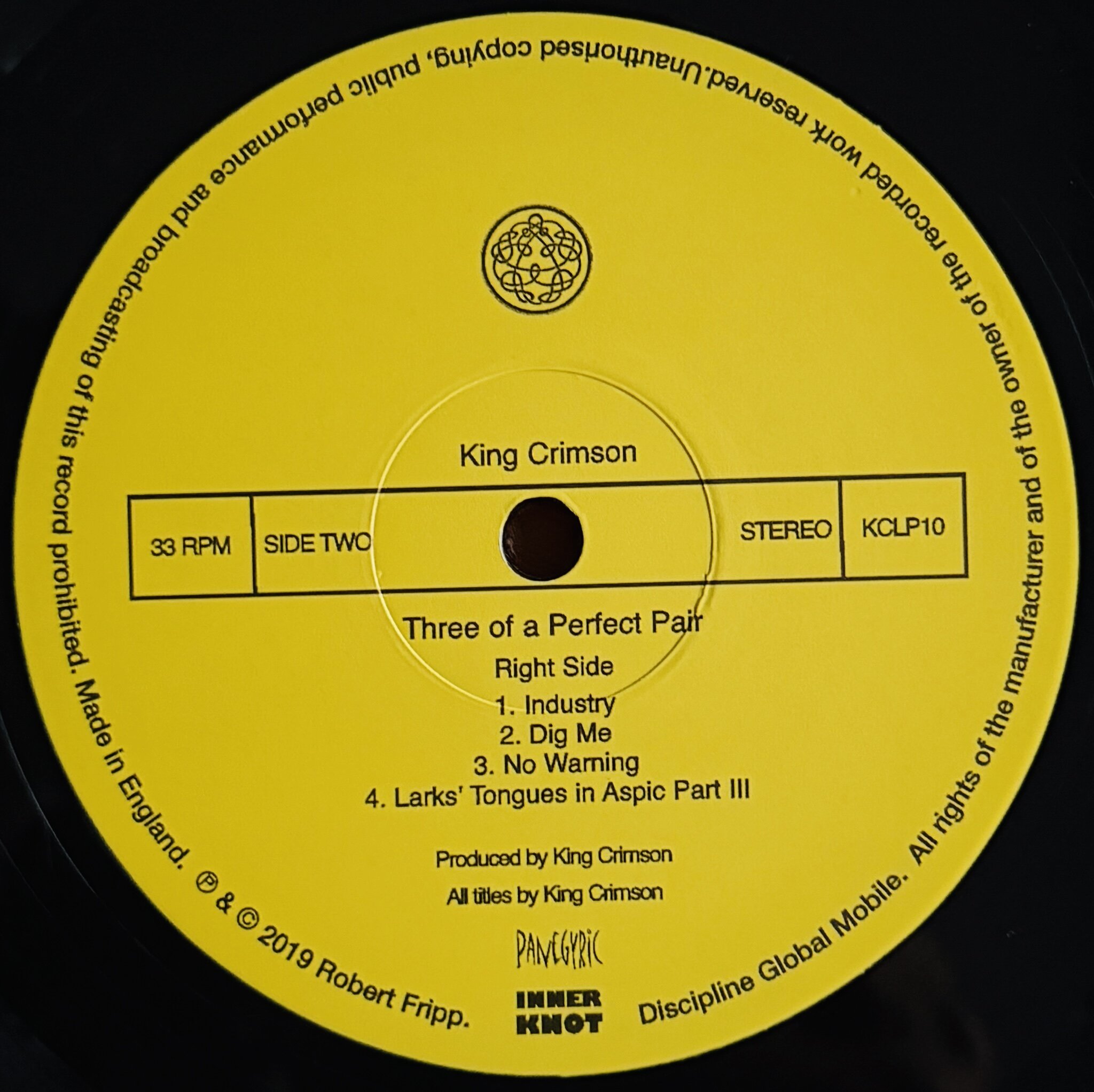
Label: Discipline Global Mobile – KCLP10, Panegyric – KCLP10, Inner Knot – KCLP10
Format: Vinyl, LP, Album, Reissue, Remastered, Stereo, 200 Gram
Country: UK & US
Released: 28 Jun 2019
Tracklist
Left Side
A1 Three Of A Perfect Pair 4:11
A2 Model Man 3:56
A3 Sleepless 3:16
A4 Man With An Open Heart 3:00
A5 Nuages (That Which Passes, Passes Like Clouds) 4:42
Right Side
B1 Industry 7:22
B2 Dig Me 2:59
B3 No Warning 3:28
B4 Larks' Tongues In Aspic Part III 6:01
LineUp
Bass, Chapman Stick [Stick], Synth, Backing Vocals [Background Voice] – Tony Levin
Drums [Acoustic Drumming], Drums [Electric Drumming] – Bill Bruford
Guitar – Robert Fripp
Voice, Guitar [Fretted Guitar], Fretless Guitar, Words By – Adrian Belew

Note: All links to the musicians’ works are in the TAGS under the article title or on the "Artists"