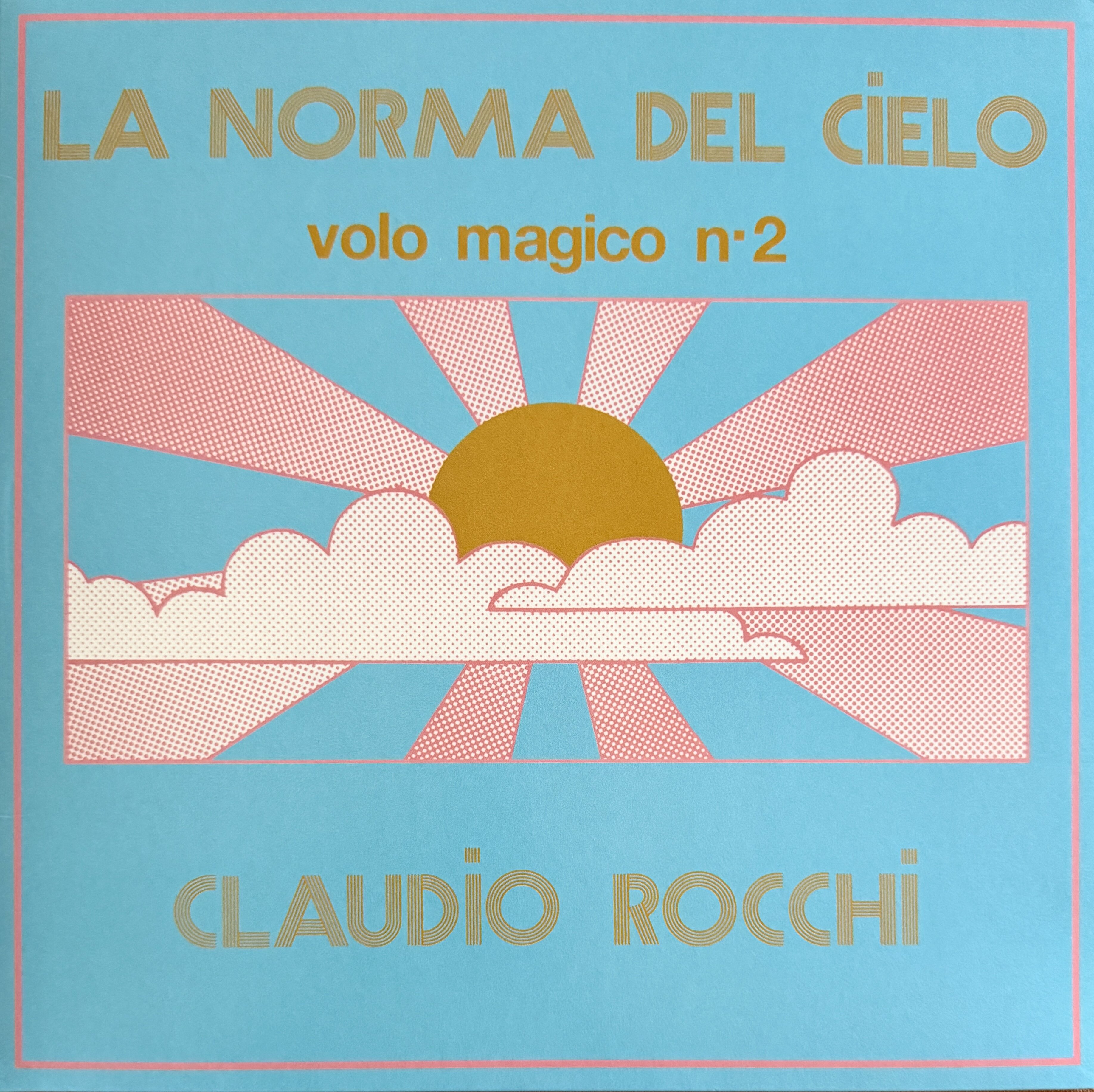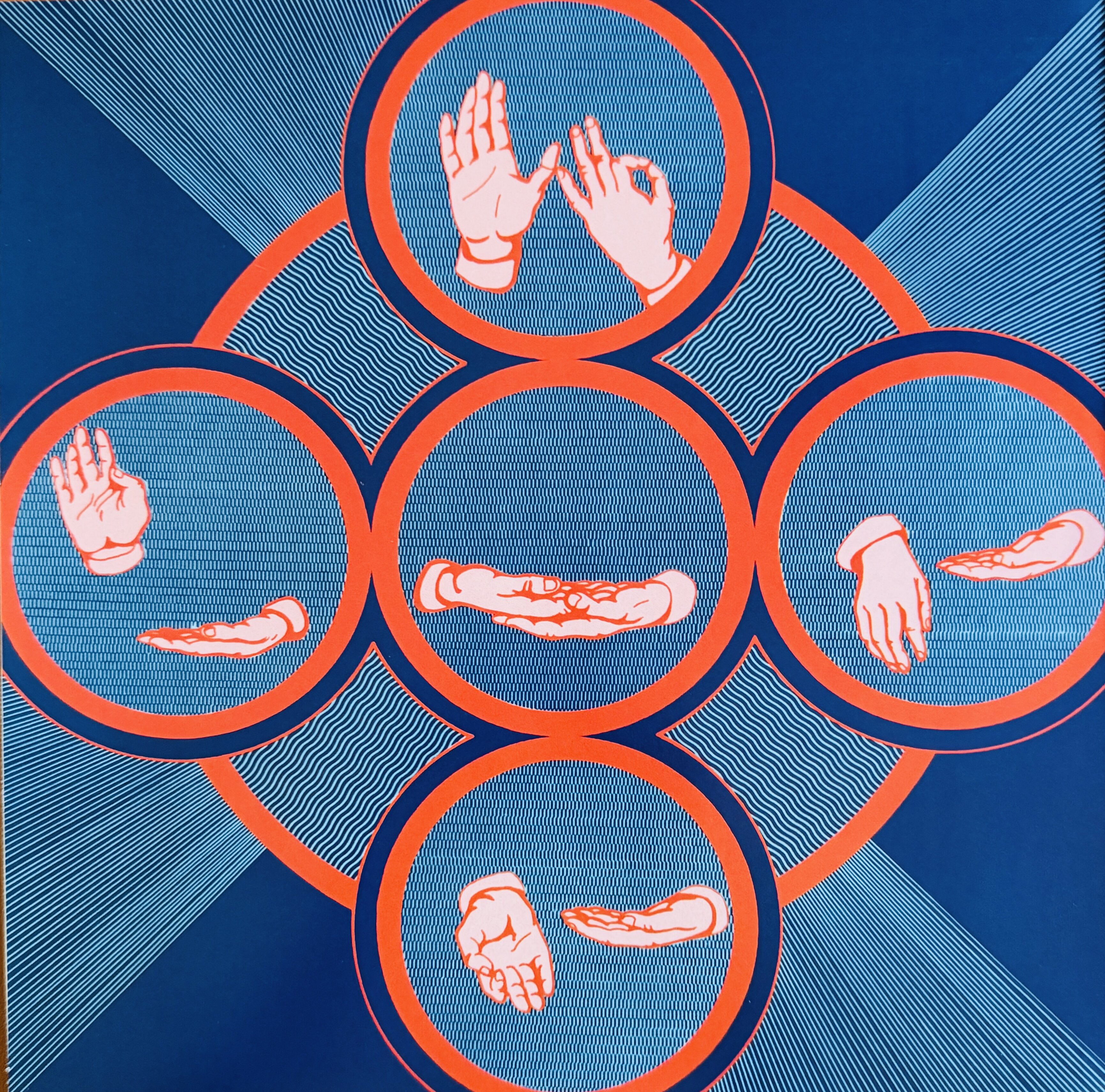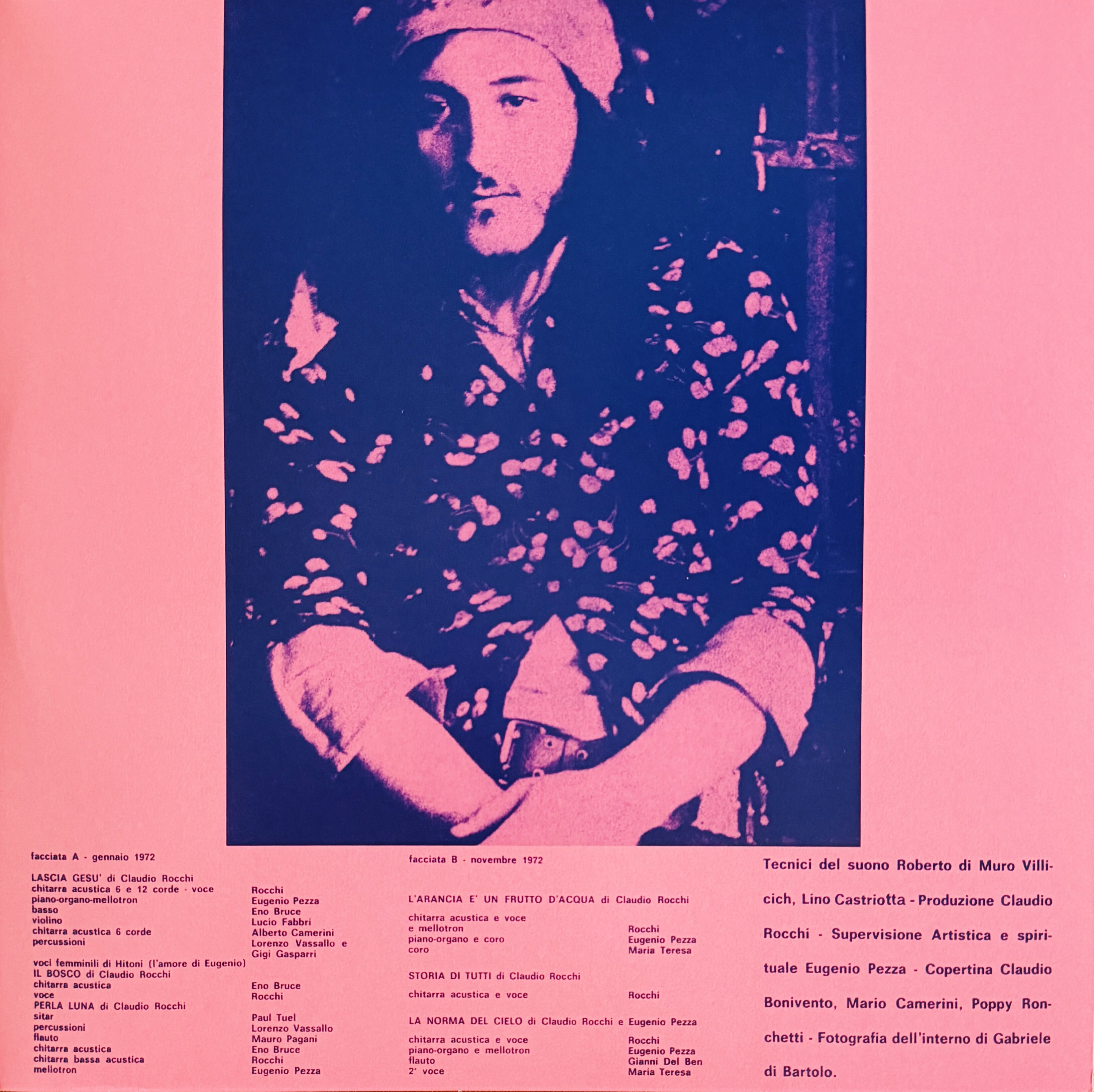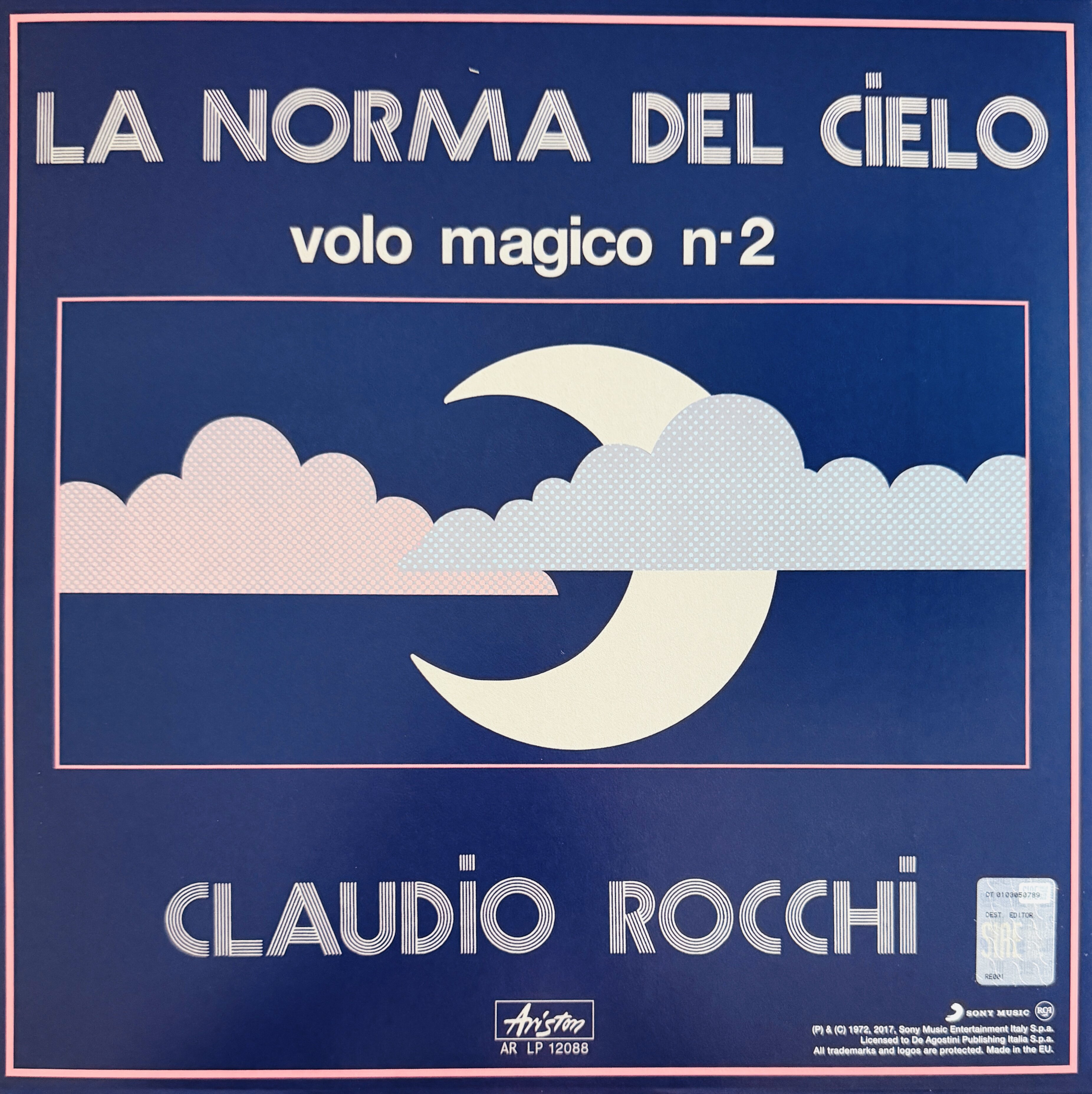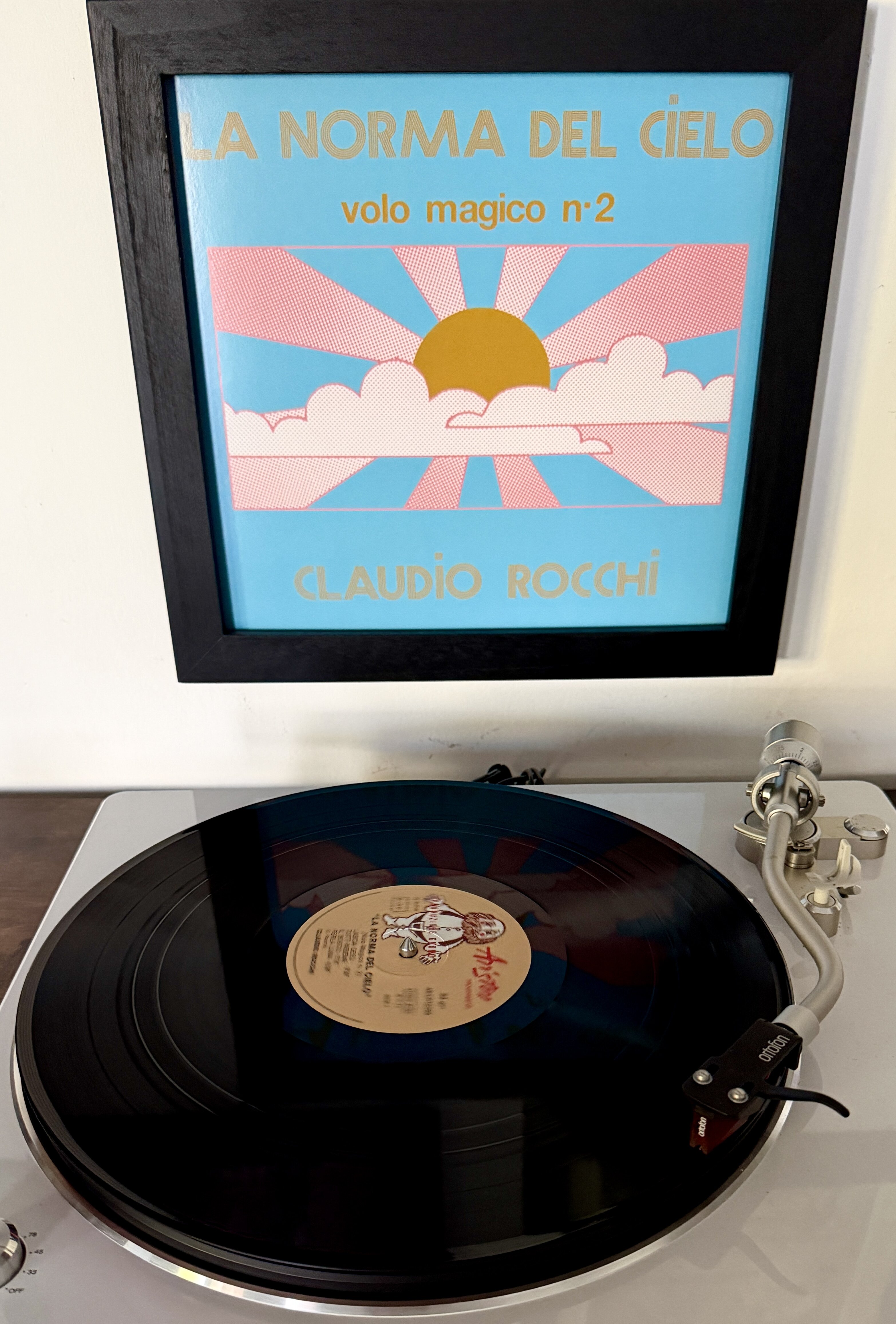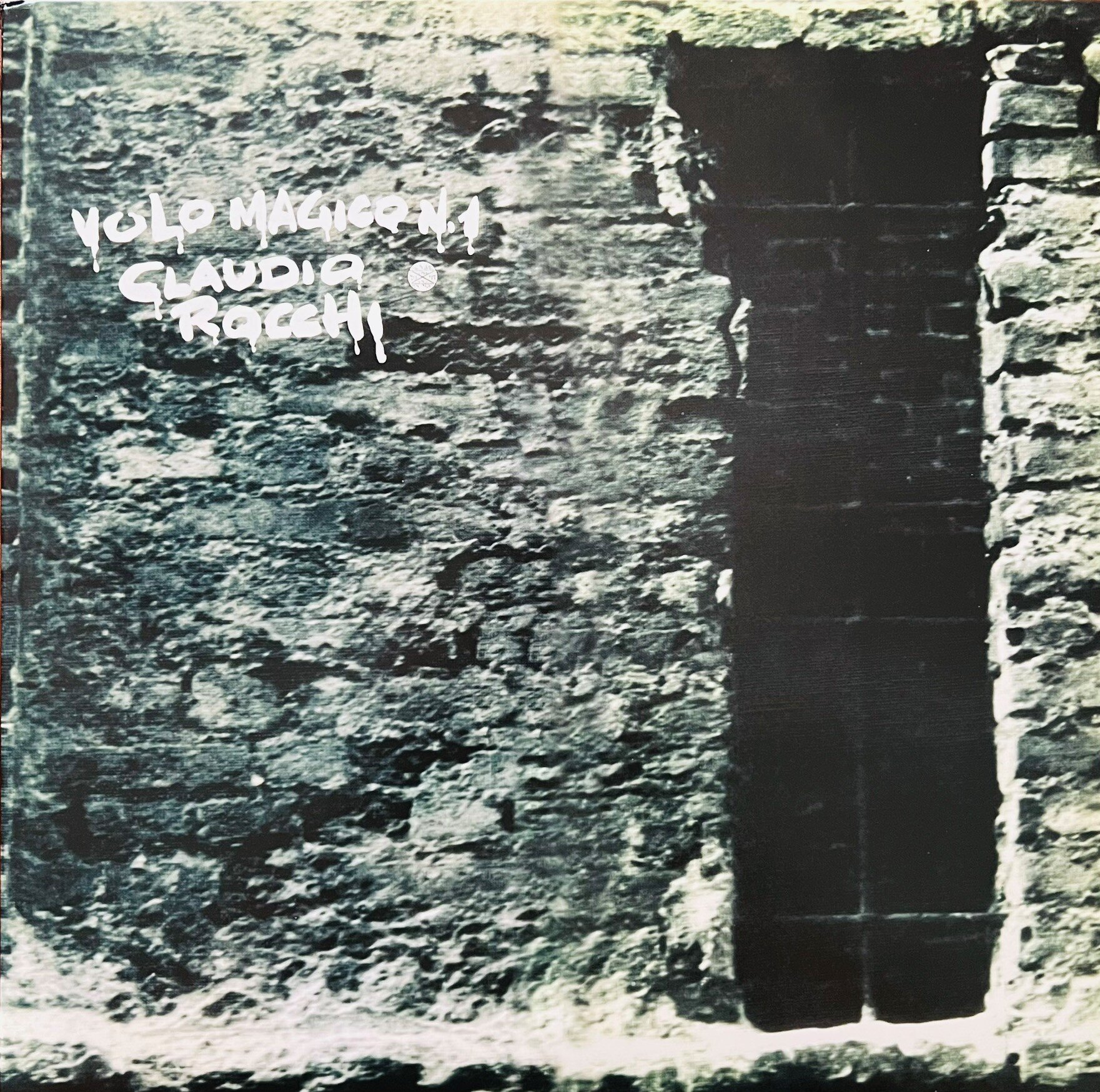

La Norma del Cielo (Volo Magico N. 2) di Claudio Rocchi, pubblicato nel 1972.
Questo album rappresenta una delle pagine più affascinanti e spirituali del pop d’avanguardia e del rock progressivo italiano degli anni ’70. La sua storia è strettamente legata a quella del suo celebre predecessore, “Volo magico n. 1” (1971).
Claudio Rocchi, inizialmente, aveva pensato a un unico, ambizioso album doppio. Purtroppo, a causa delle resistenze e delle logiche commerciali della Ariston, il progetto fu respinto. L’etichetta discografica decise quindi di dividere il materiale in due parti: la prima uscì alla fine del 1971 come “Volo magico n. 1”. Le tracce rimanenti, registrate nelle stesse sessioni e con gli stessi musicisti, furono pubblicate all’inizio del 1972 con il titolo “La Norma Del Cielo”, accompagnato dal sottotitolo “Volo Magico N. 2” per cavalcare l’onda del successo del primo album.
I musicisti che hanno partecipato alle registrazioni sono fra i massimi esponenti del rock progressivo, della psichedelia e del pop d’autore italiano di quegli anni. Molti di loro erano membri o futuri fondatori di band leggendarie.
Claudio Rocchi (Voce, Chitarre, Basso) è stato il bassista originale e co-fondatore degli Stormy Six, una delle band più importanti del rock progressivo e del movimento Rock in Opposition italiano. Ha suonato nel loro album d’esordio del 1969, “Le idee di oggi per la musica di domani”, prima di intraprendere la carriera solista.
Mauro Pagani (Flauto), membro storico e polistrumentista della PFM (Premiata Forneria Marconi), la band progressive italiana più famosa al mondo. Ha contribuito a ridefinire il suono della musica d’autore italiana collaborando per anni a stretto contatto con Fabrizio De André, co-scrivendo capolavori come “Crêuza de mä”.
Alberto Camerini (Chitarra a 6 e 12 corde), prima di diventare il celebre “Arlecchino” del synth-pop italiano anni ’80 (con hit come “Rock ’n’ Roll Robot”), Camerini era un virtuoso della chitarra acustica nell’underground milanese. Ha suonato negli Il Pacco (band formata insieme a Donatella Rettore e a un giovane Eugenio Finardi) e nella Cinzia Fontana Band.
Lucio Fabbri (Violino), è entrato successivamente nella PFM (Premiata Forneria Marconi) alla fine degli anni ’70 per sostituire Mauro Pagani. Ha suonato anche nei Finardi Band (la band di supporto di Eugenio Finardi).
Eugenio Pezza (Tastiere, Pianoforte, Organo, Mellotron), storico session man e tastierista d’avanguardia. Oltre ad essere il braccio destro musicale di Claudio Rocchi in quegli anni, ha lavorato in studio e dal vivo con grandi nomi come Eugenio Finardi e Alberto Camerini.
Lorenzo Vassallo (Batteria e Percussioni), batterista jazz-rock molto attivo nella scena milanese. Ha suonato nei primi dischi solisti di Claudio Rocchi e ha collaborato a lungo con gli Stormy Six e con l’Orchestra di musica leggera della RAI.
Eno Bruce (Chitarra acustica e Basso), musicista e arrangiatore di estrazione folk-rock. È stato una presenza costante nei primi anni della carriera solista di Rocchi, fornendo quel tappeto acustico e acido tipico del periodo.
La Norma Del Cielo è un disco che parla di ricerca spirituale, illuminazione interiore e di come l’uomo possa connettersi con l’universo, un manifesto della cultura hippy e mistica italiana dei primi anni ’70. Il titolo stesso, “Norma del Cielo”, non è una regola che vera e propria, ma l’ordine naturale e cosmico delle cose, un po’ come il Tao o il Dharma. Secondo Rocchi, soffriamo perché ci siamo allontanati da questa armonia. Lo scopo della vita, e della sua musica, è ritrovare il nostro posto in questo flusso perfetto.
In “Lascia Gesù”, Rocchi dice qualcosa di forte per l’Italia cattolica di allora. Non critica Gesù, ma invita a liberarsi dalle regole della religione istituzionale e dogmatica. Dice di cercare una spiritualità viva, personale, senza sensi di colpa, legata all’amore universale e alla natura.
In canzoni come “Tutti insieme” e “Storia di tutti”, parla di collettività e condivisione. La trasformazione non è solo per uno, ma per tutta una generazione. La musica psichedelica e i suoni ipnotici e dilatati (come il sitar e il mellotron) servono a cambiare e allargare la coscienza, portando l’ascoltatore alla meditazione e alla pace interiore.
La natura non è solo un contorno, ma una divinità presente. In pezzi come “Il bosco” e “L’arancia è un frutto d’acqua”, Rocchi celebra gli elementi fondamentali. Dice che l’uomo deve togliersi la tecnologia e la città di dosso per tornare alla purezza della terra, dei frutti e del silenzio.
Un album con un sound unico, un mix di avanguardia, psichedelia e minimalismo. A differenza del rock progressivo italiano della stessa epoca, che spesso puntava su sonorità sinfoniche, potenti e barocche (come PFM o Banco del Mutuo Soccorso), Rocchi opta per un approccio più intimo, ipnotico ed esotico.
La chitarra acustica, a 6 e 12 corde, è il cuore dei brani. Su questa base folk si sovrappongono effetti sonori, riverberi e delay che creano un’atmosfera onirica, tipica della psichedelia ma reinterpretata in chiave milanese e mediterranea.
L’influenza della musica classica indiana è evidente in tutto l’album. Accordature aperte di chitarra e l’intreccio tra il flauto traverso di Mauro Pagani e il violino di Lucio Fabbri richiamano la struttura dei raga indiani, con tappeti sonori continui che favoriscono la meditazione e ritmi circolari e ripetitivi che aumentano gradualmente di intensità.
Rocchi sfrutta lo studio di registrazione come uno strumento musicale a tutti gli effetti. L’uso pionieristico del Mellotron (suonato da Eugenio Pezza) crea archi spettrali e atmosfere fluttuanti.
Il canto di Rocchi non punta al virtuosismo o alla potenza tipica del rock. È recitato, sussurrato, quasi confidenziale. Le linee vocali spesso si ripetono, trasformando i testi in mantra laici pensati per indurre uno stato di trans o di profondo rilassamento.
Pensato come la continuazione di “Volo Magico N. 1”, l’album vanta la partecipazione di artisti che hanno saputo creare un mix unico e coinvolgente. Il basso di Rocchi, chitarre acustiche ed elettriche che sembrano sospese nel sogno, percussioni etniche che aggiungono un tocco di esotismo e le prime tastiere progressive che spalancano le porte a un mondo di suoni nuovi ne fanno un vero Capolavoro.
La Mia Versione
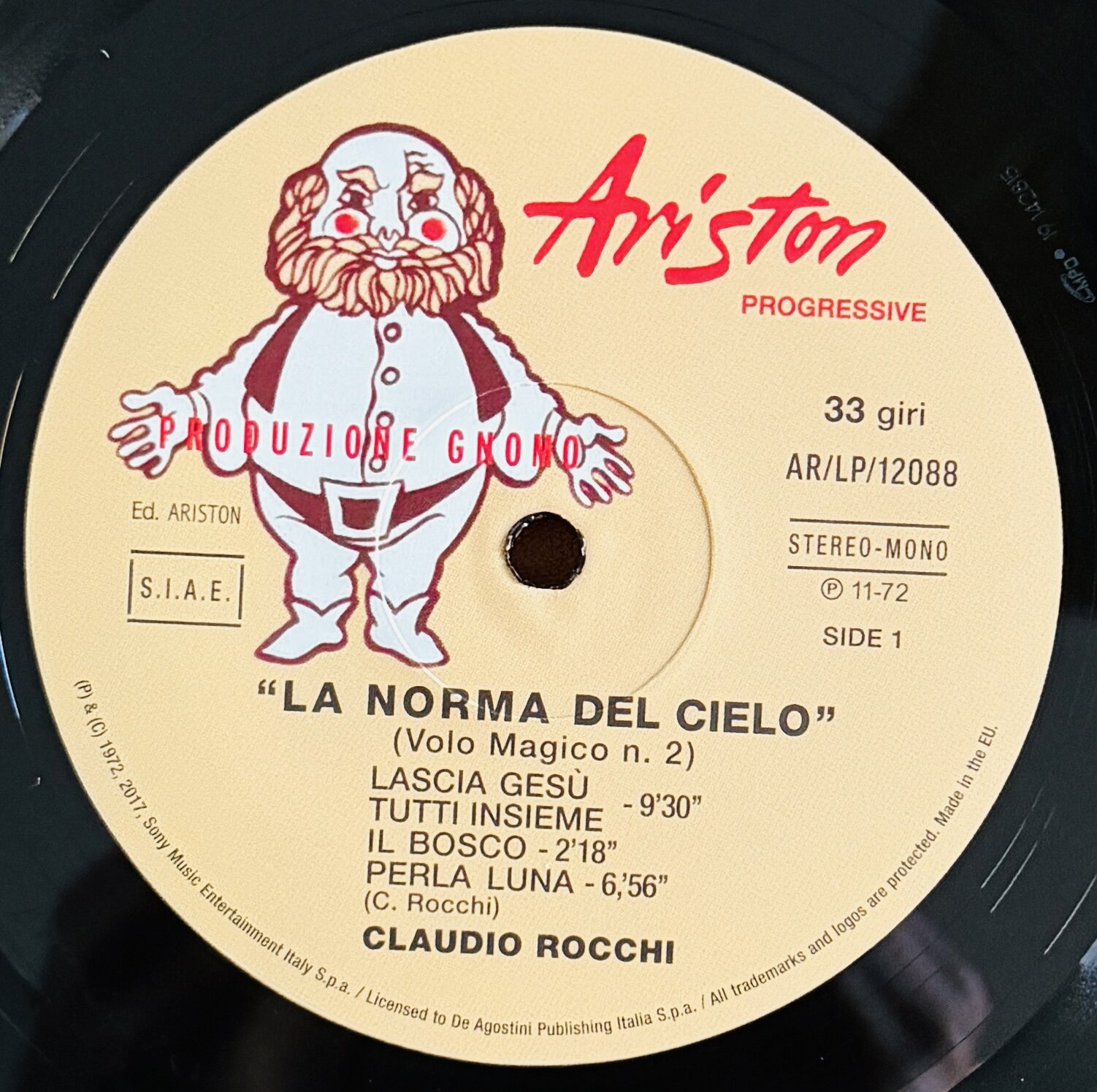
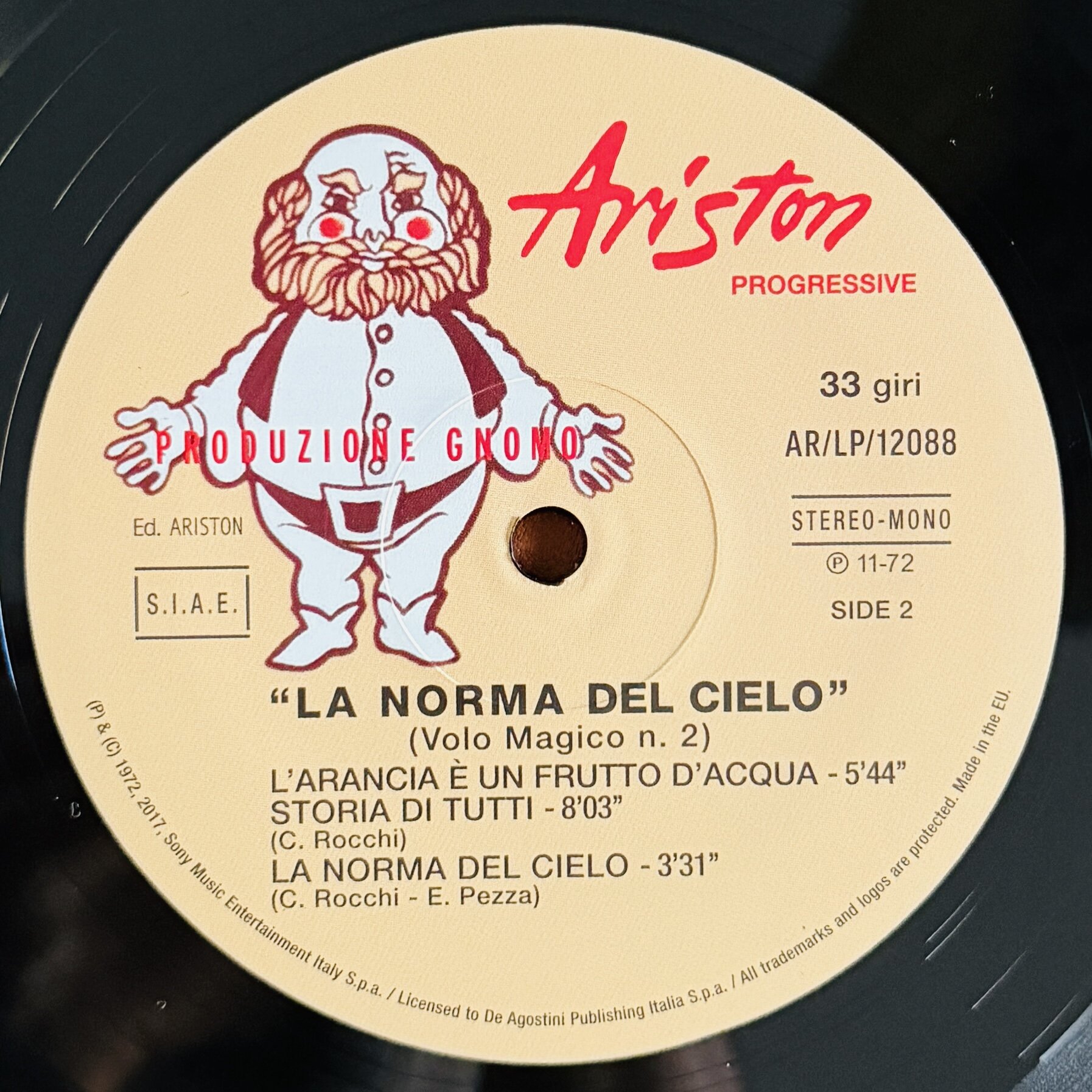
Etichetta: Ariston Progressive – AR/LP/12088, Sony Music – none, RCA – none
Serie: Prog Rock Italiano – 62, Produzione Gnomo
Formato: Vinile, LP, Album, Reissue, Stereo, Gatefold, 180 grams
Paese: Italy
Uscita: 3 feb 2020
Tracklist
A1 Lascia Gesù / Tutti Insieme 9:30
A2 Il Bosco 2:18
A3 Perla Luna 6:56
B1 L'Arancia È Un Frutto D'Acqua 5:44
B2 Storia Di Tutti 8:03
B3 La Norma Del Cielo 3:31
La Formazione
Acoustic Bass – Rocchi* (tracce: A3)
Acoustic Guitar – Eno Bruce (tracce: A2, A3)
Acoustic Guitar [6 String], Twelve-String Guitar – Alberto Camerini (tracce: A1), Rocchi* (tracce: A1, A2, B1 to B3)
Backing Vocals – Eugenio Pezza (tracce: B1), Maria Teresa (tracce: B1, B3)
Bass – Eno Bruce (tracce: A1)
Flute – Gianni Del Ben (tracce: B3), Mauro Pagani (tracce: A3)
Mellotron – Rocchi* (tracce: B1), Eugenio Pezza (tracce: A1, A3, B3)
Percussion – Gigi Gasparri (tracce: A1), Lorenzo Vassallo (tracce: A1, A3)
Piano, Organ – Eugenio Pezza (tracce: A1, B1, B3)
Sitar – Paul Tuel (tracce: A3)
Violin – Lucio Fabbri (tracce: A1)
Voice – Rocchi*
Nota: Tutti i link ai lavori dei musicisti sono nei TAG sotto il titolo dell'articolo o nella pagina "Artisti"