Gone to Earth by Barclay James Harvest, a 1977 album.
Gone to Earth is a true masterpiece of British progressive rock, both in terms of sales and artistic quality. Despite punk taking off at the time, the record managed to break into the European charts, becoming a real phenomenon especially in Germany, where it sold over 500,000 copies, earning a platinum record.
“Gone to earth!” is the classic cry of fox hunters when the fox manages to escape into its den. The band chose this image to represent a safe refuge from which to watch the outside world, a protective isolation from the pressures (and perhaps even the criticism) of the music world.
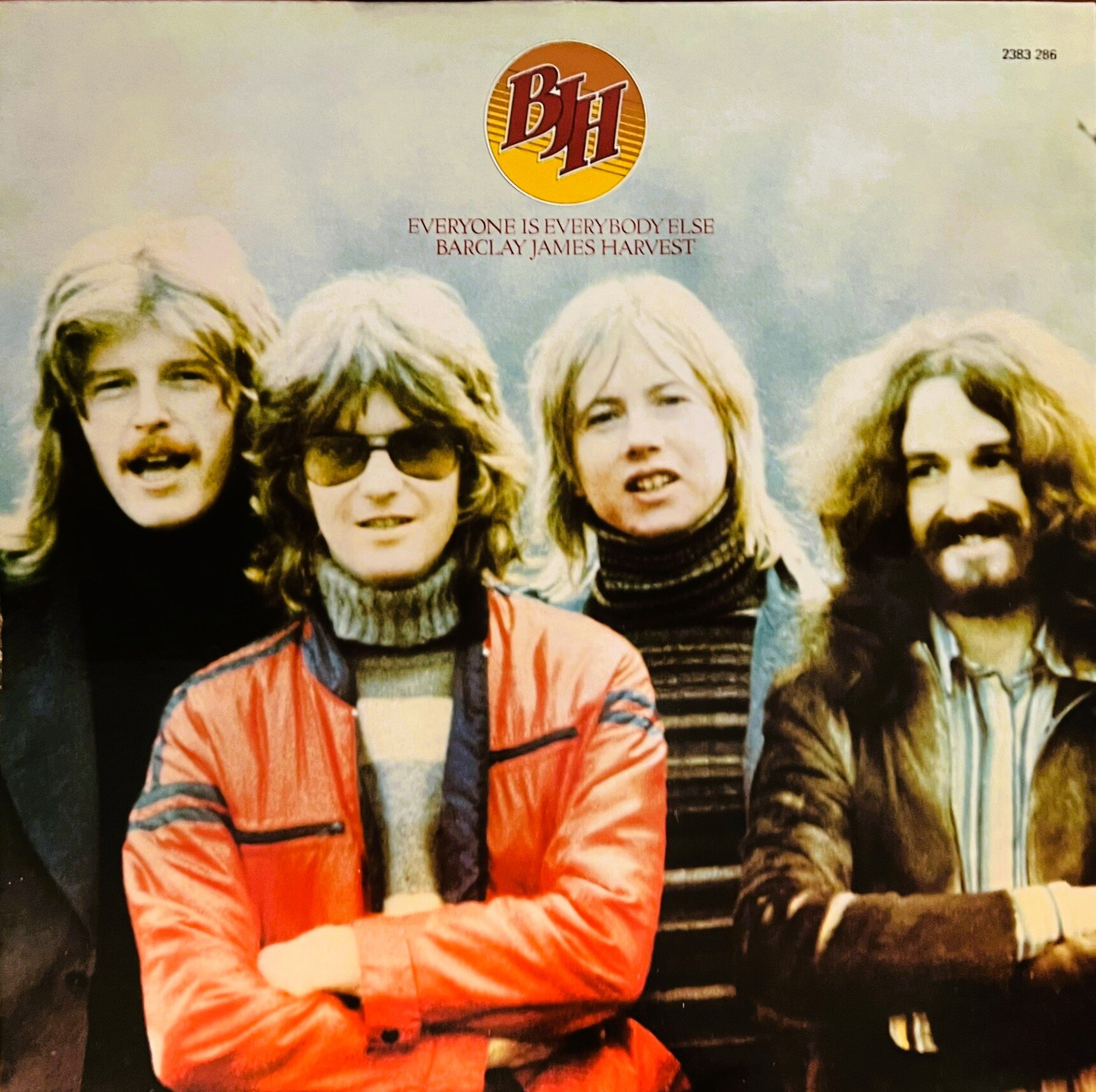
To record the album the Barclay James Harvest showed up in the studio with their original four-piece line-up, unchanged from the previous works. The quartet was the same one that had founded the band in Oldham in 1966 and had recorded their first album in 1970. The musicians who recorded the album are the four historic members: John Lees, lead vocals and guitars; Les Holroyd, lead vocals, bass, lead and acoustic guitars, and keyboards; Stuart “Woolly” Wolstenholme, vocals, mellotron and keyboards; and Mel Pritchard, drums and percussion.
Unlike many progressive supergroups of the time, Barclay James Harvest were born in an authentic way from the union of two rival local bands from the Oldham/Manchester area: The Blues Keepers, a blues/rock band with John Lees and Woolly Wolstenholme, and The Heart and Soul and the Wickeds, a beat/pop group with Les Holroyd and Mel Pritchard. In 1966, the four decided to join forces, moving temporarily into Mauldeth Hall, an 18th-century farmhouse, to compose music in complete isolation. It was there that they developed the style that made them famous.
The record stands out for its refined symphonic pop and progressive, marked by the predominant use of mellotron and lyrically voiced guitars.
“Gone to Earth” is an album that perfectly blends symphonic pop-prog with melodic soft rock. Barclay James Harvest moved away from the long instrumental suites and the complex time changes typical of early ’70s prog, opting instead for a more traditional structure, based on the song form. Their sound is defined by orchestral layers created with Mellotron and synthesizers, replacing the real orchestra used on their early works. The guitars are lyrical and dreamy, with solos that don’t chase virtuosity for its own sake, but always serve the melody. The vocal interweavings are extremely refined, with four-part harmonies that recall the tradition of the Moody Blues and Crosby, Stills, Nash & Young.
Some tracks are memorable:
“Hymn” is the jewel of the album (and of the band’s entire discography). Although the lyrics use imagery and language that are typically Christian, John Lees wrote it not as a religious song, but as a universal warning about the risks of drugs. The piece unfolds as a continuous crescendo: it starts with a lone acoustic guitar and Lees’s clear voice, then adds, verse after verse, mellotron, bass, percussion and finally the group’s powerful vocal harmonies. “Hymn” became a staple on European radio (especially in Germany) and the song that unfailingly closed every one of their concerts, sparking a very strong emotional reaction in the audience. The band’s most famous song, it was written by guitarist John Lees as early as the summer of 1971. Initially proposed for the album Barclay James Harvest and Other Short Stories, it was rejected by the rest of the group. Six years later, it was revived for the album Gone to Earth and became a worldwide success, an everlasting anthem.
"Poor Man’s Moody Blues" was born as an ironic, biting response to a review. A music journalist had called the band “the poor man’s Moody Blues”, accusing them of plagiarism. Hurt by the charge, John Lees wrote a song that deliberately imitated the structure of the Moody Blues’ Nights in White Satin, but changing melody and chords to make it technically a different song (the original words didn’t fit the meter). Justin Hayward, the Moody Blues’ frontman, didn’t appreciate it at all, so much so that years later BJH bassist Les Holroyd had to apologize to him personally. Driven by a pulsing bass line and one of the most intense guitar solos John Lees ever wrote, the track culminates in a devastating emotional crescendo.
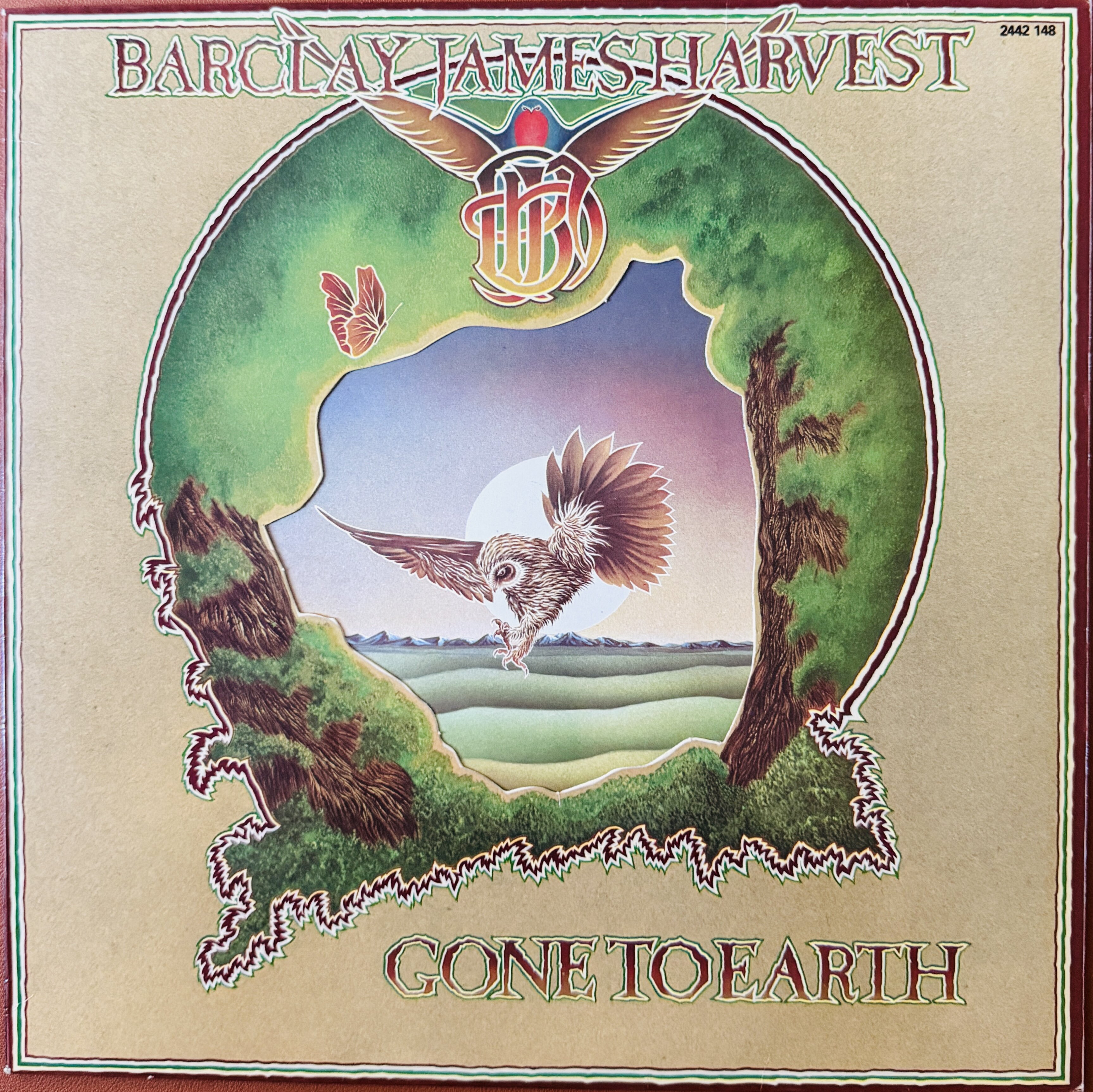
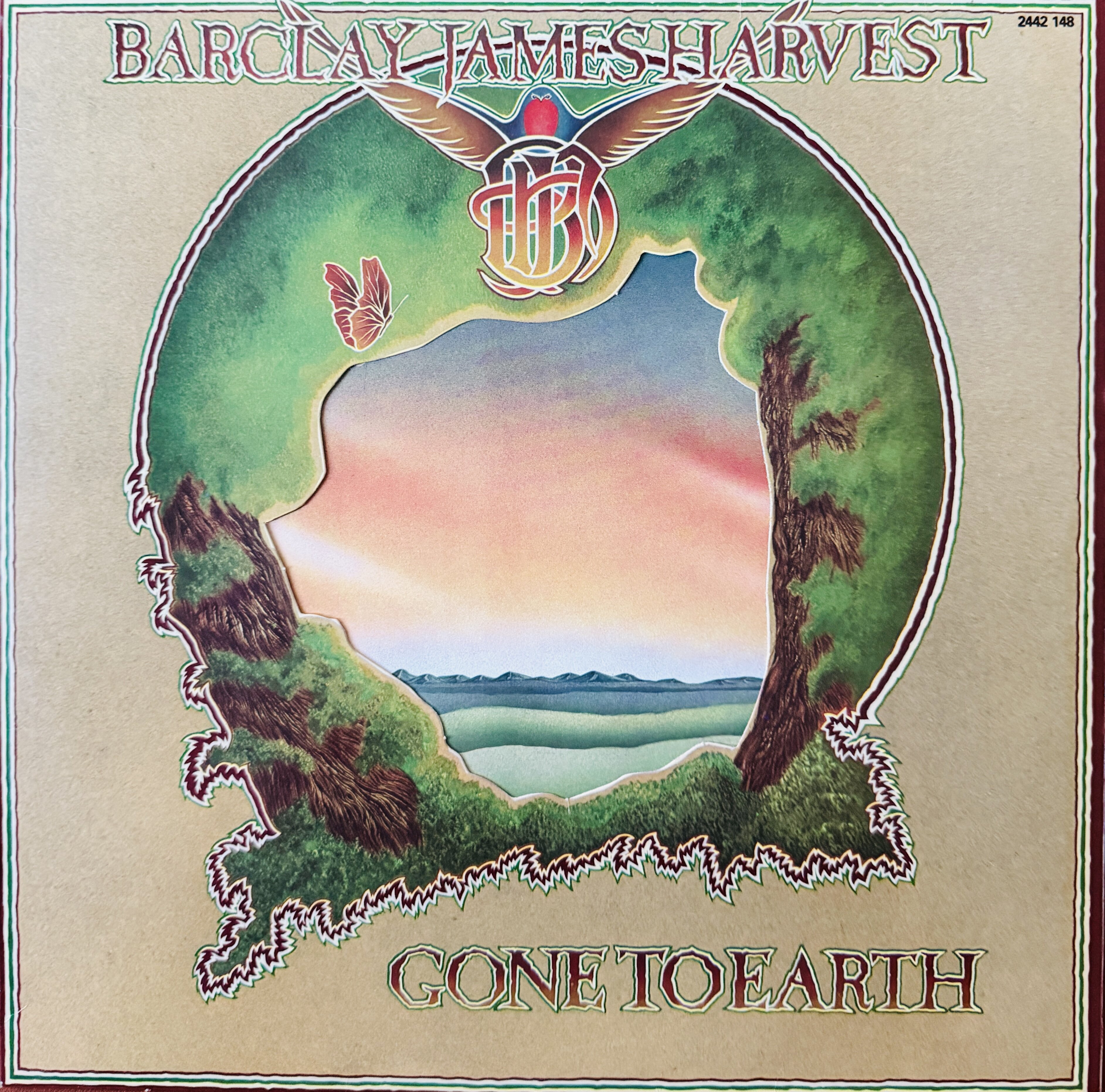
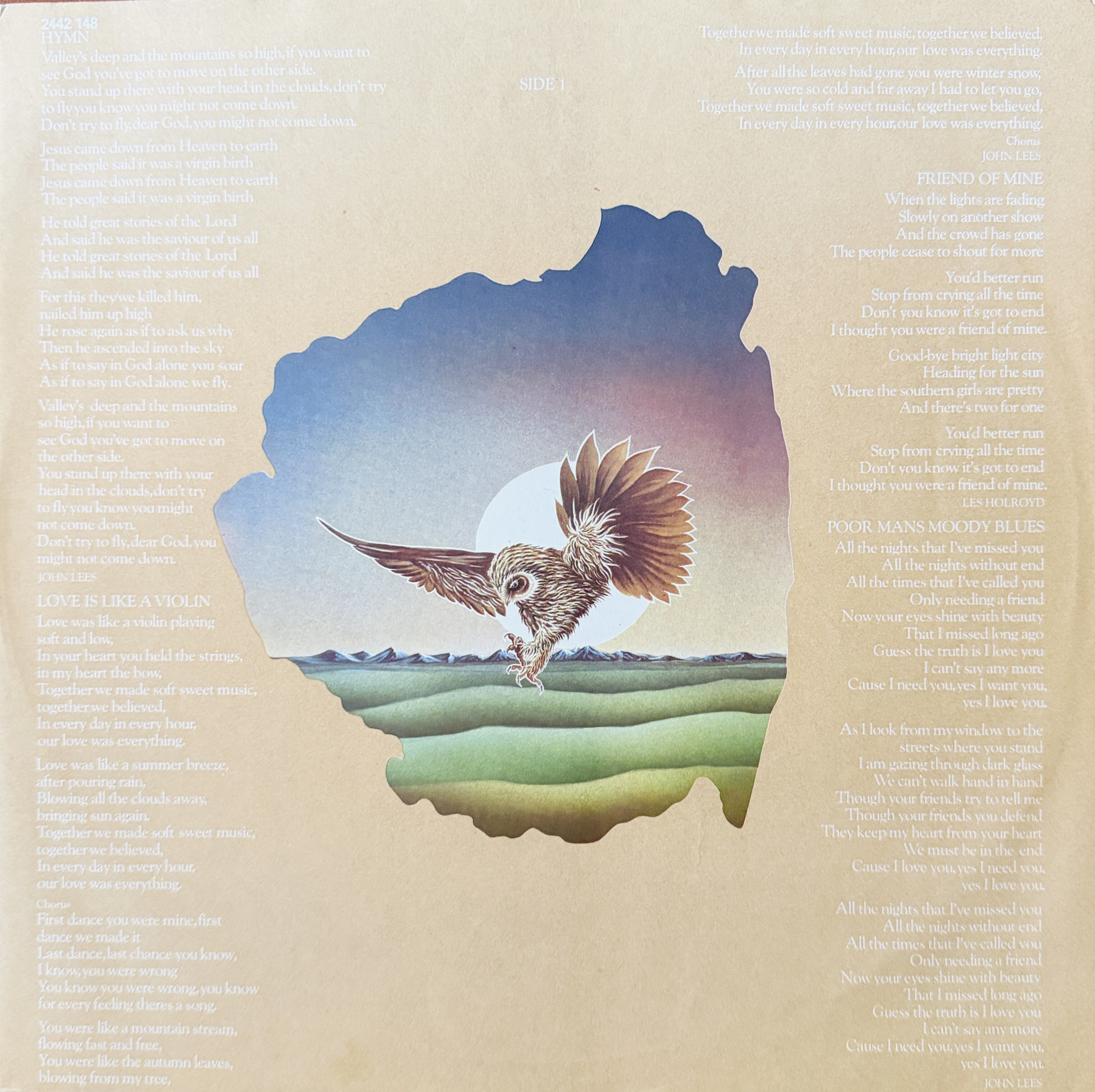
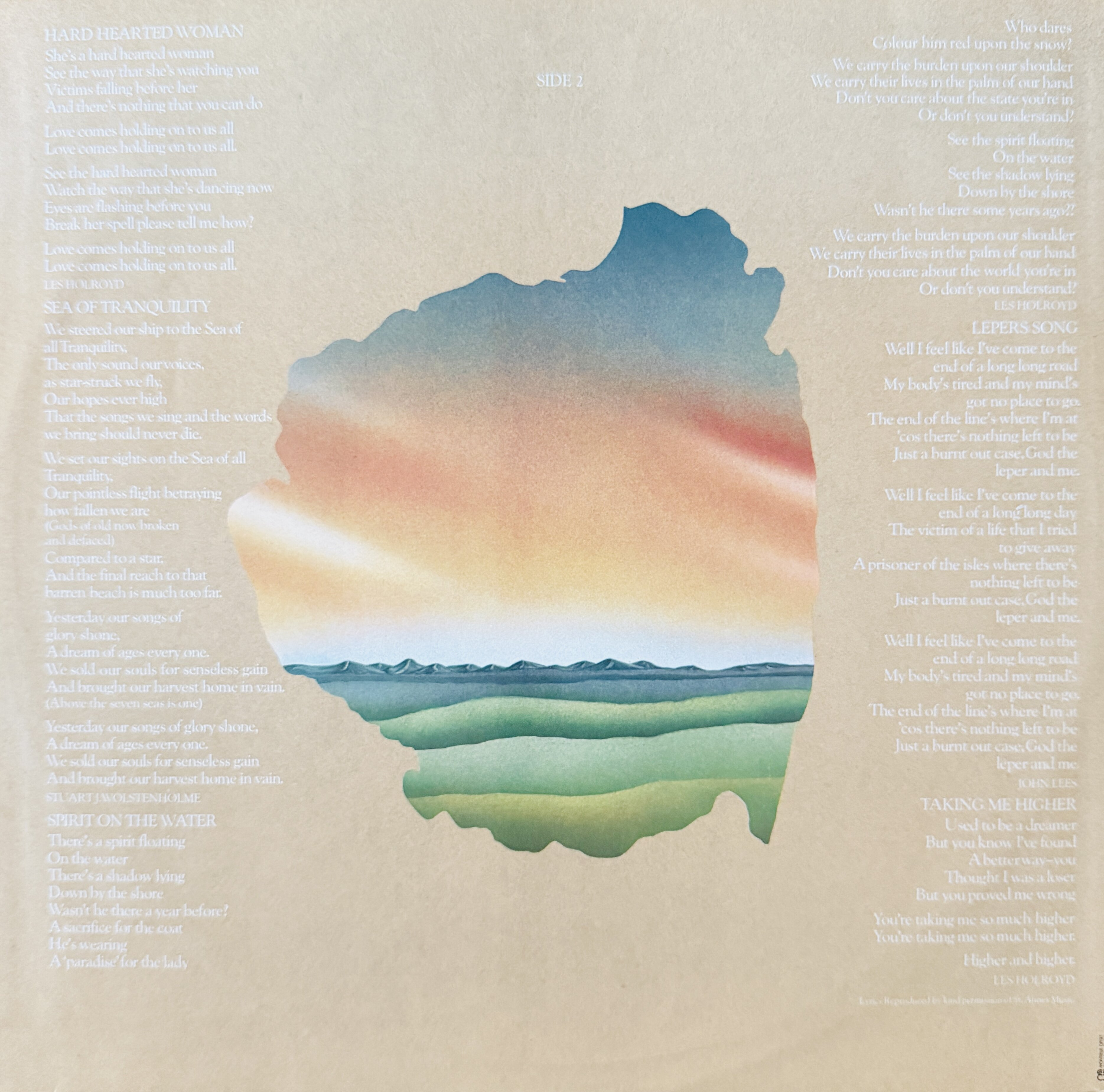
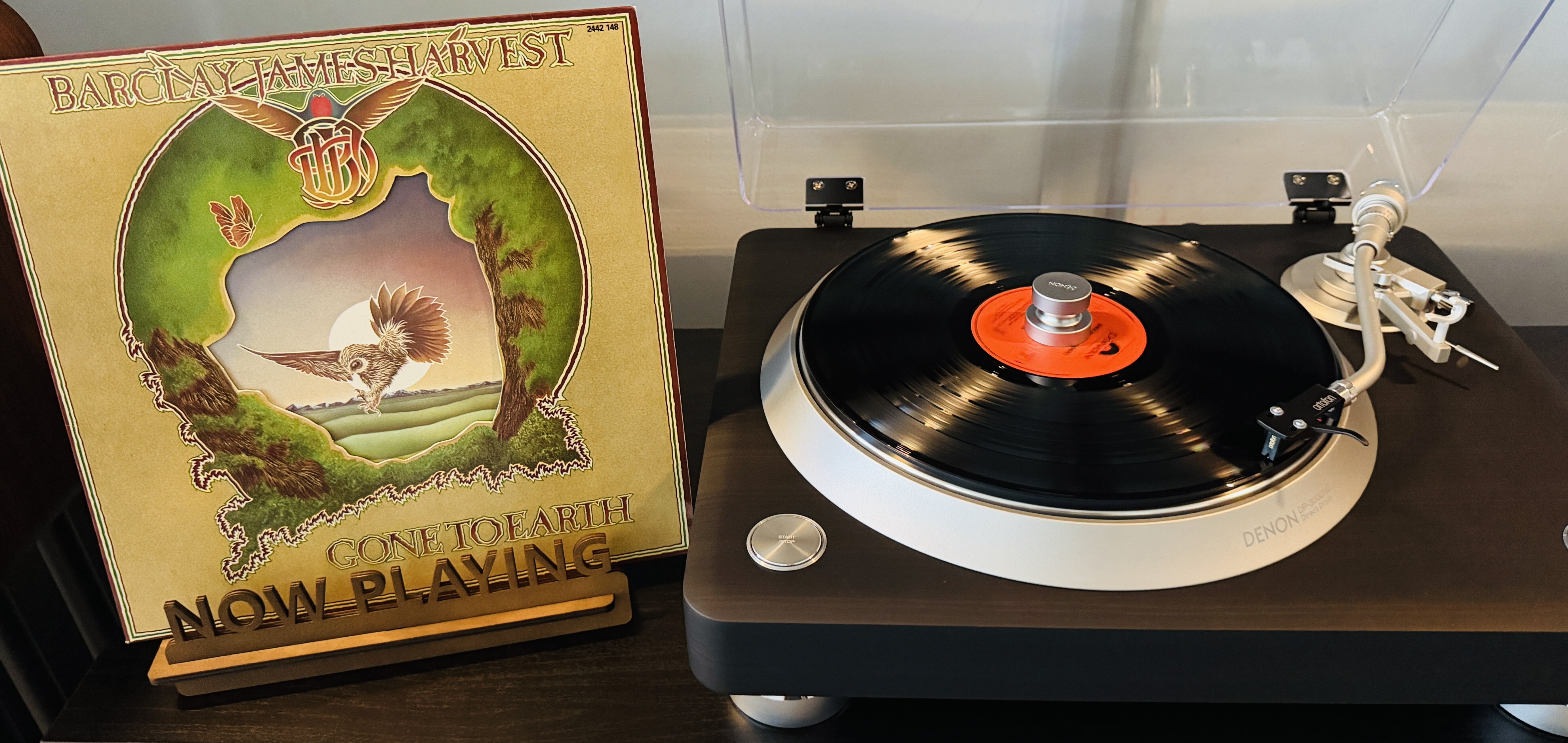
The original vinyl cover of “Gone to Earth”, designed by Maldwyn Reece Tootill, is a real gem of ’70s packaging. Its special feature is the die-cut technique. The outer cardboard has the shaped form of an owl in flight or a burrow through which the background can be glimpsed. The landscape that appears on the front is not printed on the cover itself, but on the inner sleeve that holds the record, which was designed to be reversible: on one side, it shows a color drawing of the owl flying over a natural landscape at sunset; on the other side, it presents a romantic sunset.
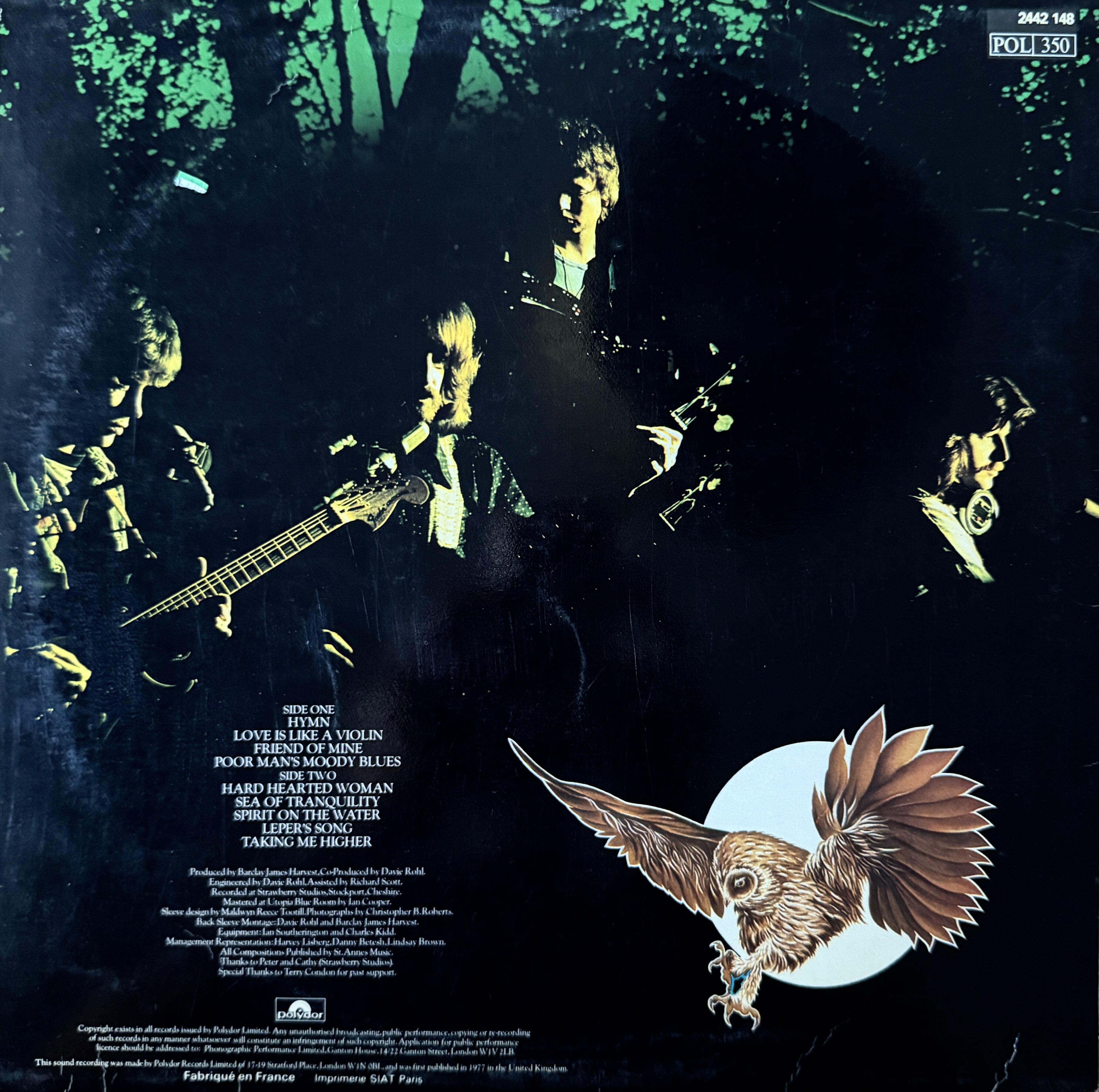
You can simply pull out the sleeve, flip it and put it back into the vinyl, thus changing the image visible through the die-cut shape. On the back cover there is also a photo montage made by the band itself together with co-producer David Rohl. This work perfectly reflects the concept of the title: a wild animal that takes refuge in the earth, watching the world from a safe place.
“Gone to Earth” is the peak of commercial success and one of the artistic high points of Barclay James Harvest, as well as a benchmark in the pop-prog landscape.
The melodies are impeccable. The band moves away from the virtuosity and complex instrumental suites typical of traditional progressive rock, opting instead for a clean, accessible symphonic ballad structure with great emotional impact. The sumptuous production, marked by the skillful use of Mellotron and synthesizers, together with the vocal layering, creates an enveloping wall of sound that doesn’t make you miss the real orchestras of the previous records. Released in September 1977, in the middle of the Punk and New Wave era, the album proved there was still a large European market eager for melodic, elegant rock, selling over a million copies worldwide.
It’s an absolute must-have for anyone who appreciates the dreamy atmospheres of the ’70s, sitting on the border where progressive rock evolved into great singer-songwriter pop.
Great album!
My Version
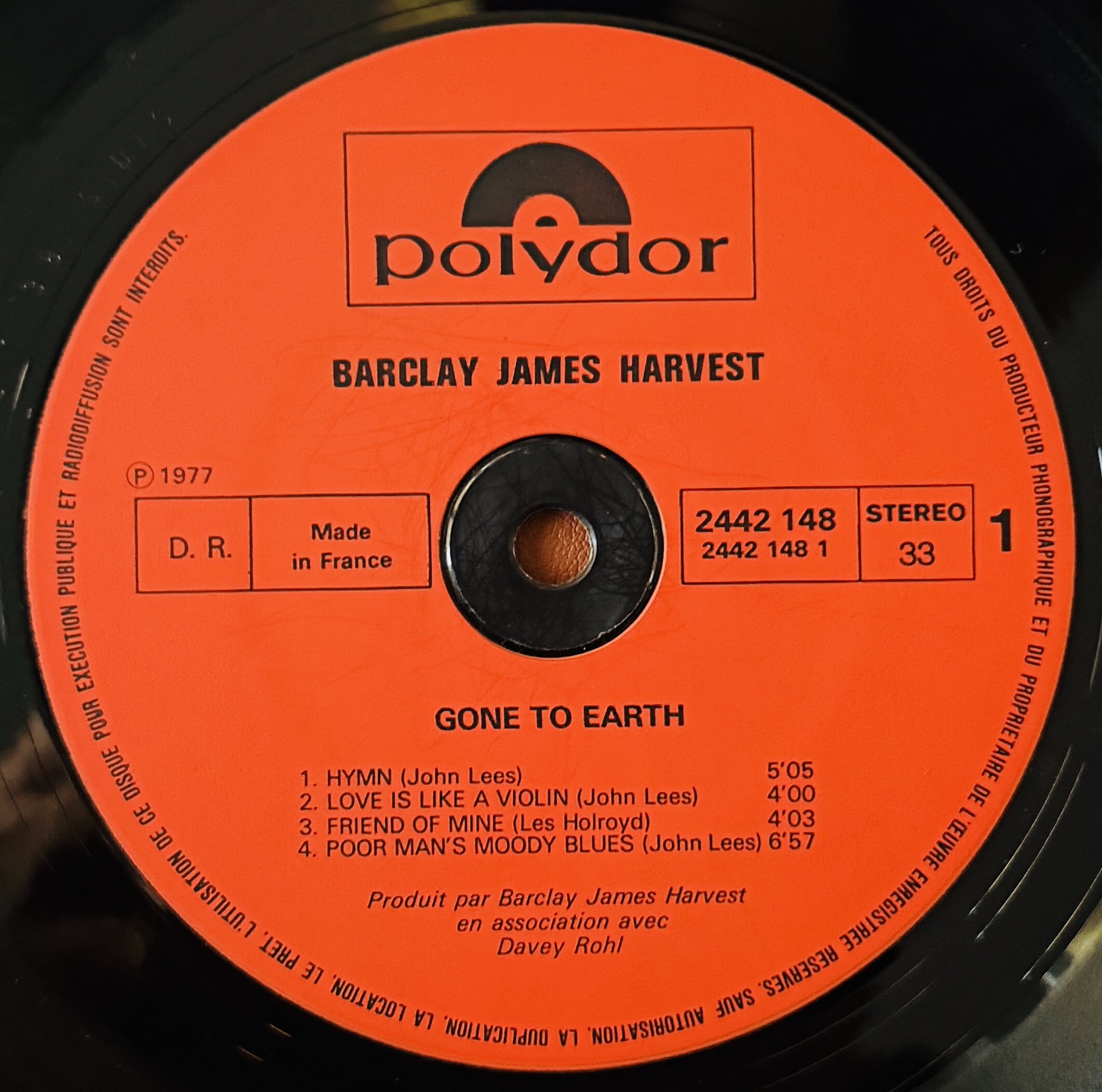
Label: Polydor – 2442 148
Format: Vinyl, LP, Album, Stereo
Country: France
Released: 1977
Tracklist
A1 Hymn 5:05
A2 Love Is Like A Violin 4:00
A3 Friend Of Mine 3:33
A4 Poor Man's Moody Blues 6:57
B1 Hard Hearted Woman 4:29
B2 Sea Of Tranquility 4:03
B3 Spirit On The Water 4:48
B4 Leper's Song 3:24
B5 Taking Me Higher 3:32
Lineup
John Lees – vocals, guitars
Les Holroyd – vocals, bass, guitars, keyboards
Stuart "Woolly" Wolstenholme – vocals, mellotron, keyboards
Mel Pritchard – drums, percussion