| Canterbury Scene | Crossover Prog | Eclectic Prog | Extreme Prog Metal | Folk Rock | Heavy Prog | Jazz-Rock Fusion | Krautrock | Neo Prog | NON PROG | Northern Prog | Post Metal | Post Rock | Prog Related | Progressive Electronic | Progressive Metal | Psychedelic Rock | Rock Progressivo Italiano | Space Rock | Symphonic Rock | Zeuhl |


FrancescoProgressive Rock World
632 Reviews - 359 Artists - 85 Detailed biographical profiles - 26 Prog Meteors - 22 Progressive Rock Subgenres
Genesis: Prog, Pop, and the Influences of the "Genesis" Sound
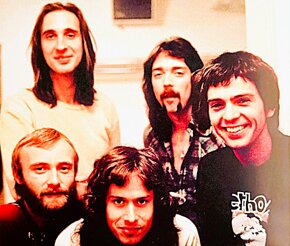
Talking about Genesis to me is like talking about a part of my life, and the information available online and in the bibliography is exhaustive, so I'll just give a brief summary.
Genesis formed in 1967. In the first half of the 1970s, they were among the leading exponents of British progressive rock, alongside bands like King Crimson, Yes, Emerson, Lake & Palmer, and Gentle Giant.
From the 1980s to the early 1990s, they reached the peak of their popularity and commercial success, thanks in part to a more accessible production.
They disbanded in 1999 and then reunited in 2006-2007 and 2020-22 for celebratory tours, without having released any new material in the meantime.
In March 2022, they officially announced their permanent retirement from the music scene.
The lineup has undergone significant changes that have shaped their sound and artistic direction.
The initial lineup included Peter Gabriel, Tony Banks, Mike Rutherford, and Anthony Phillips, along with drummer Chris Stewart.
From the first to the third album, the drummers changed, with Phil Collins replacing John Mayhew, who had replaced Chris Stewart.
Another notable departure was that of Anthony Phillips, guitarist and co-founder, who left after the third album and went on to have a wonderful and prolific solo career.
The next lineup included Peter Gabriel, Tony Banks, Mike Rutherford, Phil Collins, and new guitarist Steve Hackett. Hackett recorded the first album with this lineup, which would remain stable from 1971 to 1975. This was the lineup that marked the great growth of Genesis' sound. The album was Nursery Cryme in 1971, followed by Foxtrot in 1972, Selling England by the Pound in 1973, and the last album with Peter Gabriel, born from his own idea, The Lamb Lies Down on Broadway in 1974.
Gabriel's departure marks a historic moment for Genesis. Even the band's most loyal fans recognize the dramatic shift in sound, which will continue in part for A Trick of the Tail. However, the figure of frontman Phil Collins, who takes over vocals after an unsuccessful search for a new singer, certainly brought about a profound transformation.
It was Phil Collins himself who contacted Bill Bruford, former drummer for Yes and King Crimson, to replace him on the vocals; Collins, however, continued to play many instrumental parts, almost always duetting with him.
Furthermore, during the recording of A Trick of the Tail, Steve Hackett was the first member of Genesis to record a solo album with Collins and Rutherford: Voyage of the Acolyte. A Masterpiece.
After the release of A Trick of the Tail, during the recording of Wind & Wuthering (in 1976), the first disagreements between Steve Hackett and the rest of the band began. According to Hackett, the band was unwilling to work on his compositions (for example, the song "Please Don't Touch," which he would end up including on the solo album of the same name two years later).
Wind & Wuthering met with limited success, less than their previous album, and Genesis embarked on a tour in connection with the album in January 1977. They recruited American drummer Chester Thompson, who collaborated with Genesis until 2007. Four concerts from this tour, held in Paris, were released as the double live album Seconds Out. Fantastic Album.
The Spot the Pigeon EP was Steve Hackett's last studio recording. During the mixing of Seconds Out, Hackett decided to leave the group, and Banks, Collins, and Rutherford decided not to replace him and to continue as a trio, at least in the studio. Rutherford took on both bass and guitar duties.
This trio lineup of Banks, Collins, and Rutherford remained stable until 1996, and Hackett went on to have a long, successful solo career that continues to this day.
From 1978 to 1996, Genesis reached the peak of their commercial success. Their sound, completely transformed into pop-rock and beautifully executed, attracted a huge audience in the following years, propelling Genesis albums to the top of the charts worldwide.
In 1996, Phil Collins decided to temporarily leave the band to focus on his solo career and was replaced on vocals by Ray Wilson, chosen by Banks and Rutherford. Their last official studio album, Calling All Stations, was recorded, which was not a great commercial success and, although I have it in my collection, I have never listened to it, so I cannot judge it at this time.
On March 15, 2010, Genesis, as formed between 1971 and 1975, were inducted into the Rock and Roll Hall of Fame.
In 2014, the five were interviewed together for a BBC documentary titled Genesis: Together and Apart.
On March 4, 2020, they announced a new UK tour for November–December 2020 with a lineup featuring Daryl Stuermer on guitar and Nicholas Collins on drums. The tour, titled The Last Domino? Tour, was also accompanied by the anthology of the same name, but was postponed due to the COVID-19 pandemic. The original band members declared that this would be their farewell tour.
The story (in brief) of a great band and of much of the music I listen to, considering the enormous influence this band has had in the decades since and continues to have on countless bands who have drawn inspiration from it.
One of the most influential bands in the history of music, they (it must be admitted) after churning out progressive rock masters, also churned out pop-rock masterpieces, reaching a level of excellence in this genre and a success unmatched by any other.
There are still "Gabriel orphans," like me, diehard romantics. But allow me. I grew up with them, and thanks to them, I also met the first band I ever played with: when I met them, I was a teenager, they gave me a TDK D-90 cassette with the album "Selling England by The Pound," telling me, "This is the music we want to play." That was where my music world began.
The Discography and the Reviews
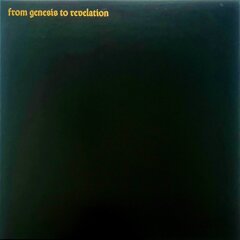
From Genesis To Revelation - 1969
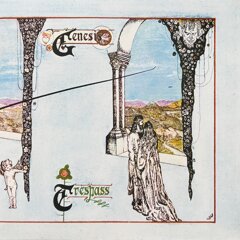
Trespass - 1970
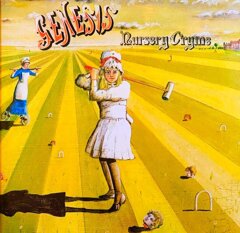
Nursery Cryme - 1971
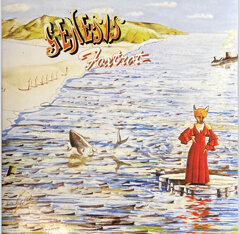
Foxtrot - 1972
Live - 1973
Rock Theatre - 1973
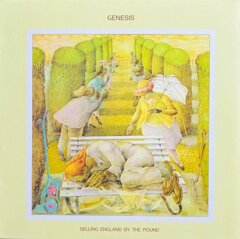
Selling England By The Pound - 1973
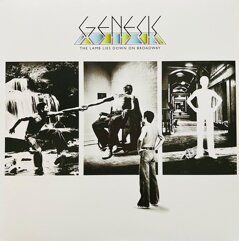
The Lamb Lies Down On Broadway - 1974
A Trick Of The Tail - 1976
Wind & Wuthering - 1976
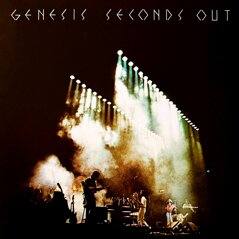
Seconds Out - 1977
Spot The Pigeon - 1977
...And Then There Were Three... - 1978
Duke - 1980
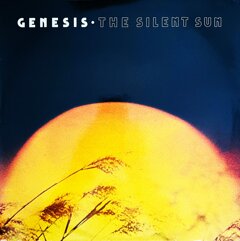
The Silent Sun - 1980
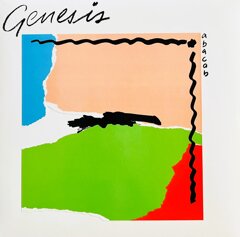
Abacab - 1981
Three Sides Live - 1982
Genesis - 1983
Invisible Touch - 1986
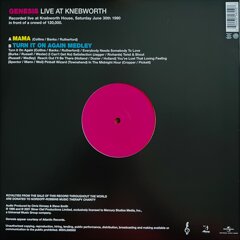
Live At Knebworth - 1990
We Can't Dance - 1991
Genesis Rock Star Music 26 - 1992
Live / The Way We Walk (Volume One: The Shorts) - 1992
Turn It On Again - Best Of '81 - '83 - 1992
Live / The Way We Walk (Volume Two: The Longs) - 1993
Turn It On Again - The Hits - 1999
Platinum Collection - 2004
...Calling All Stations... - 2008
R-Kive - 2014
The Last Domino? - 2021
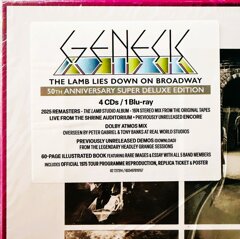
The Lamb Lies Down On Broadway (50th Anniversary Super Deluxe Edition) - 2025
Live From The Shrine Auditorium, Los Angeles, CA. January 24, 1975