.jpeg "whatsapp-image-2025-08-20-at-12.03.23-(2).jpeg")
Lizard by the great King Crimson, 1970
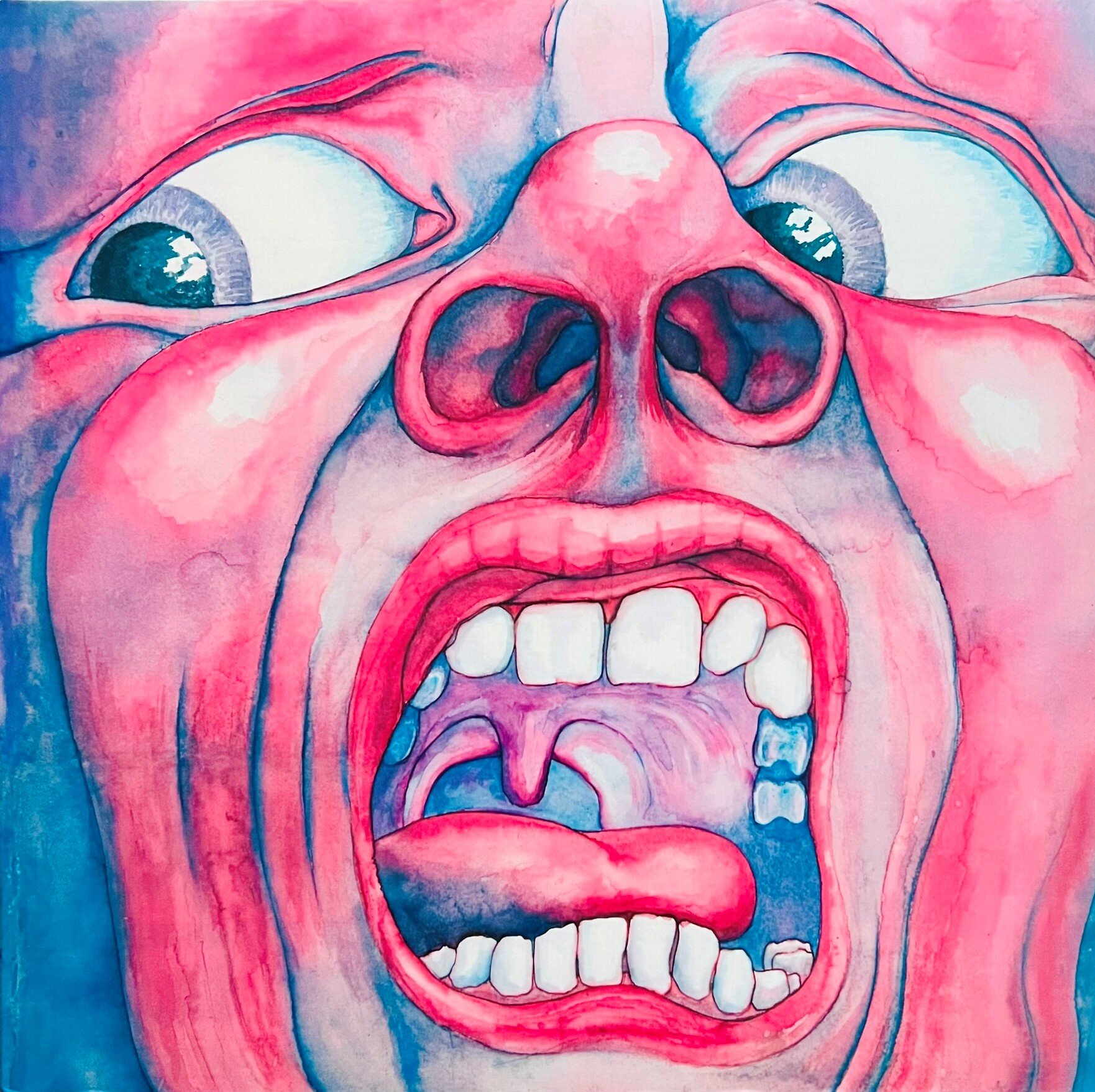
It's their third studio album, released a year after In the Court of the Crimson King and the same year as In the Wake of Poseidon, and this is its greatest flaw: being released so soon after historic albums, absolute masterpieces, and yet being different from them (this is for critics, but not for me).
The album's sound is influenced by jazz and features a lot of experimentation, a fusion of rock, jazz, and classical music like few have managed to do. It manages to be both epic and intimate, but also chaotic, at times impossible to classify into one or more genres, marked by impressive creativity.
The lineup had been heavily reshuffled:
Robert Fripp, Mel Collins, and Peter Sinfield appeared on the first and second albums; just one of these would be enough to make it a masterpiece.
Gordon Haskell and Keith Tippett also remain from the second album.
Andy McCulloch appears for the first and only time on drums, and Jon Anderson, Robin Miller, Mark Charig, and Nick Evans also appear.
Greg Lake (who left to form Emerson, Lake & Palmer), Ian McDonald, and Jakko Jakszyk from the first album, Michael Giles from the first and second albums, and Peter Giles from the second album are missing.
Its flaws compared to the previous ones are its strengths, in my opinion.
It is the most "difficult" of the early King Crimson albums, and that's what I like.
It goes in a new direction, more deeply into jazz. This, too, is a plus for me.
It's an avant-garde album and still demands careful and demanding listening. I love it when an album doesn't fully unravel and leaves something new with each listen.
Cirkus, Indoor Games, and Happy Family are songs dominated by Gordon Haskell's great voice: powerful and deep, intimate, theatrical, and delirious. "Lady of the Dancing Water," the album's least complex track, gives us a lighter, more poetic side to his voice.
The title track, featuring Jon Anderson of Yes on vocals, is magnificent. It's less jazzy and more inspired by "conventional" progressive rock, with its magnificent mellotron and classically inspired arrangements.
Big Top repeats the theme from "Cirkus," closing out a majestic album.
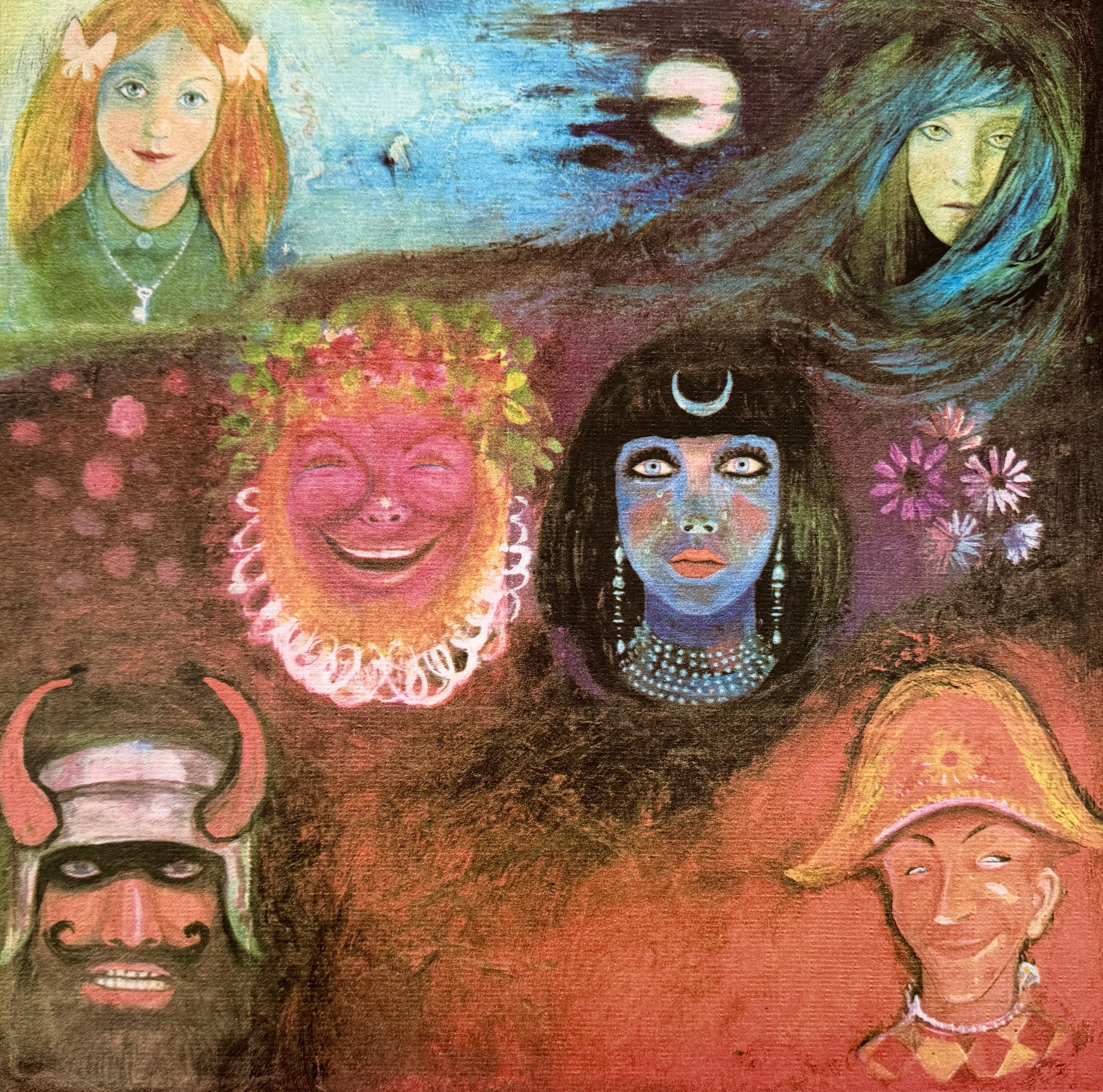
The cover is fantastic, and Pete Sinfield's lyrics are full of wonderful verses.
An album that is a masterpiece, despite the imposing shadow of the first two albums, and which absolutely must appear in any collection for lovers of progressive rock.
The Tracks in my version (The original stereo mix of the 1970 classic. - Newly cut from masters approved by Robert Fripp, 2012)
1. Cirkus (including Entry of the Chameleons) (6:27)
2. Indoor Games (5:37)
3. Happy Family (4:22)
4. Lady of the Dancing Water (2:47)
5. Lizard (23:15):
- a. Prince Rupert Awakes (4:34)
- b. Bolero - The Peacock's Tale (6:32)
- c. The Battle of the Glass Tears (11:01)
- i) Dawn Song
- ii) Last Skirmish
- iii) Prince Rupert's Lament
- d. Big Top (1:08)
Running Time 42:28
The Lineup
- Robert Fripp - guitar, Mellotron (1, 2, 5), synth and organ (2), electronics, co-producer
- Mel Collins - flute, saxophones
- Gordon Haskell - bass, vocals
- Andy McCulloch - drums
- Peter Sinfield - lyrics, VCS3 synth (2, 3), co-producer
Featuring:
- Jon Anderson - vocals (5th)
- Keith Tippet - piano, electric piano
- Robin Miller - oboe, cor anglais
- Mark Charig - cornet
- Nick Evans - trombone
.jpeg "whatsapp-image-2025-08-20-at-12.03.23-(4).jpeg")
.jpeg "whatsapp-image-2025-08-20-at-12.03.23-(1).jpeg")

.jpeg "whatsapp-image-2025-08-20-at-12.03.23-(3).jpeg")