
.jpeg "whatsapp-image-2025-08-30-at-18.47.14-(6).jpeg")
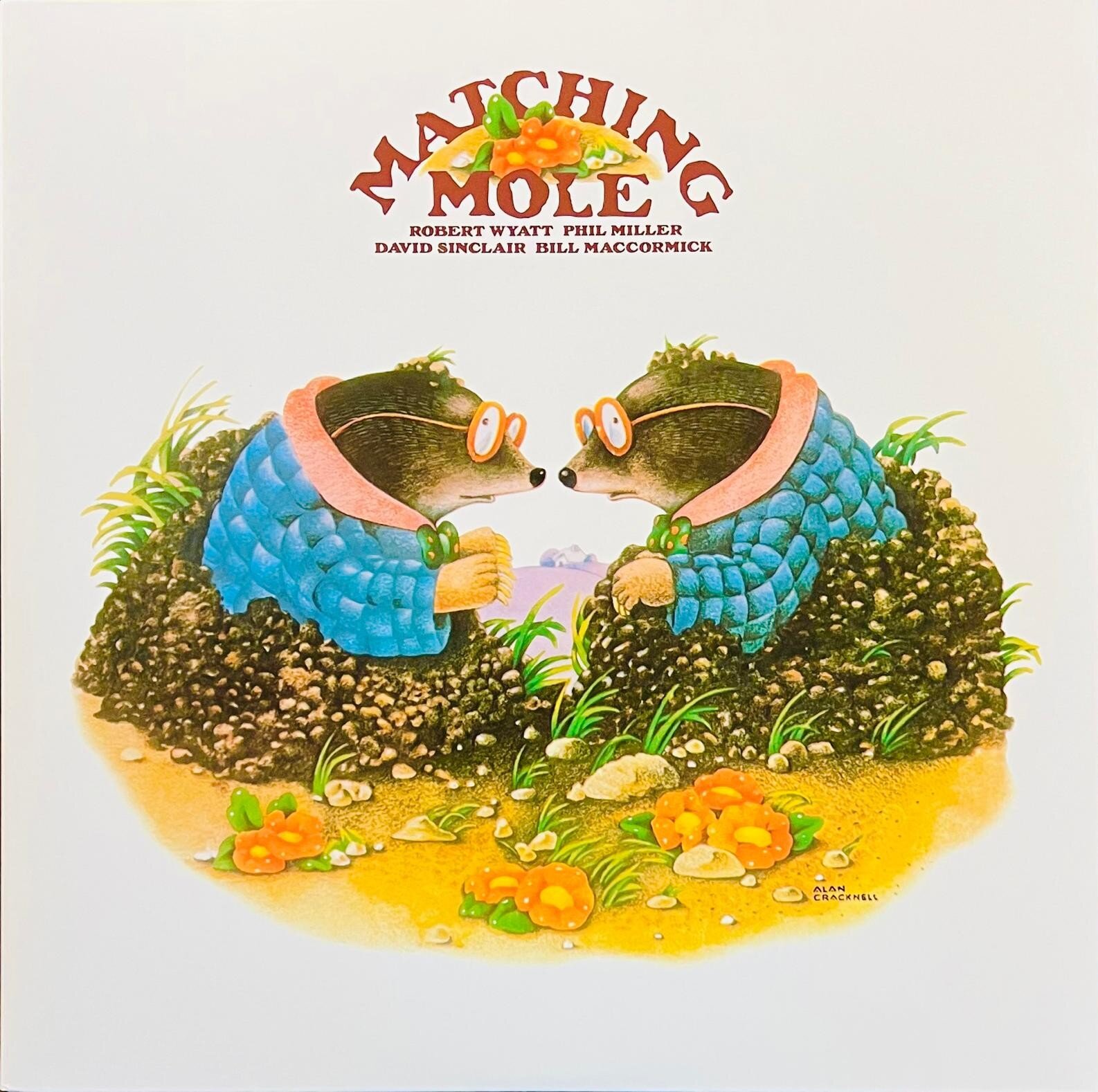
Matching Mole is a band founded in 1971 by Robert Wyatt, who was also the band's leader and main composer, after leaving Soft Machine. He also gave them a name derived from the French translation of "Soft Machine," "Machine Molle," as a tribute to his previous group.
Theirs' style is progressive rock, with jazz influences and a strong avant-garde component, not far from that of Soft Machine but with a sound, melodies, and vocals that would characterize Wyatt's solo work. In truth, Wyatt left Soft Machine precisely because he wanted to give more space to his vocals, in contrast with the band.
They released only two studio albums, both from 1972: Matching Mole and Little Red Record.
The initial lineup, that of the self-titled first album, consisted of Wyatt, Dave Sinclair (formerly of Caravan) on keyboards, Phil Miller on guitar, and Bill MacCormick on bass.
On the next album, the last of the 1970s, Little Red Record, Dave Sinclair was replaced by David MacRae.
The band is made up of absolute stars in the world of jazz and prog, all connected in some way.
- Robert Wyatt, who created the Canterbury Scene in the Wilde Flowers (Daevid Allen Trio, Wilde Flowers, Soft Machine, Matching Mole), which also included David Sinclair (Wilde Flowers, Caravan, Matching Mole, Caravan of Love). Phil Miller (Delivery, Matching Mole, Hatfield and the North, National Health) and Bill MacCormick (Quiet Sun, Matching Mole) had been friends with Wyatt since their Wilde Flowers days.
Dave MacRae, who played with Clark Terry, Chet Baker, Jon Hendricks, Gil Evans, and Nucleus, met Wyatt at an audition (Wyatt auditioned with Nucleus).
Brian Eno on synthesizer and Robert Fripp also contributed to the second album.
Due to poor commercial success, Matching Mole disbanded, and Wyatt devoted himself to composing. He then decided to reform the band with a new lineup: McCormick on bass, Gary Windo on saxophone, and Francis Monkman on keyboards. But the unthinkable happened: during the recording of the new album, on June 1, 1973, at Gilli Smyth's birthday party, Wyatt fell from a third-story window of a building, leaving him paralyzed from the waist down. He survived but found himself confined to a wheelchair.
The accident left him paraplegic and forced him to spend several months in the hospital. Unable to play a normal drum kit, he concentrated on singing and played keyboards, percussion, slide guitar, and a small drum kit without a hi-hat or bass drum. Due to this tragic event, he then abandoned the Matching Mole project.
The songs that were intended for the album were used on 1974's Rock Bottom, his first album after the accident in June 1973.
I'll close with a quote from Wyatt about the accident: "The doctor was astonished. He said to me, 'You must have been really drunk to be so relaxed while falling from the third floor.' If I'd been just a little more sober, I probably wouldn't be here today: I would have tensed up my whole body with fear and then I would have crashed." (Robert Wyatt)
Matching Mole's Works
1972 Matching Mole
1972 Little Red Record
1995 BBC Radio 1 Live in Concert (live)
2001 Smoke Signals (live)
2002 March (live)
.jpeg "whatsapp-image-2025-10-01-at-15.55.17-(1).jpeg")
.jpeg "PROFILE - The Wilde Flowers: The Origins of the Canterbury Scene")