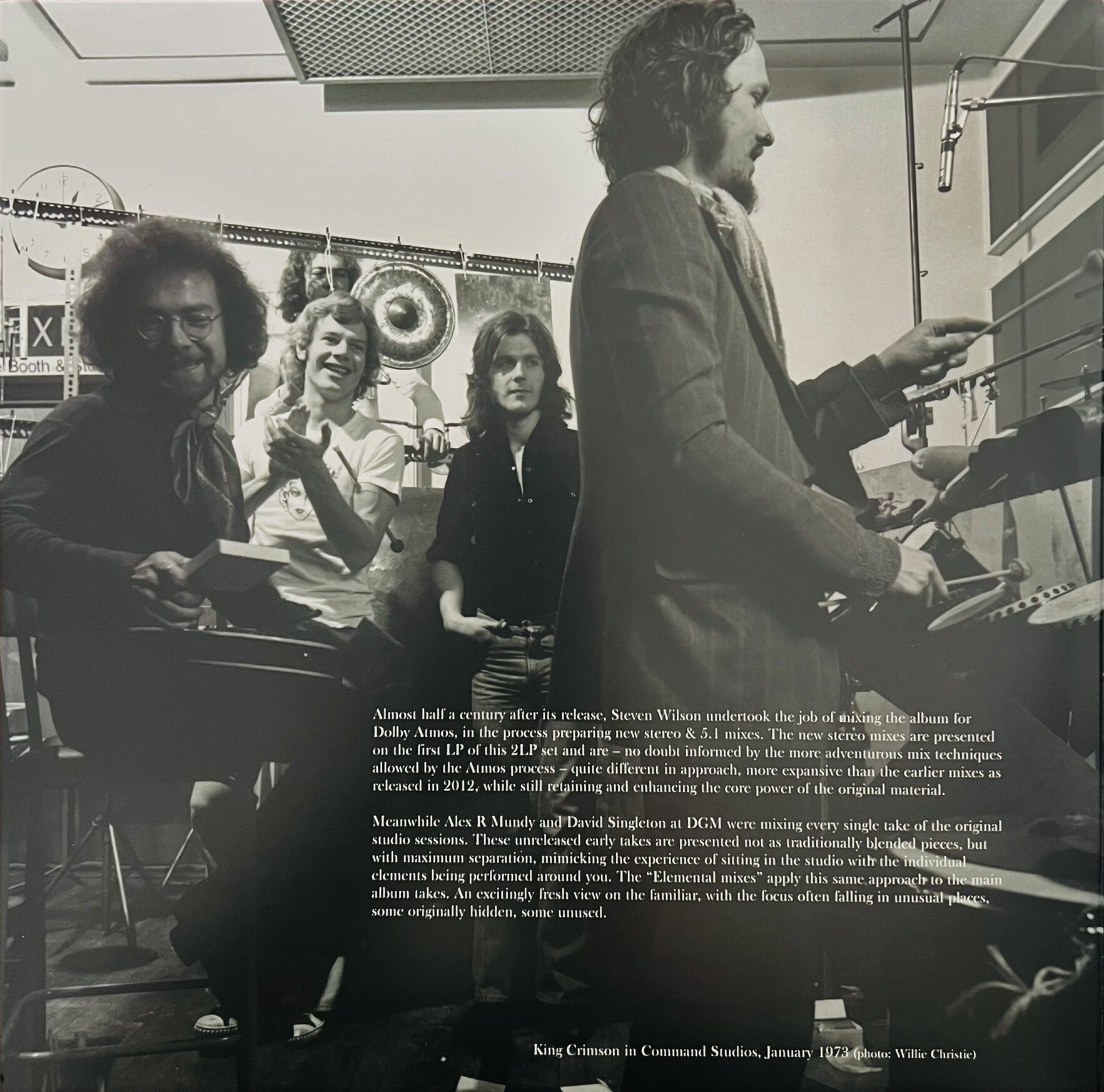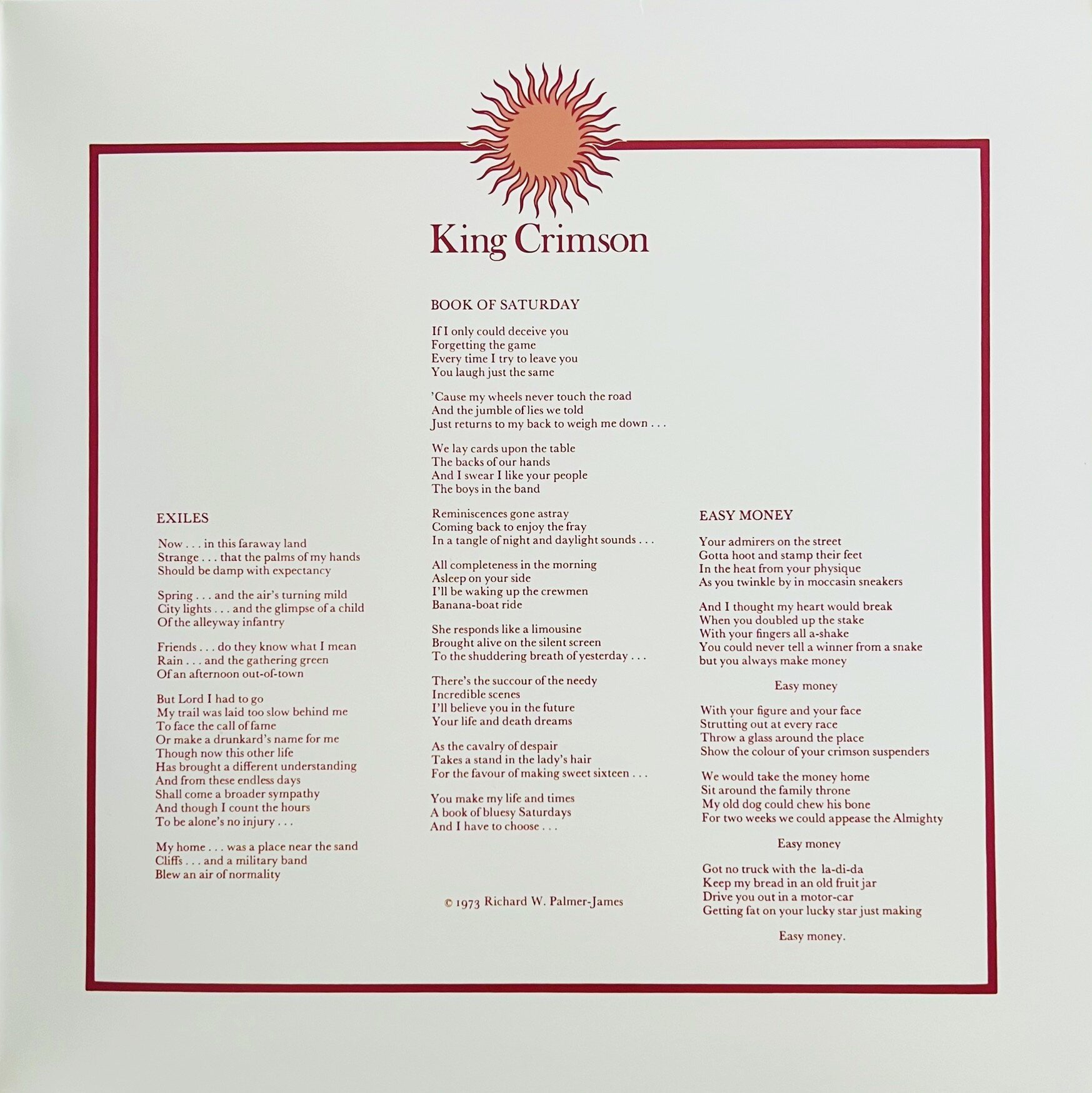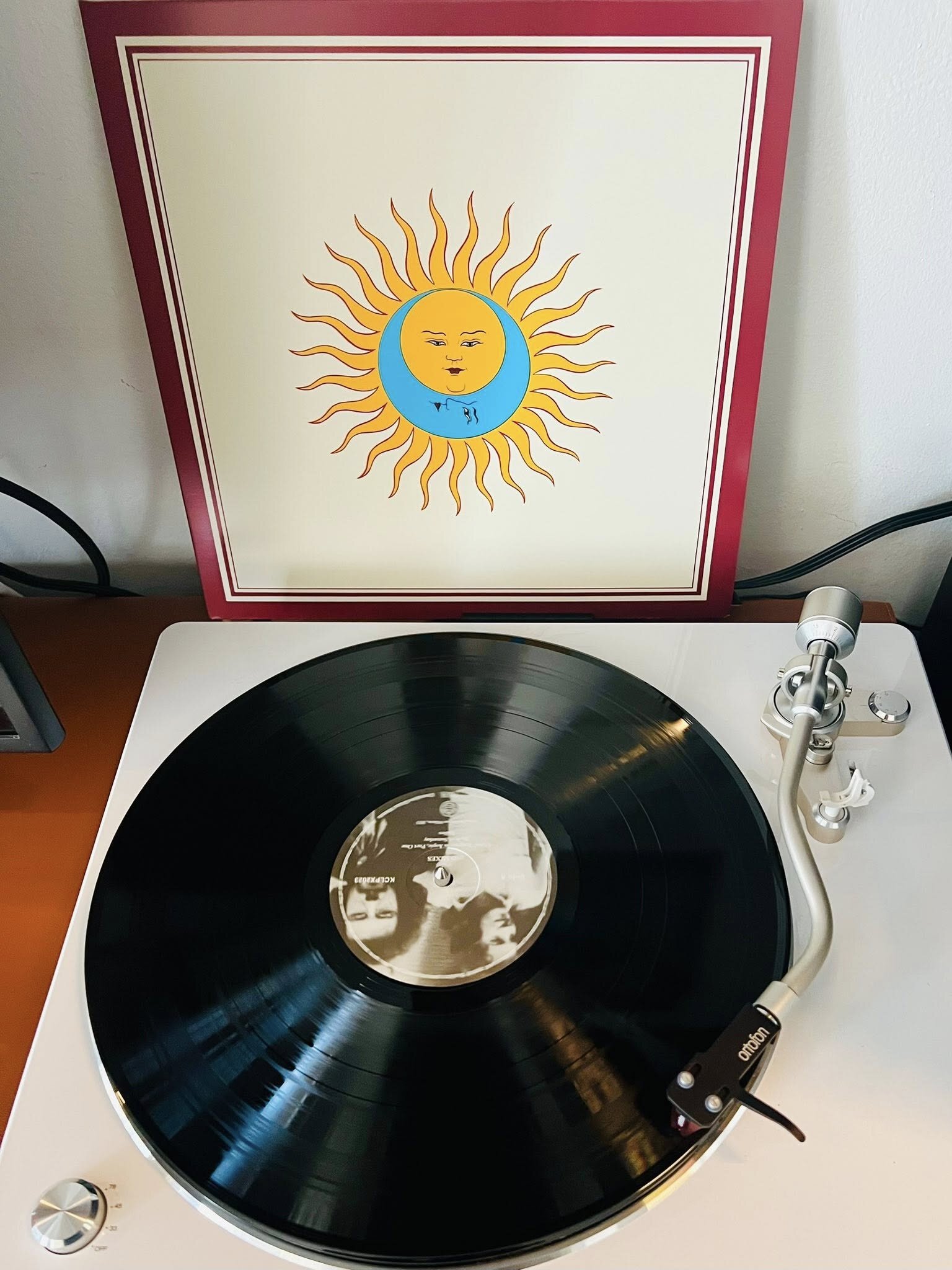
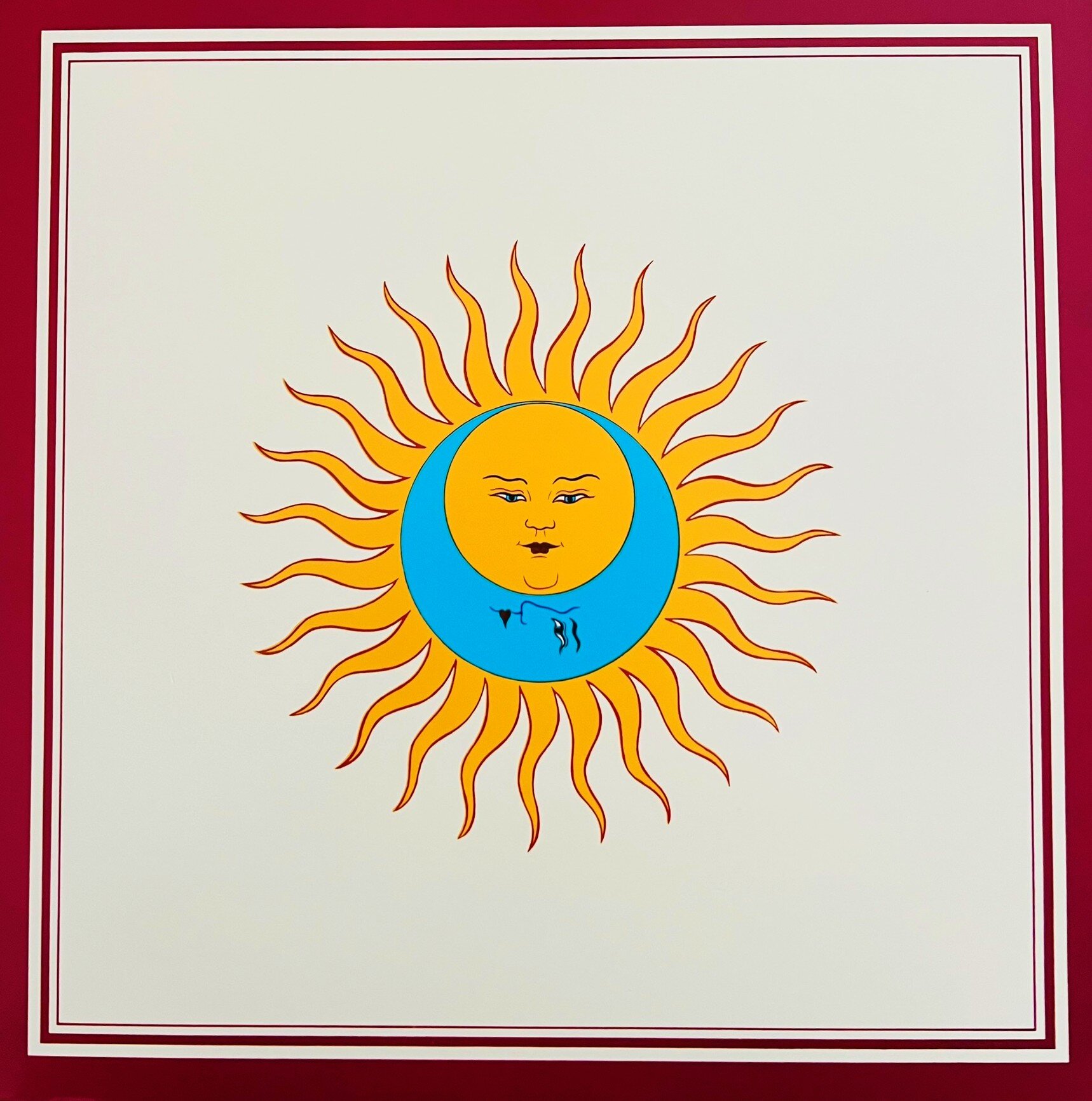
Larks' Tongues in Aspic, the fifth album, released in 1973, by the legendary King Crimson, is one of the greatest progressive albums of all time. This is the Steven Wilson remix with an additional LP featuring David Singleton's mixes.
Robert Fripp, the only survivor from the previous lineup, brought Yes drummer Bill Bruford on board, and shortly thereafter bassist/vocalist John Wetton also joined. Wetton brought with him lyricist Richard Palmer-James, a founding member of Supertramp, who remained King Crimson's lyricist for three albums. Percussionist Jamie Muir and violinist/violist David Cross completed the lineup. In February 1973, the new quintet entered the studio, and the album was released a month later.
Approximately 46 minutes, six tracks, three per side, to compose a sumptuous album, made of collective improvisations, ballads, harmonies on electric guitar and violin arpeggios, masterful electric guitar solos, a bit of the early King Crimson sound with Exiles, Fripp's distorted guitar, but also with "The Talking Drum," jams with ethnic percussion (hence the title), a din of strident sounds, bicycle horns played directly with the mouth, violent moments alongside softer passages, harmonic progressions full of disquiet.
"In Larks' Tongues in Aspic, Part Two" deserves to be cited as an emblematic piece, in my opinion, of this phase of King Crimson. It was also covered in concert by subsequent lineups in the '80s and '90s, and would later be featured in "Parts III" and "Part IV" (in '84 and 2000), making it a recurring piece that traces the band's evolution.
A complex album, not easy for everyone to digest, but with an extreme quality of execution that makes it a masterpiece, a reference point for '70s progressive rock and beyond.
A few side notes:
The album features a home recording by Bill Bruford from a randomly chosen radio show.
The album title was coined by Jamie Muir, an eccentric percussionist, when asked about the nature of the music he was playing with King Crimson, meaning "something delicate and ethereal immersed in a dense, full-bodied element," a sort of union between Yin and Yang that, according to Fripp, "also effectively symbolized the idea of the incarnation of the soul at the moment of conception."
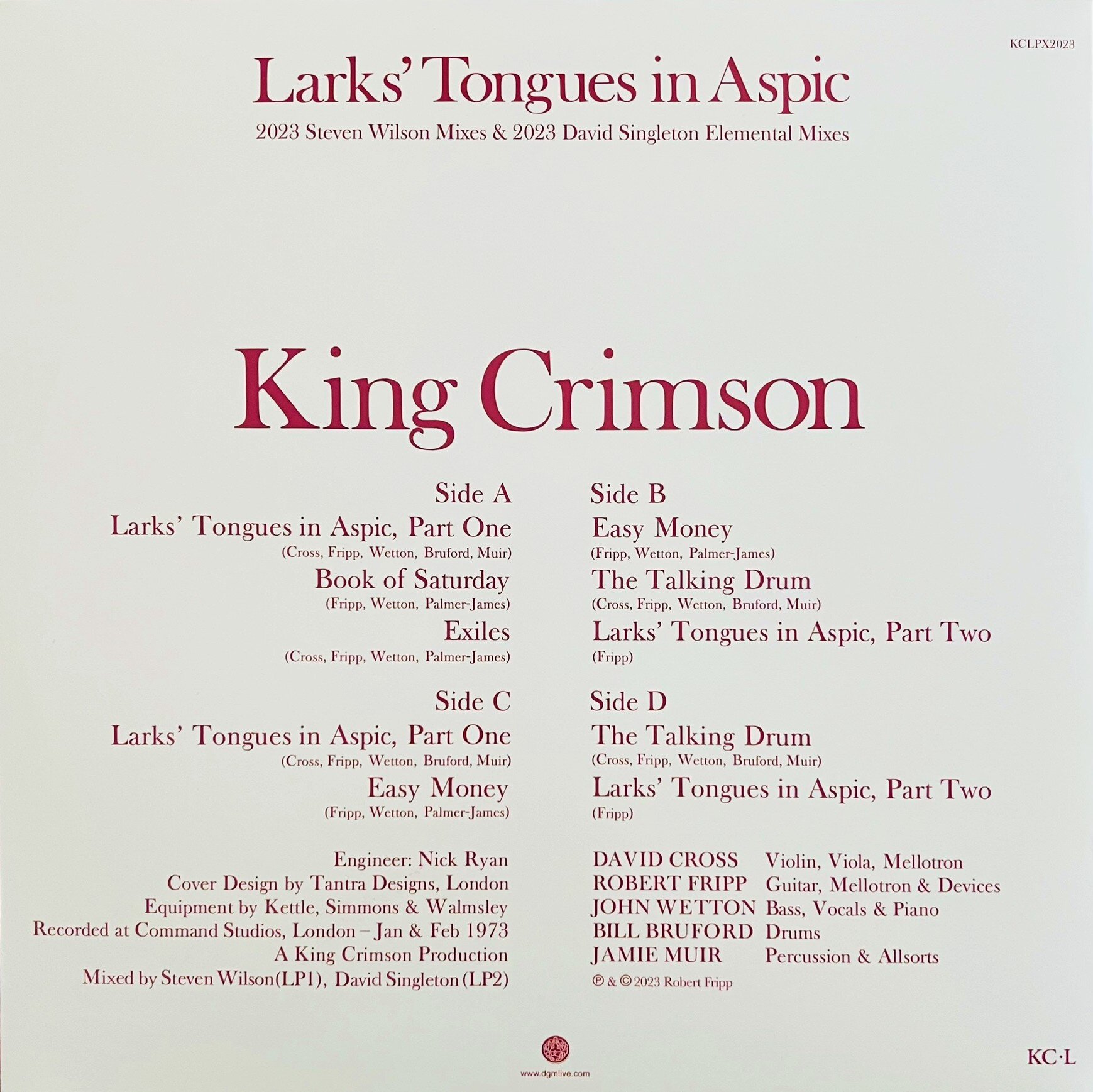
Tracklist
1. Larks' Tongues in Aspic, Part One (13:36)
2. Book of Saturday (2:49)
3. Exiles (7:40)
4. Easy Money (7:54)
5. The Talking Drum (7:26)
6. Larks' Tongues in Aspic, Part Two (7:12)
Running Time 46:37
Lineup
- Robert Fripp - guitar, Mellotron, electronics
- David Cross - violin, viola, Mellotron, electric piano, flute (3)
- John Wetton - bass, piano (3), vocals
- Bill Bruford - drums, percussion
- Jamie Muir - percussion, drums
Note: All links to the musicians' works are in the TAGS under the article title or on the "Artists" page.