

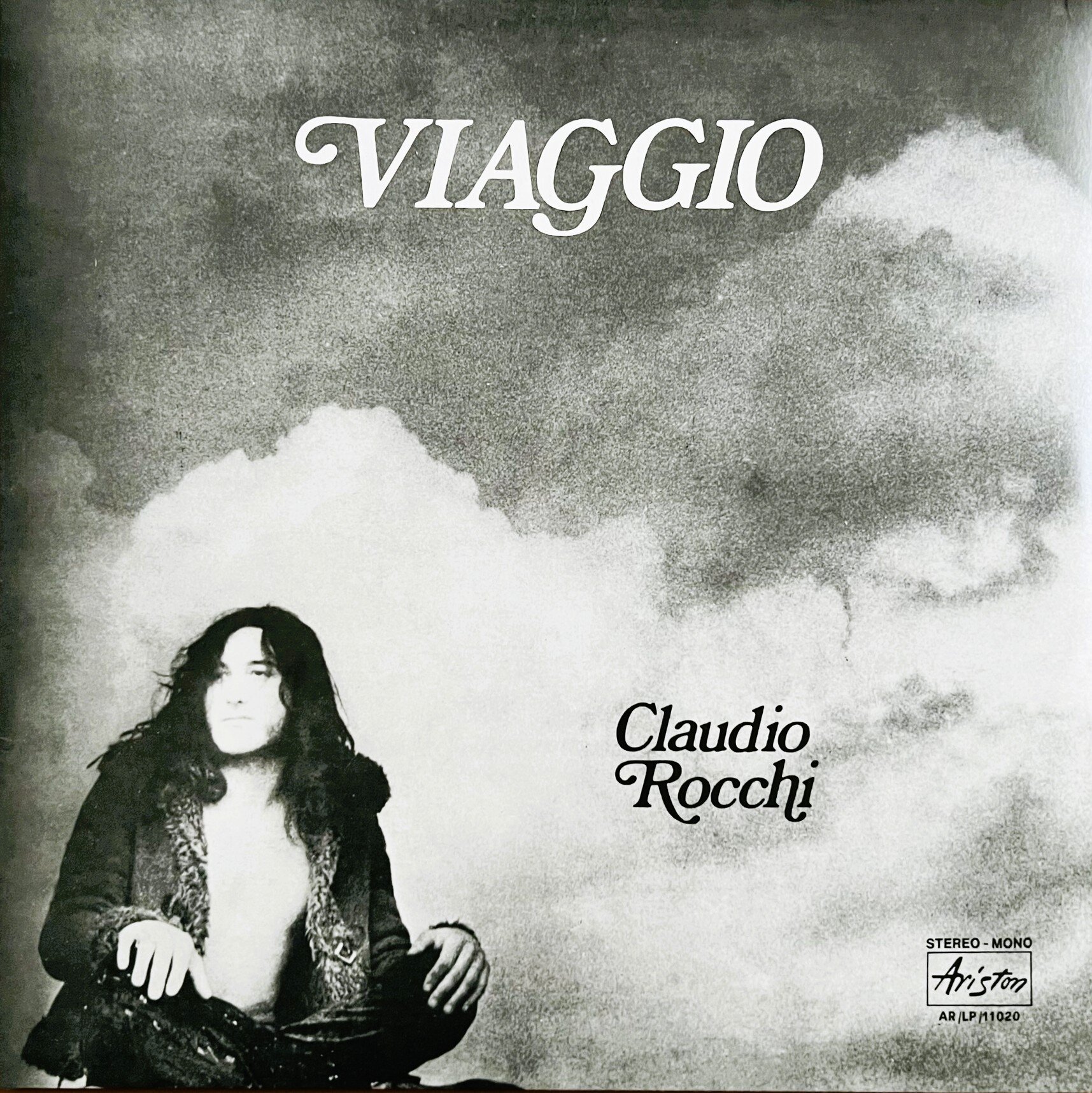
Viaggio, Claudio Rocchi's first solo album, released in 1970
Claudio Rocchi was a giant of Italian music, not only in the Italian progressive rock scene. Born in 1951 and passed away in 2013, he was a singer-songwriter, musician, and radio host (he even founded the first free radio station in Nepal, "The Himalayan Broadcasting Company," which he directed for three years), with a successful solo career in the 1970s. Throughout his life, he embraced Eastern spirituality, becoming a Hare Krishna in the late 1970s, a fact evident in the lyrics of his works.
He began as the bassist for the legendary Italian progressive rock band Stormy Six. He then released his debut album, Viaggio, in 1970, followed by Volo Magico numero 1 in 1971, two masterpieces.
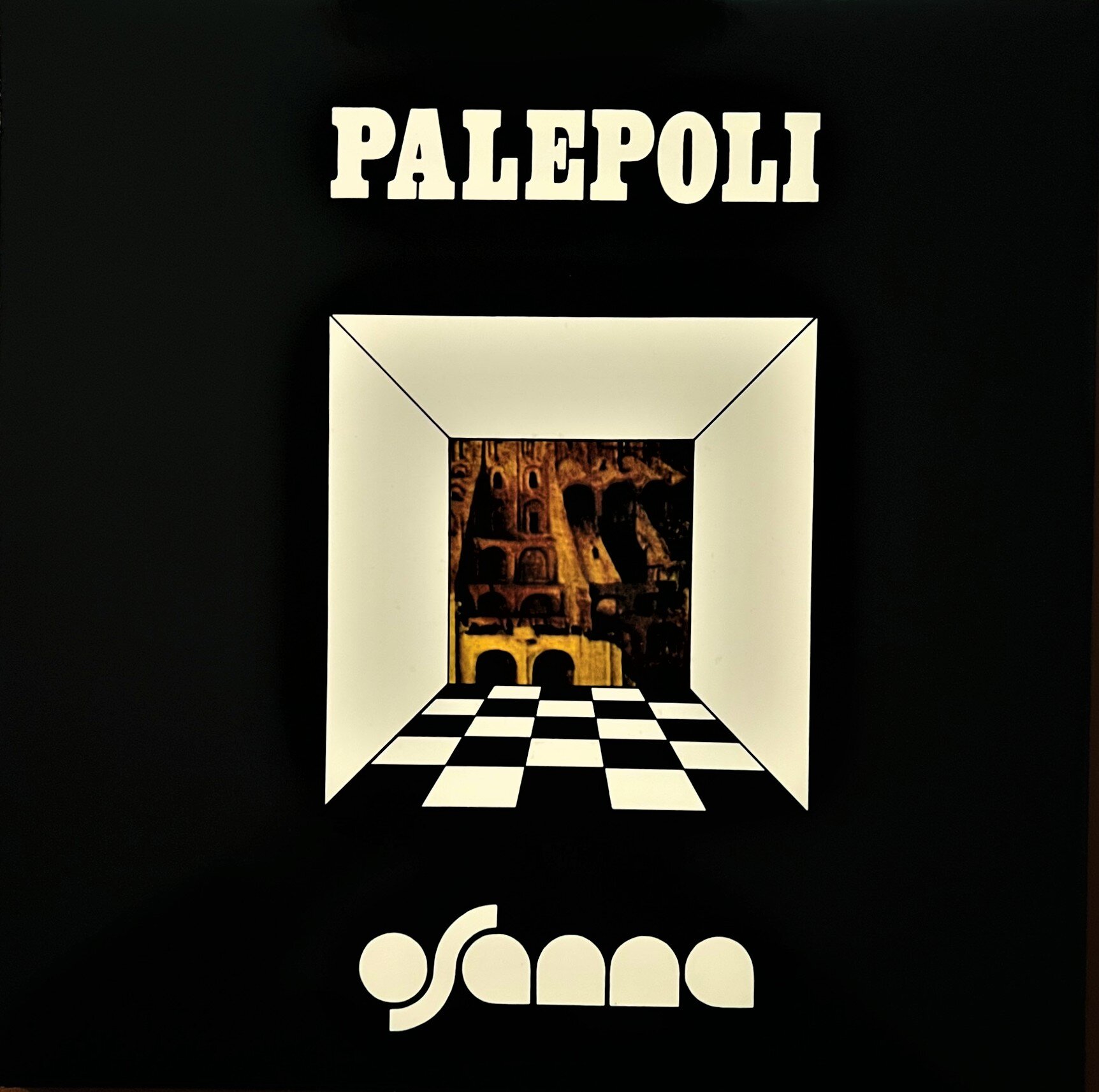
Claudio Rocchi's sound ranged from experimental, psychedelic-influenced folk, electronic music, and, in recent years, excellent pop/rock. He collaborated with giants of the Italian progressive rock scene, including Mauro Pagani (PFM), Elio D'Anna (Osanna) and Paolo Tofani (Area) , to name a few.
He distanced himself from mainstream music and returned in the 1990s, releasing his last album, "In Alto," in 2011.
He died on June 18, 2013, at the age of 62, from an incurable degenerative disease.
This debut album was released when he was just nineteen, the first of a career that would see him become a prominent figure in the world of Italian alternative music for nearly forty years. This debut album began his "journey," spanning over twenty albums, in search of his inner self.
This is a predominantly acoustic and folk album featuring acoustic guitar, piano, and light percussion. Rocchi plays guitar and sings, joined by Mauro Pagani (flute, violin, bongos) and backing vocalists. The album has a melancholic and meditative atmosphere, far removed from the progressive sound of his later works, and features sonic experiments and psychedelic poetry in the lyrics.
The themes explored are linked to Eastern mysticism, religious exploration, and self-understanding, which became central themes in Rocchi's artistic journey and which address the search for an identity and a lifestyle alternative to the dominant society, as well as generational rebellion.
A highly personal and intimate album, it conveyed a deeply felt countercultural message of the time, and did so in a highly engaging way.
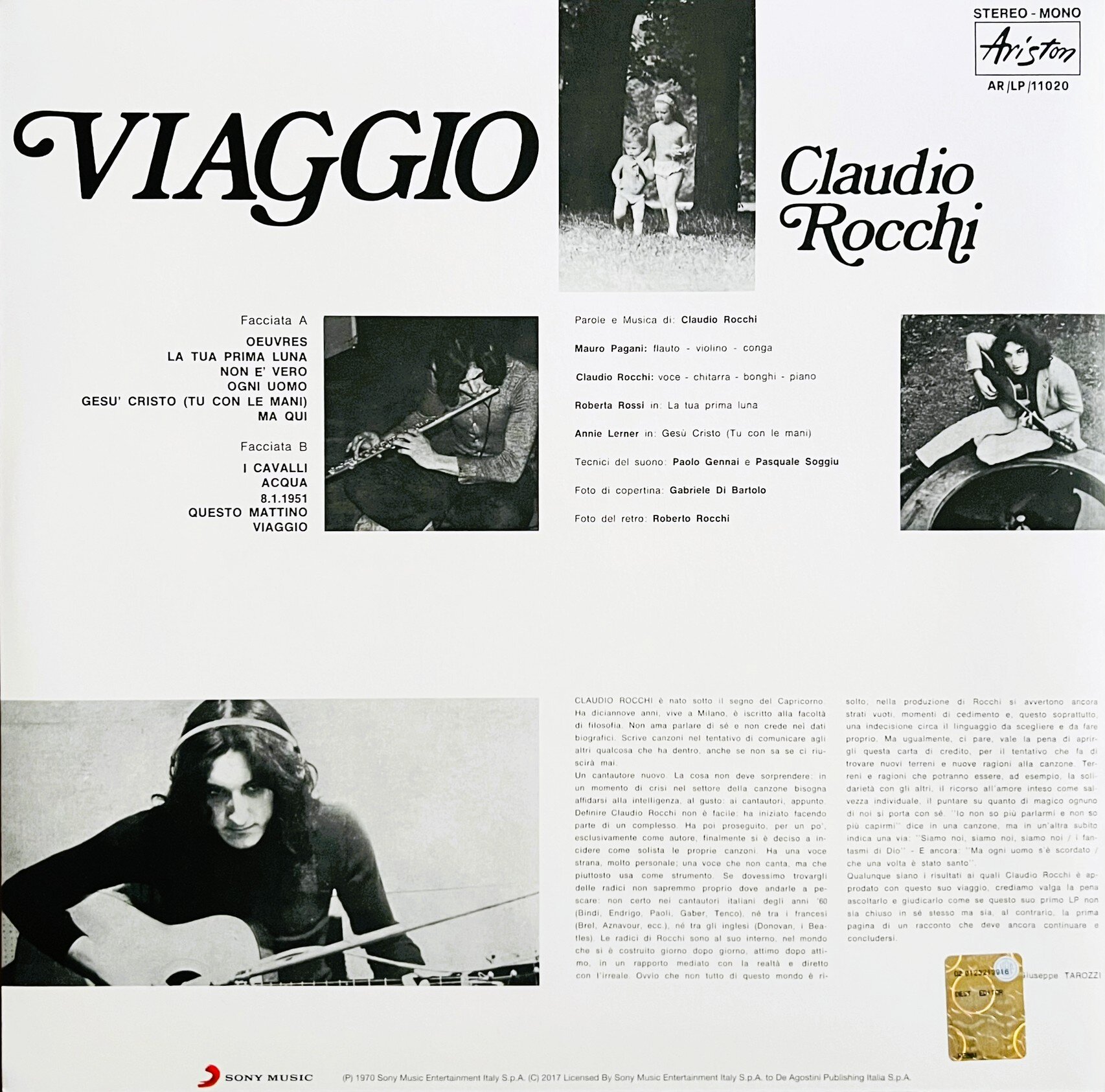
The album contains 11 tracks for a total running time of approximately 46 minutes.
- "Oeuvres" is an experimental collage of noises, sighs, and sounds—experimental, unconventional, and psychedelic—that transcends the music itself and represents a formal departure from the traditional song format, a moment of cultural reconciliation.
- "La Tua Prima Luna" is a very intimate piece, based on acoustic guitar and vocals. The lyrics are emblematic of the search for new styles and capture the precise moment in which the journey toward a different kind of autonomy begins: "This is your first moon you see, out of the house knowing you won't return. Today you went out and asked yourself, where am I going and what will I do?"
- "Non È Vero" is a short, acoustic, melancholic folk piece centered on Rocchi's light, touching voice.
- "Ogni Uomo" touches on philosophical themes of human existence; it's an acoustic and meditative piece.
- "Gesù Cristo" (evidently) touches on religious themes and different belief systems with a respectful and interlocutory tone.
- "I Cavalli" is a splendid interlude.
- "Acqua" is a short, very poetic piece in which water is represented as a metaphor for spirituality and the flow of life.
- "Giusto Amore" is a masterpiece, psychedelic rock and blues-rock with beautiful choruses, a jam with great piano work.
- "8.1.1951" is a song titled after Claudio Rochi's birth date. It's a very touching, autobiographical piece that describes the exact moment he was born and his complex relationship with his mother, conveying the feeling that something is "ending" just as his life began, and the sense that she is "missing."
- "Questo Mattino" is a beautiful, very intimate acoustic piece that expresses disillusionment with everyday life and existence itself, a theme linked to the search for meaning and an alternative to conventional society.
- Viaggio, the title track, is a conceptual summary of the album. It speaks of a journey, both physical and, above all, spiritual, with an oriental atmosphere, a sort of "journey" to self-discovery.
The album was released with three different covers. Two of Rocchi's schoolmates, Roberta Rossi and Annie Lerner, the sister of journalist Gad Lerner and later art director of the renowned photographer Oliviero Toscani, also participated in the recording.
One of the most original and interesting singer-songwriters of his generation. Without a doubt, a giant of Italian music.
Note: All links to the musicians' works are in the TAGS under the article title or on the "Artists" page.
Tracklist
1. Oeuvres (5:43)
2. La tua prima luna (3:42)
3. Non e' vero (2:37)
4. Ogni uomo (4:54)
5. Gesu' Cristo (Tu con le mani) (5:58)
6. Ma qui (1:10)
7. I cavalli (1:58)
8. Acqua (5:26)
9. 8.1.1951 (4:55)
10. Questo mattino (2:05)
11. Viaggio (7:32)
Durata 46:00
LineUp
- Claudio Rocchi - guitar, vocals, piano, bongo drums
- Mauro Pagani - flute, violin, conga
- Roberta Rossi - vocals (2)
- Annie Lerner - vocals (5)

.jpeg "Maledetti (maudits) by Area")