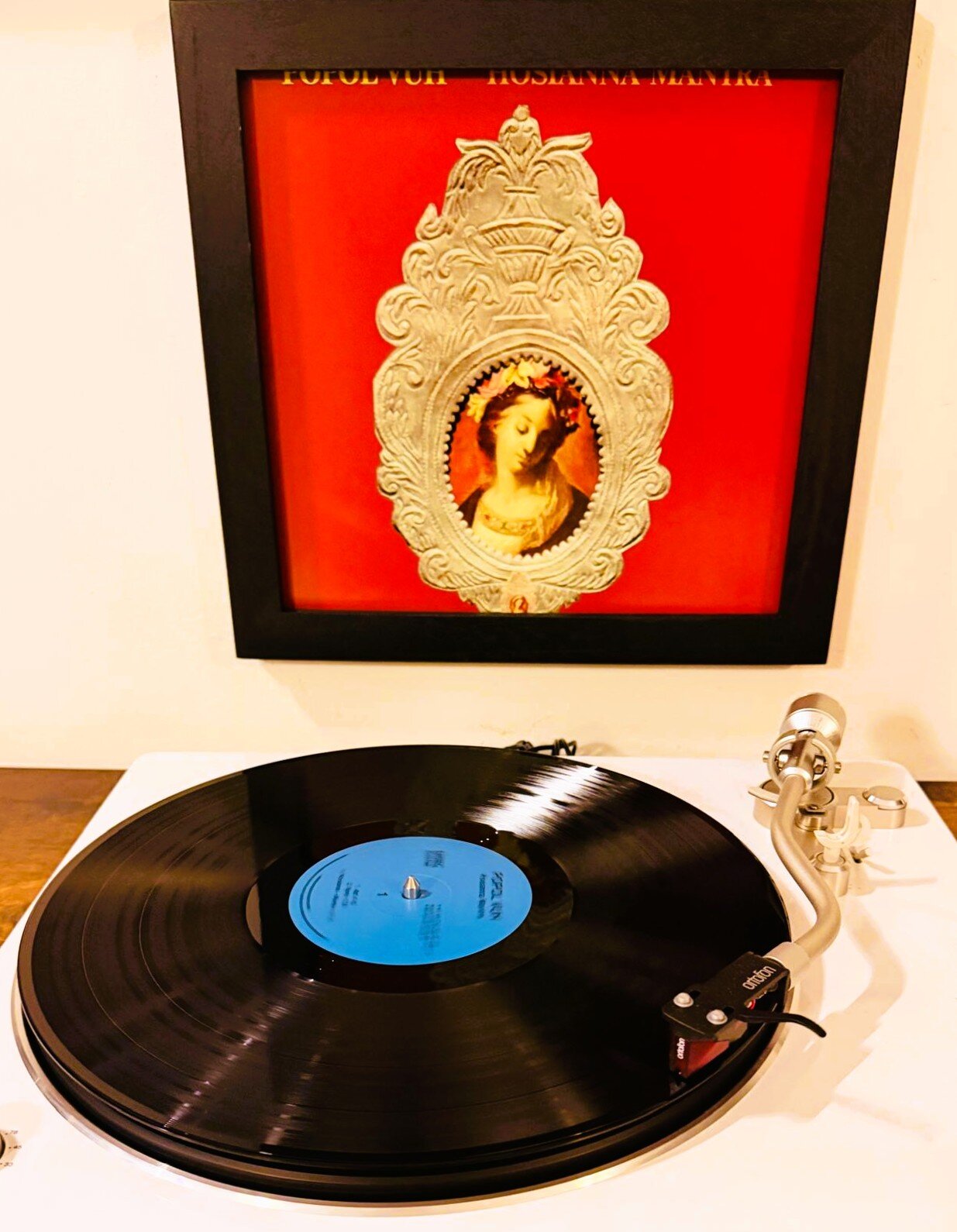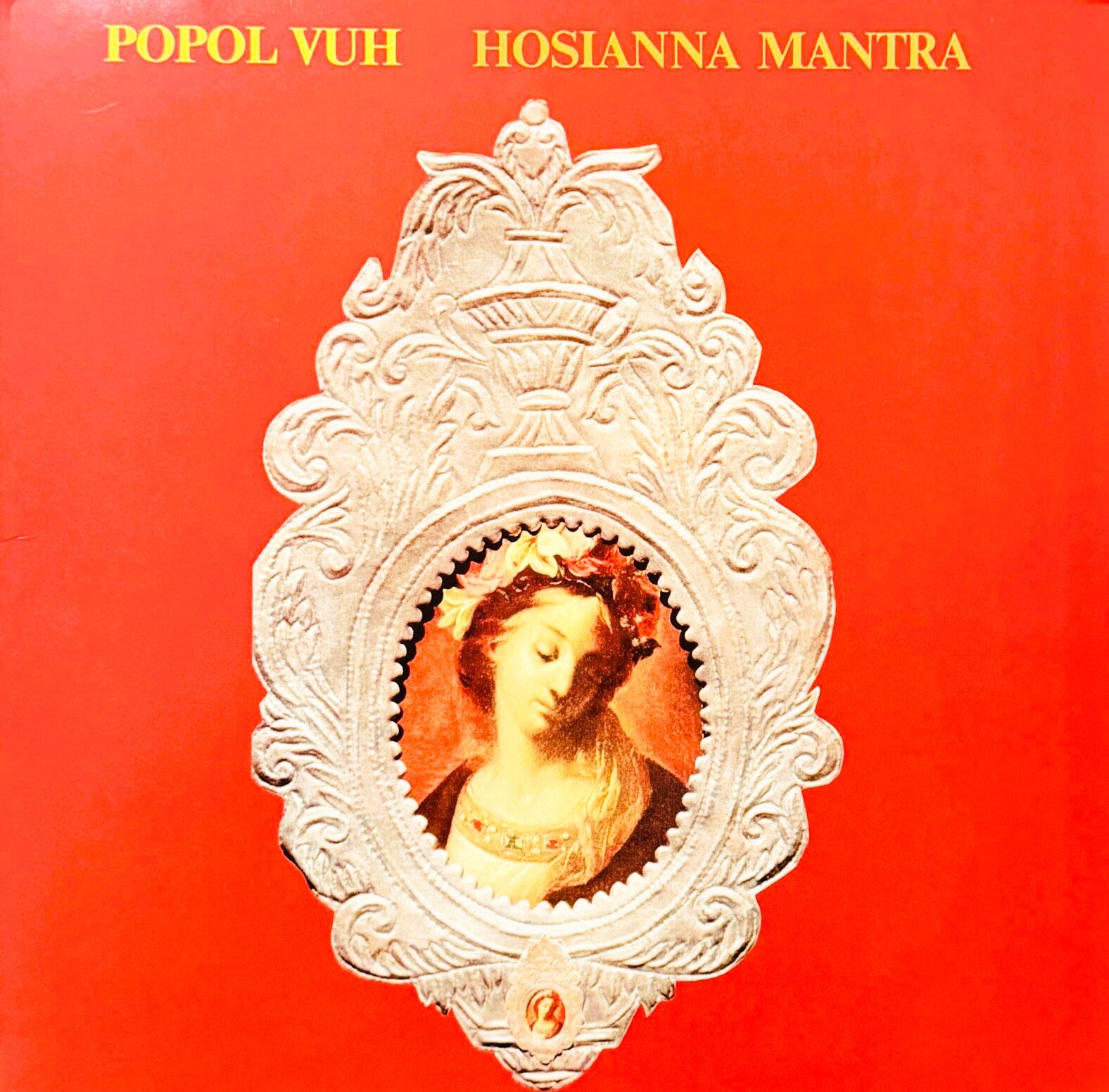
Hosianna Mantra by Popol Vuh, 1972 album.
Popol Vuh is a German band, pioneers of Krautrock and cosmic music (Kosmische Musik), founded in 1969 by Florian Fricke.
The original group consisted of Florian Fricke (keyboards), Holger Trulzsch (percussion), and Frank Fiedler (electronics).
The band's name derives from the "Popol Vuh," the "Sacred Book" or "Book of the Community" (or "Book of the Council") of the ancient Quiché Maya of Guatemala. It recounts the creation of the world, the adventures of the heroic twins Hunahpú and Xbalanqué, and the genealogy of the Quiché kings, describing the gods' attempts to create humans, demonstrating the group's interest in myths, spirituality, and pre-Columbian cultures.
Their style was a blend of rock, sacred music, electronic sounds based on the innovative use of the Moog synthesizer, and ethnic instruments, anticipating New Age and World Music, with ethereal, sometimes hypnotic atmospheres.
Their compositions have a spiritual, dreamlike, proto-New Age character, and are precursors of modern ethnic and spiritual music. They inspired the soundtracks of Werner Herzog, with whom the band, and especially its founder, collaborated intensely, culminating in the creation of the soundtracks for the director's films, including Aguirre, the Wrath of God and Fitzcarraldo.
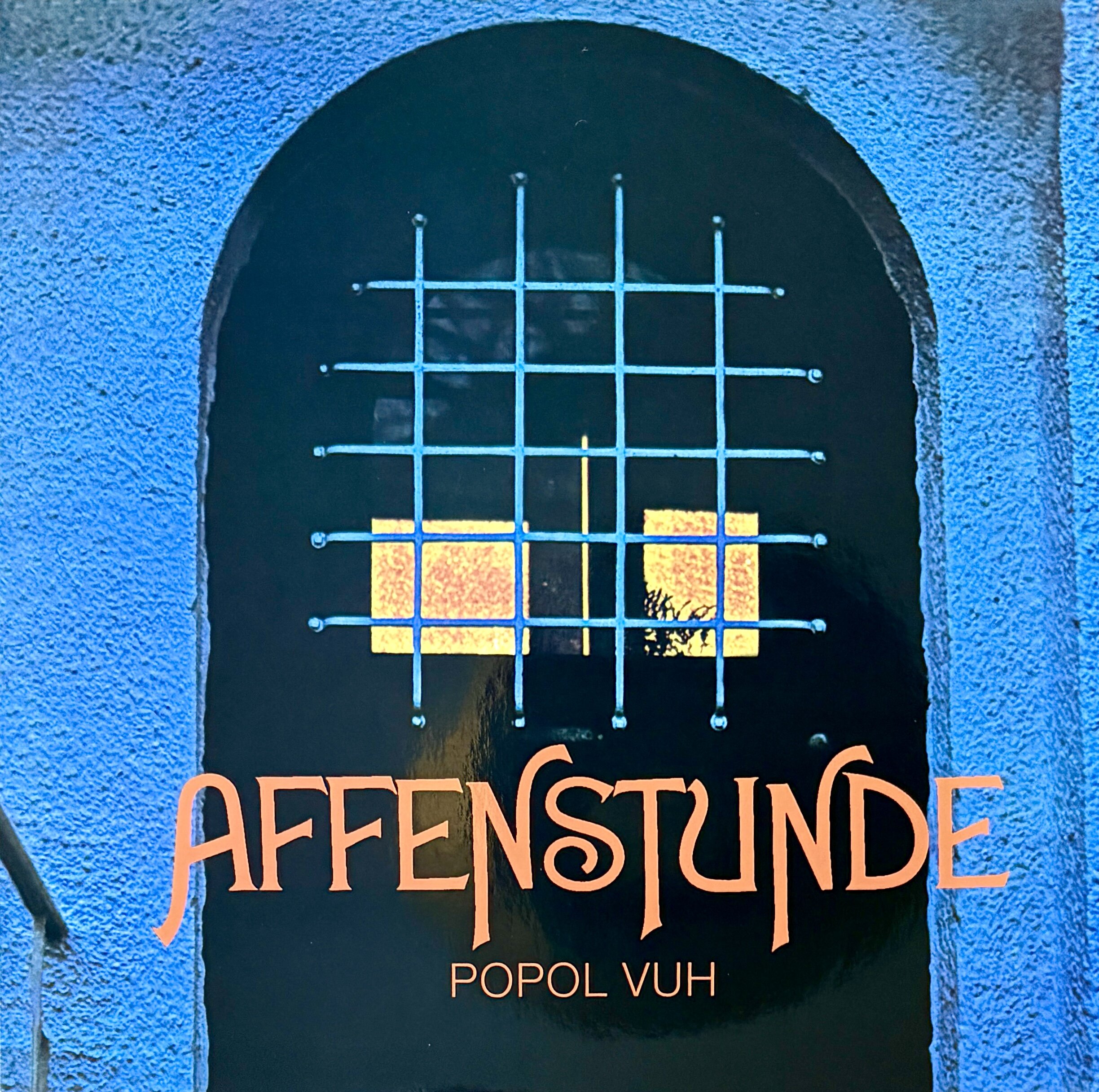
Among their most important albums are Affenstunde (1970), a landmark in electronic music, a debut already imbued with spiritual themes and ethnic influences, and Hosianna Mantra (1972), a turning point towards devotional and meditative music.
Also beautiful is In den Gärten Pharaos (1971), an ambitious work that blends ambient atmospheres, tribal percussion, and futuristic sounds.
The group disbanded after the death of founder Florian Fricke in 2001, who died at the age of 57 from a stroke (or heart attack, according to other sources) in his sleep. His passing marked the definitive end of the group. Fricke was its only permanent member and main composer, and is today remembered as one of the first to adopt the Moog synthesizer in Europe, before dedicating himself entirely to the pursuit of "contemporary sacred music" using acoustic instruments, including the piano.
His partnership with Werner Herzog lasted over thirty years, producing iconic soundtracks that defined the aesthetic of new German cinema. In the final years of his life, he devoted himself to the study of music therapy and developed a vocal training method called "The Alphabet of the Body."
Hosianna Mantra is their masterpiece and a cornerstone of German cosmic music (krautrock).
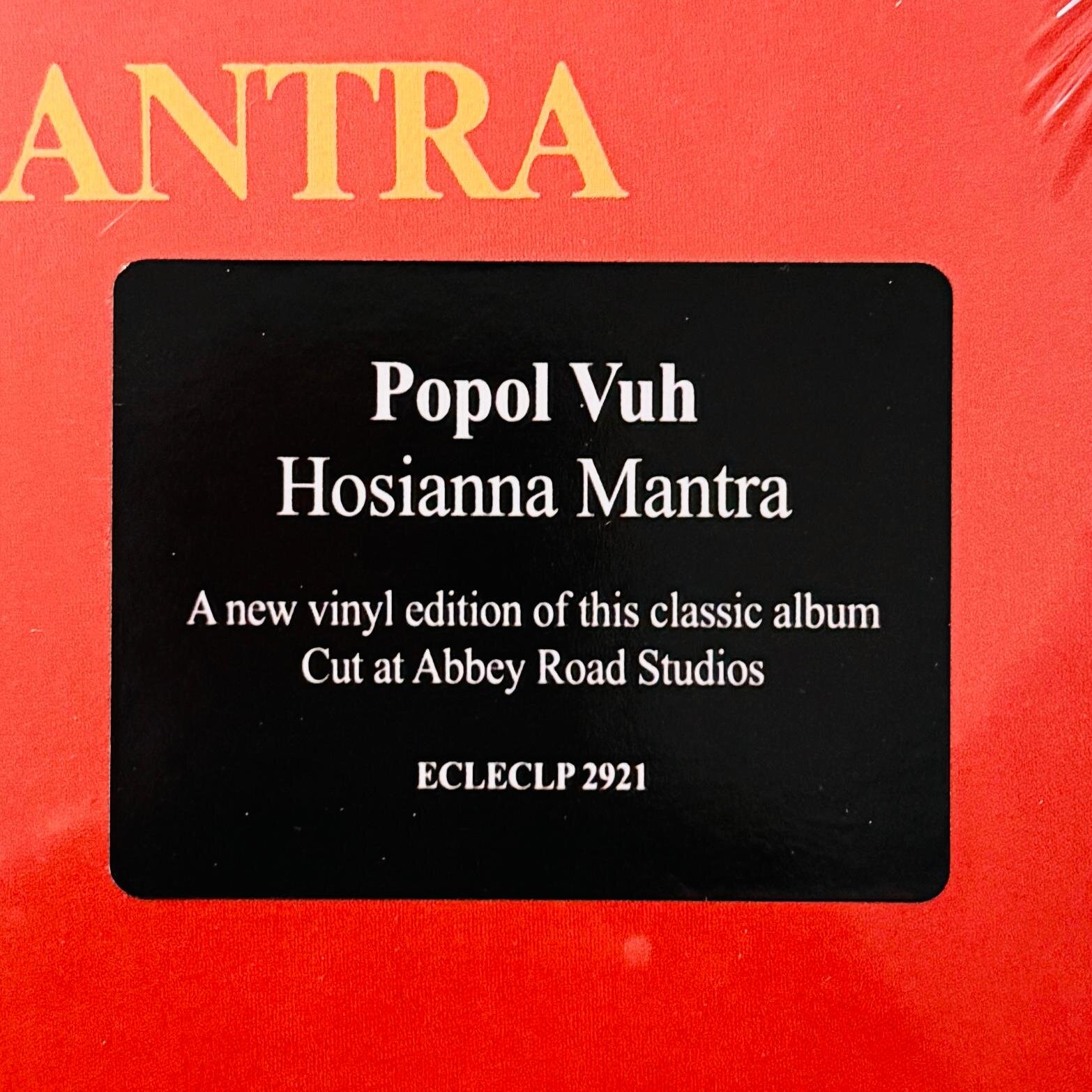
This is the beautiful remastered version faithful to the original, released on October 24, 2025 (Cherry Red Records).
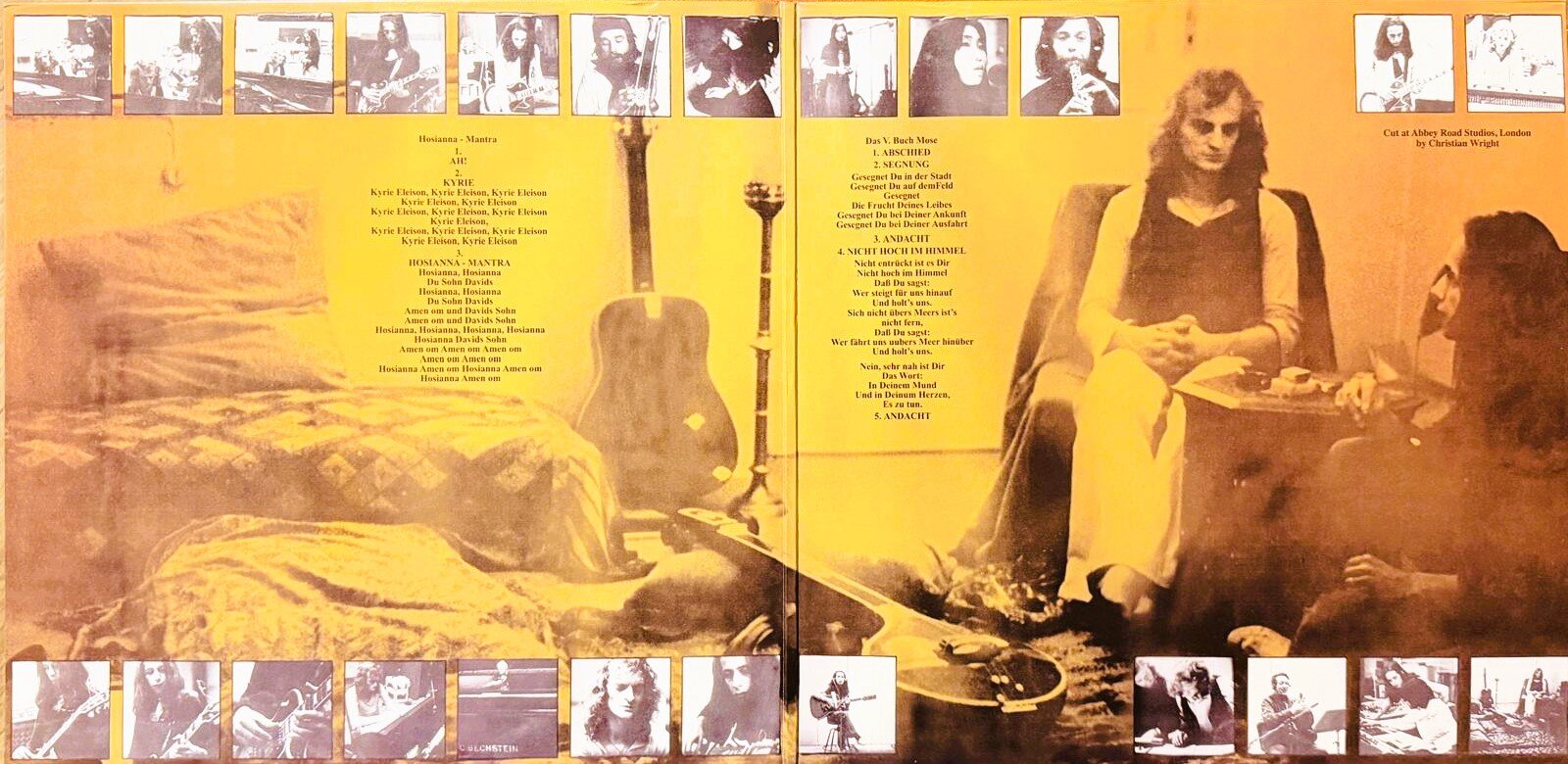
This album marks a radical turning point in the career and life of Florian Fricke, who, after pioneering the Moog, completely abandoned electronics in favor of purely acoustic and electroacoustic instrumentation. The title expresses the intention to reconcile Western religious traditions ("Hosianna") with Eastern ones ("Mantra"), and it does so through ethereal, meditative, and solemn sounds thanks to fantastic interactions between piano (by Fricke), electric guitar (by Conny Veit), oboe, and harpsichord.
The celestial voice of Korean soprano Djong Yun enhances the sacred tone of the compositions.
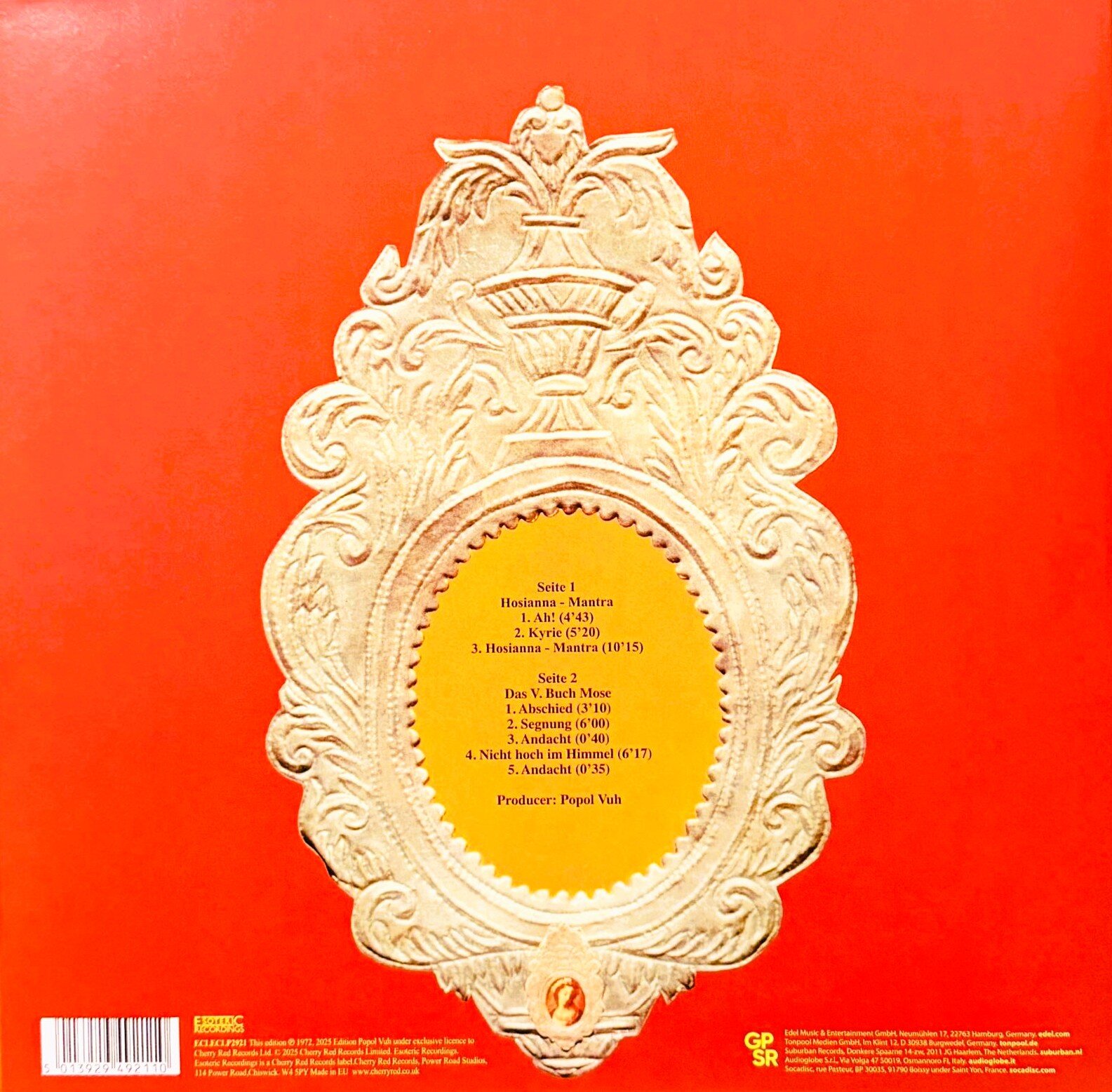
The original album is divided into two suites: Hosianna Mantra, which includes pieces such as "Ah!," "Kyrie," and the title track, focusing on devotion and sonic purity; and "Das V. Buch Mose," a sequence of shorter pieces (including "Abschied" and "Segnung") inspired by Deuteronomy.
Suite 1, Hosianna Mantra, focuses on the search for spiritual purity.
- Ah! The album opens with a romantic, minimalist piano sonata featuring Conny Veit's ethereal electric guitar and the tamboura, a long-necked, gourd-like lute with four fretless strings that produces a continuous sound (drodon) via silk threads on the bridge that generate harmonics. A fundamental instrument in Indian classical music (Hindustani and Carnatic), it creates a suspended atmosphere that slowly develops into a final "fugue" between piano and guitar.
- Kyrie is a piece based on a Christian litany, with Djong Yun's celestial voice alongside violin and piano.
- Hosianna Mantra, the ten-minute title track, is the album's standout piece, beginning timidly with Klaus Wiese's tamboura and evolving into ecstatic vocalizations that blend Gregorian chant with Eastern mantric structures, often and aptly described as a fusion of "sacred and profane."
Suite 2: Das V. Buch Mose (The Fifth Book of Moses) is inspired by Deuteronomy and continues the journey toward a more intimate spirituality.
- Abschied (Farewell) begins with a beautiful oboe and conveys a sense of alienation and serenity.
- Segnung (Blessing) is my favorite track on the album, with Djong Yun singing biblical texts over an atmospheric background reminiscent of remote sacred places with great solemnity.
- Nicht Hoch im Himmel (Not High in the Sky) is dominated by dark atmospheres that contrast with the rest of the album.
- Andacht (Devotion) is a track composed of short meditative interludes.
This is the album that most anticipated New Age, a magical and meditative album, whose listening evokes feelings of great peace and encourages reflection. Piano harmonies and ethnic instruments, with a sublime voice endowed with enormous emotional and interpretative power.
An album that is a MUST for any collection. Essential.
Note: All links to the musicians' works are in the TAGS under the article title or on the "Artists" page.
Tracklist
- Hosianna - Mantra:
1. Ah! (4:43)
2. Kyrie (5:20)
3. Hosianna - Mantra (10:15)
- Das 5. Buch Mose:
4. Abschied (3:10)
5. Segnung (6:00)
6. Andacht I (0:40)
7. Nicht hoch im Himmel (6:17)
8. Andacht II (0:35)
Duration 37:00
LineUp
- Djong Yun - soprano vocals
- Conny Veit - electric and 12-string guitars
- Florian Fricke - piano, harpsichord, producer
- Robert Eliscu - oboe
- Klaus Wiese - tambura
Featuring:
- Fritz Sonnleitner - violin