
The Power to Believe by King Crimson, 2003 album.
I've spoken extensively about King Crimson when reviewing some of their masterpieces, and this is no exception. Ever since their inception, this band, driven by an ever-evolving penchant for change and experimentation, has churned out masterpieces throughout their various phases, exploring diverse styles.
This album belongs to the initial phase of this century, known as King Crimson VI, with a lineup in which, since the end of The ProjeKcts, Bruford had officially left the band to pursue jazz with Earthworks and other groups, and Levin had begun collaborating with other artists outside of King Crimson, such as Peter Gabriel and Seal. He didn't seem inclined to rejoin the group, but was simply kept in "suspension" and considered the "fifth member" of King Crimson, even at that time, with Belew taking over his role.
The remaining members—Belew, Fripp, Gunn, and Mastelotto—resumed their activity as King Crimson in late 1999, sparking a further shift in the band's sound: Gunn began focusing on the Warr guitar, the baritone guitar, and the Ashbory bass with silicone strings. Mastelotto was increasingly experimenting with electronic instruments, leading to a massive use of technology.
They released a new album, The ConstruKction of Light, in 2000, and subsequently two EPs, Level Five and Happy With What You Have to Be Happy With, in 2001 and 2002. These effectively heralded 2023's The Power to Believe, which is also the band's most recent album as King Crimson to date.
The Power to Believe is, in my opinion, a 21st-century masterpiece that combines the band's historical legacy with the industrial sounds of the new millennium.
The title and main lyrics are derived from a haiku by Adrian Belew from his solo song, which reads:
"All Her Love Is Mine: "She saved my life... when she gave me back the power to believe."
Haiku is a poetic composition of Japanese origin, originating in the 17th century. It is characterized by extreme brevity and simplicity, with a precise structure and meter. It consists of just three lines for a total of 17 syllables, following a fixed pattern (First line: 5 syllables, Second line: 7 syllables, Third line: 5 syllables).
In this album, Belew uses the haiku structure: the opening and closing pieces, as well as the transitions between the main sections, are based on short, poetic texts that Belew himself explicitly defined as haiku.
The album's concept revolves around an apocalyptic and synthetic vision of modernity and is structured around a four-part suite.
The suite opens the album a cappella and explores phases Ambient and tribal (Part II) and moves towards violent, industrial sounds (Part III), concluding with Robert Fripp's Soundscapes (Part IV: Coda).
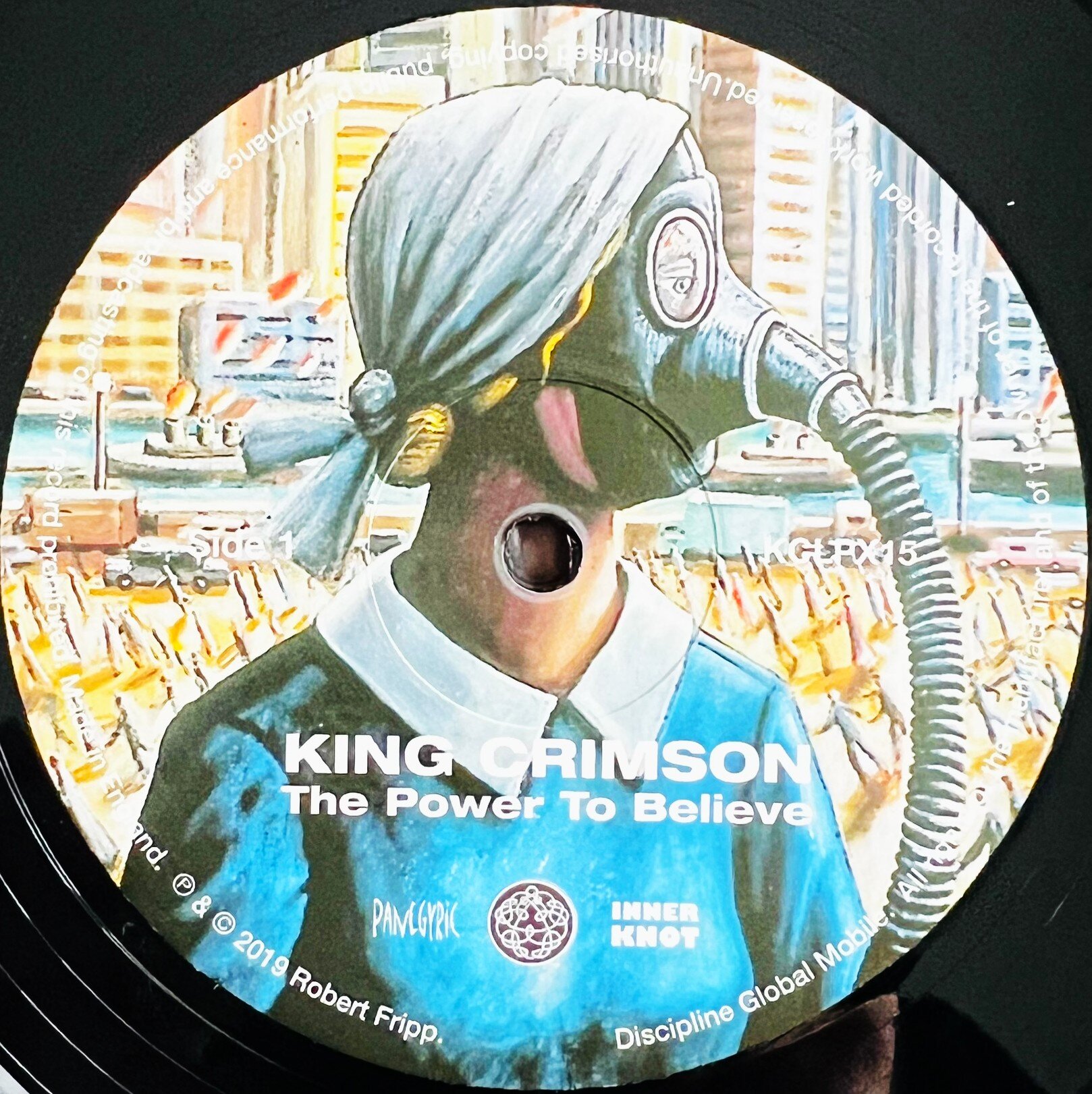
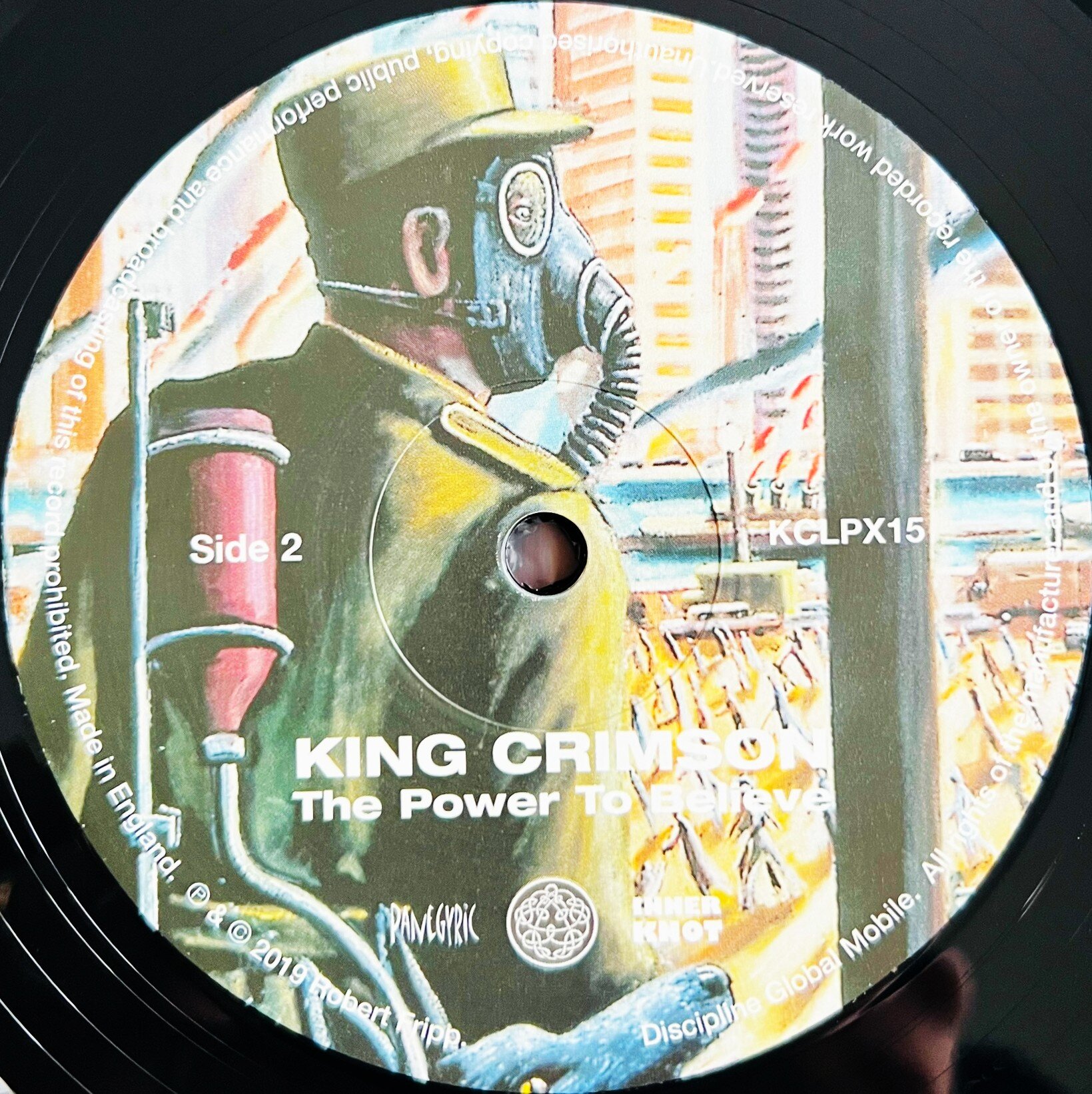
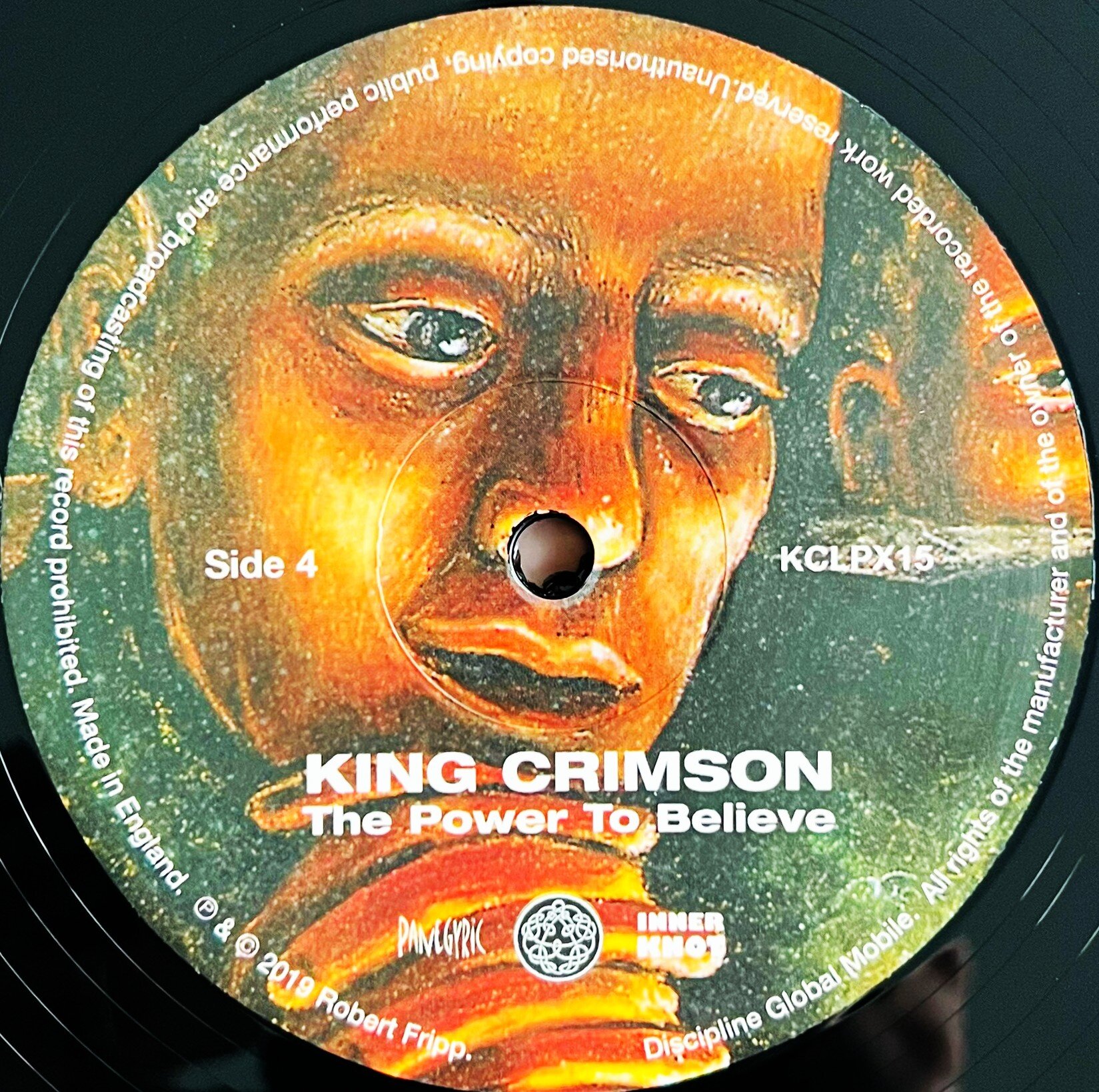
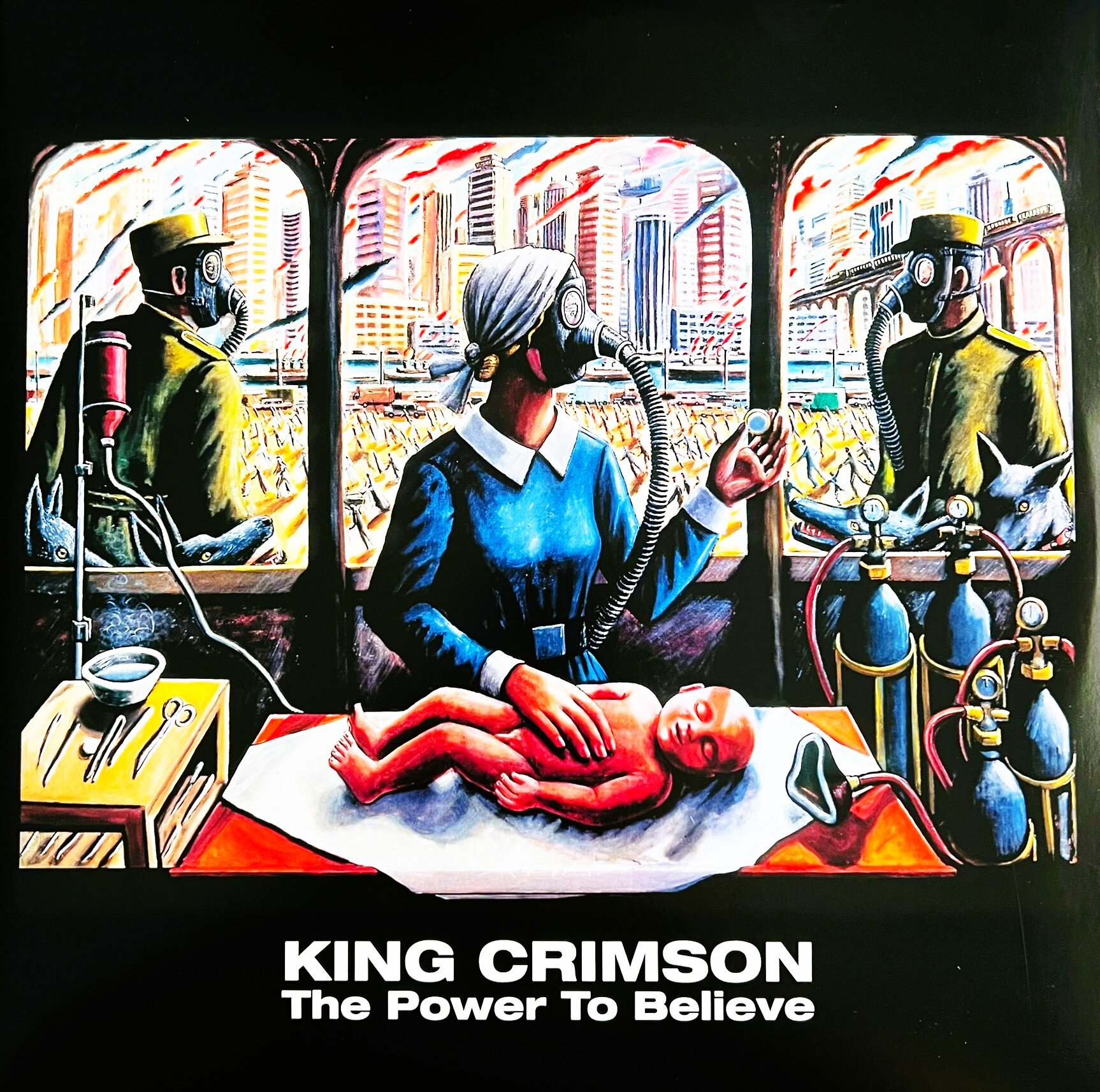
The sound creates a restless, technical atmosphere, epitomized by the album cover, a work by P.J. Crook depicting a newborn baby protected by hands in a dark room, while a polluted metropolis rages outside. The child symbolizes hope surviving in a crumbling world, with the sound conveying the sense of oppression caused by modern society.
The artwork is crucial to understanding the album, as it is not merely an aesthetic choice but is also tied to the album's themes.
The painting depicts a newborn baby stretched out in white swaddling clothes (a symbol of purity and vulnerability), held securely by two large, gnarled hands, in a sort of shelter against a cold, industrial urban landscape, typical of the album's "New Metal" sonic atmospheres.
The figures appear compressed, seen from unsettling angles, reflecting the complexity of odd time signatures. and Robert Fripp's musical structures.
The image visually illustrates Adrian Belew's haiku that runs through the album
"She saved my life... when she gave me back the power to believe."
The child in the artwork embodies that "power to believe," not as religious faith, but as a vital and creative force that resists the entropy and sonic violence expressed in songs like "Level Five."
The Child (The Newborn) is central to the work and represents innocence, vulnerability, and purity, embodying the "ability to believe" in a world that is becoming increasingly cold, mechanical, and cynical, a symbol of hope that must be protected by the Protecting Hands.
The Figures in the Background represent the anonymous mass, modern society moving in an oppressive, industrial urban environment, and contribute to the sense of isolation that is a central theme of the album.
Although he doesn't physically appear in the painting, Robert Fripp has an almost "personal" connection with P.J. Crook's characters. The artist often inserts small references or hidden "cameos" into his works; in this particular image, the austere atmosphere and precise linework reflect the bandleader's personality.
An album that also features room for irony, with "Happy With What You Have to Be Happy With," in which Belew openly jokes about the need to write a catchy chorus to satisfy the music market, contrasting the banality of "standard" lyrics with the group's instrumental complexity.
Conceptually, the album closes the circle of King Crimson's history with "Level Five," the fifth and final part of the landmark suite "Larks' Tongues in Aspic," linking the industrial present to its 1970s roots.
The "Larks' Tongues in Aspic" suite is, in fact, King Crimson's most iconic work, begun in 1973 and concluded (perhaps) in 2003, spanning thirty years of progressive rock history, evolving from experimental violin to industrial metal.
1. Larks' Tongues in Aspic, Part One (1973) from the album Larks' Tongues in Aspic, a monumental work lasting over 13 minutes that opens with Jamie Muir's metallic percussion and David Cross's violin, then explodes into a distorted, angular guitar riff by Robert Fripp, the birth of the darker, more experimental "Crimson sound."
2. Larks' Tongues in Aspic, Part Two (1973) from the album Larks' Tongues in Aspic, a shorter and more structured piece, purely instrumental with odd time signatures and heavy riffs.
3. Larks' Tongues in Aspic, Part III (1984) from the album Three of a Perfect Pair, which reflects the influence of New Wave and minimalism, with fast guitar interlocking.
4. Larks' Tongues in Aspic, Part IV (2000) from the album The ConstruKction of Light, divided into three sections, in the world of industrial rock, extremely technical, with electronic drums and guitars that sound like heavy machinery, and which includes the only vocal section of the suite entitled "Coda: I Have a Dream".
5. Level Five (2003) from the album The Power to Believe, which does not contain the name of the suite in the title but which Fripp officially identified as "Larks' Tongues in Aspic, Part V", the most brutal and modern piece, a wall of "New Metal" sound that definitively closes the cycle begun in 1973.
A suite that is considered the backbone of King Crimson's discography.
The album is essentially held together by a four-part suite (the title track) with a sound Fripp defines as "New Metal." Influenced by the band's collaboration with Tool, it features distorted guitars and complex rhythms, but it also contains, in addition to aggressive songs like "Level Five," the melody of ballads like "Eyes Wide Open."
The Power to Believe is the finest work by the Belew-Gunn-Mastelotto-Fripp lineup, the band's definitive manifesto, a fusion of metal, avant-garde, and ambient music into a single, coherent vision of modern society. A masterpiece.
Note: All links to the musicians' works are in the TAGS under the article title or on the "Artists" page.
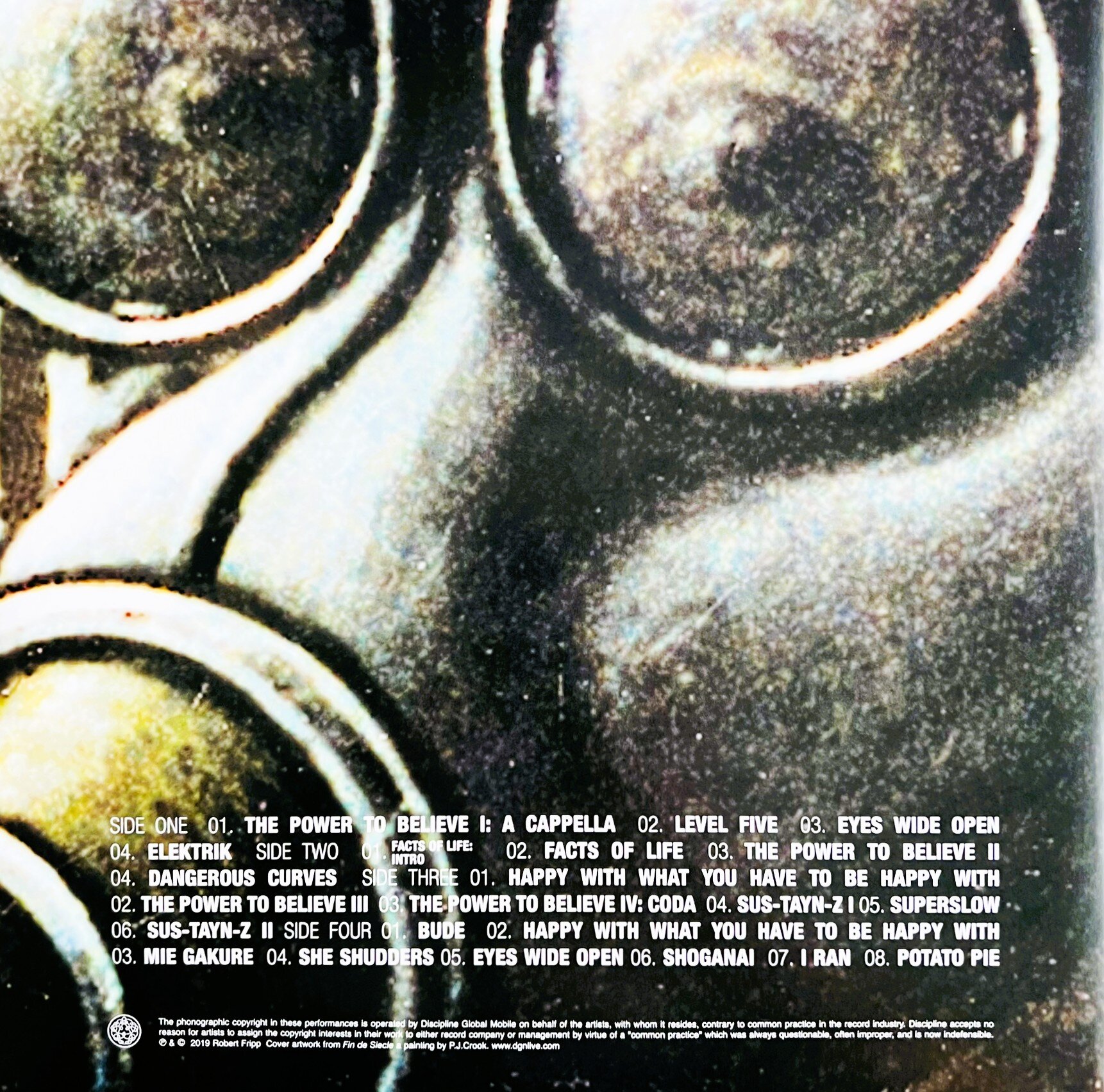
Tracklist
1. The Power to Believe I: A Cappella (0:44)
2. Level Five (7:17)
3. Eyes Wide Open (4:08)
4. Elektrik (7:59)
5. Facts of Life: Intro (1:38)
6. Facts of Life (5:05)
7. The Power to Believe II (7:43)
8. Dangerous Curves (6:42)
9. Happy With What You Have to Be Happy With (3:17)
10. The Power to Believe III (4:09)
11. The Power to Believe IV: Coda (2:29)
Duration 51:11
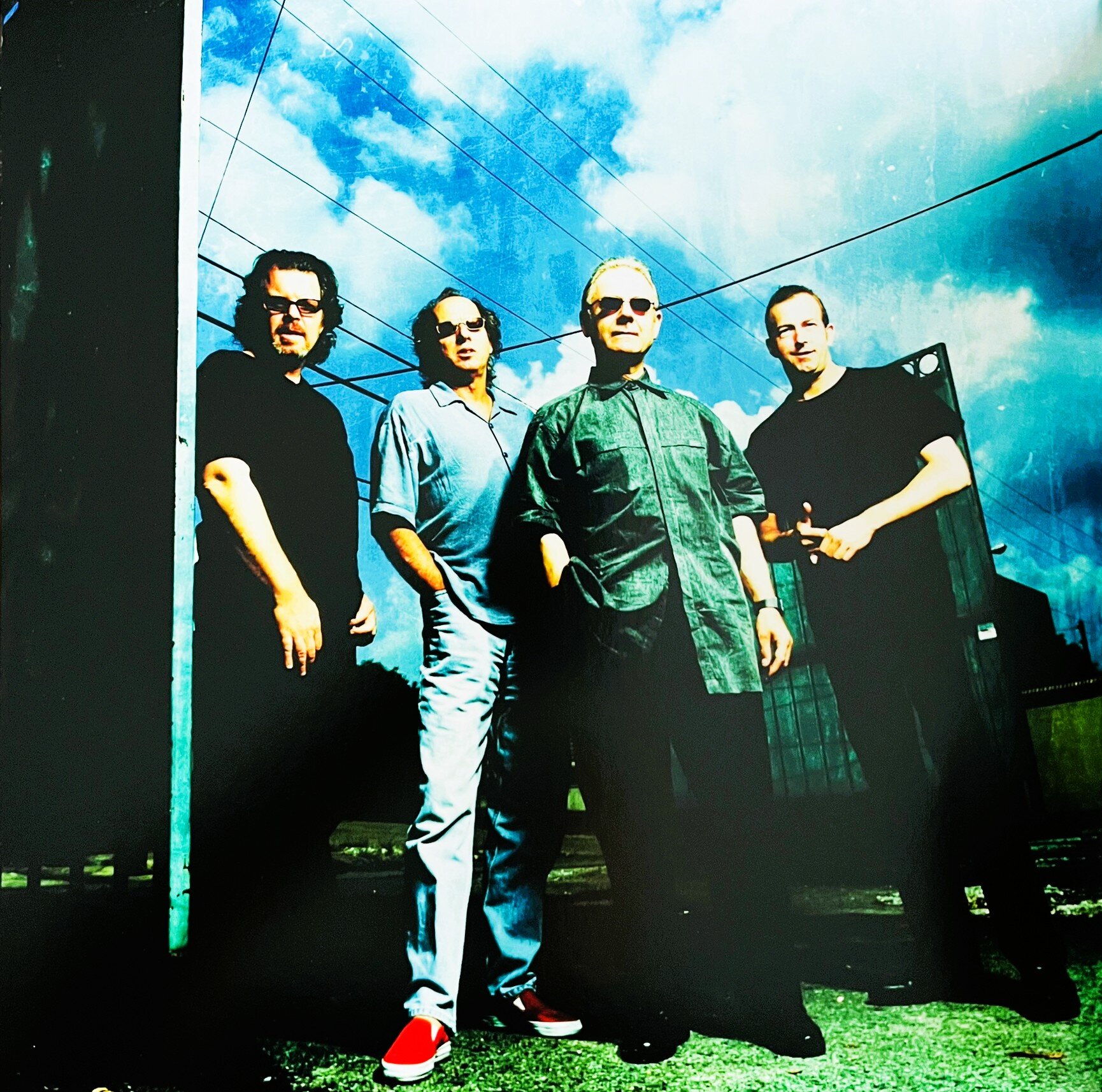
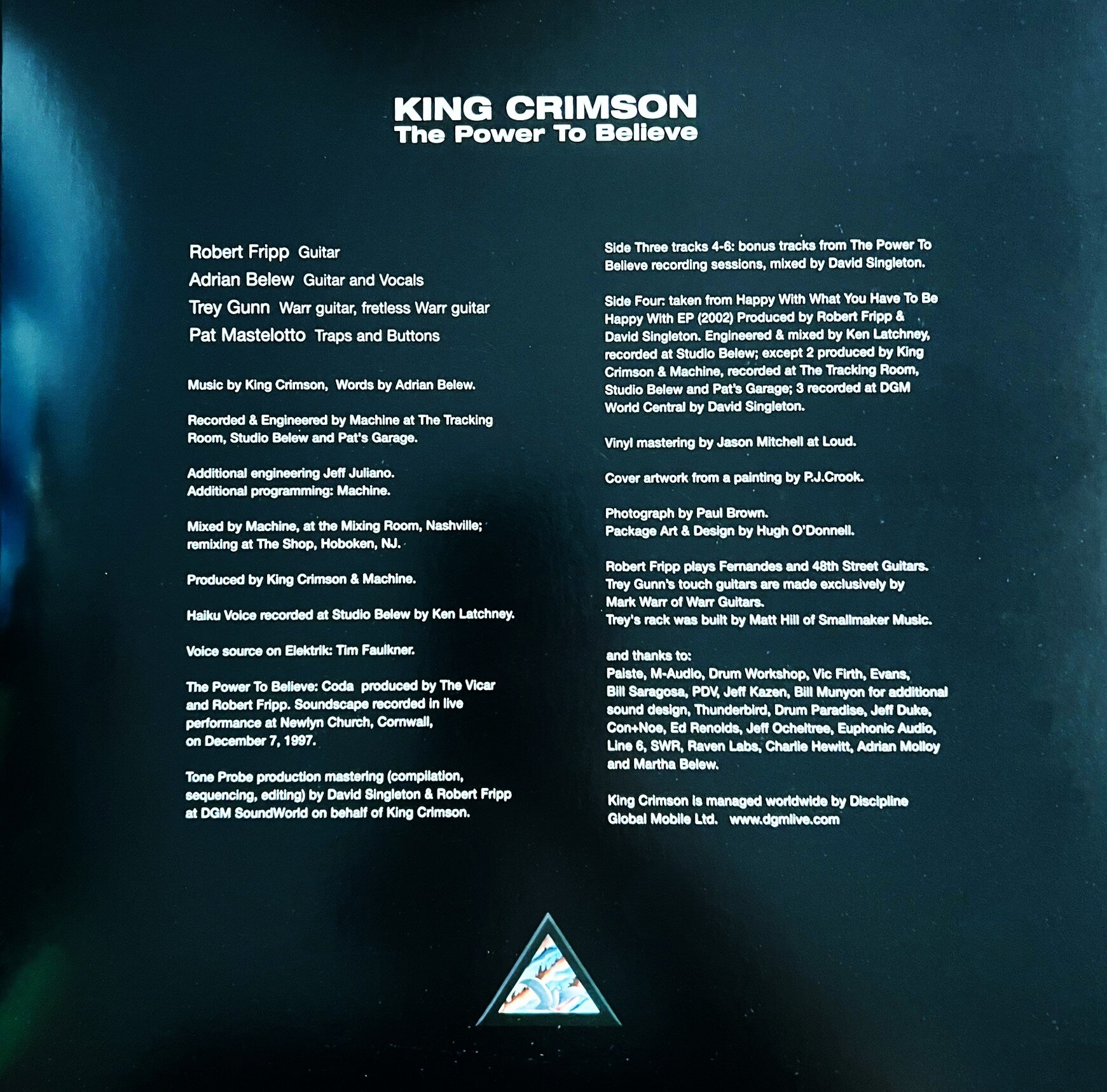
LineUp
- Adrian Belew - guitar, vocals
- Robert Fripp - guitar
- Trey Gunn - Warr fretted and fretless guitars
- Pat Mastelotto - drums and drum programming
Featuring:
- Tim Faulkner - vocals (4)
- Bill Munyon - sound design (additional)