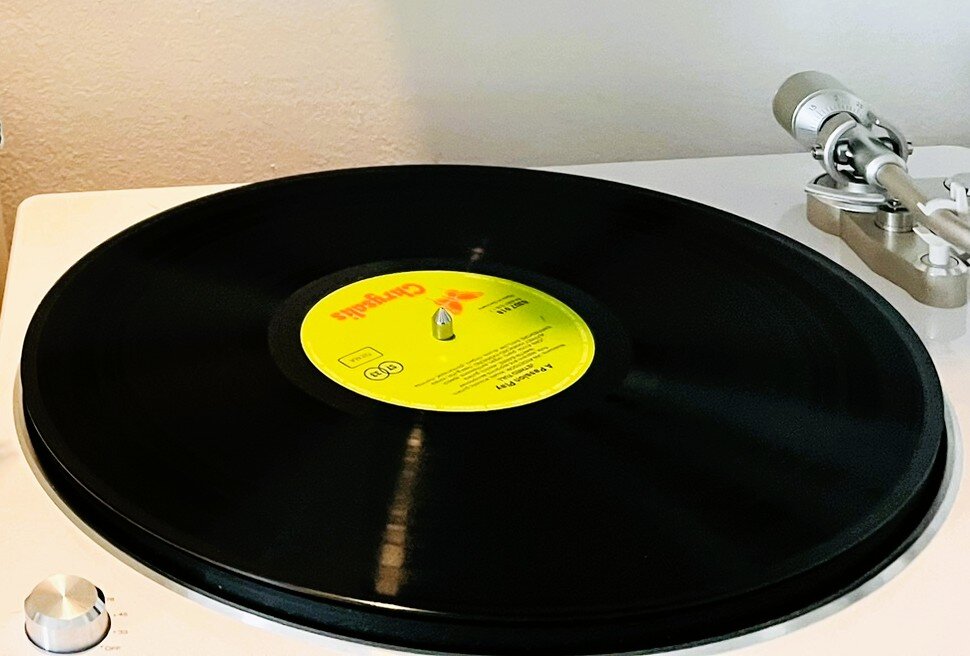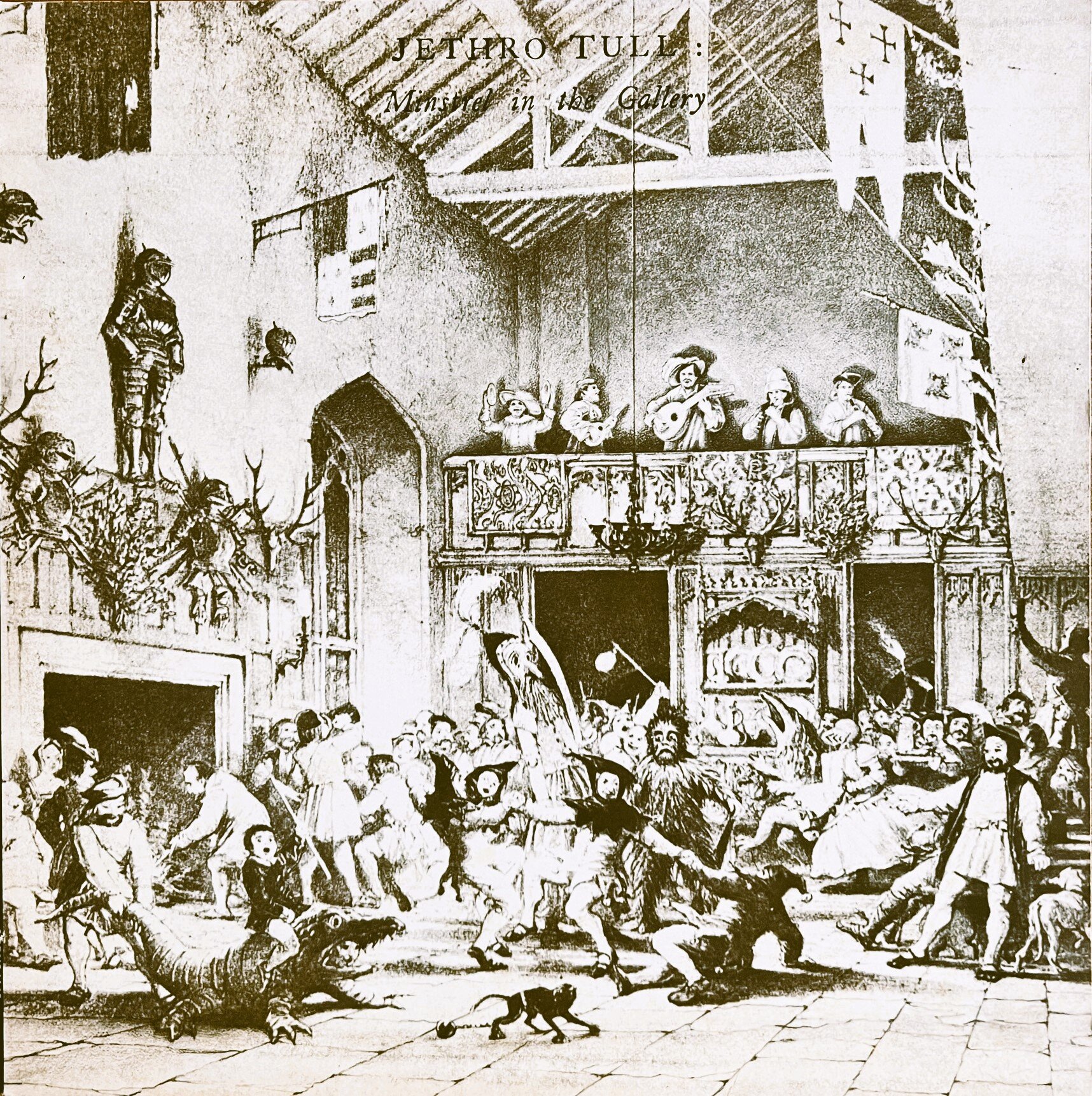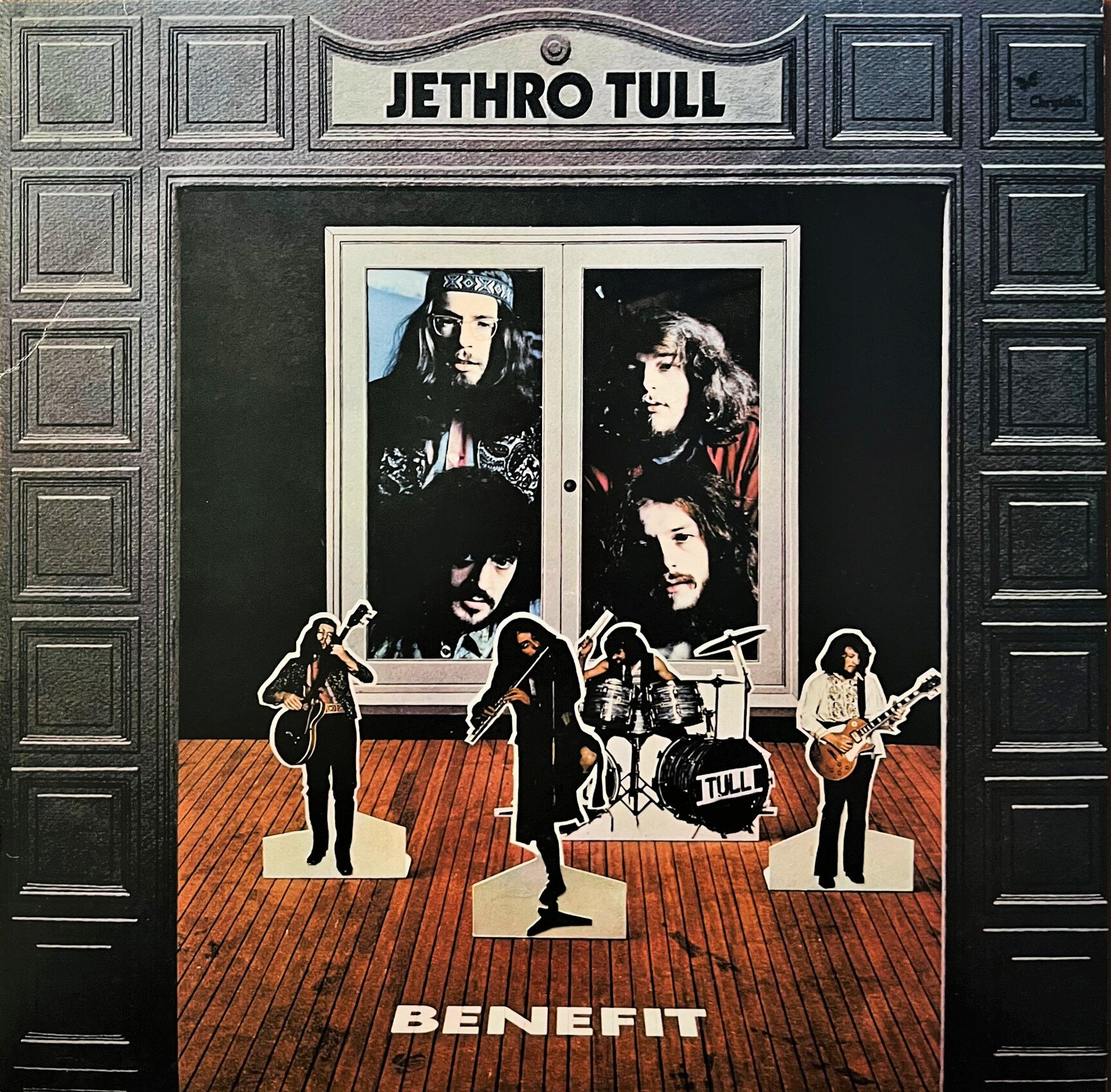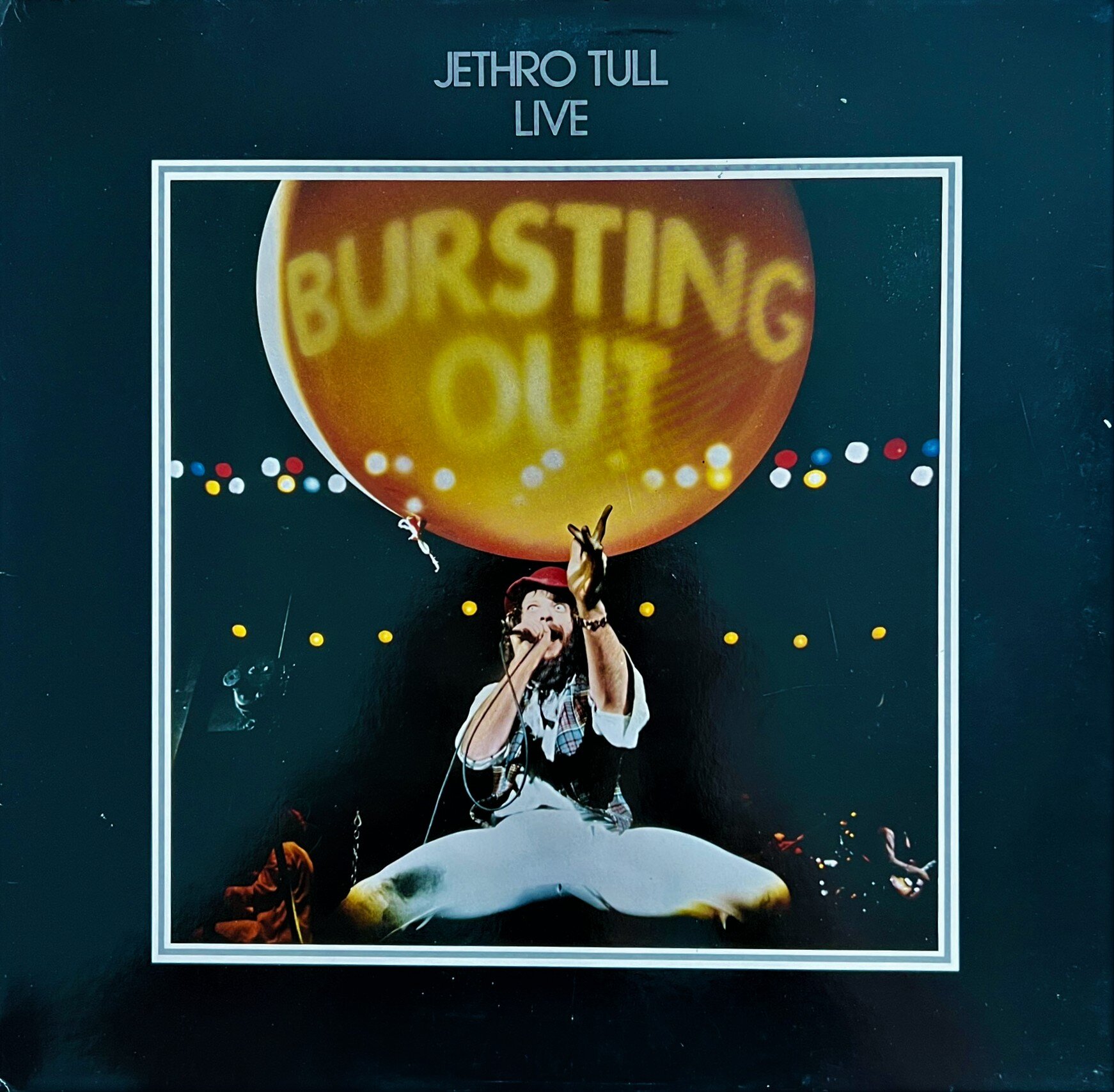

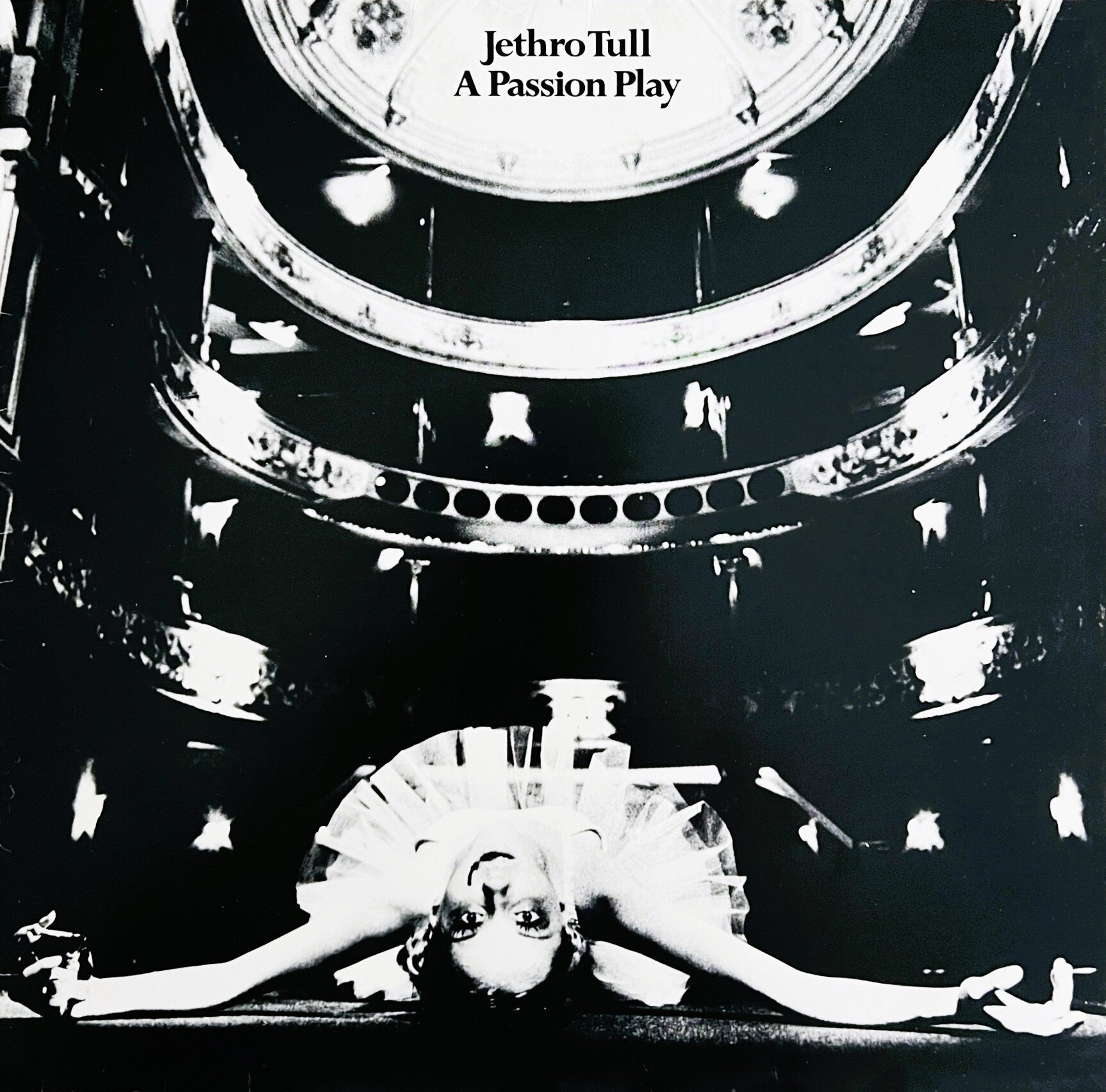
A Passion Play by Jethro Tull, 1973 album.
I have spoken at length about the great Jethro Tull on the occasion of many reviews of their works including the most recent album Curious Ruminant, from 2025 and in the page dedicated to them “Jethro Tull: Rock, Folk, Blues and Anderson's Magic Flute”, but I like to remember that Jethro Tull are a British band founded in Blackpool in 1967 by Ian Anderson and led by him to this day.
The band takes its name from the pioneer of modern agriculture, the agronomist Jethro Tull, and is famous for its fusion of rock, folk, blues, and classical music, combining traditional and innovative sounds, with Anderson virtuously playing the flute and helping to define the band's sound.
Their music is characterized by the dominant presence of the flute, played by the virtuoso leader Ian Anderson. After a debut marked by blues influences, Jethro Tull traversed the history of rock, experimenting with various genres: from folk rock to hard rock, from progressive rock to classical music.
A very long and brilliant career in Progressive Rock and Folk Rock with numerous lineup changes, an active band that continues to perform and release music.
A Passion Play is one of the most complex and divisive works of progressive rock, the peak of Ian Anderson's compositional ambition, and was a successful album despite being born from the ashes of a failed recording session.
The album actually follows the recordings of a double album started at Château d'Hérouville studio in France, recordings complicated by continual technical failures, food poisoning, and parasite infestations, so much so that the band nicknamed the studio "Chateau D'Isaster". The album never saw the light of day; upon returning to the UK, Anderson decided to discard almost all the material (later released in collections like Nightcap or The Château D'Hérouville Sessions) and to write A Passion Play entirely from scratch.
It is an ambitious concept album that tells the spiritual journey of a man in the afterlife.
The title recalls the "Sacred Representations" (Passions) of Christian tradition, but Anderson reworks the theme in an ironic and surreal way, comparing life and death to a theatrical performance.
The protagonist faces several stages after his death:
Act 1: Death and the Funeral. Ronnie dies and, in spirit form, attends his own funeral. He then crosses a purgatory described as a frozen desert, guided by an angel.
Act 2: The Judgment. He arrives at a sort of "memory bank," where a jury examines the footage of his past life to judge his actions.
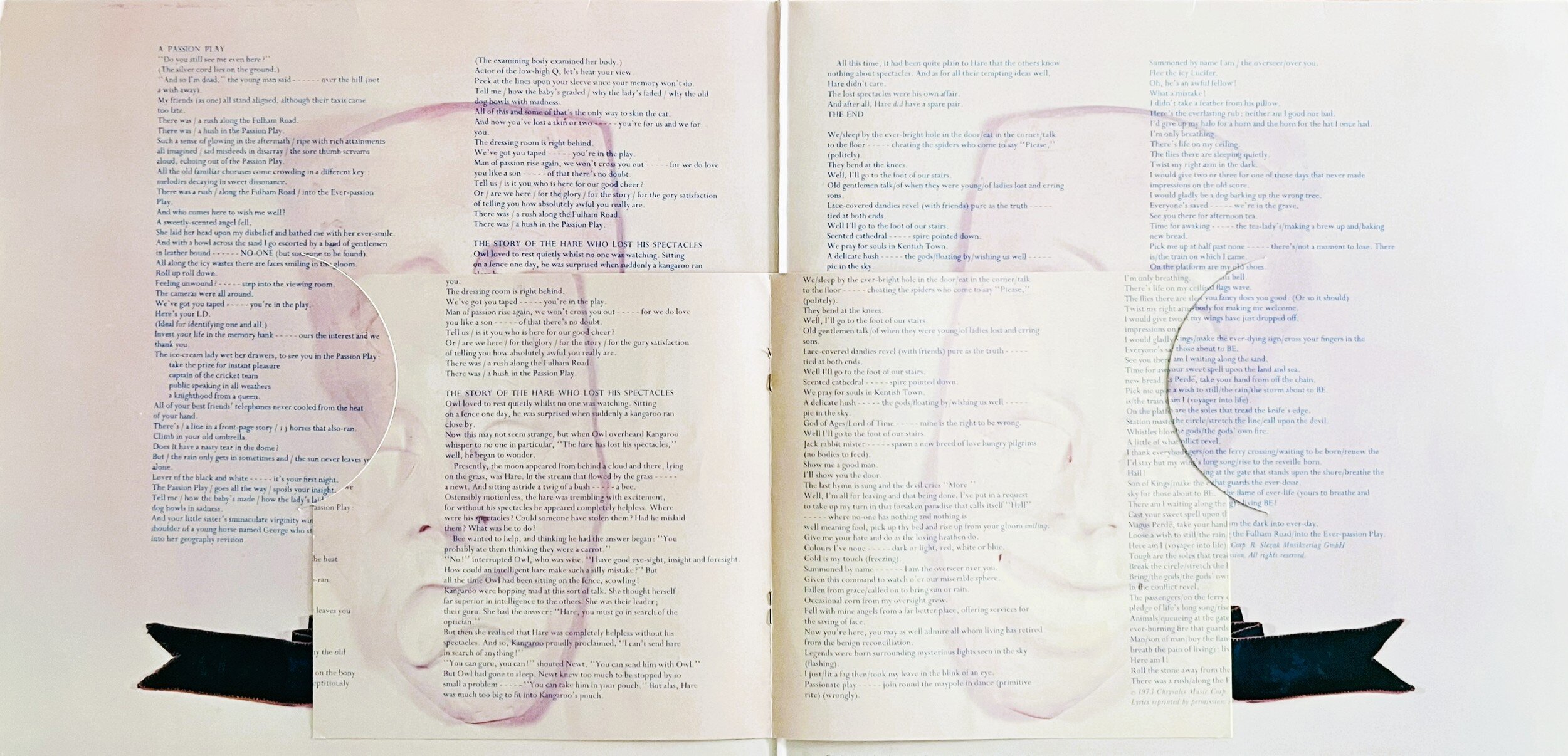
The Intermezzo: The Fable. In the middle of the album comes "The Story of the Hare Who Lost His Spectacles," a surreal fable narrated by Jeffrey Hammond that serves as a metaphor for the inability to see reality beyond social conventions.
Heaven and Hell. Ronnie is admitted to Heaven, but finds it boring and bureaucratic. He then decides to visit Hell, discovering that even Lucifer is a disappointing and "corporate" character.
The Rebirth. Rejecting both options, Ronnie chooses to escape the afterlife to return to the cycle of earthly life through reincarnation.
It is a critique of Dogmatic Religion; Anderson explores the possibility of the afterlife but rejects rigid doctrines, preferring a cyclical vision of existence. Through Ronnie Pilgrim, the album reflects on how people live to meet others' expectations rather than their own potential.
The entire work is structured like a theatrical drama, complete with a program included in the original vinyl (in the photo), to emphasize how each individual is an actor in their own "Passion."
Musically, the album is an uninterrupted 45-minute suite with continuous changes of tempo and musical themes that require numerous listens to be assimilated, alternating pastoral moments with syncopated jazz-rock sections with a predominant use of sax by Ian Anderson, who significantly reduces the space dedicated to the flute, giving the record a darker tone.
Act 1: The Funeral, is divided into three parts, Lifebeats / Prelude which opens with a sampled heartbeat introducing a complex instrumental overture with Ian Anderson's soprano sax in great evidence. The Silver Cord with Anderson's voice, atmospheric section. Re-Assuring Tune is a brief instrumental moment introducing the next section.
Act 2: The Judgment opens with Memory Bank / Best Friends, a driving jazz-rock track. Critique Oblique is one of the most beautiful sections, with many tempo changes. Forest Dance #1 is a pastoral instrumental interlude.
The Suite is interrupted at this point by the fable "The Hare Who Lost His Spectacles," a children's tale narrated by bassist Jeffrey Hammond with a marked Lancashire accent, accompanied by an orchestral arrangement by David Palmer. The track was included to break the density of the album and serves as a comic interlude, a light moment that separates the more serious parts.
Act 3: Heaven begins with The Foot of Our Stairs / Overseer Overture, great prog with excellent interactions between organ and electric guitar.
Act 4: Hell and Rebirth begins with Flight from Lucifer / Magus Perdé with the hardest passages of the album, not far from hard rock. Epilogue reprises the initial themes, ending with a sense of perpetual cyclical motion towards the "Ever-passion play" of life
At the time, the album received mixed reviews for its textual and musical complexity but reached number one in the United States and has since been re-evaluated and considered a milestone of prog. Excellent!
Note: All links to the musicians' works are in the TAGS below the article title or on the "Artists" page
Tracklist
1. A Passion Play, Part I (23:04)
Act 1 - Ronnie Pilgrim's funeral - a winter's morning in the cemetery.
I. "Lifebeats" (instrumental)
II. "Prelude" (instrumental)
III. "The Silver Cord"
IV. "Re-Assuring Tune" (instrumental)
Act 2 - The Memory Bank - a small but comfortable theatre with a cinema-screen (the next morning).
V. "Memory Bank"
VI. "Best Friends"
VII. "Critique Oblique"
VIII. "Forest Dance #1" (instrumental)"
2. A Passion Play, Part II (22:00)
Interlude - The Story of the Hare Who Lost His Spectacles.
IX. "The Story of the Hare Who Lost His Spectacles" (Anderson, Hammond, Evan)
Act 3 - The business office of G. Oddie & Son (two days later).
X. "Forest Dance #2" (instrumental)
XI. "The Foot of Our Stairs"
XII. "Overseer Overture"
Act 4 - Magus Perdé's drawing room at midnight.
XIII. "Flight from Lucifer"
XIV. "10:08 to Paddington" (instrumental)
XV. "Magus Perdé"
XVI. "Epilogue"
Duration 45:04
LineUp
- Ian Anderson - vocals, flute, acoustic guitars, soprano and sopranino saxophones
- Martin Barre - electric guitar
- John Evan - piano, organ, synthesizer, announcer of "The Story of the Hare Who Lost His Spectacles"
- Jeffrey Hammond - bass, vocals, narrator of "The Story of the Hare Who Lost His Spectacles"
- Barriemore Barlow - drums, timpani, glockenspiel, marimba
With:
- David Palmer - arranger and orchestra conductor