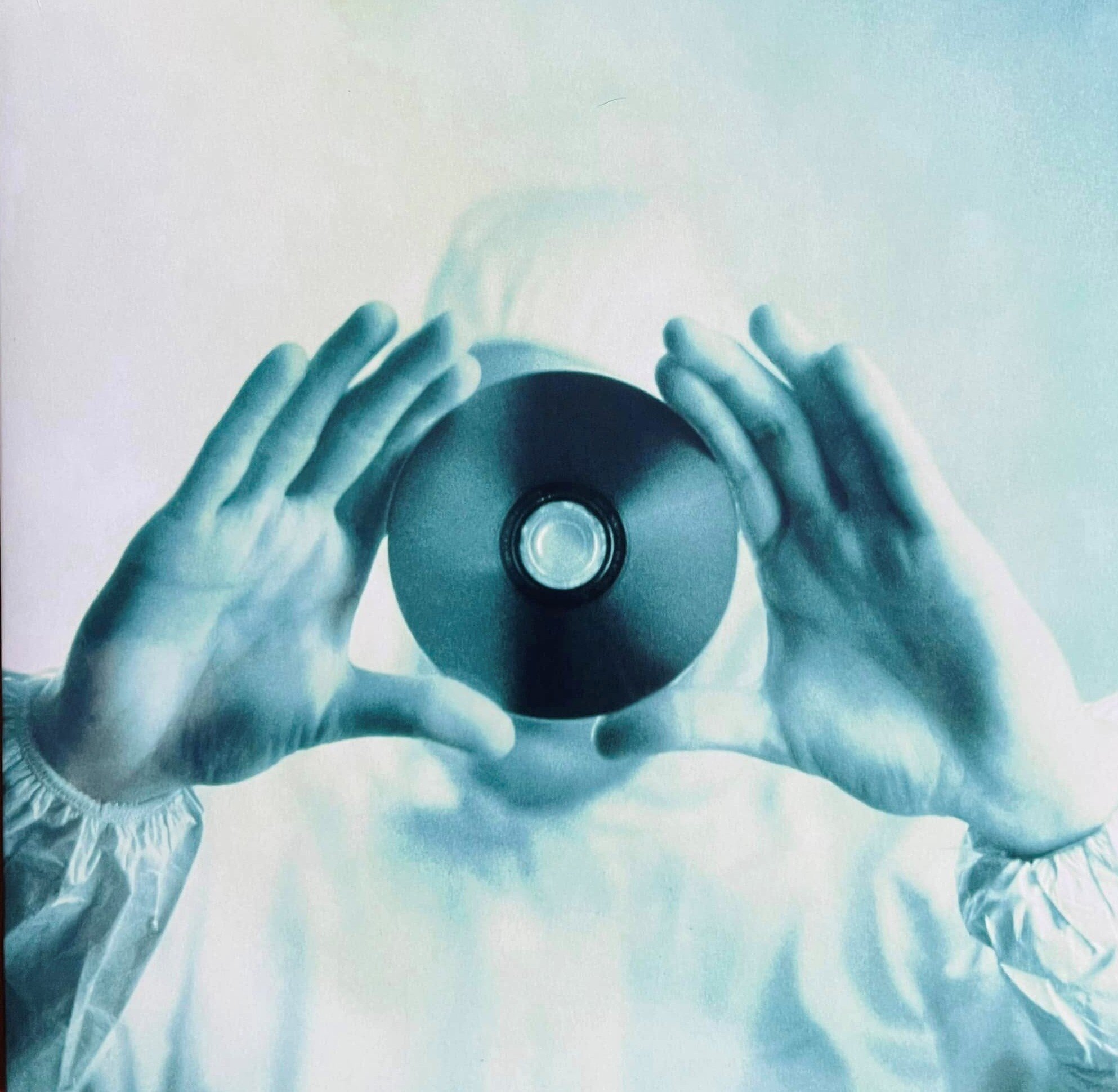

Here is the first of 11 studio albums by Porcupine Tree, “On the Sunday of Life...” released in 1992, an album that collects demos by Steven Wilson made between the late eighties and early nineties. Only later, for live performances, did he involve Richard Barbieri, Colin Edwin, and Chris Maitland.
A debut album that already makes clear the splendid direction the full band would later take.
It's incredible how it all started as a real game, as also described in the article “Up the Downstair by Porcupine Tree, Wilson's joke and their great story,” a game born from the brilliant mind of an English IT technician, Steven Wilson, who also dabbled with guitar and keyboards, and his friend Malcolm Stocks. Taking inspiration from the psychedelia so dear to early Pink Floyd, they created a fictitious rock band called Porcupine Tree, endowed with a rich background of tours, actions, and details about members they clearly never had. The wonderfully orchestrated game quickly turned into reality, and Steven Wilson alone, with the help of some guest musicians, began to produce the first demos—the rest is history: eleven studio albums, each more beautiful than the last. The lyrics on the album are by Alan Duffy, Wilson's schoolmate, and are often abstract and "acidic" thanks to the use of vocal effects (such as sped-up voices for a "helium" effect).
Beyond its status as a “cult album” due to the strange story that precedes it, musically it is a raw work, far from the genius of Steven Wilson's later works and those of this great band—an initial experiment by Steven Wilson that later evolved into something completely different.
The album, however, in my opinion, is a fascinating document that represents an unrepeatable stylistic phase in Wilson's career. It is a kaleidoscope of handcrafted and experimental sounds ranging from the psychedelia of the '60s and '70s with the influence of early Pink Floyd from the Syd Barrett era, with circular and hypnotic compositions, to Space Rock and Ambient with synthesizers and long atmospheric sections, for a progressive pop that blends pop with the avant-garde. There is a strong influence of the typical irony of the "Canterbury" style and great use of drum machines, samples, and ambient noises, but also acoustic and electric guitars ranging from folk to grittier riffs.
An album recorded entirely by Wilson in his bedroom, so it's Lo-Fi, but it immediately highlights his great creativity and gives a glimpse of his idea of Prog, when the style becomes darker, slower, and more imposing—the trademark of Porcupine Tree.
- Music for the Head is an instrumental ambient opener with a great oboe part by Master Timothy Masters and synthesizers, a suspended and dreamy track.
- Jupiter Island is a psychedelic, very rhythmic track with garage rock influences, one of the least progressive tracks on the album.
- Third Eye Surfer is a short experimental instrumental with the fine drumming of John Marshall and a mood reminiscent of jazz-fusion.
- On the Sunday of Life... is a short, atmospheric instrumental with light guitar.
- The Nostalgia Factory is one of the most beautiful tracks on the album, with an ethereal beginning that evolves into a tight rhythm with powerful keyboards and guitars.
- Space Transmission is a short, unsettling track characterized by cosmic sounds and an apocalyptic atmosphere.
- Message from a Self-Destructing Turnip is a very brief sound interlude.
- Radioactive Toy is the masterpiece of the album, at times overwhelming, great space rock with a hypnotic riff and a grand finale.
- Nine Cats is a beautiful acoustic ballad with a dreamy and melancholic atmosphere, a wonderful melody.
- Hymn is a short interlude of synthesized choirs
- Footprints is a disturbing track with dissonant riffs, dark tones.
- Linton Samuel Dawson is a pop-rock track with sped-up and distorted vocals, very quirky.
- And the Swallows Dance Above the Sun is a rhythmic track with '90s dance-pop influences, very catchy.
- Queen Quotes Crowley is an experimental track with many sound effects and psychedelic guitars by Jemain Solomon St.
- No Luck with Rabbits is an abstract track, the distortion of music boxes and musical toys.
- Begonia Seduction Scene is a short acoustic instrumental with bucolic atmospheres.
- This Long Silence is a structured rock track, melodious and powerful at the same time.
- It Will Rain for a Million Years closes the album, a long instrumental, ambient track with a tribal rhythmic section and Floydian lead guitar.
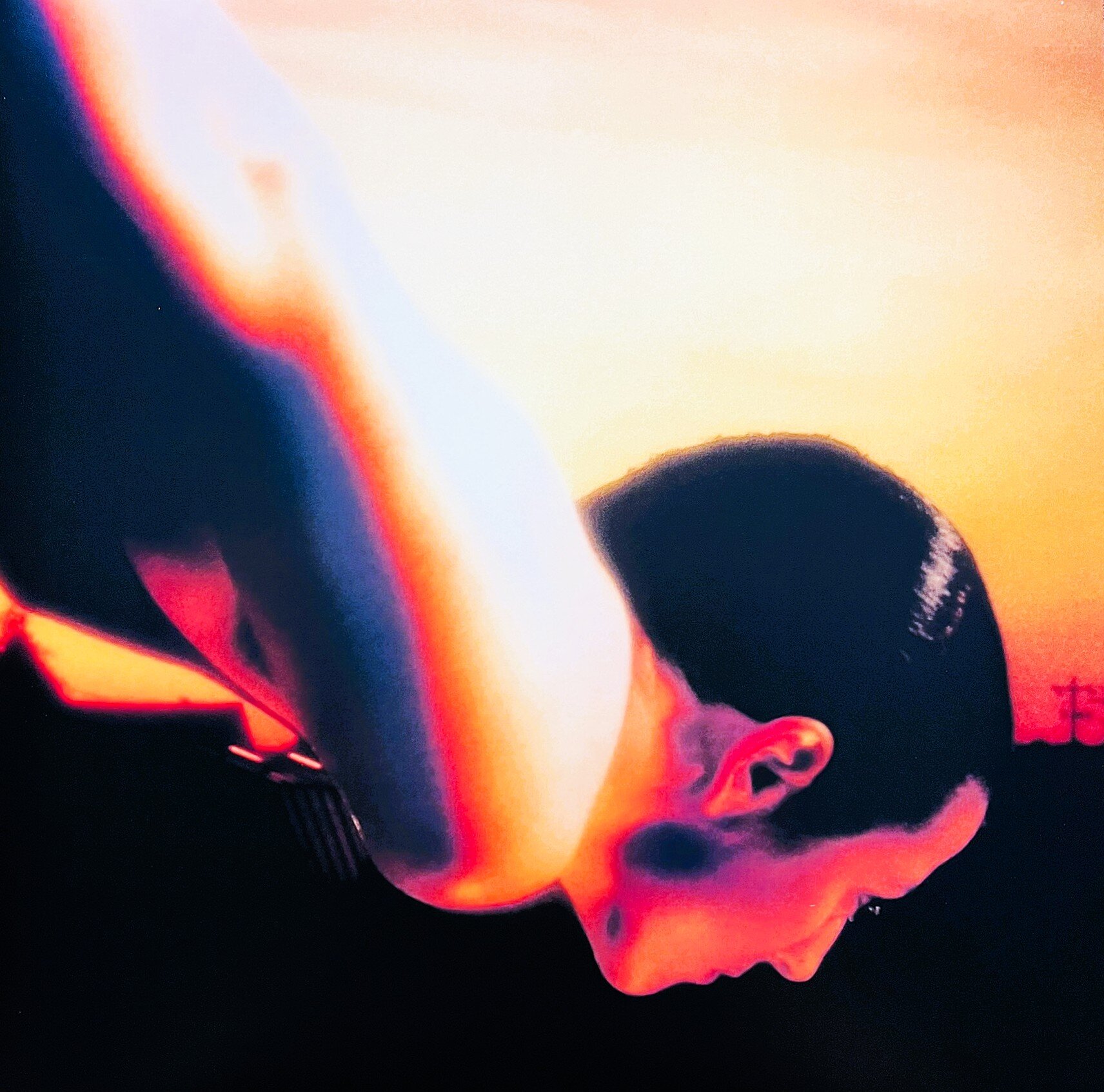
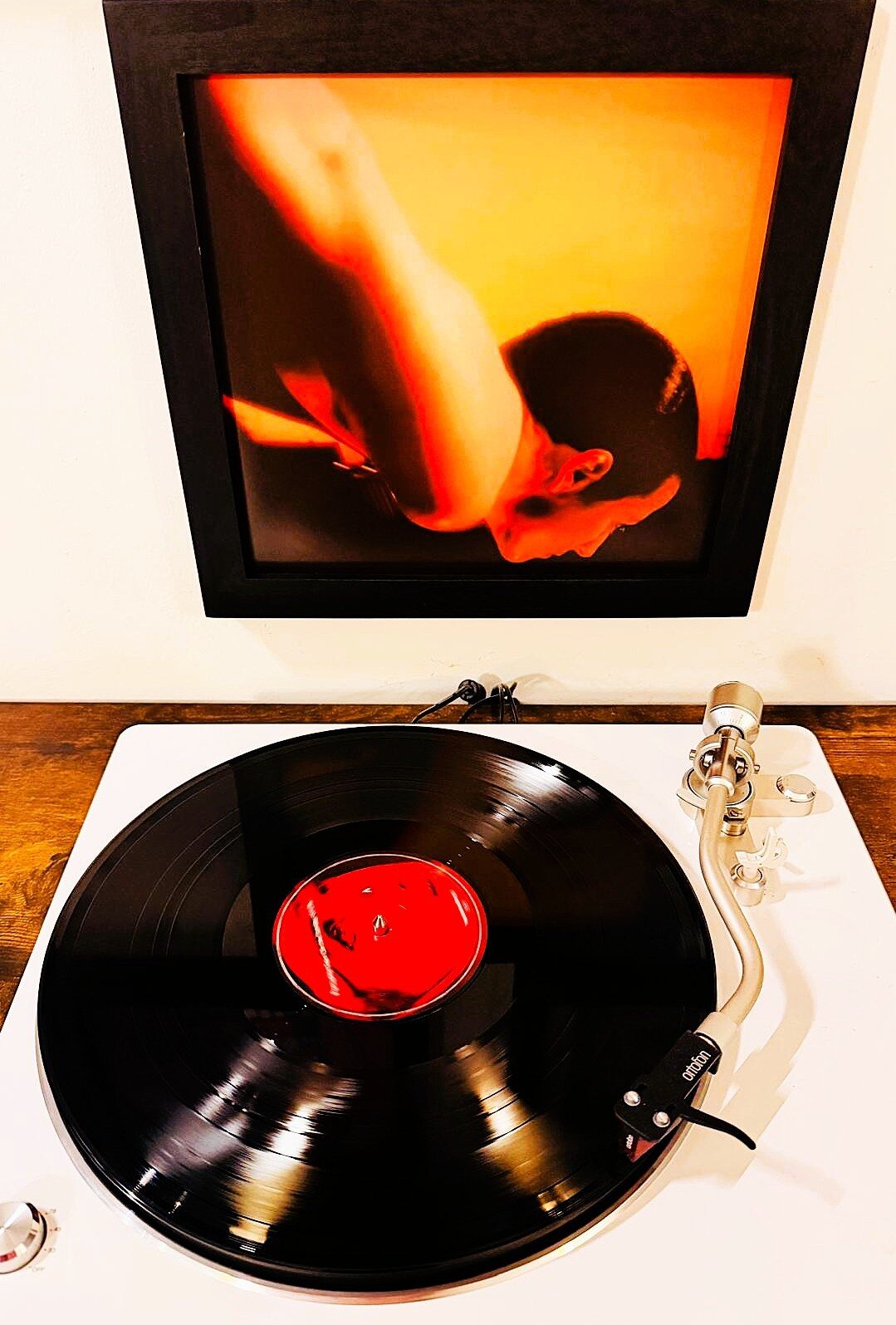
The artwork reflects the surreal and experimental aesthetic of the album; the image shows a human figure seemingly diving into a cityscape. Wilson revealed that the idea for the cover was born together with designer Mike Bennion, taking inspiration from a 1930s railway poster depicting a woman diving into a swimming pool. Wilson and Bennion "transposed" the swimmer's pose into an urban context, creating a dreamlike and timeless effect.
This shows how, from the very beginning, Wilson wanted a high-quality visual aesthetic for Porcupine Tree, inspired by the works of the Hipgnosis studio despite the limited budget of Delerium Records at the time. The meaning of the artwork, as well as the title, is linked to the concept of nonsense and psychedelia, to the absence of a univocal message. The title itself "On the Sunday of Life..." was chosen from a list of meaningless titles compiled by Richard Allen (owner of Delerium) and consequently, the artwork does not illustrate a specific concept, but aims to evoke a feeling of estrangement...
This is the zero moment of Steven Wilson's brilliant career, a work that is raw and fragmentary, but which sowed the seeds for the entire evolution of Porcupine Tree and his solo career. "Radioactive Toy" is probably the most important and enduring track on the album. A must-have in the collection of this great band and for fans of the genius Steven Wilson.
Note: All links to the musicians' works are in the TAGS under the article title or on the "Artists" page
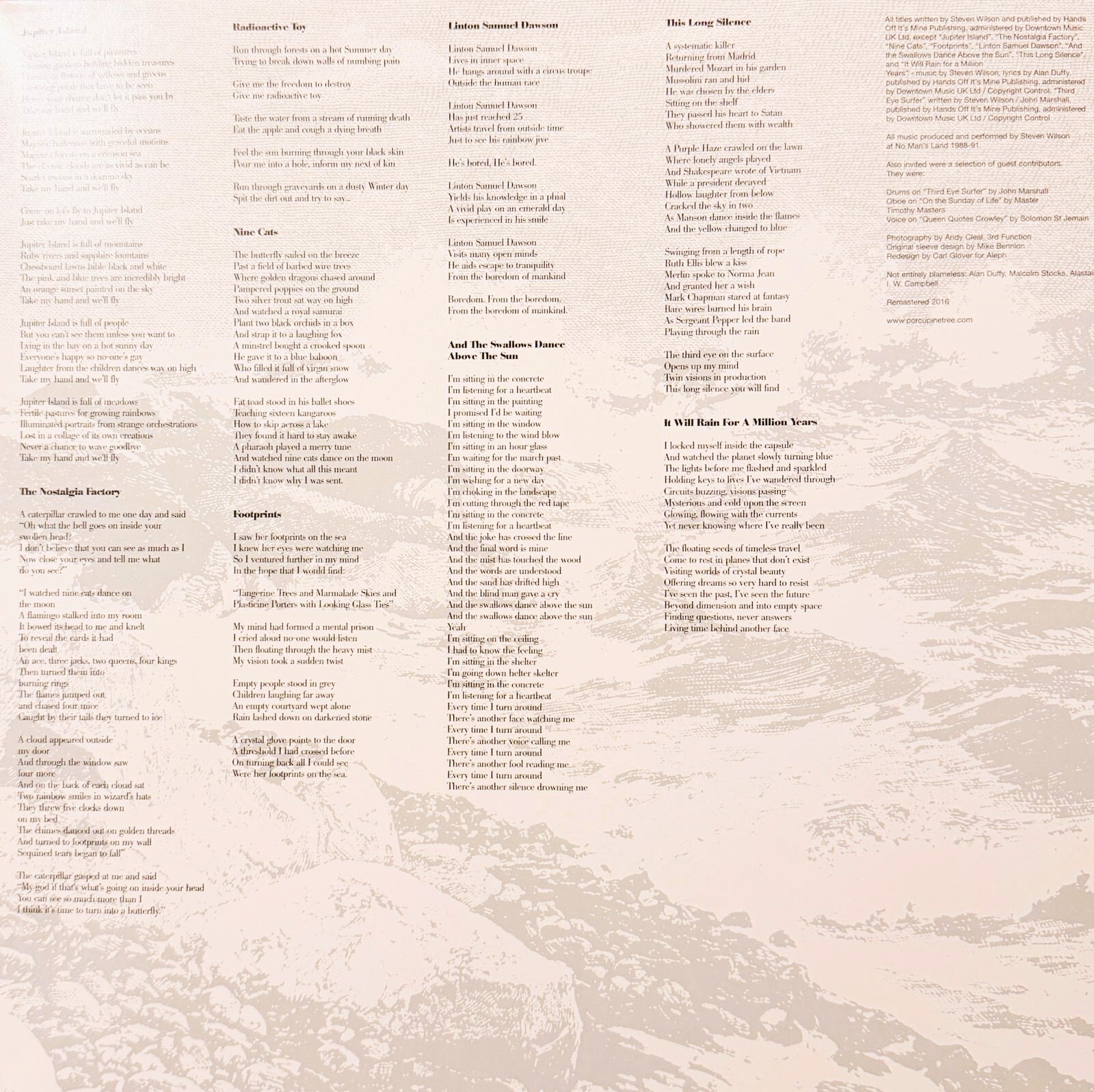
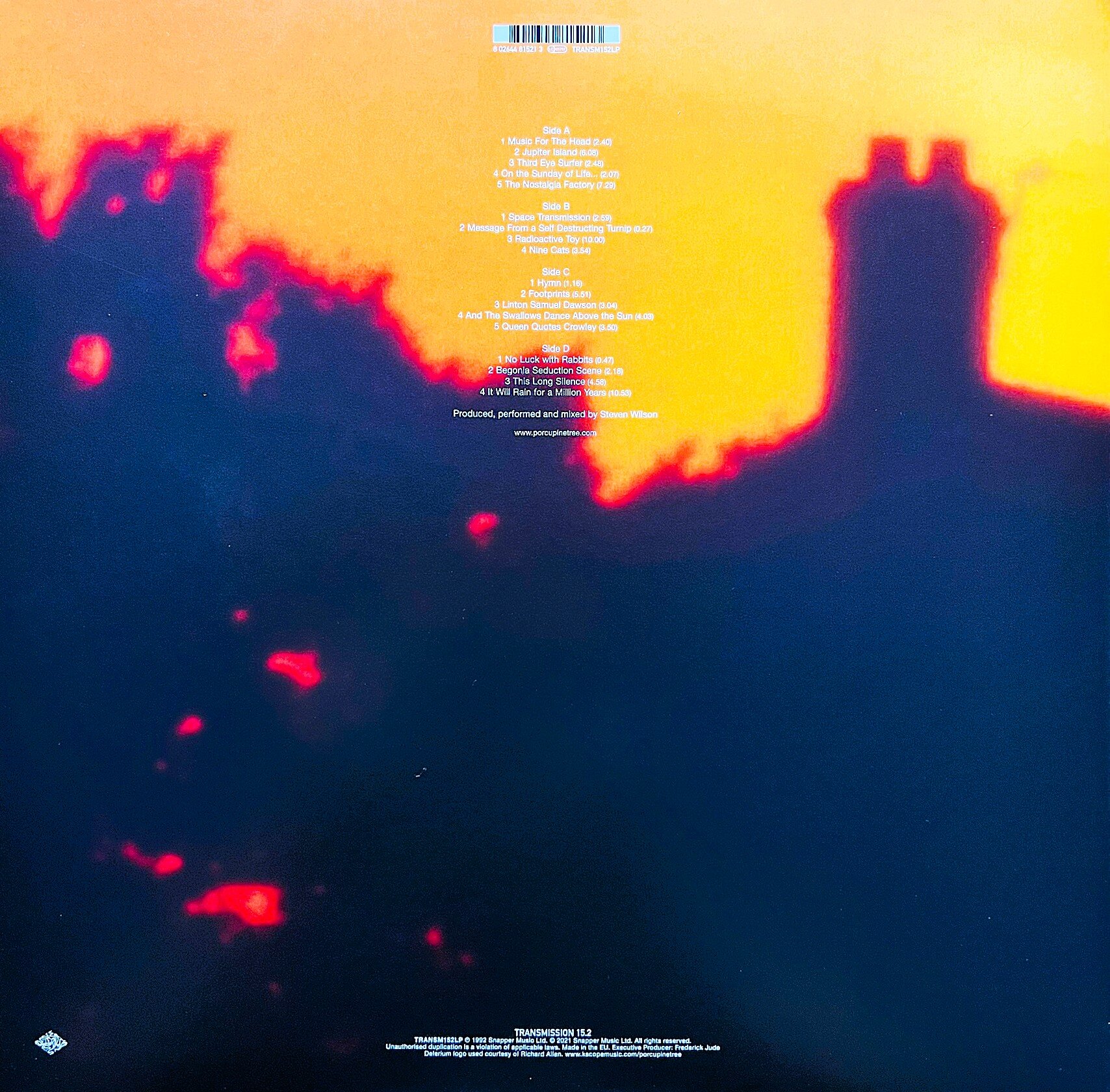
Tracklist
1. Music for the Head (2:42)
2. Jupiter Island (6:12)
3. Third Eye Surfer (2:50)
4. On the Sunday of Life... (2:07)
5. The Nostalgia Factory (7:28)
6. Space Transmission (2:59)
7. Message from a Self-Destructing Turnip (0:27)
8. Radioactive Toy (10:00)
9. Nine Cats (3:53)
10. Hymn (1:14)
11. Footprints (5:56)
12. Linton Samuel Dawson (3:04)
13. And the Swallows Dance Above the Sun (4:05)
14. Queen Quotes Crowley (3:48)
15. No Luck with Rabbits (0:46)
16. Begonia Seduction Scene (2:14)
17. This Long Silence (5:05)
18. It Will Rain for a Million Years (10:51)
Duration 75:41
LineUp
- Steven Wilson - vocals, guitar, instruments (keyboards, programming)
With:
- Malcolm Stocks ("Solomon St. Jemain") - additional guitar and vocals (14)
- Maestro Timothy Masters - oboe
- John Marshall - drums (3)


.jpeg "The Sky Moves Sideways by Porcupine Tree")