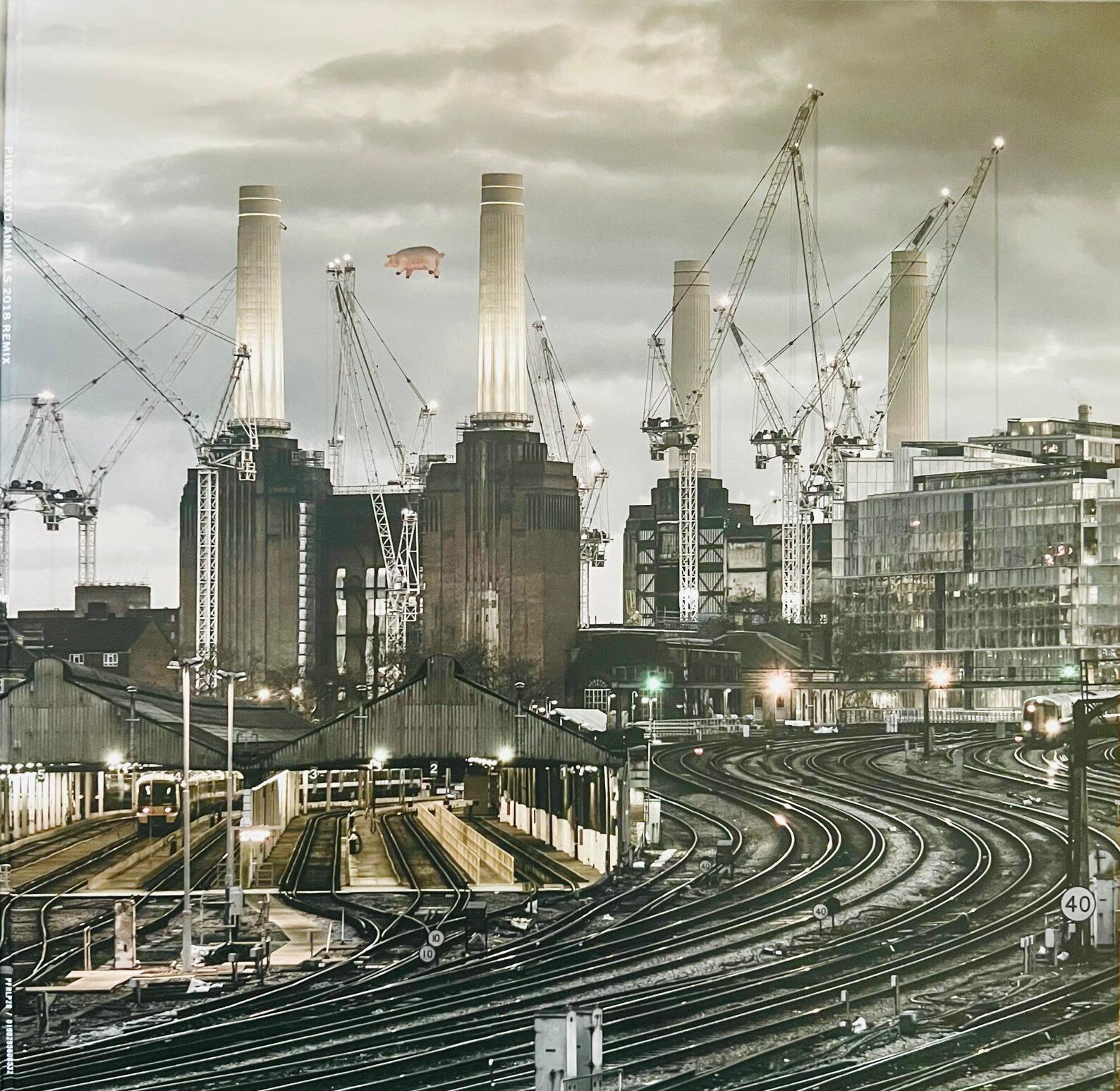

Pink Floyd's "The Dark Side of the Moon," a 1973 album.
Everything has already been said about this album; reviewing it is a nearly impossible challenge. Therefore, in addition to providing information about the album and its most recent fiftieth anniversary version, I will limit myself to offering my impressions.
There is also an endless amount of documentation on Pink Floyd; I've discussed it extensively in my own small review of their albums, as well as in reviews of the band members who have gone on to have splendid solo careers.
The Dark Side of the Moon was released in that wonderful year, March 1, 1973, one of the most influential years for progressive rock and the music I listen to. It is universally considered Pink Floyd's absolute masterpiece, as well as one of the most influential albums in rock history and one of the 10 most important albums of progressive rock.
The Dark Side of the Moon transcends the simple realm of music; it is a pillar of modern culture that continues to be talked about and listened to today, known even to new generations after more than half a century, and not just to those who are tied to the album because they heard it at a young age or experienced it.
Since this album, many things have changed in the way music is made. The album has redefined the standards of studio production, becoming a reference for sound engineers and producers. The pioneering use of synthesizers (EMS VCS3), magnetic tape loops (such as the famous heartbeat and cash registers in Money), and vocal samples transformed the recording studio itself into a musical instrument. Thanks to Alan Parsons's work, the album has been considered the definitive test of high-fidelity audio for decades, thanks to its sonic clarity.
The contribution of Alan Parsons, then only twenty-four years old, was crucial in defining the album's identity, bringing a level of technical precision and inventiveness that transformed the album into a masterpiece of high-fidelity.
It was his idea to record a large collection of antique clocks in a specialty shop. Originally created as a test for quadraphonic sound, the recording was later meticulously synchronized for the song's intro. For the rhythm of "Money," Parsons manually created a magnetic loop by spliced together tape fragments that reproduced the sounds of coins and cash registers. Because the song is in 7/4 time, he had to measure the tapes with a ruler to ensure perfect timing.
Parsons also suggested and recruited backing vocalist Clare Torry for the improvised vocal performance on "The Great Gig in the Sky," having previously worked with her.
He used the new EMI TG12345 16-track mixing console, applying cutting-edge techniques such as double-tracking vocals for David Gilmour and complex echo and tape reverb effects. His obsession with clarity made the album the "ultimate test" for hi-fi systems. He received his first Grammy Award nomination for this work.
The album's lyrics, written by Roger Waters and under whose leadership the album was released, address universal themes that remain relevant today: alienation, time, greed, and mental health.
At the heart of the album are the pressures and contradictions of human existence that can drive an individual to madness. It doesn't refer to the moon as our satellite, but uses it as a metaphor for mental alienation and inner darkness.
Time is about Time, the obsession with the passing of time and the awareness of mortality.
Money is about Money, a critique of the materialism, consumerism, and greed that corrupt the human soul.
Us and Them is about Conflict, the absurdity of war and the social divisions (race, religion, politics) that isolate individuals.
Brain Damage is about Madness, the album's climax, inspired by Syd Barrett's mental decline. It represents the moment when the individual gives in to external pressures.
All this lies in the album title itself, which is an integral part of the masterpiece as well as being a combination of psychological metaphors and discographic coincidences.
The title is not astronomical in nature, but psychological. The band chose "the dark side of the moon" as a metaphor for mental instability and the unknown. The English word for madness, lunacy, derives from the Latin root luna, linked to the ancient belief that the phases of the moon influence human behavior. The concept particularly refers to former leader Syd Barrett. The line from the song "Brain Damage" goes, "I'll see you on the dark side of the moon," referring to a symbolic meeting place for those who have lost their minds.
During production, the group discovered that a blues-rock band called Medicine Head had just released an album titled, precisely, Dark Side of the Moon (1972). To avoid confusion, Pink Floyd temporarily changed the title to Eclipse. However, after the commercial failure of Medicine Head's album, the Floyd decided to return to the original title.
The album closes with the voice of Abbey Road caretaker Gerry O'Driscoll, who clarifies the concept: "There is no dark side of the moon, really. Matter of fact, it's all dark," suggesting that darkness (and madness) is a universal and intrinsic condition of being human.
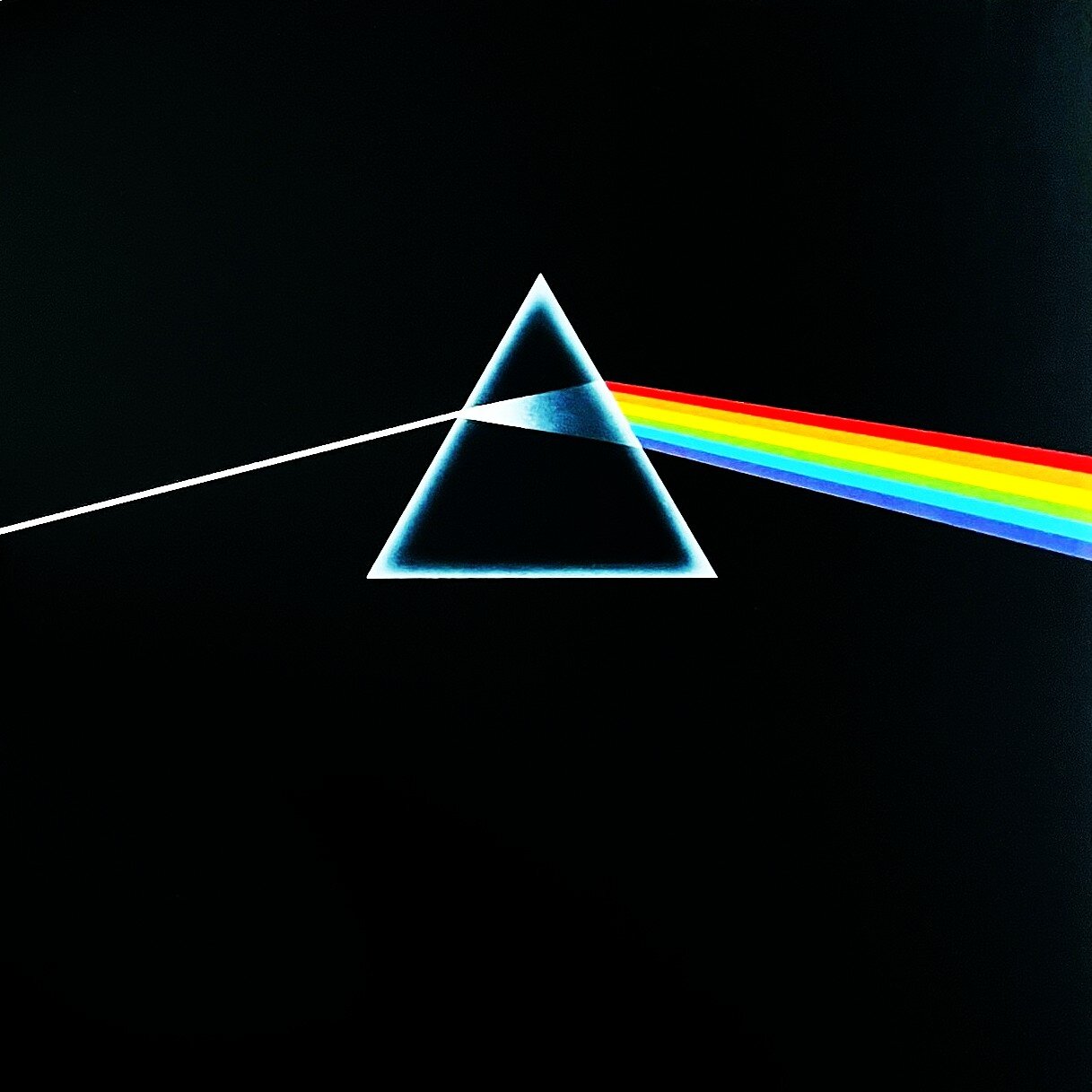
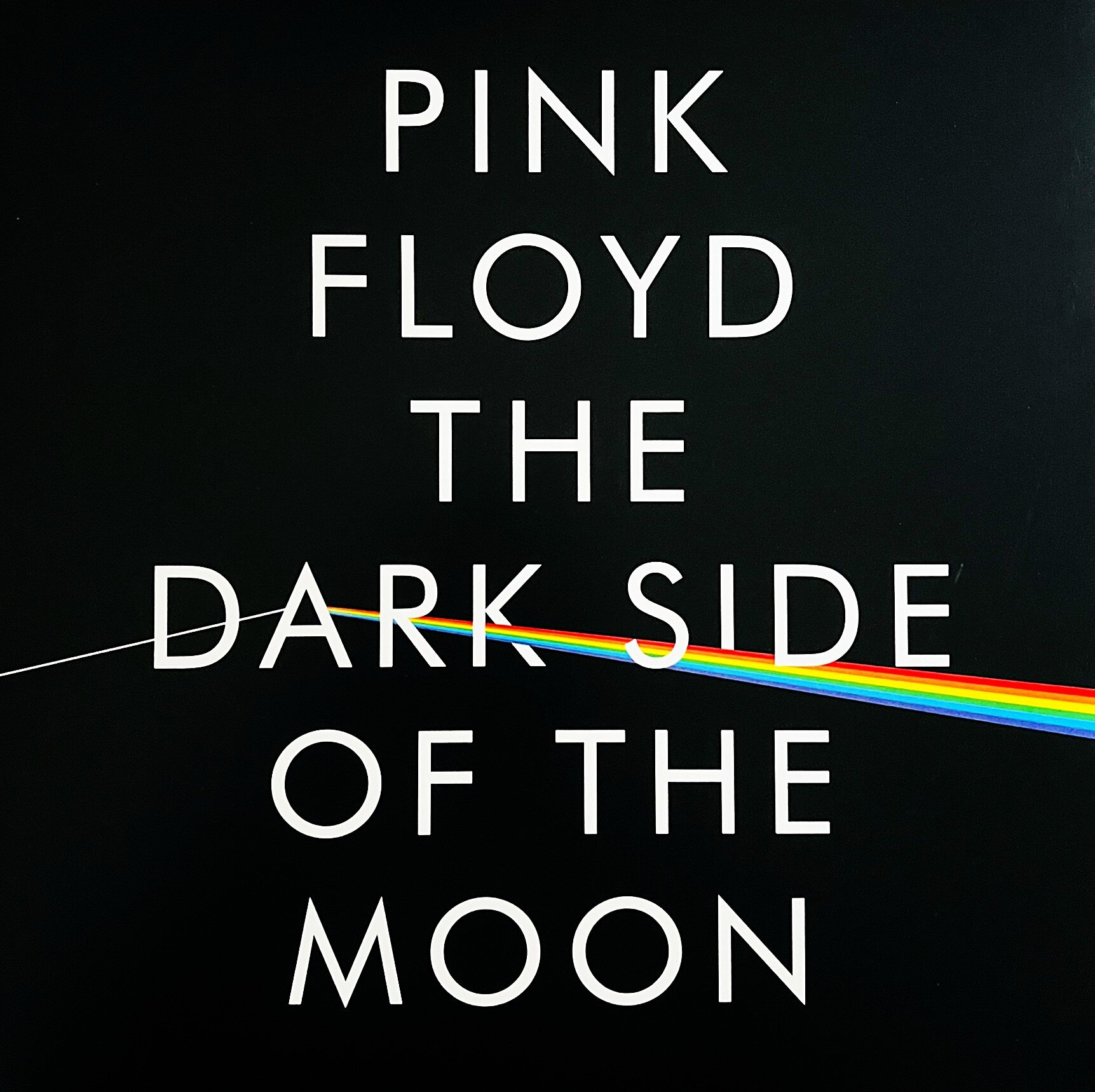
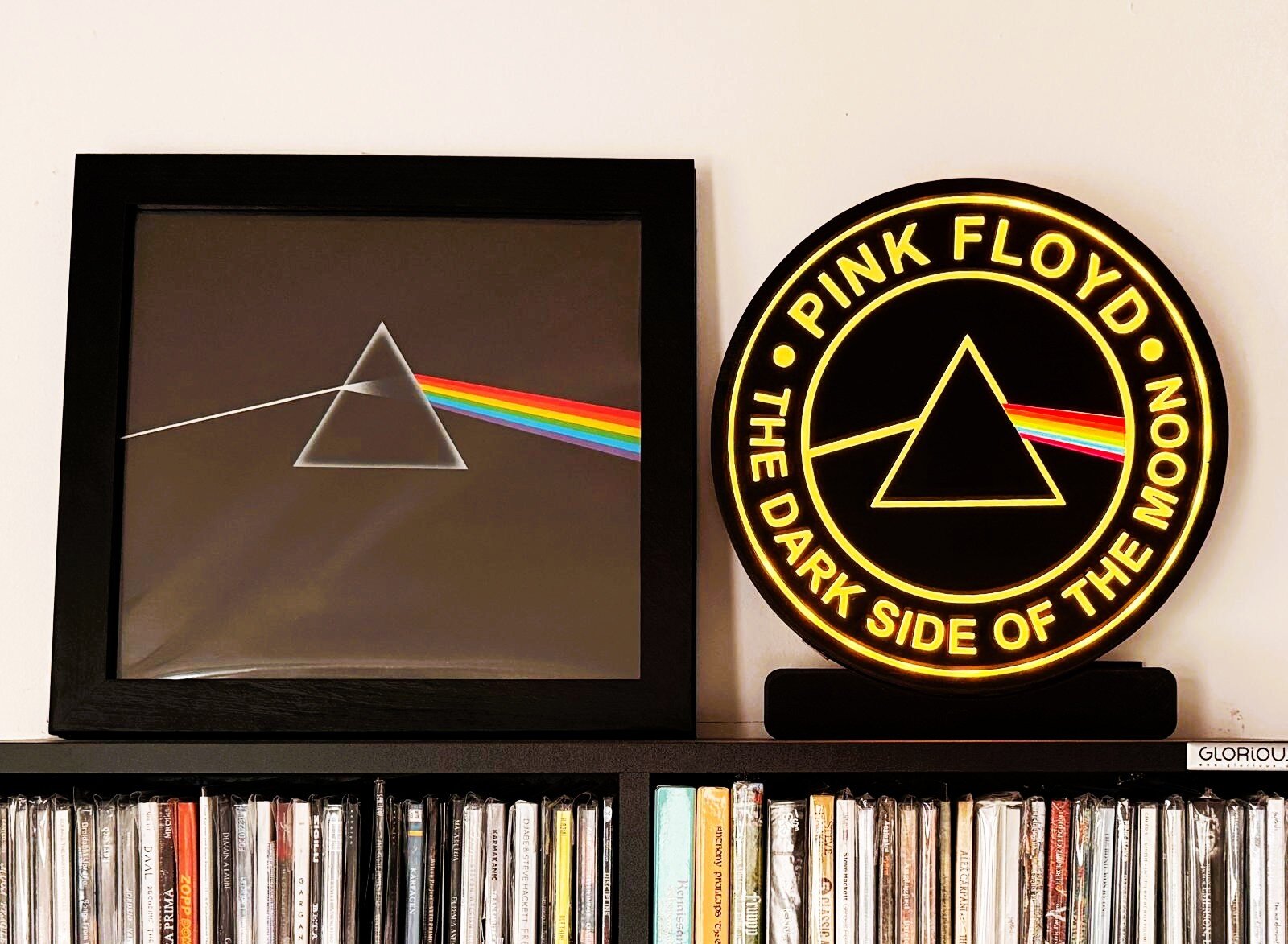
Storm Thorgerson's prism has become one of the most recognizable symbols in the world, transcending the concept of album covers to become a universal icon featured on countless clothing items and artworks.
It is one of the most recognizable images in the world, created by graphic design studio Hipgnosis and designer George Hardie.
The idea was born from a request from Richard Wright, who wanted something "simple and precise," far removed from the band's typical surrealist photographic covers.
The prism represents three key elements: Pink Floyd's stage lighting (famous for its plays of light), the album's profound lyrics, and the simplicity of the requested design.
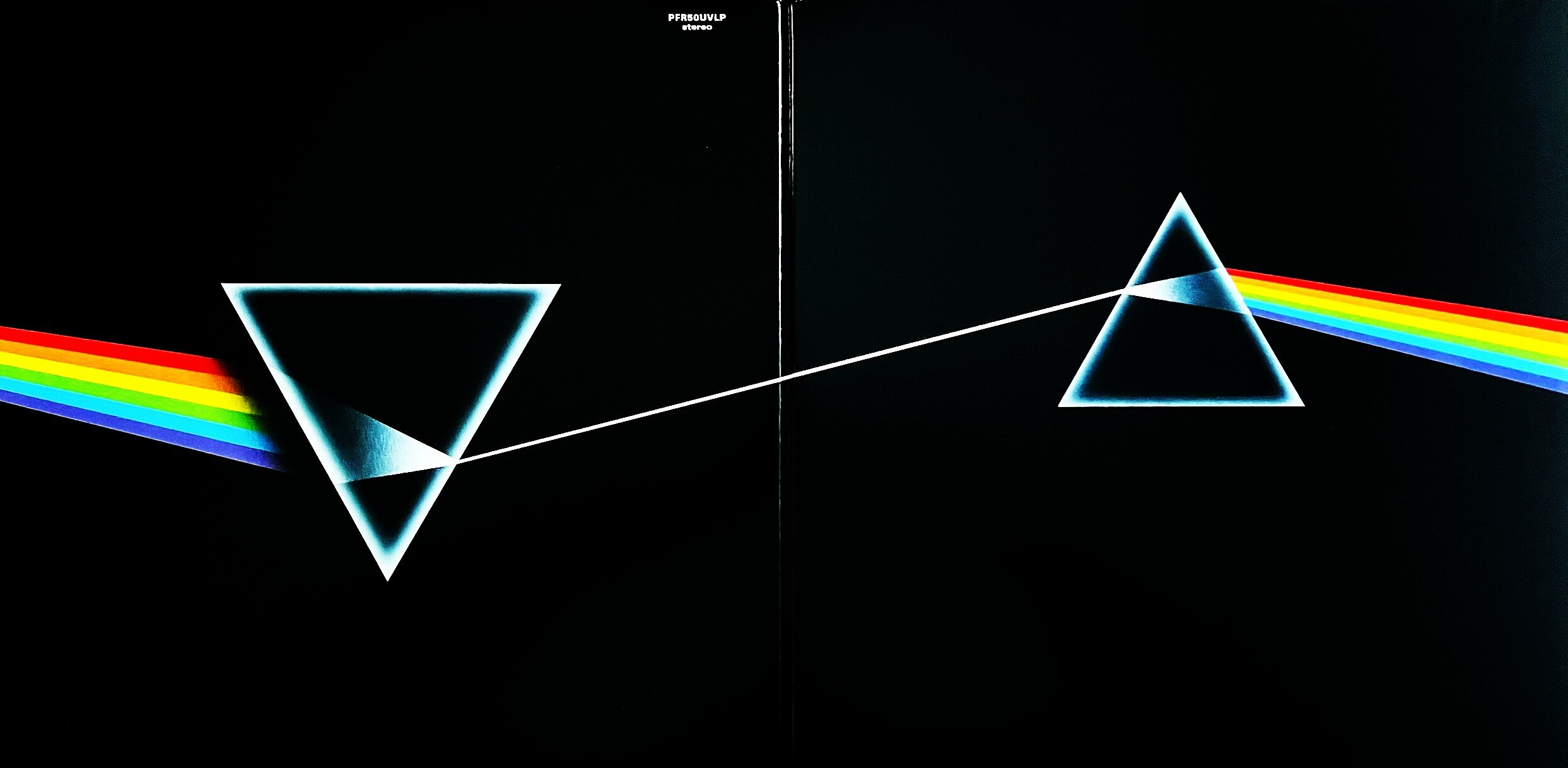
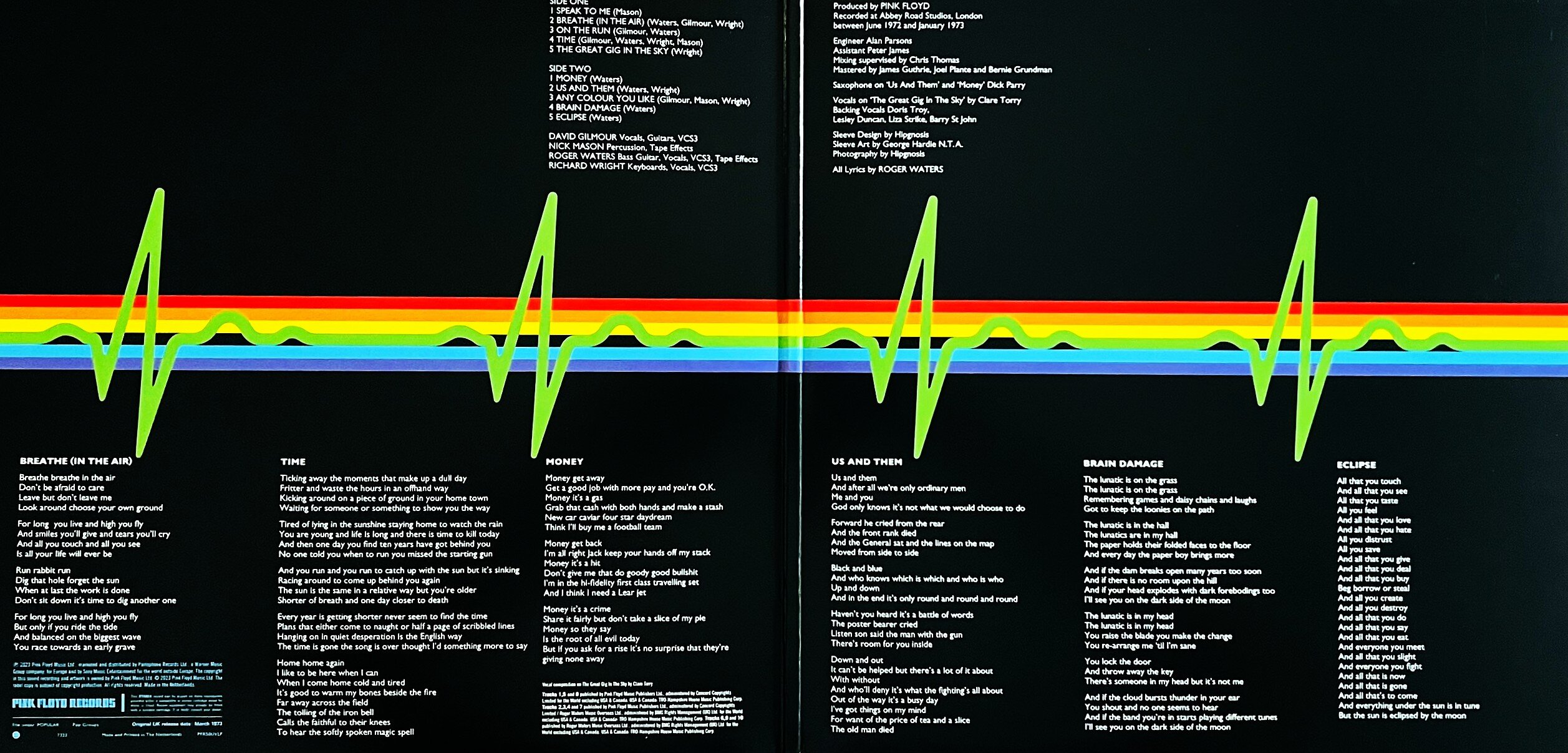
A beam of white light passes through a triangular prism, breaking down into the colors of the spectrum. Curiously, the color indigo is missing from the spectrum depicted. The line of light continues inside the gatefold and on the back cover, creating an infinite loop that reflects the cyclical nature of the album (which begins and ends with a heartbeat).
On the inside of the original cover, the light spectrum takes the form of an electrocardiogram line, visually connecting to the theme of life and death.
The album's influence on modern music is evidenced by its incredible commercial longevity and the ongoing accolades it receives. To date, the album has spent 996 weeks on the Billboard 200 chart, approaching the historic milestone of 1,000 weeks.
This album marked a turning point in Pink Floyd's career, with the band abandoning long instrumental suites for more direct and philosophical lyrics. It represents the perfect synthesis between the psychedelia of their early days and their more mature and deeply atmospheric progressive rock.
The album is a single, seamless suite. The songs blend into one another through the use of sound transitions, heartbeats, and interview snippets.
The use of synthesizers and real (non-musical) sound samples is very incisive, as in "Money," with a loop of cash registers, coins, and tearing paper, or in "Time," a cacophony of high-fidelity recorded clocks and alarms.
There's no shortage of rock, blues, and jazz influences; David Gilmour's guitar playing is melodic, with a masterful use of reverb and delay. Dick Parry's saxophone on "Money" and "Us and Them" adds a distinctive depth to the rock of the era. The alternation of Gilmour and Waters' lead vocals with imposing female choir sections is extraordinary, and on "The Great Gig in the Sky," Clare Torry performs a wordless vocal solo, using her voice as a true solo instrument.
David Gilmour's (Guitar and Vocals) performance is the pinnacle of "feeling" applied to technique. His solos aren't simple demonstrations of speed, but compositions within the composition. His voice on "Breathe" and "Time" is perfect for the reflective moments of the songs.
Richard Wright (Keyboards and Vocals), the architect of Pink Floyd's sound, is immense with his synthesizers (VCS3), Hammond organ, and electric piano, creating soundscapes that underpin the entire album. He is also the primary songwriter on "The Great Gig in the Sky" and "Us and Them," and his vocal harmonies with Gilmour are fundamental.
Roger Waters (Bass & Lyrics) is the creator of the concept with extraordinary bass lines, such as the one in "Money," written in an unusual 7/4 time signature, one of the most famous riffs in music history. He is the sole author of all the lyrics, and his vocals on the album's finale, especially on "Brain Damage" and "Eclipse," are extraordinary.
Too little is said about this extraordinary drummer, Nick Mason (Drums & Effects), whose precision and taste are particularly evident on "In Time," with the use of rototoms in the intro that creates a spectacular percussive effect. He collaborated on the loops and sound effects that connect the tracks, crucial to the album's continuity.
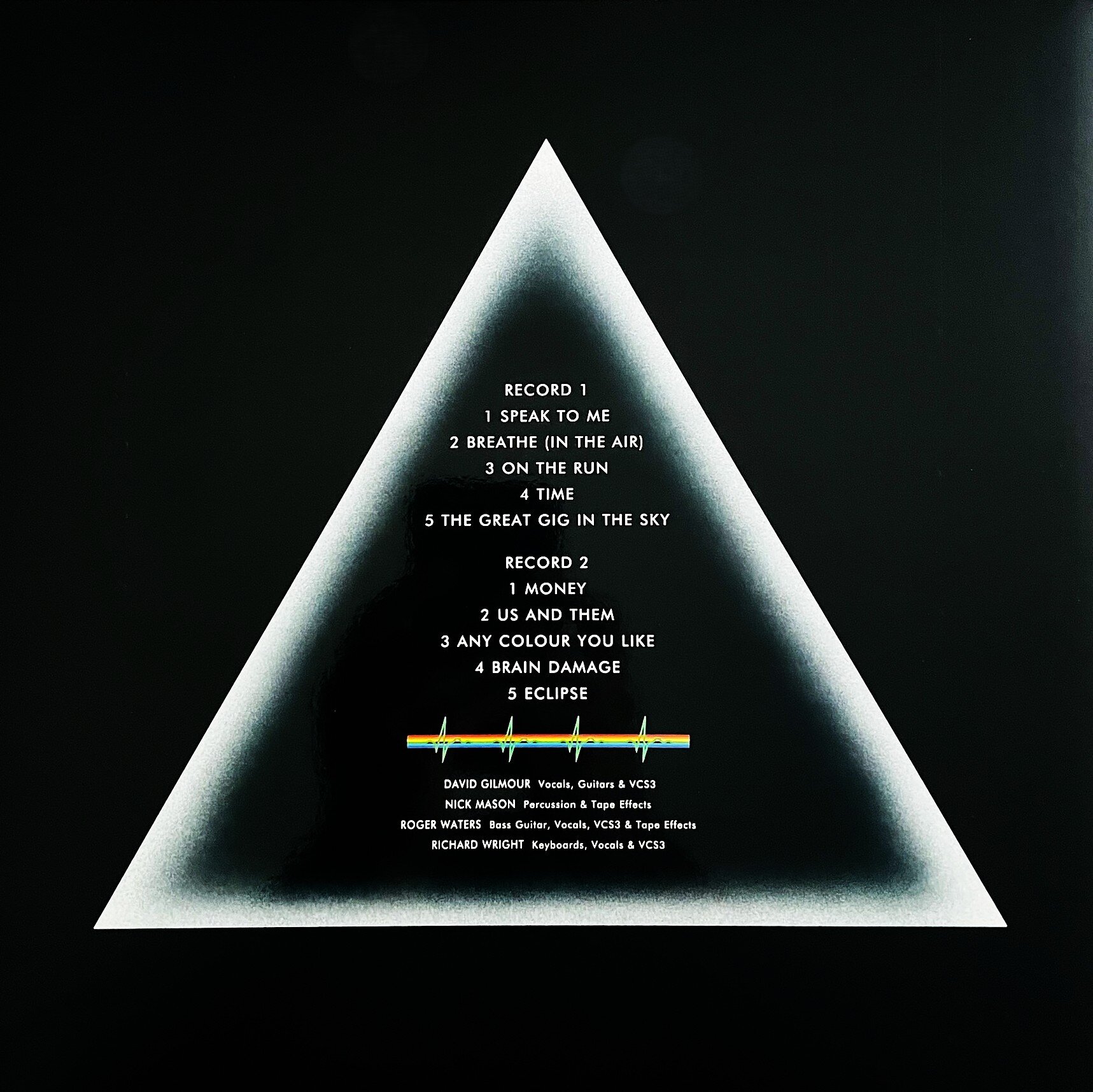
"Speak to Me" is an atmospheric introduction. It opens with a heartbeat, followed by a cascade of sampled sounds—the clock from "Time," the cash register from "Money," the maniacal laughter of "Brain Damage," and a glimpse of Clare Torry's vocals.
"Breathe (In the Air)" has a spacey feel, an invitation to "breathe" and live life to the fullest before it's too late. David Gilmour's vocals are ethereal, accompanied by a riff on pedal steel guitar and Richard Wright's organ.
"On the Run" is a frenetic and experimental instrumental, a hypnotic loop created with an EMS VCS3 synthesizer accompanied by effects simulating a plane in flight and an explosion.
"Time" is the album's most famous track, along with "Money." With its legendary intro, a cacophony of alarms and clocks chiming in unison, it's a progressive hard rock song, featuring a spectacular guitar solo by Gilmour.
"The Great Gig in the Sky" is a predominantly instrumental track with an incredible improvised vocal performance by Clare Torry, with a heartbreaking, wordless voice, pure emotion.
"Money" is the most commercially successful song and the only one to chart at the time with a 7/4 time signature (except for the solo, which is in 4/4) and the famous cash register loop. Dick Parry's saxophone solo is wonderful.
"Us and Them" is a slow ballad with great jazzy keyboards by Rick Wright and beautiful vocals by Roger Waters, along with another great saxophone solo.
"Any Colour You Like" is a psychedelic piece dominated by synths and Gilmour's guitar.
"Brain Damage" is a song written and performed by Roger Waters, which speaks of the madness and mental decline of former member Syd Barrett. It contains the key line: "I'll see you on the dark side of the moon."
"Eclipse" is the epic closing track, a crescendo that encapsulates all the album's themes and concludes with the fading heartbeat and the famous line from the Abbey Road Studios custodian: "There is no dark side of the moon really... matter of fact, it's all dark."
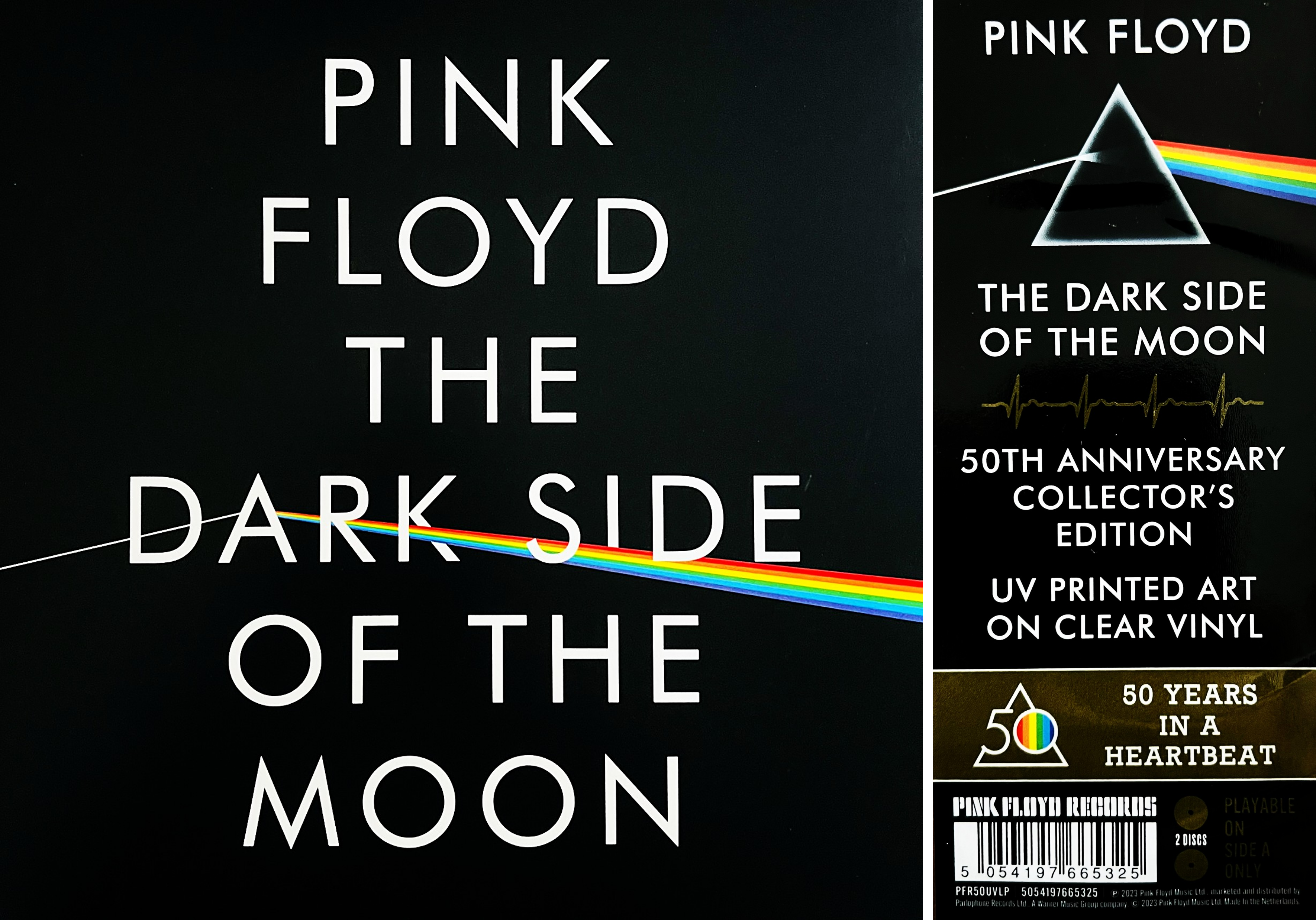
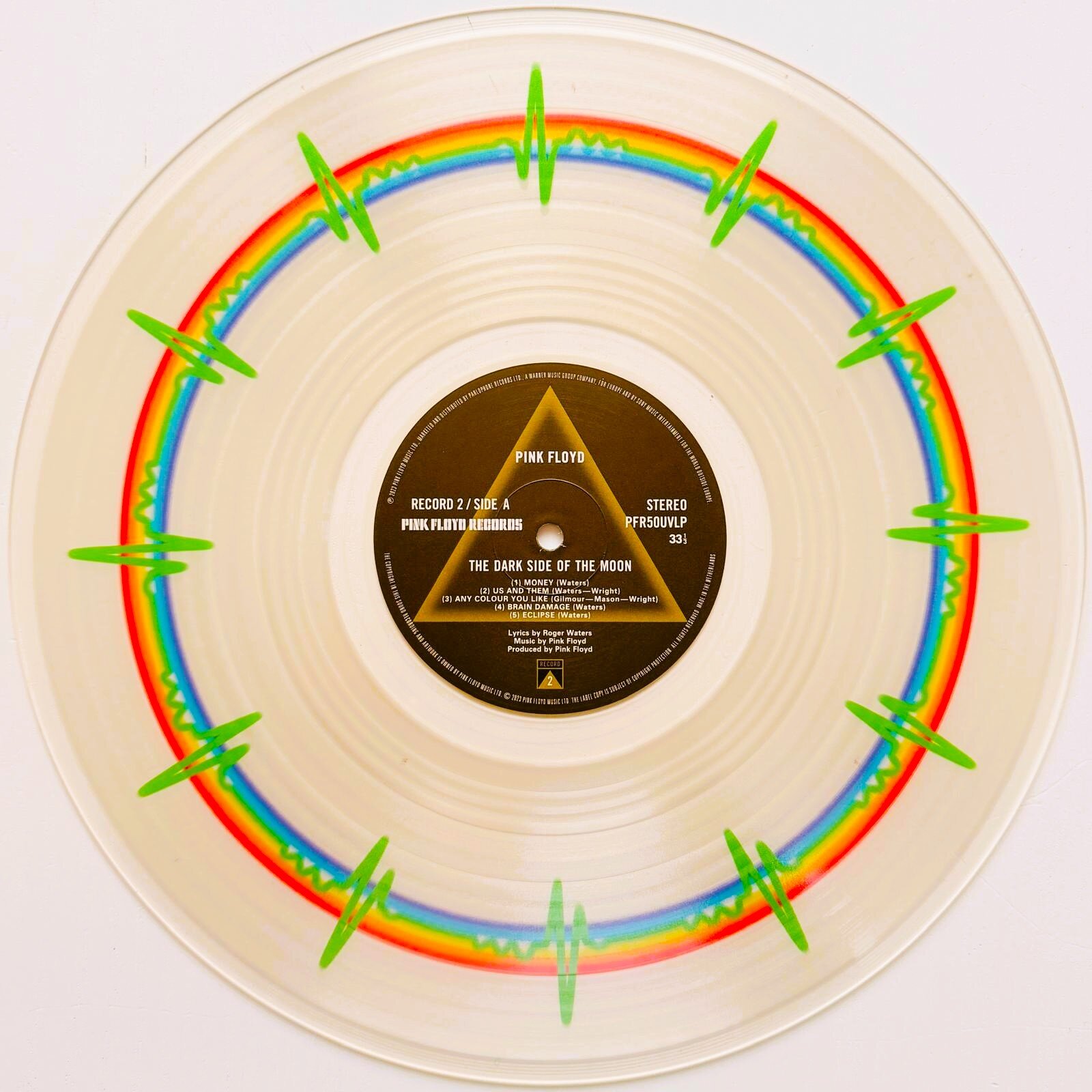
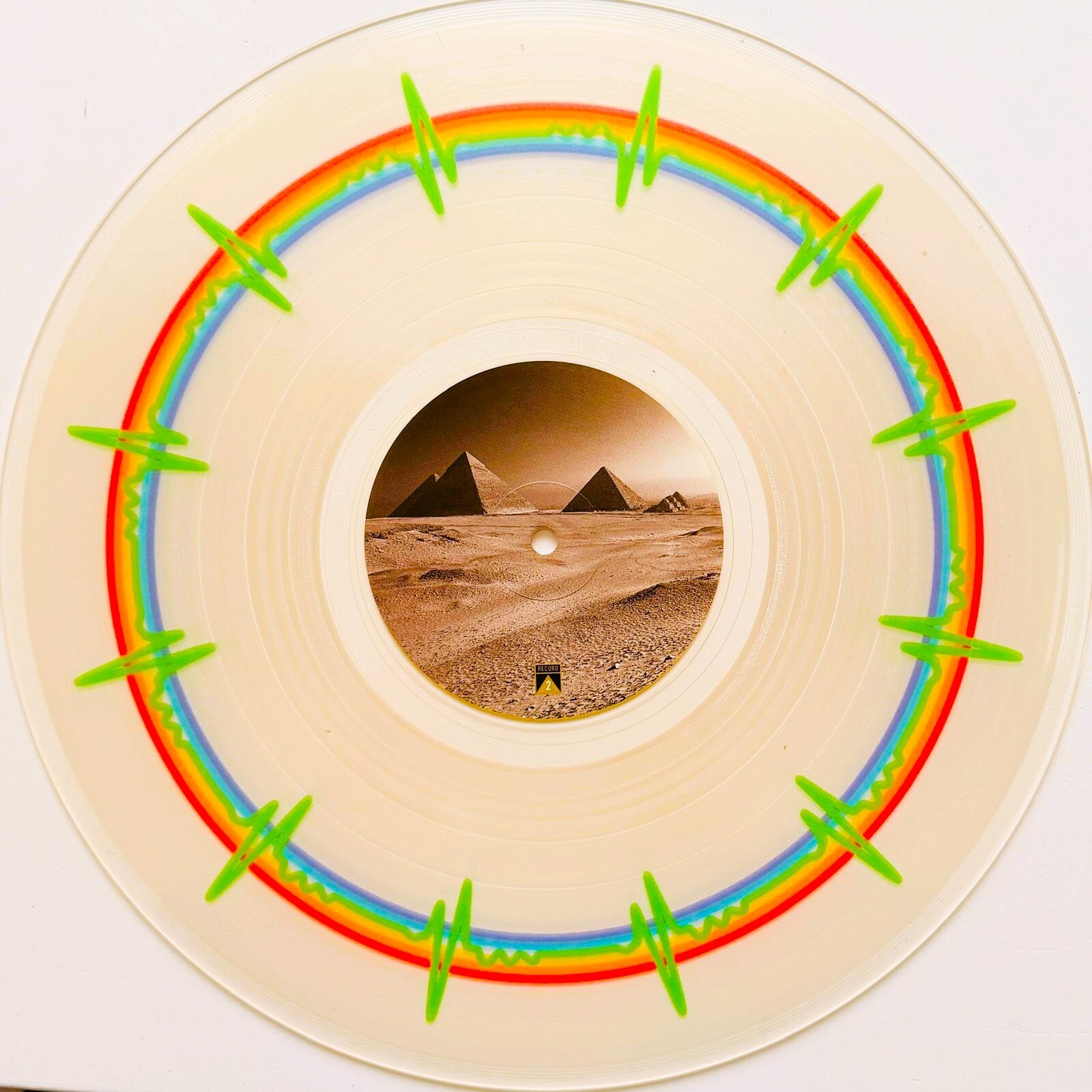
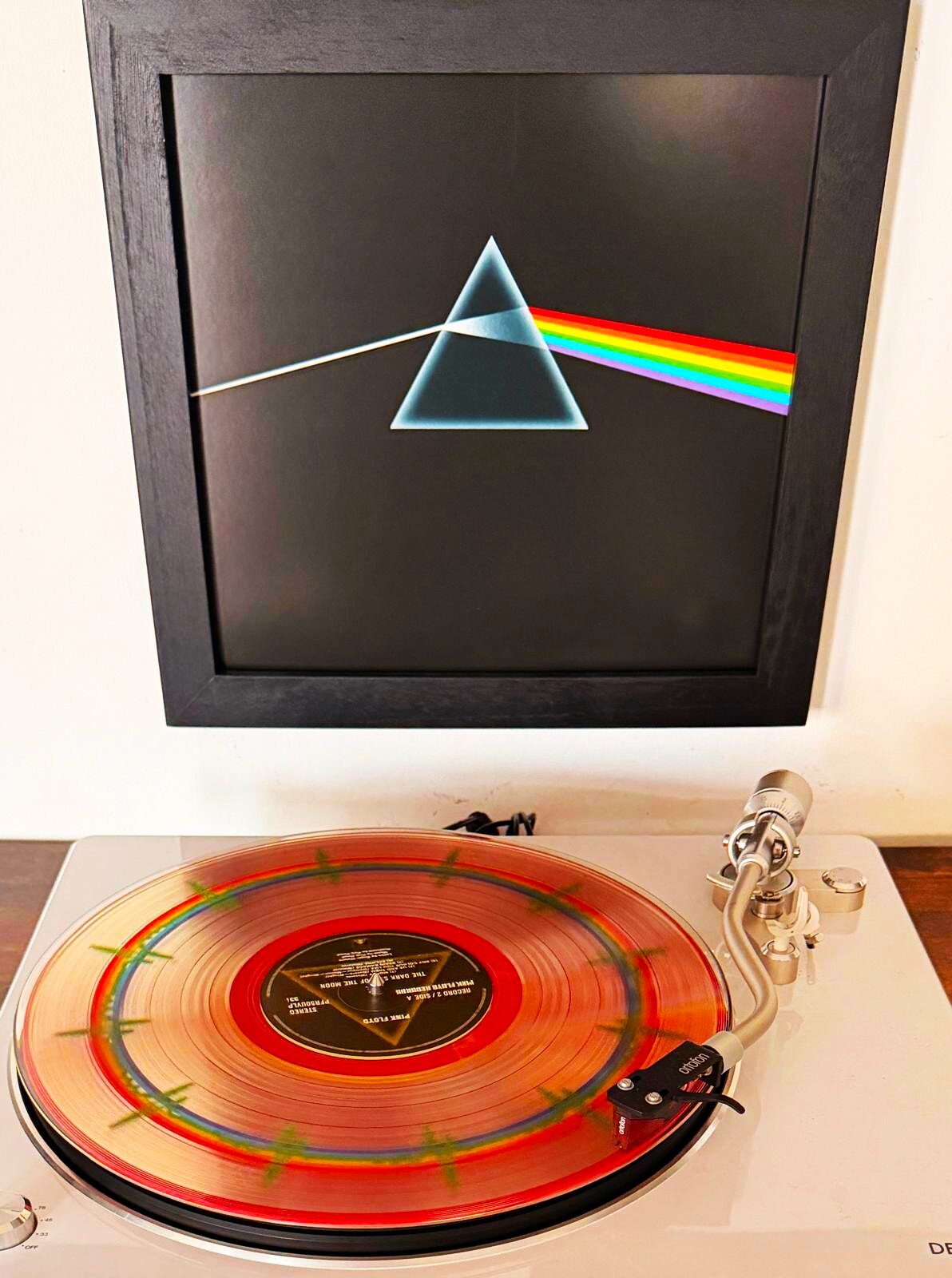
The 50th Anniversary Collector's Edition with product code PFR50UVLP is a 180-gram clear double vinyl set.
Format: Double LP (2 vinyl discs) on 180-gram clear vinyl.
Remastered Audio: Includes the 2023 remaster of the original album, curated by James Guthrie to ensure the highest sound quality, unlike traditional picture discs, which can sometimes be subpar.
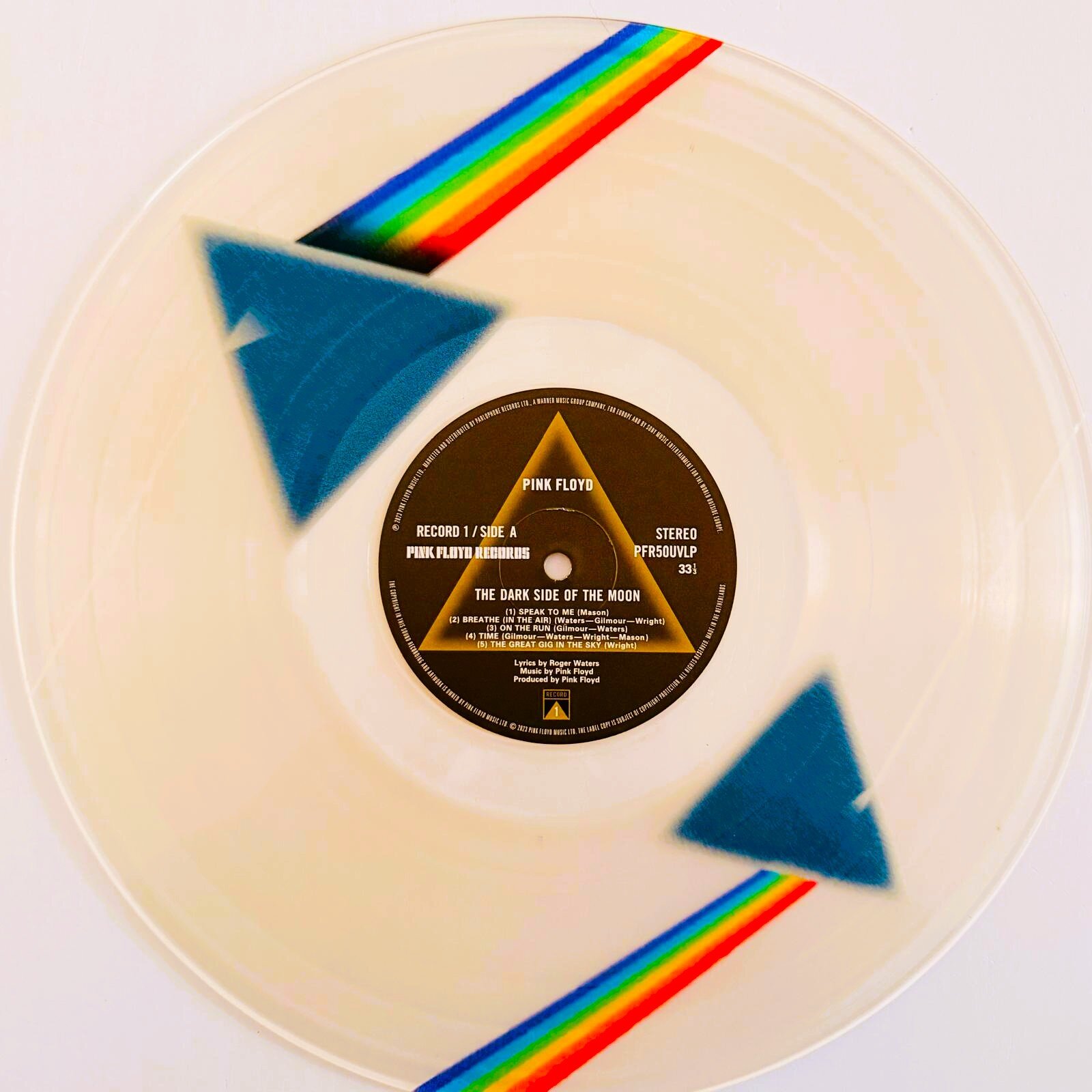
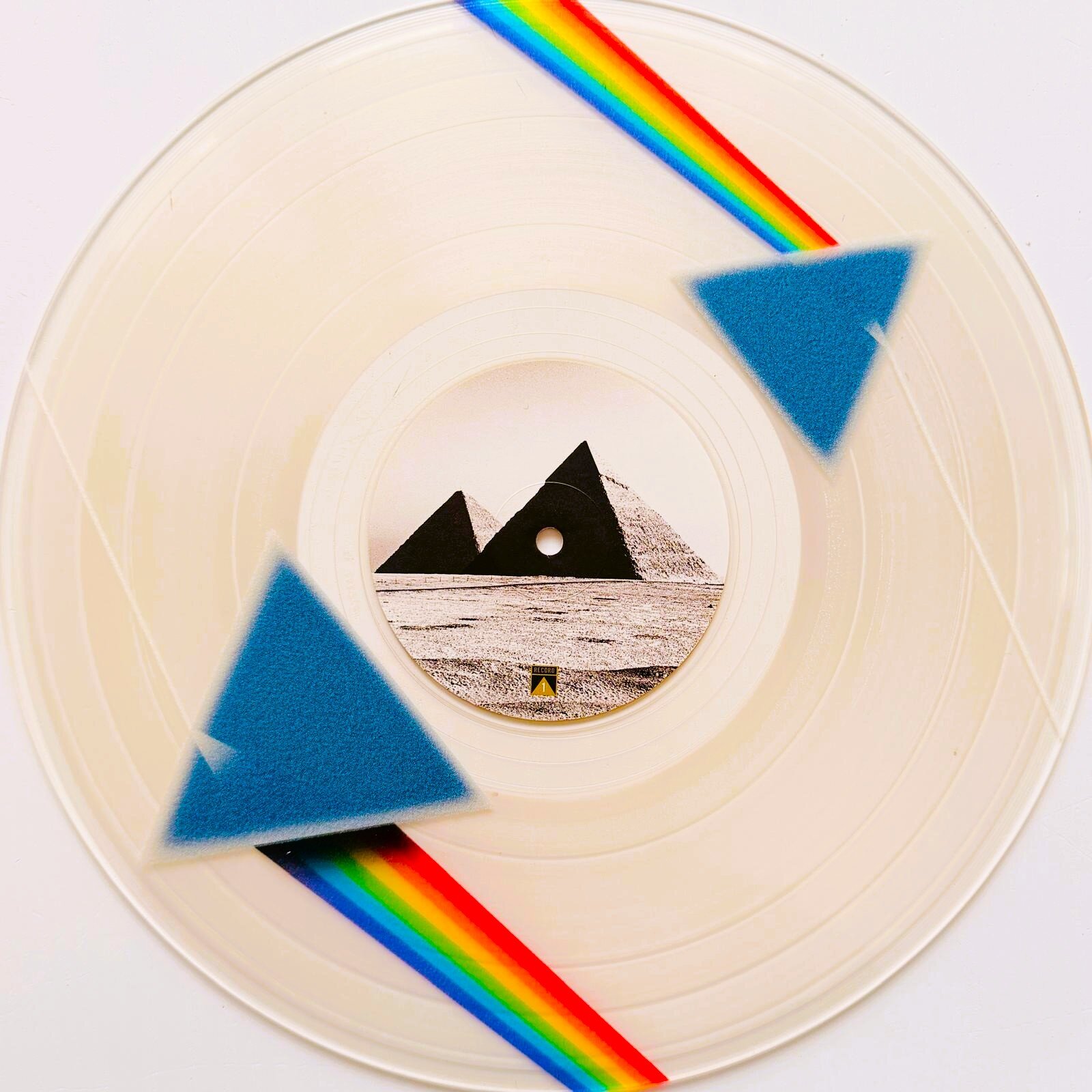
Innovative UV Printing: The iconic prism artwork and heartbeat design are printed using a high-end UV printer on the unetched sides of the vinyl. This allows the image to be seen through the playable side as the disc rotates, without compromising the audio.
Packaging: The discs are packaged in a gatefold sleeve with an additional outer slipcase and include an exclusive poster for this edition.
Reproduction: Each disc is single-sided, with the music engraved on one side and the UV artwork printed on the other. The first disc contains the songs up to The Great Gig in the Sky, while the second disc contains the rest of the album.
The album has influenced artists and entire musical genres since its release, leaving an invaluable legacy for progressive rock, electronic music, and modern pop. Radiohead, for example, have been considered the "Pink Floyd of the '90s," drawing inspiration from Dark Side's atmosphere and complexity for masterpieces like OK Computer and A Moon Shaped Pool. Tool has cited Pink Floyd as a key influence for their creation of immersive sound worlds and emphasis on concept albums. Dream Theater and Porcupine Tree (Steven Wilson), pillars of modern prog, incorporated the use of synthesizers and instrumental suites typical of the Dark Side era. The influence is also evident in Coldplay, especially in their early works like Parachutes (2000), where the emphasis on sonic textures prevails over classic pop structure.
An immense and timeless masterpiece, a must-have. An essential album for progressive rock, space rock, psychedelic rock, and music, ALL of it.
Note: All links to the musicians' works are in the TAGS under the article title or on the "Artists" page.
Tracklist
1. Speak to Me (1:16)
2. Breathe (2:44)
3. On the Run (3:32)
4. Time / Breathe (reprise) (7:06)
5. The Great Gig in the Sky (4:44)
6. Money (6:32)
7. Us and Them (7:40)
8. Any Colour You Like (3:25)
9. Brain Damage (3:50)
10. Eclipse (2:04)
Duration 42:53
LineUp
- David Gilmour - guitars, lead vocals (2, 4, 6, 7), VCS3
- Richard Wright - keyboards, lead vocals (4, 7), VCS3 (8, 9) and Synth A (3, 4)
- Roger Waters - bass, lead vocals (9, 10), VCS3, tape effects
- Nick Mason - drums, percussion, tape effects
Featuring:
- Dick Parry - saxophone (6, 7)
- Clare Torry - lead vocals (5)
- Lesley Duncan - backing vocals
- Liza Strike - backing vocals
- Barry St. John - backing vocals
- Doris Troy - backing vocals

.jpeg "Meddle by Pink Floyd")