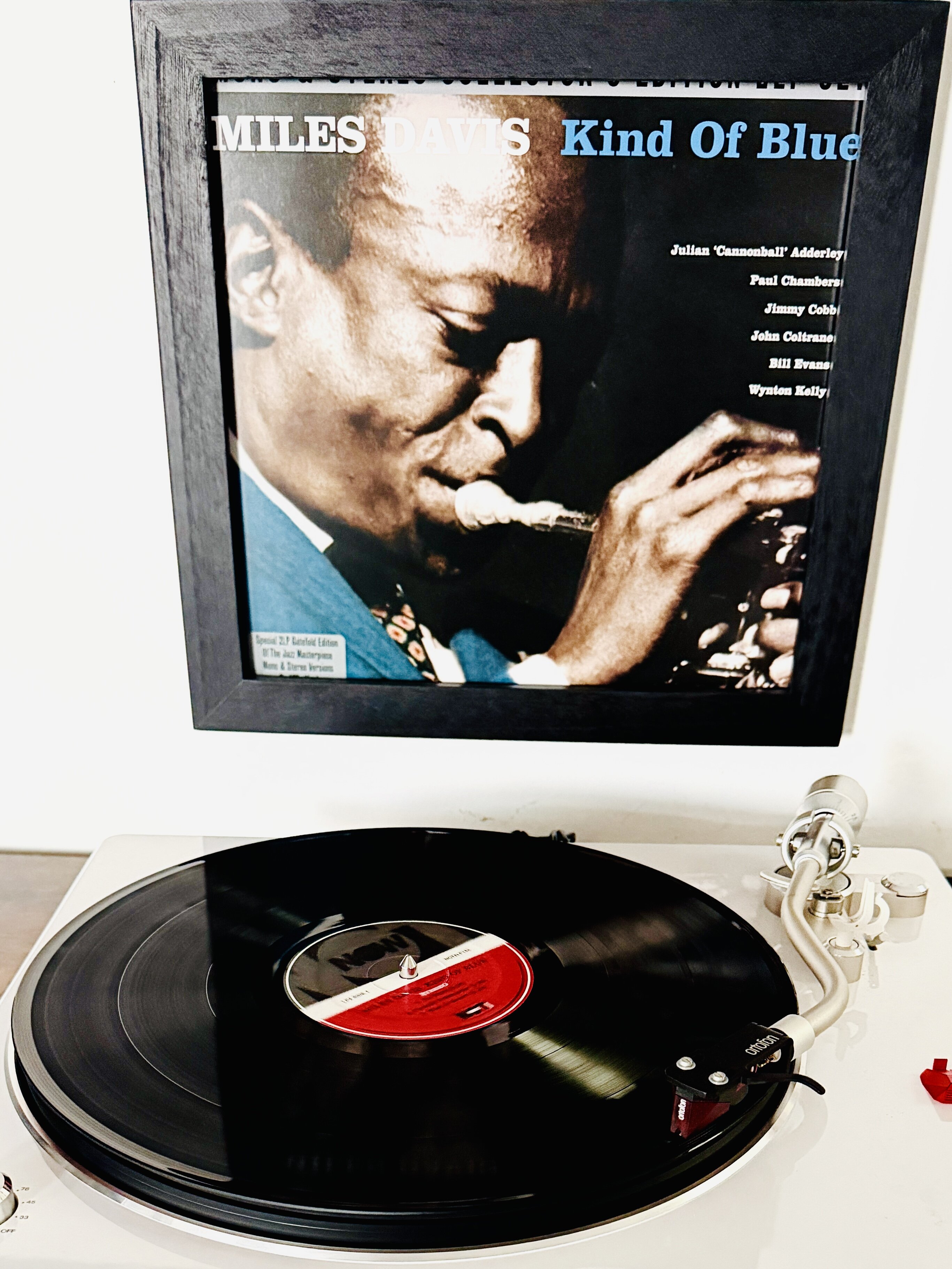
Kind Of Blue di Miles Davis, album del 1959
Difficile avvicinarsi senza essere banali o peccare di inesperienza ad un artista come Miles Davis e ad un album di questa dimensione storica e culturale ed è per questo che nonostante la moltitudine di ascolti di questo disco e di altri suoi capolavori non lo ho fatto finora. E' anche vero però che la sua mancanza è una lacuna enorme in un blog che aspira a trattare del “progressive rock in tutte le sue declinazioni”
Kind of Blue infatti pur non essendo un abum puramente progressive, viene associato al genere per la sua natura rivoluzionaria, la struttura non convenzionale, l’approccio intellettuale e le atmosfere immersive che lo accomunano al prog, anticipando il jazz-rock.
Questo album segna l’inizio di qualcosa di immenso nel progressive rock, con Miles Davis che si integra perfettamente nel mondo progressive durante il suo “periodo elettrico” (fine anni ’60 - metà anni ’70). Nei dischi successivi, la struttura jazz si dissolve per lasciare spazio a lunghe suite psichedeliche e ritmi rock. Bitches Brew (1970), il “Big Bang” del jazz-rock, è un doppio album composto da lunghe improvvisazioni collettive, montaggio analogico in studio e atmosfere oscure. È considerato un capolavoro del progressive jazz per la sua complessità monumentale. In a Silent Way (1969), forse il primo disco ambient-prog, è un’opera ipnotica, quasi circolare, che ha influenzato profondamente gruppi come i Pink Floyd e i Can.
Kind of Blue è il capolavoro indiscusso del jazz e l’album più venduto del genere. Introducendo il jazz modale, l’album crea un’atmosfera rilassata, malinconica e “blu”, rendendolo un caposaldo accessibile ma profondo.
È un disco imperdibile per ogni appassionato di musica, grazie al suo sestetto leggendario:
Miles Davis alla tromba. Cresciuto nel bebop con Charlie Parker, questo leader e visionario ha rivoluzionato il jazz più volte, passando dal cool jazz al jazz modale e infine alla fusion.
John Coltrane al Sax tenore. Dopo questa esperienza, divenne una forza della natura, un leader spirituale del jazz d’avanguardia e del free jazz, spingendo lo strumento verso limiti tecnici estremi, con la sua potenza e la sua ricerca armonica.
Julian "Cannonball" Adderley al Sax alto. Con il suo sound blues e swing, apportava al gruppo un calore e un senso di “swing” più tradizionale rispetto a Coltrane, grazie all’influenza del blues e del gospel.
Bill Evans al pianoforte. L’architetto armonico, introspettivo e colto, ha portato influenze della musica classica europea (Debussy, Ravel), fondamentali per definire l’atmosfera eterea dell’album, e che sono state cruciali per l’estetica introspettiva e modale.
Paul Chambers al Contrabbasso. Il battito costante, il pilastro ritmico, era il bassista più richiesto del tempo, nonostante la giovane età. Il suo tempo impeccabile e la capacità di trasformare il contrabbasso in uno strumento solista melodico lo distinguevano da tutti gli altri.
Jimmy Cobb alla Batteria. Con il suo accompagnamento discreto ma pulsante, è stato l’ultimo sopravvissuto della formazione originale, musicista dal tocco delicato ed elegante.
Wynton Kelly al Pianoforte. Il pianista blues, chiamato da Davis per sostituire Evans nel brano “Freddie Freeloader”, si distingue per il suo stile gioioso e il suo incredibile senso del ritmo.
Questo album non è solo un disco, ma una vera e propria pietra miliare della musica del ‘900 e il manifesto del jazz modale. Segna il distacco definitivo dalle strutture frenetiche del bebop, abbracciando un approccio basato sulle scale (modi) anziché sulle rigide sequenze di accordi. Questo ha permesso ai musicisti una libertà melodica senza precedenti, creando un’atmosfera contemplativa, quasi ipnotica.
Davis fornì ai musicisti solo dei canovacci abbozzati poche ore prima della registrazione, puntando tutto sull’improvvisazione pura. Nonostante la complessità teorica, l’album è celebre per la sua bellezza melodica e fluidità, risultando il punto d’ingresso perfetto per chiunque voglia avvicinarsi al jazz.
Registrato in sole due sessioni (marzo e aprile 1959), quasi tutti i brani sono stati catturati al “primo colpo” (first take) per preservare la freschezza dell’ispezione momentanea.
“So What”, introdotta da contrabbasso e piano, esplode in un tema iconico dorico. La struttura a due accordi offre libertà melodica ai solisti, con il solo di Davis come esempio di sottrazione ed eleganza.
“Freddie Freeloader”, l’unico brano blues tradizionale a 12 battute dell’album, presenta un tocco ritmato e gioioso grazie a Wynton Kelly al piano.
“Blue in Green” è una ballata malinconica, caratterizzata da un tempo “liquido” e dall’assenza del sax, creando un’intimità notturna.
“All Blues” è un blues in 6/8 con un andamento ipnotico. Il sestetto lavora come un unico organismo, con il riff di sax e le variazioni cromatiche dei solisti.
“Flamenco Sketches”, senza melodia fissa, esplora la sperimentazione modale attraverso l’improvvisazione su cinque scale diverse.
Kind of Blue è un disco fondamentale, non solo per il jazz, ma per la cultura occidentale in generale. Ha liberato i musicisti dalla complessità degli accordi bebop, introducendo il jazz modale e spostando l’attenzione su melodia e spazio. Questo ha permesso improvvisazioni più lunghe e meditative. L’album ha insegnato il valore della semplicità, influenzando generi come il rock psichedelico, l’ambient e il minimalismo.
È stato un punto di svolta per i musicisti coinvolti, lanciando John Coltrane verso la sua fase spirituale e consacrando l’estetica colta di Bill Evans.
Con oltre 5 milioni di copie vendute solo negli USA, è il disco jazz più venduto di sempre e figura in ogni lista dei “migliori album di tutti i tempi” per la sua accessibilità e complessità. Registrato quasi interamente in modo improvvisato e “buona la prima”, ha stabilito un nuovo standard per la purezza della registrazione in studio.
Un album che ha avuto un impatto così profondo da superare i confini del jazz, influenzando artisti di rock, pop ed elettronica.
Richard Wright e David Gilmour dei Pink Floyd lo hanno citato come influenza chiave, con l’uso degli spazi e le atmosfere dilatate di brani come “Breathe” e “Us and Them” che derivano dalla lezione modale di Davis.
Duane Allman, chitarrista dei The Allman Brothers Band, ha modellato i suoi assoli, in particolare in “In Memory of Elizabeth Reed”, sullo stile di Davis e Coltrane in questo disco, cercando di emularne la fluidità melodica.
Quincy Jones, produttore di Michael Jackson, ha definito Kind of Blue la sua “influenza numero uno”, ascoltandolo quotidianamente per decenni per capire come bilanciare semplicità e profondità sonora.
I Radiohead, durante le sessioni di OK Computer, hanno cercato di catturare la stessa “atmosfera di spazio e malinconia” presente nell’album.
Brian Eno, pioniere della musica ambient, ha tratto ispirazione dalla natura contemplativa e non invasiva del disco per sviluppare i suoi paesaggi sonori.
Infine, Lana Del Rey ha citato il “mood” di Davis come punto di riferimento per le sue produzioni più jazz-pop e sognanti.
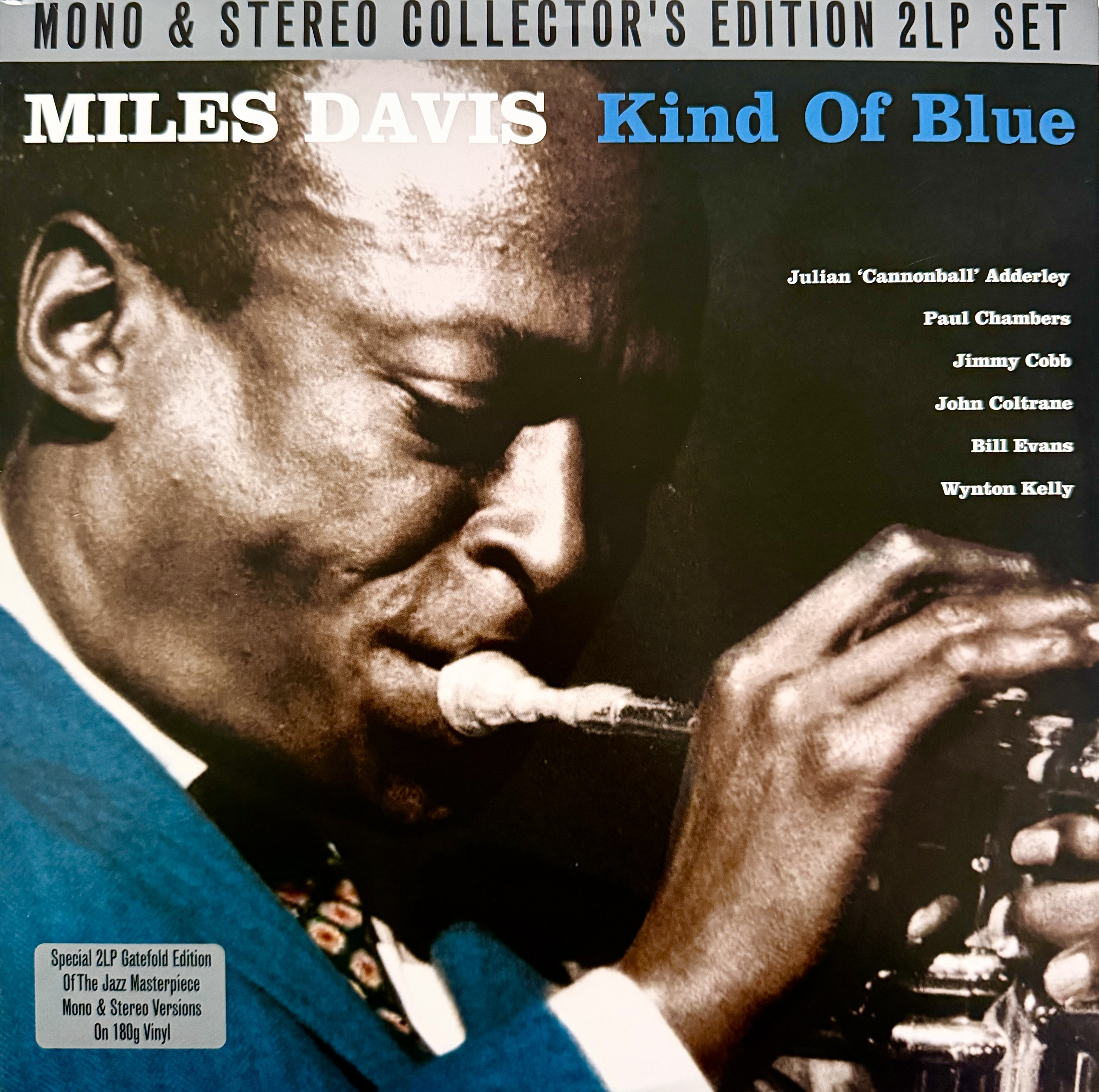
Album Essenziale
La Mia Versione
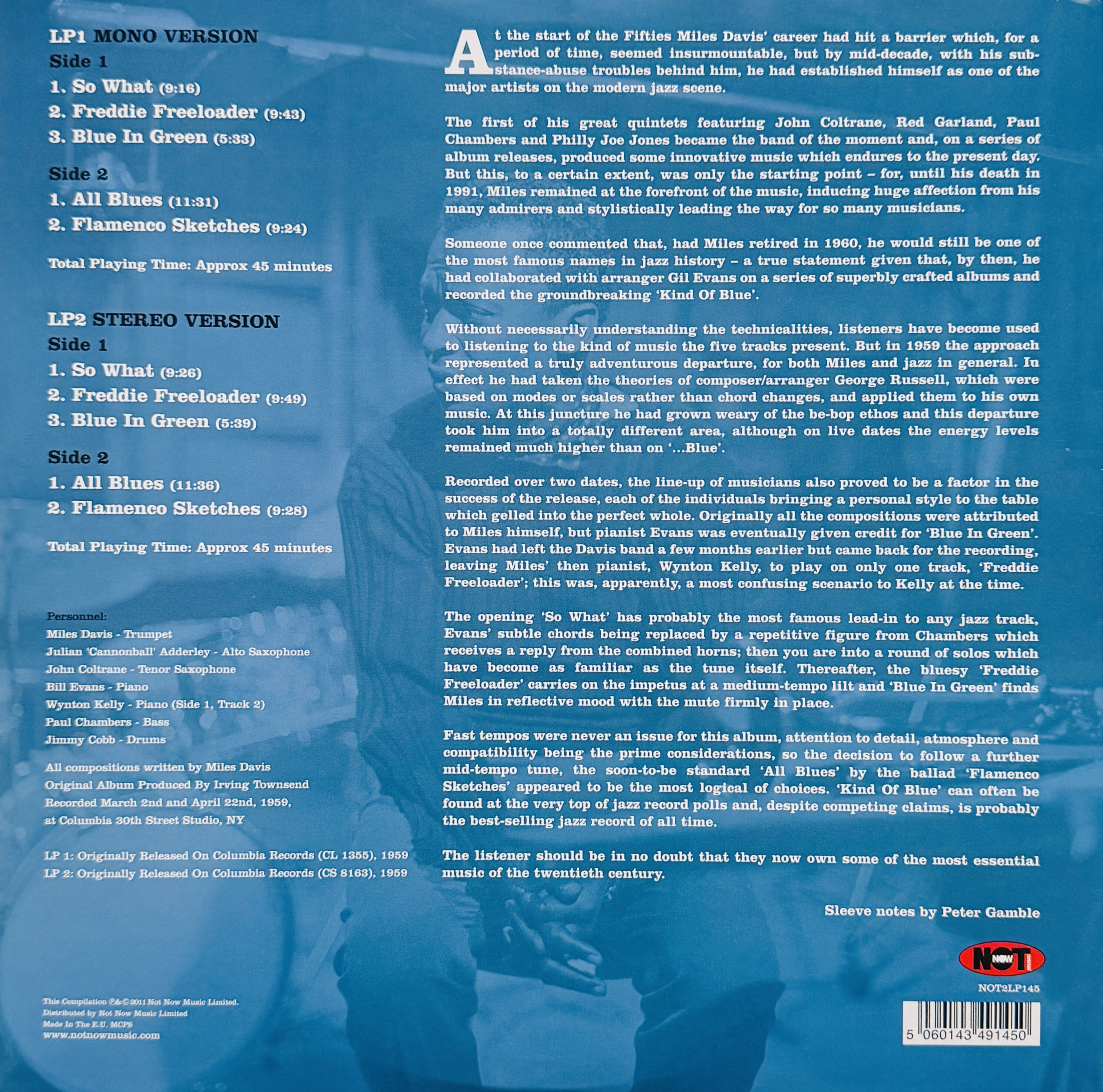
Etichetta: Not Now Music – NOT2LP145, Not Now Music – NOTLP145
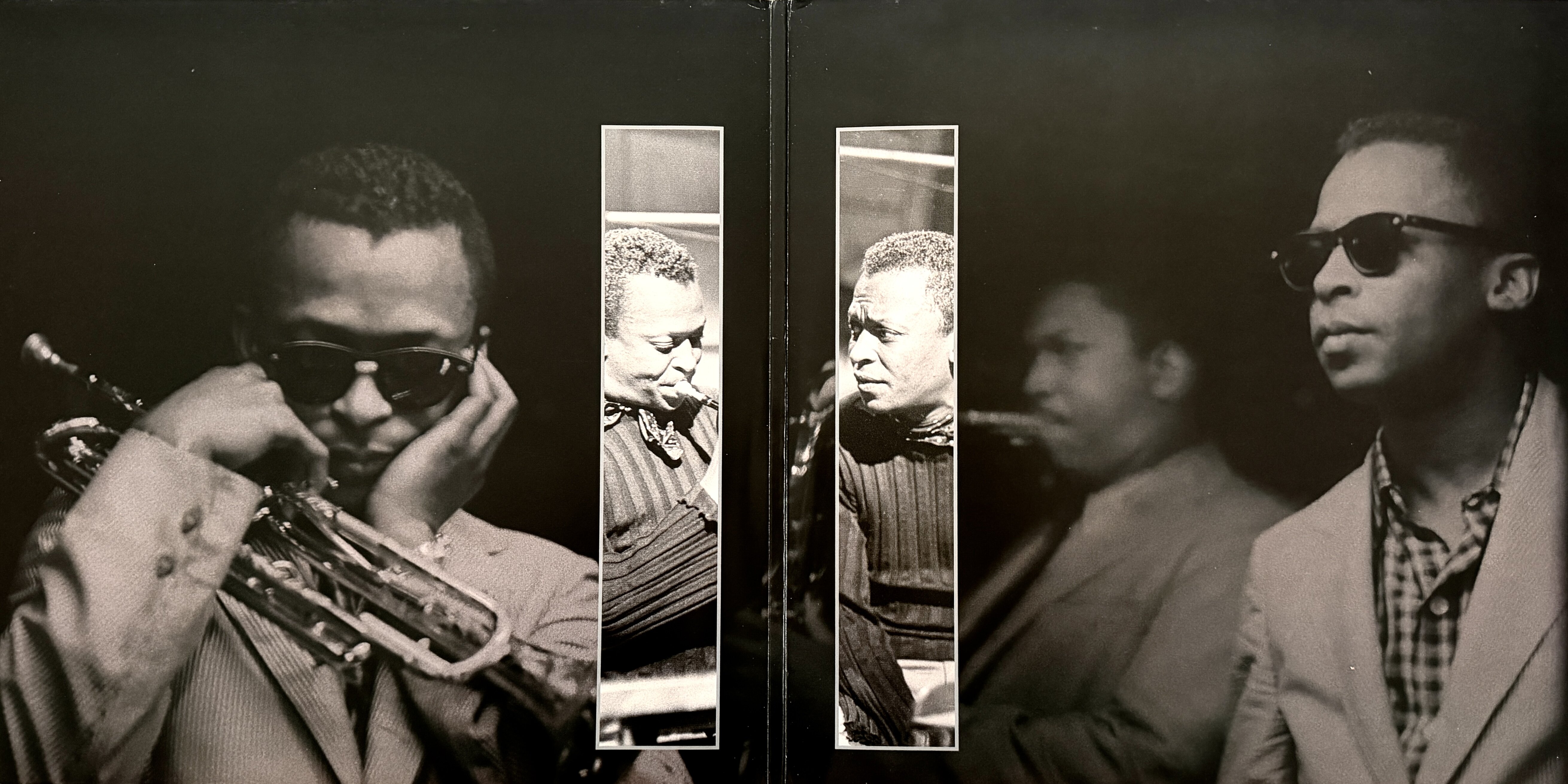
Formato: 2 x Vinile, LP, Album, Reissue, Stereo, Mono, 180 gram, Gatefold
Paese: Europe
Uscita: 2011
Tracklist
Mono version
A1 - So What 9:16
A2 - Freddie Freeloader 9:43
A3 - Blue In Green 5:33
B1 - All Blues 11:31
B2 - Flamenco Sketches 9:24
Stereo version
C1 - So What 9:26
C2 - Freddie Freeloader 9:49
C3 - Blue In Green 5:39
D1 - All Blues 11:36
D2 - Flamenco Sketches 9:28
LineUp
Miles Davis: Tromba
John Coltrane: Sax tenore
Julian "Cannonball" Adderley: Sax alto
Bill Evans: Pianoforte
Paul Chambers: Contrabbasso
Jimmy Cobb: Batteria
Wynton Kelly: Pianoforte (solo in "Freddie Freeloader")
Link per l’ascolto:
Kind of Blue di Miles Davis in Streaming Digitale (Audio)
Spotify: Kind of Blue - Album
YouTube Music: Kind of Blue (Full Album)
Apple Music: Kind of Blue (Legacy Edition)
Amazon Music: Kind of Blue - Album
Deezer: Kind of Blue - Album
Qobuz (Hi-Res): Kind of Blue - Album
Nota: Tutti i link ai lavori dei musicisti sono nei TAG sotto il titolo dell'articolo o nella pagina "Artisti"