
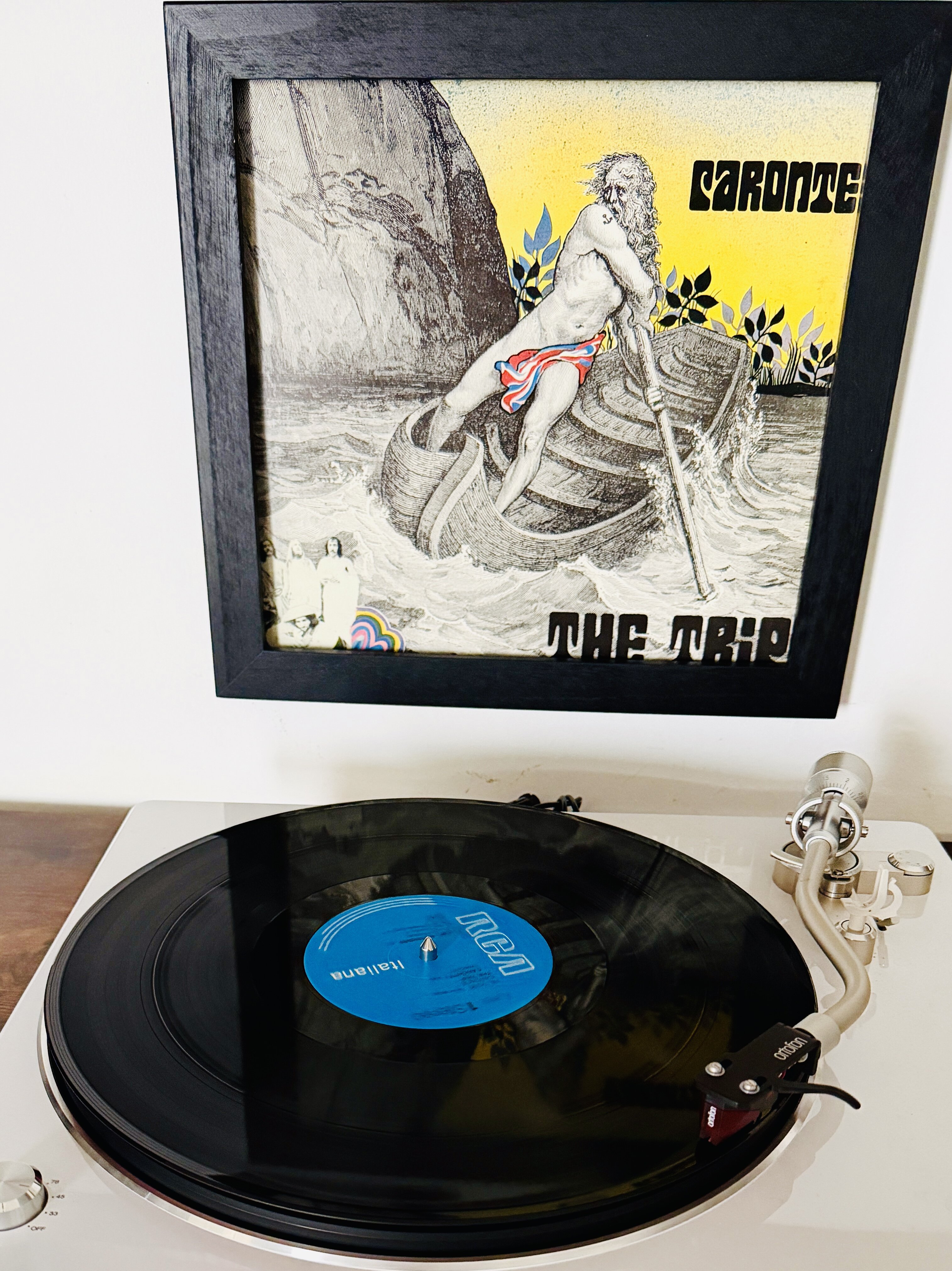
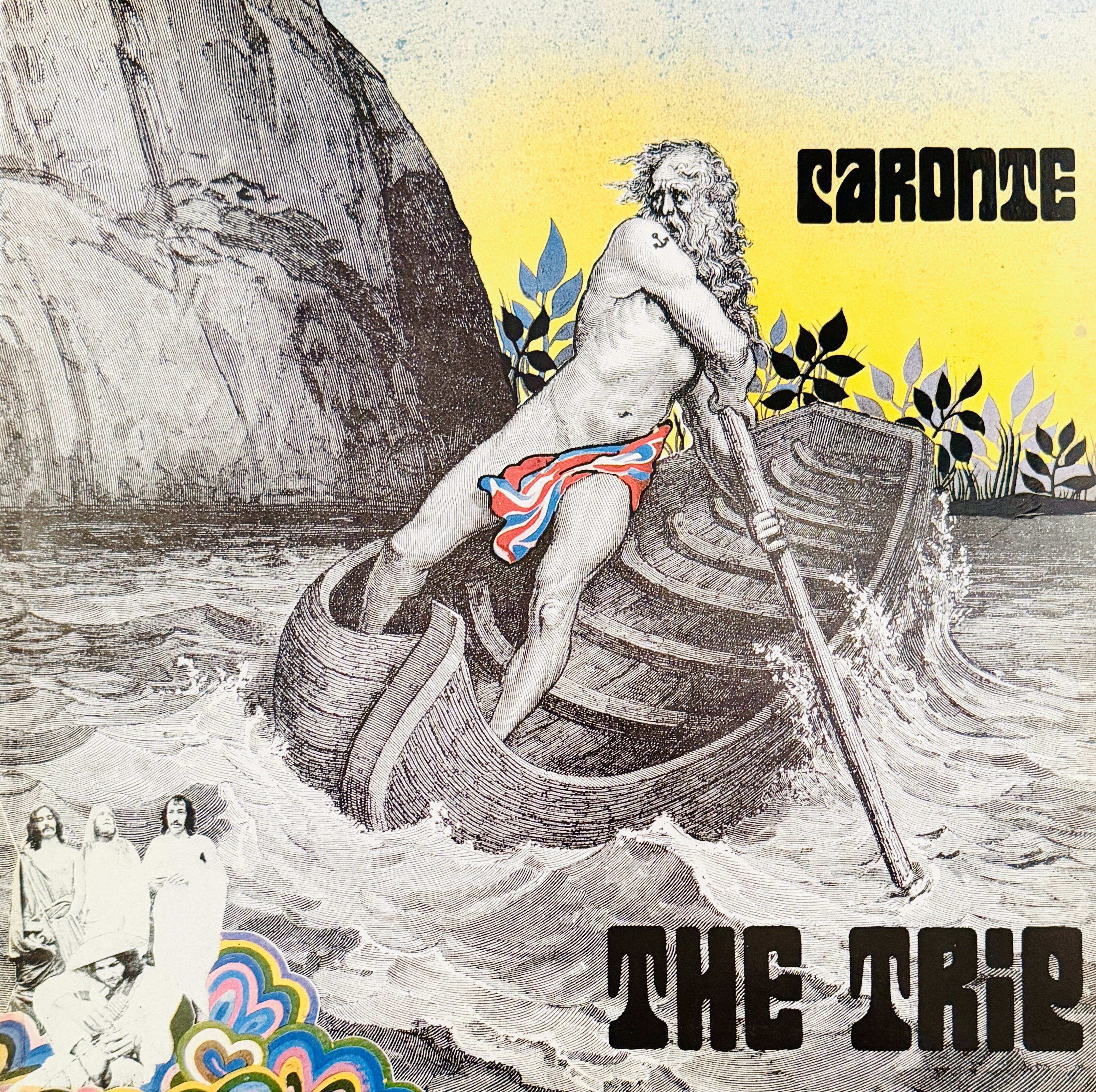
Caronte dei The Trip, album del 1971.
I The Trip sono stati un gruppo fondamentale e innovativo del rock progressivo italiano, per il loro sound internazionale e la maestria tecnica.
La band si formò a Londra a metà degli anni ’60 dall’incontro tra il cantante italiano Riki Maiocchi e il chitarrista Ritchie Blackmore (che in seguito avrebbe fondato i Deep Purple). Inizialmente, erano il gruppo di supporto di Maiocchi con il nome Maiocchi & The Trip, e la formazione originale includeva anche Arvid “Wegg” Andersen al basso e Billy Gray alla chitarra. Blackmore lasciò il gruppo nel 1967 per tornare in Inghilterra, poco prima che la band trovasse la sua identità definitiva in Italia.
Con l’arrivo del tastierista savonese Joe Vescovi, il gruppo si affermò come una delle band di punta del prog italiano.
La loro produzione discografica più importante si divide in quattro album chiave: The Trip (1970), un debutto che mescolava psichedelia e rock impressionistico; Caronte (1971), il loro capolavoro, un concept album che li consacrò come pionieri del genere; Atlantide (1972), caratterizzato da un passaggio a una formazione a trio (Vescovi, Andersen, Gray) e influenze simili agli Emerson, Lake & Palmer; e Time of Change (1973), l’ultimo album del periodo storico, con un approccio più jazz-rock e l’ingresso di Furio Chirico alla batteria.
Dopo lo scioglimento a metà degli anni ’70, la band si è riunita in diverse occasioni. Nel 2015, su richiesta di Joe Vescovi prima della sua morte, il batterista storico Pino Sinnone ha riformato il gruppo. La formazione attuale continua a suonare e a pubblicare nuova musica, mantenendo viva l’eredità della band con una line-up che include il cantante Andrea “Ranfa” Ranfagni e il chitarrista Carmine Capasso.
L'album Caronte del 1971 è considerato una delle pietre miliari e tra i primi veri esempi di rock progressivo italiano. Segna il distacco della band dalle radici beat del debutto verso un suono più complesso e travolgente, guidato dalle tastiere di Joe Vescovi.
Si tratta di un album ambizioso che usa la figura mitologica del traghettatore infernale per collegare la Divina Commedia di Dante Alighieri alla società ribelle dei primi anni ’70. Non è una semplice rilettura di Dante, ma usa il viaggio nell’Oltretomba per parlare dell’alienazione e del desiderio di libertà dei giovani dell’epoca. Caronte non trasporta solo anime morte, ma chiunque cerchi di passare verso una nuova consapevolezza e lo fa attraverso le figure che la società perbenista del tempo considerava ai margini:
In “Two Brothers”, il viaggio agli inferi è legato alla libertà selvaggia dei biker (ispirato al film Easy Rider). Nella suite “L’Ultima Ora / Ode a Jimi Hendrix”, la morte del chitarrista (avvenuta pochi mesi prima) è vista come il passaggio di un semidio moderno nel regno delle ombre.
Il concept è racchiuso tra due momenti strumentali:
“Caronte I (L’Inizio)”: Rappresenta l’arrivo alla riva, con un suono solenne e minaccioso dominato dall’organo Hammond di Joe Vescovi.
“Caronte II (La Fine)”: Chiude il cerchio, suggerendo che il viaggio e la ricerca di libertà sono processi infiniti.
Sotto la maschera mitologica, l’album critica il sistema di potere e la guerra (temi presenti in “Little Janie”), dipingendo il mondo reale come un vero inferno da cui i “ribelli” cercano di fuggire, anche se questo significa finire nella barca di Caronte.
I The Trip si distinguono per un sound fortemente caratterizzato dalle tastiere di Joe Vescovi. Il suo stile fonde abilmente il virtuosismo tipico della musica classica, con elementi come fughe e contrappunti, con l’energia aggressiva del rock.
A differenza di altri gruppi progressive italiani più melodici, come ad esempio la PFM, i The Trip mantengono una forte impronta Hard Rock. La chitarra di Billy Gray interagisce con l’organo di Vescovi attraverso riff potenti e assoli distorti, che richiamano il blues-rock.
L’album è permeato da echi della psichedelia di fine anni ’60. Effetti sonori, riverberi e strutture musicali dilatate contribuiscono a creare l’atmosfera “infernale” e nebbiosa che caratterizza il concept.
Le canzoni non seguono la struttura classica della strofa-ritornello, ma si sviluppano come suite musicali. Un esempio emblematico è “L’Ultima Ora / Ode a Jimi Hendrix”, che alterna momenti di furia ritmica a rallentamenti onirici e solenni, tipici della musica classica.
Il basso di Wegg Andersen e la batteria di Pino Sinnone offrono un supporto solido e dinamico, capace di passare da tempi jazzati a cavalcate rock travolgenti.
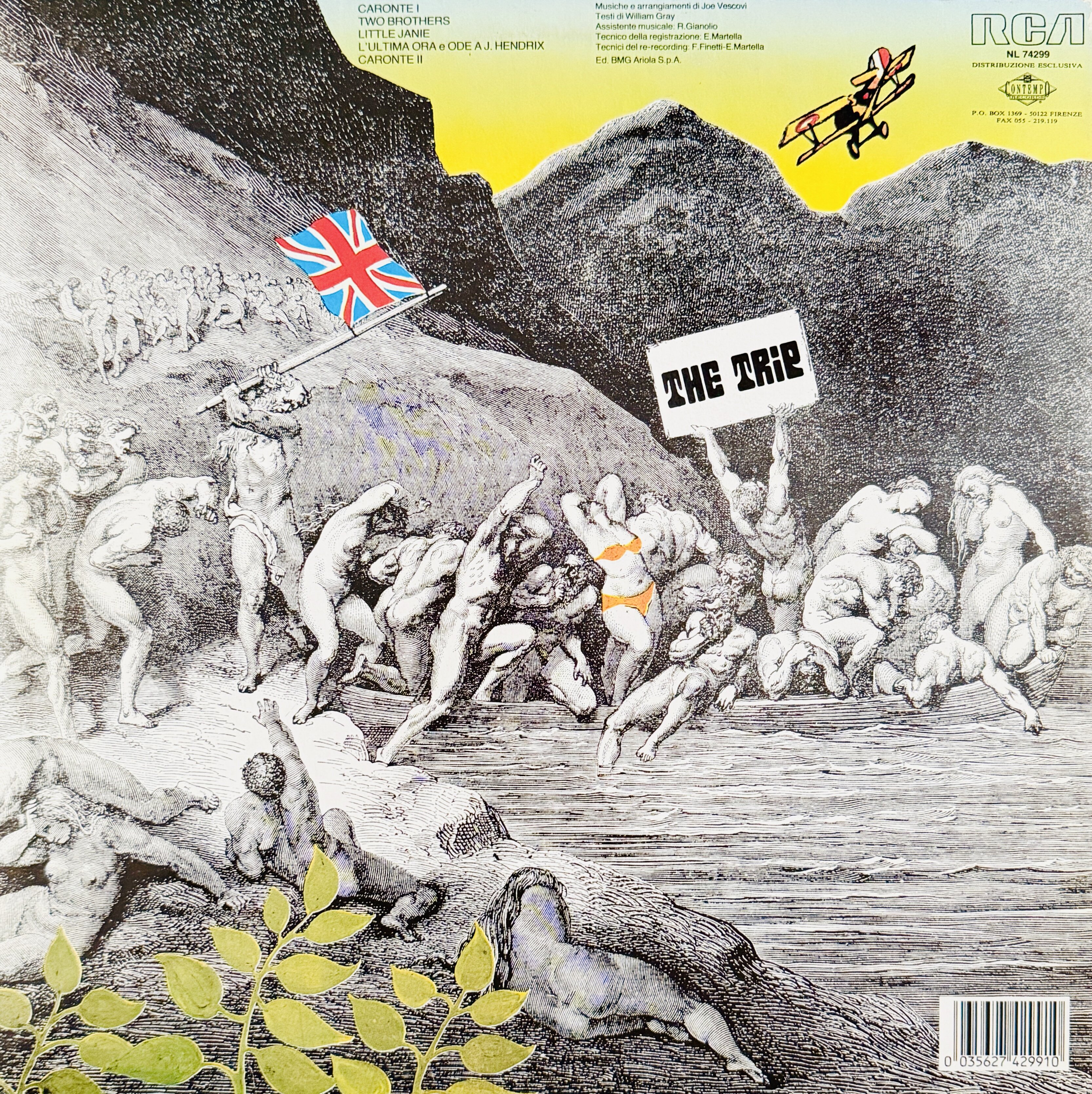
La mia versione è la NL 74299, la ristampa in vinile pubblicata dalla RCA Italiana nel 1990. Trattandosi di una riedizione fedele del master originale del 1971, la tracklist e l'esperienza d'ascolto ricalcano i cinque brani storici del disco originale, mantenendo la pulizia sonora del mix originale RCA pur essendo una versione economica.
“Caronte I” apre l’album con un pezzo strumentale che è un vero gioiello di prog sinfonico. Parte con un’atmosfera misteriosa e cupa, per poi trasformarsi in un hard rock super coinvolgente, grazie alle classiche e potenti progressioni dell’organo Hammond di Joe Vescovi.
“Two Brothers” è uno dei pezzi più lunghi e movimentati dell’album. Si apre con dei rumori ambientali, tipo passi e motori, e un riff di basso ipnotico di Wegg Andersen. Il testo è un tributo alla libertà ribelle, ispirato ai protagonisti di “Easy Rider”.
“Little Janie” è una canzone melodica, dedicata a Janis Joplin, e anche la più pop del disco. Ha una parte di Mellotron stupenda e un’atmosfera sognane che ti fa rilassare dopo le canzoni più intense che la precedono.
“L’Ultima Ora e Ode a Jimi Hendrix”, secondo me, è il pezzo più bello dell’album. È una suite complessa che rende omaggio al mitico Jimi Hendrix, che purtroppo ci ha lasciati poco prima che iniziassero le registrazioni. Il brano si snoda tra una struttura blues in 3/4 e momenti di pura bravura tecnica, per poi concludersi con un finale solenne e toccante, arricchito dall’organo a canne e da un grande assolo di chitarra di William Gray.
“Caronte II” chiude il disco riprendendo il tema principale della prima traccia, ma con un tocco decisamente più rock.
La copertina dell’album utilizza le celebri incisioni di Gustave Doré realizzate per la Divina Commedia di Dante Alighieri. L’immagine raffigura Caronte che traghetta le anime attraverso l’Acheronte, evocando un’atmosfera solenne e drammatica. Tuttavia, presenta anche dettagli moderni e provocatori: un piccolo tatuaggio con un’ancora sul braccio destro, un panno con i colori della Union Jack (la bandiera britannica) che copre le parti intime, a sottolineare le origini inglesi di gran parte dei membri della band, e i volti dei quattro membri della formazione originale (Vescovi, Gray, Andersen e Sinnone), quasi sospesi sulle onde in basso a sinistra, inseriti tra nuvole colorate e psichedeliche.
La back cover espande l’omaggio a Gustave Doré con un’incisione che raffigura una moltitudine di anime dannate sulle rive dell’Acheronte, reinterpretata con elementi ironici e provocatori tipici dell’estetica pop/prog. Sull’opera classica di Doré sono stati incollati elementi grafici estranei che creano un contrasto surreale: una Union Jack sorretta da un dannato, che ribadisce l’anima inglese della band; una figura femminile al centro che indossa un bikini arancione, un tocco di dissacrazione tipico dei primi anni ’70; un biplano giallo in stile fumettistico che vola sopra le montagne infernali; e il logo della band, “THE TRIP”, racchiuso in un fumetto bianco.
Questo album ha introdotto il Progressive sinfonico in Italia, portando un tocco di internazionalità in un panorama ancora dominato dal beat. L’idea di fondere Dante, i motociclisti e un omaggio a Hendrix in un unico viaggio infernale era rivoluzionaria e incarnava perfettamente lo spirito ribelle del 1971. L’influenza di Caronte si percepisce in tutta la produzione prog successiva, avendo aperto la strada a band come il Banco del Mutuo Soccorso e le Orme, dimostrando che la musica classica poteva coesistere con il rock più duro.
Album storico, un Must in collezione, eccellente!
La Mia Versione
Etichetta: RCA Italiana – NL 74299
Formato: Vinile, LP, Album, Reissue
Paese: Italy
Uscita: 1990
Tracklist
A1 Caronte I
A2 Two Brothers
B1 Little Janie
B2 L'Ultima Ora E Ode A J. Hendrix
B3 Caronte II
LineUp
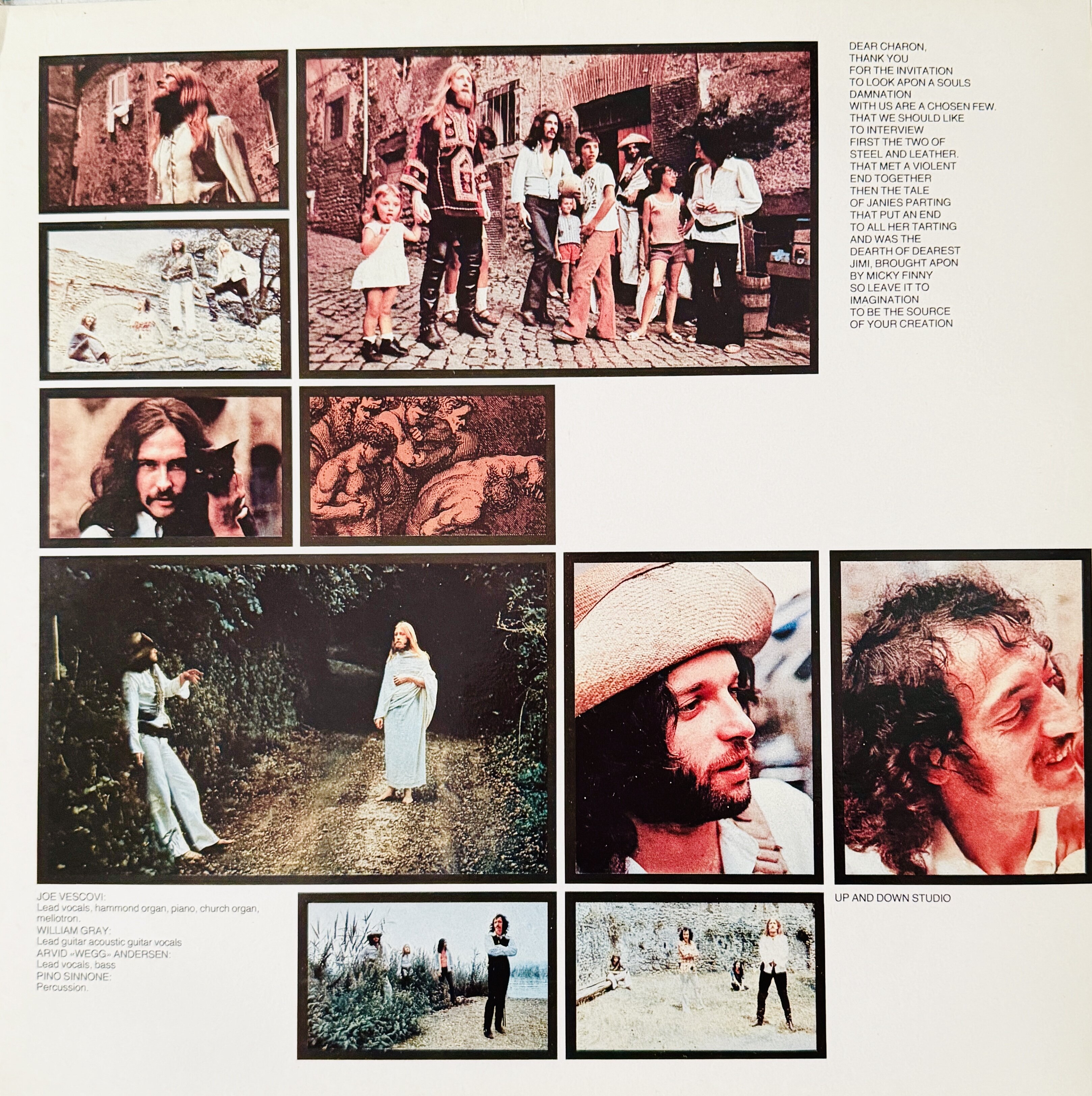
Chitarra solista, chitarra acustica, voce, testi di – William Gray
Voce principale, basso – Arvid ''Wegg'' Andersen
Voce principale, Mellotron, Organo [Hammond, Church], Pianoforte, Musica di, Arrangiamenti di – Joe Vescovi
Percussioni – Pino Sinnone
Link per l’ascolto attraverso le principali piattaforme di streaming:
- Spotify: Album completo - Caronte (1971)
- Apple Music: Versione rimasterizzata - Caronte
- Amazon Music: Caronte (Streaming & MP3)
Nota: Tutti i link ai lavori dei musicisti sono nei TAG sotto il titolo dell'articolo o nella pagina "Artisti"