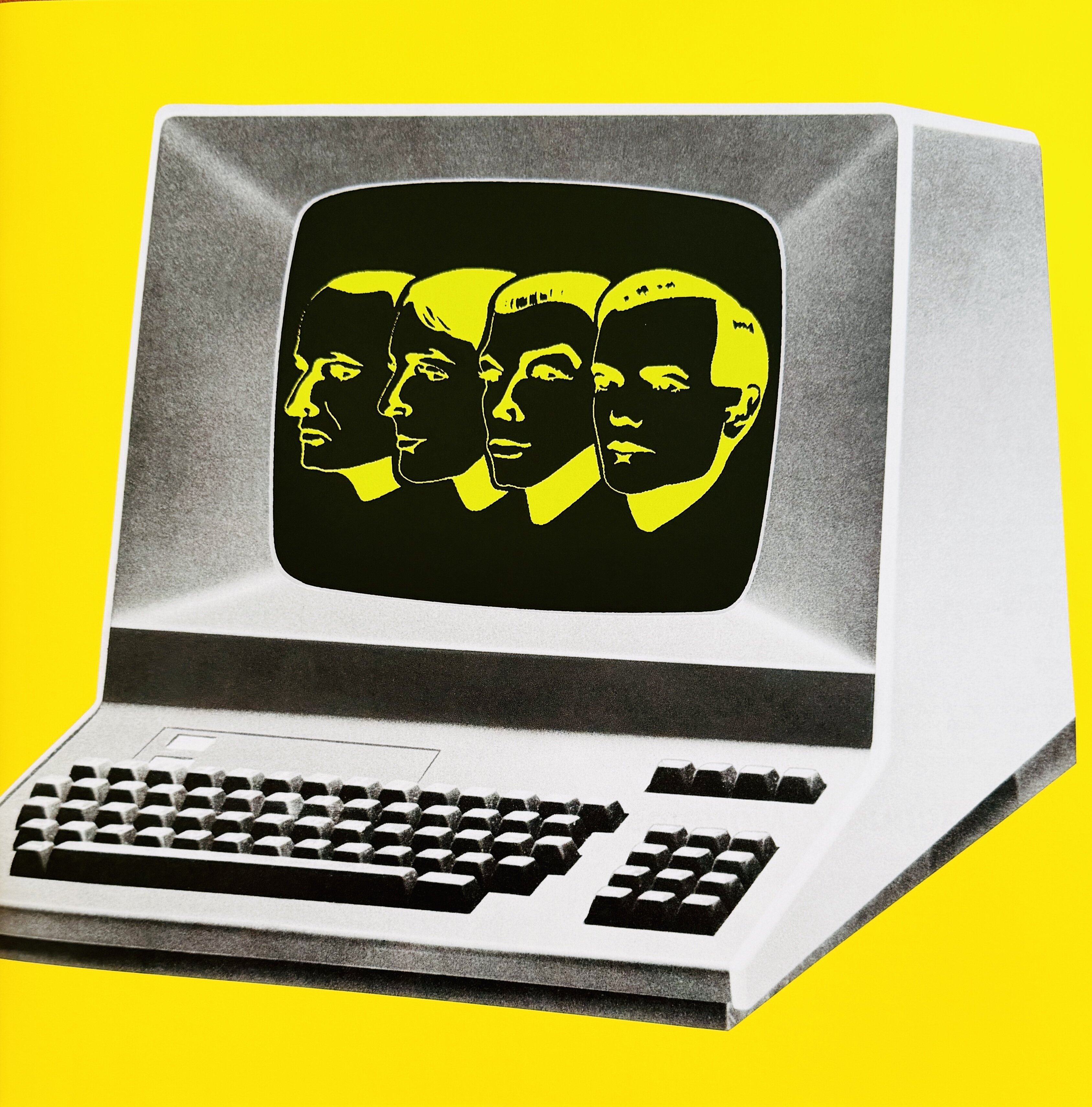
Computer World dei Kraftwerk, album del 1981.
Su Progressive Rock World, i Kraftwerk vengono celebrati come i veri e propri pionieri della musica elettronica moderna, un riconoscimento che sottolinea la loro incredibile influenza.
La band di Düsseldorf ha trasformato il sintetizzatore in uno strumento pop alla portata di tutti, un’impresa che ha lasciato un segno indelebile nella storia della musica. I loro album sono dei veri e propri tesori per chiunque voglia capire come il rock progressivo si sia evoluto verso sonorità elettroniche.
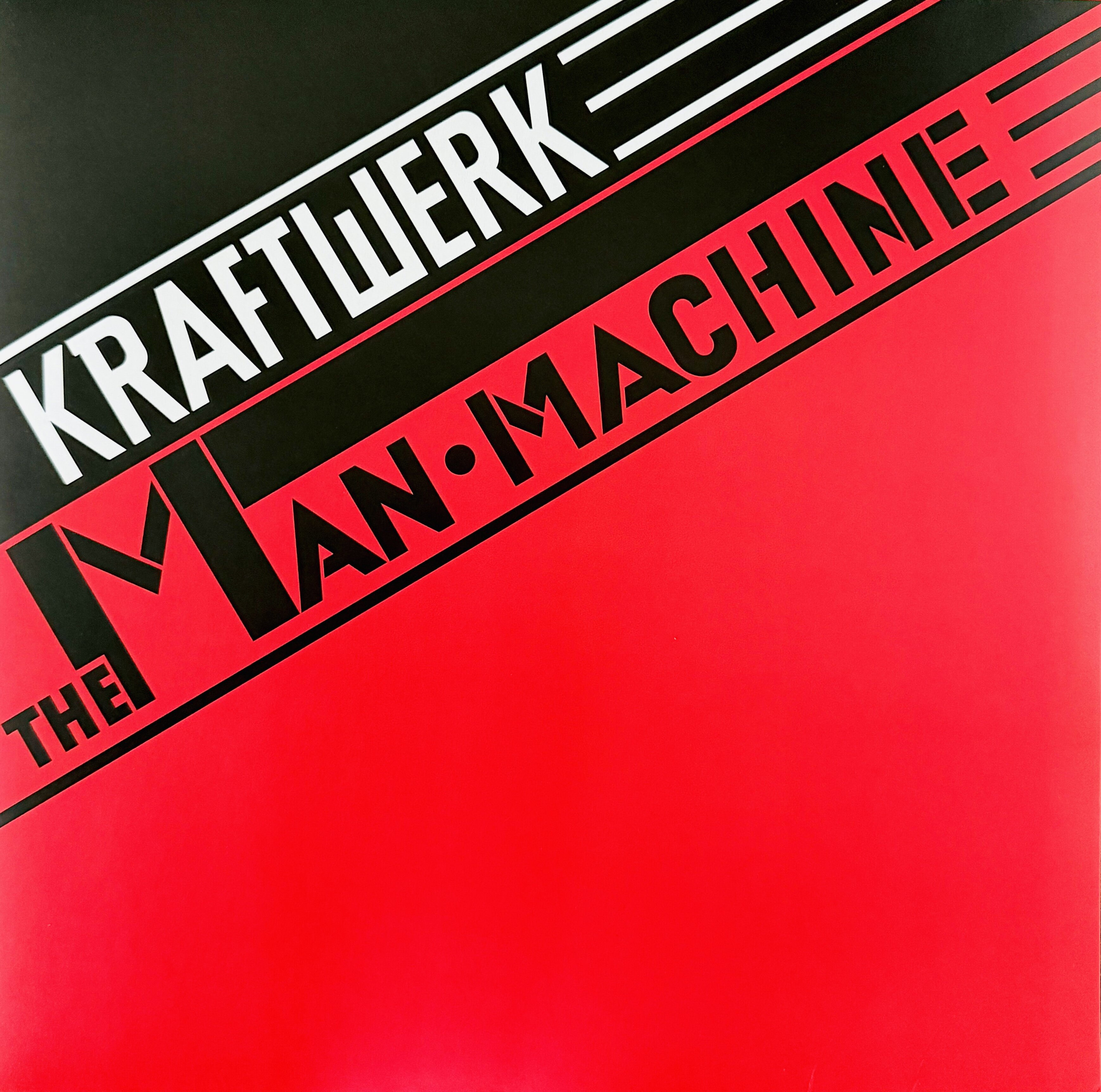
Ho già parlato di The Man-Machine (1978), il loro disco più famoso, dove i Kraftwerk hanno dato il meglio di sé, esplorando al massimo le possibilità del synth-pop, ma anche di Trans Europe Express, un altro album fondamentale della loro carriera, che ho cercato di sintetizzare nella scheda a loro dedicata intitolata “I Kraftwerk, padri fondatori della musica elettronica moderna”.
I Kraftwerk sono stati dei veri pionieri nell’uso di drum machine, vocoder e sintetizzatori personalizzati, e Ralf Hütter e Florian Schneider avevano già capito, negli anni ’70 e ’80, che la società sarebbe stata dominata dai dati e dai computer. Anche se sono nati come parte della scena Krautrock, io li considero parte del genere “Progressive Electronic”, un sottogenere che ha molte cose in comune con il rock progressivo più sperimentale.
Computer World (Computerwelt in tedesco), uscito nel 1981, è uno dei migliori album di musica elettronica di sempre e un disco profetico che ha anticipato l’era digitale in cui viviamo. Dopo il successo di The Man-Machine (1978), il quartetto di Düsseldorf ha passato tre anni nel mitico Kling Klang Studio a sperimentare nuove tecnologie e a perfezionare il proprio equipaggiamento.
Durante la realizzazione dell’album, la formazione classica dei Kraftwerk è rimasta invariata, mantenendo la sua stabilità tra il 1975 e il 1987. Il quartetto presente nel disco è composto da Ralf Hütter (voce e sintetizzatori), Florian Schneider (sintetizzatori e vocoder), Karl Bartos (percussioni elettroniche e tastiere) e Wolfgang Flür (percussioni elettroniche). Nonostante la mancanza di cambi di formazione, il contributo compositivo di Karl Bartos è diventato molto più significativo in questo album, figurando come co-autore in quasi tutte le tracce insieme a Hütter e Schneider. I primi abbandoni importanti sono avvenuti solo anni dopo l’uscita di questo disco.
Questo album è un vero pilastro dell’Electro e del Synth-pop, influenzando la techno di Detroit e l’hip-hop old-school con i suoi ritmi sintetici e sincopati. È minimalista e preciso, con trame elettroniche essenziali, sintetizzatori, drum machine come la Roland TR-808 e sequenze cicliche che ricordano i calcolatori. L’album sperimenta con suoni artificiali e ripetitivi, mescolando musique concrète e funk avanguardista, e usa il vocoder e voci sintetizzate per esplorare il tema uomo-macchina. Nonostante il suo sound robotico, ha melodie orecchiabili, come in “Computer Love”, che sono quasi romantiche e hanno definito il pop elettronico moderno. Il tutto è legato al concetto dell’album: un mondo dominato da computer, database e comunicazioni digitali.
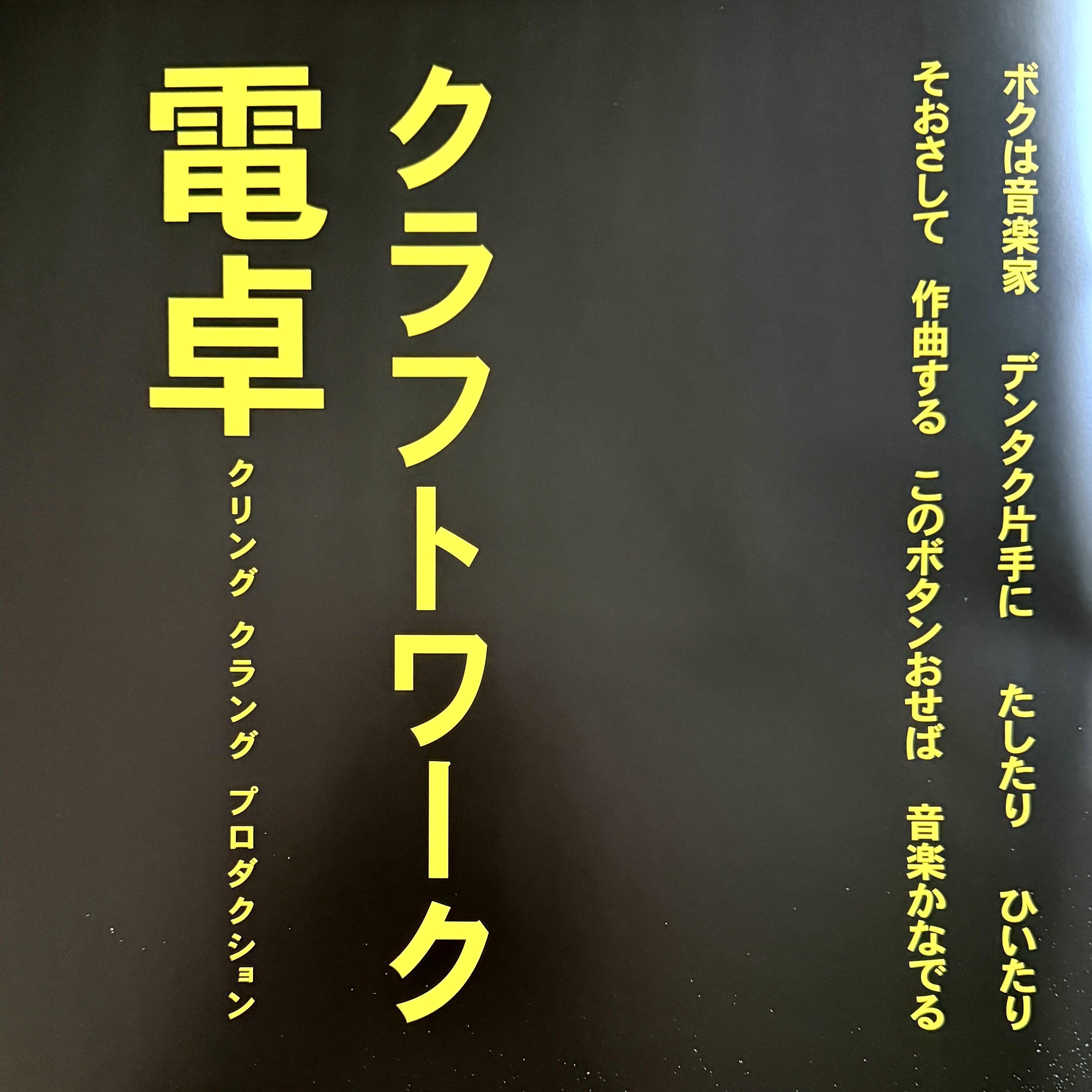
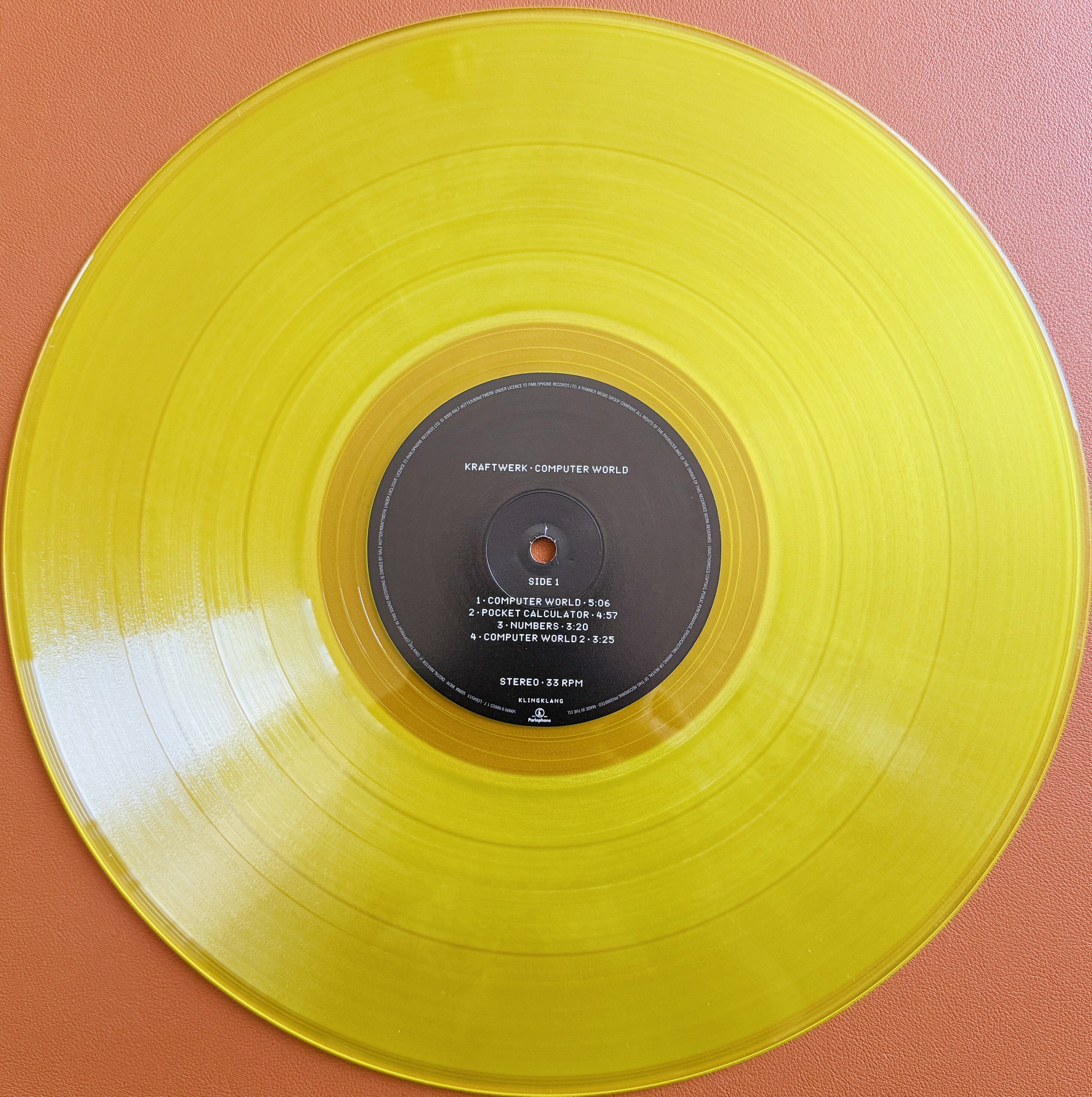
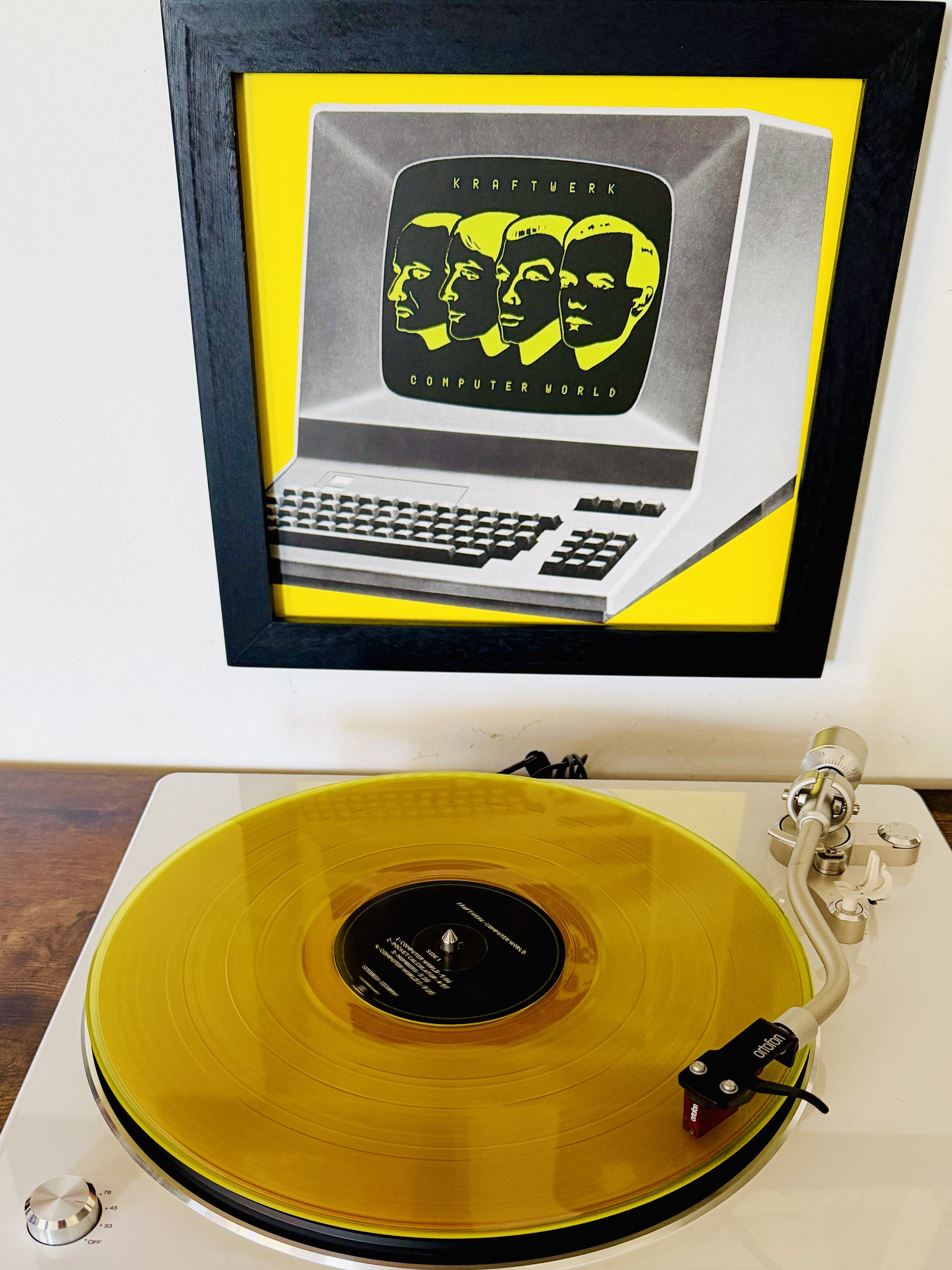
La mia è la riedizione in vinile giallo neon del 9 ottobre 2020 con un audio rimasterizzato di alta qualità che esalta la chiarezza sonora rispetto all'originale, offrendo bassi profondi e un'esperienza d'ascolto definita. Le tracce guadagnano in nitidezza e beneficiano di una separazione sonora superiore, rendendo questa edizione fondamentale per gli appassionati.
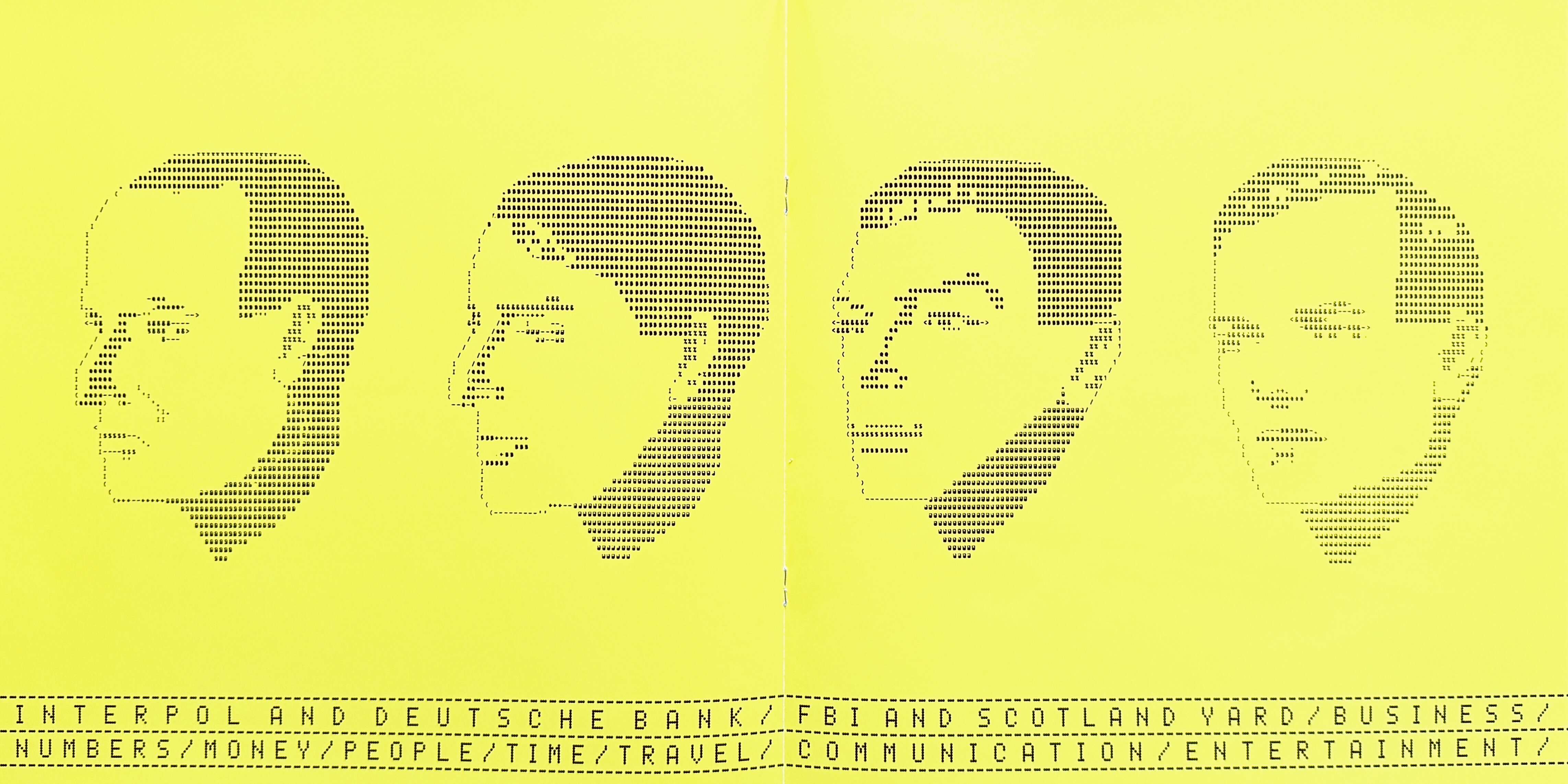
Computer World, la traccia che dà il nome all’album, ci porta subito nel suo mondo con un ritmo robotico e ipnotico. Nomina una moltitudine di istituzioni che gestiscono i dati (tipo Interpol, Deutsche Bank, FBI, Scotland Yard), trasformando un argomento noioso in un inno elettronico super potente e minimalista.
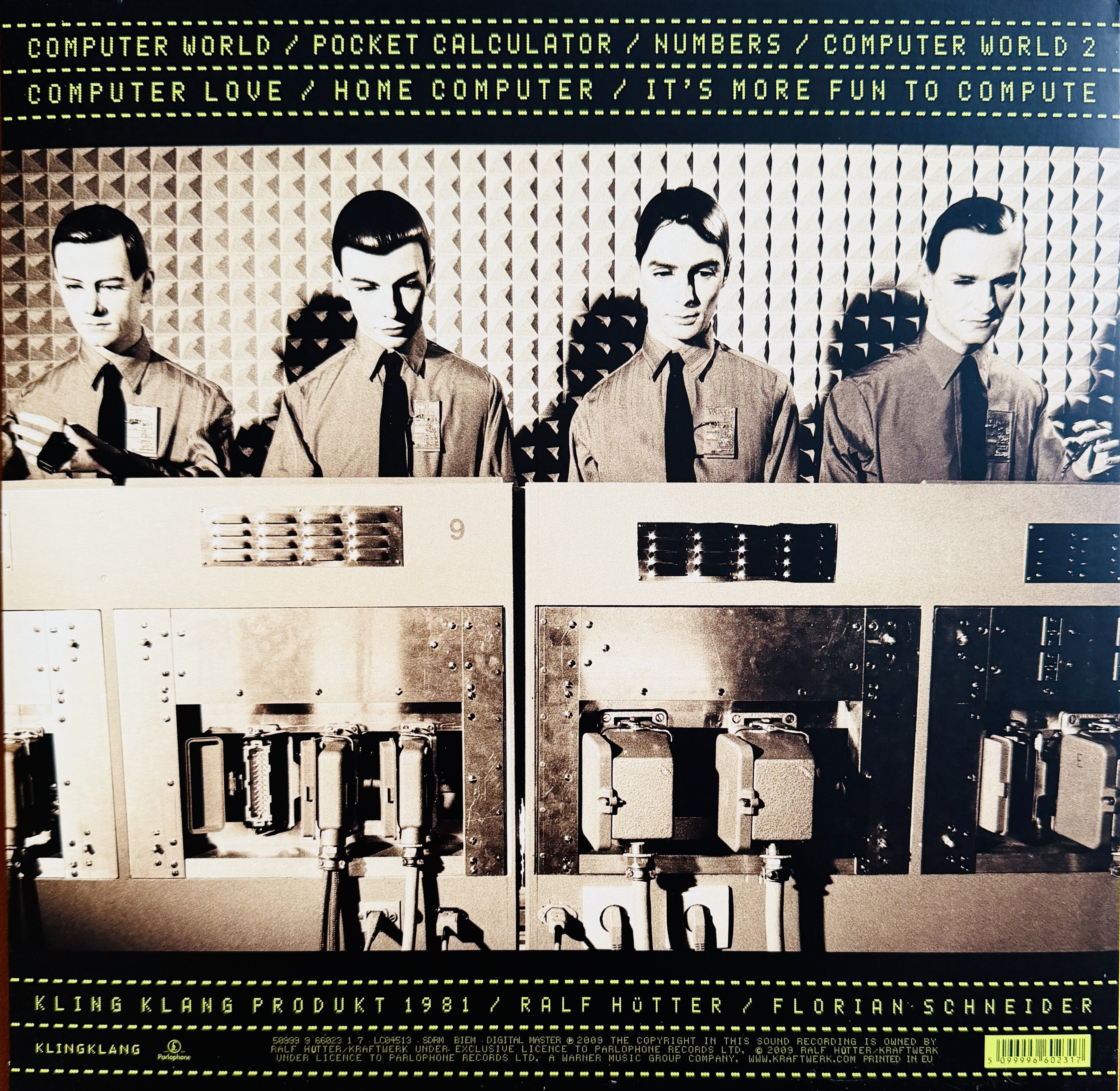
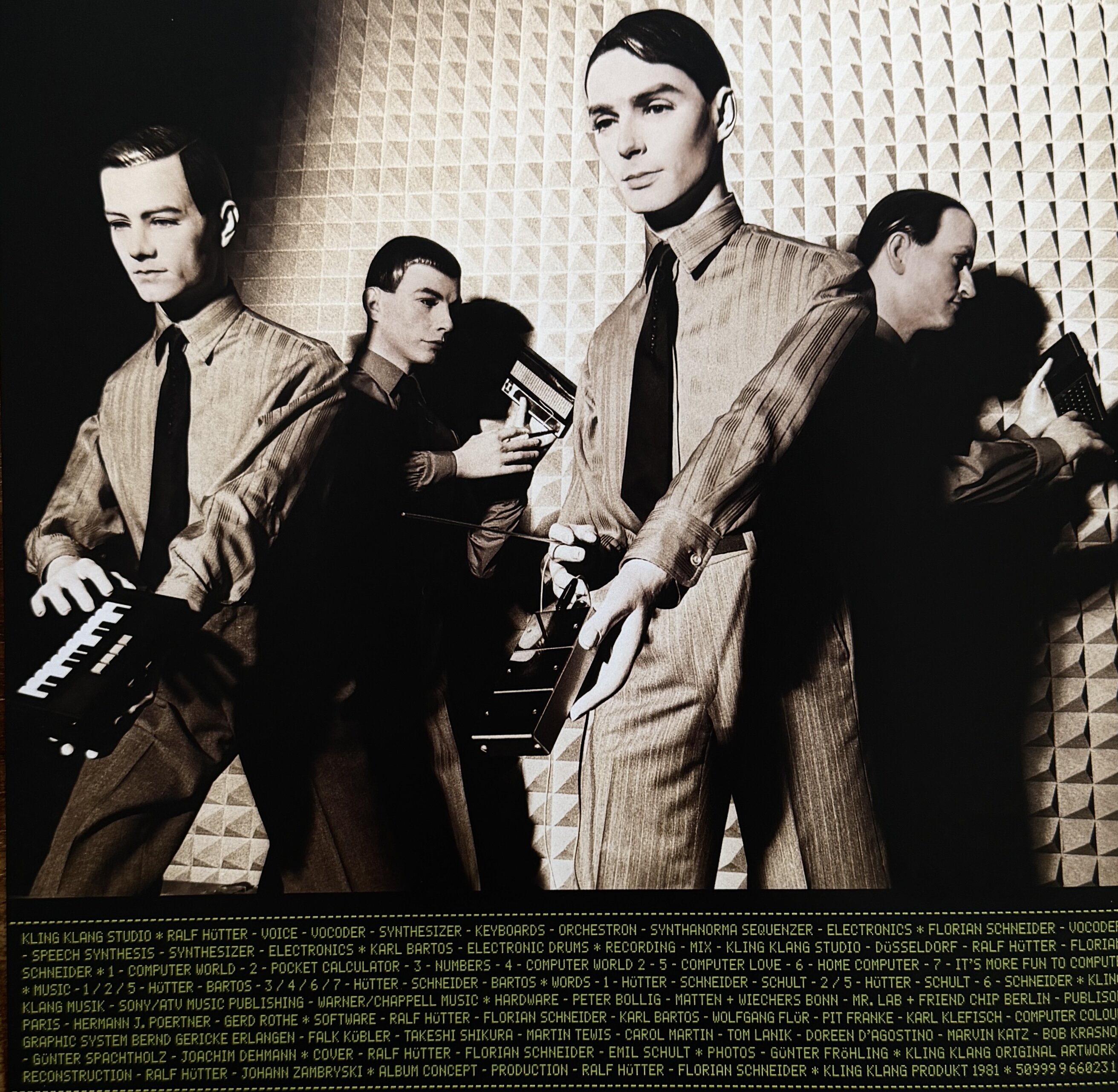
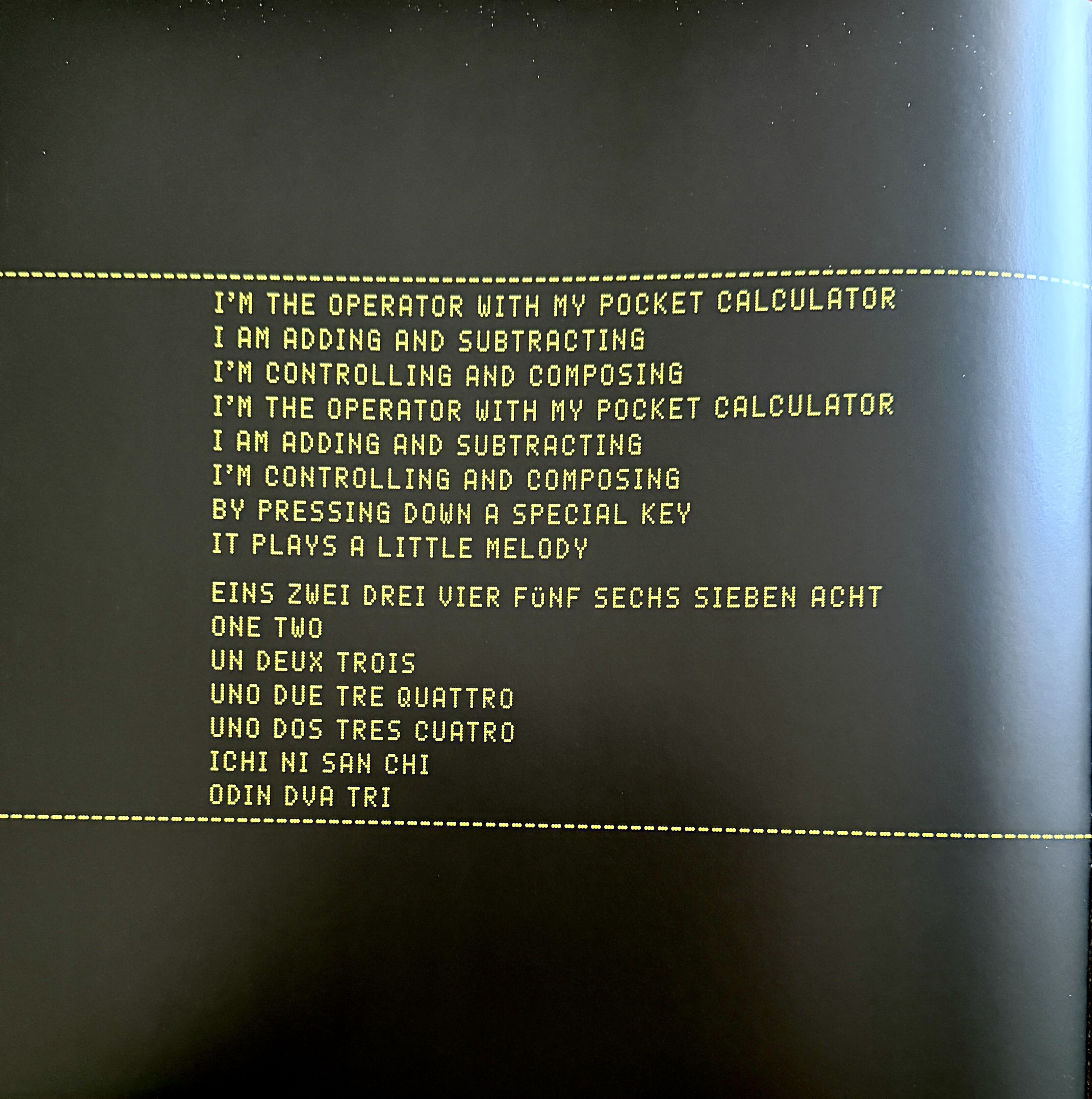
Pocket Calculator è un pezzo allegro ma tecnicamente difficilissimo. I Kraftwerk hanno usato veri giocattoli e calcolatrici (come la Casio FX-501P) per creare la melodia. È un inno alla tecnologia portatile che oggi abbiamo tutti in tasca.
Numbers è una traccia completamente ritmica dove voci sintetizzate contano in diverse lingue su un beat secco e martellante. È considerata la canzone che ha dato il via alla scena Electro e all’hip-hop old-school grazie al suo groove spaziale.
Computer World 2 riprende il tema principale e fa da ponte perfetto verso la seconda parte dell’album. Mantiene l’atmosfera tesa e tecnologica, chiudendo la prima parte del nostro viaggio nel mondo dei dati.
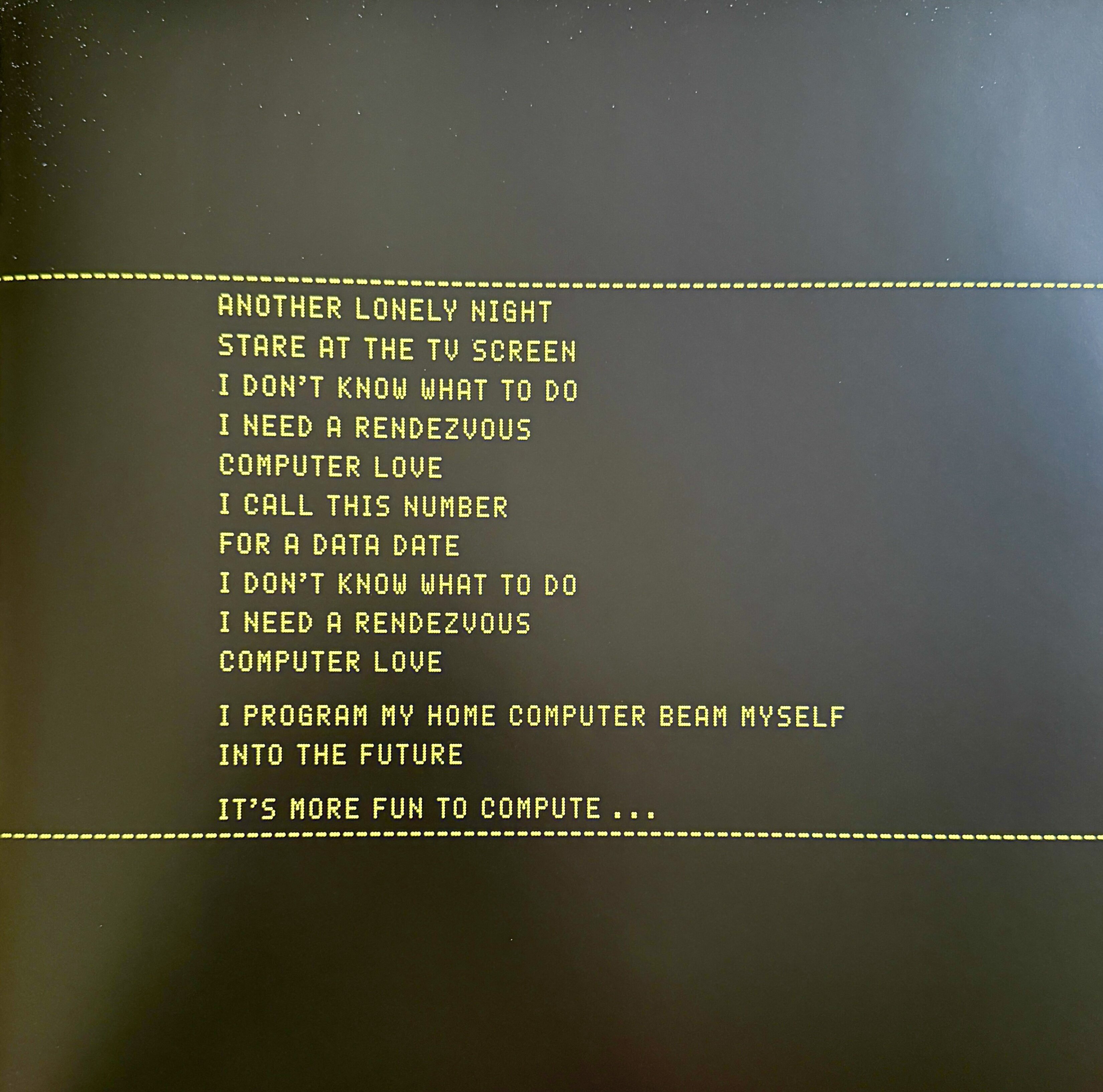
Computer Love è il momento più emozionante e melodico del disco. Parla di solitudine e della ricerca dell’amore tramite uno schermo, un tema super attuale. La sua linea di synth è così famosa che i Coldplay hanno chiesto il permesso di usarla nel loro brano “Talk”.
Home Computer è una traccia complessa che cresce in intensità elettronica. Racconta l’idea del computer che entra nelle nostre case, trasformandoci in “operatori” creativi. Un sound design pazzesco che anticipa la techno di anni dopo.
It’s More Fun to Compute chiude l’album, è un loop industriale martellante basato su un gioco di parole degli slogan delle sale giochi di una volta (“It’s more fun to compete”). È la canzone più “dura” e ripetitiva, un addio meccanico che chiude in bellezza il viaggio tecnologico.
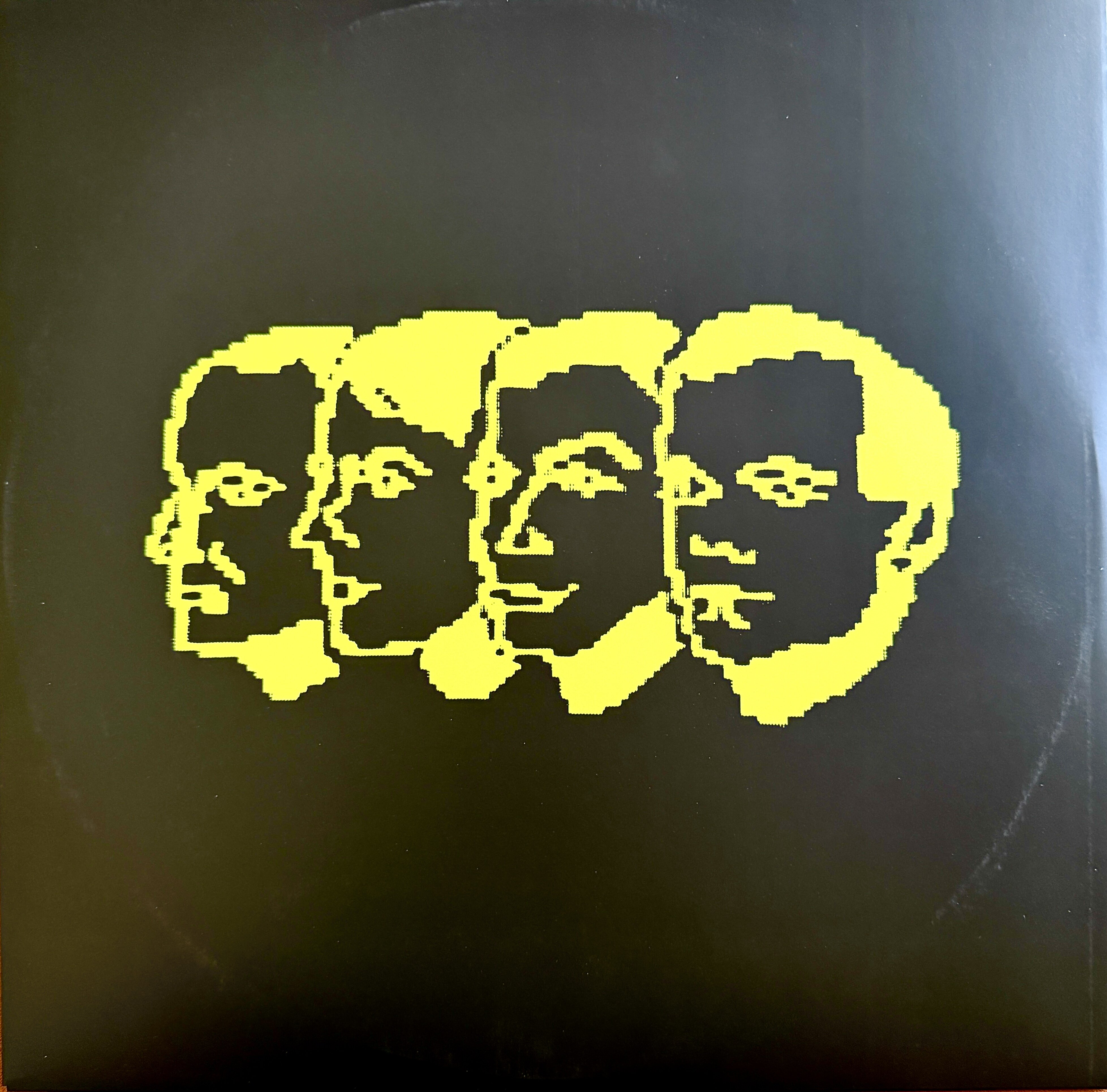
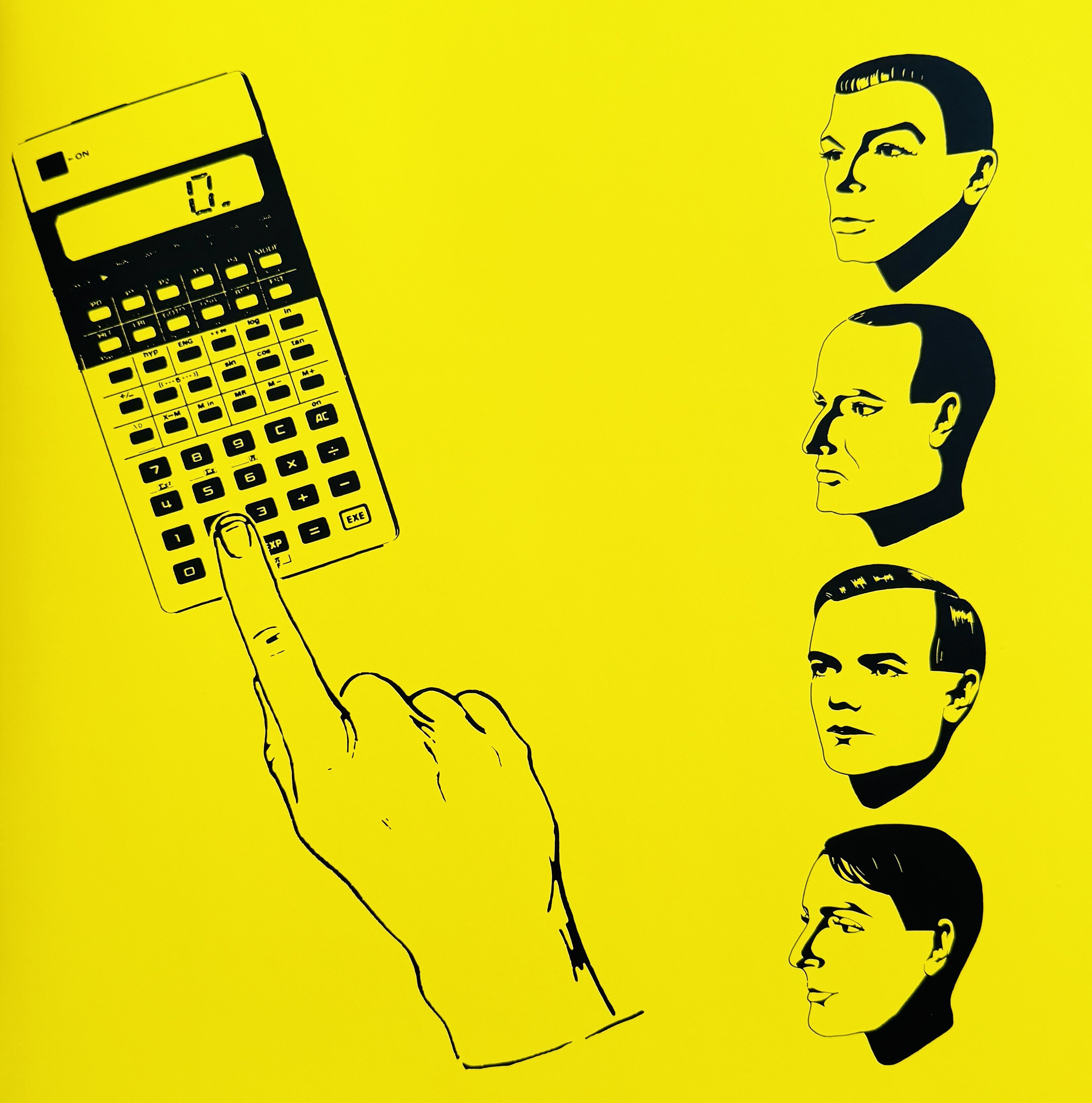
L’artwork di Computer World è un vero e proprio gioiello di design minimalista e retro-futurista, uno dei più iconici nella storia della musica elettronica. La copertina mostra un terminale video (un Hazeltine 1500, che spesso viene scambiato per un computer vero e proprio) su uno sfondo giallo canarino. Sullo schermo i volti stilizzati dei quattro membri della band: Ralf Hütter, Florian Schneider, Karl Bartos e Wolfgang Flür. Il titolo dell’album è scritto con il carattere OCR-A, nato negli anni ’60 per essere letto sia da noi umani che dai primi scanner ottici. Un dettaglio che sottolinea perfettamente il tema del legame uomo-macchina, così centrale nell’album.
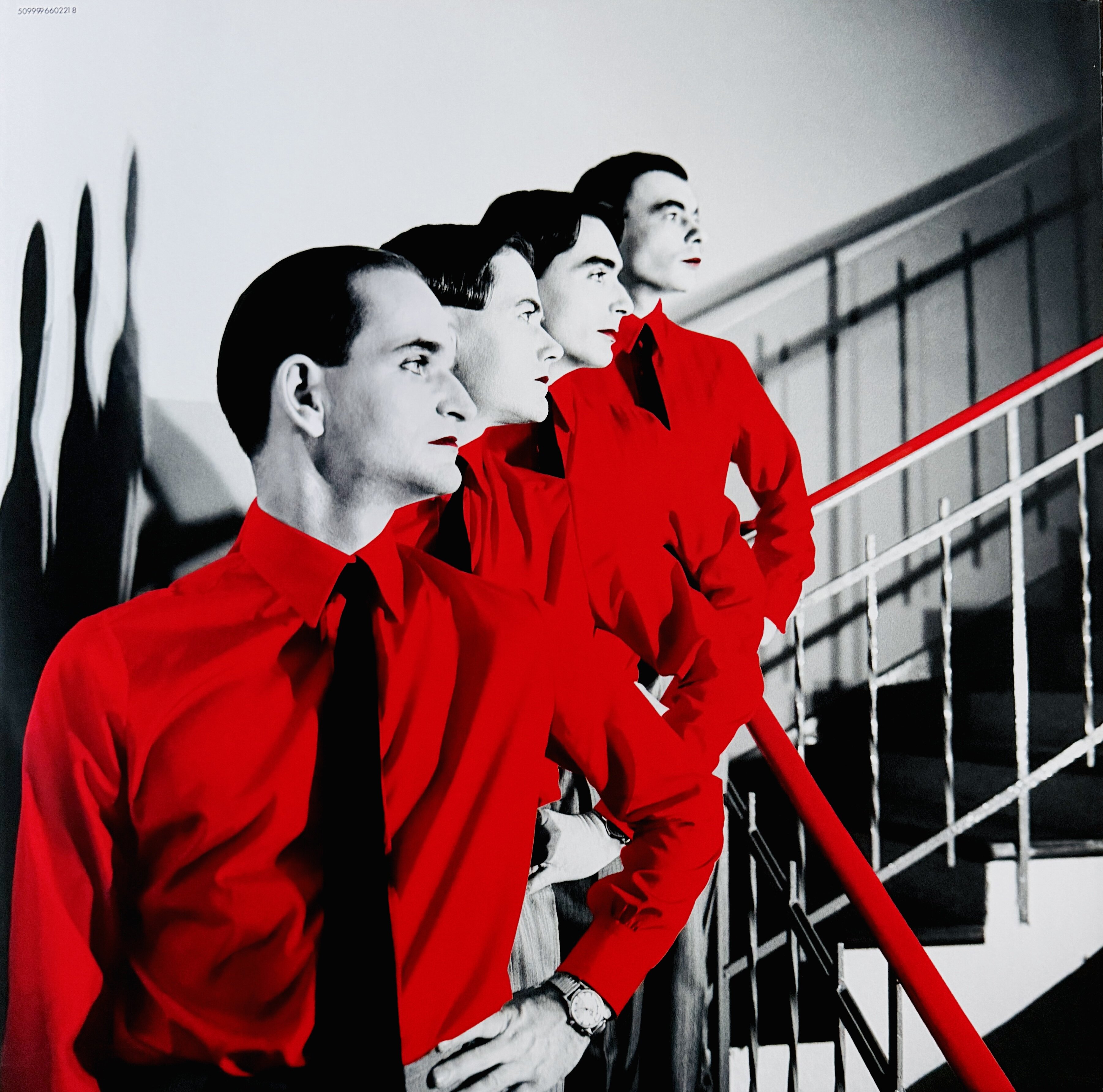
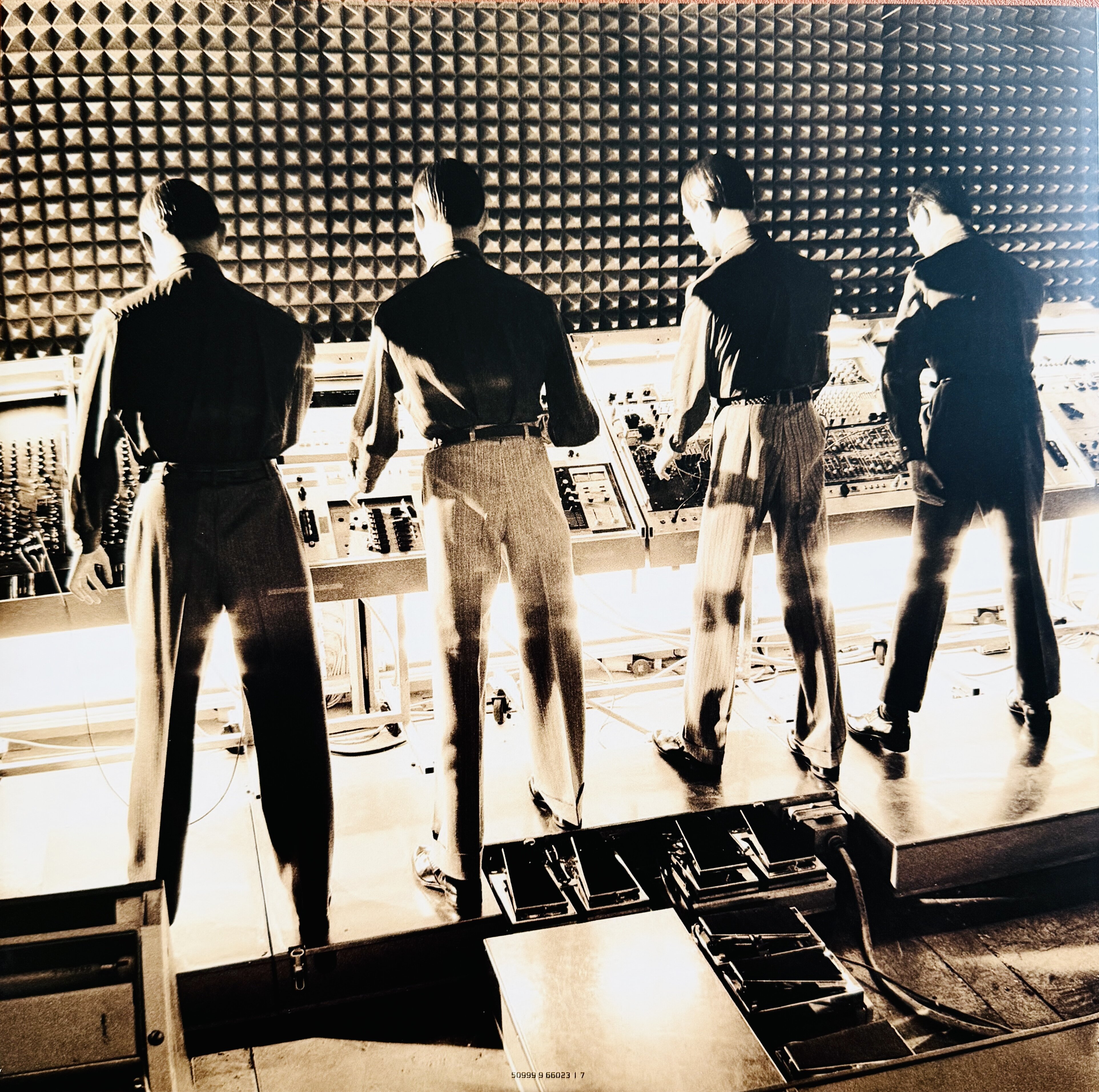
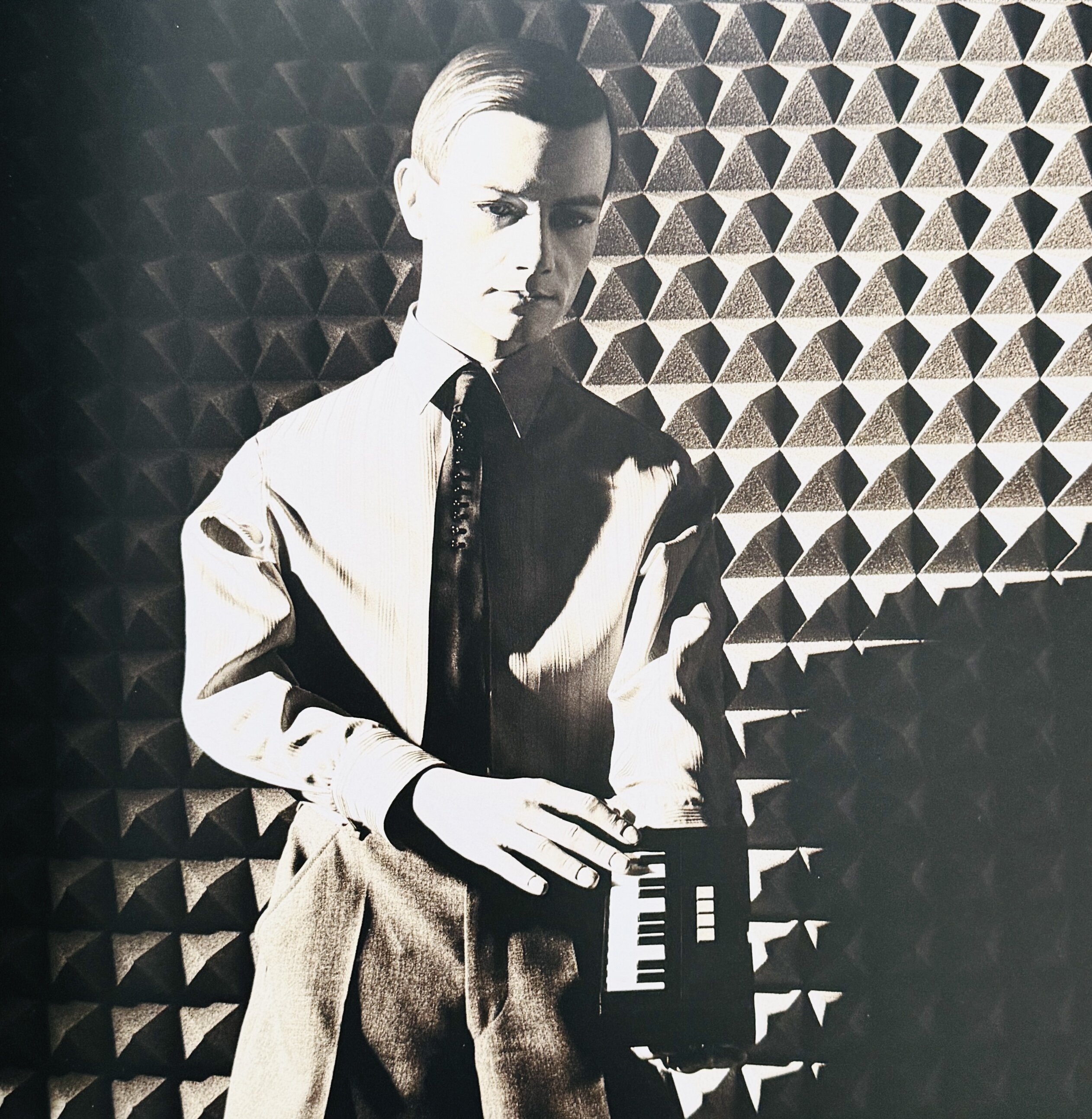
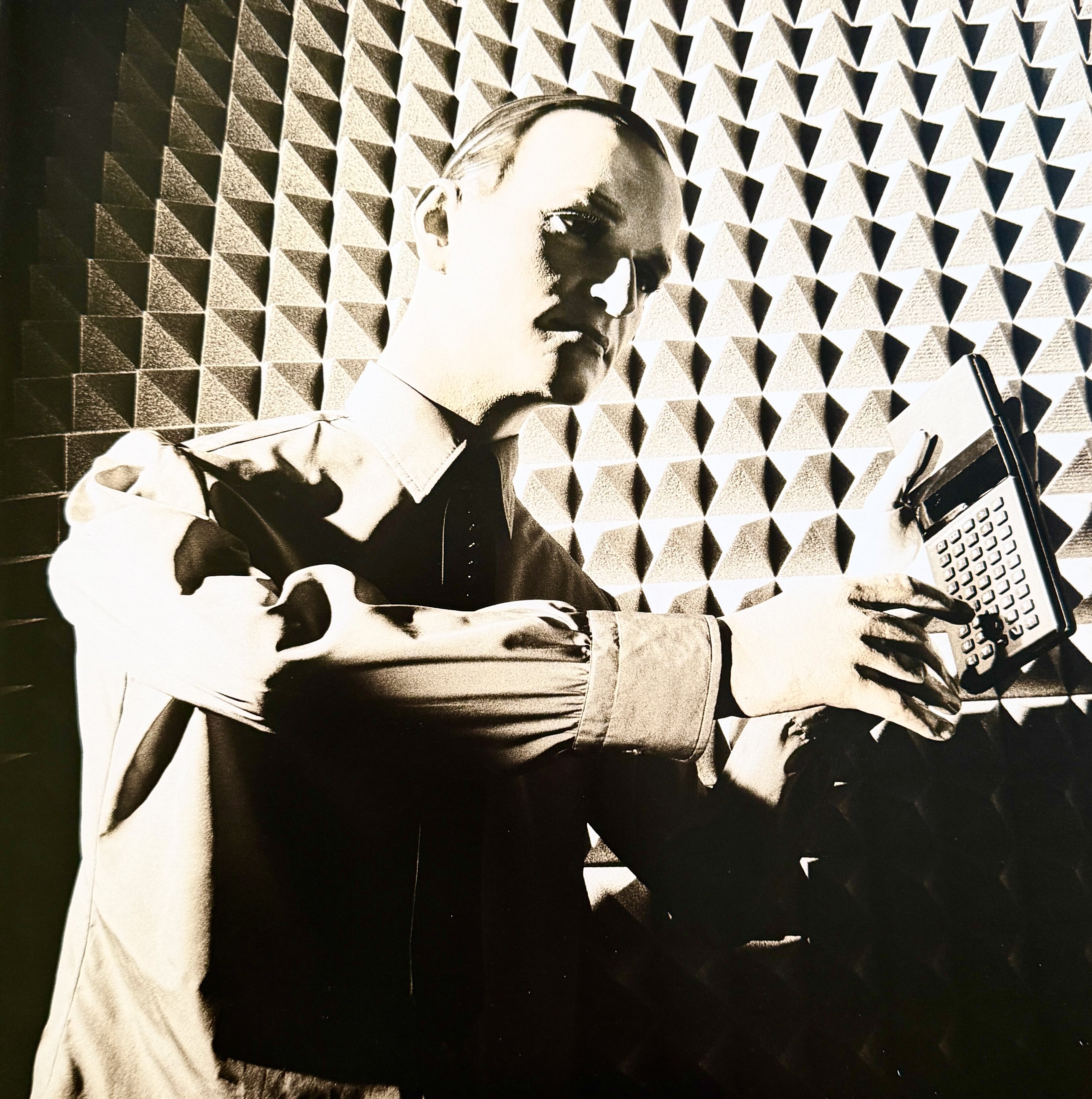
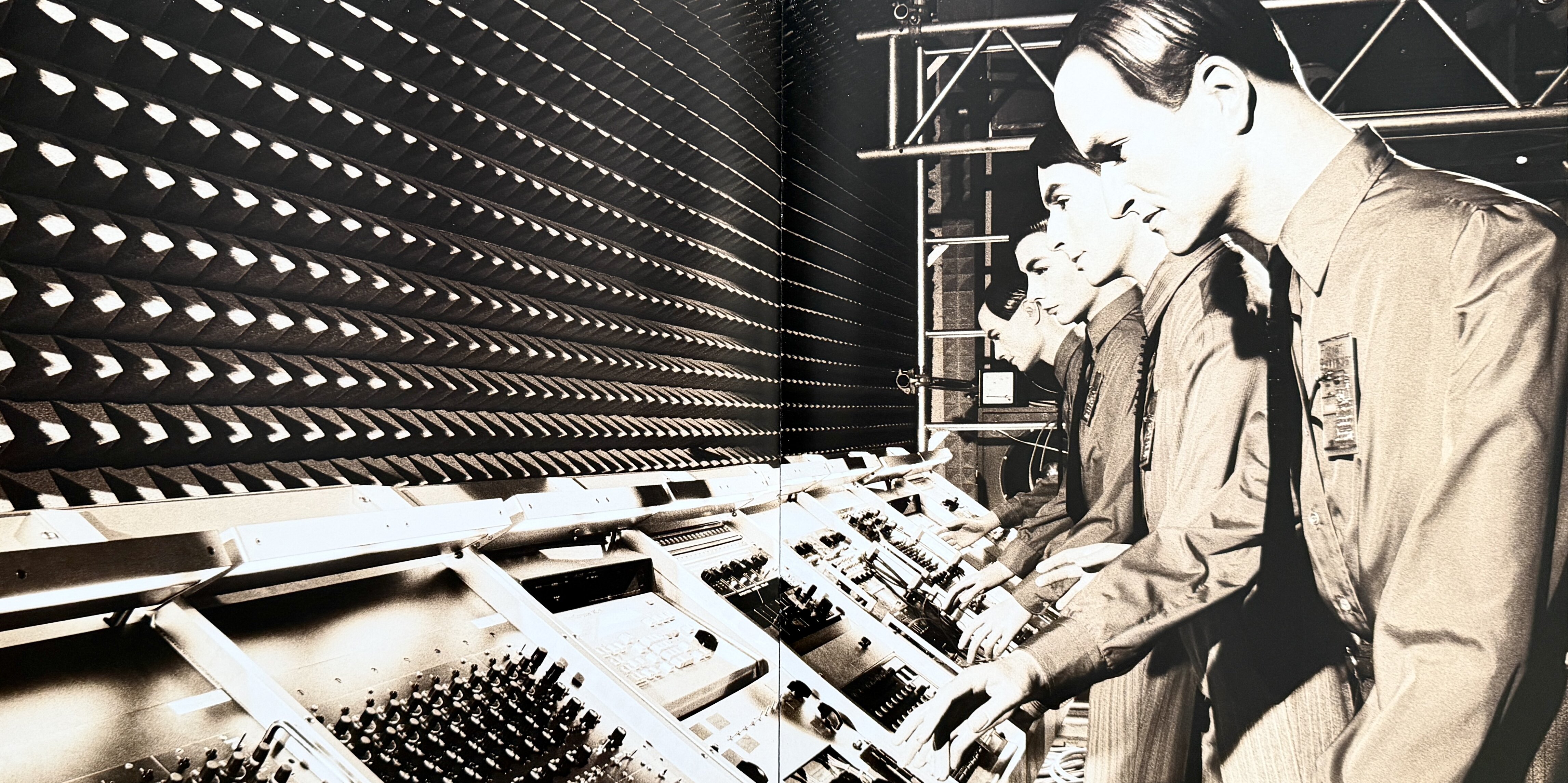
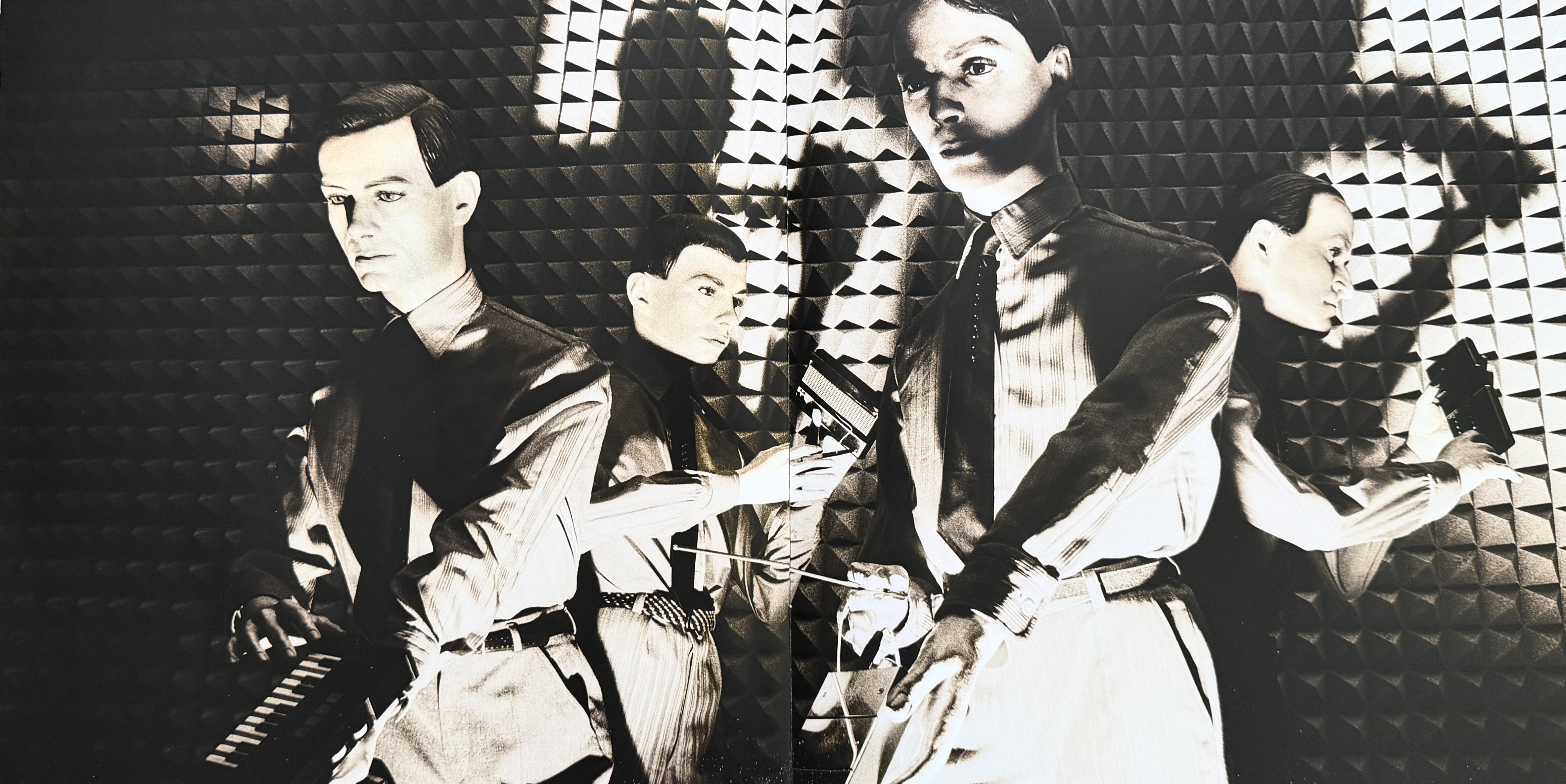
All’interno le fotografie di Günter Fröhling, che ritraggono i membri della band come manichini robotici. Li vedrete impegnati in attività di studio, come la registrazione e il mixaggio. Uno stile che ricorda molto quello del precedente album, The Man-Machine.
Insomma, sia il disco che l’artwork sono vere e proprie opere d’arte che vanno oltre la musica ed appartengono ormai alla storia moderna, anche se molti di noi e moltissimi giovani ancora non lo sanno. Eccellente!
La Mia Versione
Etichetta: Kling Klang – 50999 9 66023 1 7, Parlophone – 50999 9 66023 1 7
Serie: Kling Klang Digital Master
Formato: Vinile, LP, Album, Limited Edition, Reissue, Remastered, Special Edition, Stereo, Yellow Translucent ,180g
Paese: Europe
Uscita: 9 ott 2020
Tracklist
1. Computer World (Computer Welt) (5:06)
2. Pocket Calculator (Taschenrechner) (4:55)
3. Numbers (Nummern) (3:19)
4. Computer World 2 (Computer Welt 2) (3:23)
5. Computer Love (Computer Liebe) (7:16)
6. Home Computer (Heim Computer) (6:19)
7. It's More Fun to Compute (4:14)
LineUp
Artwork [Kling Klang Original Artwork] [Reconstruction] – Johann Zambryski, Ralf Hütter
Computer [Hardware] – Gerd Rothe, Hermann J. Poertner, Matten + Wiechers Bonn*, Mr.Lab + Friend Chip Berlin*, Peter Bollig, Publison Paris
Computer [Software] – Computer Colour Graphic System Bernd Gericke Erlangen*, Bob Krasnow, Carol Martin (2), Doreen D'Agostino, Falk Kübler*, Florian Schneider, Günter Spachtholz, Joachim Dehmann, Karl Bartos, Karl Klefisch, Martin Tewis, Marvin Katz, Pit Franke, Ralf Hütter, Takeshi Shikura, Tom Lanik, Wolfgang Flür
Concept By [Album], Producer [Production] – Florian Schneider, Ralf Hütter
Cover – Emil Schult, Florian Schneider, Ralf Hütter
Electronic Drums – Karl Bartos
Lacquer Cut By – NS*
Photography By [Photos] – Günter Fröhling
Recorded By, Mixed By – Florian Schneider, Ralf Hütter
Vocoder, Speech [Synthesis], Synthesizer, Electronics – Florian Schneider
Voice, Vocoder, Synthesizer, Keyboards, Keyboards [Orchestron], Sequencer [Synthanorma Sequenzer], Electronics – Ralf Hütter
Link per l’ascolto sulle principali piattaforme di streaming ai seguenti link:
- Spotify: Disponibile sia in versione English che nella versione originale tedesca Computerwelt.
- YouTube: Puoi trovare la playlist ufficiale dell'album caricata dal canale ufficiale dei Kraftwerk.
- Apple Music: L'album è presente nel catalogo in alta qualità come Computer World (Remastered).
- SoundCloud: È possibile ascoltare la playlist completa su SoundCloud.

Nota: Tutti i link ai lavori dei musicisti sono nei TAG sotto il titolo dell'articolo o nella pagina "Artisti"
.jpeg "Trans Europa Express dei Kraftwerk")