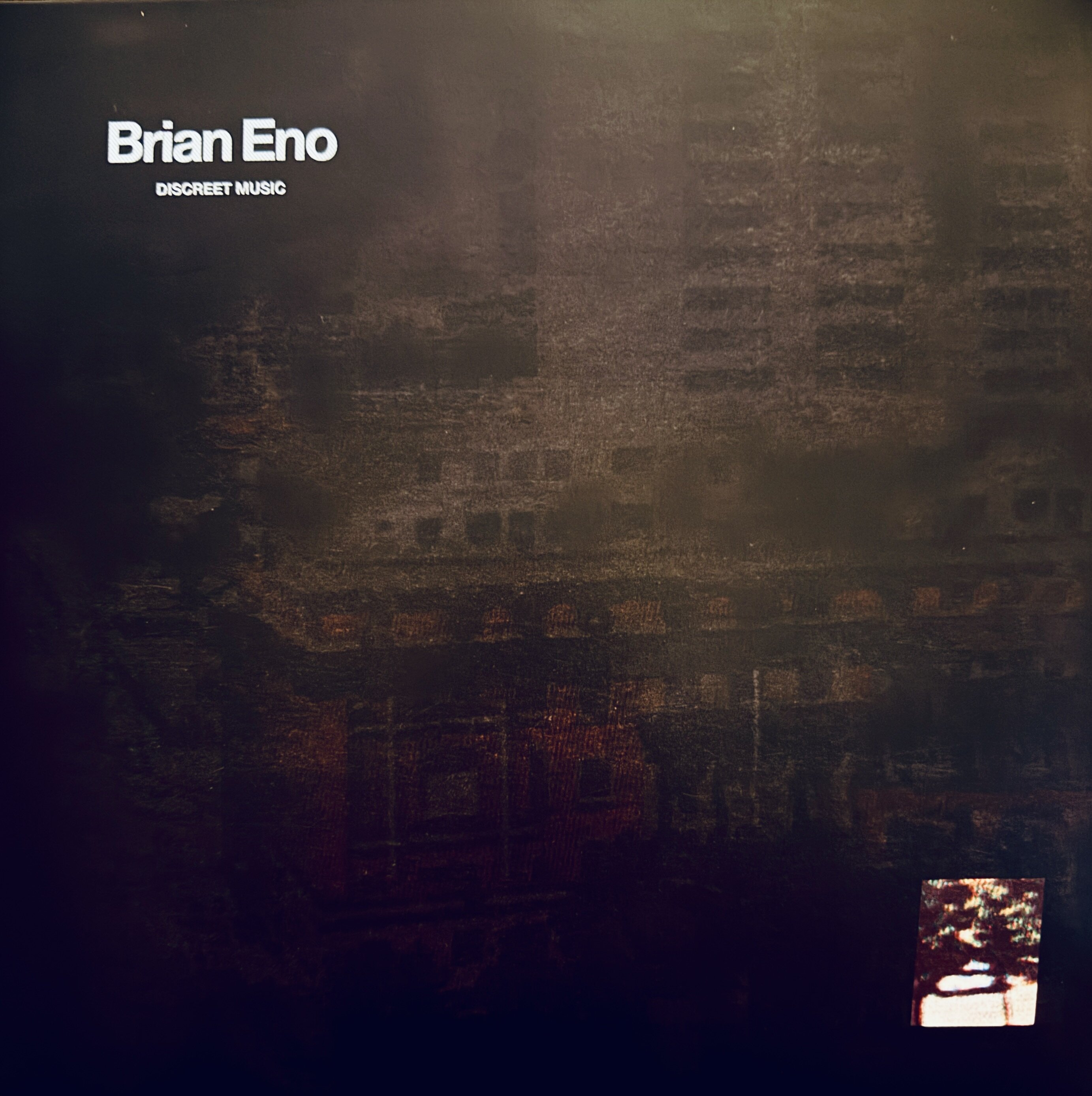
Discreet Music di Brian Eno , album del 1975.
Questo album è un’opera fondamentale che ha cambiato per sempre il modo di concepire la musica d’ambiente, gettando le basi per quello che oggi chiamiamo genere ambient.
Pubblicato inizialmente dalla sua etichetta sperimentale Obscure Records, segna una rottura netta con il suo passato art-rock, trasformando la musica in un flusso sonoro continuo, discreto e volutamente non invadente.
La storia dietro la creazione di questo disco è legata a un incidente d’auto che immobilizzò Eno a letto nel 1975. Non potendo alzarsi per regolare il volume di un giradischi che suonava musica per arpa del Settecento, e con il rumore della pioggia che ne attenuava il suono, Eno ebbe un’illuminazione: la musica poteva avere una funzione completamente diversa. Non doveva necessariamente essere al centro dell’attenzione, ma poteva integrarsi con l’ambiente circostante.
Discreet Music non è solo una serie di brani, ma un’esperienza filosofica che sposta il focus creativo dall’artista all’ascoltatore. Anche se album successivi come Ambient 1: Music for Airports hanno reso il genere più accessibile al grande pubblico, questo disco rimane l’esperimento più puro, radicale e intrigante di tutta la sua produzione.
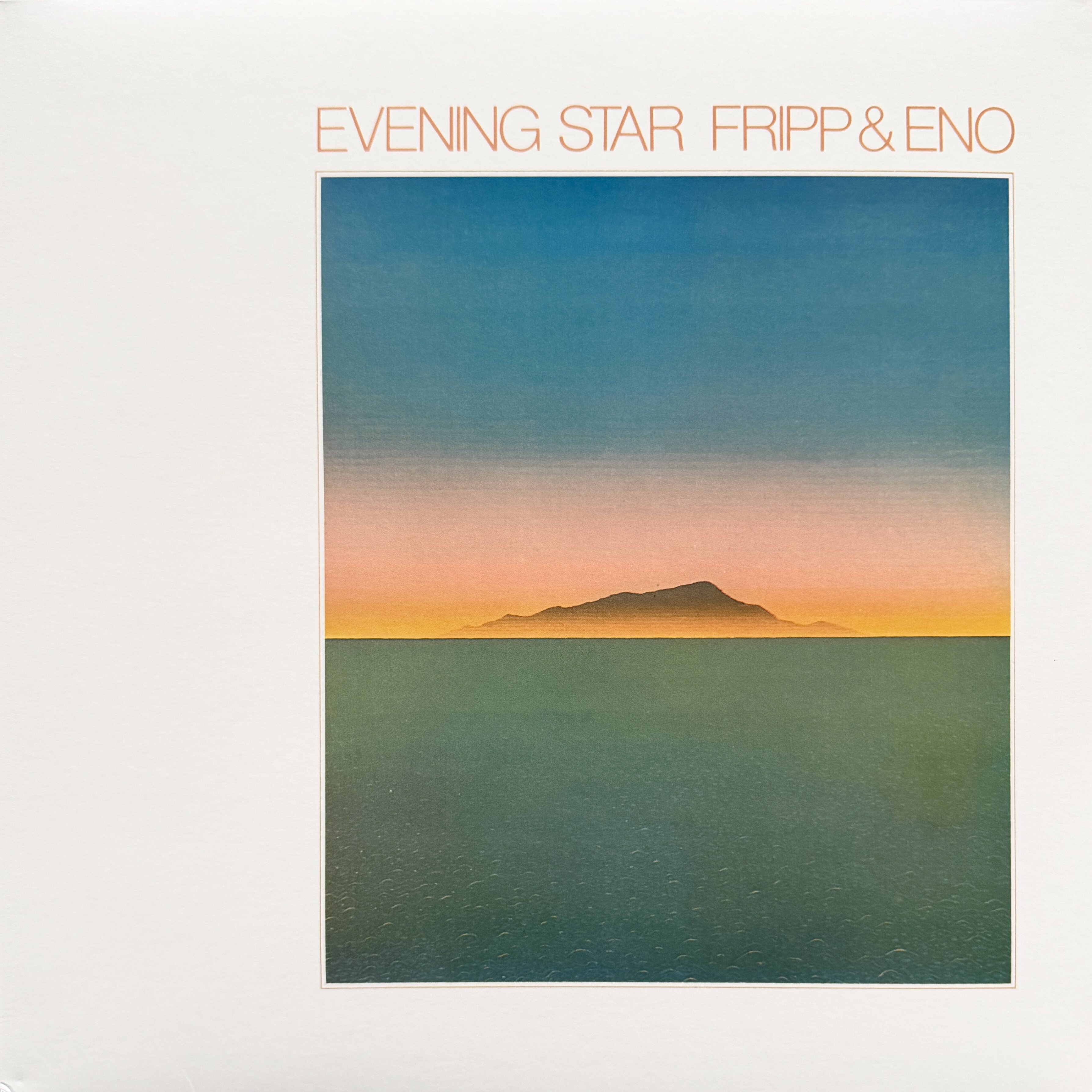
L’album che rappresenta uno dei primi e più noti esempi di musica generativa. L’approccio di Eno era quello di fungere da “regista” o progettista del sistema, minimizzando il proprio intervento manuale nella creazione del suono. Il lato A dell’album si basa su un sistema di delay a nastro a circuito chiuso (tape loop), ispirato alle prime sperimentazioni di Robert Fripp, conosciute come Frippertronics, do cui ho già lungamente parlato in occasione dell’articolo sull’album Evening Star di Fripp & Eno.
Eno utilizzò due registratori a bobina aperti (open-reel tape recorders) posizionati uno accanto all’altro. Il nastro magnetico vergine partiva dalla bobina del primo registratore, che registrava il segnale iniziale, passava fisicamente attraverso la testina di riproduzione del secondo registratore (posizionato a qualche metro di distanza) e tornava infine alla bobina di riavvolgimento del primo. Il segnale riprodotto dal secondo registratore veniva reimmesso nel primo per essere registrato nuovamente, creando un ritardo (delay) molto lungo e un progressivo sbiadimento del suono ad ogni ciclo.
Il flusso audio era volutamente minimale, composto da pochissimi elementi analogici. Eno utilizzò il Sintetizzatore EMS Synthi AKS, uno strumento compatto e modulare senza tastiera tradizionale (utilizzava una tastiera a sfioramento), per programmare timbri dolci, caldi e privi di attacchi percussivi netti. Un Equalizzatore Grafico, inserito tra il sintetizzatore e il primo registratore, permetteva di alterare attivamente lo spettro delle frequenze, smussando acuti e bassi per rendere il suono il più “discreto” e fuso con l’ambiente possibile. Infine, Eno utilizzò anche un primissimo sintetizzatore digitale (prototipo) per generare brevi sequenze melodiche fisse da immettere nel loop.
Dopo aver avviato il sistema, Eno ha stravolto il metodo di registrazione tradizionale. Ha suonato pochissime note isolate sul sintetizzatore, lasciando passare molto tempo tra una e l’altra. Una volta registrate, le note venivano sovrapposte, accumulate e sfumate dal sistema di nastri in modo autonomo, generando combinazioni armoniche imprevedibili che Eno non avrebbe mai potuto immaginare.
Per le Three Variations on the Canon in D Major, Eno ha usato un approccio algoritmico con un’orchestra vera e propria, il Cockpit Ensemble. Ha dato ai musicisti pezzi della partitura di Pachelbel, chiedendo loro di ripetere i frammenti cambiando la velocità o inserendo ritardi regolari. Durante il missaggio, ha usato filtri di frequenza e piccole variazioni di intonazione per mettere in risalto i timbri degli archi, trasformando un’esecuzione acustica in una texture quasi elettronica e eterea.
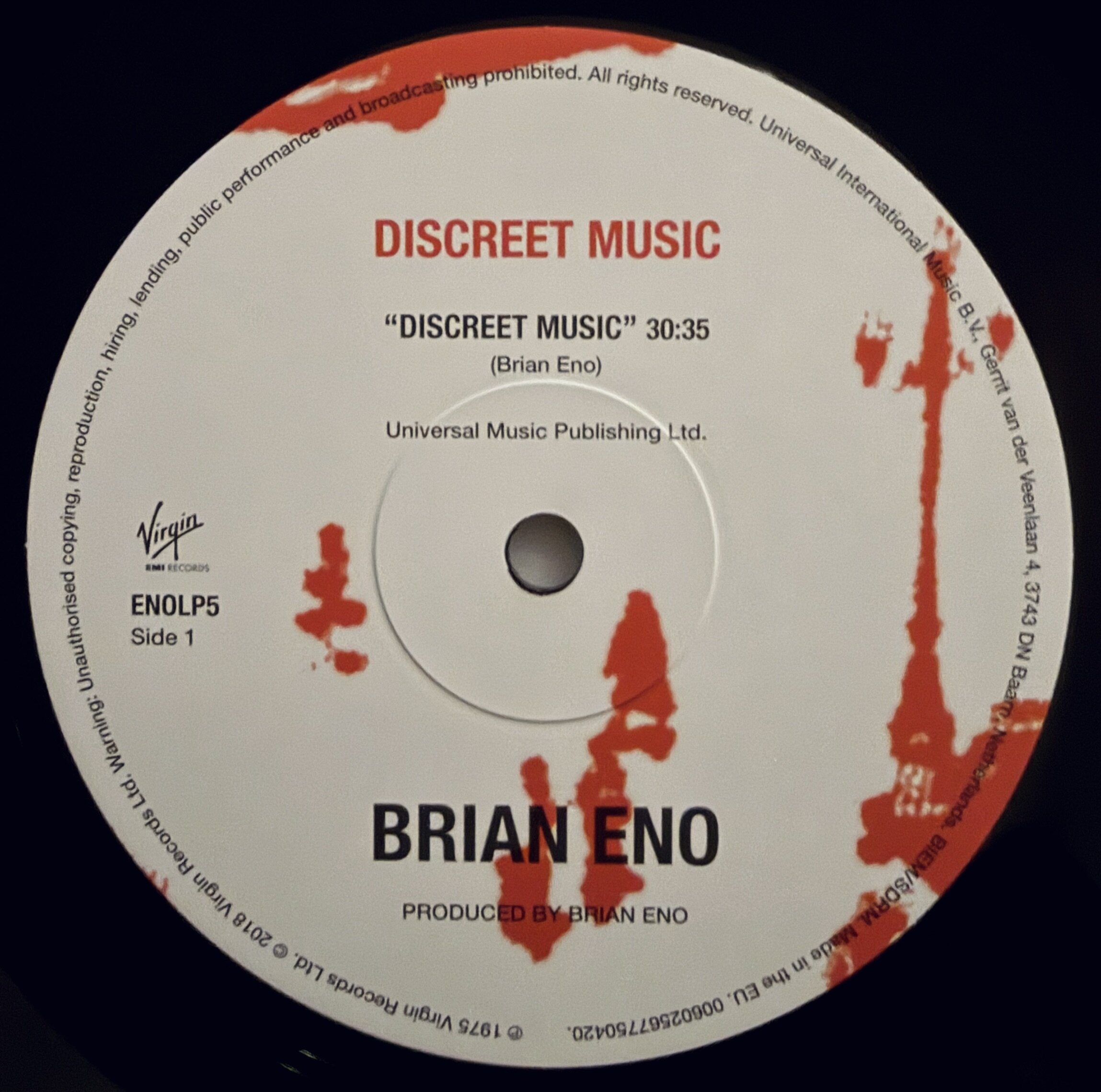
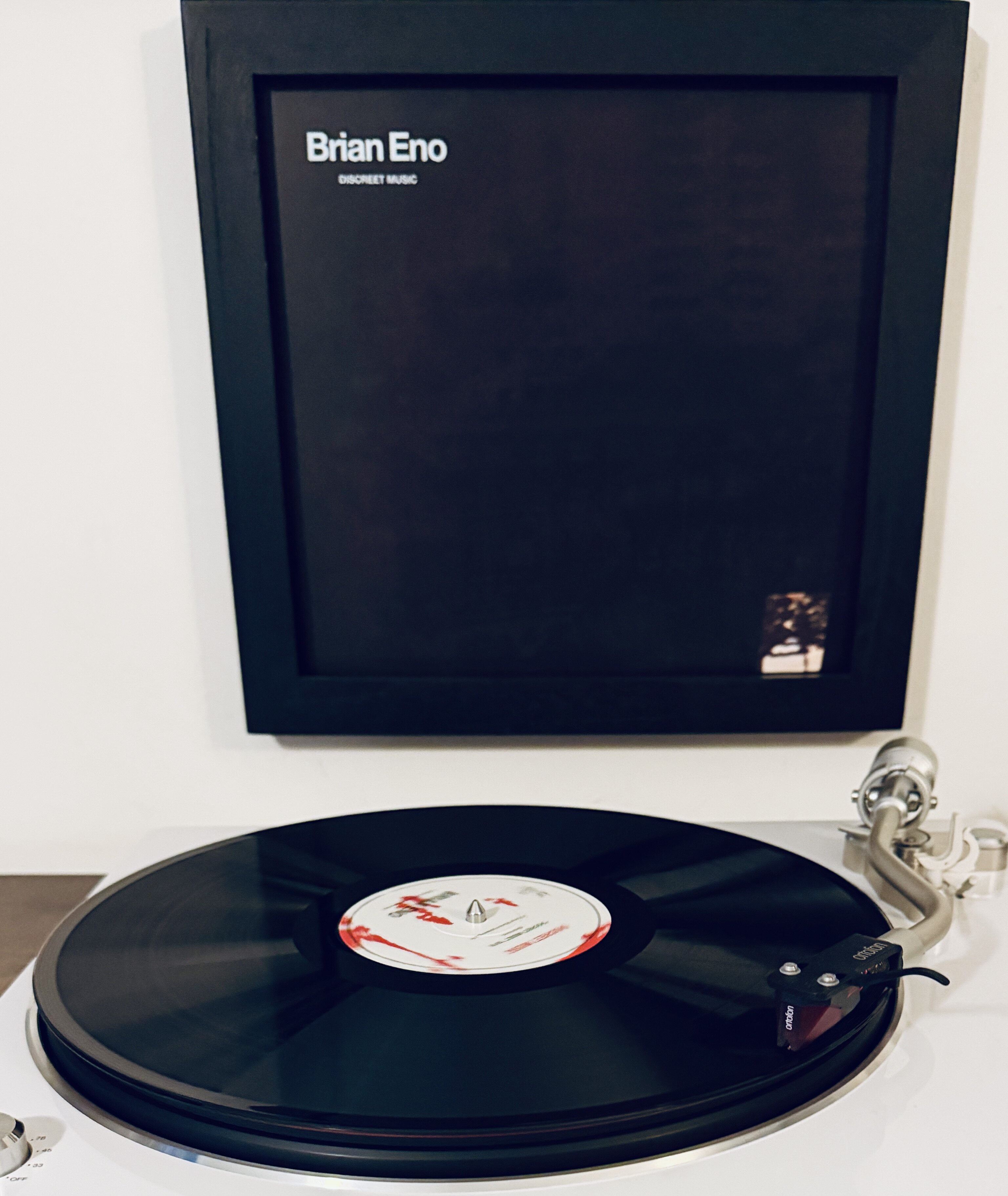
La mia è la versione ENOLP5.
Il lato A è tutto dedicato alla title-track, che parte con un leggero fruscio analogico, quello dei nastri magnetici originali del 1975. Questo fruscio, pur essendo pulito, ha una qualità calda e naturale che pervade tutto il brano. Due brevi melodie di sintetizzatore si intrecciano, si sovrappongono e poi svaniscono, creando un’atmosfera di pace assoluta. L’assenza di ritmo e la fluidità delle frequenze medie, ottimizzate per questo vinile, ti fanno sentire completamente isolato dal mondo esterno. Il brano non ha un vero e proprio climax, ma piuttosto ti avvolge come una nebbia sonora calda e confortante.
Il Lato B presenta le Tre Variazioni Strumentali, che smontano il Canone in Re Maggiore di Pachelbel usando le idee e gli algoritmi di Eno, interpretati dal Cockpit Ensemble.
“Fullness of Wind” è la variazione più lunga e simile alla title-track, grazie al suo effetto ipnotico. Eno gioca con la percezione del tempo facendo suonare i musicisti a velocità diverse, sovrapponendo i loop delle sezioni d’archi. Anche se il Canone originale è ancora riconoscibile, i legami armonici tradizionali si sciolgono in un flusso continuo e malinconico.
“French Catalogues” gioca sulla frammentazione. Qui Eno isola brevi frammenti melodici basandosi sulle combinazioni geometriche di una partitura legata al Canone. Il risultato è un pezzo astratto che ricorda la musica impressionista francese (da cui il titolo), dove gli archi fluttuano nello spazio senza una direzione precisa.
“Brutal Ardour” è il momento più denso e cupo del disco. Il ritmo viene ulteriormente rallentato e i toni degli archi vengono abbassati. Nonostante il titolo suggerisca ardore, il brano evoca una quiete austera, una processione sonora che si spegne lentamente nel silenzio, chiudendo l’album in modo profondo e meditativo.
Queste le storiche note di copertina dell’album di Brian Eno tradotte integralmente:
“Poiché ho sempre preferito ideare piani piuttosto che eseguirli, sono stato attratto da situazioni e sistemi che, una volta messi in funzione, potessero creare musica con un intervento minimo o nullo da parte mia. Vale a dire che tendo a preferire i ruoli di pianificatore e programmatore, per poi diventare spettatore del risultato.
La genesi di questa preferenza è varia: in parte deriva da una naturale pigrizia, in parte dal rendersi conto che i sistemi autogenerativi possiedono spesso una complessità e una coesione interna che superano di gran lunga ciò che avrei potuto organizzare consapevolmente. In parte è dovuta anche all'ascolto di composizioni nate da dinamiche simili (come i pezzi con i nastri magnetici in loop di Terry Riley, o la musica basata su processi formali di Steve Reich), e in parte a un incidente stradale avvenuto nel gennaio del 1975.
In quell'occasione rimasi confinato a letto, non gravemente ferito ma impossibilitato a muovermi con facilità. Una mia amica, Judy Nylon, venne a trovarmi e mi portò un disco di musica per arpa del XVIII secolo. Quando se ne andò, riuscii con grande fatica a mettere il disco sul giradischi e a tornare a letto.
Subito dopo mi resi conto che l'amplificatore era impostato a un volume estremamente basso e che uno dei due canali stereo non funzionava affatto. Non avendo l'energia per alzarmi e rimediare, rimasi lì sdraiato. Fuori pioveva forte e la musica era appena udibile, emergendo solo occasionalmente sopra il picchiettare della pioggia.
Questa esperienza mi rivelò quello che per me era un modo del tutto nuovo di ascoltare la musica: come parte dell'ambiente circostante, esattamente come il colore della luce e il suono della pioggia. Fu in quel momento che mi resi conto che la musica non doveva necessariamente essere al centro dell'attenzione in modo fisso e immodificabile, ma poteva essere inserita delicatamente nel tessuto dello spazio, offrendo una gamma di livelli di ascolto differenti senza che alcuno di essi venisse imposto.
Informazioni sulle registrazioni presenti in questo disco
Il brano intitolato "Discreet Music" è un pezzo tecnologico in cui l'elettronica funge da componente generativa principale. Il diagramma riportato di seguito illustra la disposizione delle macchine che ho utilizzato per registrare la traccia.
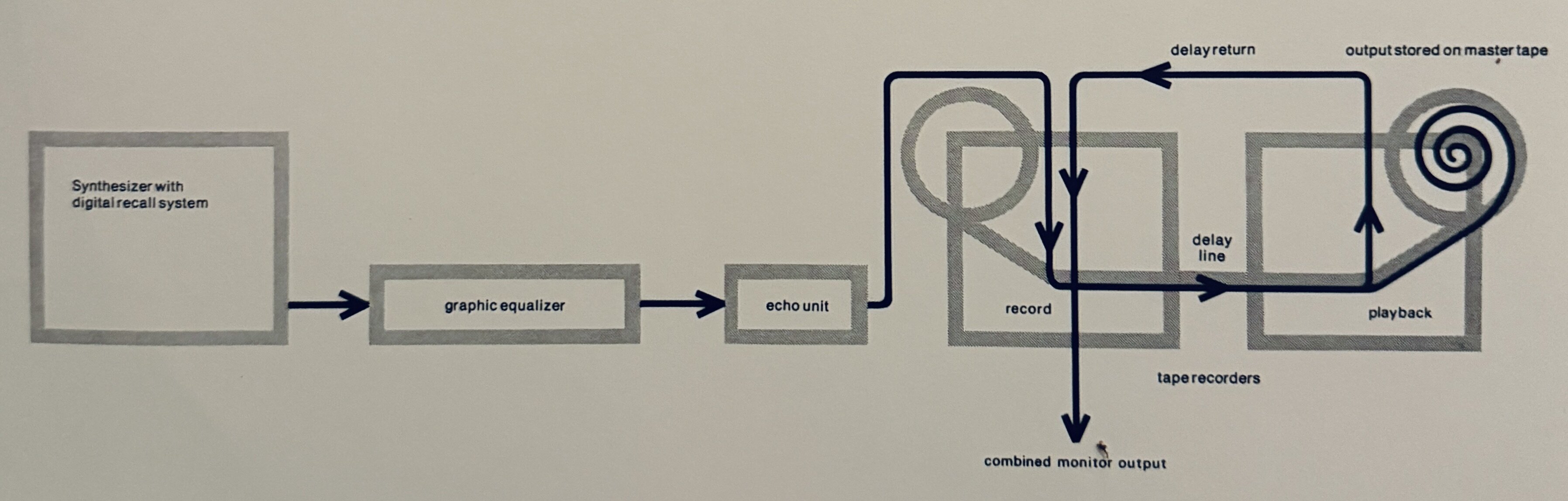
Le frasi melodiche di partenza sono state generate dal sintetizzatore EMS Synthi AKS, che possiede un sequencer digitale integrato in grado di memorizzare brevi sequenze di note. Una volta programmate due melodie di lunghezze diverse e con tempi differenti, ho lasciato che l'apparecchio le eseguisse, intervenendo solo raramente per alterare il timbro o la consistenza dei suoni.
Il segnale audio passava poi attraverso un equalizzatore grafico per modificare lo spettro delle frequenze, poi in un'unità d'eco, ed infine veniva inviato alla testina di registrazione del primo magnetofono. Il nastro si srotolava lungo la stanza fino a un secondo magnetofono, posizionato a una certa distanza, che veniva utilizzato esclusivamente per la riproduzione.
Il segnale letto da questa seconda macchina veniva rimandato al mixer di rete, dove si mescolava con i nuovi suoni provenienti dal sintetizzatore, per poi essere registrato nuovamente. Questo sistema accumulava gradualmente i suoni, creando un ritardo temporale (delay) molto lungo tra la generazione di una nota e la sua successiva ripetizione, fino a quando il segnale non svaniva progressivamente a causa del decadimento del nastro.
Dal momento che il sistema era autonomo e interamente programmato prima della sessione, il mio coinvolgimento durante la registrazione (durata circa un'ora) è stato minimo: ho agito quasi esclusivamente come un passeggero, modificando solo occasionalmente le impostazioni dell'equalizzatore.
Le tre tracce sul lato B, intitolate "Three Variations on the Canon in D Major by Johann Pachelbel", applicano un approccio simile ma a un gruppo di esecutori umani. Ho preso la celebre partitura barocca di Pachelbel e l'ho scomposta, fornendo ai membri del Cockpit Ensemble una serie di istruzioni specifiche.
A ciascun musicista è stato chiesto di ripetere piccoli frammenti della melodia originale, ma modificando la velocità di esecuzione (dilatando o restringendo il tempo) o alterando l'ordine delle note secondo regole prefissate. In questo modo, l'insieme dei musicisti si è comportato come una macchina generativa vivente: pur partendo dagli stessi dati storici, la sovrapposizione casuale delle loro decisioni individuali ha generato una struttura sonora completamente nuova e imprevedibile.
— Brian Eno, settembre 1975.”
Discreet Music formalizza il concetto di musica Ambient, trasformando il musicista in progettista di sistemi. Con tape loops autosufficienti, anticipa l’uso di algoritmi e intelligenza artificiale nella composizione musicale, fondendo musica e ambiente, invitando a un ascolto a basso volume che integra i rumori circostanti, trasformando la musica in una texture spaziale. L’approccio geometrico e algoritmico al Canone di Pachelbel ha influenzato profondamente la musica moderna, inclusi generi come New Age, Kosmische Musik, Post-Rock ed Elettronica/Techno e per questo io lo considero un ascolto Essenziale.
La Mia Versione
Etichetta: Virgin EMI Records – ENOLP5
Formato: Vinile, LP, Album, Reissue, Remastered, 180g
Paese: Europe
Uscita: 16 nov 2018
Tracklist e Line Up
A Discreet Music
Synthesizer [With Digital Recall System, Effects [Graphic Equalizer, Echo Unit, Delay], Tape – Brian Eno
30:35
Three Variations On The Canon In D Major By Johann Pachelbel
Arranged By – Brian Eno
B1 Fullness Of Wind
Conductor, Arranged By – Gavin Bryars
Engineer – Peter Kelsey
Ensemble – The Cockpit Ensemble
9:57
B2 French Catalogues
Conductor, Arranged By – Gavin Bryars
Engineer – Peter Kelsey
Ensemble – The Cockpit Ensemble
5:18
B3 Brutal Ardour
Conductor, Arranged By – Gavin Bryars
Engineer – Peter Kelsey
Ensemble – The Cockpit Ensemble
8:17
Link per l’ascolto sulle principali piattaforme di streaming ai seguenti link:
Spotify: Puoi trovare l'album completo rimasterizzato sulla pagina ufficiale di Discreet Music su Spotify.
YouTube Music: L'album è fruibile traccia per traccia o in riproduzione continua tramite la playlist ufficiale di Discreet Music su YouTube Music.
Apple Music: I quattro brani originali del 1975 sono disponibili al link dell'album ufficiale di Discreet Music su Apple Music.
.jpeg "img_2259-(1).jpeg")
Nota: Tutti i link ai lavori dei musicisti sono nei TAG sotto il titolo dell'articolo o nella pagina "Artisti"