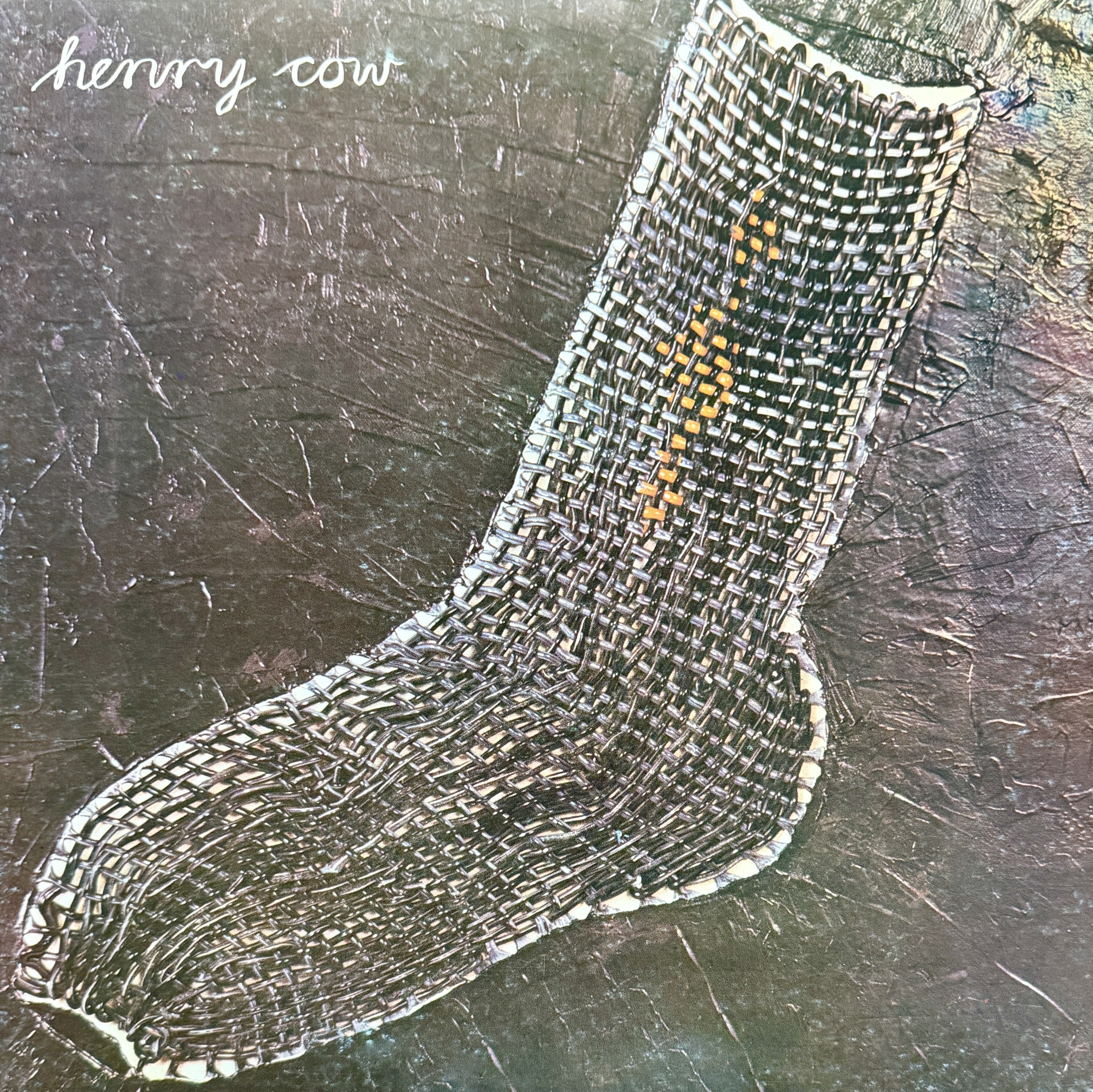
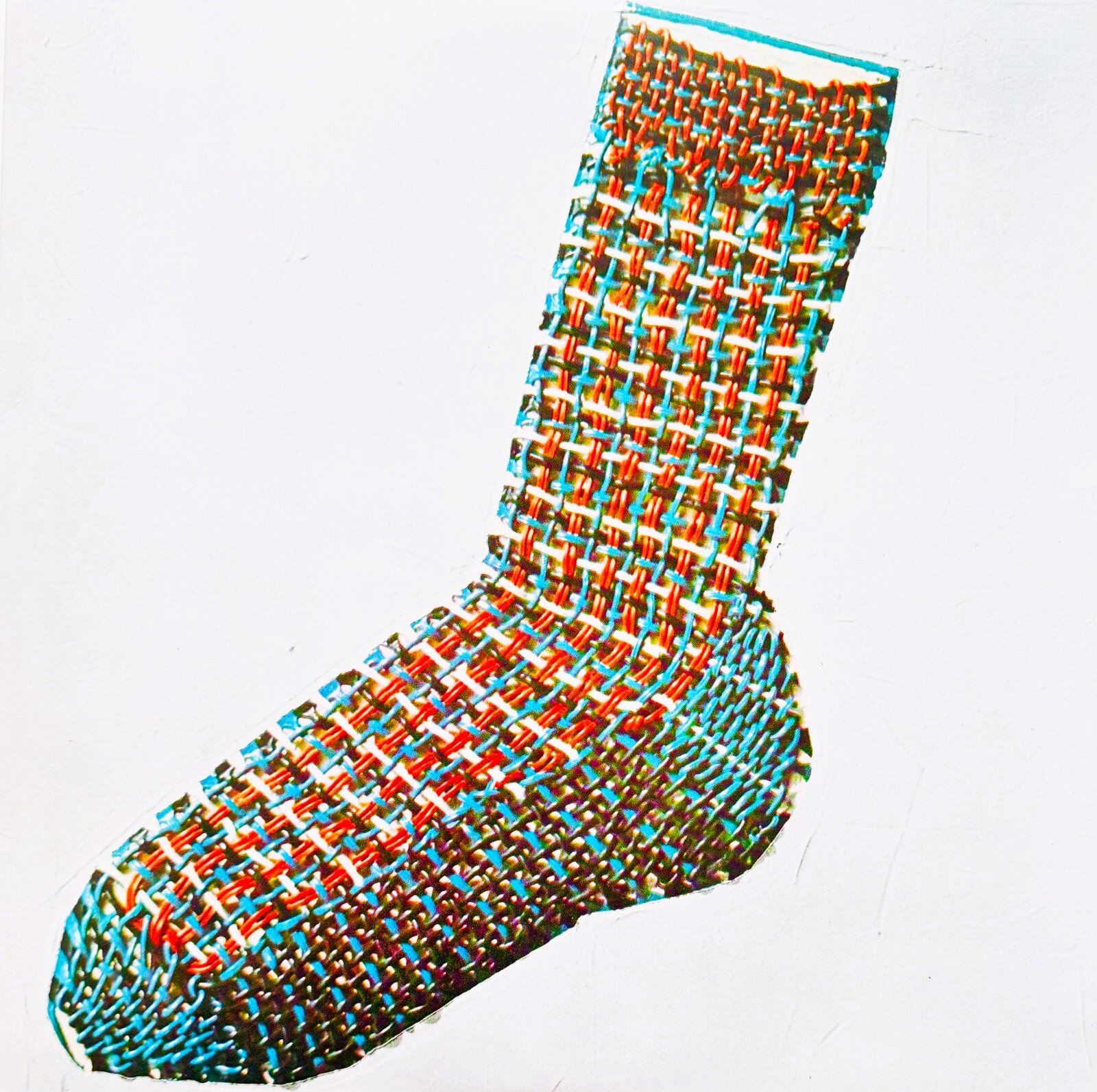
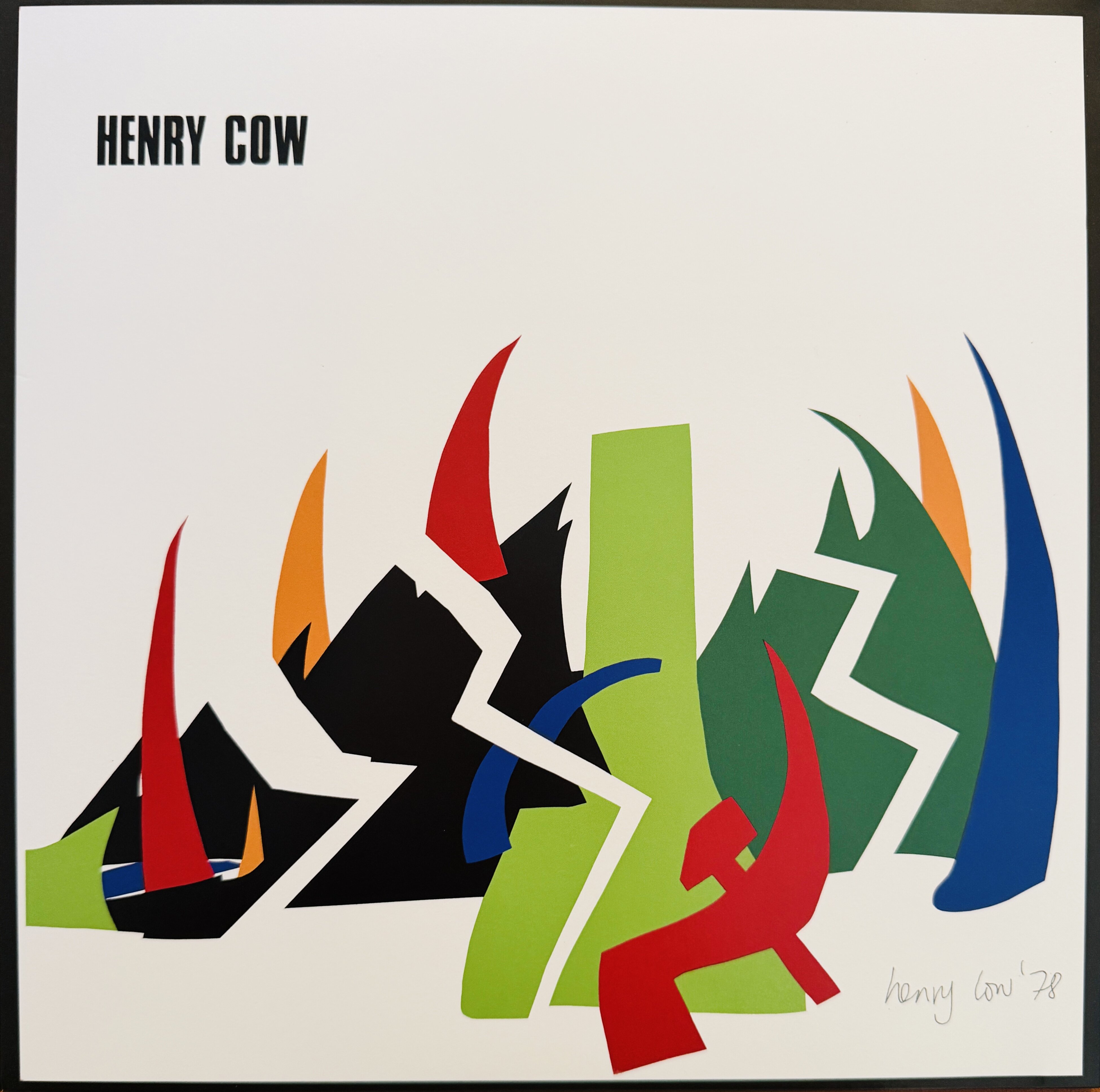
In Praise of Learning by Henry Cow, 1975 album.
In an era in which we hear (in my opinion, too much) about social and political messages in music as if they were something harmful or wrong, rather than the natural artistic expression of a current of thought that has developed in society, I feel compelled to talk about one of the "political" records par excellence.
On Progressive Rock World I talked at length about Henry Cow and Chris Cutler, dedicating space to them both in the treatment of the historical cornerstones of the genre and in the case of the most recent avant-garde projects.
A dedicated card entitled "Henry Cow, pioneers of the Rock in Opposition (RIO) movement" tells their fascinating story.
I dedicated a specific focus to The Henry Cow Legend (the 1973 debut album, originally known as Leg End), a complex and fascinating blend that combines experimental jazz, contemporary classical music and progressive rock.
A lot of space is given to the centrality of Chris Cutler both for his historical militancy as drummer and lyricist of the band, and for Cutler's collaborative wake in the Avant-Prog and Rock in Opposition (RIO) scene with his recent participation in the project led by Luciano Margorani (historical name of the Italian RIO scene with La 1919), which also involves Dario D'Alessandro by Homunculus Res, a risky but usable experiment, capable of touching the strings of the Canterbury scene. The album "Triangulations" of 2025.
I also talked about Henry Cow on Unrest (1974), one of the high points of the RIO movement, thanks to its perfect fusion between rigorous composition and pure improvisation.
Released in 1975, Henry Cow's "In Praise of Learning" is a seminal album of European avant-garde rock, mixing communist political ideas and musical experimentation. It marked an important moment for the British band, when between January and May 1975, Henry Cow permanently joined the members of Slapp Happy (Dagmar Krause, Peter Blegvad and Anthony Moore). This collaboration creates a really interesting mix: Slapp Happy bring an intellectual and somewhat out-of-the-box pop sensibility, reminiscent of Bertolt Brecht's cabaret, while Henry Cow add their avant-garde instrumental complexity.
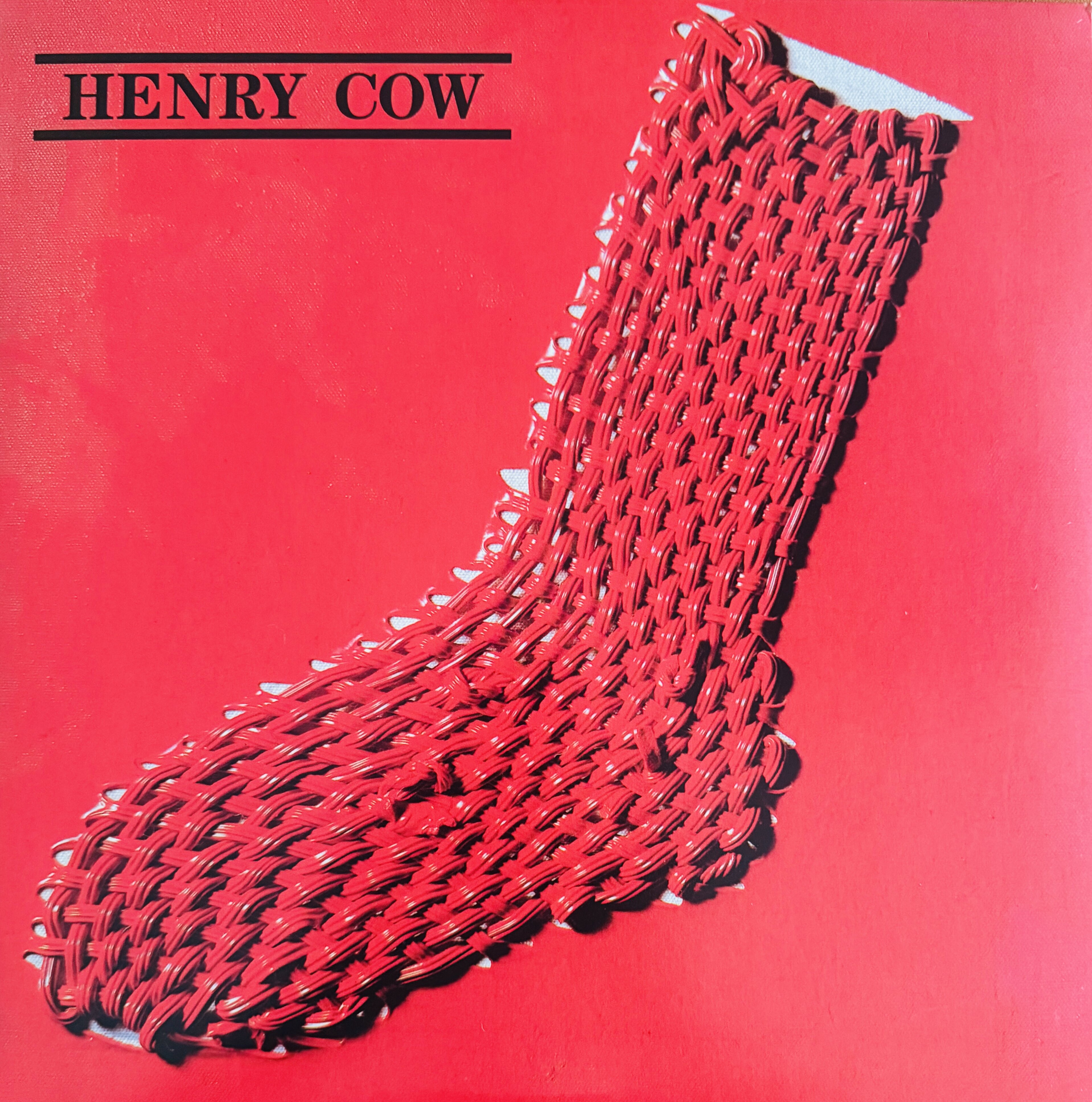
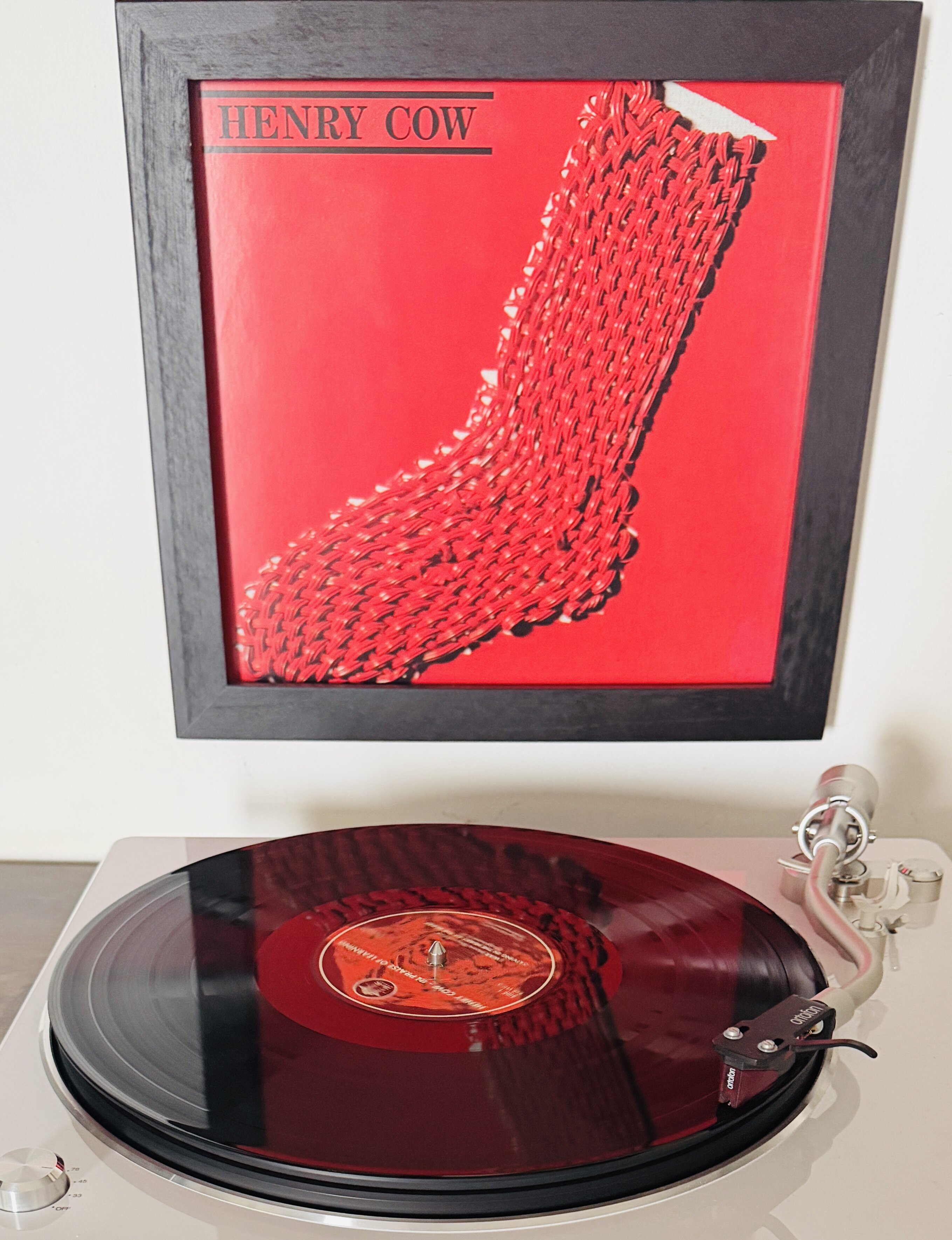
The title of the album, borrowed from Brecht's poem "In Praise of Learning", and the cover with a red stocking on a red background, leave no doubt about the influence of Marxism on the group. The album is a profound critique of capitalism and the cultural industry, but at the same time it is an invitation to knowledge. The title itself urges the working class and the less fortunate to educate themselves. For Brecht and Henry Cow, learning is not just an academic matter, but a tool to emancipate oneself and improve one's life.
This album is a true jewel of avant-garde jazz-rock, an explosive mix of free jazz, contemporary cultured music and progressive rock that does not bend to commercial logic. The central idea of "In Praise of Learning" is to merge musical avant-garde and Marxist political activism. It's not just about using music to send a message, but about seeing musical complexity and dissonance as a way to rebel against the commercial and capitalist structures of the cultural industry.
Here, culture is seen as a weapon, and learning is essential to understand how power and exploitation work, so that we can fight them. Brecht's text says: "You must take power... Study, man in the prison! Study, man in the kitchen! … You have to direct".
The lyrics, written mainly by drummer Chris Cutler, speak of the loss of the individual in capitalist society, denouncing the alienation of work and the violence of imperialism (as can be heard well in the track "War").
The highlight of the album is the "Living in the Heart of the Beast" suite. It tells the story of a person who realizes that he lives "in the heart of the beast" (i.e. the Western capitalist system) and decides to join the collective struggle to bring it down. Henry Cow didn't want simple melodies and catchy rhythms because they considered them "opium for the masses", commercial music made to distract people from real problems. Their music is edgy, difficult and destabilizing precisely to keep the listener awake, to keep him alert and critical.
This album is a real journey into the world of the most experimental and daring rock. It can be defined mainly as Avant-Prog (avant-garde Rock) and Experimental Jazz-Rock, and represents the most rebellious soul of the Canterbury scene, laying the foundations for the Rock in Opposition (RIO) movement. Henry Cow, in particular keyboardist Tim Hodgkinson and guitarist Fred Frith, were inspired by twentieth-century composers such as Béla Bartók, Igor Stravinsky and the twelve-tone and serial school of Darmstadt.
Forget the traditional melodies: here we find angular scales, dissonant chords and a continuous play of sound contrasts. The rhythm section and the winds (saxophone, clarinet, oboe, bassoon) do not follow the rules of classic jazz, but are close to European free jazz, with collective improvisations, noises and an expressive freedom that breaks the structure of the songs. The album practically says "no" to the 4/4 time typical of rock. Chris Cutler's drums are an explosion of odd time signatures, polyrhythms and asymmetrical metrics (with the frequent use of unstable time signatures such as 5/8, 7/8 or even more complex mathematical sequences). Thanks to Dagmar Krause (who comes from Slapp Happy), the album incorporates Sprechgesang (spoken song), inspired by the expressionist theater of Bertolt Brecht and Kurt Weill. Dagmar's voice does not seek melodic beauty, but is dramatic, theatrical, strident and martial. Influenced by musique concrète, Henry Cow and producer Simon Heyworth use magnetic tapes creatively. Songs like Beginning: The Long March integrate electronic manipulations, loops, inverted sounds and studio montages that anticipate industrial and post-rock.
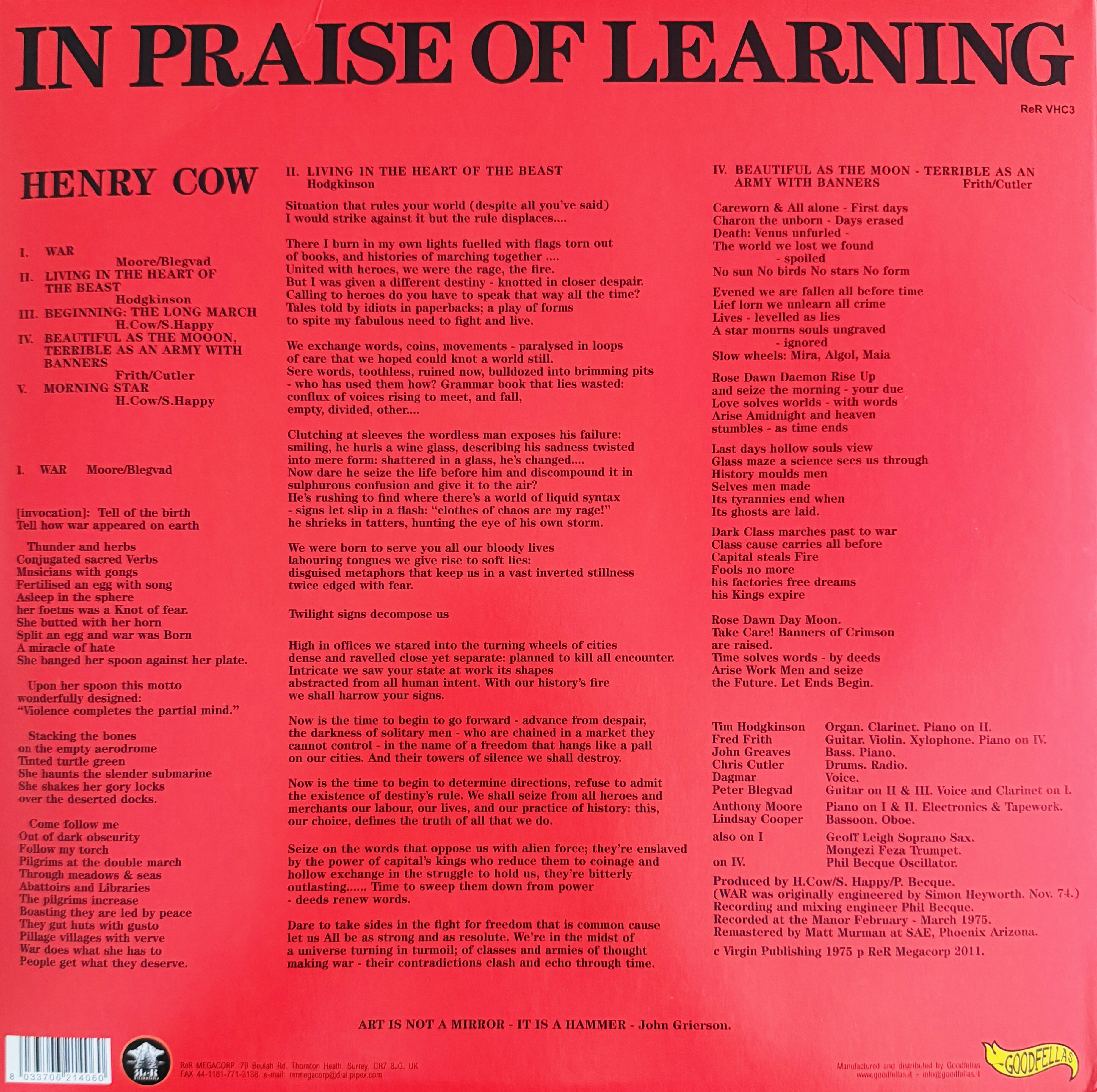
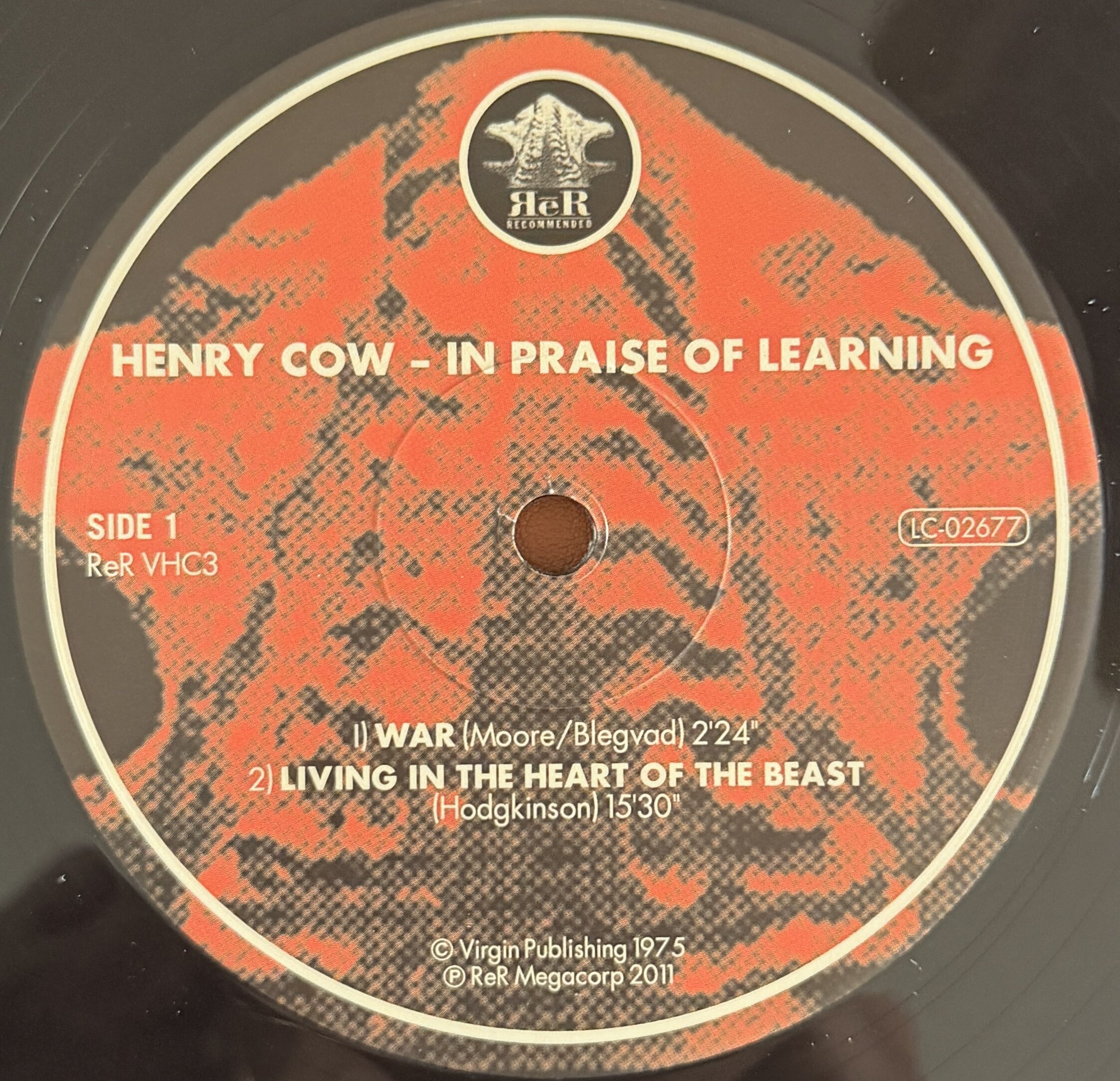
I have the 2017 RER VHC3 vinyl reissue.
"War" is a short but very powerful song, which mixes electric rock and expressionist avant-garde. It is a strong and direct invective, full of energy. Dagmar Krause's austere and theatrical voice stands out against a background of pounding percussion and dissonant sounds, creating an almost apocalyptic atmosphere. Krause's vocal performance and Chris Cutler's powerful, noisy drumming are the backbone of the piece.
"Living in the Heart of the Beast", a stunning suite, is a mix of complex orchestral music and free improvisation sections. It is the highlight of the album, which starts from a desolate atmosphere with intense vocal harmonies, and then explodes in a rhythmic and triumphant second half. It is a real musical and revolutionary manifesto, with a melody as strange as it is fascinating. Tim Hodgkinson, who wrote the song, plays keyboards and horns, while John Greaves leads the final rhythm on bass, and Fred Frith shows off his intricate guitars.
"Beginning: The Long March" is an experimental jazz-rock and free improvisation song that delves into more abstract and mysterious territories. The music deconstructs itself into a surreal dialogue between the musicians, punctuated by pauses and silences that create an intriguing atmosphere. Towards the end, the song accelerates with militant energy. Chris Cutler and Fred Frith use xylophone and percussion in an innovative and metallic way, while Lindsay Cooper enriches the sound texture with oboe and bassoon.
"Beautiful as the Moon; " Terrible as an Army with Banners" is a truly unique piece of avant-garde rock and chamber music. It is a dense and visionary composition, with an intricate and angular structure. It moves between quiet moments and instrumental explosions, creating a dramatic intensity that keeps you hooked. Fred Frith, who wrote the song, is the protagonist on guitars and violin. Together with him, Tim Hodgkinson on organ and clarinet, and Lindsay Cooper on bassoon, intertwine dissonant and fascinating melodic lines.
"Morning Star" is a piece of free improvisation that mixes Dadaist and free jazz elements. He closes the album with a hypnotic and mysterious atmosphere, as if taking us on a space journey through desolate landscapes. Traditional melodies give way to an interweaving of metallic sounds, electronic percussion and screeching winds. Anthony Moore is fundamental with his electronics and tape, creating a very special final soundscape, supported by Chris Cutler on percussion.
"In Praise of Learning" is not an easy listening record, but it is an all-round work of art. It is considered the informal beginning of the Rock in Opposition (RIO) movement, which wanted to free rock music from the clutches of profit. Still today one of the most challenging, complex and fascinating records of the 70s. A must.
My Version
Label: ReR Megacorp – RER VHC3
Format: Vinyl, LP, Album, Reissue, Remastered, Repress
Country: UK & Europe
Release: 2017
Tracklist
A1 War
A2 Living In The Heart Of The Beast
B1 Beginning: The Long March
B2 Beautiful As The Moon, Terrible As An Army With Banners
B3 Morning Star
LineUp
Bass, Piano – John Greaves
Bassoon, Oboe – Lindsay Cooper
Clarinet, Organ – Tim Hodgkinson
Drums, Sounds [Radio] – Chris Cutler
Electronics, Tape [Tapework] – Anthony Moore
Guitar, Violin, Xylophone – Fred Frith
Voice – Dagmar
Listening link on the main streaming platforms at the following links:
Spotify: Listen to the full album on Spotify - In Praise of Learning.
Apple Music: Play Songs on Apple Music - In Praise of Learning.
Streaming Channels and Independent Support
If you prefer to support the artists directly or listen to the album in high quality on the web, you can use the official Bandcamp profiles associated with the band:
Bandcamp (Profilo ReR Megacorp)
Note: All links to the musicians’ works are in the TAGS under the article title or on the "Artists"