
Honora by Flea, 2026 album.
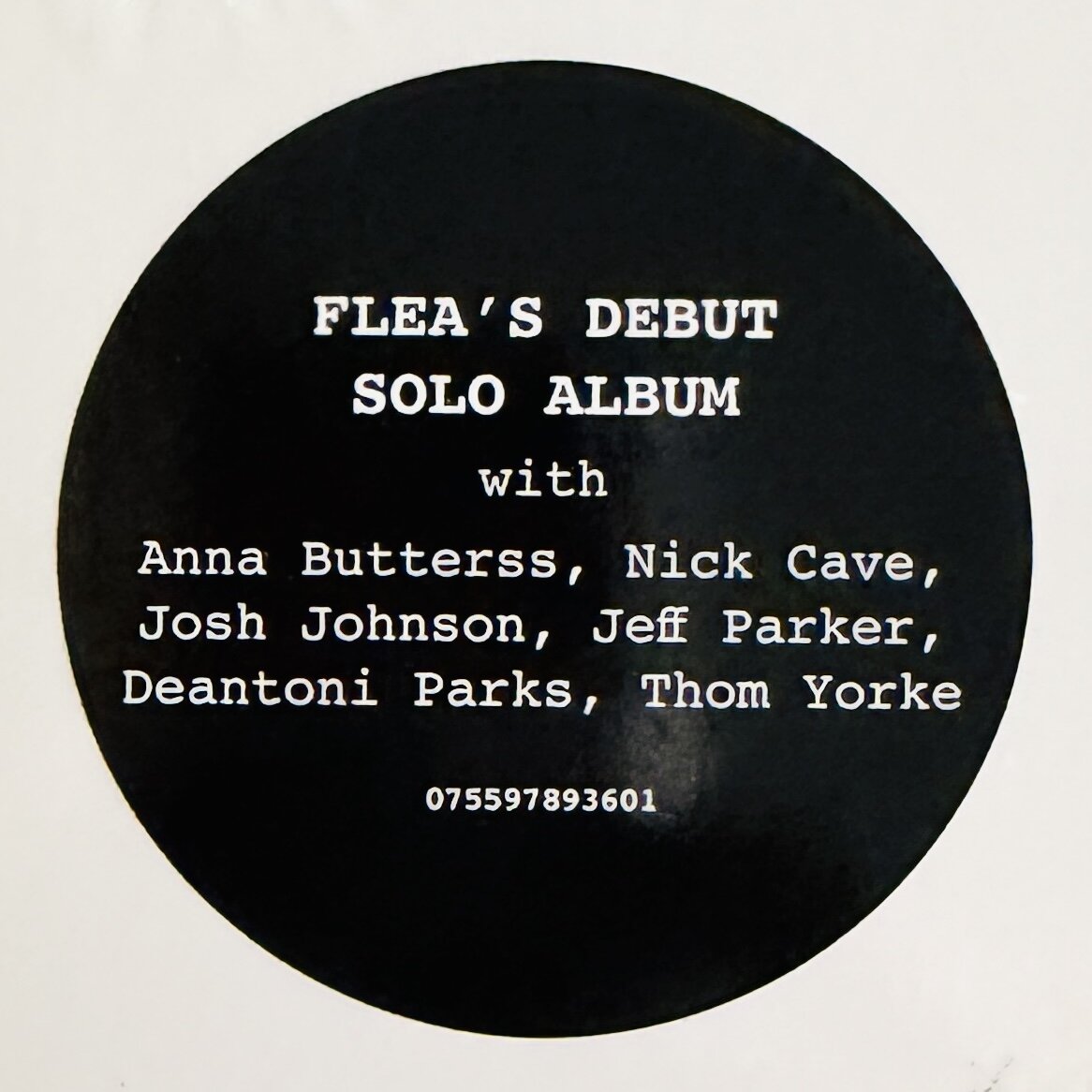
It’s the first solo album by the legendary Red Hot Chili Peppers bassist, released on March 27, 2026. After almost fifty years of a career tied to rock and electric bass, Flea surprised us by returning to his musical roots, focusing on jazz and the trumpet, his first love as a boy.
On this record, Flea in fact focuses mainly on two instruments: the trumpet, which is the main one, playing most of the melodic themes, solos and free-jazz improvisations, without completely abandoning the electric bass, the instrument that made him famous, but using it very sparingly, with dark bass lines and hypnotic loops only on a few tracks, leaving the main bassist role to Anna Butterss’s double bass.
A few biographical notes.
Flea, stage name of Michael Peter Balzary, born in Melbourne on October 16, 1962, is one of the most influential and iconic bassists in rock, thanks to his dynamic style blending funk, punk and psychedelia.
After moving to the United States as a child, he grew up in Los Angeles, where he first developed an interest in jazz and the trumpet, inspired by musicians such as Miles Davis. During high school, he met Anthony Kiedis and Hillel Slovak, with whom he would form the band that would change his life.
Beyond music, Flea is known for his work as an actor both on stage and on screen (he appeared in films such as Back to the Future, The Big Lebowski and Babylon) and for founding in 2001 the Silverlake Conservatory of Music, a non-profit music institution dedicated to young people. Among the main bands he has played in, the Red Hot Chili Peppers—of which he is a co-founder in 1983—he is the only member (together with Anthony Kiedis) to have taken part in every single album by the band, helping create worldwide hits such as Californication and Give It Away. He has also collaborated with many other projects and artists.
In 2009 he formed the supergroup Atoms for Peace with Thom Yorke, Nigel Godrich, Mauro Refosco and Joey Waronker, focusing on art-rock and electronic music. In 1997 he reunited with Jane’s Addiction for the Relapse tour and recorded for the album Kettle Whistle. Between 1982 and 1983 he played bass for Fear, a Los Angeles hardcore punk band. In 2008 he launched the project Rocket Juice & the Moon with Damon Albarn and Tony Allen.
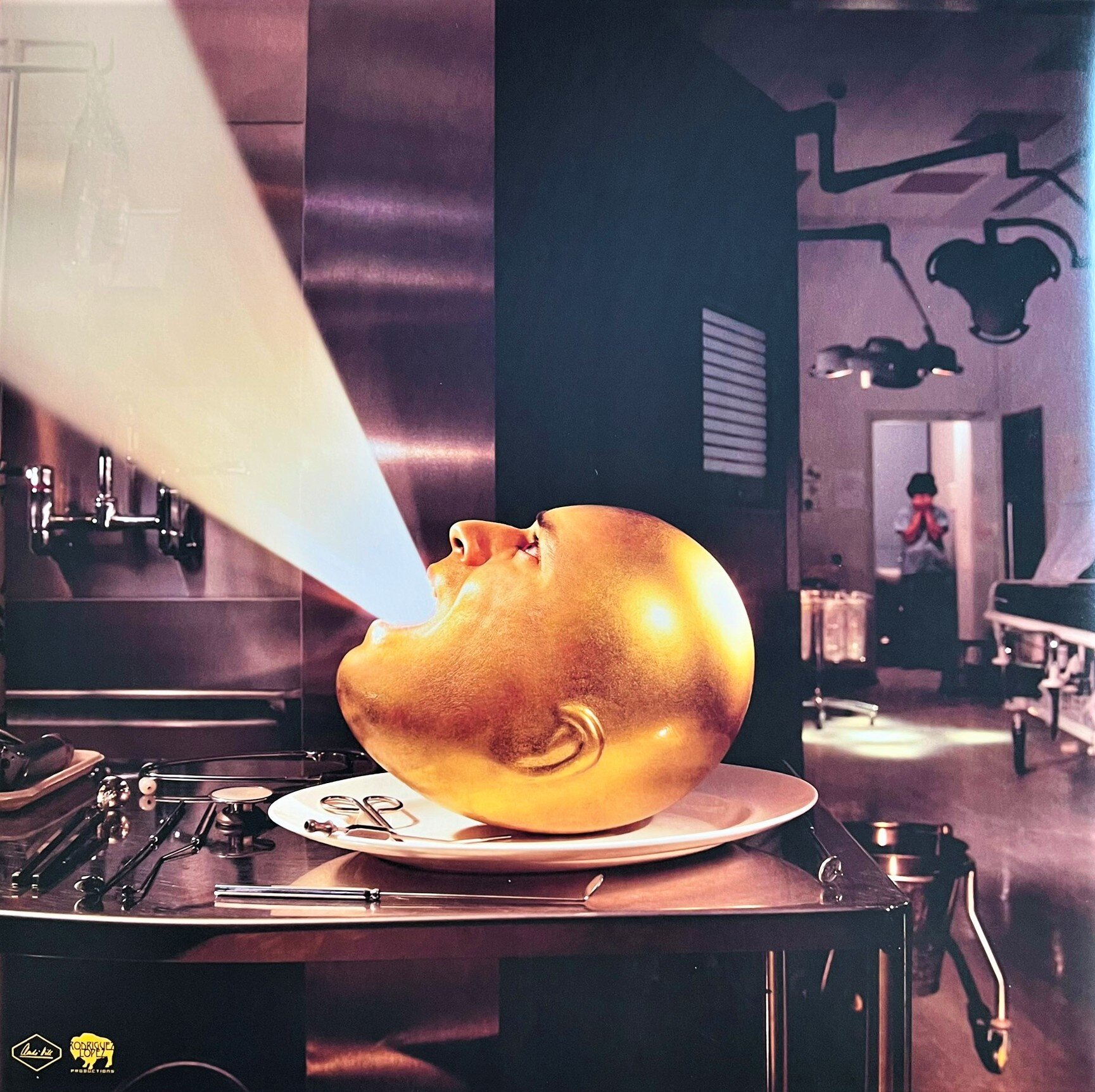
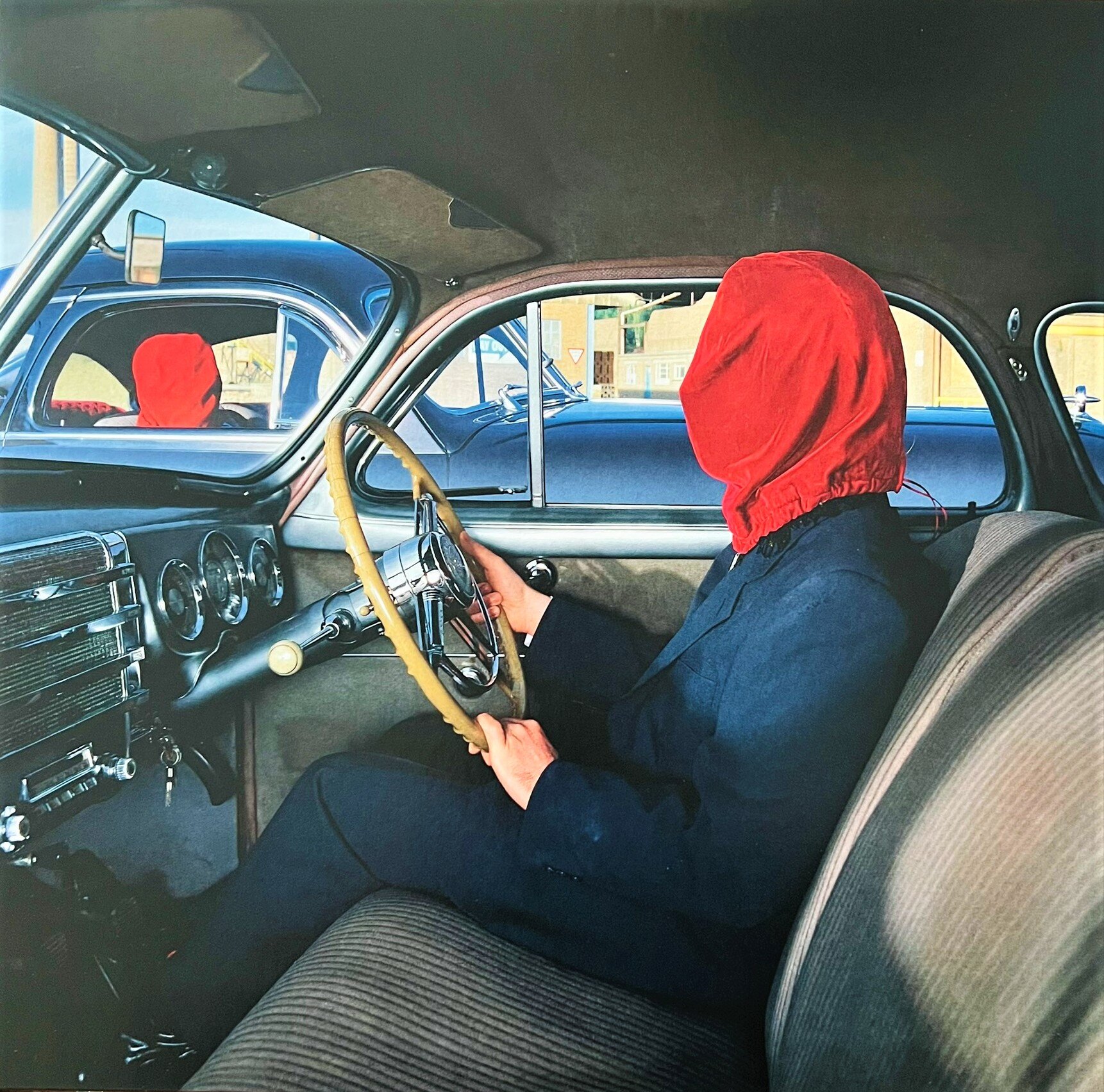
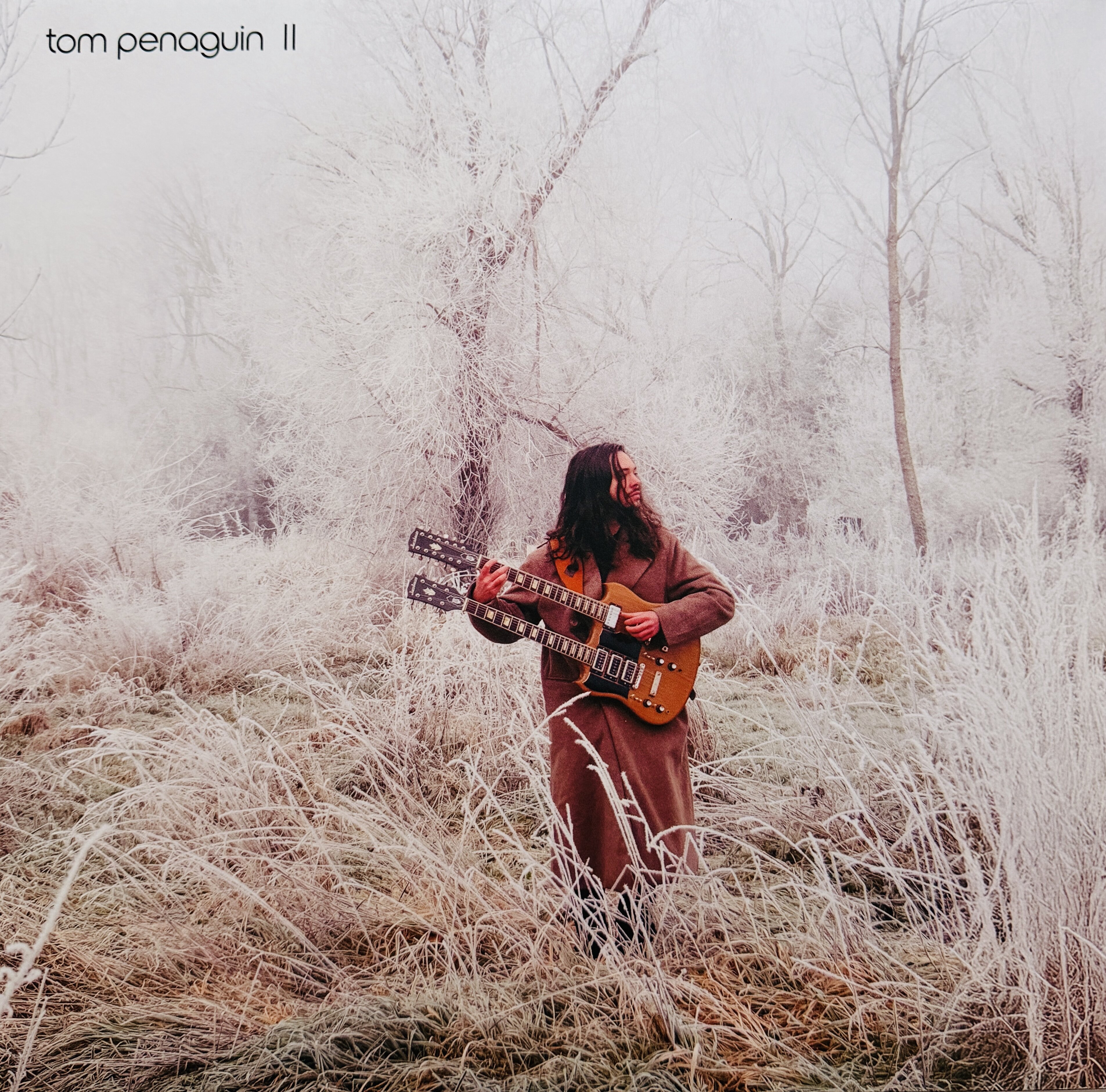
Flea also played bass for several artists, including Alanis Morissette on the 1995 single “You Oughta Know” and The Mars Volta on the debut album “De-Loused in the Comatorium” (2003) and on trumpet on “Frances the Mute” (2005). He collaborated with Johnny Cash on the album “American IV: The Man Comes Around” (2002) and with Tom Waits on the albums “Orphans: Brawlers, Bawlers & Bastards” (2006) and “Bad as Me” (2011). He played with Patti Smith in the studio and live at benefit events.
The inspiration for Honora came from Flea’s desire to enjoy uncompromising artistic freedom, far from the typical dynamics of a hugely successful stadium band. Promotion unexpectedly began on December 2 with the single A Plea. To realize this “long-cherished dream,” Flea brought in a top-tier group of collaborators, including artists of the caliber of Thom Yorke, Nick Cave, Anna Butterss and Josh Johnson.
The album marks a clean break from the high-energy funk-rock that made him famous with the Red Hot Chili Peppers. The record ventures into far more intimate, experimental and reflective territory. The trumpet isn’t played with classic jazz virtuosity, but is used to evoke images, create nocturnal atmospheres and weave melodic lines heavy with melancholy. The compositions often unfold on hypnotic structures, close to contemporary jazz and ambient music. The tracks alternate moments of calm with sudden sonic bursts, blending elements of art-rock, psychedelia and minimalism. The overall tone is cinematic, dark and evocative, able to lead you on an introspective journey.
The album’s musical aesthetic is strongly shaped by the guests chosen by Flea: the electronic cross-pollination and rhythmic tension recall Thom Yorke’s style (already his bandmate in Atoms for Peace). The darker, more confessional shades connect to the presence of artists like Nick Cave and Warren Ellis.
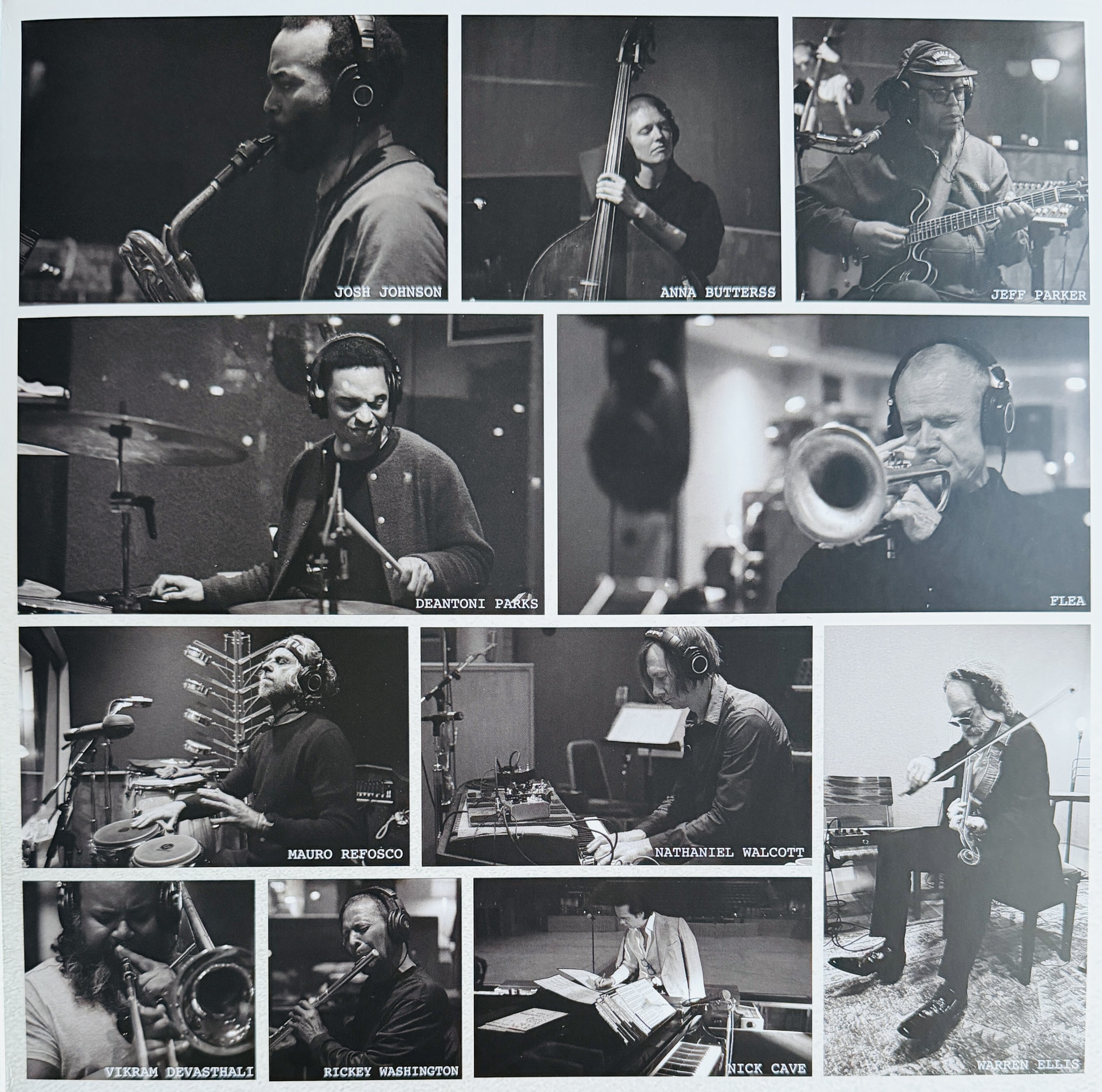
The group is made up of some of the most talented musicians in contemporary jazz and alternative rock:
Josh Johnson (Alto sax, keyboards, synth and production): He’s the brain behind the project. He handles production and arrangements, blending acoustic elements (sax, piano) and electronics.
Jeff Parker (Guitar): A longtime member of Tortoise, he brings his unique post-rock and avant-jazz style, marked by geometric arpeggios, ethereal chords and abstract textures.
Anna Butterss (Double bass and upright bass): A rising jazz talent, she lays down the record’s darker, more traditional rhythmic foundations, giving Flea the freedom to focus on trumpet or occasional electric-bass forays.
Deantoni Parks (Drums): A former collaborator of The Mars Volta, he’s a drummer with a deconstructed, almost mechanical style. His contribution gives the tracks a syncopated groove.
The guest singers are also top-notch.
Thom Yorke: Co-writer and vocalist on the track Traffic Lights. He infuses the piece with his signature emotional and electronic tension, echoing the stylistic freedom already explored with Flea in Atoms for Peace.
Nick Cave: With his deep, theatrical voice, he delivers a moving reworking of the pop classic Wichita Lineman by Jimmy Webb. His contribution gives the track a nocturnal, solemn and cinematic atmosphere.
A list of standout multi-instrumentalists also contributes to the project:
John Frusciante, guitarist of the Red Hot Chili Peppers, got busy with electronics, sound treatments and mixing, leaving his mark with an experimental touch. And he also plays trumpet on some tracks.
Chad Smith, the RHCP drummer, joined the band only for the opening track, driving it with a primal, hard-hitting rock beat.
Mauro Refosco, former Atoms for Peace member and RHCP touring musician, enriched the tracks with ethnic percussion and exotic patterns, creating a super complex rhythmic weave.
Nathaniel Walcott, Bright Eyes keyboardist, played Fender Rhodes piano, additional trumpet, and handled the orchestral string arrangements, conducted by the excellent Suzie Katayama.
Rickey Washington (alto flute) and Warren Ellis (alto flute) added a spiritual-jazz and psychedelic-folk touch with their warm, mysterious timbre.
Finally, Vikram Devasthali (trombone) and Brian Walsh (clarinet/bass clarinet) expanded the horn section with dynamics and shades typical of free jazz and avant-garde music.
Honora is built on two big ideas: emotional vulnerability and total artistic freedom. For a musician used to the energy of stadium shows, this album is a true return to the roots, spiritually speaking.
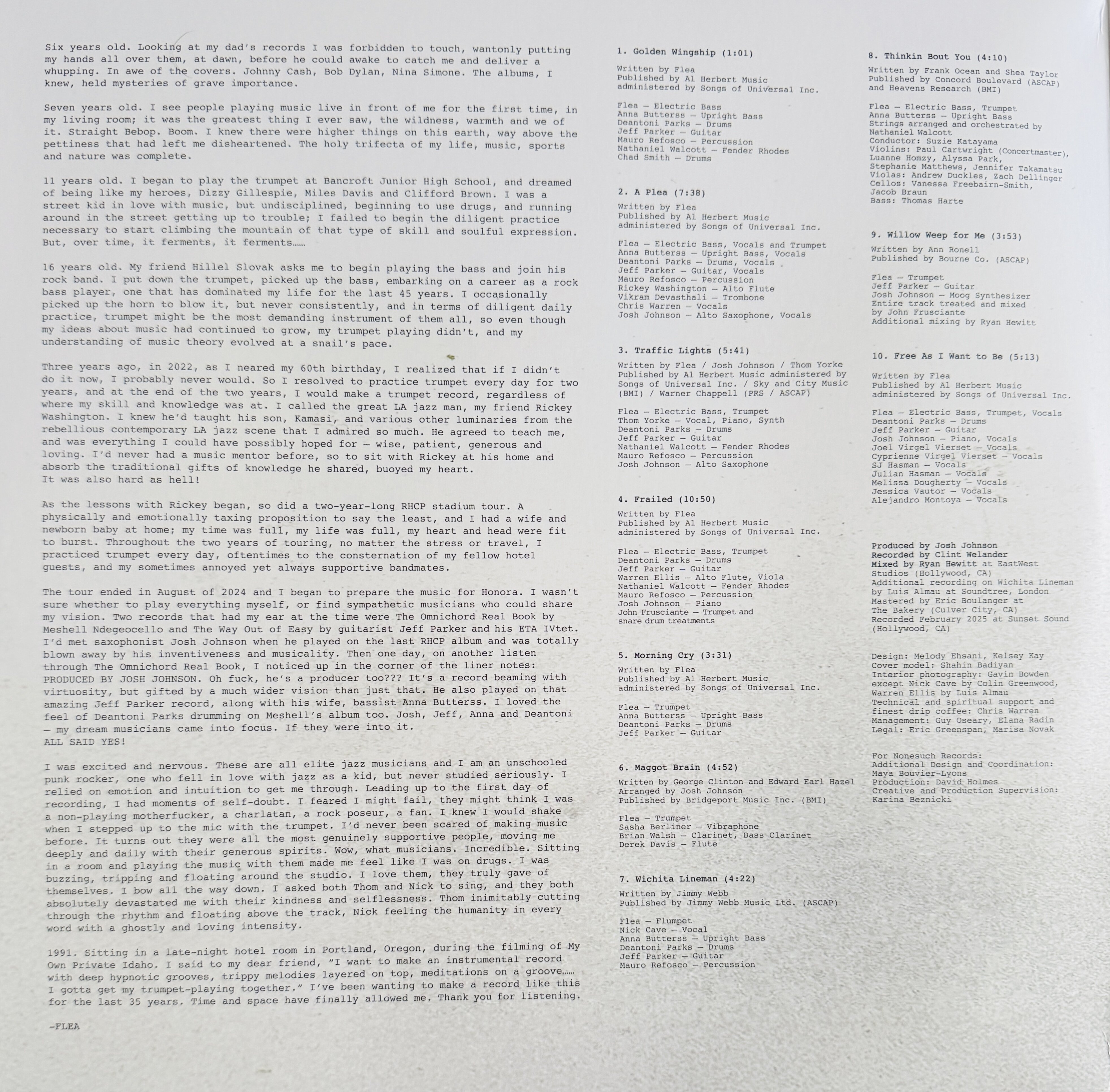
Flea’s text on the album’s inner sleeve is a moving personal story that weaves vulnerability and musical passion. Flea reveals he has nurtured the idea for this record since 1991, when, on the set of The Doom Generation, he confided to a friend his desire to make “an instrumental record with hypnotic rhythms and trippy melodies.” Aware that to realize this dream he had to pick up the trumpet again—his first musical love, abandoned for decades—Flea, nearing sixty, decided to devote himself to daily practice for two years, even during the Red Hot Chili Peppers’ world tours. For the first time, Flea felt scared and intimidated playing in front of a stellar cast of jazz musicians, fearing he’d be judged as a “fan or a charlatan rocker.” Contrary to his fears, Flea found in the artists involved (including Josh Johnson, Jeff Parker, Anna Butterss) incredibly supportive souls. He described the studio experience as a drug that made him vibrate and “float euphorically.”
Unlike the Red Hot Chili Peppers, where the groove has to be powerful and driving, Honora is all about subtraction. Flea said he wanted to create music where silence, the space between notes and atmosphere matter more than speed or technique. It’s a true manifesto against commercial dynamics and classic pop structures.
The album isn’t meant as a collection of singles, but as an atmospheric suite. The musical idea is that of a soundtrack for a “film of the mind,” with tones ranging from nocturnal to melancholic, and at times even a bit unsettling. The choice of collaborators like Nick Cave and Thom Yorke, known for their dark, cerebral sounds, serves precisely to create this soundscape, oscillating between dream and inner reflection.
Honora is structured conceptually and is clearly divided into two parts: side A, with original tracks written by Flea (often long, jazz-fusion and experimental), and side B, devoted to a series of covers radically reinterpreted.
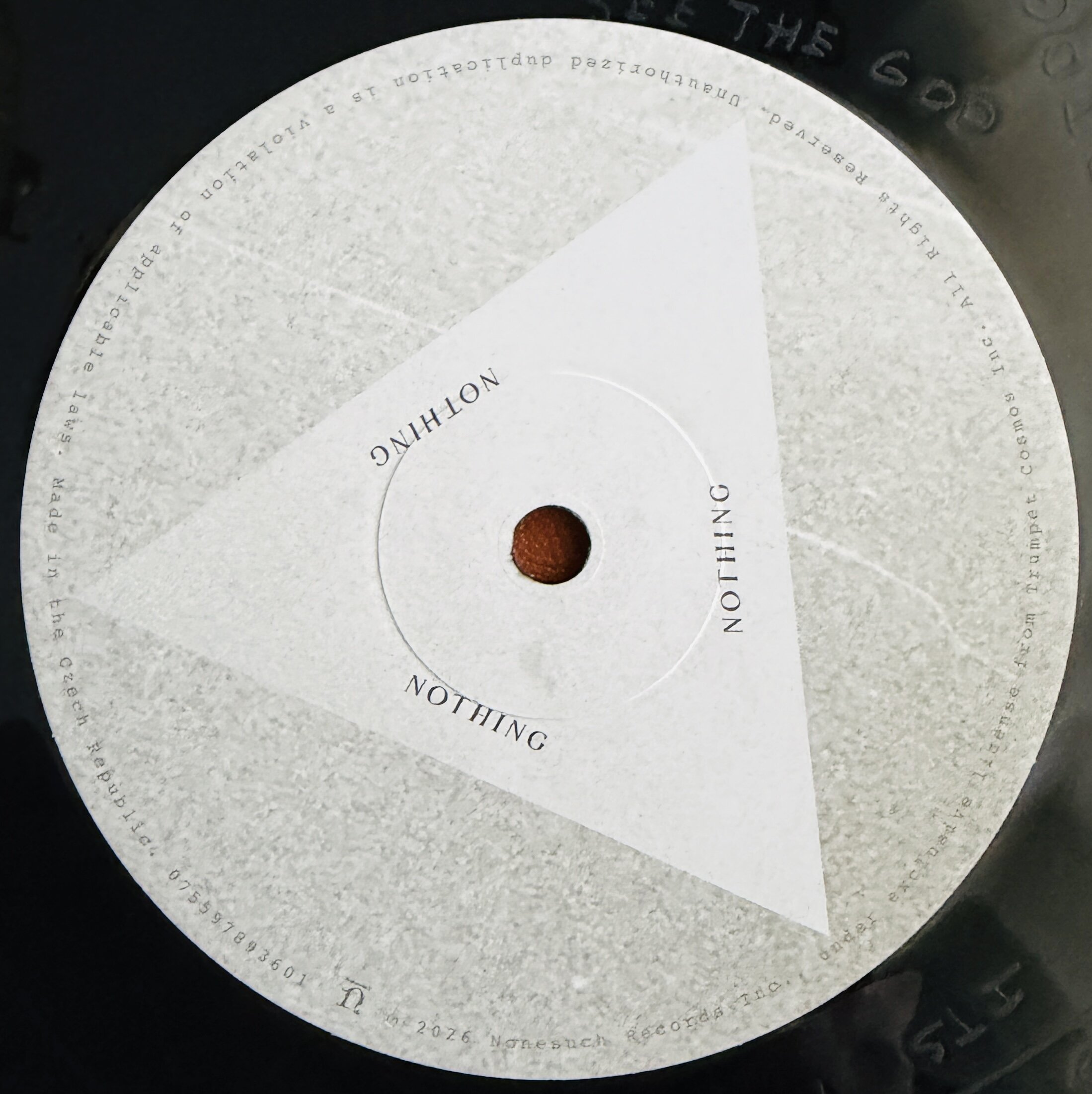
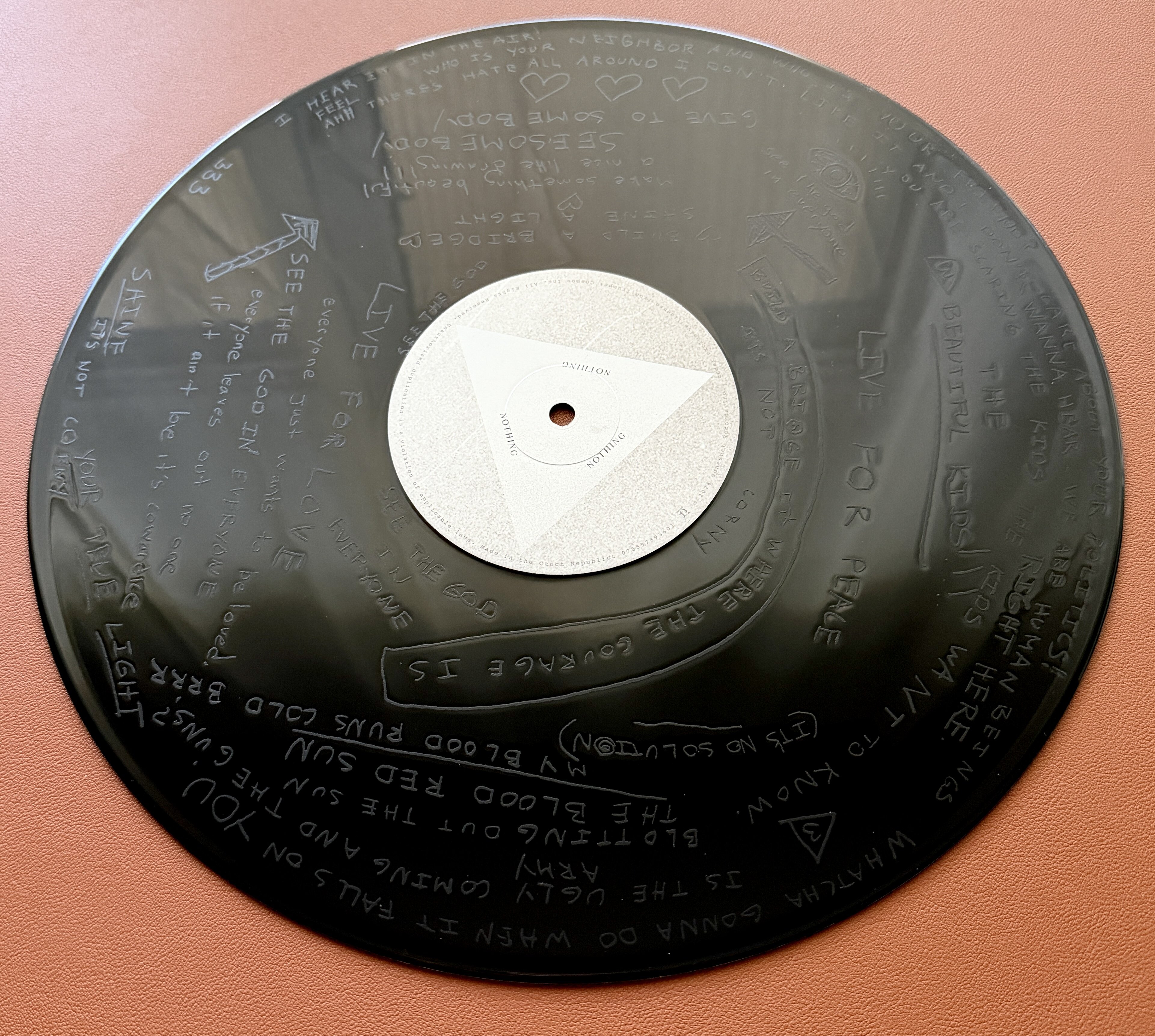
The album is physically available as a double-vinyl edition (2 LP). The peculiarity of this release is that the tracks are cut across 3 sides (Side A, Side B and Side C). The fourth side has no music; it was used only for aesthetic and collector reasons: it features a special screen print with notes, drawings and autograph sketches by Flea.
“Golden Wingship” is a brief, evocative introduction, a mix of ambient and jazz. This little one-minute instrumental gem sets the stage for what’s to come. Chad Smith on drums gives it a rock rhythmic push, while Flea hints at the first chords. It’s the only time Chad appears on the record.
“A Plea” is a piece that blends spiritual jazz, avant-garde, fusion and spoken word, and runs almost 8 minutes. It starts with a bass figure, then spills into free-jazz chaos and tension-filled shouts. Flea recites a protest text with apocalyptic tones about social division, wondering who our neighbor and our friend are, and sounding an alarm about concentration camps. He expresses his fear for the political future and the isolation awaiting us. The band lets go into total improvisation. Nathaniel Walcott adds ghostly background voices, while Jeff Parker’s guitar slices through the track with sharp chords. The piece moves fluidly and boldly from the initial funk groove to the horn-driven instrumental madness.
“Traffic Lights (feat. Thom Yorke)” is an electronic art-rock track, one of the album’s most successful and easiest listens. It has a hypnotic rhythm, a bit unsettling yet engaging, recalling the nighttime feel of a deserted city. Thom Yorke co-wrote the track, which conveys a sense of alienation and stillness. The “traffic lights” represent emotional blocks, time flowing under someone else’s control, and the anxiety of city life. Yorke leads the piece with piano, synths and voice. Deantoni Parks creates a syncopated drum pattern, precise as a clock. Flea’s bass holds it all together with a dark loop. Beautiful is the interplay between Yorke’s falsetto and Flea’s brief trumpet interventions.
“Frailed” is a crazy avant-garde jazz piece, a mix of jazz and rock. It’s the album’s centerpiece, an 11-minute instrumental suite that starts with a hypnotic electronic beat, slowly building to a goosebump-inducing orchestral explosion. Josh Johnson does incredible work on synths and sax, creating an intricate harmonic base for Flea’s trumpet and Vikram Devasthali’s trombone. The second part is pure energy, with the horn section cutting loose in a screaming avant-jazz improvisation.
“Morning Cry” is a free-jazz style track, an energetic piece that represents the chaotic, slightly traumatic awakening of the mind, with horns going wild over a rhythm section that never lets up. Anna Butterss does incredible work on double bass, while Flea on trumpet pushes it to the limit, almost into saturation, reinventing the syncopation. What a duel between Flea’s trumpet and Johnson’s alto sax!
The Funkadelic cover of “Maggot Brain” is a psychedelic jazz, ambient-funk interpretation, truly distinctive. The original, famous for Eddie Hazel’s blazing guitar solo, is completely transformed, becoming a hypnotic, meditative piece. Mauro Refosco adds a magical touch with his exotic, delicate percussion, while Flea, in place of distorted electric guitar, delivers a clean, reverbed trumpet solo. Flea’s trumpet conveys a nostalgic lyricism, as if rereading a classic from his youth with the wisdom of maturity.
“Wichita Lineman (feat. Nick Cave - Cover of Jimmy Webb)” is a noir-pop piece with an orchestral, cinematic touch. It’s the album’s most moving moment, a nocturnal ballad full of despair. The lyrics speak of the loneliness of a telephone line technician (the “lineman”) in a desolate America, who hears the voice of the woman he loves through the vibrations of the cables. Cave turns this nostalgia into a deep reflection on grief, distance and existential loneliness. Nick Cave’s vocal performance is baritonal, dramatic and heartbreaking. Nathaniel Walcott and Suzie Katayama created a sumptuous, melancholic string arrangement. The orchestral ending is gorgeous; Cave’s voice fades into silence, accompanied only by Butterss’s double bass.
The cover of Frank Ocean’s “Thinkin Bout You” is an extraordinary track. It’s a mix of contemporary jazz, instrumental R&B and symphonic jazz, an experiment that works brilliantly. Frank Ocean’s song is stripped of its R&B touch and dressed in super refined jazz arrangements. It’s melodic, smooth as oil, and has an unexpected grace. Flea leaves the bass to Butterss to focus 100% on the main melody on trumpet. Jeff Parker, meanwhile, delights us with warm, enveloping chords in the background. It’s incredible how the trumpet manages to reproduce the complex vocal lines of the original track, which I went back to listen to again for the occasion.
“Willow Weep for Me (Cover of Ann Ronell)” is an experimental jazz piece. It’s the most unusual track, where traditional jazz merges with sonorities. John Frusciante is the real protagonist behind the scenes: he handles the mix and fills the song with sound effects and synths, deconstructing the horns’ acoustic performance. The contrast between the retro sound of the flute played by Rickey Washington and Frusciante’s abstract electronic distortions is truly interesting.
“Free As I Want to Be” is the most interesting track. It’s the only time Flea goes back to his roots, with his slap-bass touch but immersed in a spiritual atmosphere. The musicians sing a repetitive refrain that says “I’m free to be what I want to be”. It’s as if Flea were declaring his artistic freedom to the whole world, without being conditioned by the rules of the music market. The band joins in a sweeping chorus and rhythm, driven by Refosco’s percussion and Flea’s powerful bass. And to close the album in style, Flea gives us a jaw-dropping double-stopping technique.
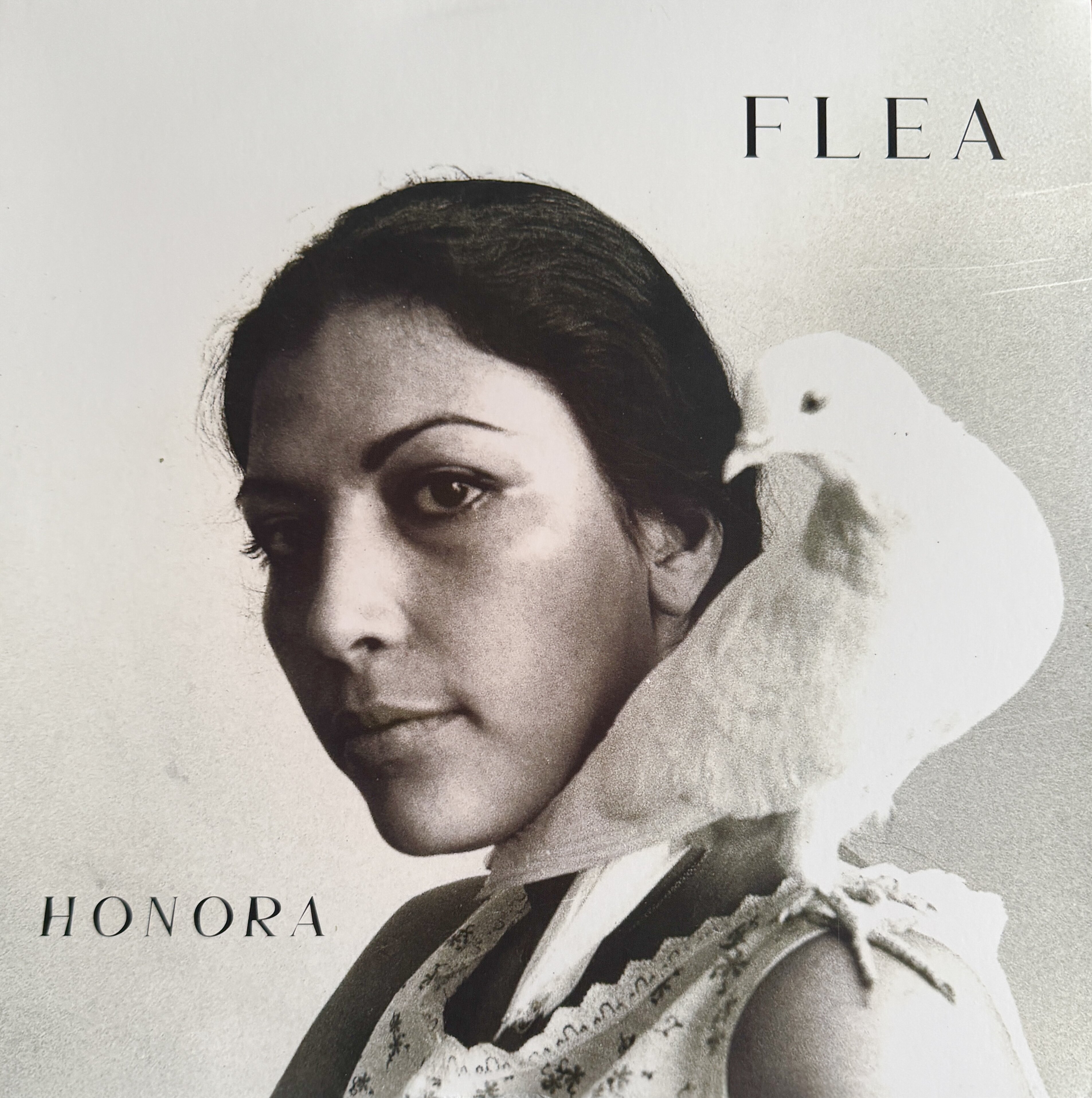
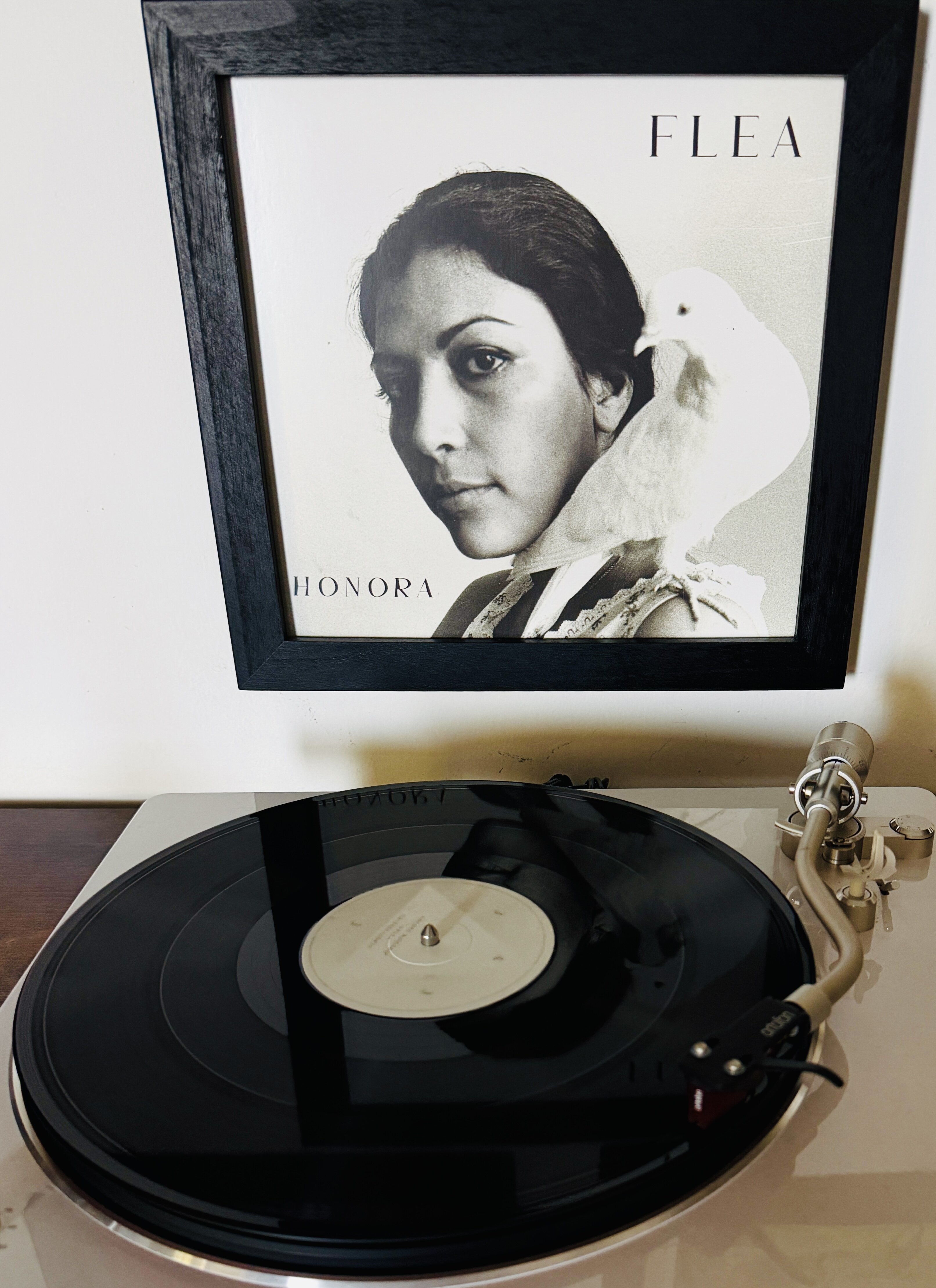
The black-and-white photo on the album cover portrays Shahin Badiyan, Flea’s mother-in-law (the mother of his wife, designer Melody Ehsani). It’s an original photo taken in Tehran, Iran, in the late ’60s. You see Shahin as a young woman with a dove on her shoulder. Flea chose this image to pay tribute to a “strong Persian woman”. He said that, for him, the spirit of a free Iran lives in his mother-in-law’s heart. The idea of using this intimate portrait came directly from his wife Melody.
While the cover celebrates his mother-in-law, the album title is a tribute to his great-great-grandmother Honora. Flea chose this name because he is deeply inspired by her story: the hard struggles she faced in Ireland due to poverty and her brave journey to Australia. The name “Honora” also comes from the Latin “Honos,” meaning honor and dignity, a fitting tribute to his family.
Flea’s mother is named Patricia, but everyone affectionately calls her Pat. She was the one who introduced him to jazz, by marrying, in her second marriage, the musician Walter Urban Jr., a truly important figure who pushed Flea toward the trumpet and jazz. In the early ’70s, after his parents’ divorce, Flea’s mother remarried Walter Urban Jr., a New York jazz double bassist.
Living-room jam sessions were the order of the day: his stepfather often hosted fiery bebop sessions right in the house’s living room. Watching those musicians, Flea fell madly in love with jazz. Struck by that world, he didn’t choose bass; he decided to play trumpet, aiming to become the new Dizzy Gillespie. As a child, he treated the instrument with absolute devotion.
Only later, during his adolescence in Los Angeles, his friend Hillel Slovak (future first guitarist of the Red Hot Chili Peppers) convinced him to switch to electric bass to play rock together. Even though the relationship with his stepfather was complex, Flea has always acknowledged Walter’s immense credit for opening the doors of music to him and sparking his love for the trumpet—a love he finally fulfilled decades later with the album Honora.
On this album, Flea chose to show himself without filters, rather than cash in on his rockstar fame. It’s not a product made for the mass audience, but an expression of total artistic freedom, an honest record to explore the deeper, intellectual and spiritual side of the famous bassist. Choosing trumpet instead of electric bass is an act of great courage and love. Flea doesn’t hide behind his reputation as king of the bass; he puts himself out there with an instrument that isn’t in his comfort zone, turning his uncertainties into pure emotion.
And when music and feeling merge, when an artist decides to put into an album, into a work, himself and his story, the result is inevitably excellent. Excellent musically too: both the section of new compositions, very jazz-oriented and tasteful, and the covers (which I personally prefer), which include a monumental, moving interpretation by my beloved Nick Cave. Absolutely recommended album.
My Version
Label: Nonesuch – 075597893601
Format: Vinyl, LP
Vinyl, LP, Single Sided, Screen Printed
Country: USA & Canada
Released: 27 Mar 2026
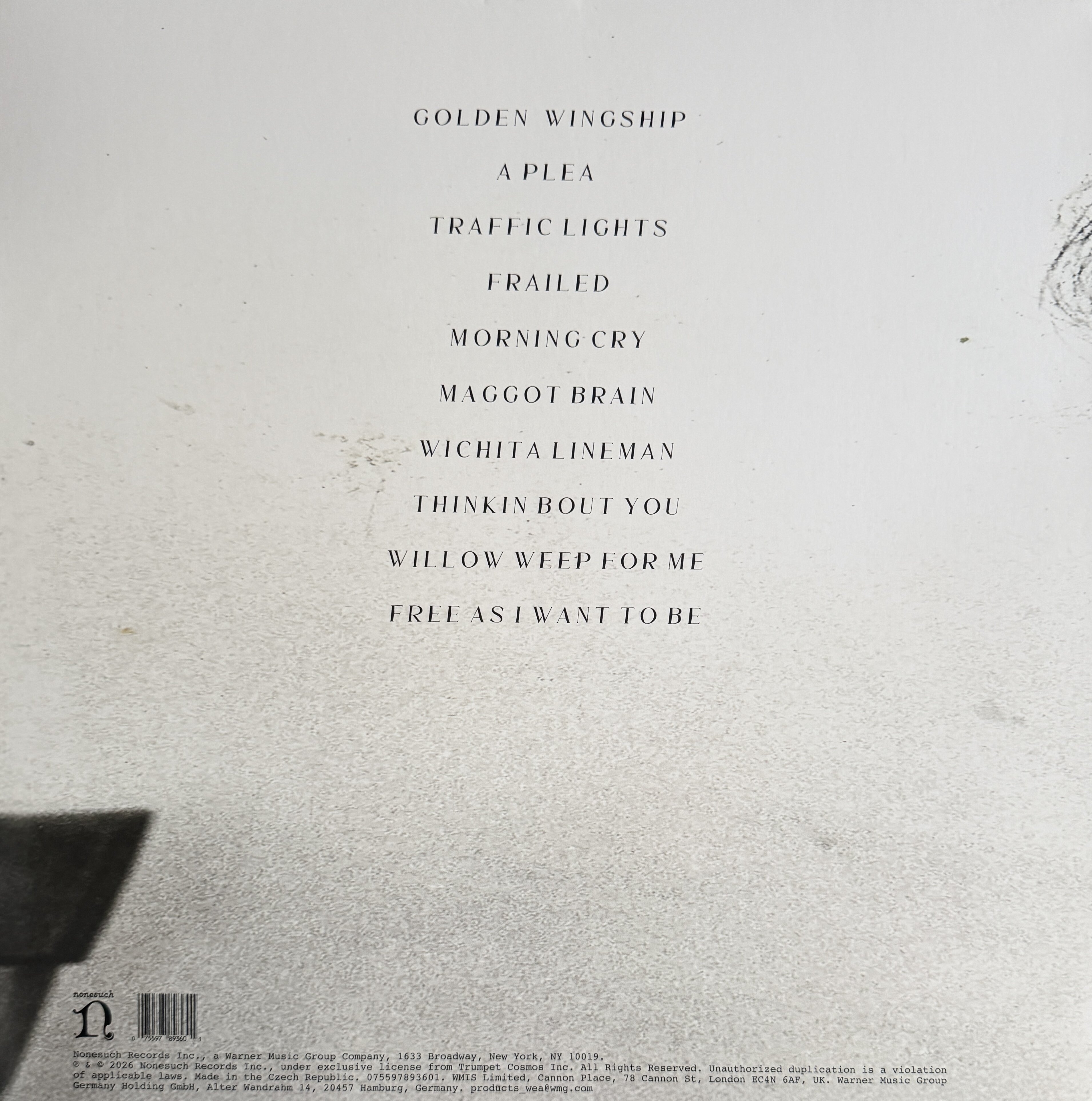
Tracklist
A1 Golden Wingship
A2 A Plea
A3 Traffic Lights
B1 Frailed
B2 Morning Cry
C1 Maggot Brain
C2 Wichita Lineman
C3 Thinkin Bout You
C4 Willow Weep For Me
C5 Free As I Want To Be
LineUp
Flea: Trumpet, Electric bass, Vocals (Spoken word)
Josh Johnson: Alto saxophone, Keyboards, Synthesizers
Jeff Parker: Electric guitar
Anna Butterss: Double bass, Upright bass
Deantoni Parks: Drums
With
Thom Yorke: Vocals, Piano, Synthesizers
Nick Cave: Lead vocals
John Frusciante: Modular synthesizers, Electronic treatments, Additional trump
Chad Smith: Drums (only on track 1)
Mauro Refosco: Ethnic and additional percussion
Nathaniel Walcott: Fender Rhodes piano, Additional trumpet, String arrangem
Suzie Katayama: String orchestra direction
Rickey Washington: Alto flute
Warren Ellis: Alto flute
Vikram Devasthali: Trombone
Brian Walsh: Clarinet, Bass clarinet
Listening links on the main streaming platforms at the following links:
Spotify: Listen to the full album on Spotify - Honora by Flea.
Apple Music: Play the tracks in high definition on Apple Music - Honora by Flea.
Bandcamp: Support the artist directly, listen to the tracks and buy digital or physical formats on Bandcamp - Honora by Flea.
Global link: Access the official redirect hub for all other platforms (including Amazon Music, Deezer and YouTube Music) via Linkfire - Flea Honora.
Note: All links to the musicians’ works are in the TAGS under the article title or on the "Artists"