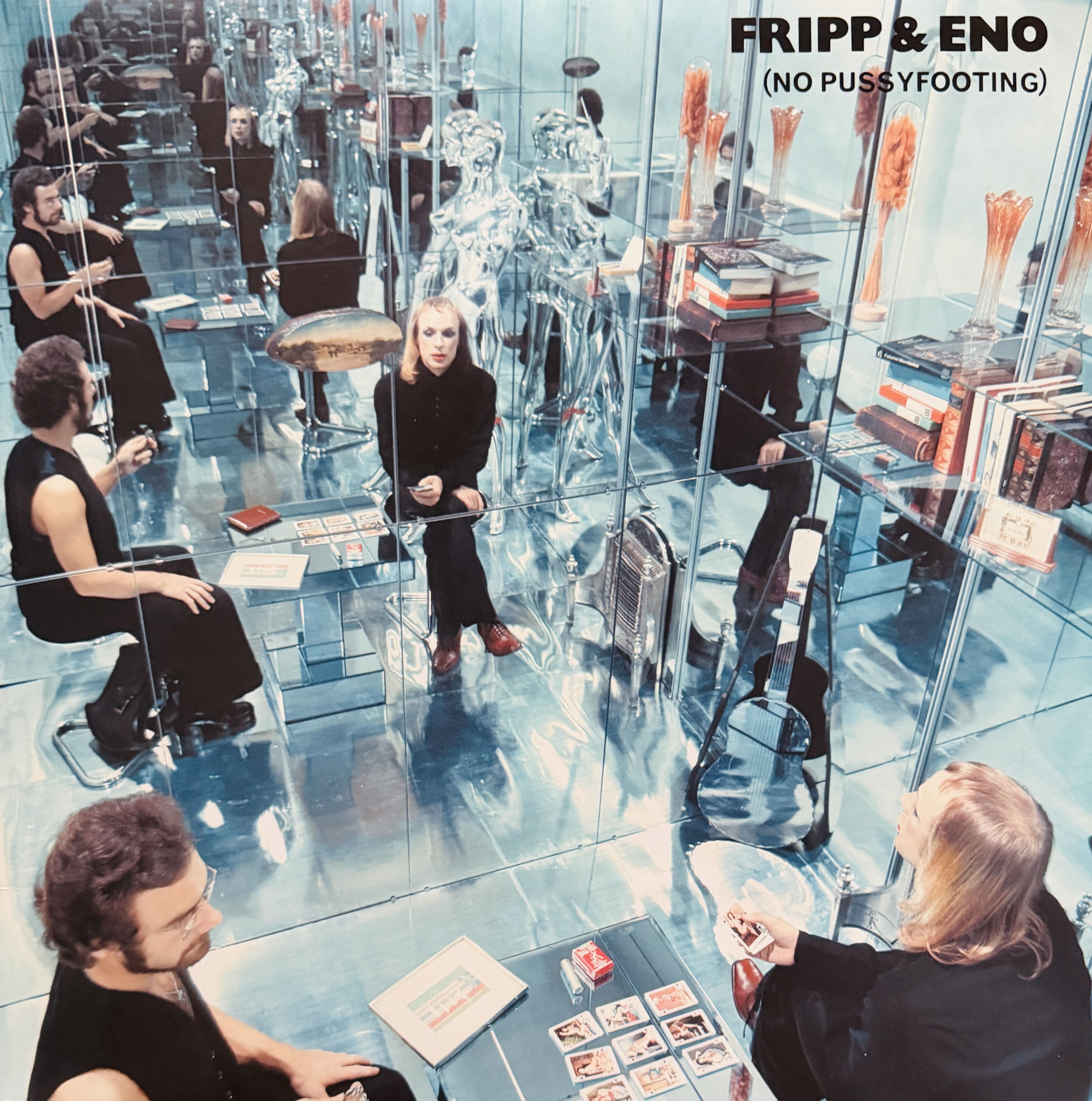
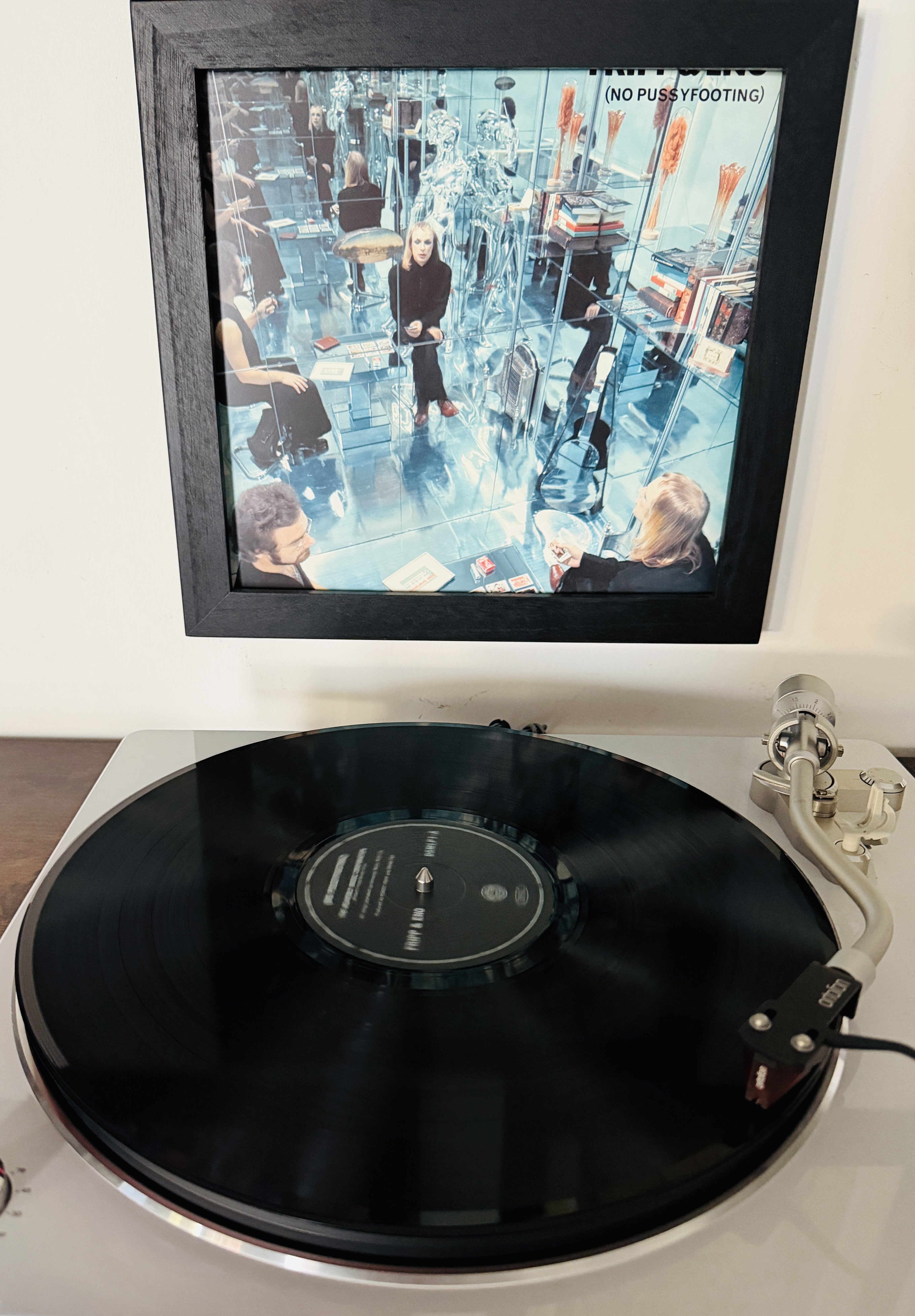
No Pussyfooting by Fripp & Eno, a 1973 album.
This is the debut album by the duo Robert Fripp and Brian Eno, the first of a landmark collaboration that blends the avant-garde guitar genius of King Crimson with the visionary mind of the electronic-music pioneer (then fresh from Roxy Music), laying the groundwork for modern ambient music and minimalist and electronic music.
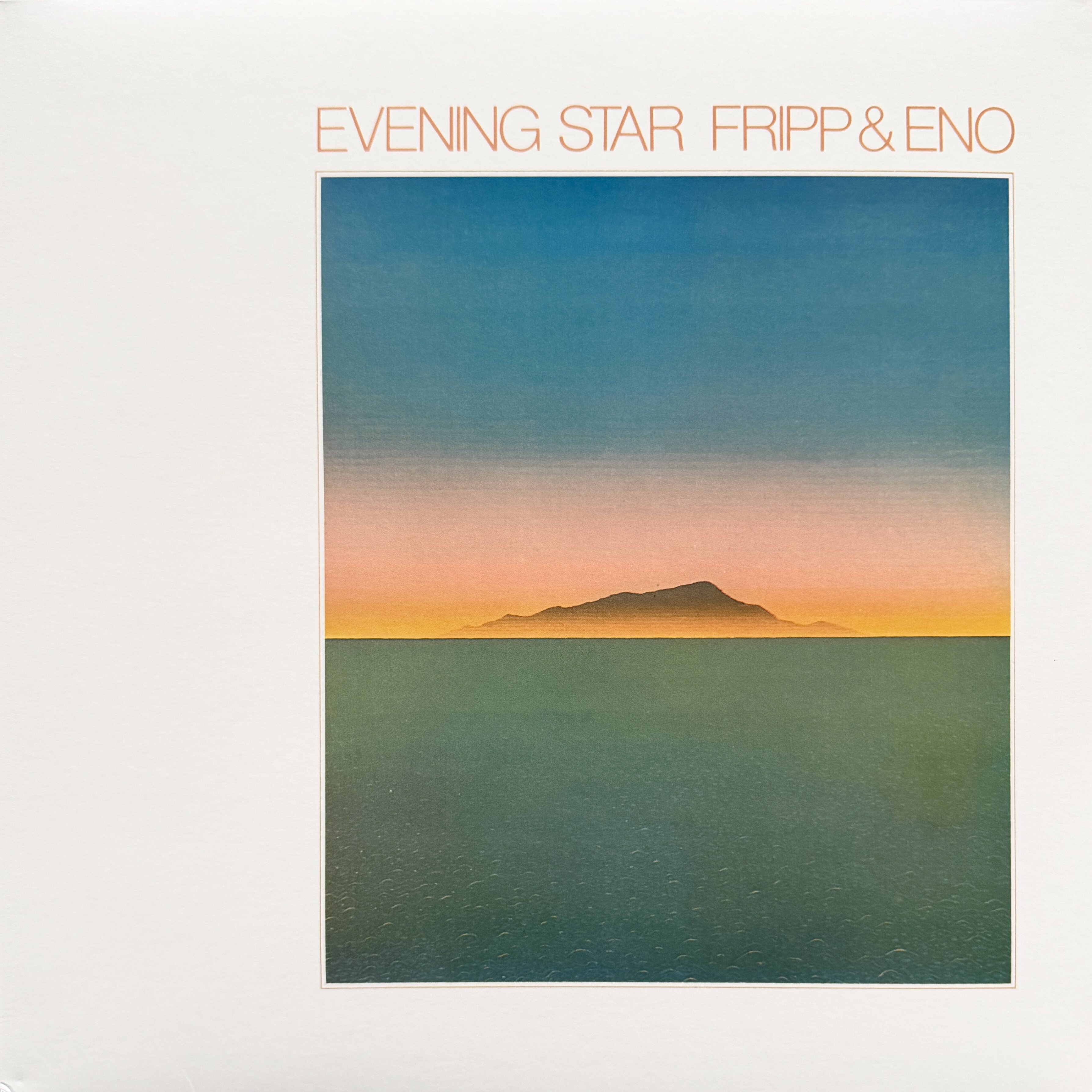
In September 1972, Eno invited Fripp to his London studio. He was experimenting with an innovative recording system using two linked Revox tape recorders, creating a continuous delay loop. Fripp plugged his Gibson Les Paul into Eno’s system and began to improvise. I discussed this system and the two artists at length in the review devoted to their next album, Evening Star.
They immediately realized they had created something completely new. The first session gave birth to the track that fills the entire first side of the record.
The album is split into two monumental instrumental suites:
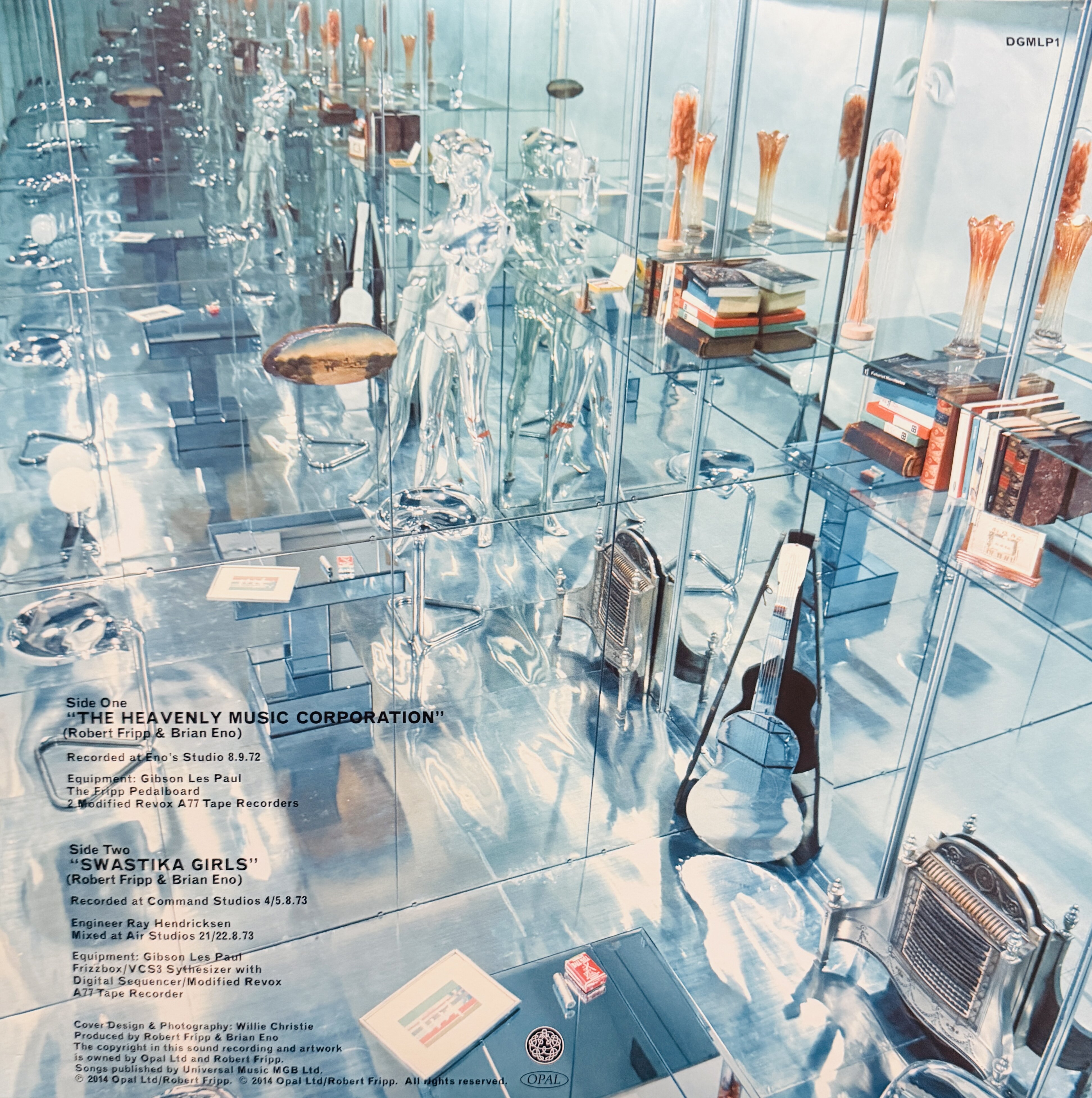
On Side A, “The Heavenly Music Corporation”, recorded in a single day in September 1972 in Eno’s studio. A hypnotic flow of almost 21 minutes, where guitar solos and chords layer up thanks to the tape loops.
On Side B, “Swastika Girls”, recorded in August 1973 at Command Studios in London. This track of over 18 minutes introduces more complex, rhythmic sounds thanks to Eno’s VCS3 synthesizer, intertwining with Fripp’s guitar textures. The provocative title reflected the counterculture’s interest in shocking visual and political contrasts, with no ideological affiliation.
At the album’s core is the technical invention: the dual-tape delay system, later known as Frippertronics. Fripp used it extensively on his solo tours, allowing a single guitarist to create real-time orchestrations, building up layers of sound without a band.
The album title, an English expression meaning “without beating around the bush” or “getting straight to the point”, points to the direct, no-compromise nature of their experimentation.
The tracks aren’t really for everyone, especially for those used to pop, rock or classical music, but also to the complexity of Prog. First of all, there’s no classic structure: no melodies, choruses, verses, or a guiding rhythm section. Then, the length is notable: the two long instrumental suites of about 20 minutes each require no small amount of attention. Finally, the sonics are quite extreme, especially on Side A (The Heavenly Music Corporation), with harsh guitar distortions, piercing sounds, and a continuous wall of sound that can be hypnotic for some, but also heavy and repetitive for others.
There is, however, a small more accessible moment, if one really wants to find it. In the first minutes of Side B the opening is gentler, with a clean guitar arpeggio and a two-chord warm, relaxing figure, before it too turns into a dense avant-garde weave.
For this reason, on release, in 1973, it disoriented both King Crimson’s progressive rock fans and Roxy Music’s glam rock fans.
Over time, it has been reassessed and is now rightly considered a seminal masterpiece. Without this album, there would have been no later ambient works by Eno (such as Ambient 1: Music for Airports) nor much of contemporary drone, new age and electronic music. A must-have for collectors who love the genre and its history. An avant-garde record, fascinating and historic, but decidedly tough and experimental.
My Version
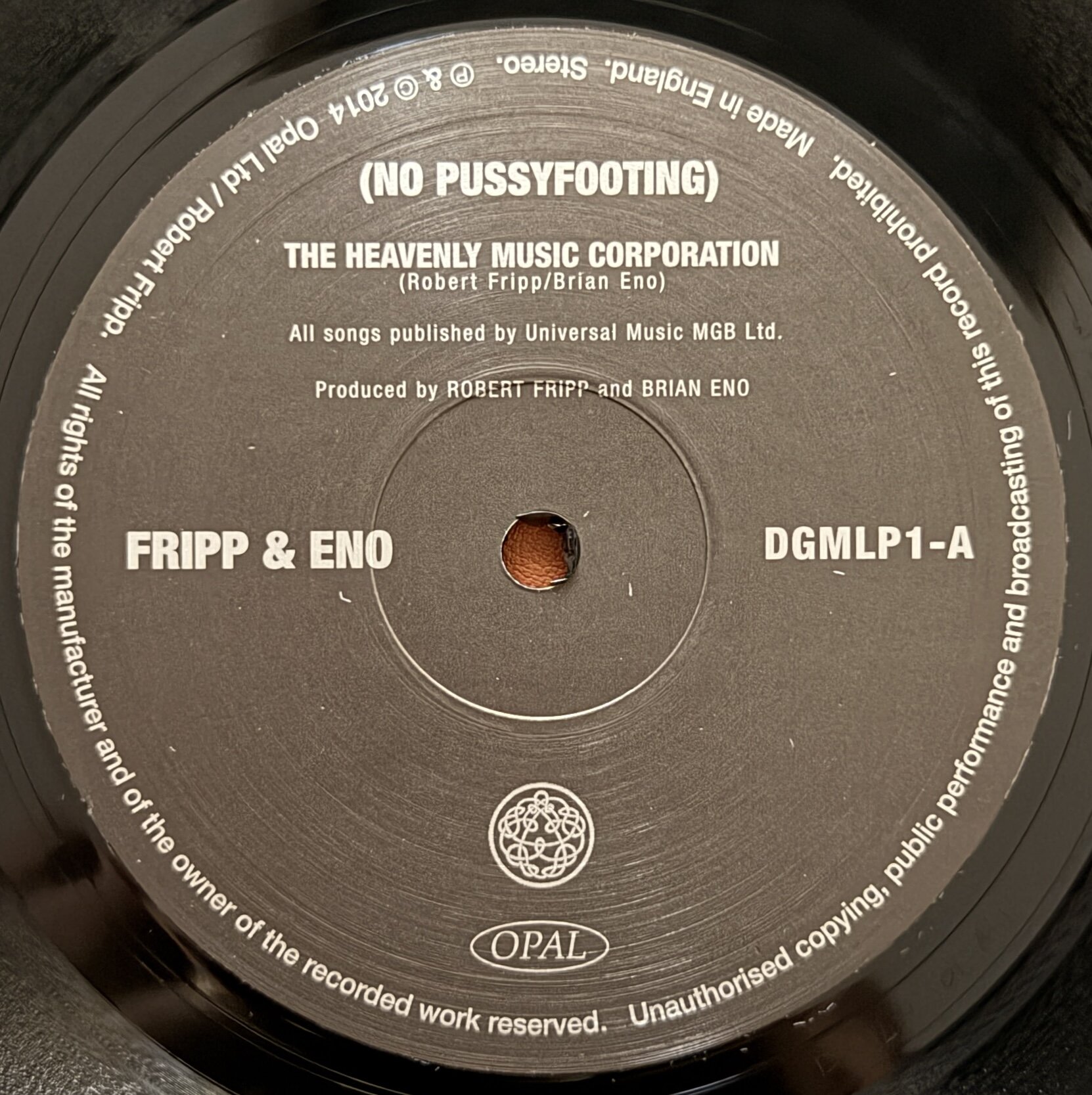
Label: Discipline Global Mobile – DGMLP1, Opal Records – DGMLP1
Format: Vinyl, LP, Album, Reissue, Stereo, Gatefold, 200 Gram
Country: Worldwide
Released: Apr 2014
Tracklist
A The Heavenly Music Corporation
B Swastika Girls
Lineup
Producer [Produced By] – Robert Fripp & Brian Eno
Written-By – Robert Fripp & Brian Eno

.jpeg "Little Red Record by Matching Mole")