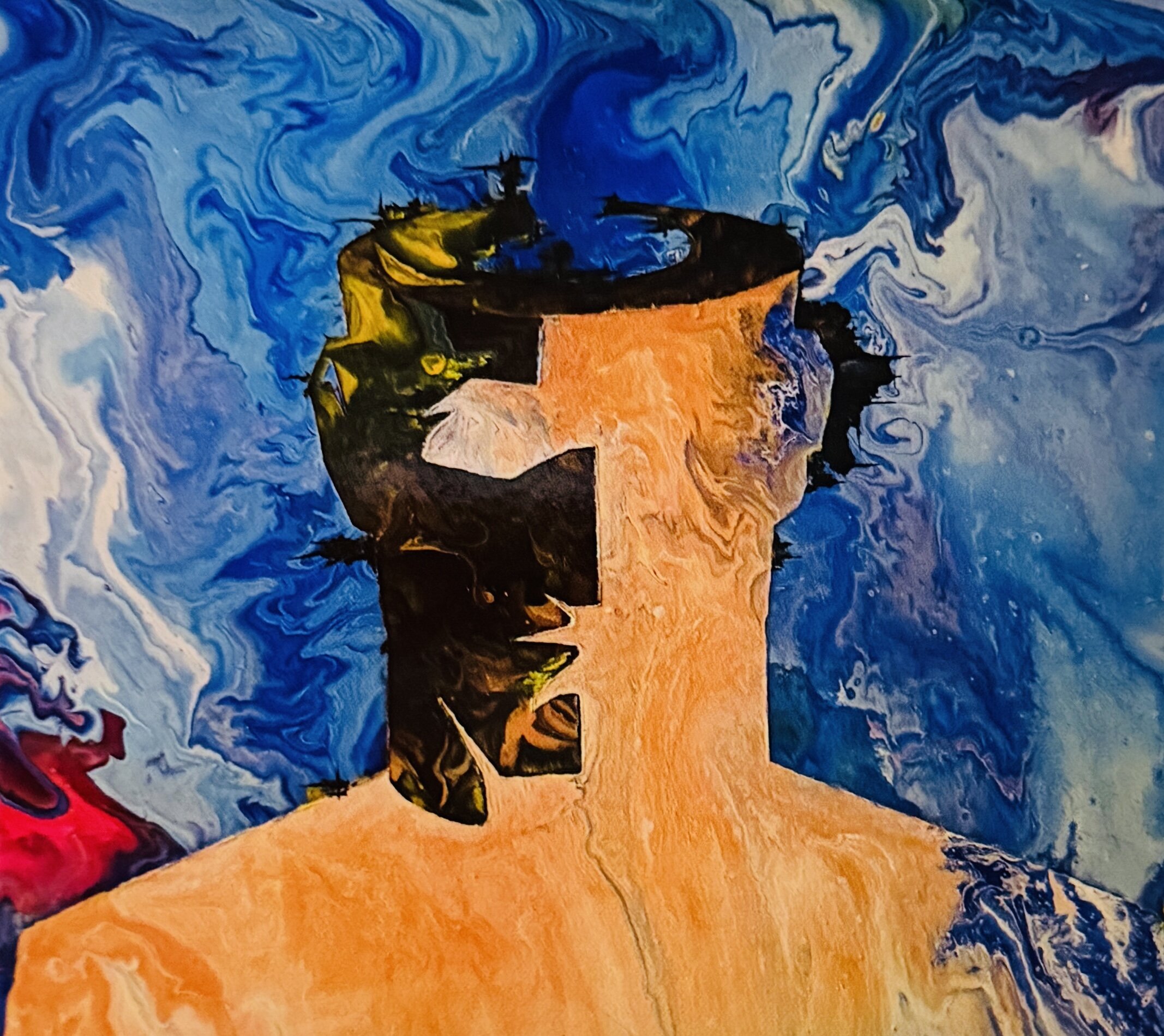
“III” by Aether, a 2026 album.
The Aether are an instrumental project from Milan that is making waves with its third studio album, a record that marks a real turning point in their journey begun in 2021.
This new work explores a fascinating sonic territory, a refined blend of progressive rock, Northern European jazz-rock, Canterbury sounds, post-rock and ambient electronica.
Their story officially begins at the end of 2021 in Milan, from an academic need that soon turned into a stable artistic project. The core idea came from bassist Andrea Grumelli, who started experimenting with the first compositions and arrangements for his graduation thesis in jazz electric bass at the Conservatory of Piacenza.
The goal? To blend the harmonic sensitivity of European jazz with the energy and distortions of progressive rock and post-rock.
The educational side of the project soon expanded with the arrival of three musicians from different backgrounds:
Andrea Ferrari on guitars, bringing folk and psychedelic influences, Andrea Serino on keyboards and Fender Rhodes, and Matteo “Teo” Ravelli on drums and electronics.
Together, they helped shape a musical vision focused on dynamics and analog timbral manipulation. Grumelli and Ravelli, moreover, already had a solid artistic chemistry in the project I Sincopatici, which I already mentioned on the occasion of the release of their beautiful album La Corazzata Potëmkin.
The band chose the name Aether, representing the ether as a universal quintessence that unites all elements.
In 2023, their self-titled album “Aether” was released with Overdub Recordings. Recorded in 2022, this album focuses on metropolitan atmospheres and a strong post-rock and jazz-rock component, highlighting their refusal of excessive computerized manipulation.
In 2024 they released their second album, “Trans-Neptunian Objects”, with Luminol Records. This record marks a new beginning with the new label and digs into a more prog-oriented and cinematic-ambient sound, inspired by cosmic suggestions.
In 2026, again with Luminol Records, “III” arrived, the album of maturity, closing a trilogy of instrumental avant-garde. After the post-rock debut of 2023 and the cosmic atmospheres of “Trans-Neptunian Objects” (2024), the quartet – made up of Andrea Ferrari, Andrea Grumelli, Andrea Serino and Teo Ravelli – decided to explore a more human and instinctive dimension, setting aside complex concepts.
In 2025, the band isolated themselves for long sessions of collective improvisation, minimizing pre-packaged writing. To capture the spontaneous energy typical of jazz bands, they chose to record everything live, with no digital editing or computer fixes. The raw tracks were then refined, mixed and mastered while keeping intact the original punchy dynamics, a blend of the Canterbury sound and Northern European jazz.
During the post-production of “Vogon”, the band decided to add a touch of originality by involving Claudio Milano, for an avant-garde vocal performance in recitar cantando. Added to this are the flute contributions by Rosarita Crisafi in the opening track “Oort Cloud”.
These collaborations define the album’s experimental and choral nature.
“III” is an album that plays with expectations, abandoning the classic narrative structure of a concept album to dive into abstraction, into “continuous flow” and into the very essence of the human being, and it invites an inner journey, discovering spontaneity and the “self-generative power” of music.
A river of sounds flowing nonstop, with no precise destination. That’s exactly the effect created by the music of “III”: abstract, fluid, a collective stream born from the 2025 improvisations. The tracks evoke mental landscapes, ranging from cinematic atmospheres to meditative silences and sudden bursts of chaotic, distorted energy. A bit like a film unfolding in our mind, with images following one another in an unpredictable harmony.
The album gives great importance to silence and to the resonances between notes, using silence as a blank space on which music can paint, creating a unique and evocative atmosphere.
But the real concept of “III” is human interaction, the magic that happens when musicians play together in the same room. No algorithms, no hyper-edited computer music: here live expressiveness is valued, the spontaneous mistake, the musicians’ physical togetherness. An authentic, engaging experience that conveys all the energy of the moment.
Even though instrumental, the album evokes conceptual suggestions through the titles and the few textual inserts. Take for example “Panta Rei”, which translates into music Heraclitus’ philosophical idea that “everything flows”, constantly changing shape, starting from a jazz opening and flowing into a hypnotic ending. Or “La Mélancolie Du Petit Prince”, a tribute to Saint-Exupéry’s work, trying to capture the poetic loneliness and innocence of the Little Prince. And then there’s “Vogon”, a track inspired by the alien race from The Hitchhiker’s Guide to the Galaxy, with Claudio Milano’s avant-garde voice reciting a cryptic text, the only explicit literary element in a sea of instrumental sounds.
“III” is a record that tastefully blends modern progressive rock, European jazz and instrumental post-rock. It’s almost entirely instrumental, acoustic and analog, and it stands out for a crazy dynamism, with moments of deep silence alternating with scream-worthy sonic explosions.
The influence of Northern European jazz is felt right away in the handling of space and silence. The open chords of the Fender Rhodes and the laid-back bass lines create ethereal, suspended atmospheres.
The band takes up the rhythmic complexity and odd meters typical of classic progressive rock (Soft Machine and King Crimson), but without sounding nostalgic or like a copy.
Many tracks develop with long crescendos typical of modern post-rock, where layers of distorted guitars and minimal electronics build up until they culminate in imposing, hypnotic finales that leave you speechless.
The analog warmth of the Fender Rhodes electric piano and the fretless bass creates a soft, jazzy harmonic bed that wraps around you.
The Chapman Stick makes it possible to combine complex bass lines and geometric textures, adding a unique touch to the sound.
The guitar ranges from clean, cinematic arpeggios to powerful distortions that give you goosebumps. The drums don’t just keep time, but constantly interact with the other instruments, integrating subtle electronic nuances that enrich the whole.
The album mainly moves between Jazz-Rock and contemporary Progressive Rock. Being an experimental work in constant evolution, it sits at the crossroads of three major musical genres:
Avant-Prog / Progressive Rock, for the complexity of its structures, the use of odd meters and the long instrumental suites that recall the historic Canterbury Scene.
Modern Jazz (ECM School), for the strong improvisational component, the use of open, warm chords and a handling of silence typical of Northern European jazz.
Instrumental and Cinematic Post-Rock, for the development of the tracks through atmospheric dynamics and long “crescendos” that culminate in imposing walls of distorted guitars and minimal electronics.
A modern formula that combines the refined technique of jazz with the visceral power of alternative rock.
In my opinion, three tracks from “III” stand out as the most representative of the album:
Cinq Teintes, Quatre Cadres, with the excellent interplay between electric guitar and Fender Rhodes, managing to create exotic, hypnotic atmospheres without overdoing the virtuosity.
La Mélancolie Du Petit Prince, the calmest and most ambient track, with the skillful use of atmospheric electronics and a cultured, pianistic approach.
Vogon, the most disorienting and original piece. Even if it breaks with the record’s completely instrumental nature thanks to Claudio Milano’s avant-garde recitar cantando, it shows experimental courage and a strong theatrical charge.
“III” is an album that invites active listening, letting yourself be carried by the flow of the music and discovering the endless possibilities hidden between the notes. A unique, unforgettable experience that will leave you wanting to listen again and again. Excellent album!
For purchase, listening, and to support the band
https://aether5.bandcamp.com/album/iii
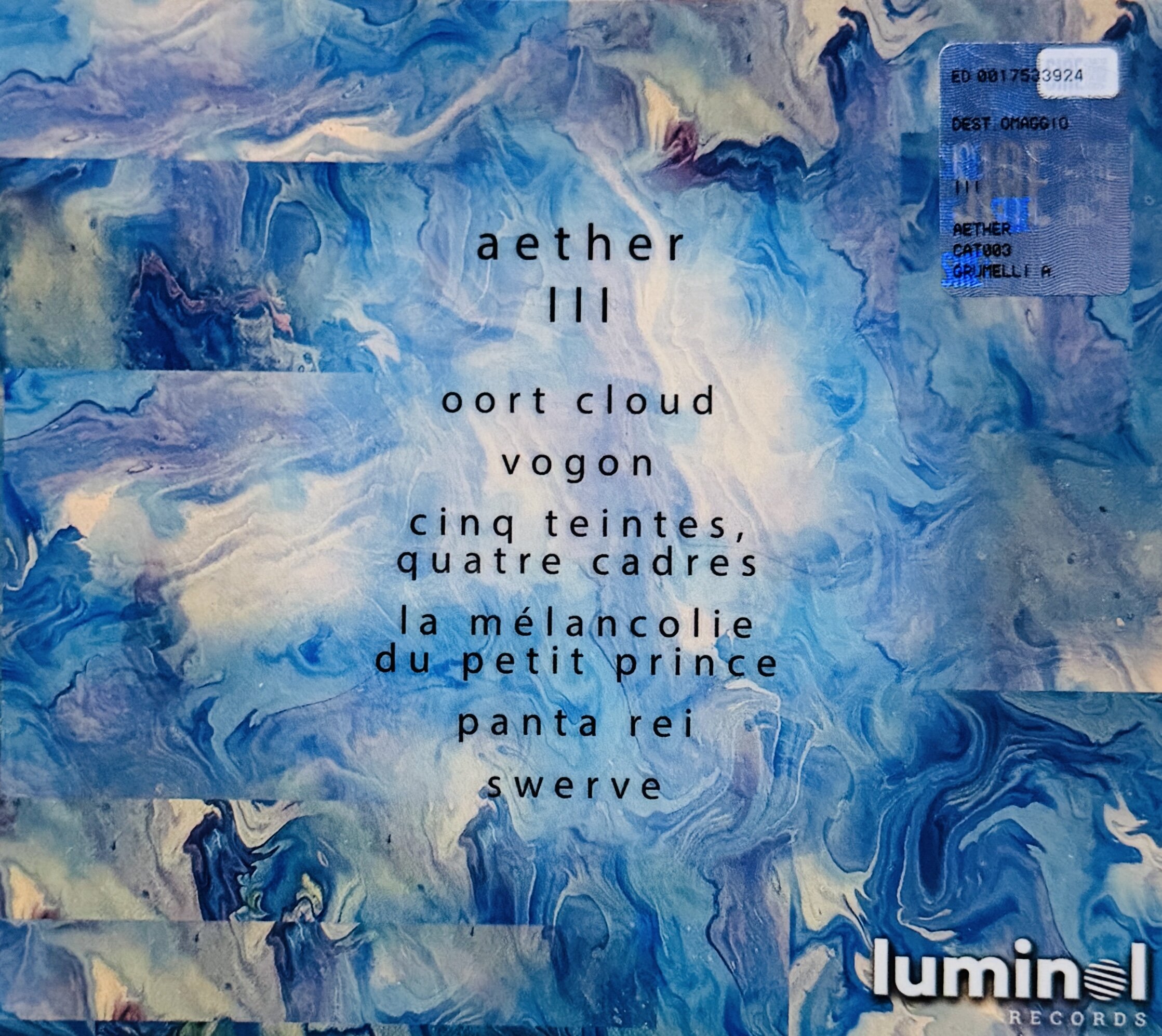
Tracklist
1. Oort Cloud 06:21
2. Vogon 04:51
3. Cinq Teintes, Quatre Cadres 08:42
4. La Mélancolie Du Petit Prince 04:37
5. Panta Rei 08:00
6. Swerve 10:42
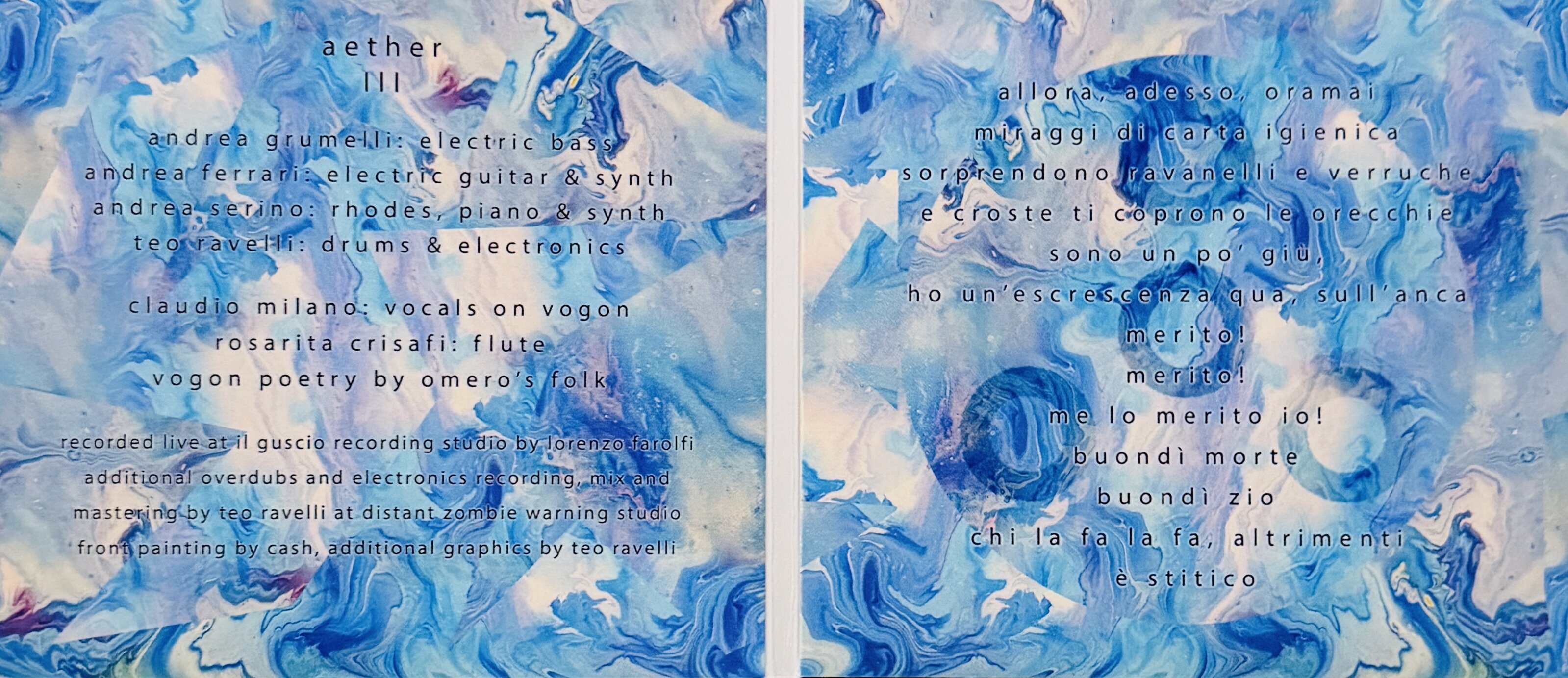
Lineup
Andrea Grumelli: electric bas
Andrea Ferrari: electric guitar & synth
Andrea Serino: rhodes, piano & synth
Teo Ravelli: drums & electronics
With
Claudio Milano: vocals on vogon
Rosarita Crisafi: flute
vogon poetry by omero's folk