| Canterbury Scene | Crossover Prog | Eclectic Prog | Extreme Prog Metal | Folk Rock | Heavy Prog | Jazz-Rock Fusion | Krautrock | Neo Prog | NON PROG | Northern Prog | Post Metal | Post Rock | Prog Related | Progressive Electronic | Progressive Metal | Psychedelic Rock | Rock Progressivo Italiano | Space Rock | Symphonic Rock | Zeuhl |
FrancescoProgressive Rock World
632 Reviews - 359 Artists - 85 Detailed biographical profiles - 26 Prog Meteors - 22 Progressive Rock Subgenres
The Henry Cow, pioneers of the Rock in Opposition (RIO) movement
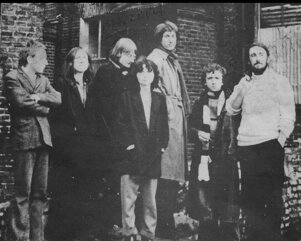
The History
Henry Cow were a fundamental British collective of avant-garde rock, pioneers of the Rock in Opposition (RIO) movement, founded in Cambridge by Fred Frith (guitar, violin) and Tim Hodgkinson (keyboards, woodwinds)
Leg End (1973): Characterized by jazz influences and the Canterbury scene.
Born as a blues-psychedelic group, they quickly evolved towards complex structures. The historic core stabilized with the arrival of John Greaves (bass) and Chris Cutler (drums). They debuted in 1973 with Leg End for the newly founded Virgin Records.
Unrest (1974): Introduces studio techniques and radical improvisation.
With the arrival of Lindsay Cooper (bassoon/oboe), the group explored chamber sounds in Unrest.
In Praise of Learning (1975): The peak of their "political" and complex style.
In 1975 they temporarily merged with the avant-garde trio Slapp Happy, welcoming singer Dagmar Krause and producing In Praise of Learning, their political manifesto.
Disillusioned with the record industry, Cutler founded the Rock In Opposition (R.I.O.) movement, a collective of independent European bands (including the Italians Stormy Six) united by an anti-commercial ethic.
They disbanded in 1978 during the recordings of what would become the first Art Bears album (Hopes and Fears), mainly due to a deep artistic divergence regarding the role of vocals and song form: during the preparation of the last album, the group split.
One faction (led by Chris Cutler and Dagmar Krause) wanted to focus on sung pieces with political and poetic lyrics.
The other (Fred Frith and Tim Hodgkinson) preferred to continue exploring purely instrumental and complex music.
To resolve the impasse, the sung material was released under the name Art Bears (Hopes and Fears), effectively marking the end of Cow's unified identity and after ten years of extreme and self-managed communal life, the members embarked on solo paths.
Their last concert was held in Milan on July 25, 1978, marking the end of the group for "having exhausted their historical task".
Western Culture (1979): Entirely instrumental album, oriented towards contemporary music.
The posthumous album Western Culture (1979) represents their final instrumental testament.
In recent years, the surviving members have sporadically reunited to pay tribute to Lindsay Cooper and, since 2022, occasionally perform under the name Henry Now
The Name
The origin of the name Henry Cow is subject to various opinions and interpretations:
Many believe that the name is a play on the name of the American avant-garde composer Henry Cowell. Although the composer's widow has sometimes supported this thesis, the group members have repeatedly denied it over the years.
Drummer Chris Cutler has stated in several interviews that the name was chosen simply because it sounded "silly". In 1968 the band had a less rigorous and more zany approach, a name that therefore had no intellectual pretensions.
Co-founder Tim Hodgkinson confirmed that the name had no specific connection to anything: it was simply an idea circulating during their time at the University of Cambridge and seemed to work for the group.
Certainly “Henry's Sock” is one of the most original names ever heard.
The Sock Trilogy
The band's symbol is a sock, derived from the title of their first album, Legend, which can also be read as "Leg End." Hence the sock motif on the cover, which, as drummer Chris Cutler explained, was retained for the next two albums (Unrest and In Praise of Learning), changing the sock style to match the "temperament of the music" of each album.
The illustrations are by Ray Smith, an artist who collaborated with the band during concerts (performing absurd activities like ironing or reading lyrics on stage). He suggested the sock for the first cover, insisting that the band's name not appear. To create the original image, Smith used a pastry bag to spread strips of acrylic paint that, once dry, were woven together to form the sock pattern.
For fans of this band, the first three albums are called the "sock albums".
Their Style
The musical style of Henry Cow was a fusion of progressive rock, experimental rock, free jazz, improvisation, the Canterbury scene and contemporary classical music, with a strong left-wing political connotation and a strong Marxist political commitment.
Their sound is known for being dissonant, experimental and intellectually stimulating and stands apart from symphonic progressive rock, preferring complex structures, dissonances and a strong component of free improvisation. The band adopted a radical artistic and political coherence, often criticizing bourgeois and commercial culture and musically expressed a clear rejection of commercial conventions.
The compositions balanced elaborately orchestrated pieces with complex structures, with sections of free improvisation and studio manipulations, a sound fabric capable of being both structured and chaotic.
There was extensive use of unconventional instruments for rock, such as the bassoon and oboe (played by Lindsay Cooper) which helped define their chamber and unique sound.
All this made them the forerunners and emblem of the Rock in Opposition (R.I.O.) movement, which defines a style of complex, dissonant and free progressive rock, with a strong social and political charge. A movement that is a confederation of European bands fighting for musical independence from the logic of the record market.
Robert Wyatt's Role in Henry Cow
It's important to remember that the band's greatest supporter in its early days was the great Robert Wyatt. The relationship between Henry Cow and Robert Wyatt was one of the deepest and most significant collaborations in the Canterbury and experimental rock scene of the 1970s.
Robert Wyatt, in fact, called them his "favorite band in the world" and highly recommended them to Richard Branson to sign them to Virgin Records in 1973.
Members of Henry Cow, particularly Fred Frith, played on Wyatt's solo masterpiece, Rock Bottom (1974), recorded after the accident that left him paraplegic.
Wyatt contributed vocals to some of the band's songs, such as "Bad Alchemy" (written by John Greaves of Henry Cow and Peter Blegvad) from the album Desperate Straights.
In May 1975, Wyatt and Henry Cow embarked on a European tour (with stops in London, Paris, and Rome) to promote the albums In Praise of Learning (by Henry Cow) and Ruth Is Stranger Than Richard (by Robert Wyatt). Their live performances are documented on the 1976 double album Concerts, where Wyatt sings on songs such as "Little Red Riding Hood Hit the Road" and a cover of Matching Mole.'s "Gloria Gloom."
Robert Wyatt remained close to the band until their final concert in Piazza Navona in Rome on June 27, 1975, which is historically remembered as Robert Wyatt's last official public performance before his long retirement from the live scene.
Both shared a strong communist and radical political vision, which influenced not only their lyrics but also their self-managed, anti-commercial approach to music.
The Discography and the Reviews
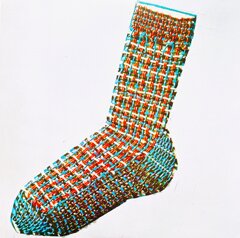
The Henry Cow Legend [Aka: Legend or Leg End] - 1973
Unrest - 1974
In Praise of Learning - 1975
Concerts - 1976
Western Culture - 1979