| Canterbury Scene | Crossover Prog | Eclectic Prog | Extreme Prog Metal | Folk Rock | Heavy Prog | Jazz-Rock Fusion | Krautrock | Neo Prog | NON PROG | Northern Prog | Post Metal | Post Rock | Prog Related | Progressive Electronic | Progressive Metal | Psychedelic Rock | Rock Progressivo Italiano | Space Rock | Symphonic Rock | Zeuhl |
Progressive Rock World


662 Reviews - 375 Artists - 93 Detailed biographical profiles - 26 Prog Meteors - 22 Progressive Rock Subgenres
Jaco Pastorius: life, instruments, technique, man, death, phenomenon and influence in Prog
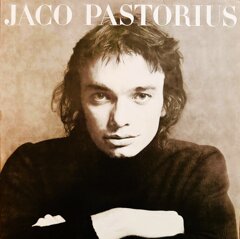
His full name was John Francis Anthony Pastorius III, but he is universally known as Jaco Pastorius, the American bassist, composer, and producer who revolutionized the role of the electric bass in modern music.
He is one of the greatest musicians of all time, having transformed an accompanying instrument into an expressive lead voice, capable of spanning jazz, fusion, funk, and R&B.
History tells us that Jaco Pastorius was born on December 1, 1951, in Norristown, Pennsylvania, and moved with his family to Florida at the age of eight. He was the son of a jazz drummer and began playing drums, but was forced to switch to bass due to a serious wrist injury suffered while playing football at age 13.
He joined the celebrated fusion band Weather Report, led by Joe Zawinul and Wayne Shorter, from 1976 to 1981, contributing to masterpieces such as Heavy Weather (1977) and the worldwide hit "Birdland." Throughout his career, he collaborated with artists such as Pat Metheny, Joni Mitchell, and Ian Hunter.
But Jaco Pastorius' career has been studded with legendary collaborations that have redefined the boundaries of jazz, rock, and pop. In addition to his central role in Weather Report, Jaco lent his genius to many other world-renowned artists, including Joni Mitchell, in one of the most profound and artistically accomplished collaborations in music history, where Jaco's bass became almost as much of a "narrator" as Mitchell's; Pat Metheny, for whom Jaco was instrumental in his solo debut, forming a trio with drummer Bob Moses; and Herbie Hancock, who not only wrote the liner notes for Jaco's first album, calling him a "phenomenon," but the two collaborated, swapping roles on their respective projects. But that's not all.
He was part of a short-lived supergroup formed in 1979 with guitarist John McLaughlin and drummer Tony Williams, Trio of Doom, whose recordings (live and studio) were released posthumously.
He collaborated with Al Di Meola on his debut album Land of the Midnight Sun (1976), with Ian Hunter with whom he contributed to the album All American Alien Boy (1976) and many others.
Innovations in the Instrument and in Bass Technique
Jaco Pastorius was an innovator who not only changed the way bass is played, but revolutionized the bass as a musical instrument. His art is inextricably linked to the Fender Jazz Bass, an instrument he radically transformed through his legendary personal modifications.
He primarily played the so-called "Bass of Doom" (a 1962 Fender Jazz Bass), his primary instrument, with which he recorded approximately 85% of his solo output and with Weather Report, achieved through a fretless conversion. Jaco personally removed the frets and filled the grooves with wood filler. To protect the fingerboard from roundwound strings (which would normally wear it down), he applied several layers of marine epoxy resin (Poly-Poxy), giving the instrument its distinctive "singing" and bright tone. This bass, after being shattered into several pieces during an argument and subsequently repaired, was stolen in New York in 1986. It was recovered decades later and today, thanks to the intervention of Robert Trujillo (Metallica bassist), is being held on behalf of the Pastorius family.
He played the 1960 Fender Jazz Bass, a blond, alder-body fretted model that he often used for songs requiring a more defined attack or as an alternative to his main fretless bass.
He played the 1966 Fender Jazz Bass, one of his first important instruments, featuring block inlays and a bound fretboard. He used it extensively during his adolescence in Florida.
Pastorius used Rotosound RS66 Swing Bass strings (stainless steel roundwounds) to achieve that rich midrange and harmonics, and his sound was sculpted by Acoustic 360 amplifiers, boosting the midrange using the "Variamp" control.
In the "Modern Electric Bass" instructional video, he played a hybrid bass featuring a '70s Jazz Bass body and a Precision Bass neck with a maple fingerboard.
Today, Fender produces a Jaco Pastorius Signature Jazz Bass model that replicates the specifications of his famous fretless instrument, including the urethane-covered fingerboard.
He pioneered not only technical innovations on the instrument, but also bass techniques that forever changed bass playing with his virtuosic natural and artificial harmonics, rapid and fluid phrasing inspired by bebop saxophonists, and the integration of chords and complex contrapuntal lines. Jaco Pastorius's bass playing was a true revolution, transforming the electric bass from an accompaniment instrument to an expressive lead voice, comparable to a saxophone or cello.
By removing the frets from his bass, Jaco introduced a "singing" tone (often described as the mwah sound), characterized by fluid glissandos and a deep vibrato that mimics the human voice. He was the first to use harmonics (both natural and artificial) not only as embellishments, but to play entire melodies and complex chords, as demonstrated in the song "Portrait of Tracy."
He often played close to the bridge to achieve a drier, more percussive sound, rich in mid-range frequencies. He used a very fast picking technique, alternating between the index and middle fingers, often incorporating "ghost notes" to create a dense, syncopated groove. He brought the language of modern jazz and bebop to the electric bass, transcribing and performing solos by Charlie Parker (as in Donna Lee) with unprecedented technical precision.
Despite his virtuosity, his style was rooted in funk and rhythm and blues, using tight sixteenth-note lines inspired by bassists like Jerry Jemmott and Rocco Prestia. Through the use of chords, loops (with digital delays), and fuzz pedals, he was able to fill the sound space like an entire rhythm section or orchestra, elevating the bass to a leading harmonic instrument. A genius.
A Tormented Genius
We've discussed the musician's complexity and greatness, but Jaco was a complex man in every way. Jaco Pastorius' life was a blend of absolute genius and profound fragility. Beyond the revolutionary musician, the human aspects that characterized him paint the portrait of a deeply troubled man.
Pastorius was known for his extreme self-confidence, often calling himself "the greatest bass player in the world" before he was even famous. This wasn't just bravado, but a visceral belief in his own talent. Those who met him describe a manic, frenetic energy that made him both magnetic and exhausting.
In 1982, he was diagnosed with manic-depressive bipolar disorder, which led to extreme mood swings, ranging from moments of creative euphoria to deep depressive episodes. He was treated with lithium, but he complained that the drug "dulled" his creativity and emotions, leaving him unable to play with his usual intensity.
Despite his great success with Weather Report, Jaco constantly searched for a human dimension. In his later years, he often found himself living as a homeless person in New York City and Fort Lauderdale, hanging out in parks and asking for a few dollars for food. Despite financial and personal difficulties, he never lost his love for sharing music, often playing with street musicians or anyone who wanted to jam.
Excessive alcohol and drug use increased his mental instability, making him unreliable professionally and isolating him from friends and colleagues. His death in 1987 was not the result of an illness, but of an act of violence suffered while he was in an extremely vulnerable state, a testament to how precarious his life had become.
On September 11, 1987, at the age of just 35, he died following a brawl after a concert by his friend Carlos Santana.
Pastorius went on stage and raised the bassist's hand, like a boxing referee when deciding the winner of a fight, so as not to diminish his stature with his presence. However, he was escorted out by security guards, who didn't recognize him. Pastorius then headed to the Midnight Bottle Club, a nightclub on the outskirts of the city. Due to his obvious intoxication, bouncer Luc Havan, a martial arts expert, denied him entry. A fight broke out, and when the police arrived at 4:00 a.m., Jaco was unconscious on the ground, his face in a pool of his own blood.
Musical legacy and influence in music and Prog
His legacy lives on today, powerfully, through the many musicians who continue to draw inspiration from his style, which set a standard for modern bass: every contemporary fretless bassist is considered, in some way, an heir to his musical vision.
As Herbie Hancock stated, Jaco didn't just play the instrument, he also managed to "fuse his life with the rhythm of the times." The liner notes for his debut album are beautiful, and I quote them in full:
"Jaco is a phenomenon. He is able to make sounds on the bass that are a total surprise to the sensibilities. Not only single notes, but chords, harmonics, and all sorts of nuances with the color of the instrument that when combined and translated through Jaco make for some of the best music that I've heard in a long time.
Of course, it's not the technique that makes the music; it's the sensitivity of the musician and his ability to be able to fuse his life with the rhythm of the times. This is the essence of music. On this record Jaco captures some of that rhythm."
Every fretless bassist who came after Jaco Pastorius has absorbed, consciously or unconsciously, his technical and sonic legacy. Jaco defined the modern paradigm of the instrument, influencing generations of musicians ranging from jazz to progressive metal.
Jaco Pastorius's influence on the world of progressive rock and prog metal is profound, as he popularized the idea of the bass as a solo and technically complex instrument, concepts fundamental to the genre. Many of the greatest exponents of prog metal cite Jaco as a turning point in their understanding of the instrument.
Geddy Lee (Rush) described seeing Jaco live with Weather Report in the 1970s as a "life-changing experience." He considers Jaco the best jazz bassist of all time and praised his ability to make the fretless bass "sing," citing songs like "Teen Town" as models of technical perfection.
John Myung (Dream Theater), a cornerstone of modern progressive metal, often cites Jaco among his main influences for his virtuoso use of harmonics and his ability to integrate complex melodic lines into complex band contexts.
Tony Levin (King Crimson), despite his highly personal style, also based on the Chapman Stick, collaborated with his brother Pete (who played with Jaco) and credits Pastorius as the pioneer of lyrical phrasing on the electric bass that influenced the entire experimental scene.
Jonas Reingold (The Flower Kings, Steve Hackett) is an example of a bassist who absorbed Jaco's lessons in melodic agility and the use of harmonics within long progressive suites.
Juan Alderete (The Mars Volta), who grew up listening to classic prog rock, cites Jaco as one of the key influences that pushed him to explore the more experimental and technical side of bass.
Conner Green (Haken), a representative of the new prog generation, is considered a musician whose technical and melodic approach would be unthinkable without the innovation brought by Jaco in the 1970s.
These musicians didn't copy Jaco's style, but rather took his vision of the bass as the co-protagonist of the melody and applied it to the complex structures and odd time signatures typical of progressive rock.
For all this, thei self-titled debut album, "Jaco Pastorius," released in 1976, is not just a jazz-fusion album, but the "ground zero" of modern electric bass, the album that redefined what was technically and musically possible on four strings.
The Discography and the Reviews
Pastorius / Metheny / Ditmas / Bley (aka Jaco) - 1974 - Coming Soon
Jaco Pastorius - 1976 - ESSENTIAL
Word of Mouth - 1981 - Coming Soon
Note: the links to the pages of the artists and bands mentioned here and their albums are available on the"Artists" page or using the TAG Jaco Pastorius