

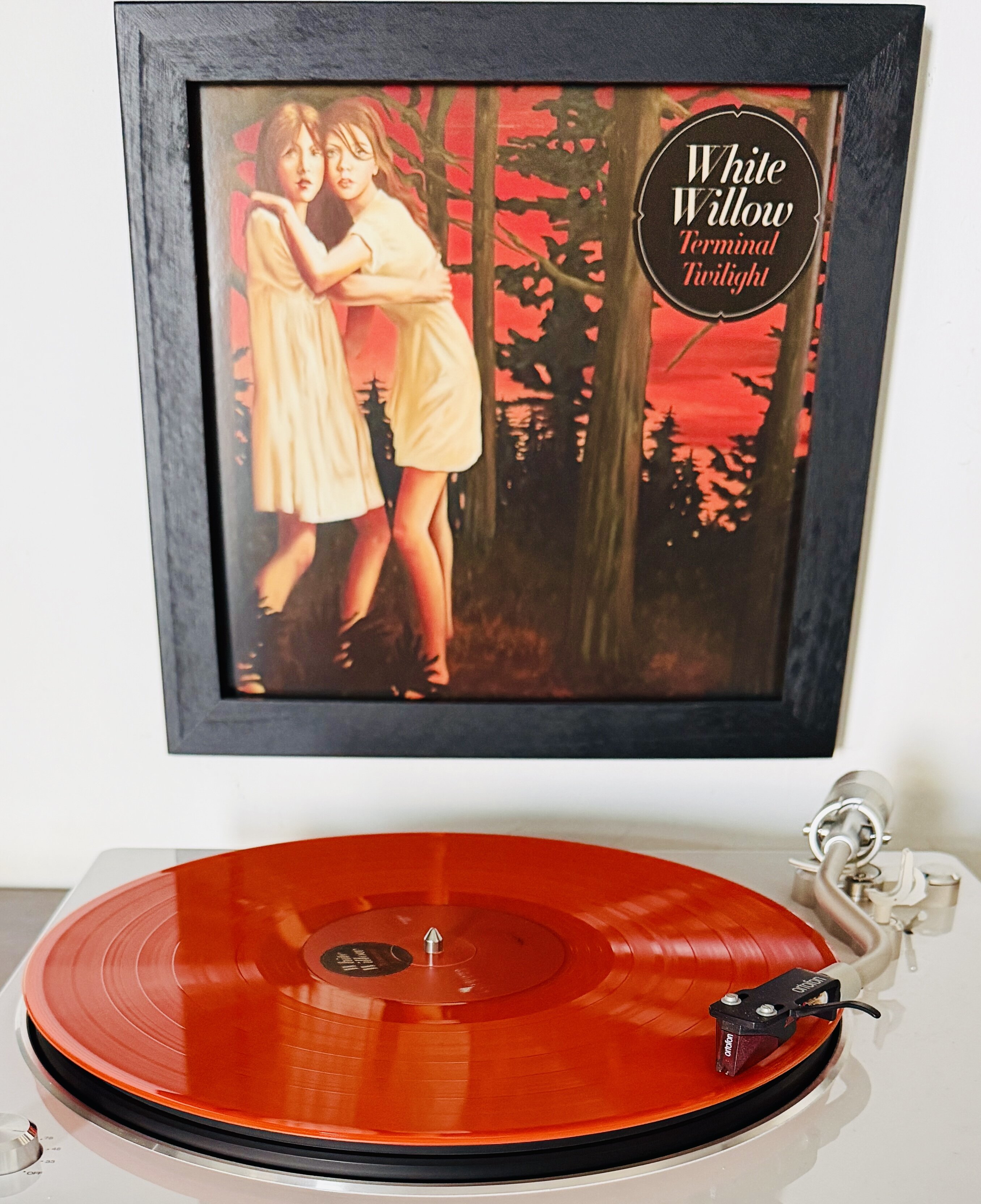
Terminal Twilight by White Willow (2011) album
On Progressive Rock World I gave ample space to White Willow, true legends of Norwegian prog and among the most important and eminent representatives of the so-called "Northern Prog" (progressive rock that comes from the North), one of the leading bands of contemporary symphonic prog, having as its central figure the guitarist and producer Jacob Holm-Lupo, for a sound pervaded by a deep and typical Nordic melancholy.
Terminal Twilight is an album that blends 70s Scandinavian prog with art-rock and electronic sounds. Released in September 2011 on Termo Records, a label founded by Jacob Holm-Lupo, it comes five years after the previous Signal to Noise (2006).
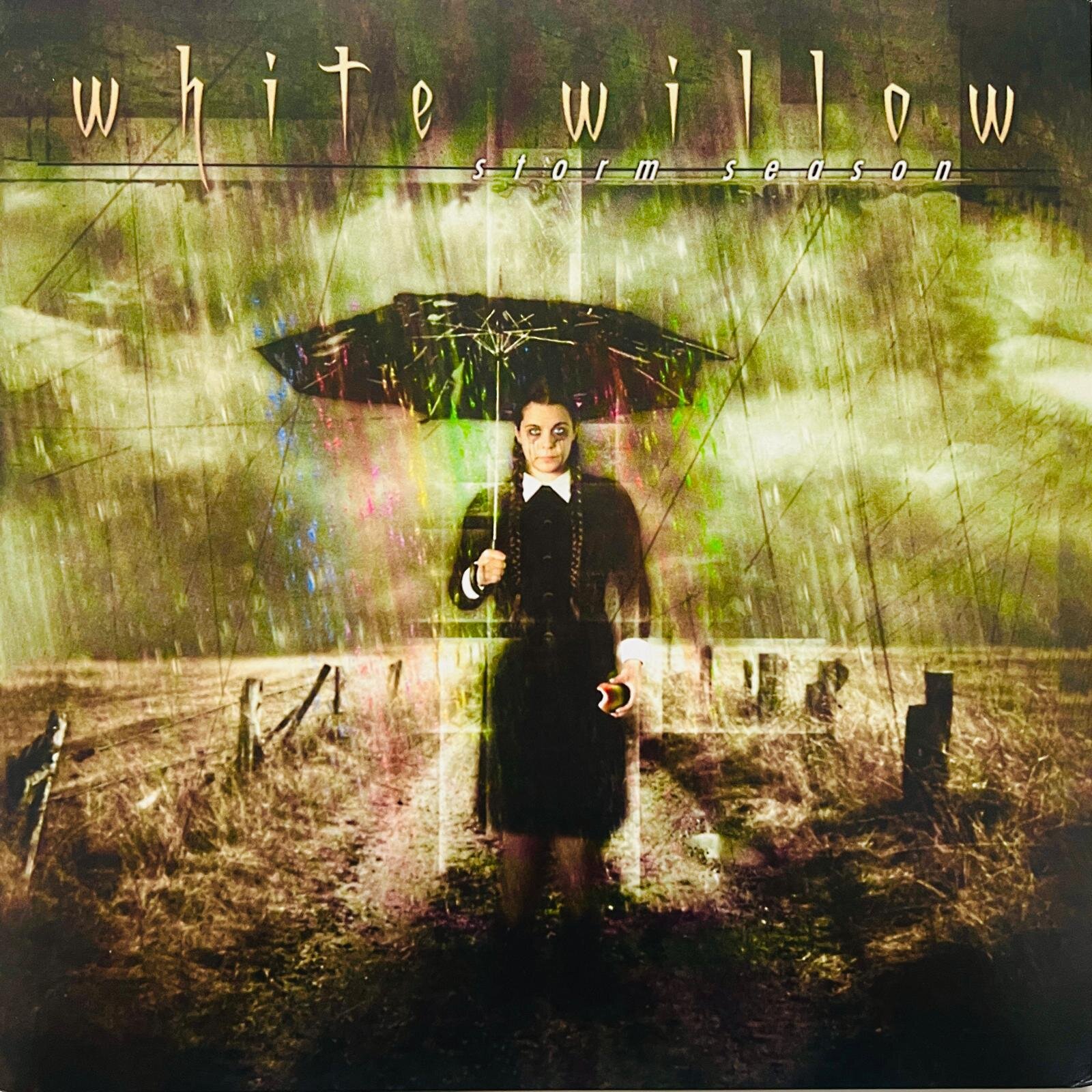
Holm-Lupo describes the atmosphere of the album as "apocalyptic scenarios", with lyrics that speak of twilight visions, winter landscapes and a subtle feeling of the end of the world. Unlike the darker Storm Season (2004), however, Terminal Twilight also gives a glimpse of some glimmer of hope and a strong nostalgic vein.
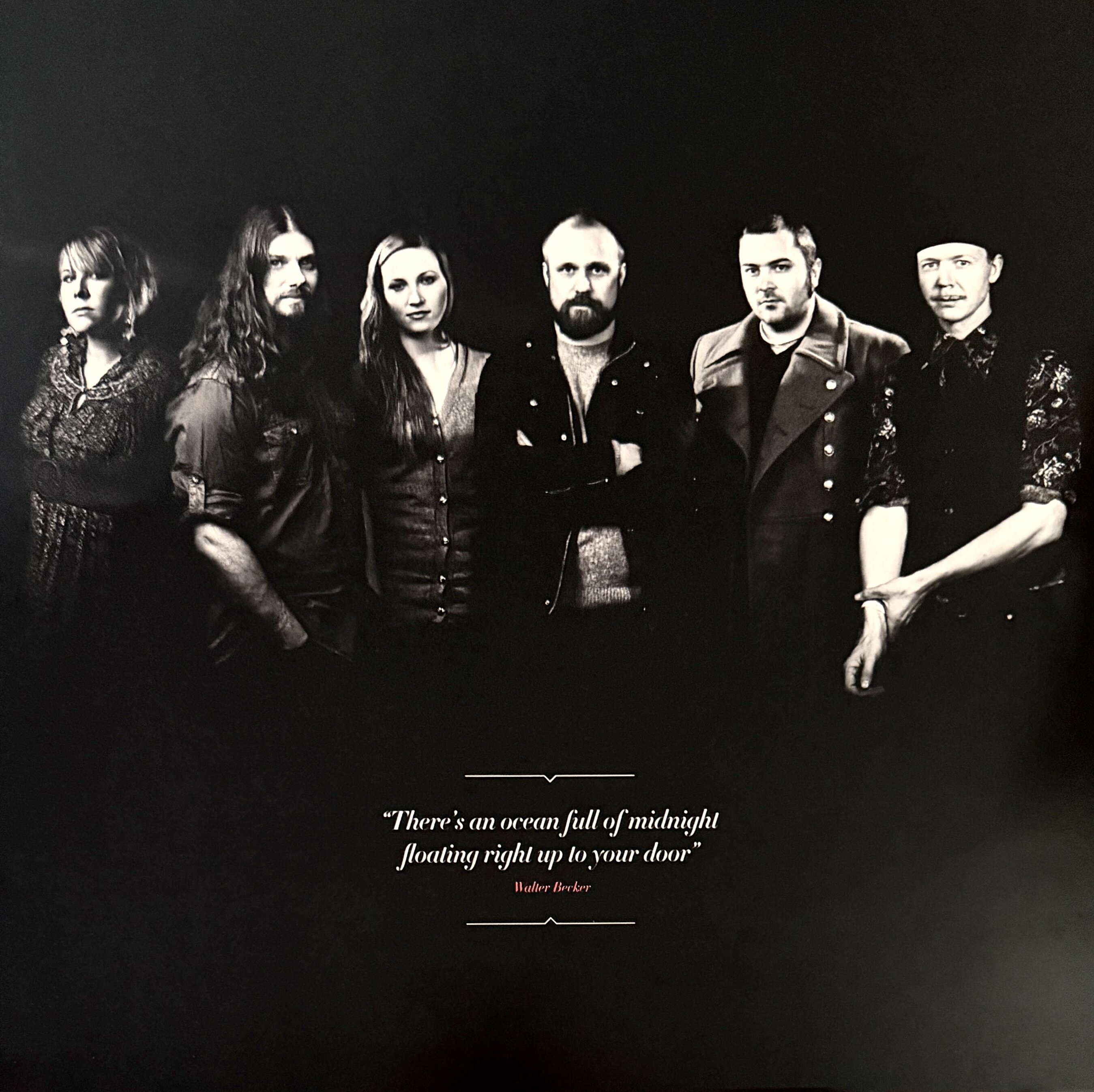
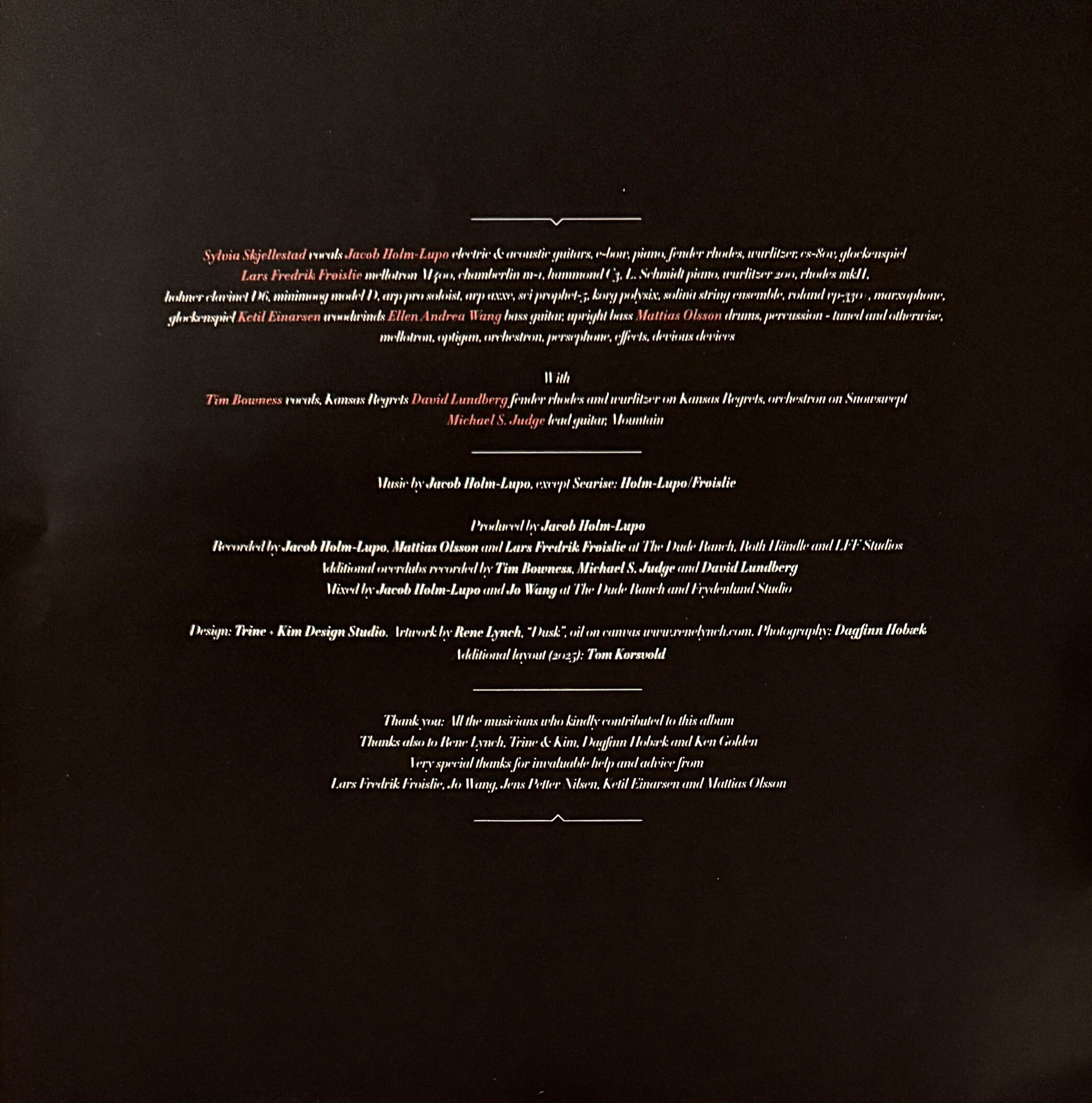
The album boasts a real parade of northern European prog talents. Alongside the memorable voice of Sylvia Erichsen (Skjellestad), Mattias Olsson (historic drummer of the Swedish band Änglagård) returns to play drums. On keyboards we find Lars Fredrik Frøislie (Wobbler), who enriches the sound with vintage instruments such as Mellotron, Moog and Hammond organ. Ketil Einarsen (Jaga Jazzist, Motorpsycho) plays flute. And there are also some special guests, including Tim Bowness, voice of the No-Man project with Steven Wilson, who co-wrote and sang the song Kansas Regrets.
The title, Terminal Twilight, which can be translated as "The final twilight", perfectly encapsulates the double soul of the album. On the one hand, the final farewell, the terminus of civilization; on the other, the beauty of the end, with the term Twilight (twilight, dusk) representing the moment when the light of day vanishes, leaving room for night. For White Willow, this title represents the exact moment in which everything is about to end, a transitory moment that has its own tragic and romantic visual beauty, suspended between darkness and the last reflections of light.
Music is an exciting journey, with constant changes in tempo. Ketil Vestrum Einarsen's flute and Holm-Lupo's acoustic guitars add a bucolic, fairytale-like and melancholic touch, typical of Scandinavian folk and early Genesis, leaving room for sudden distorted electric guitar riffs, complex odd tempos and a powerful rhythm section that touches on prog metal and jazz-rock, thanks to the dynamic imprint of jazz bassist Ellen Andrea Wang.
The voices of Sylvia Erichsen and Tim Bowness are essential to balance the instrumental complexity. Sylvia's dreamy, theatrical singing floats above the band's odd times with accessible but emotionally charged melodies. In the song Kansas Regrets, Tim introduces minimalist atmospheres that recall pop-noir and post-rock.
White Willow included discrete electronic loops, samples and ambient effects curated by drummer Mattias Olsson. These elements bring the album closer to the sounds of contemporary bands such as Porcupine Tree, No-Man and the Swedish Landberk, moving it away from the clichés of technical prog for its own sake to privilege the emotional impact. Terminal Twilight is an album that captures the imagination and invites listeners to lose themselves in its unique and fascinating world.
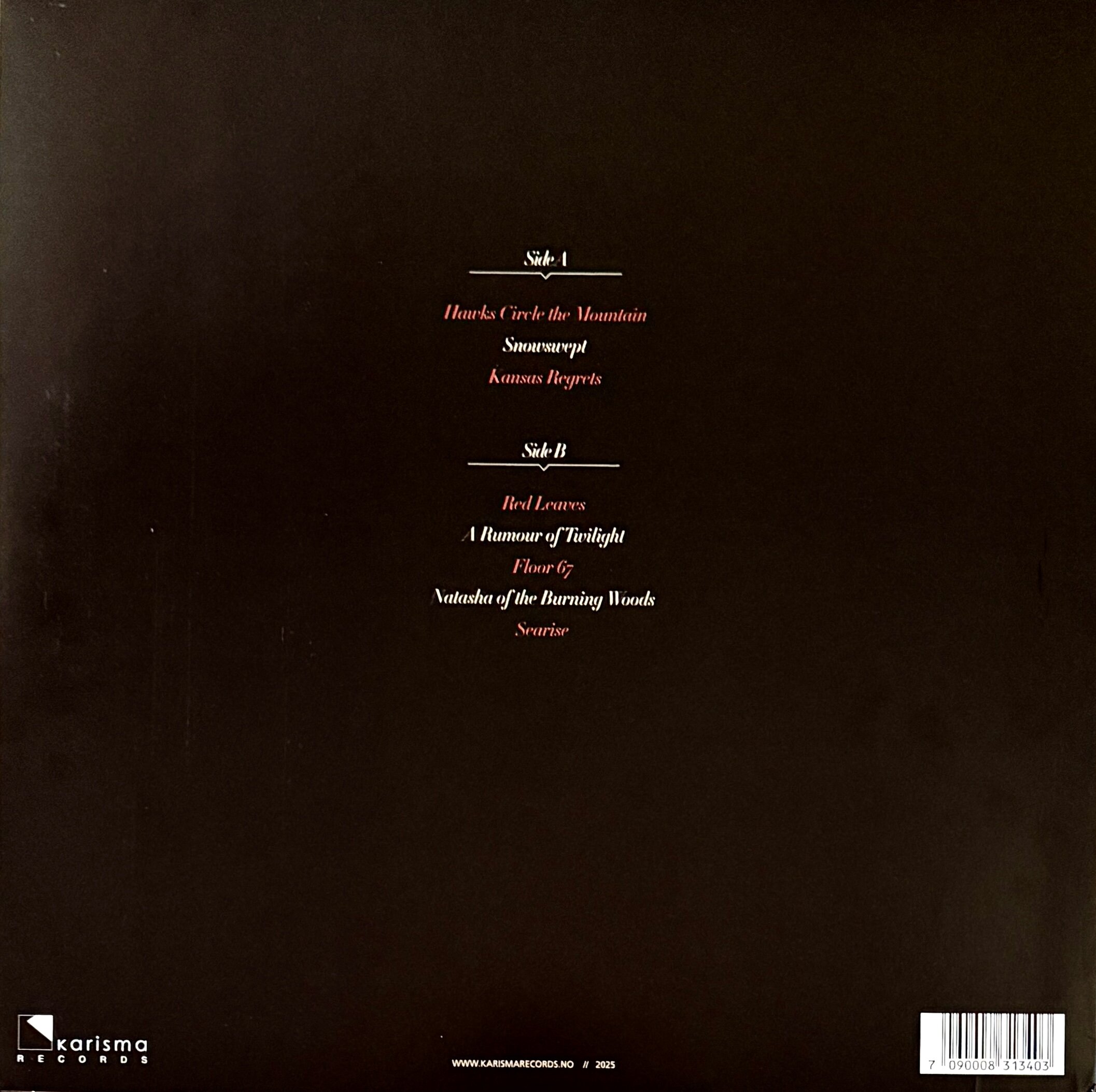
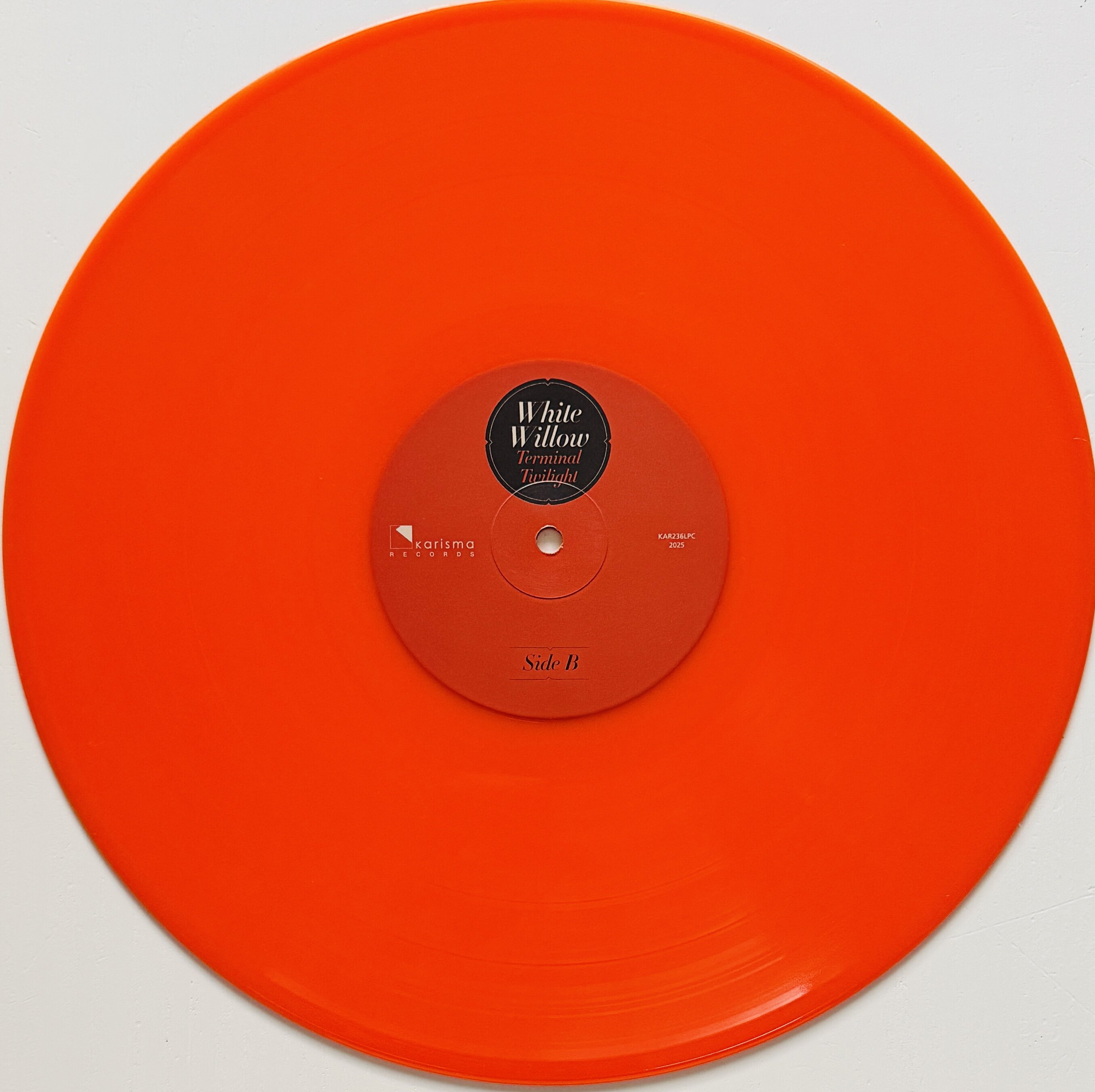
My version is the Pancromatic – PLP 2011 (printed in a limited and numbered edition) with a misprint. The tracks are indicated in the correct sequence but while on the cover there are 3 on the A side and 5 on the B side, on the vinyl it is the opposite.
"Hawks Circle the Mountain" is a screaming opening that immediately catapults you into a mysterious and dramatic atmosphere, which is the common thread throughout the album. It is a cinematic beginning that envelops and captures immediately. The song is a mix of modern prog crossover with grafts of electronic art-rock, pressing rhythms and a voice reminiscent of folk-noir. And what about the contrast between the more rarefied verses and the final instrumental explosion? Beautiful. Sylvia Erichsen's voice, icy and ethereal, floats on a tight rhythm created by Mattias Olsson, while Michael S. Judge's final electric guitar solo is thrilling.
We then move on to "Snowswept", a short but intense piece, which takes you to a world of isolation and icy and rigid Scandinavian landscapes. The song is in pastoral and acoustic prog style, dreamy, with a strong reference to Nordic folk music. The interweaving of acoustic guitar and artificial orchestral sections is simply gorgeous. Ketil Vestrum Einarsen's flute adds a fairytale, old-fashioned touch, while David Lundberg enriches the mix with the Orchestron.
"Kansas Regrets" is a small pearl of intimacy, acoustic and crepuscular. Slow down the complex rhythms of prog to focus all your attention on emotional intensity. The song is in a minimal art-pop and post-rock style, a bit like No-Man. The male vocal interpretation is a moment of pure emotion, which breaks the continuity of the album. Tim Bowness, co-writer of the song, lends his unmistakable voice, while David Lundberg weaves delicate textures on the Fender Rhodes electric piano and Wurlitzer organ.
"Red Leaves" is one of the highlights of the album. Perfectly capture the sense of time passing and the impending end, thanks to an exceptional sound progression. The song is in classic symphonic rock style, with strong inspirations from the Italian progressive of the 70s (Le Orme) and Genesis. The finale is overwhelming, with a dramatic instrumental crescendo that leaves you breathless. Lars Fredrik Frøislie builds a real wall of sound with the Mellotron M400, while the rhythm section formed by Olsson and Ellen Andrea Wang delivers a complex yet fluid groove.
"A Rumour of Twilight" is a short instrumental that closes side A. It works like a lyrical and ethereal bridge, preparing us for the descent into the longer tracks of the next side. The song is in a progressive and chamber Ambient style, with a rarefied atmosphere suspended in time. Jacob Holm-Lupo creates a spooky nocturnal music box with synthesizers and glockenspiel.
"Floor 67" is a monumental ten-minute track, claustrophobic in concept (people stuck on top of a skyscraper during the end of the world) but exhilarating in musical development. The song is in Heavy-prog and dark-prog style, with strong rock veins and sudden distorted breaks. The constant tempo changes and the transition from acoustic sections to organ-driven heavy explosions are simply incredible. Ellen Andrea Wang pushes the track with a pulsating, aggressive bass line, while Sylvia Erichsen delivers her most theatrical and distressing vocal performance.
"Natasha of the Burning Woods" is a dark ballad with a gothic and folk flavor, which tells an ancient and mythological story. The song is in symphonic Prog-folk style with strong dark hues (dark-folk). The hypnotic vocal melody of the chorus enters the head from the first listening. The flute and woodwinds of Ketil Vestrum Einarsen dominate the scene along with the clavinet and Frøislie's piano.
"Searise" is the main track of the album, a real soundtrack of environmental collapse. Thirteen minutes of emotional roller coaster that summarizes thirty years of Scandinavian prog. It is a suite of classic symphonic progressive rock, structured in several movements. The Hammond organ-led central opening and the cathartic choral finale that simulates the rising ocean are simply epic. Co-written by Holm-Lupo and Frøislie, the track sees the keyboardist sporting an impressive arsenal (MiniMoog, Solina String Ensemble). Mattias Olsson's drums handle transitions with monstrous dynamics and power.
Terminal Twilight is an album that masterfully blends the classic symphonic progressive rock of the 70s with the modern art-rock of the early 2000s, all enriched by a strong cinematic and Nordic imprint. Lars Fredrik Frøislie is the genius behind the massive analog instrumentation, which includes Mellotron, Hammond organ and Moog synthesizers. These instruments create a rich and layered sound, with dark and dramatic orchestral carpets alternating with more aggressive and exquisitely prog rock passages. The modern, clear and dynamic production ensures that the retro sound is never dated.
My Version
Label: Pancromatic – PLP 2011
Format: Vinyl, LP, Album, Limited Edition, Stereo, Orange
Country: Norway
Release: 2011
Tracklist
A1 Hawks Circle The Mountain
A2 Snowswept
A3 Kansas Regrets
A4 Red Leaves
A5 A Rumour Of Twilight
B1 Floor 67
B2 Natasha Of The Burning Woods
B3 Searise
LineUp
- Sylvia (Erichsen) Skjellestad - vocals
- Jacob Holm-Lupo - acoustic and electric guitars, e-bow, Fender Rhodes, glockenspiel, Wurlitzer, CS 80V synth, piano, producer
- Lars Fredrik Frøislie - Hohner D6 Clavinet, Elkapiano 88, Fender Rhodes, glockenspiel, Mellotron, Chamberlin M1, Hammond C3, Mini-Moog D, Solina String Ensemble, Wurlitzer, piano, Marxophone, synth (ARP Axxe & Pro-Soloist, Korg Polysix, Roland VP330, SCI Prophet 3)
- Ketil Vestrum Einarsen - woodwinds
- Ellen Andrea Wang - bass, double bass
- Mattias Olsson - drums, percussion, effects, electronics, Mellotron, Optigan and Orchestron organs, Persephone synth
Con:
- Michael S. Judge - chitarra assolo
- David Lundberg - organo orchestrale, Fender Rhodes & Wurlitzer
- Tim Bowness - voce
Listening link on the main streaming platforms at the following links:
Spotify: You can find the full album, including the bonus track The Howling Wind, directly on the official Terminal Twilight page on Spotify. If you prefer the updated audio version, the Terminal Twilight 2025 Remastered on Spotify is also present.
Bandcamp: To listen to the songs in high quality and support the band or label directly, you can visit the official Terminal Twilight page on Bandcamp.
Apple Music: If you use the Apple ecosystem, the album is accessible through the Twilight Terminal catalog on Apple Music.


Note: All links to the musicians’ works are in the TAGS under the article title or on the "Artists"
.jpeg "Sacrament by White Willow")