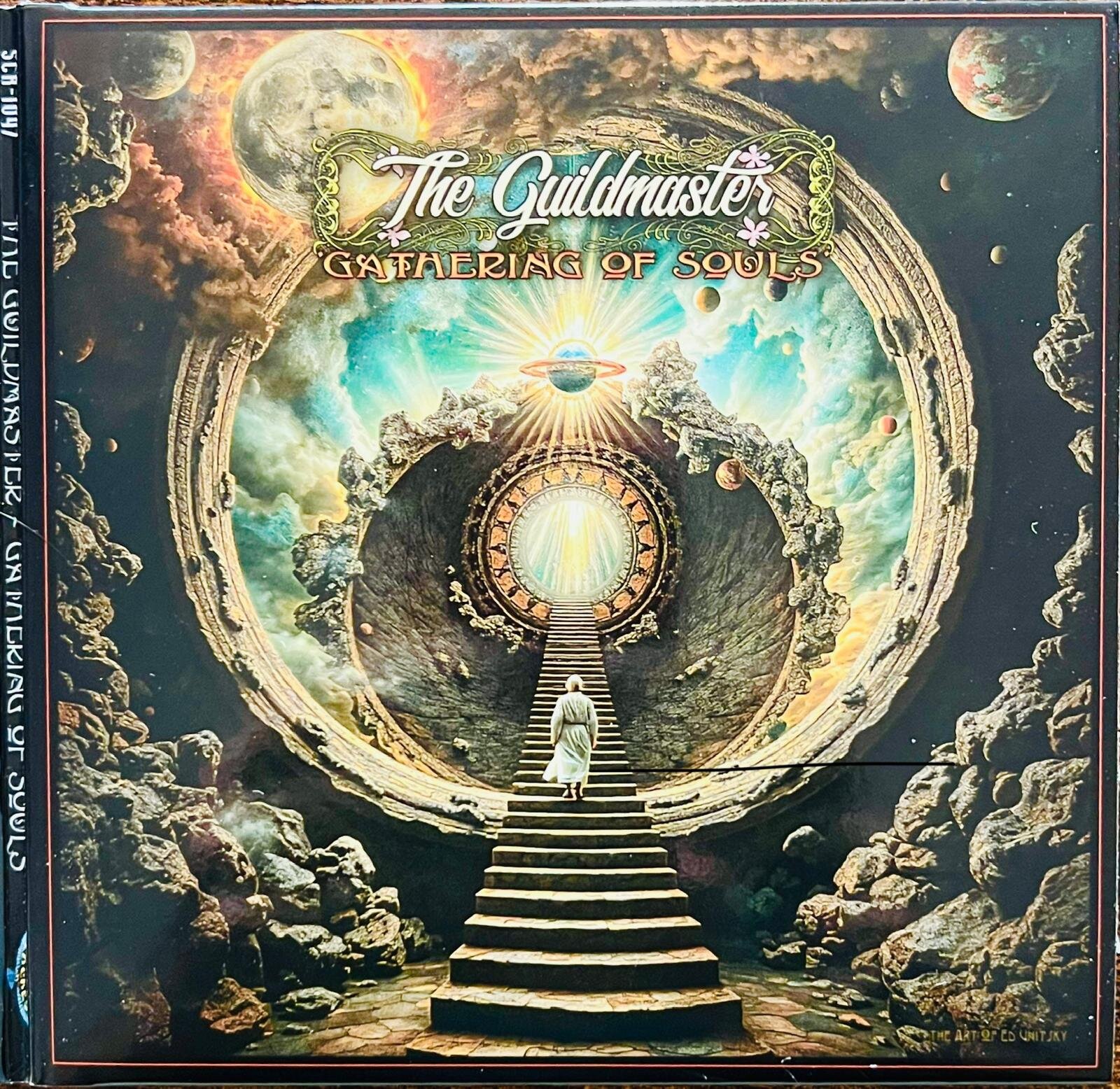
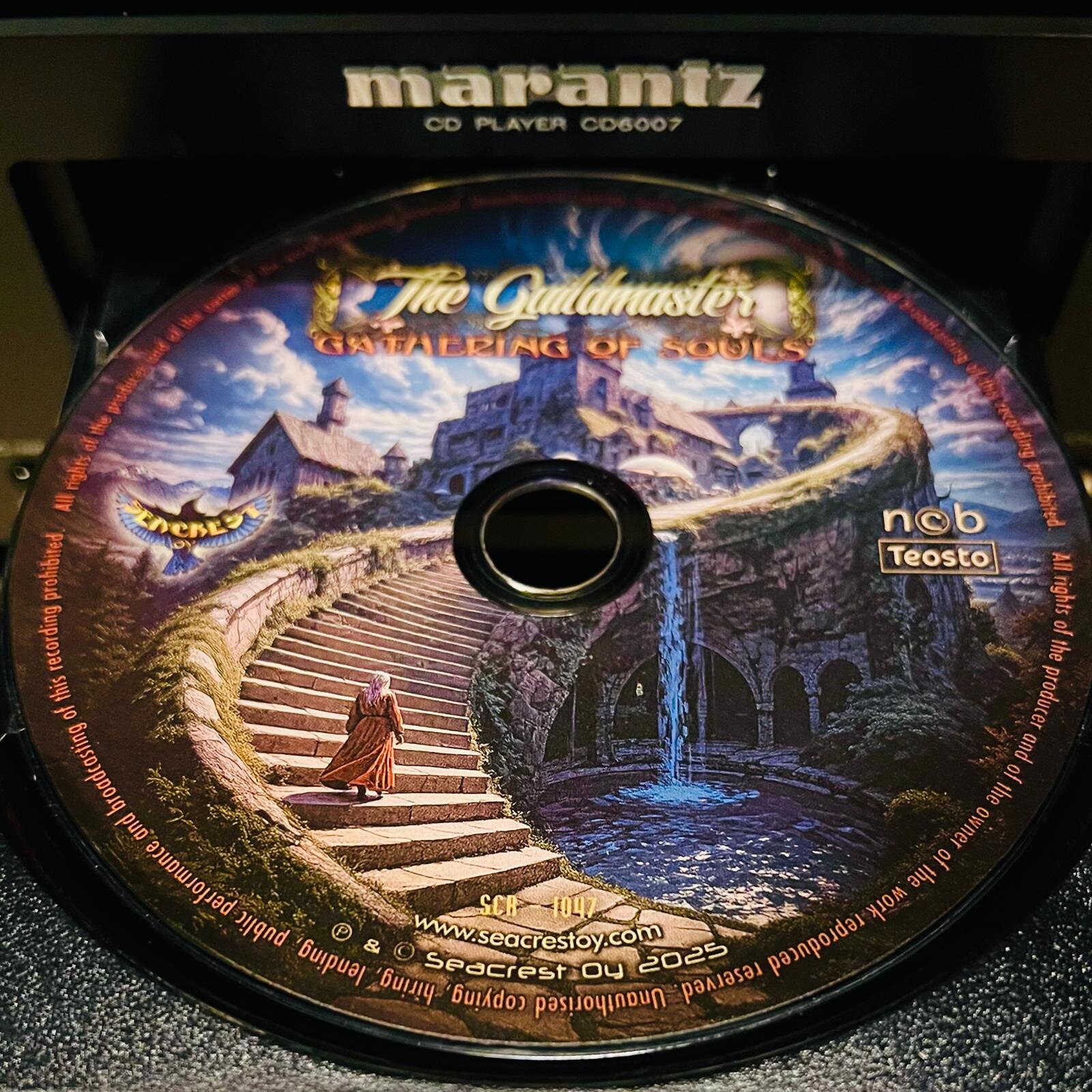
Gathering of Souls ottimo album dei The Guildmaster, pubblicato in questo 2025
The Guildmaster sono una band progressive rock, folk rock, attiva dal 2020, anno di pubblicazione del loro primo album The Knight and the Ghost.
L'idea iniziale era quella di interpretare il progressive rock attraverso diverse influenze Folk, intenzione pienamente soddisfatta dai risultati.
La Lineup di base del primo album The Knight and the Ghost del 2020 vedeva Rafael Pacha come polistrumentista che vede nel suo
armamentario numerosi strumenti folk di diverse nazionalita' nell'ambito delle "chitarre", fiati e percussioni internazionali, Ton Scherpenzeel alle tastiere, Marco Bernard al basso Shuker, Kimmo Pörsti alla batteria e percussioni, e una serie di numerose collaborazioni e ospiti che vedevano in particolare Alessandro Di Benedetti alle tastiere, Rubén Álvarez alla chitarra elettrica e Manoel Macía alla chitarra barocca.
La formazione cambia per il secondo album Liber de Dictis del 2022, in cui Alessandro Di Benedetti entra in formazione base (che resta la stessa anche per il terzo album oggetto di questo post) sostituendo Ton Scherpenzeel alle tastiere e tutti gli ospiti ad eccezione di Rubén Álvarez alla chitarra elettrica e Manoel Macía alla chitarra barocca non figurano piu'.
La formazione del terzo album Gathering of Souls, resta la stessa, ma di tutti gli ospiti e' presente Paula Pörsti alla voce dalla formazione del precedente lavoro e se ne aggiungono altri Yogi Lang, Nick Markham e John Wilkinson alla voce, Giovanni Mazzotti al flauto, Alfonso Romero al Chapman Stick e Tony Riveryman alla chitarra elettrica.
L'album e' composto da 8 tracce, 5 delle quali fra i 5 e i 7 minuti circa, le rimanenti tre fra i 10 e i 12 minuti circa. Le tracce sono 4 completamente stumentali e 4 cantate e con lunghe sezioni strumentali
- The Crusade of Earl Birger e' caratterizzato, come molti brani del disco se non tutti, da fantastici fiati e chitarra classica, in queso con un leggero accento gitano, ma prevalentemente il brano e' animato da un bellissimo sound medievale fatto di cornamuse e percussioni, con sezioni piu' soft e piu' intense quando etrano ottimi la batteria e il basso e il tempo sale di intensita', con grande ricerca dei suoni. Il mood del brano si fa piu' rock, la batteria e il basso disegnano un tempo incalzante che sfocia presto al mood leggero e sospeso. Belissimo Brano.
- Where Are You? e' uno dei brani piu' lunghi del disco, parte con chitarra acustica (bellissima) con una melodia coinvolgente e torna il folk medievale e le cornamuse, i flauti i tamburi e gli archi in un gioco di ritmi che si protrae a lungo e sul quale gli eccellenti fiati si districano in meravigliosi virtuosismi seguendo grandi accordi di chitarra. Belle le intersezioni e le armonie. Il ritmo vie poi scandito dalla batteria nella fase corale, tutti i musicisti insieme danno enfasi allo stesso tema. Bellissimi i suoi della chitarra che riesce ad emulare una sorta di corno. Qui i controtempi e la ritmica sono avvincenti, poi sale in cattedra la tastiera in una alternanza di assoli e fraseggi con la chitarra elettrica. Le tastiere sfoggiano suoni diversi con prevalenze vintage quasi neo-prog (che ormai e' vintage). Bellissimi i vocalizzi su una base di Synth, si confondono fra loro, coi suoni, su una leggera ritmica elettronica, quando entra il pianoforte elettrico e la melodia cambia in una stupenda direzione. Il tono del brano si fa epico quando batteria e chitarra elettrica salgono in cattedra, mi piacciono i suoni della batteria, profondi e intensi. Il finale del brano e' epico ed avvincente fatto di un bel solo di chitarra e nuovi giri di tastiere, un ottimo prog. Bellissima anche la chiusura del brano.
- Omnis saltat ad solem e' una ballata in stile medievale , brillante e accattivante, di buona complessita'. La sezione ritmica su queste armonie e' perfettamente centrata. Questa e' una sorta di orchestrazione rock di grande pregio. Sopo questa fase accesa il mood si fa sognante, belli gli arpeggi di chitarra eletrica accompagnati dal piano leggero e poi arriva il blues rock, molto bello, con la chitarra aggressiva il giusto e una batteria potente che non disdegna l'uso dei crash per dare enfasi. Quando tutti gli strumenti si uniscono questo diventa una sorta di rock medievale che accompagna all'ultima fase dove tornano brevemente protagonisti i flauti e poi arriva la chiusura epica, con il rock medievale e la chitarra elettrica in primo piano. Bellissima composizione.
- Blood and Oblivion e' il brano piu' lungo, inizia con una fantastica intro di piano, una melodia emozionante, quasi commovente, valorizzata da splendidi fiati e da una accellente parte vocale, di bello stile e grande interprezatione. Alla fine della strofa la chitarra acustica introduce una sezione con una ritmica quasi jazz rock, una base essenziale di batteria sulla quale la chitarra le tastiere e il basso disegnano un groove complessivo davvero bello. Il Basso che ho poco nominato e' perfetto in questo brano come negli altri. Salgono in cattedra le tastiere e la chitarra alternandosi agli assoli. E meravigliosi arrivano i cori che si fondono con le tastiere e i fiati, i flauti che fanno sognare, il piano. Poi il basso bellissimo riaccente il mood e torna la bella sezione jazzata. Bel giro di pianoforte elettrico che lascia spazio alla bellissima chitarra in una intersezione di atmosfere soffuse che sfocia in un nuovo intermezzo melodico a base di flauti e piano. Chitarra acustica e tastiera ci donano un nuovo intermezzo di armonie, seguito da un ritorno nel mood medievale, con percusioni profonde e bellissimi vocalizi e torna il cantato iniziale, bellissima canzone coinvolgente con una bellissima voce. Il finale e' della chitarra con suoni che ricodano lo stile di Hackett a volte e un grandissimo gusto.
- Lo Prometido es Deuda e' un bellissimo strumentale con intersezioni di chitarra acustica, piano, con un basso bellissimo che fonde armonie medievali ed emozioni e sezioni classiche ma anche momenti rock di buona itensita', bellissie le tastiere e il piano. Una buona legatura fra le sezioni con tempi diversi.
- In Mary the Jewess bello il mood generale con fantastici archi e voce, anzi, le voci. Un bel rock fuso con melodie folk che ricompaiono in alcune fasi. La chitarra e' sempre un plus quando entra con i suoi assoli. La seconda parte del brano e' un bel prog complesso e ricco di sfumature, con un sound vintage a tratti. Bellissimo brano e bellissima canzone, con un basso sempre preciso e una batteria che da il meglio di se', una voce calda e con una interpretazione favolosa, col suo timbro blues, convincente, credbile e ancora una volta, ma lo ripeto, chitarre, tastiere archi e flauti al TOP.
- Luonto puhuu e' una ballata che ha qualcosa di celtico o arabo, con bellissime voci e percusioni e ottimi controtempi, molto bello il lavoro di chitarra in tutto il brano e molto bella la batteria anche qui molto centrata. Bella la variazione sulla chitarra acustica seguita da fiati e percussioni eccellenti su tonalita' diverse che si susseguono fin quando non ritorna l'intenso giro iniziale, con le voci e le percussioni ma su un tempo piu' rock. Non abbastanza citato il basso e il lavoro di tastiere come substrato di suoni in tutto il brano.
- Sea and Sky chiude il disco deliziandoci ancora una volta con chitarra acustica, fiati e un bellissmo cantato appassionato. Il flauto ci porta in una atmosfera romantica e poi torna la voce con il momento piu' vicino alla forma di canzone di tutto il disco, con la voce e bellissimi controcanti. Bella la sezione strumentale centrale fin quando torna protagonista il cantato, la voce, su una bellisima melodia. Un fantastico assolo di chitarra chiude alla grande il disco.
ArtWork bellissimo di Ed Unitsky.
Un album molto ambizioso con una ottima produzione e un mix interessantissimo di folk internazionale, suonato da musicisti di eccezionale talento. Un album che mi ha convinto, andro' ad ascoltare anche quelli precedenti.
I Brani
1. The Crusade of Earl Birger (5:49)
2. Where Are You? (10:29)
3. Omnis saltat ad solem (5:55)
4. Blood and Oblivion (12:39)
5. Lo Prometido es Deuda (7:11)
6. Mary the Jewess (10:49)
7. Luonto puhuu (5:46)
8. Sea and Sky (5:36)
Durata 64:14
La Formazione
- Rafael Pacha - saz, flauti dolci, crumhorn, chitarre classiche, acustiche ed elettriche, bouzouki, bodhrán, violino elettrico, mandolino, cetra, tastiere, hulusi, cuatro, viola da gamba, dulcimer, cetra, percussioni, fischietti, violino
- Alessandro di Benedetti - tastiere, voce
- Marco Bernard - bassi Shuker
- Kimmo Pörsti - batteria e percussioni, tastiere aggiuntive
Con:
- Paula Pörsti - voce e vocalizi
- Yogi Lang - voce
- Nick Markham - voce
- Giovanni Mazzotti - flauto
- Alfonso Romero - Chapman Stick
- John Wilkinson - voce
- Tony Riveryman - chitarra elettrica
.jpeg "whatsapp-image-2025-09-01-at-08.09.58-(1).jpeg")
.jpeg "whatsapp-image-2025-09-01-at-08.09.58-(2).jpeg")
.jpeg "whatsapp-image-2025-09-01-at-08.09.58-(3).jpeg")
.jpeg "whatsapp-image-2025-09-01-at-08.09.58-(4).jpeg")
.jpeg "whatsapp-image-2025-09-01-at-08.09.58-(5).jpeg")
.jpeg "whatsapp-image-2025-09-01-at-08.09.58-(6).jpeg")
.jpeg "whatsapp-image-2025-09-01-at-08.09.58-(7).jpeg")
.jpeg "whatsapp-image-2025-09-01-at-08.09.58-(17).jpeg")