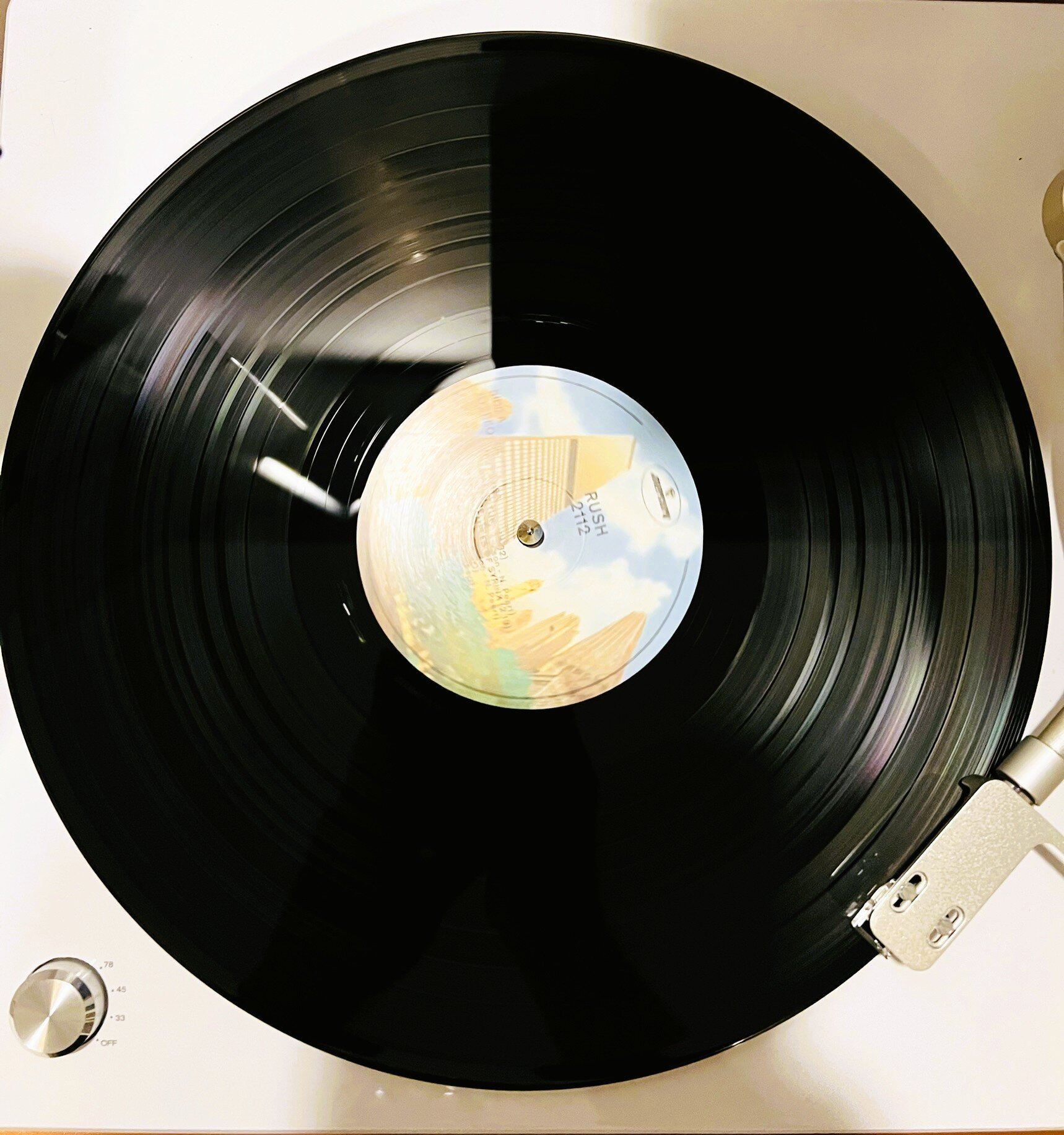

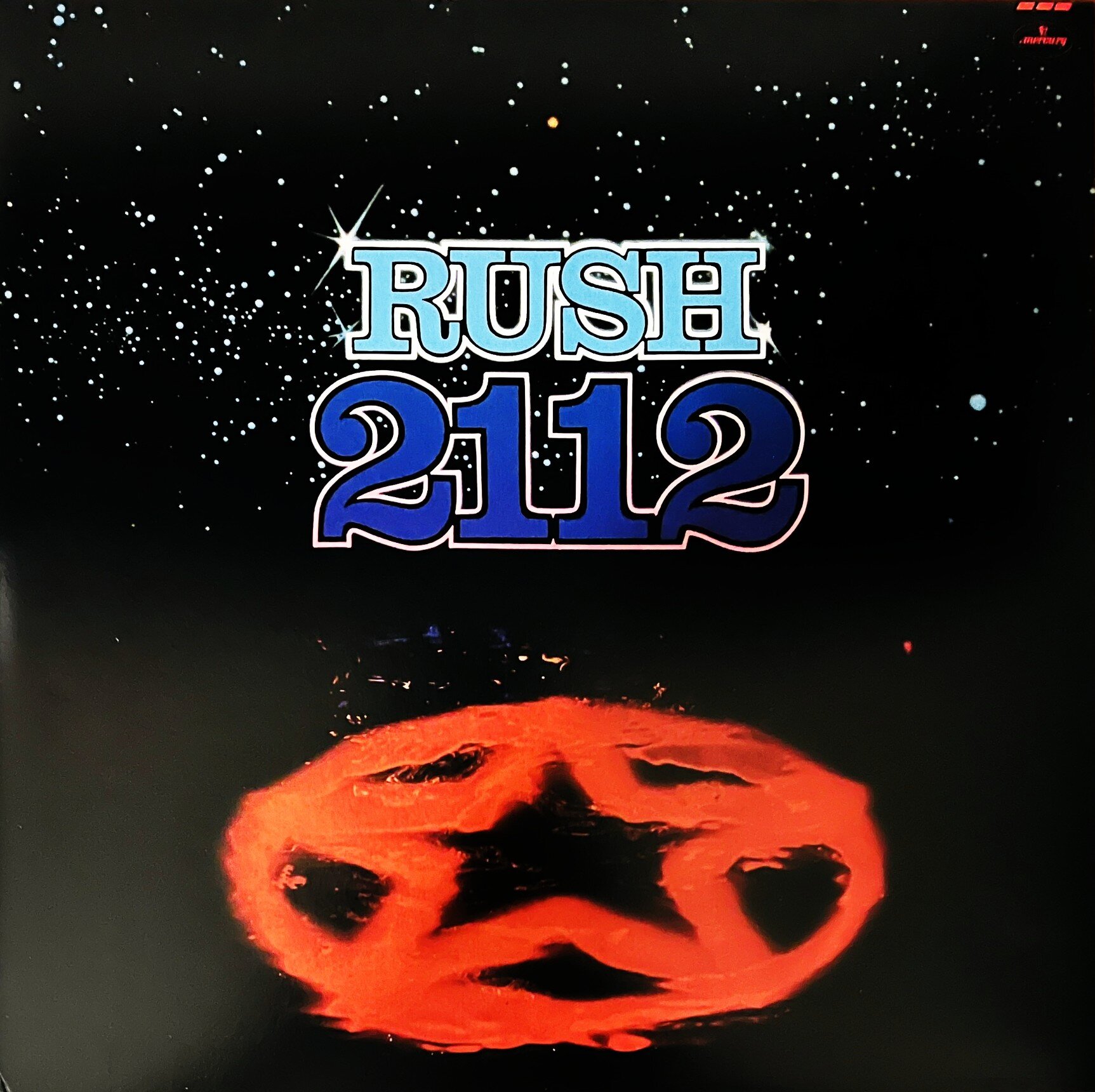
2112, Rush's fourth album, from 1976.
We've talked about Rush, a band I adore, at length, and I published a review of their achievements and greatness, "Rush: Masters of Heavy Prog." But I'd like to point out that they're a Canadian band founded in 1968. They're the leading representatives of the Heavy Pro movement in progressive rock, and are one of the most influential progressive and hard rock bands in history. The Rock and Roll Hall of Fame has stated that their influence in the 1970s was as significant as that of the Beatles in the previous decade.
2112 was their first real commercial success, arriving at a crucial moment in their career, after predominantly hard rock albums with Zeppelin influences. Neil Peart, in fact, said: "If it hadn't done well, we wouldn't have continued." It did, and their greatest masterpieces, and masterpieces of progressive rock ever, followed.
An album universally recognized as a seminal masterpiece of progressive rock, thanks to Neil Peart's exceptional virtuosity, the complex yet melodic song structure, and Peart's profound poetics, it is Rush's defining album.
The album is a sci-fi tale, with the splendid title track, divided into seven parts, telling a dystopian tale of freedom and technology.
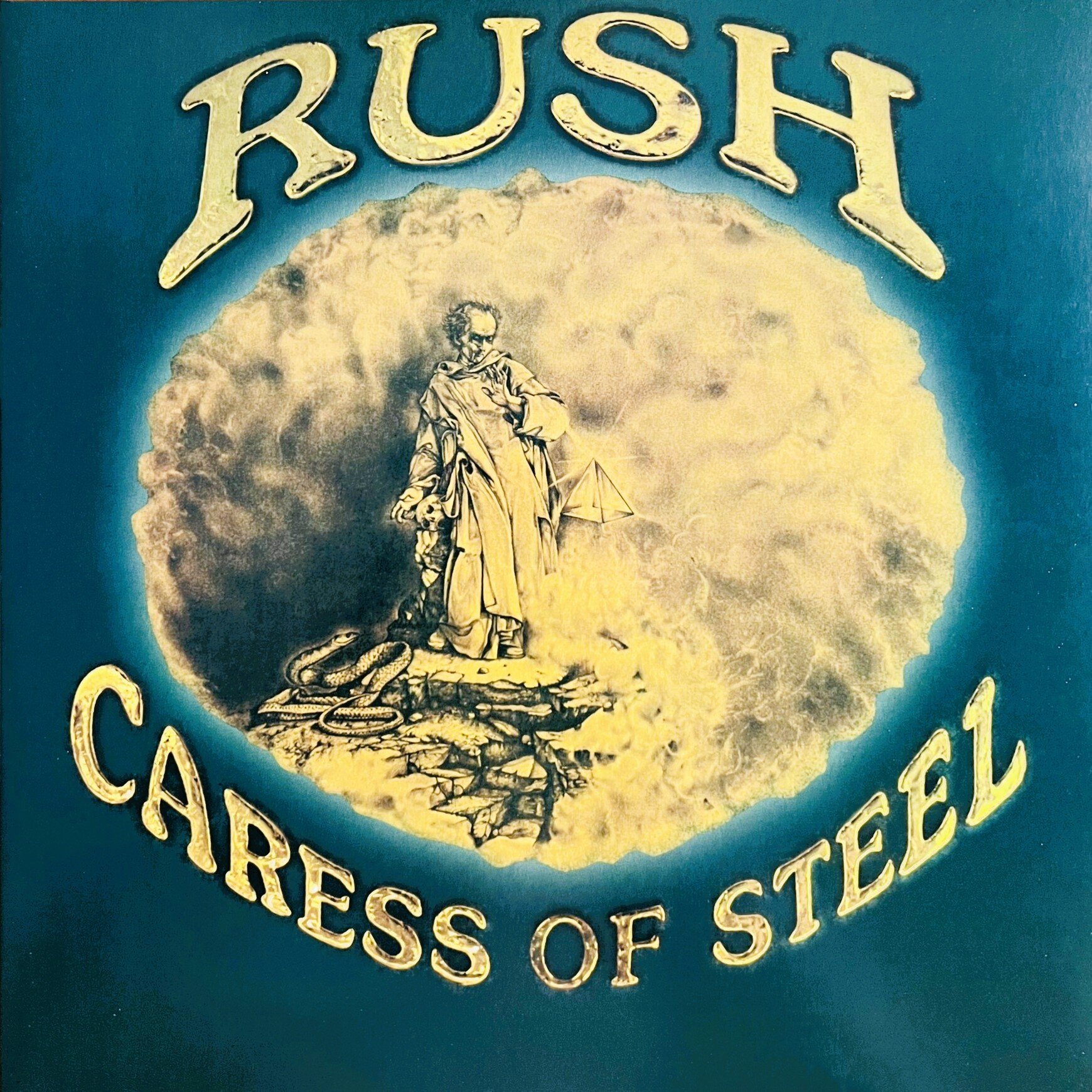
The virtuosity of Geddy Lee, Alex Lifeson, and especially Neil Peart is unrivaled, with unique combinations of odd time signatures, retro atmospheres, melodies, and complexity, all delivered with a powerful and decisive sound. This iconic work saved their career after the commercial failure of their previous album, Caress of Steel, which literally sent them from zero to hero.
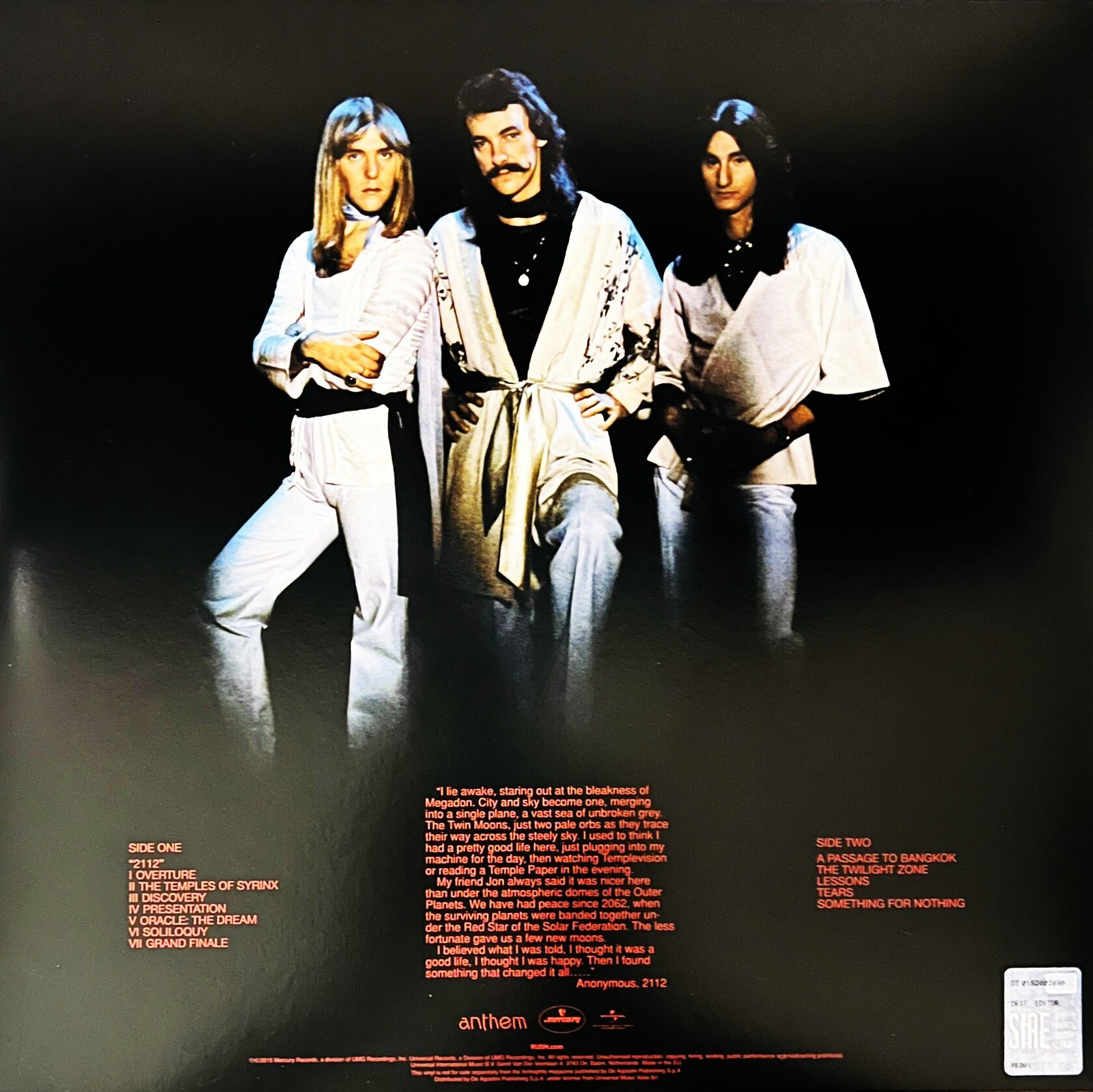
Side A features the marvelous suite "2112," a monumental track lasting over 20 minutes, set in a future controlled by the "Temple Priests of Syrinx." It tells the story of a man who discovers an ancient guitar and attempts to bring music and individualism back into a totalitarian society.
Side B features five shorter tracks of varying styles:
A Passage to Bangkok, a hard rock song with Eastern influences; "The Twilight Zone," inspired by the TV series of the same name and characterized by psychedelic atmospheres; "Lessons," written by Alex Lifeson with powerful acoustic and electric guitars; "Tears," a melancholic ballad with a powerful mellotron, played by Hugh Syme; and "Something for Nothing," a highly energetic piece.
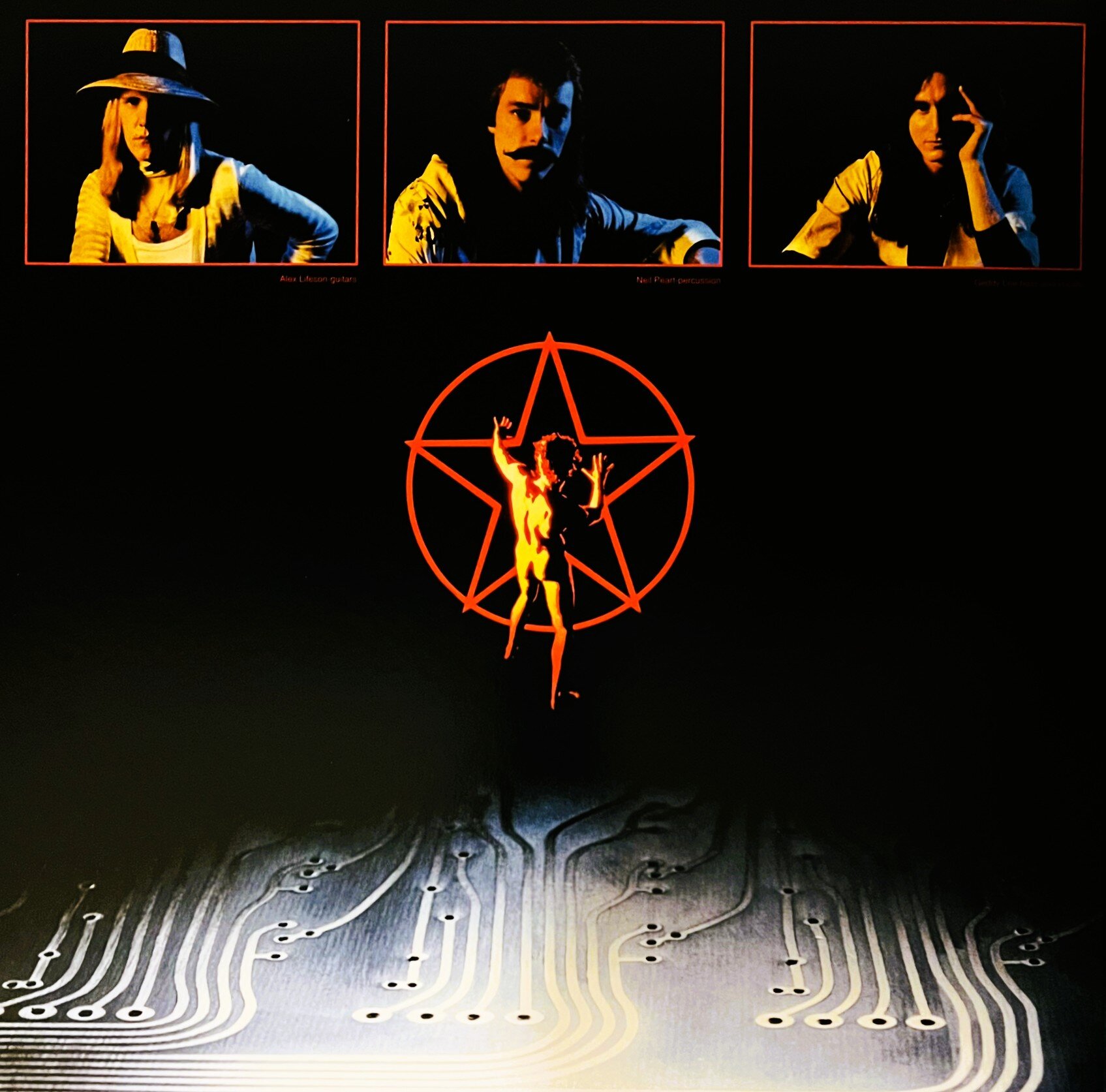
The back cover of the album features the first appearance of a symbol that would later become one of the group's historic logos: a naked man from behind facing a pentagram, designed by Hugh Syme.
A huge album, which ignites my passion for this band and the world's greatest drummer with every listen.
Note: All links to the musicians' works are in the TAGS under the article title or on the "Artists" page.
Tracklist
1. 2112 (20:31) :
- i) Overture (4:32)
- ii) The Temples of Syrinx (2:13)
- iii) Discovery (3:29)
- iv) Presentation (3:42)
- v) Oracle:The Dream (2:00)
- vi) Soliloquy (2:21)
- vii) The Grand Finale (2:14)
2. A Passage to Bangkok (3:34)
3. The Twilight Zone (3:18)
4. Lessons (3:51)
5. Tears (3:32)
6. Something for Nothing (3:59)
Duration 38:45
LineUp
- Alex Lifeson - guitars
- Geddy Lee - bass, bass pedals, vocals
- Neil Peart - drums, percussion
Featuring:
- Hugh Syme - ARP Odyssey (intro 1.i), Mellotron (5)
- Terry Brown - co-arranger, co-producer, engineer