

Pink Floyd – Wish You Were Here - 50th Anniversary - The Box Set
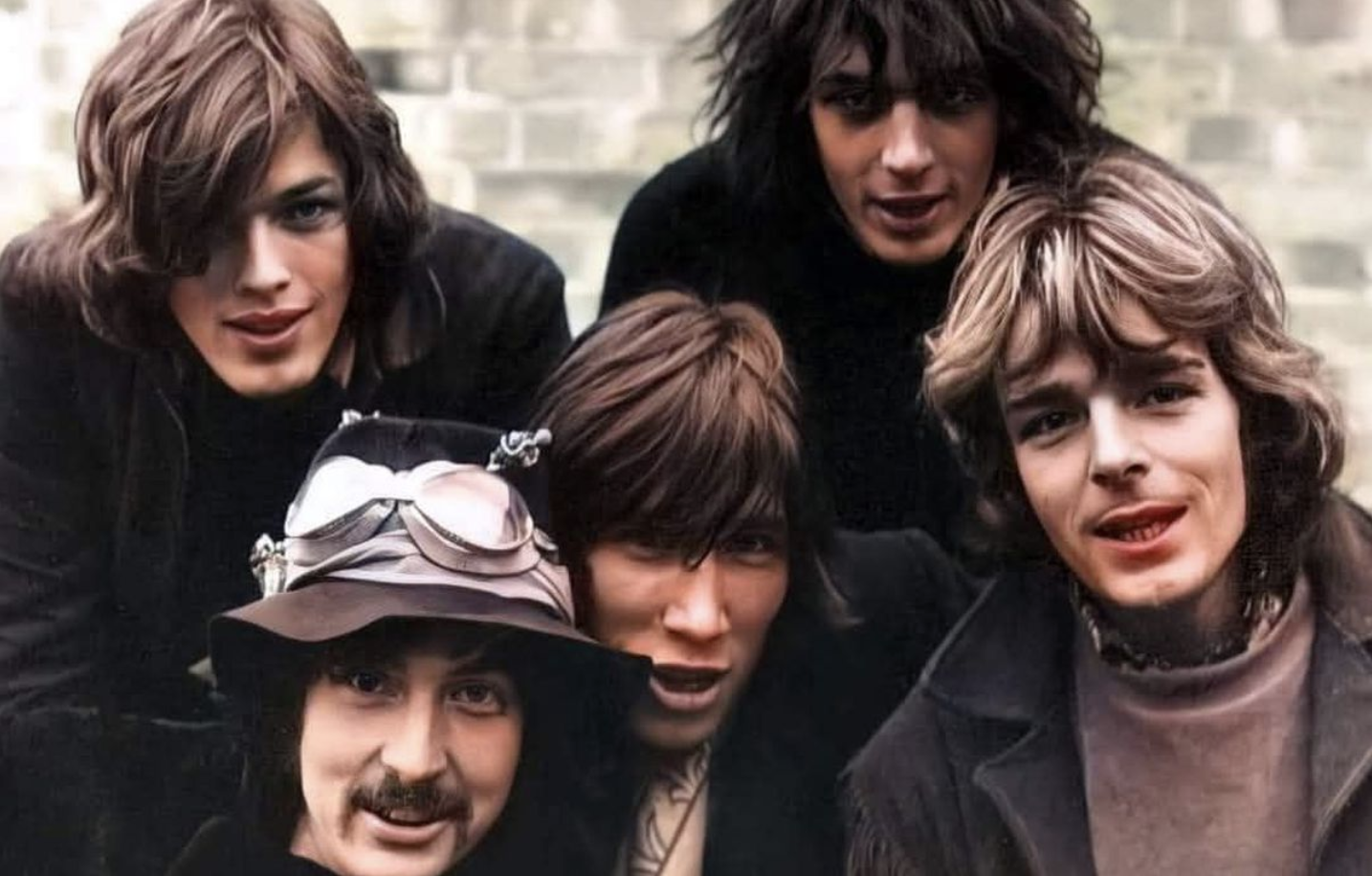
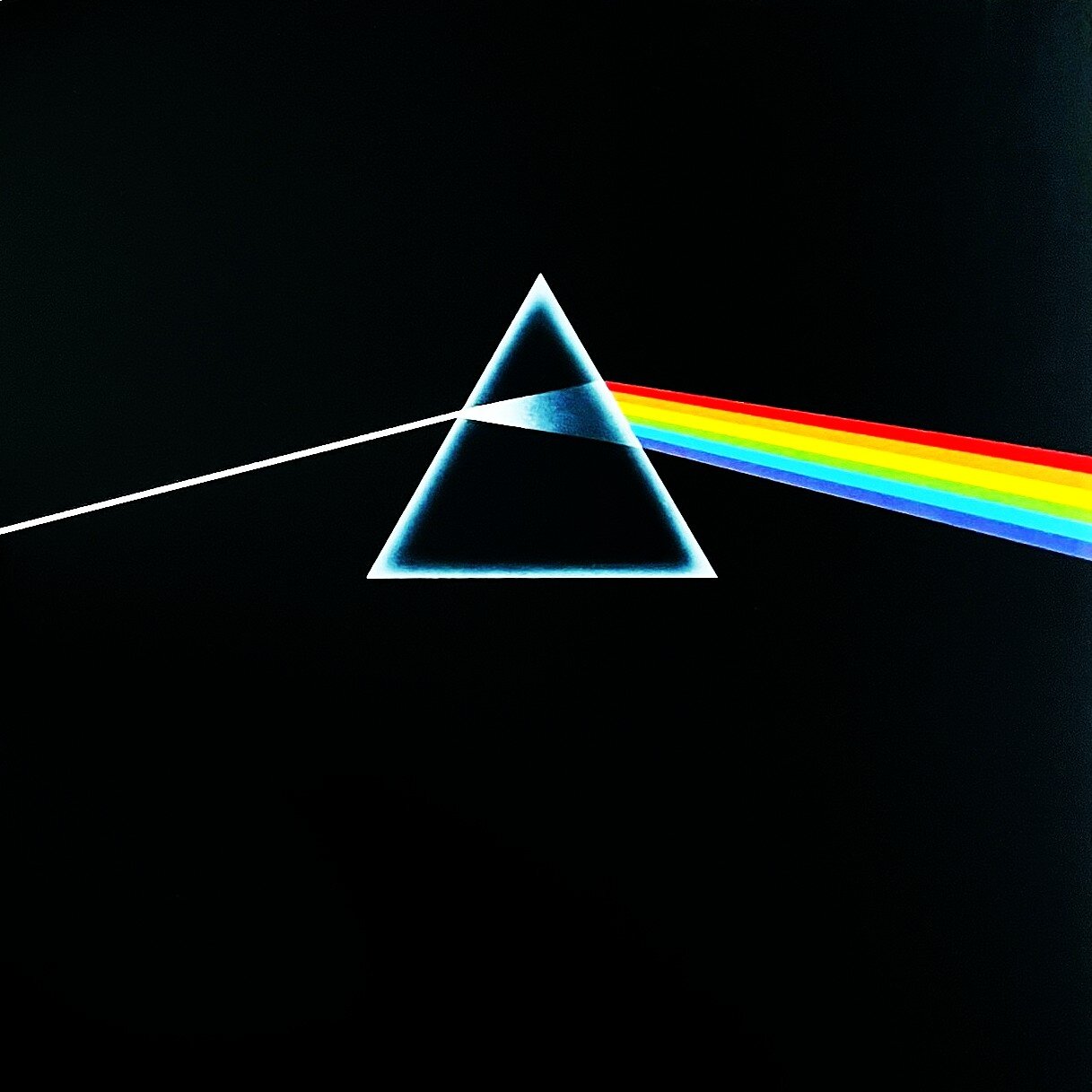
The time has come for me to review a huge album, essential to all music and to Progressive Rock, one of the five most important albums of this genre. I'm doing so on the occasion of the 2025 reissue of the Pink Floyd – Wish You Were Here 50th Anniversary Limited Edition box set.
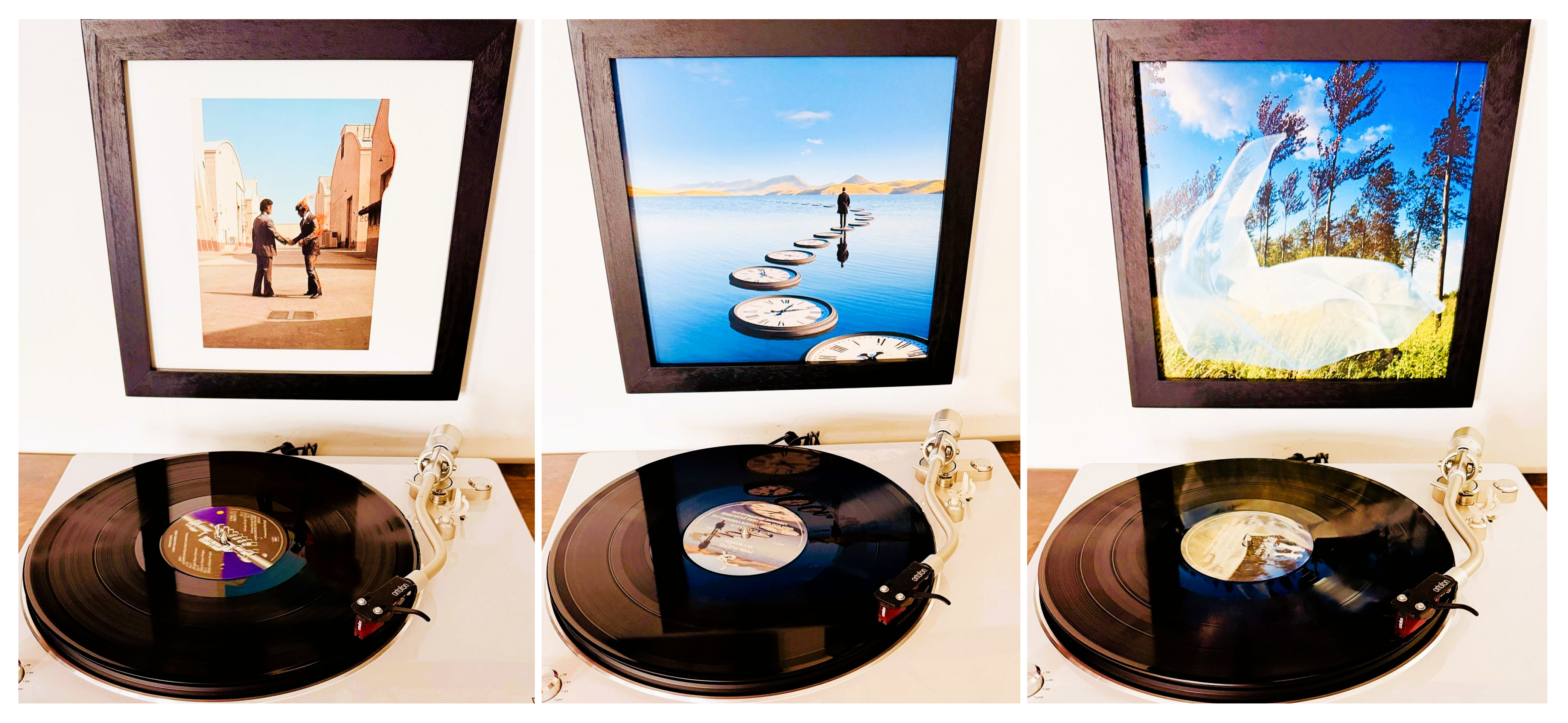
In this review, we'll look at the contents of the box set in detail, with photos and reviews of all three vinyl records.
Let's start with the features of the 2025 box set, a hard case that protects the three vinyl records and inserts.
Let's talk about the EAN/UPC code 0198028767118, which identifies the 3-LP Deluxe Edition 50th Anniversary limited edition released on December 12, 2025.
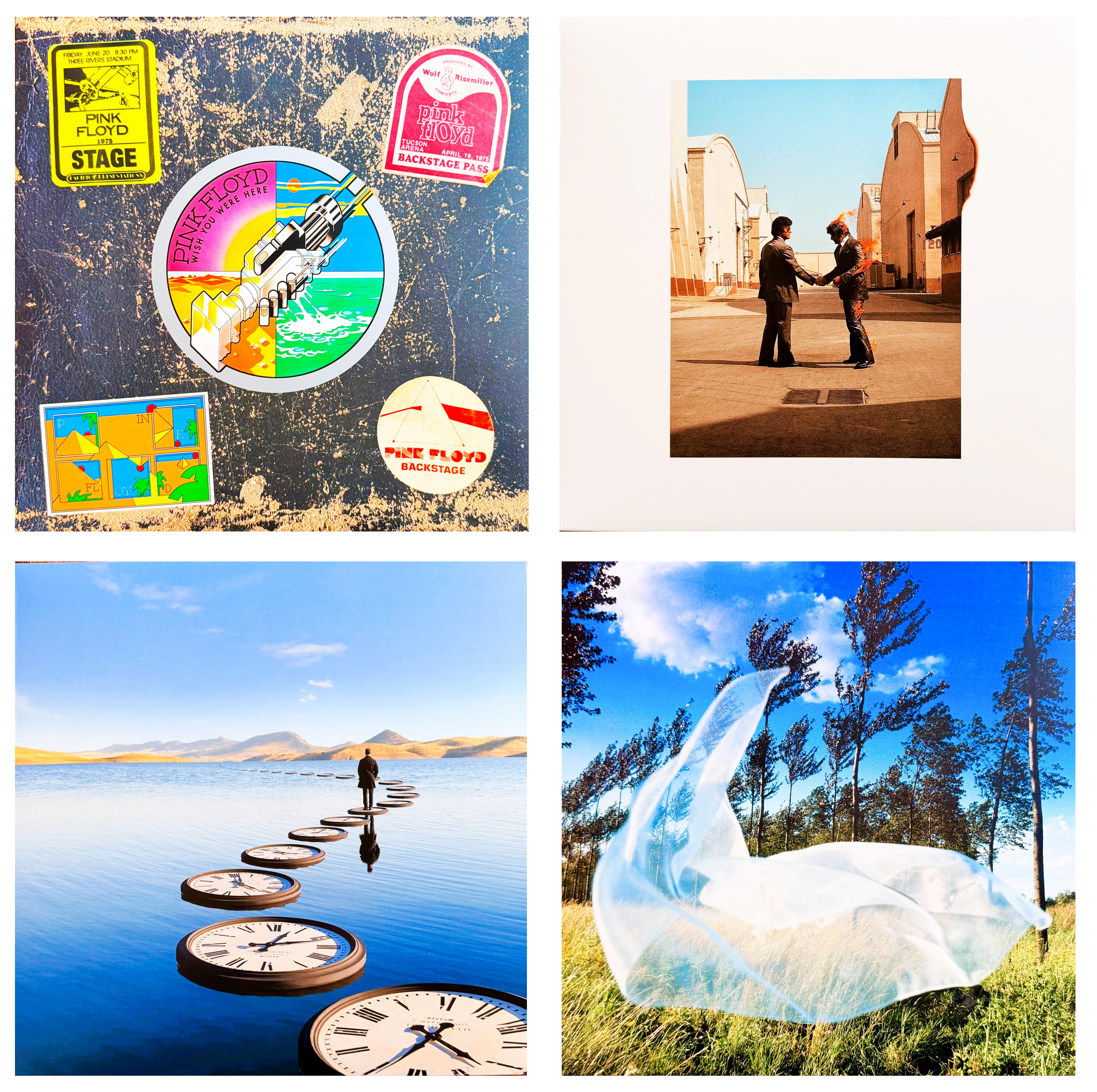
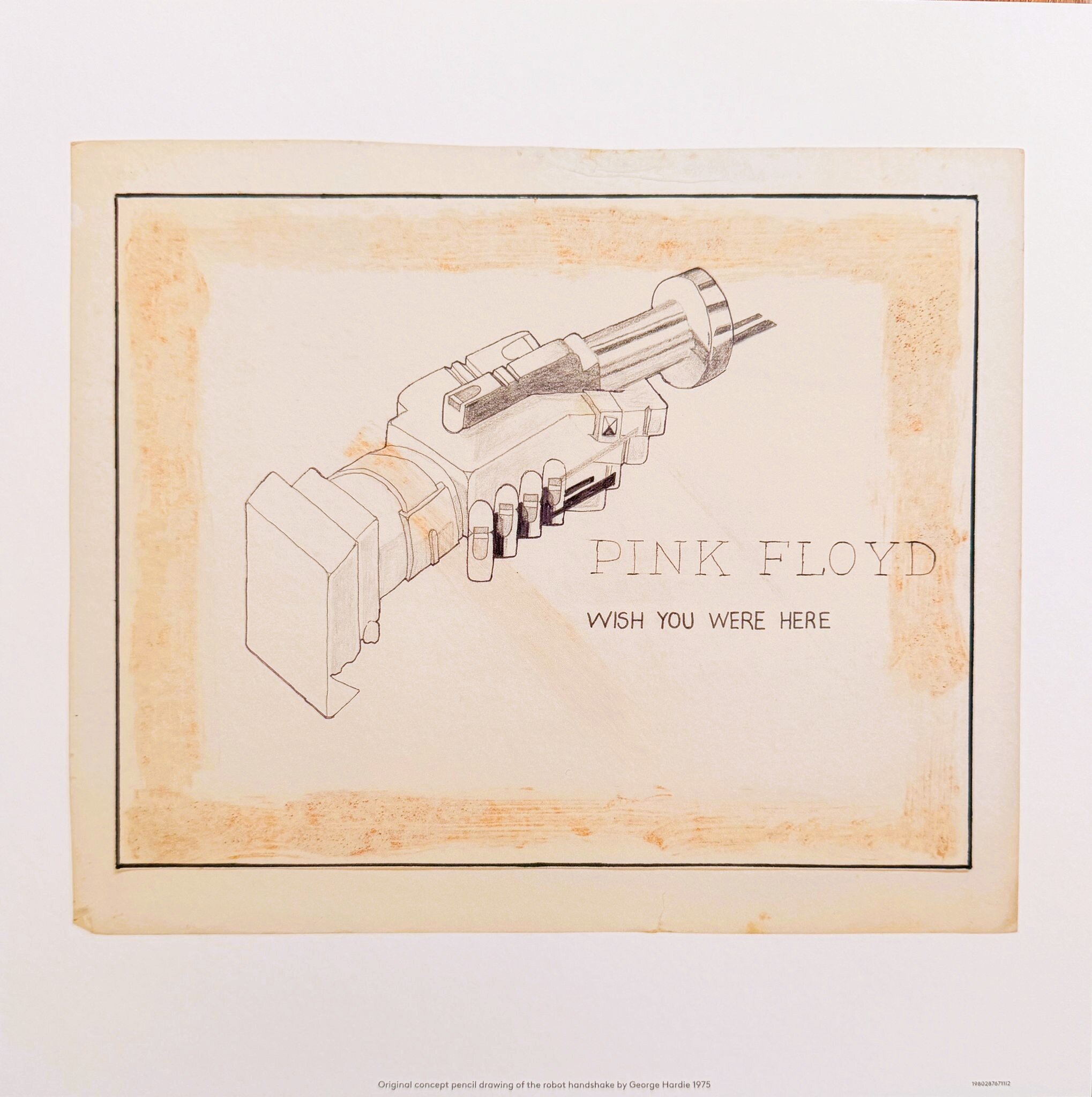
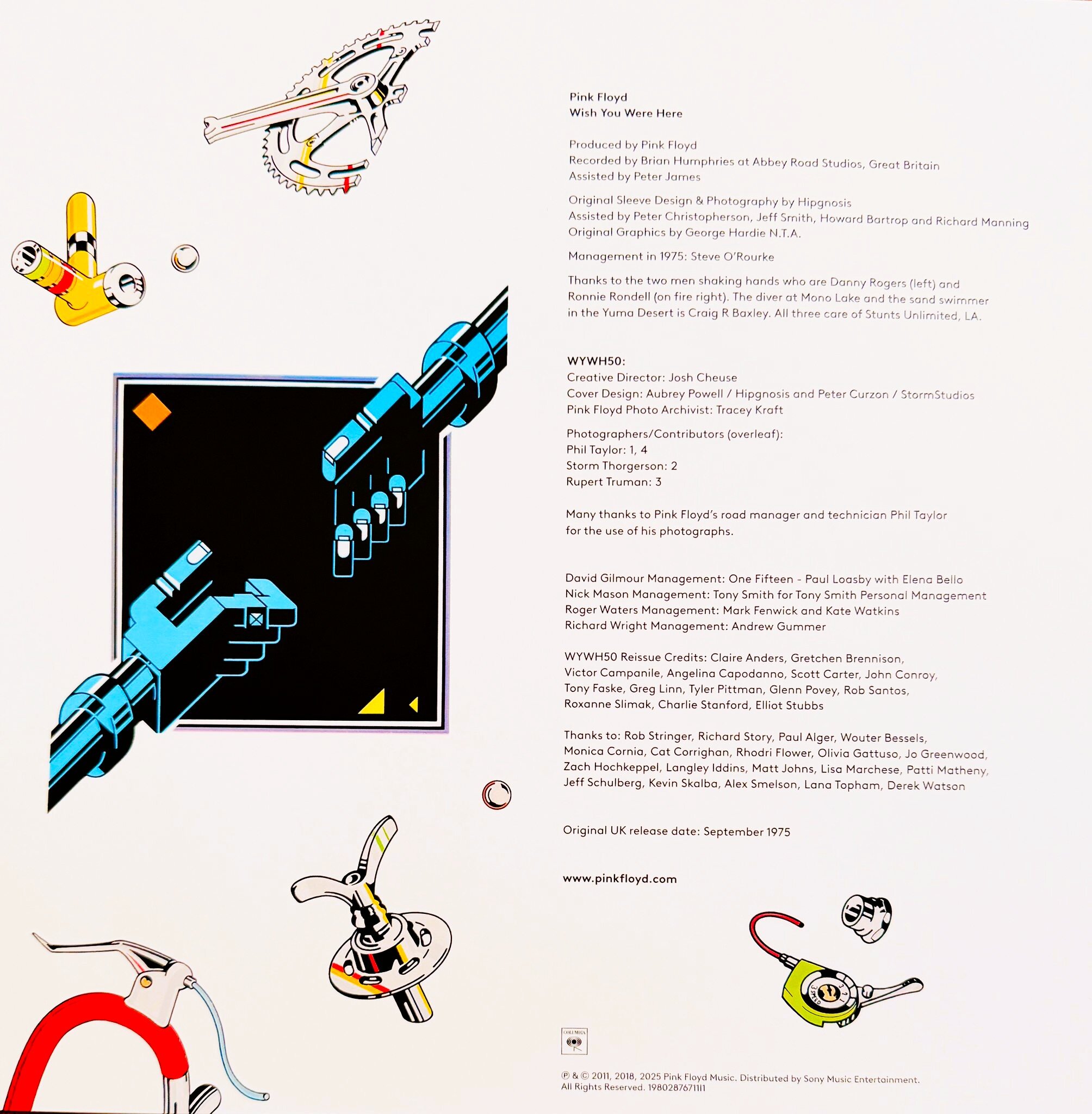
The front image features George Hardie's classic circular mechanical handshake logo and four fake Pink Floyd stickers against a vintage (faux-damaged) background. The back of the box features the complete tracklist for the 3 LPs and credits updated to 2025. The 50th anniversary logo sticker is a nice touch. This version focuses on the studio recordings from 1975.
This version contains the following in detail:
3 180g LPs: the original album and two discs of unreleased or rare archival material:
- LP 1: Original Album (2025 Remaster), remastered by James Guthrie and Joel Plant, includes all the classic tracks.
- LP 2: Studio Rarities 1, contains "Wine Glasses," from the abandoned Household Objects project; "Have a Cigar (Alternate Version), a different version featuring Roy Harper; and "Wish You Were Here" (featuring Stéphane Grappelli), the legendary version featuring the French jazz violinist.
- LP 3: Studio Rarities 2, contains "Shine On You Crazy Diamond" (Early Instrumental Version), a rough mix lasting over 18 minutes, "The Machine Song," Roger Waters' original demo for "Welcome to the Machine," "Wish You Were Here" (Take 1), and previously unreleased instrumental versions.
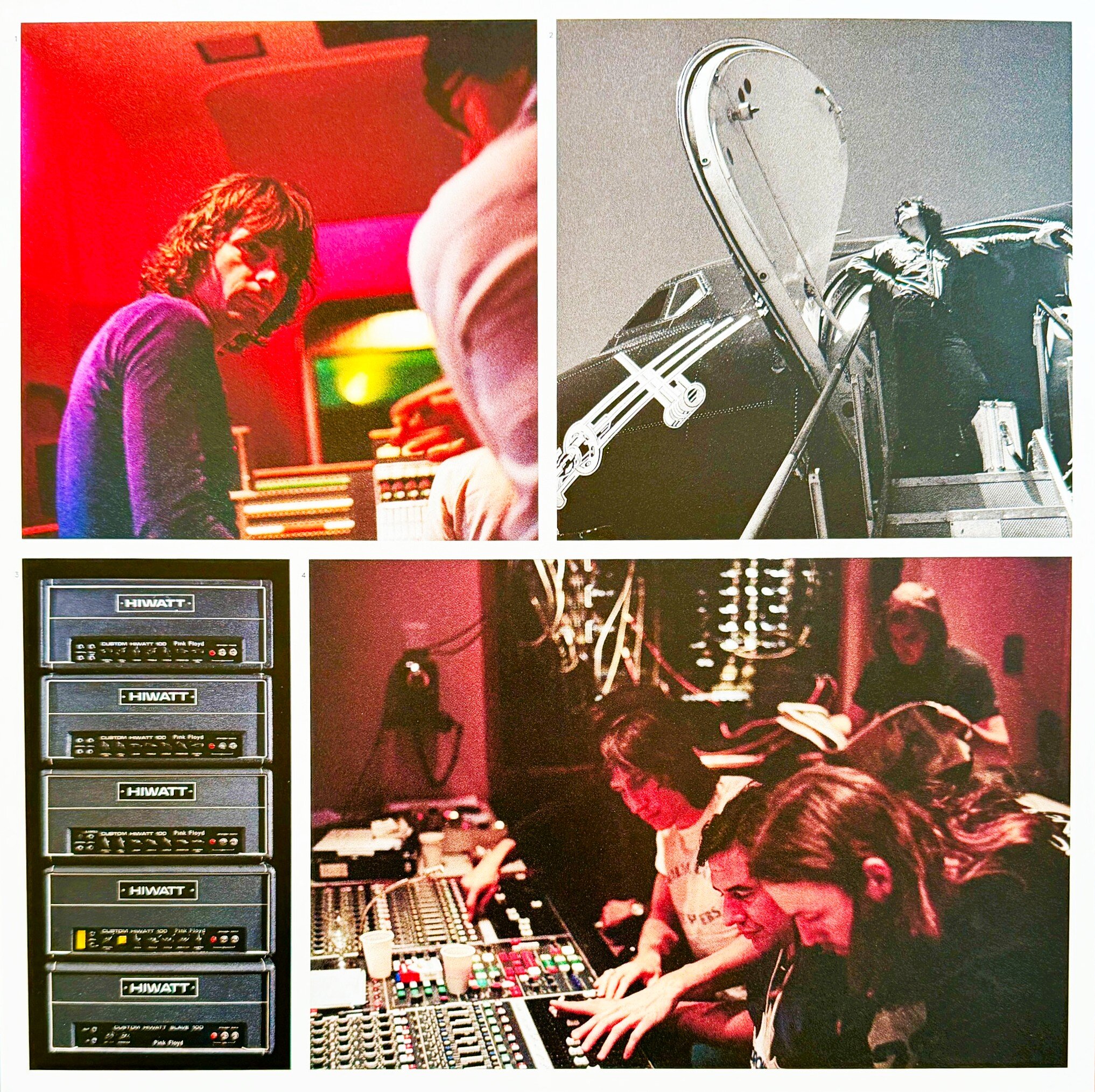
The box contains a print featuring the mechanical handshake concept drawing and a poster with alternative concepts, a poster with photos of Pink Floyd in various situations, including a young Syd Battett and the famous Hiwatt amplifiers that were a key part of David Gilmour and Roger Waters' sound during their 1970s heyday, known for their clean, powerful tone, high headroom, and durability.
Now let's look at the three LPs one by one.
LP 1: Original Album Wish You Were Here (2025 Remaster)
LP 2: Studio Rarities 1 (Outtakes and Collaborations)
LP 3: Studio Rarities 2 (Developments and Alternate Mixes)
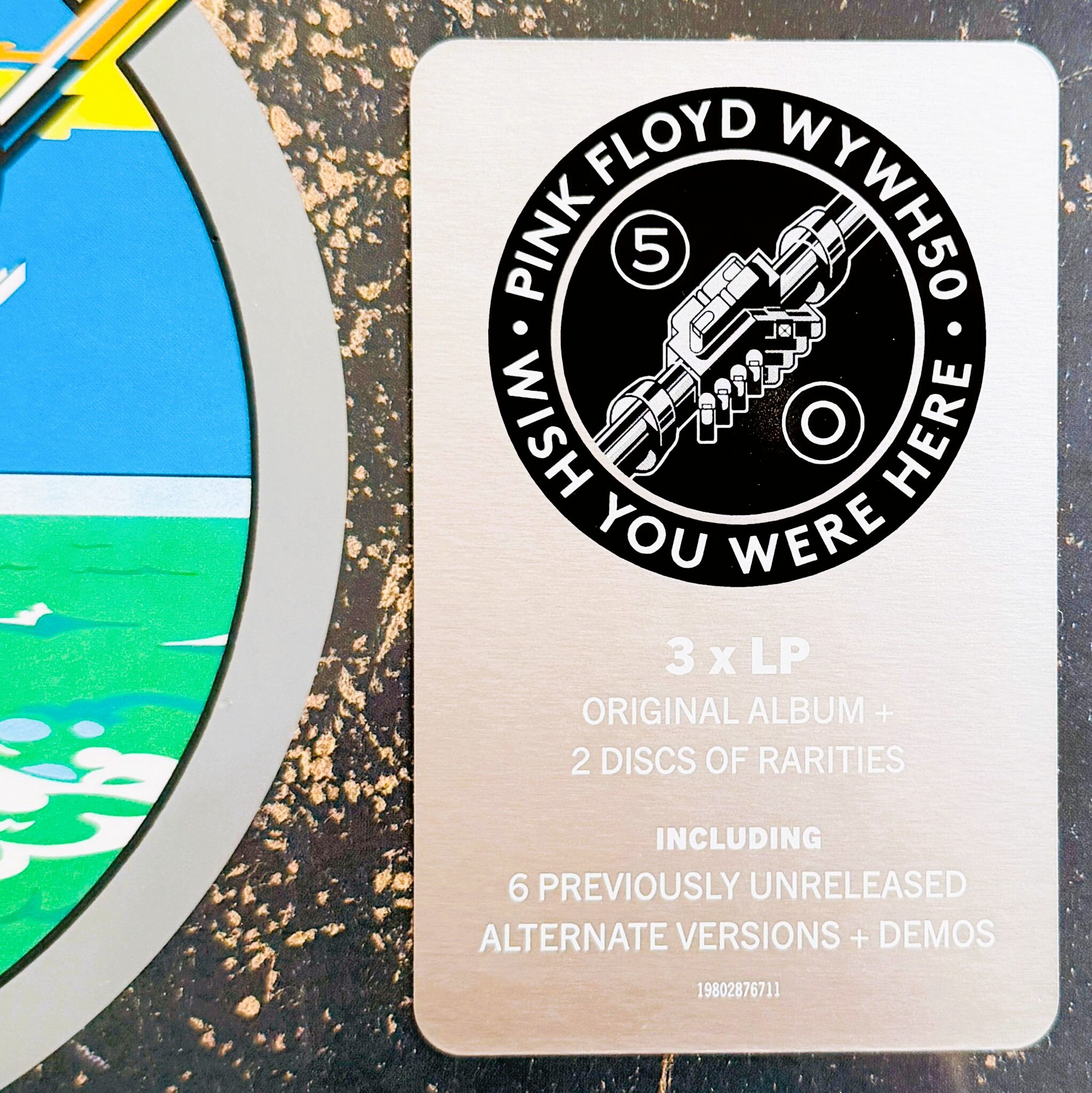
LP 1: Original Album Wish You Were Here (2025 Remaster)
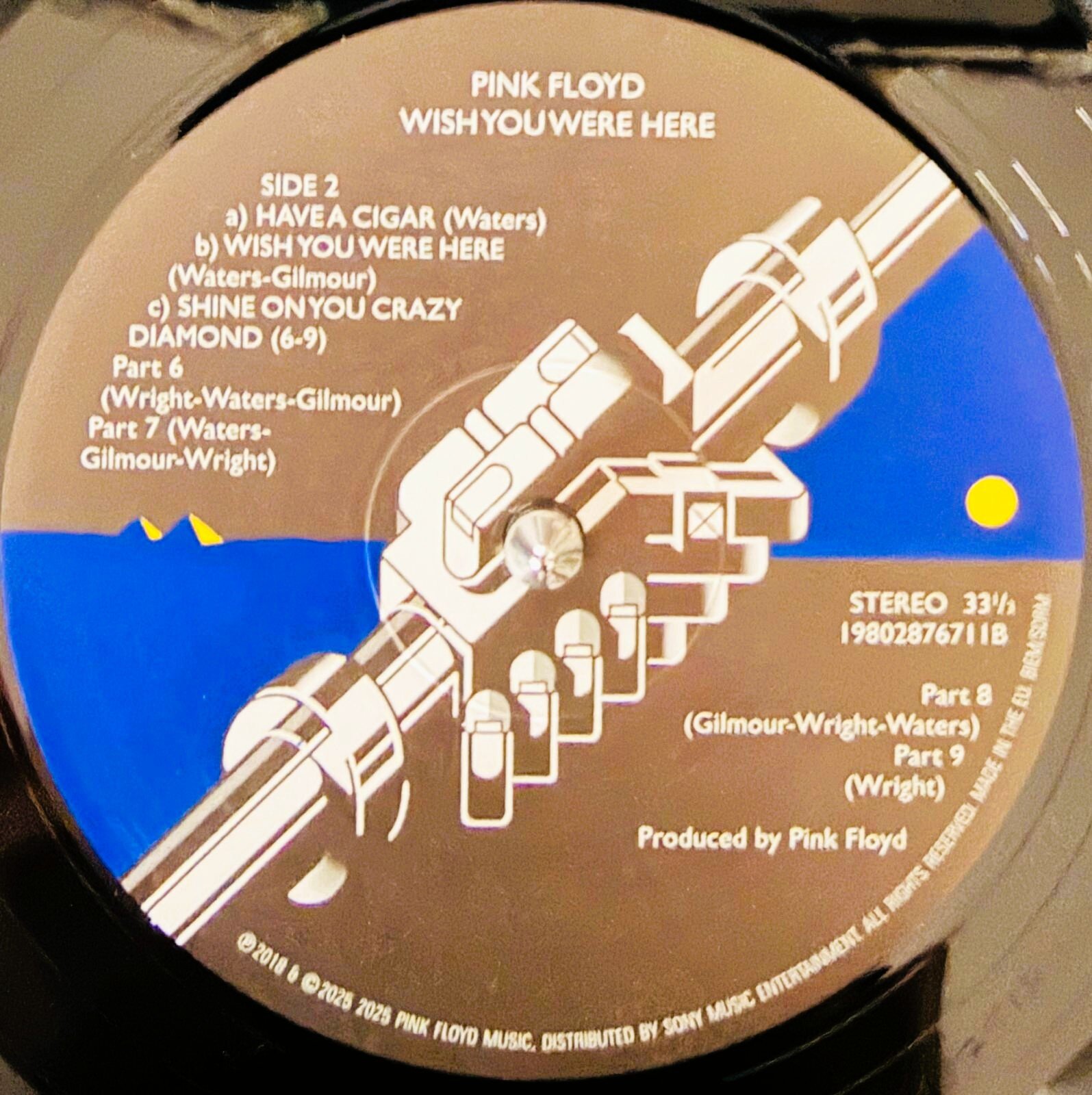
"Wish You Were Here" is a melancholic tribute but also a critique of the absence of former leader and co-founder Syd Barrett, who was removed due to drug-related mental health issues, and a denunciation of the music industry machine that made them feel "burned out."
Barrett's figure on the album serves as a metaphor for the loss of authenticity and humanity, culminating in the harrowing story of his "ghost" visit to the studios during recording.
The title track and the entire album are therefore a tribute to Barrett, who passed away from the band in 1968, and who embodied creative genius and artistic purity. This song, in particular, expresses the wish that Syd were still with them. The album also criticizes the treatment of musicians as commodities, a theme evident in the songs "Have a Cigar" and "Welcome to the Machine," which attack the cynicism of record companies, and in the famous cover art featuring a businessman on fire shaking hands with another.
Barrett's unexpected visit to the studio during recording is well known. He was unrecognizable, his gaze vacant, and he seemed to be in another world, making his absence even more palpable and painful. A large, bald, eyebrowless man entered the studio. The band members didn't immediately recognize him, but it was Syd Barrett. When David Gilmour realized who he was, the group was shocked, and Roger Waters burst into tears at the sight of his childhood friend reduced to such a state of total absence. Syd listened to the music (dedicated to him), commented that it sounded "a bit old," and left without saying goodbye. It was the last time the band saw him as a whole. A bitter masterpiece, despite its commercial success, "Wish You Were Here" represents a moment of torment and harsh reflection for Pink Floyd, an album that transformed personal pain into a timeless masterpiece.
- Side A begins with the now timeless 12-string acoustic guitar intro, seemingly coming from an old radio, simulating a person playing along with the music being played; we even hear a small cough at the 26th second. This is the beginning of the marvelous "Shine On You Crazy Diamond" (Parts 1-5), one of the pinnacles of progressive rock, a monumental work spanning over 13 minutes and divided into five sections.
Part I opens with Richard Wright's keyboards and crystal-like sounds created by rubbing his fingers on wine glasses, followed by a reverb-laden, bluesy solo by David Gilmour.
Part II introduces the iconic four-note arpeggio (B♭, F, G, E), nicknamed "Syd's theme," a riff evoking mystery and loss, the linchpin of the entire composition.
Part III features a Minimoog solo by Wright that adds a spatial, futuristic feel before the final crescendo toward the vocals.
Part IV is where Roger Waters's voice comes in. The lyrics are a direct tribute to Barrett, "Remember when you were young, you shone like the sun."
Part V is the final section, dominated by Dick Parry's baritone and tenor sax, which slowly fades into the industrial noise of "Welcome to the Machine."
- Welcome to the Machine abandons the classic rock structure and is dominated by the pulsating VCS3 synthesizers and Richard Wright's Minimoog, creating a sci-fi, claustrophobic atmosphere. Gilmour's acoustic guitar accentuates the contrast between the human and the mechanical. In the lyrics, Roger Waters describes a young artist whose dreams of rebellion have actually already been foreseen and planned by the "system." The line "It's alright, we told you what to dream" is a critique of alienation. Sound effects appear at the beginning and end of the song, the sound of a door opening and closing symbolizing the artist's entry into a "gilded prison" from which he will never emerge, and the song fades into the sound of a party, representing the emptiness of the industry's high-society celebrations, devoid of real human contact.
- The B-side begins with "Have a Cigar," Pink Floyd's most satirical song, a critique of the record industry's hypocrisy. It's famous because the lead vocal isn't by a band member, but by friend and folk singer-songwriter Roy Harper. It's said that Roger Waters strained his voice too much on "Shine On," and David Gilmour wasn't comfortable with the cynical tone of the lyrics. Harper's performance is now considered masterful for its smarmy, arrogant tone, which perfectly embodies the classic industry shark.
"Oh by the way, which one's Pink?" It's a real question posed to the band by an executive who was unaware that "Pink Floyd" wasn't the name of a single artist.
Musically, the song is a masterpiece, with an almost funky groove featuring Waters' fantastic bass and Richard Wright's masterful work on synthesizers and Wurlitzers.
- Then comes the title track, "Wish You Were Here," one of the most emotional ballads in rock history, a work that transcends genre, a universal hymn to absence and loss. It begins with the famous effect of a radio tuning from one station to another, finally settling on a channel playing David Gilmour's opening acoustic riff on his 12-string guitar, before exploding into the intense sound of his lead guitar. Roger Waters wrote the lyrics as a self-criticism, reflecting on the tendency to become absent-minded in self-defense. The questions, "Did they get you to trade your heroes for ghosts?", are directed at both Syd Barrett and the listener, asking if we've sacrificed our integrity for material security. Here, David Gilmour delivers one of his finest vocal performances ever. The song never ends, fading into a windy sound that introduces the final parts of "Shine On You Crazy Diamond."
- Shine On You Crazy Diamond (Parts 6-9) is the album's monumental close.
Part VI opens with the sound of the wind from the finale of "Wish You Were Here." David Gilmour introduces a very aggressive bass solo and provides us with lap steel guitar work that creates a menacing atmosphere.
Part VII represents the final farewell to Syd Barrett, with Waters's resigned, almost whispered voice surrendering to the loss.
Part VIII is a funky, almost jazzy section with Richard Wright's electric piano and a commanding rhythm from Roger Waters.
Part IX is the most moving moment, a funeral march composed entirely by the genius of Richard Wright, a heartbreaking instrumental tribute where, in the final seconds, Wright plays a brief melody from "See Emily Play" on the synthesizer, the song that brought Syd to fame, definitively closing the circle of his artistic life.
If parts 1-5 are "Gilmour's," parts 6-9 are "Wright's," a triumph of synthesizers.
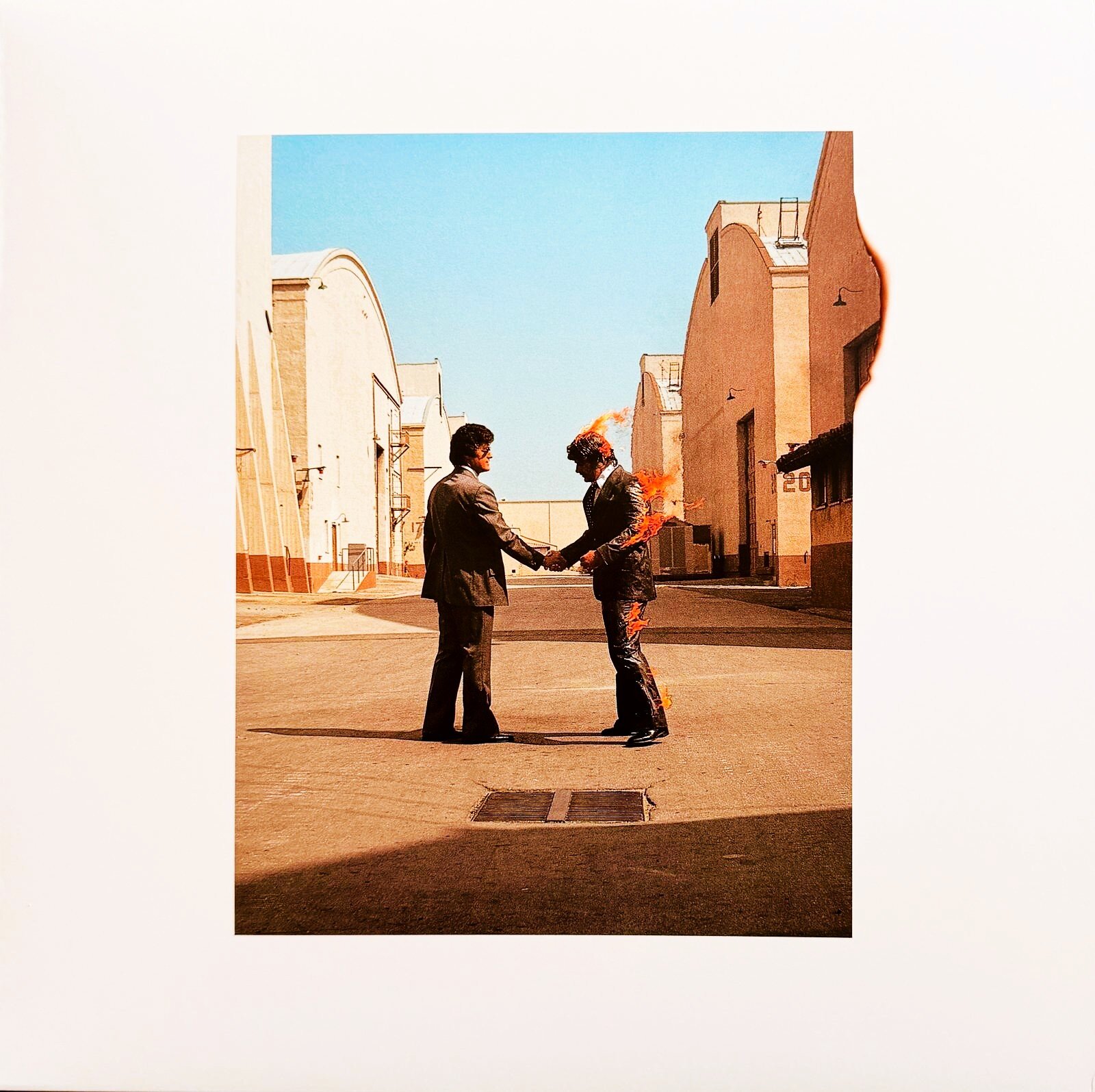
The artwork was created by legendary design agency Hipgnosis and photographer Aubrey "Po" Powell, with art direction by Storm Thorgerson, and is an icon of conceptual design, focusing on the album's themes of absence, insincerity, and criticism of the music industry.
The front cover features two businessmen shaking hands, but one of them is on fire. This photo, taken without digital special effects and using a real stuntman, Ronnie Rondell, who passed away in August 2025, symbolizes the fear of getting burned, of deceiving one another in the business world, and the insincerity of relationships in the music industry. The man on fire represents the artist who, like Syd Barrett, "burns" himself mentally and emotionally by signing a contract.
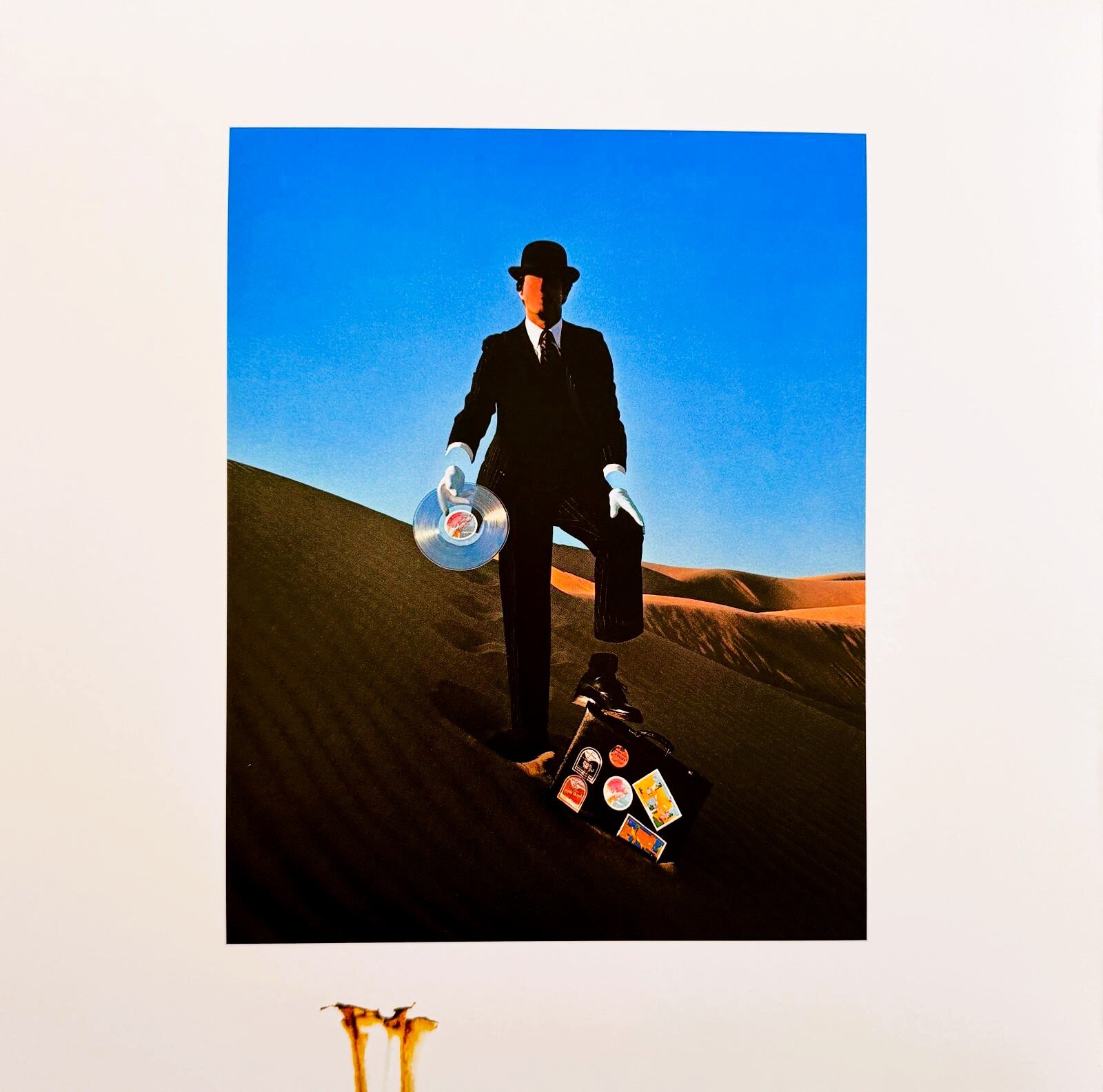
The faceless salesman on the back cover, in the Yuma Desert, California, features an image of a salesman called the "Floyd Salesman," dressed in a suit and tie but faceless, offering a transparent vinyl record. This image represents the soullessness and dehumanization of the recording industry, where artists and their music are viewed as mere commodities.
The entire original album was wrapped in an opaque black plastic sleeve, completely hiding the internal artwork. Thorgerson's idea was to emphasize the concept of "absence" by making the art itself "absent" at the moment of purchase, forcing the buyer to unwrap it to see it.
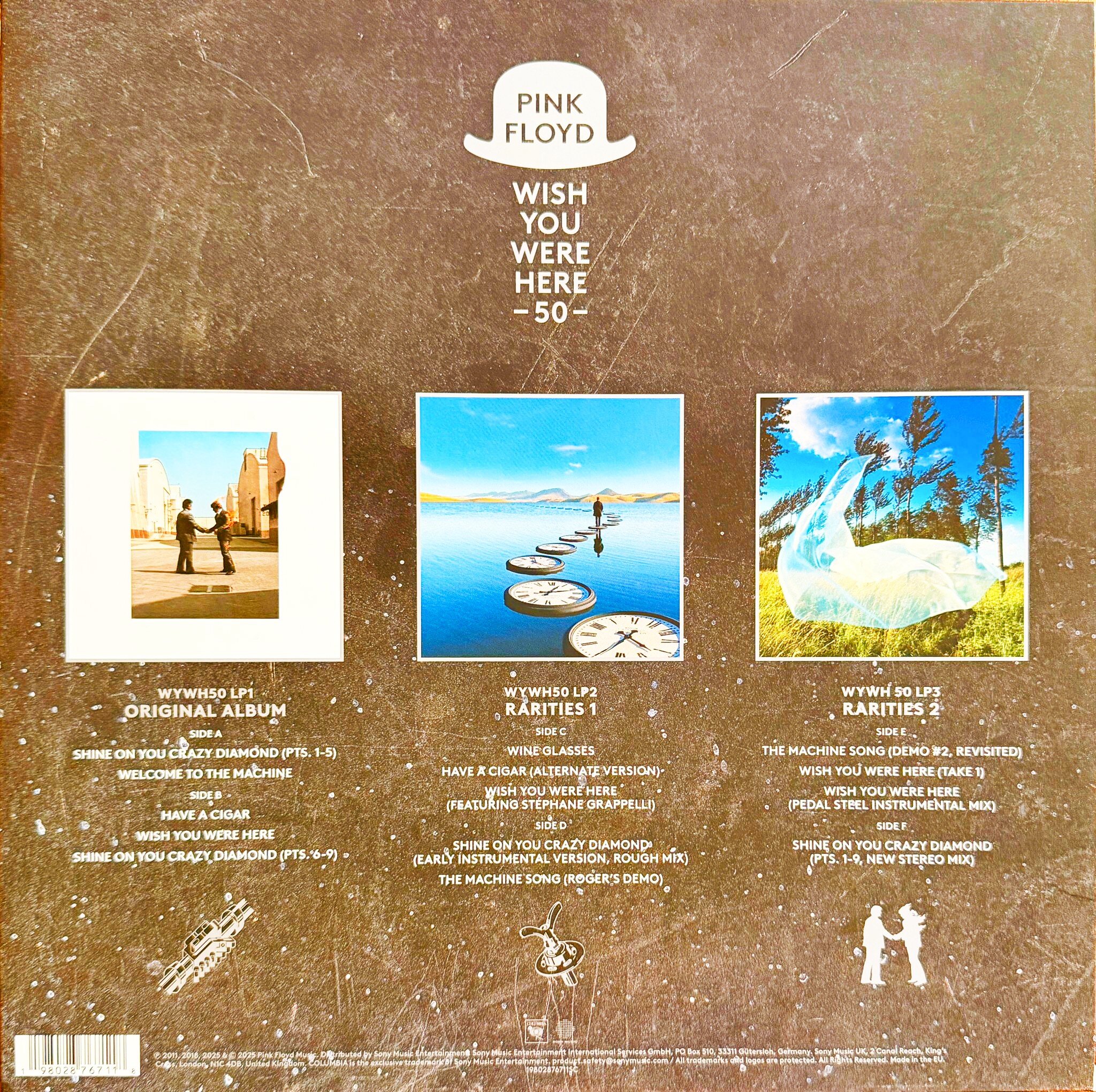
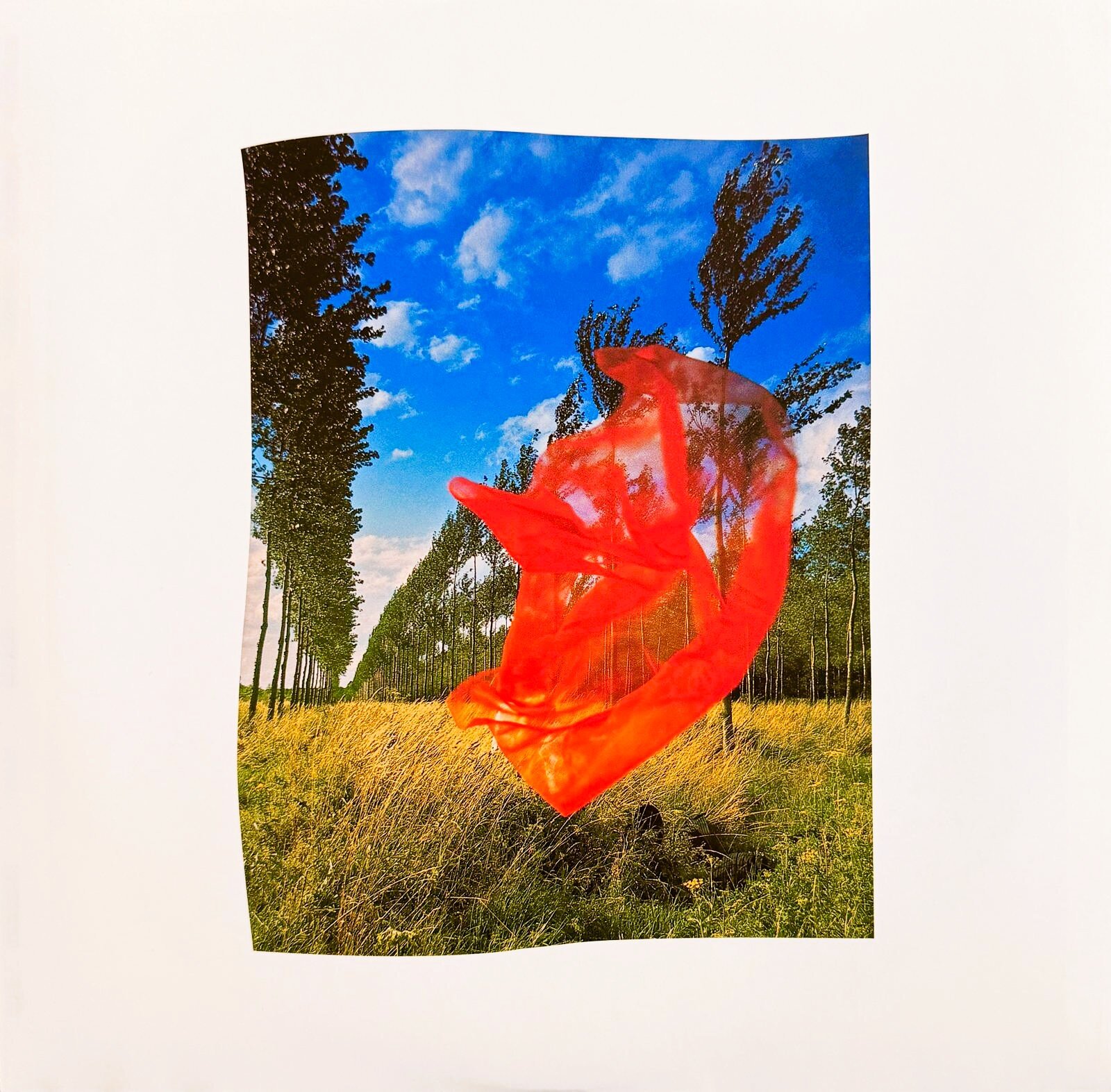
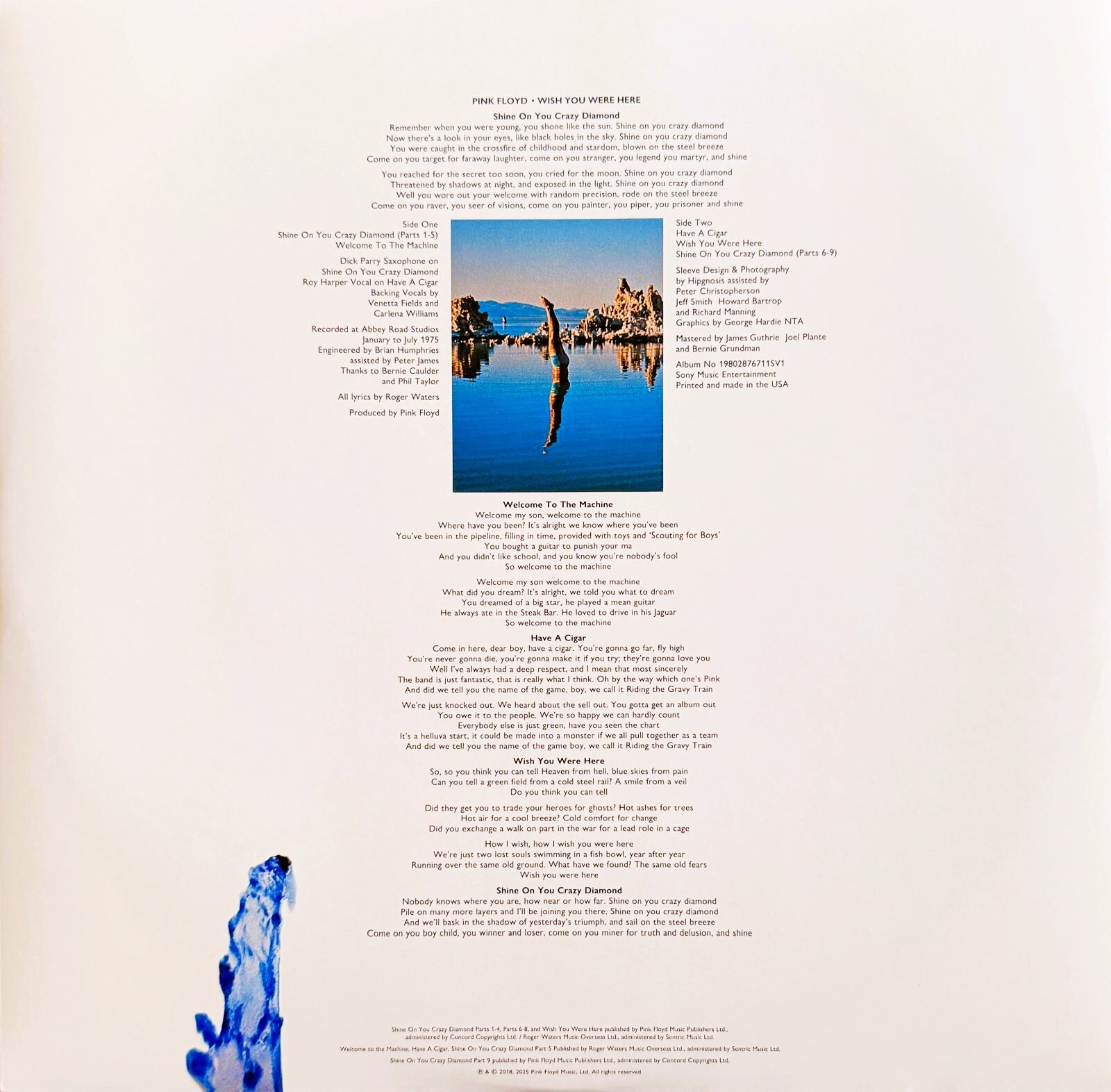
The motionless diver in the inner sleeve, diving into Mono Lake, California, and doing so without creating the slightest splash or ripple on the water's surface, is another visual metaphor for the absence of reaction, of any impact. The billowing veil in the inner sleeve is a red veil floating in a windswept grove, symbolizing the absence of a close friend.
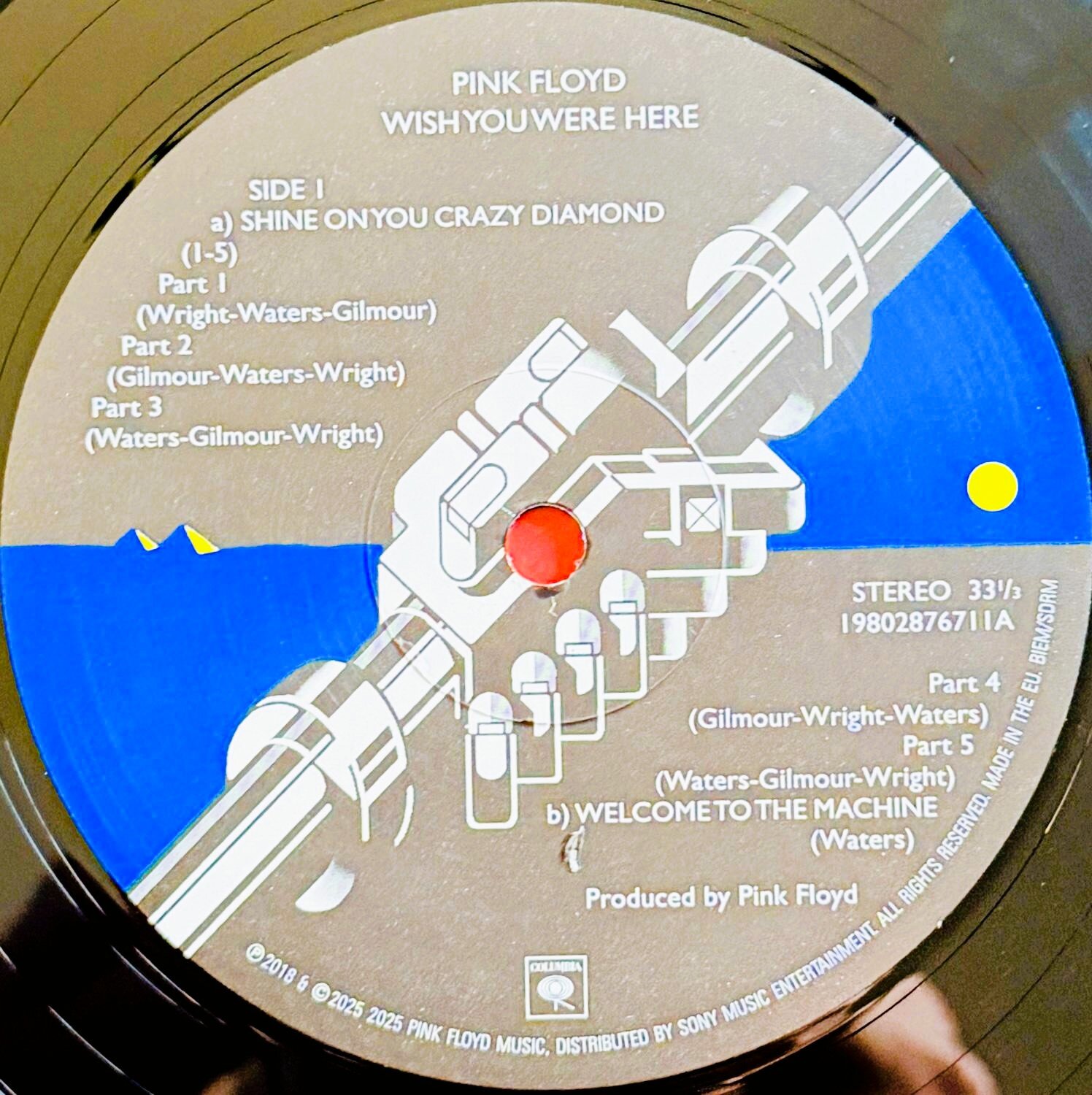
Finally, the circular sticker on the black envelope depicts two mechanical hands clasping, a reference to the song "Welcome to the Machine."
The legacy of "Wish You Were Here" has transcended the confines of rock music to become a cultural document of the human condition.
Musically, the album defined what is now called "Atmospheric Rock" and taught musicians that silence and pauses are as important as the notes themselves. It is the "sacred text" for the use of synthesizers (Minimoog and VCS3) for emotional and melodic purposes, not just experimental ones.
Roger Waters' lyrics are still relevant today in this age dominated by artificial intelligence and algorithms. The line "We told you what to dream" speaks to us, a prophecy about the digital manipulation of desires we are experiencing today. The album's theme is eternal: not being truly "here" despite being present.
It's the album that secured Syd Barrett artistic immortality that extends far beyond his brief career.
The artwork by Storm Thorgerson (the man on fire) remains one of the most parodied and cited symbols in pop culture.
If there's another way to say "Masterpiece," it's “Wish You Were Here.”
Tracklist
Shine On You Crazy Diamond (Parts I–V) (13:31)
Welcome to the Machine (7:30)
Have a Cigar (5:07)
Wish You Were Here (5:39)
Shine On You Crazy Diamond (Parts VI–IX) (12:30)
Duration 44:17
LineUp
David Gilmour: Vocals, guitars (electric, acoustic, 12-string, lap steel), EMS VCS 3 synthesizer, sound effects.
Roger Waters: Vocals, bass, acoustic guitar, EMS VCS 3 synthesizer, sound effects.
Richard Wright: Keyboards (piano, Hammond organ, Minimoog and ARP String synthesizers), clavinet, backing vocals.
Nick Mason: Drums, percussion, sound effects.
Guest Musicians
Roy Harper: Lead vocals on "Have a Cigar."
Dick Parry: Tenor and baritone saxophones on "Shine On You Crazy Diamond."
Venetta Fields & Carlena Williams: Backing vocals on "Shine On You Crazy Diamond."
Stéphane Grappelli: Violin on "Wish You Were Here" (present almost imperceptibly at the end of the original mix, officially credited only in modern reissues)
2025 Mixing and Remastering: James Guthrie (Stereo remastering, 5.1 Surround mix, and new Dolby Atmos mix).
LP 2: Studio Rarities 1 (Outtakes and Collaborations)

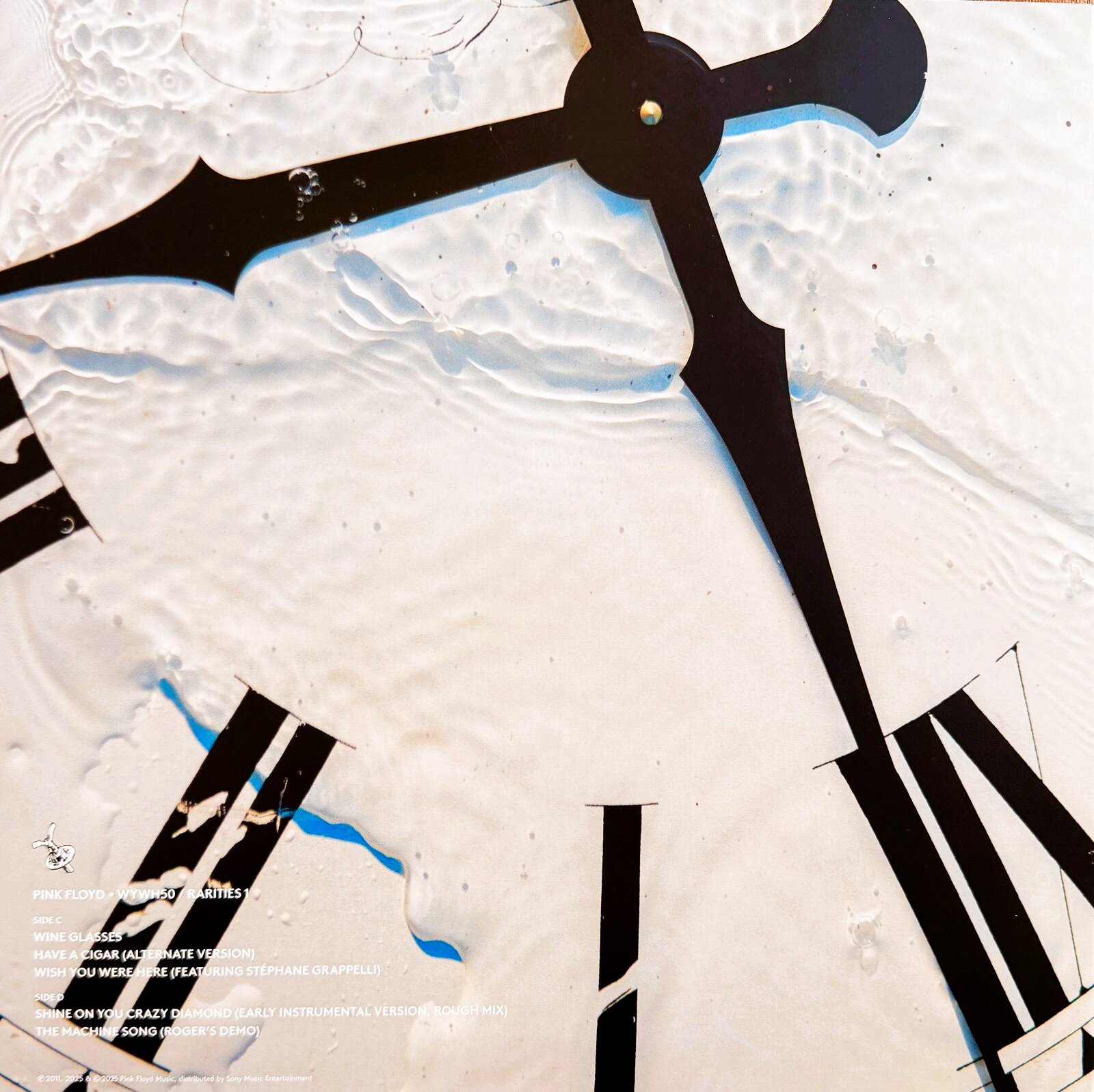
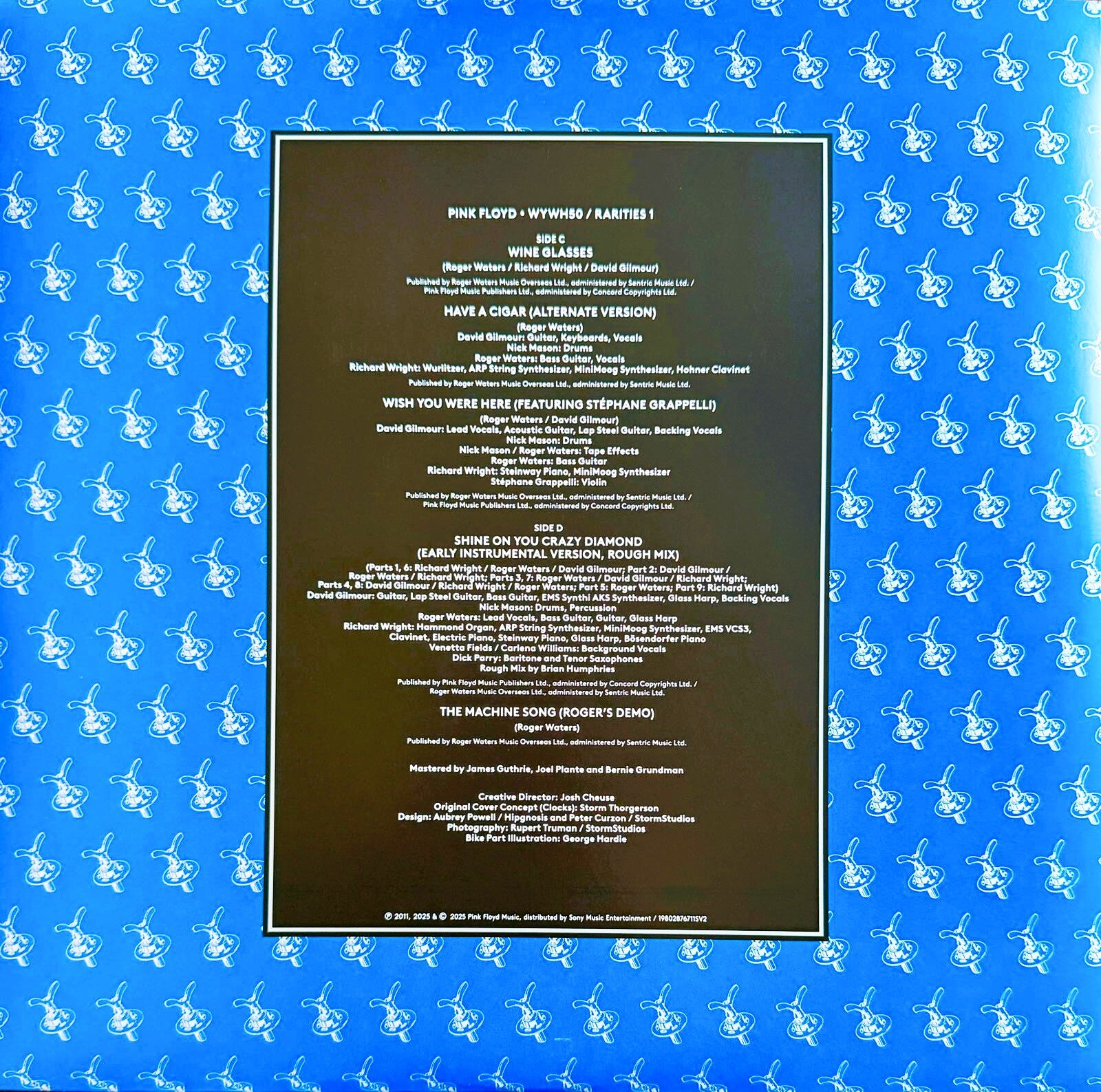
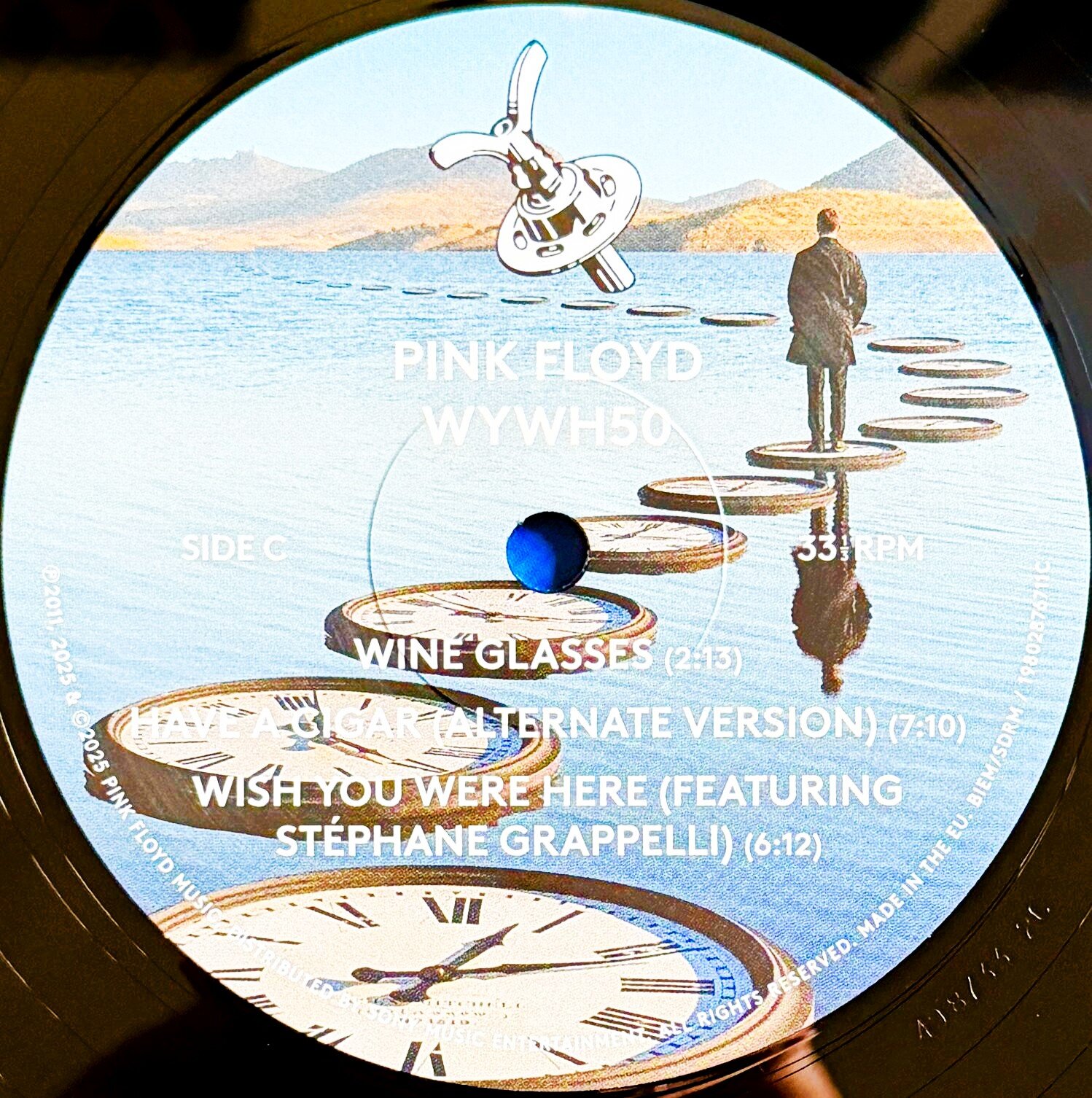
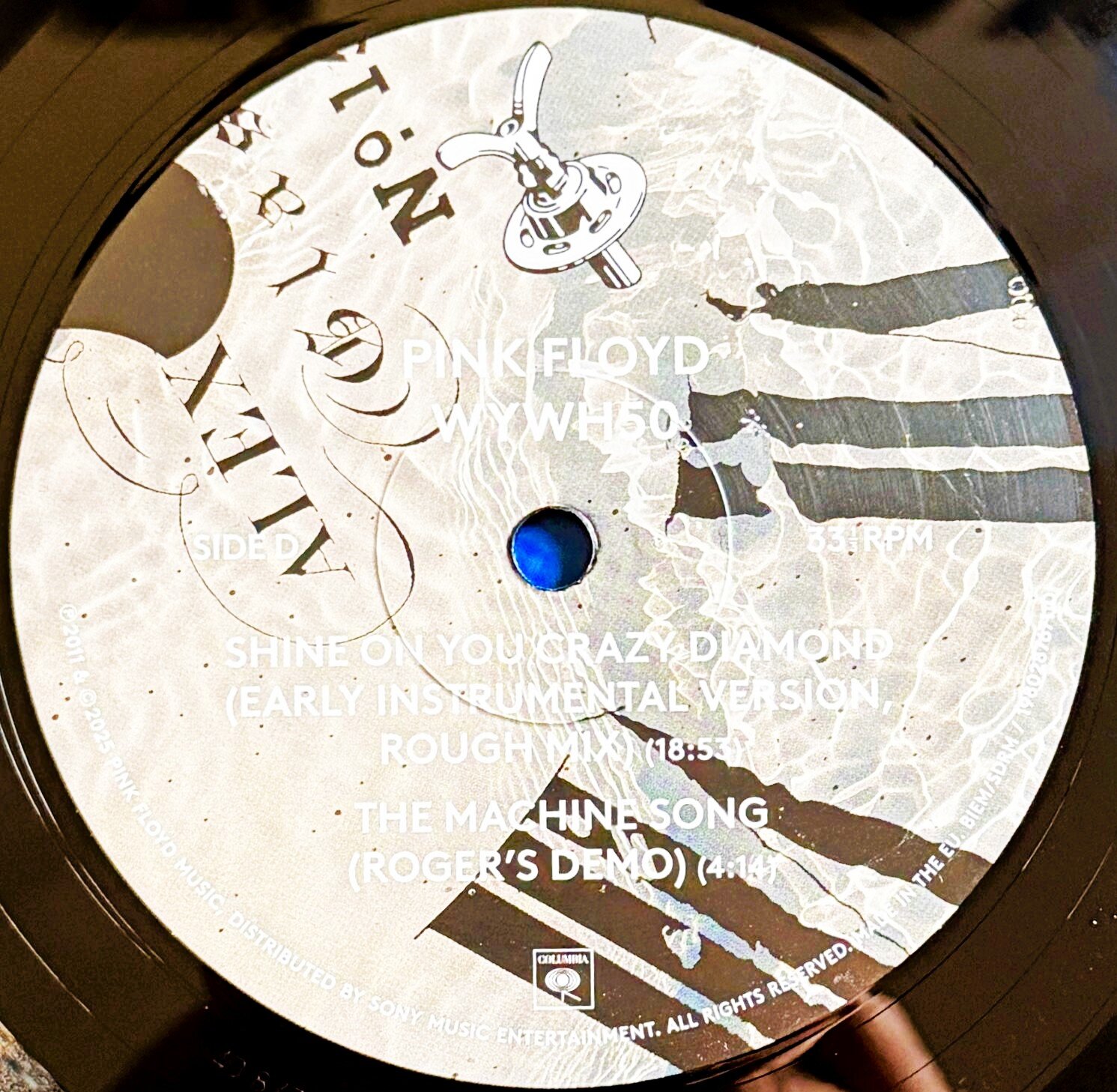
The second LP is dedicated to studio rarities, alternate versions, demos, and unreleased mixes that are part of the band's creative process in 1975, including a version of "Wish You Were Here" (feat. Stéphane Grappelli), a "new" Pink Floyd masterpiece.
- The album opens with "Wine Glasses," a recording from the abandoned Household Object project. This experimental piece provided the initial soundtrack for “Shine On You Crazy Diamond.”
"Household Objects" was an experiment in which the band attempted to create an entire album without using conventional musical instruments, only household objects. The sound was achieved by running wet fingers along the rims of numerous crystal glasses, filled with varying amounts of liquid to obtain precise notes.
The recording of "Wine Glasses" was recovered and layered with Richard Wright's synthesizers to create the atmospheric opening of the album. The song received its first official release on the Experience & Immersion Edition (2011), as a bonus track. The 50th Anniversary Edition includes it as a standalone track and runs for approximately two minutes.
- This is followed by "Have a Cigar (Alternate Version), an alternate version of the song, whose main feature is the absence of Roy Harper: the lead vocals are provided by Roger Waters and David Gilmour, who sing together in a rawer version. Musically, the mix is less accurate than the standard version; Waters' bass is stronger and Gilmour's guitar is less "funky." The finale also extends into a longer, less structured jam.
- "Wish You Were Here" (feat. Stéphane Grappelli) includes the legendary jazz musician's violin, which was almost imperceptible in the original mix but is fully enhanced here, almost entirely replacing the guitar.
Stéphane Grappelli was at Abbey Road Studios at the same time as the band and was invited to improvise on the song's finale. In the original 1975 version, his violin was almost completely eliminated from the final mix, remaining audible only in the final seconds. In this version, the violin is brought to the forefront, adding a melancholic country-blues nuance that transforms the song's atmosphere through a dialogue between Gilmour's guitar and violin. A masterpiece, a great discovery.
- Shine On You Crazy Diamond (Early Instrumental Version, Rough Mix) is a preliminary instrumental version that shows the evolution of the suite before the lyrics and vocals were completed. At an embryonic stage, it feels like a rehearsal where Pink Floyd were creating the song from its basic structure. The orchestral finishing touches and backing vocals are missing. Richard Wright takes center stage. In the absence of Waters' vocals, the keyboards and synthesizers are much more prominent, the four-note arpeggio (the "Syd's Theme") is essential, and the solo lines are different. Spectacular.
- The Machine Song (Roger's Demo) is Roger Waters's first-ever demo of "Welcome to the Machine." It's a home demo in which Roger Waters performs the song alone with an acoustic guitar, with the melody and lyrics already possessing great intensity despite the absence of synthesizers. The vocal performance is completely different; Waters sings with a plaintive tone, and the audio fidelity is deliberately raw, with background noise and breathing, which, in my opinion, makes it a historic document.
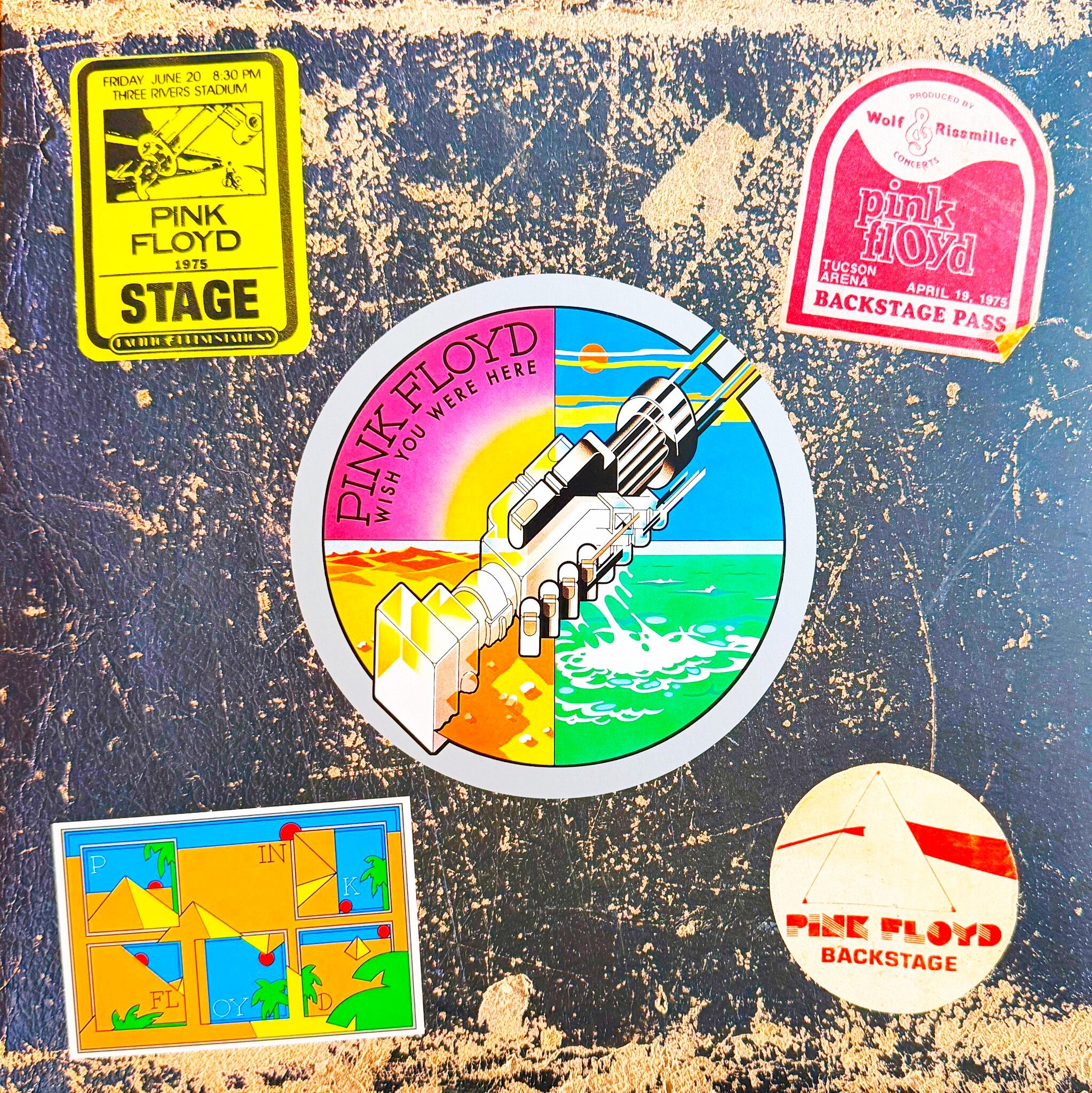
The artwork for the second LP features clocks floating on water, a design already seen on the "Experience Edition" (2011) of Wish You Were Here. This artwork was created by Storm Thorgerson years after the original release and was chosen to accompany the unreleased material and rarities because the clocks floating in water represent the passage of time and emphasize that the album is a kind of time capsule, bringing to the surface recordings that had been "submerged" for decades.
The second disc is a wonderful historical document.
Tracklist
Wine Glasses (from the unreleased Household Objects project).
Have a Cigar (alternate version).
Wish You Were Here (featuring Stéphane Grappelli).
Shine On You Crazy Diamond (first instrumental version, rough mix).
The Machine Song (Roger's original demo)
LineUp: Studio Rarities 1
David Gilmour: 12-string acoustic guitar (on "Wish You Were Here"), electric guitar, vocals (on "Have a Cigar Alternate" and "Shine on the Rough Mix").
Roger Waters: Vocals (on "The Machine Song Demo" and "Have a Cigar Alternate"), bass, acoustic guitar, EMS VCS 3 synthesizer.
Richard Wright: Keyboards, Steinway piano, Minimoog and ARP synthesizers, crystal glasses (on "Wine Glasses").
Nick Mason: Drums, percussion.
Special Guest Musicians
Stéphane Grappelli: Violin solo on "Wish You Were Here" (feat. Stéphane Grappelli).
The Blackberries (Venetta Fields & Carlena Williams): Backing vocals (present in embryonic form in some rough mixes).
Restoration and Remixing Curator (2025): James Guthrie, assisted by Joel Plante. Guthrie supervised the recovery of the original multitrack tapes to isolate Grappelli's violin and Waters' demos.
LP 3: Studio Rarities 2 (Alternative Developments and Mixes)
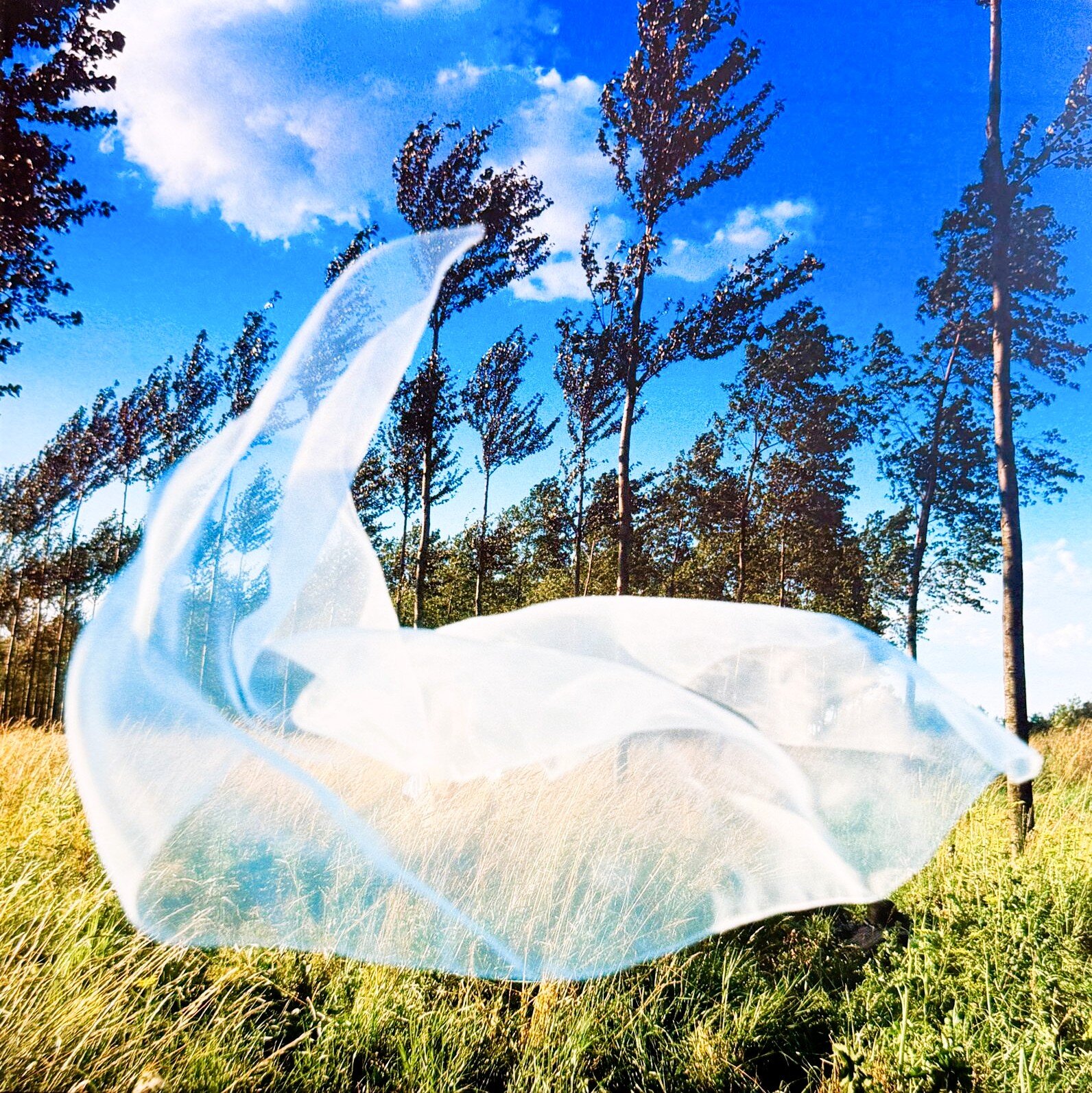
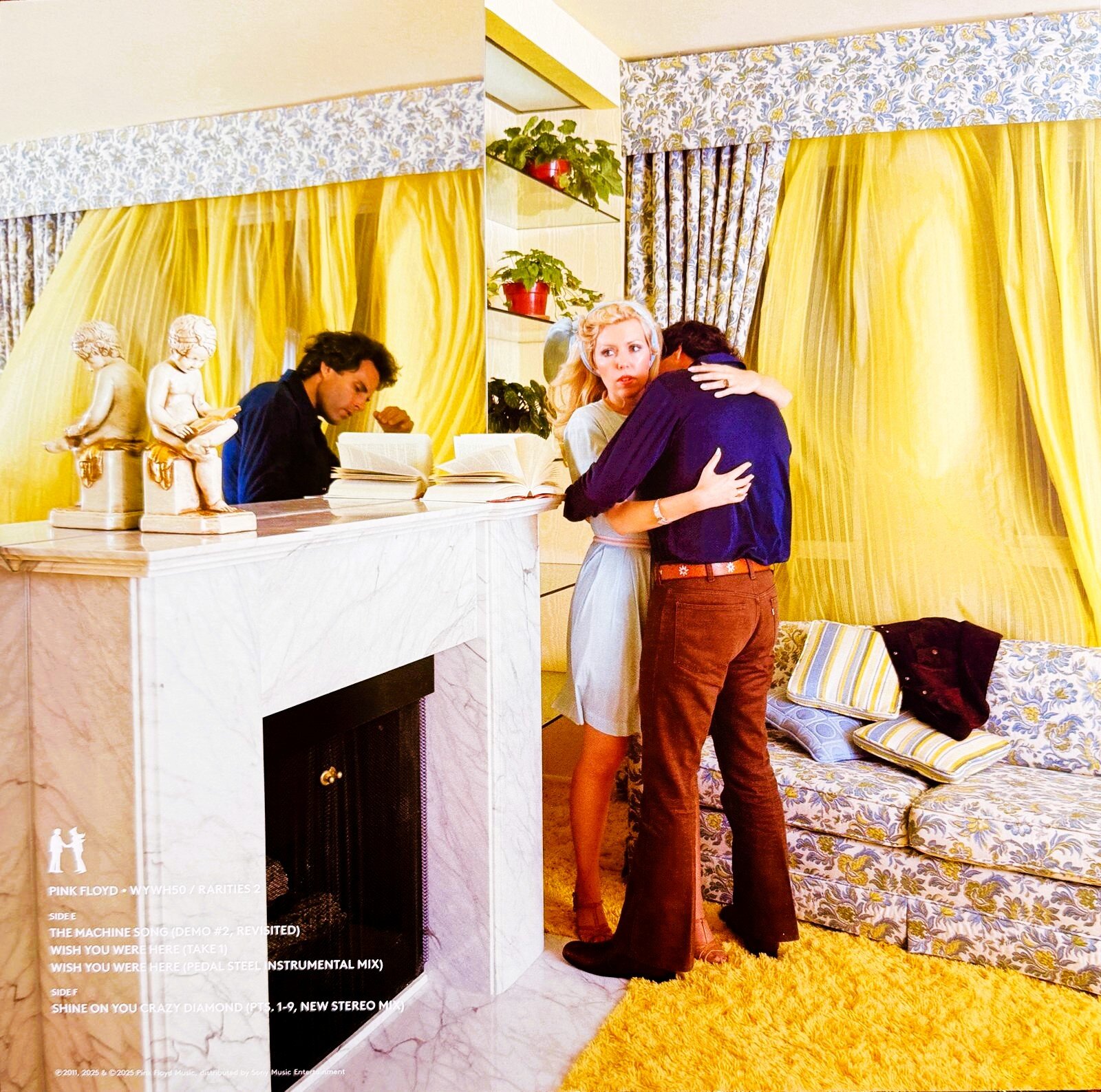
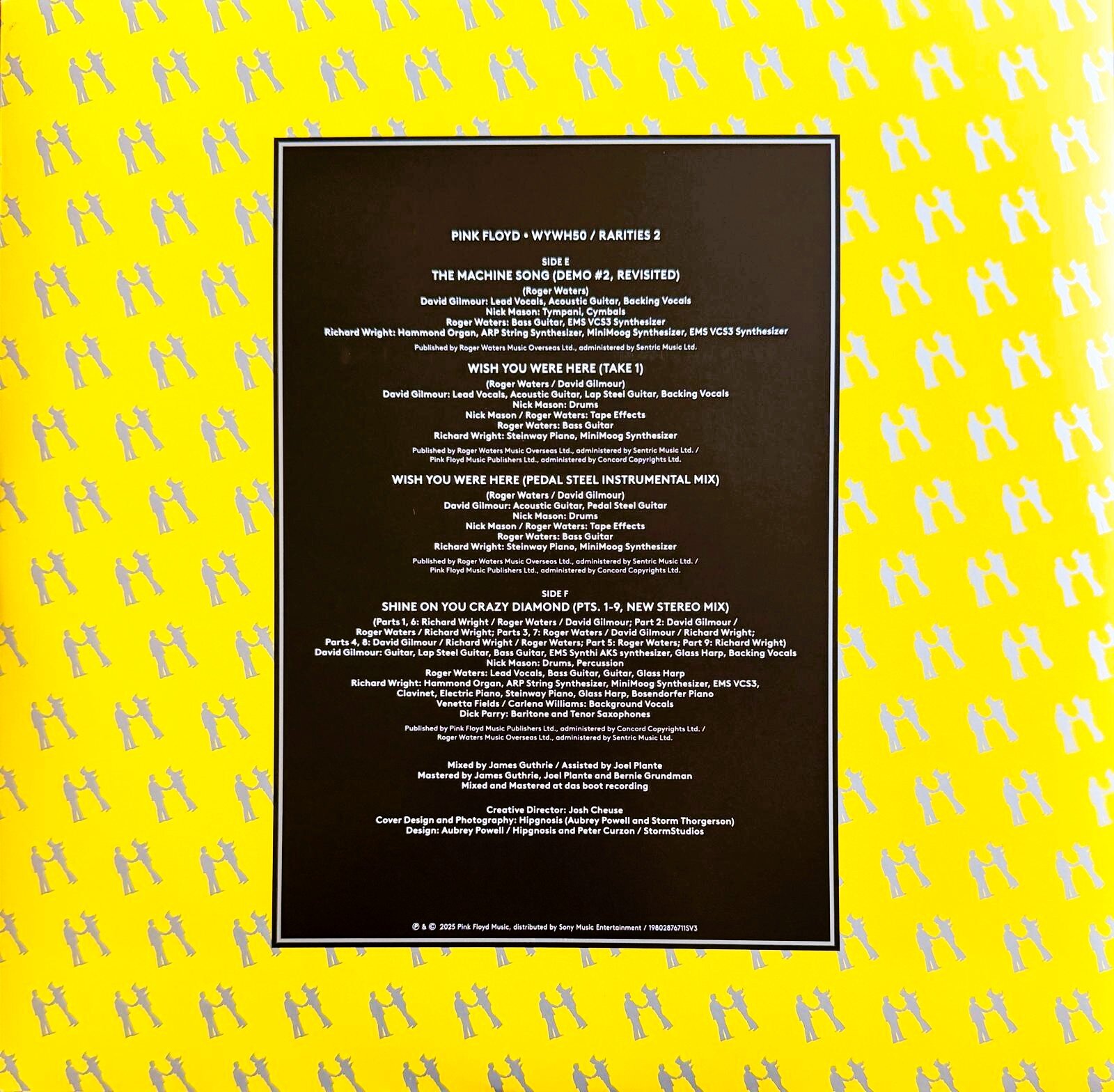
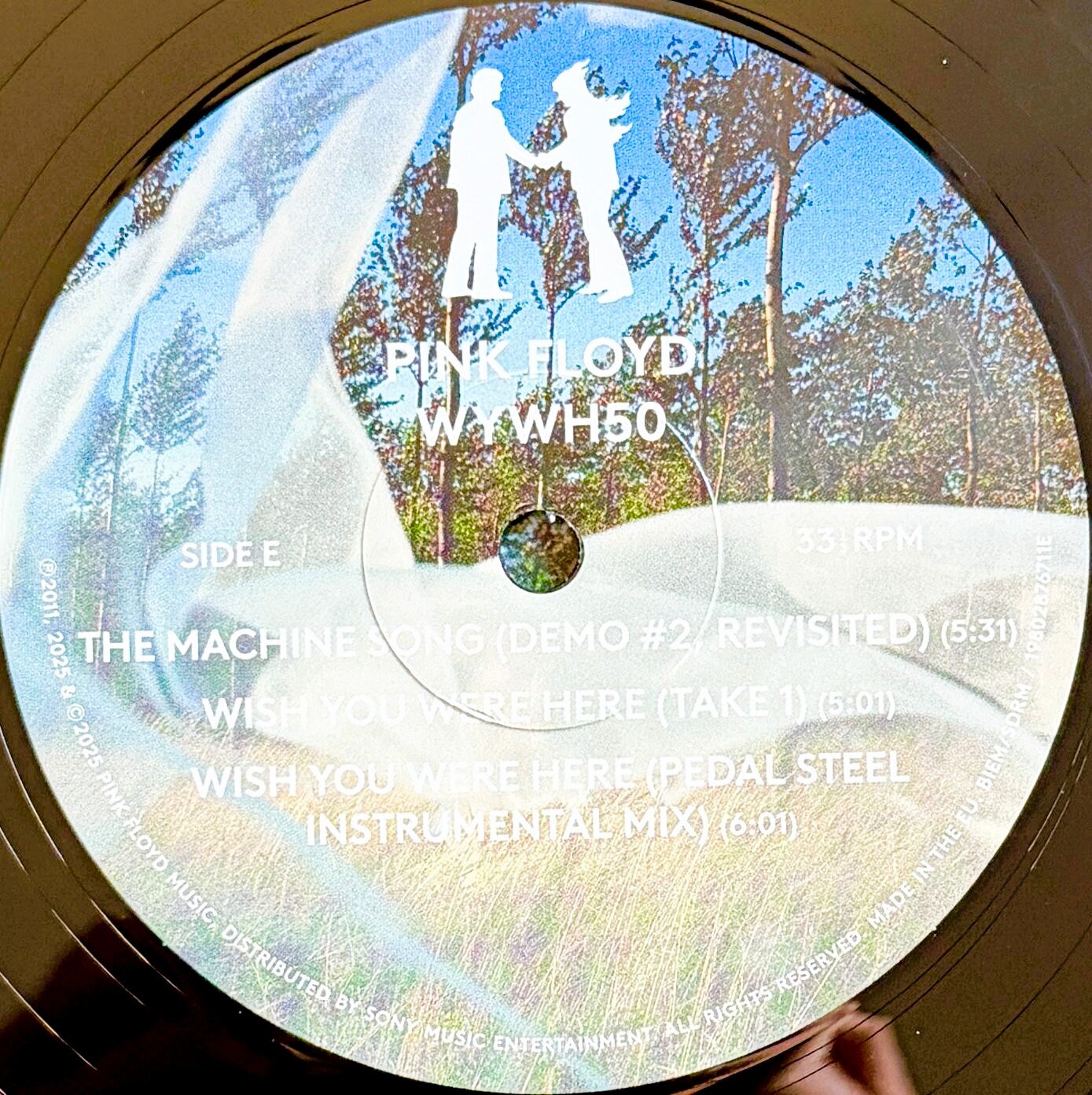
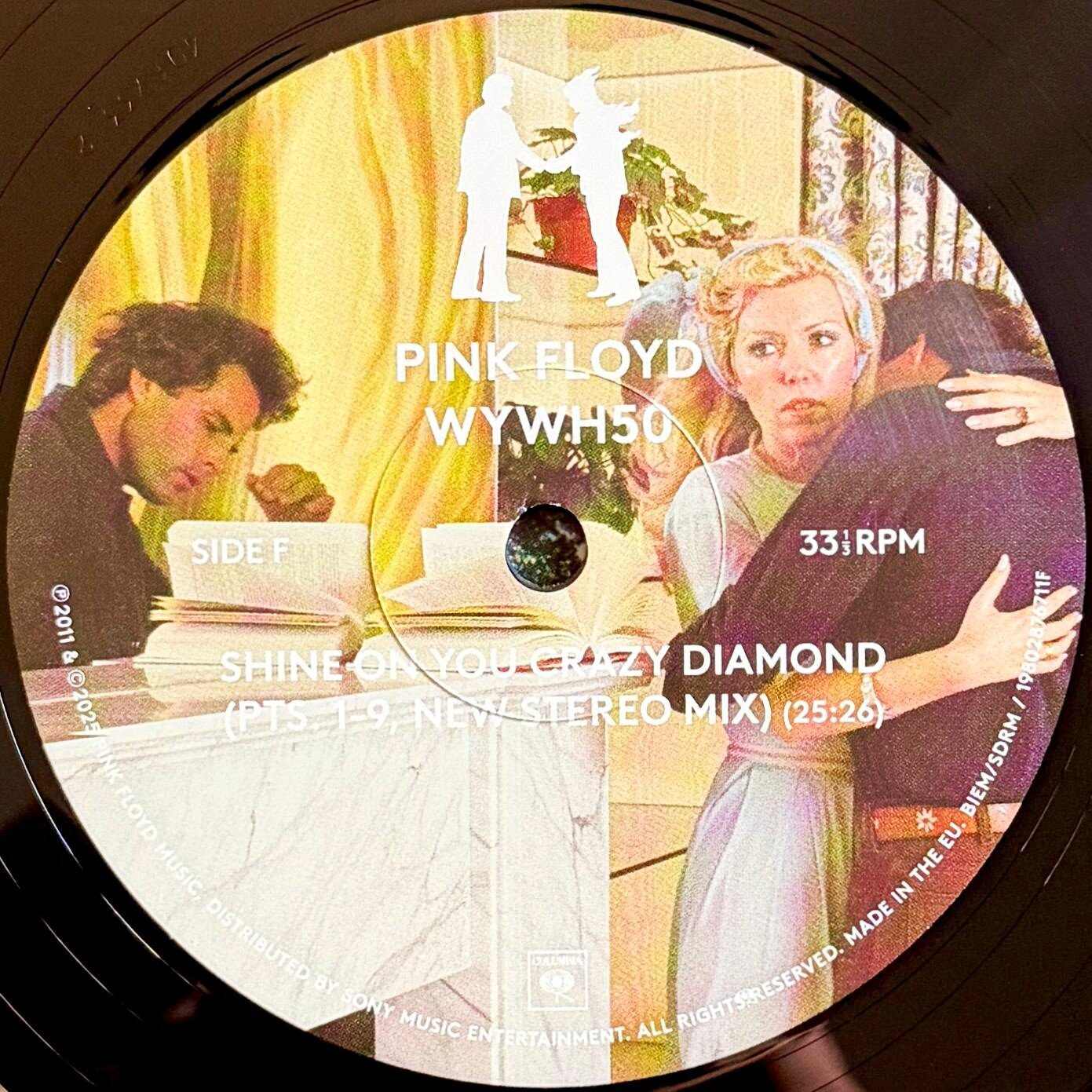
The third LP is dedicated to the evolution of the songs and to alternative mixes or previously unreleased versions, and here too they offer at least two masterpieces: a version of "Wish You Were Here," an absolute rarity that isolates Gilmour's pedal steel guitar, and "Shine On You Crazy Diamond (Pts. 1-9), presented for the first time as a complete, uninterrupted suite lasting approximately 25 minutes.
The Machine Song (Demo #2, Revisited), unlike Roger Waters' first demo, sees the band heavily incorporate electronics, with Richard Wright's first experiments with the VCS3 synthesizer. Some vocal lines can be heard, with David Gilmour harmonizing with Waters, which are not present on the final version.
Wish You Were Here (Take 1) is a more stripped-back version of the title track. David Gilmour's vocals are less refined, and the track lacks the rich layers of overdubs of the final version. The acoustic guitar is predominant, the radio-friendly opening effects are missing, and the nuanced ending is absent, all elements that make it a "simple" yet beautiful song.
Next comes one of the album's masterpieces, "Wish You Were Here (Pedal Steel Instrumental Mix), a song of rare beauty, which isolates Gilmour's pedal steel guitar, with a country-blues sound that doesn't quite exist with such force in the original. Without the lyrics, the song transforms and becomes heartbreaking. A masterpiece to listen to again and again.
This beautiful box set closes with "Shine On You Crazy Diamond (Pts. 1-9) (New Stereo Mix), where for the first time the complete suite can be heard as a single, uninterrupted stream of approximately 25 minutes, remastered with modern technology. A monumental and sublime song that closes a monumental and sublime album.
Tracklist Studio Rarities 2
The Machine Song (Demo #2, Revisited).
Wish You Were Here (Take 1).
Wish You Were Here (Pedal Steel Instrumental Mix).
Shine On You Crazy Diamond (Pts. 1-9, New Stereo Mix).
Studio Rarities 2 Lineup
David Gilmour: Vocals, guitars, pedal steel guitar, keyboards.
Roger Waters: Vocals, bass, EMS VCS 3.
Richard Wright: Keyboards, piano, backing vocals.
Nick Mason: Drums, percussion.
Production Credits
Original Recording Engineers: Brian Humphries.
2025 Audio Mixing/Remastering: James Guthrie (credited for new stereo mixes) and Joel Plante.
Mastering/Lacquer Cut: Bernie Grundman Mastering
Note: All links to the musicians' works are in the TAGS under the article title or on the "Artists" page.
.jpeg "Meddle by Pink Floyd")