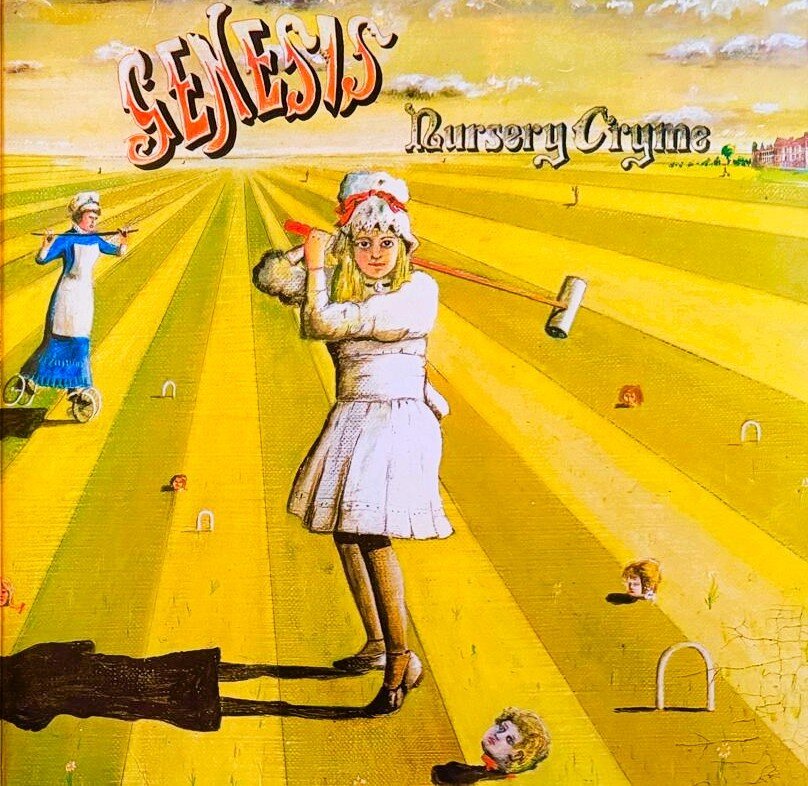
Nursery Cryme il terzo album dei Genesis, del 1971, un disco cruciale che vede l’ingresso di Phil Collins alla batteria e voce e Steve Hackett alla chitarra in formazione a creare la formazione “classica” che consoliderà il sound dei Genesis, la seguente
- Peter Gabriel: voce, flauto, percussioni.
- Tony Banks: tastiere, mellotron, chitarra 12 corde.
- Mike Rutherford: basso, chitarra 12 corde.
- Phil Collins: batteria e cori (sostituì John Mayhew).
- Steve Hackett: chitarra elettrica e acustica (sostituì Anthony Phillips).
Tutti artisti dei quali ho lungamente parlato nella scheda dedicata ai Genesis "Genesis: Il Prog, il Pop e le influenze del sound "genesiano"
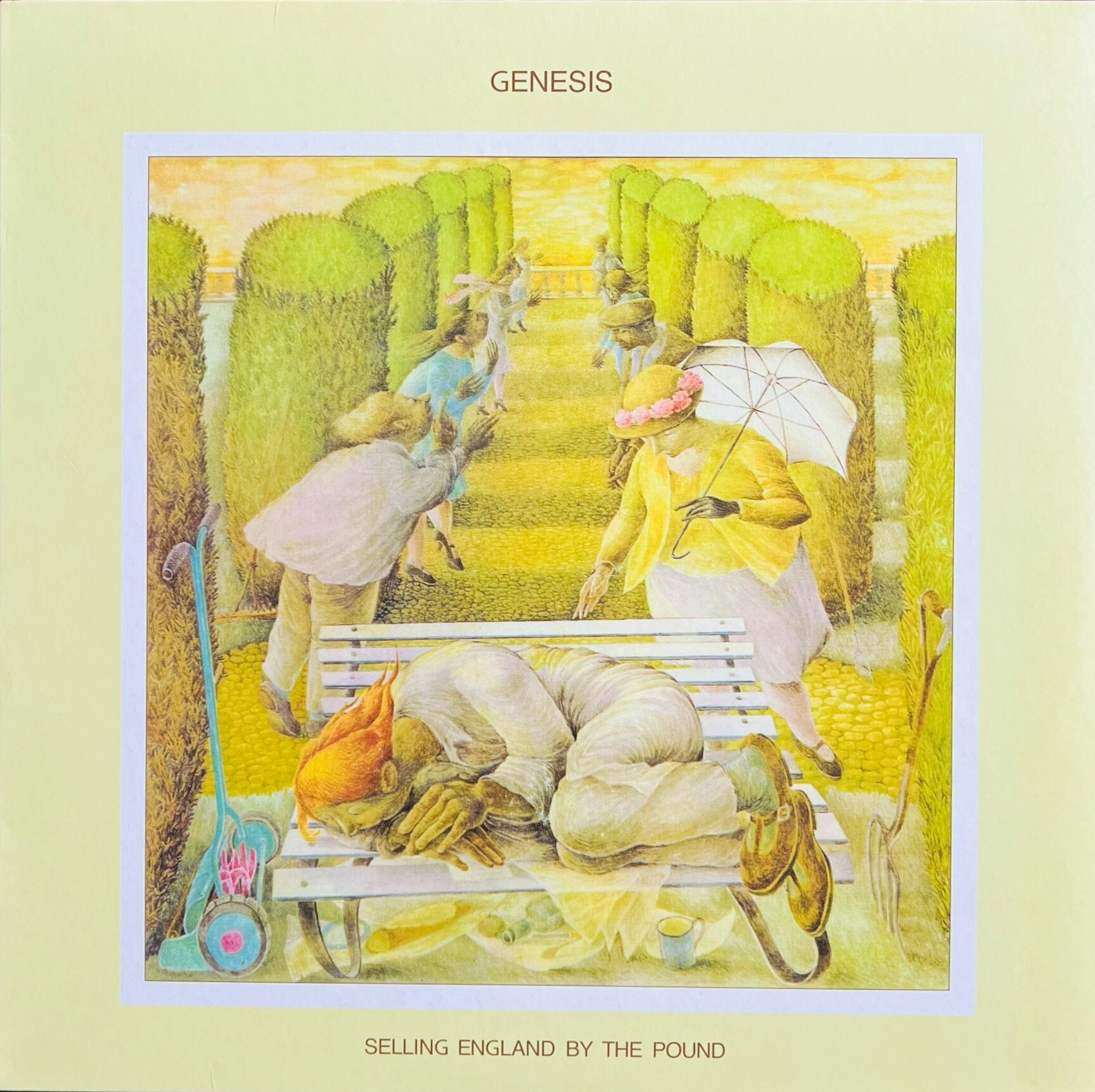
Il disco forma un trittico fondamentale per il progressive rock che con Foxtrot e Selling England by the Pound diventerà una serie impressionante di album essenziali per la musica.
La band abbandona la forma di canzone per strutture complesse, tipiche del progressive rock, con ritmi variabili e progressioni elaborate, introducendo sonorità più aggressive e complesse rispetto al precedente Trespass, per un progressive rock fiabesco che narra storie di elfi e amori proibiti. L’album musicalmente è un capolavoro innovativo, grazie al virtuosismo di Collins alla batteria e all'uso del mellotron (acquistato dai King Crimson) e alla tecnica del tapping di Hackett. Mi torna alla memoria quando ho parlato degli strumenti utilizzati da Dave Kerzner nel suo disco “IT - A Celebration of The Lamb Lies Down On Broadway” per i brani suonati con autentici strumenti vintage degli anni ‘70 tra cui molte delle tastiere appartenute a Tony Banks, chissà se c’era anche il mellotron acquistato dai King Crimson.
l titolo è un gioco di parole tra “nursery rhyme” (filastrocche per bambini) e crime (crimine).
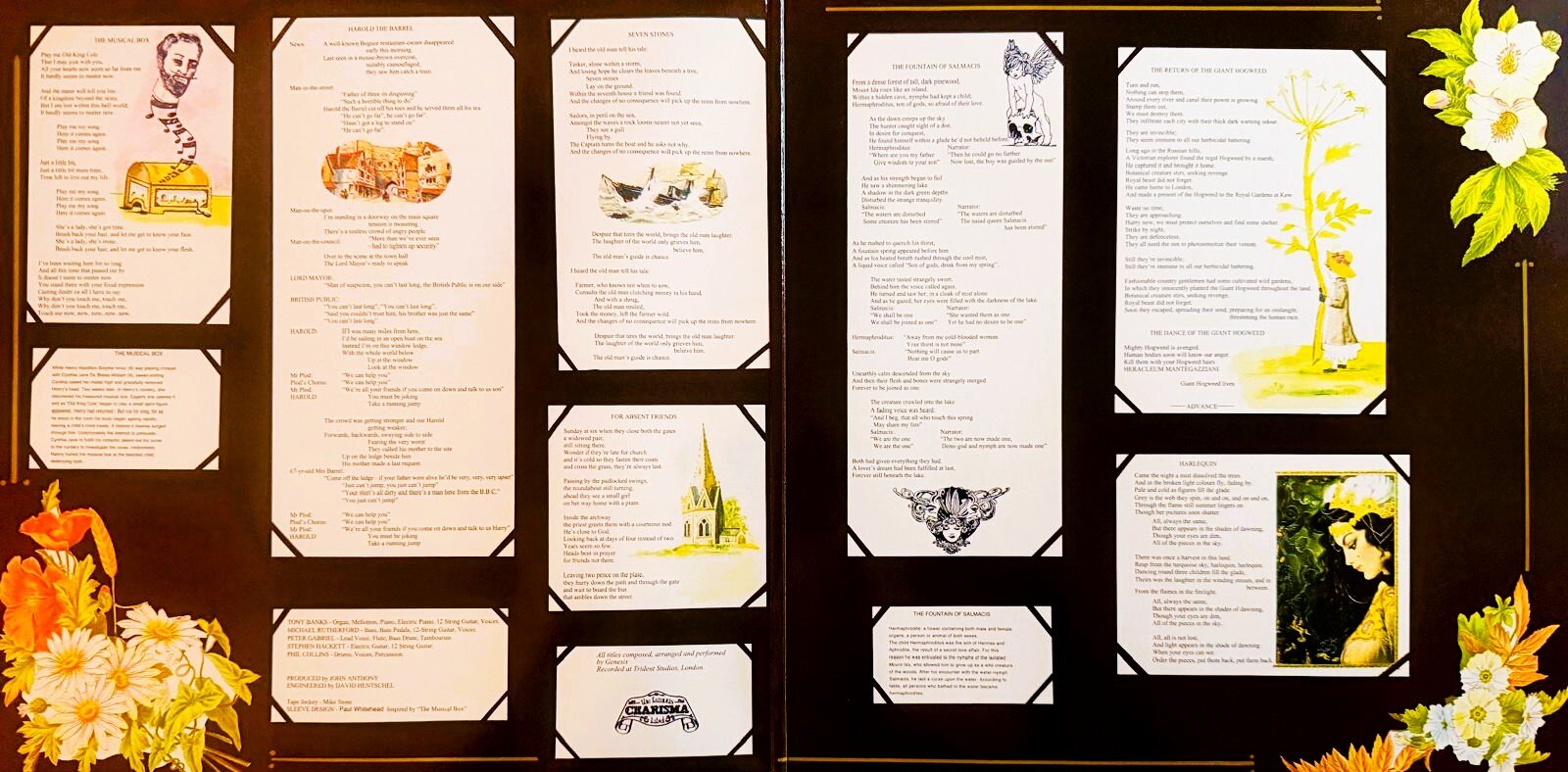
L’ atmosfera è fiabesca, gotica con testi che esplorano mondi fantasy, con riferimenti a miti (l'ermafrodita in "The Fountain of Salmacis") e storie horror vittoriane, ispirate alle filastrocche inglesi (le già citate nursery rhymes), con i testi si ispirano a favole macabre, mitologia e cronaca surreale con The Musical Box che narra la storia di Cynthia, che uccide il compagno di giochi Henry con una mazza da croquet; lo spirito del bambino ricompare poi invecchiato attraverso un carillon, The Return of the Giant Hogweed che descrive una "pianta assassina" (ispirata alla reale Heracleum mantegazzianum) che invade l'Inghilterra e The Fountain of Salmacis: basata sul mito greco di Ermafrodito e della ninfa Salmace.
Le tracce sono tutti grandissimi capolavori
The Musical Box apre il disco
Si tratta di una delle composizioni più famose dei Genesis, una suite visionaria che da sola rappresenta lo stile del progressive rock dei primi anni '70.
Il brano nasce da un pezzo strumentale intitolato F#, scritto da Mike Rutherford e Anthony Phillips prima che lasciasse la band. La versione finale include i contributi fondamentali di Steve Hackett che introduce l'uso della tecnica del tapping alla chitarra, Phil Collins che apporta una dinamica ritmica aggressiva e complessa, Tony Banks che inserisce sonorità derivanti dagli Who, su suggerimento di Peter Gabriel.
Il Testo narra una Fiaba Macabra, scritto da Peter Gabriel, racconta una storia surreale e violenta ambientata in epoca vittoriana, nella quale, durante una partita a croquet, la piccola Cynthia uccide il suo compagno di giochi Henry decapitandolo con una mazza. Tempo dopo, Cynthia ritrova il carillon di Henry. Aprendolo, la melodia (Old King Cole) risveglia lo spirito del bambino, che riappare in forma corporea ma invecchia rapidamente fino a diventare un vecchio. Lo spirito, colto da desideri repressi tipici dell'età adulta in un corpo senile, cerca di sedurre la bambina (da cui il celebre climax finale "Why don't you touch me, touch me, touch me now!"). La governante interviene scagliando il carillon contro lo spettro, distruggendo entrambi.
La suite è alterna momenti di estrema dolcezza a esplosioni imponenti, dopo una intro acustica, un arpeggio di chitarre a 12 corde che crea un'atmosfera fiabesca, parte una sezione strumentale incalzante dove tastiere e chitarre elettriche dialogano magnificamente verso un finale teatrale, con il crescendo vocale di Gabriel che è uno dei momenti più intensi della sua carriera a mio avviso.
The Musical Box nei concerti dal vivo era interpretata con il famoso travestimento di Peter Gabriel che indossava la maschera di un vecchio curvo durante la sezione finale per interpretare visivamente la trasformazione di Henry.
For Absent Friends è un brano e molto sottovalutato brano che separa le due suite del lato A del disco.
È la prima canzone dei Genesis cantata interamente da Phil Collins mostrando per la prima volta quel timbro che sarebbe diventato centrale per la band dopo il 1975.
Il testo descrive una scena di vita quotidiana inglese e trasuda di malinconia e nostalgia, con due vedovi che si recano in chiesa una domenica pomeriggio in una atmosfera pastorale tipicamente britannica descritta con dovizia di particolar, come i cancelli dei parchi che chiudono alle sei o una bambina che spinge una carrozzina.
Musicalmente è un brano della durata di meno di due minuti con uno splendido intreccio delle chitarre acustiche a 12 corde di Steve Hackett e Mike Rutherford, un intermezzo melodico che attenua la tensione tra l'epica di The Musical Box e l'aggressiva di The Return of the Giant Hogweed e per questo è una ballata molto sottovalutata, un capolavoro nascosto. persone anziane, nonostante fosse stata scritta da musicisti poco più che ventenni.
The Return of the Giant Hogweed è uno dei momenti più energici e sperimentali del disco che unisce la satira sociale, la fantascienza e l’innovazione tecnica.
Il brano racconta in modo teatrale l'invasione dell'Inghilterra da parte dell'Heracleum mantegazzianum (Panace di Mantegazza), una pianta tossica realmente esistente e narra di un esploratore vittoriano che porta la pianta in Inghilterra dalle colline russe e la pianta innocentemente nei giardini reali, ma la creatura si risveglia per vendicarsi della razza umana, diventando invincibile contro ogni diserbante. In realtà Peter Gabriel utilizza la pianta come metafora delle conseguenze impreviste dell'interferenza umana con la natura e come satira verso l'ossessione vittoriana per il collezionismo esotico.
Musicalmente presenta tecniche chitarristiche rivoluzionarie per l'epoca, in particolare l'uso del Tapping nella intro in cui Steve Hackett suona le note sulla tastiera con entrambe le mani con una tecnica che avrebbe influenzato generazioni di chitarristi rock, fra i quali Eddie Van Halen.
Imponenti le tastiere di Tony Banks che usa il piano elettrico e mellotron e la sezione ritmica potente guidata da Phil Collins.
Il brano si chiude con un crescendo martellante, una marcia inarrestabile che simboleggia alla perfezione l'avanzata della pianta.
Seven Stones è la gemma nascosta dell'album, un brano dalla atmosfera sognante accreditato principalmente a Tony Banks con un arrangiamento romantico, incentrati su un maestoso mellotron e splendido organo, con una struttura meno aggressiva rispetto agli altri brani del disco ma con un finale epico orchestrale stupendo.
Il testo narra tre diverse parabole attraverso il racconto di un vecchio saggio, la storia di un uomo perso in una tempesta che trova rifugio grazie a un segno del destino (sette pietre sotto le foglie), la storia di un marinaio che evita un disastro seguendo un istinto improvviso dettato dal volo di un gabbiano, la storia di un uomo inesperto che tenta di comprare la saggezza, finendo truffato, realizzando così che la vera saggezza non ha prezzo.
Harold the Barrel è uno dei momenti più teatrali della discografia dei Genesis, dal ritmo incalzante e con una narrazione macabra, una sorta di "mini-opera" comica scritta quasi interamente da Peter Gabriel e che a differenza delle lunghe suite progressive dell'album, ha una durata di circa 3 minuti e sembra suonato a velocità raddoppiata.
La storia narra il tentato suicidio di Harold, il proprietario di un ristorante che ha subito un crollo nervoso. Harold sparisce, si taglia le dita dei piedi (servendole per il tè nel suo ristorante) e infine sale sul cornicione di un edificio minacciando di saltare. La reazione di chi lo circonda è grottesca, con la madre che si preoccupa più dell'apparenza che della vita del figlio, esclamando la celebre frase: "La tua camicia è tutta sporca, c'è un uomo qui della BBC!", criticando così la spettacolarizzazione del dolore, con la folla e i media che accorrono per assistere all'evento come se fosse uno show.
Musicalmente il brano è caratterizzato da un bellissimo dialogare fra Peter Gabriel e Phil Collins, che interpretano i vari personaggi con toni caricaturali, mentre il bellissimo piano di Tony Banks scandisce il ritmo accompagnato da una linea di basso spettacolare di Mike Rutherford.
Harlequin è un breve intermezzo acustico che precede la chiusura dell'album, scritto principalmente da Mike Rutherford, torna alla atmosfera pastorale e folk dei Genesis di Trespass. Si tratta di uno splendido intreccio di chitarre acustiche a 12 corde suonate da Rutherford e Steve Hackett, con un accompagnamento di basso melodico, con splendide armonie vocali con le voci di Peter Gabriel e Phil Collins in un coro e malinconico per un testo che è incentrato sul passaggio del tempo, la luce che sbiadisce e la natura che si prepara al riposo. Arlecchino (Harlequin) non appare come il classico personaggio della commedia dell'arte, ma come una metafora della mutevolezza dei colori e delle ombre nel bosco. Brano di grande eleganza, il lato più dolce e sognante del progressive rock britannico dei primi anni '70
The Fountain of Salmacis è uno dei vertici assoluti del progressive rock sinfonico, circa otto minuti, con un'atmosfera mitologica e solenne, il cui testo, scritto principalmente da Mike Rutherford, si ispira ai Miti greci (alle Metamorfosi di Ovidio) e narra la storia di Ermafrodito, figlio di Ermes e Afrodite, e della ninfa Salmace.
La ninfa, perdutamente innamorata del giovane che si sta bagnando nella sua fonte, prega gli dèi di restare unita a lui per sempre e il desiderio viene esaudito fondendo i loro corpi in un unico essere dotato di entrambi i sessi.
Musicalmente, il brano è un trionfo delle tastiere di Tony Banks, il Mellotron con l'apertura del brano è uno dei momenti più importanti nell'uso del mellotron con suoni di archi e cori un muro di suono maestoso e ipnotico. L'assolo di Steve Hackett nella sezione centrale e finale con linee melodiche sognanti. La batteria di Phil Collins con stile jazzistico e potente con splendide transizioni fra i cambi di tempo. Uno dei brani più emozionanti della discografia dei Genesis, probabilmente quello che ha definito il "suono Genesis" che verrà perfezionato nel successivo album, altro capolavoro Essenziale, Foxtrot.
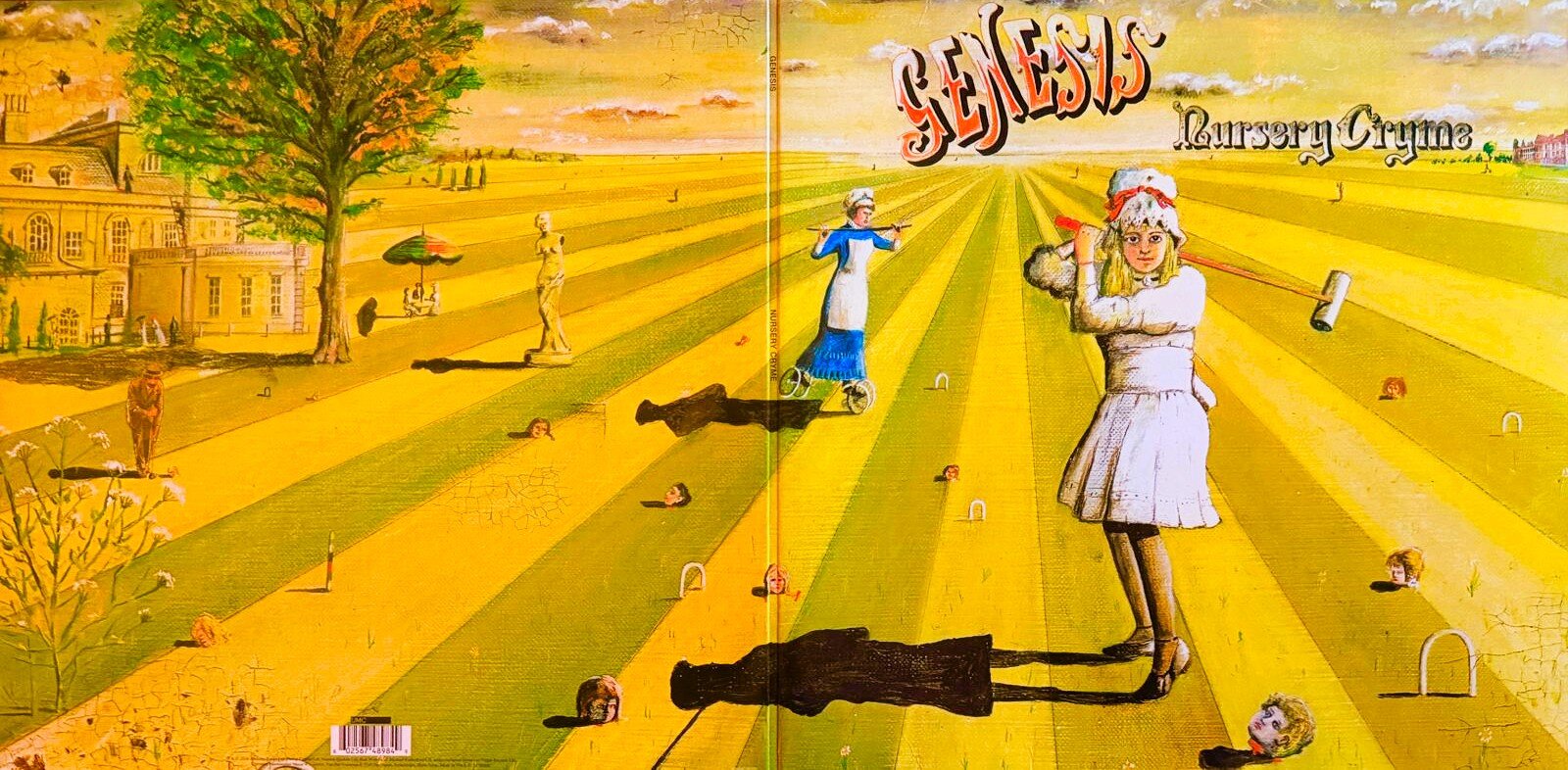
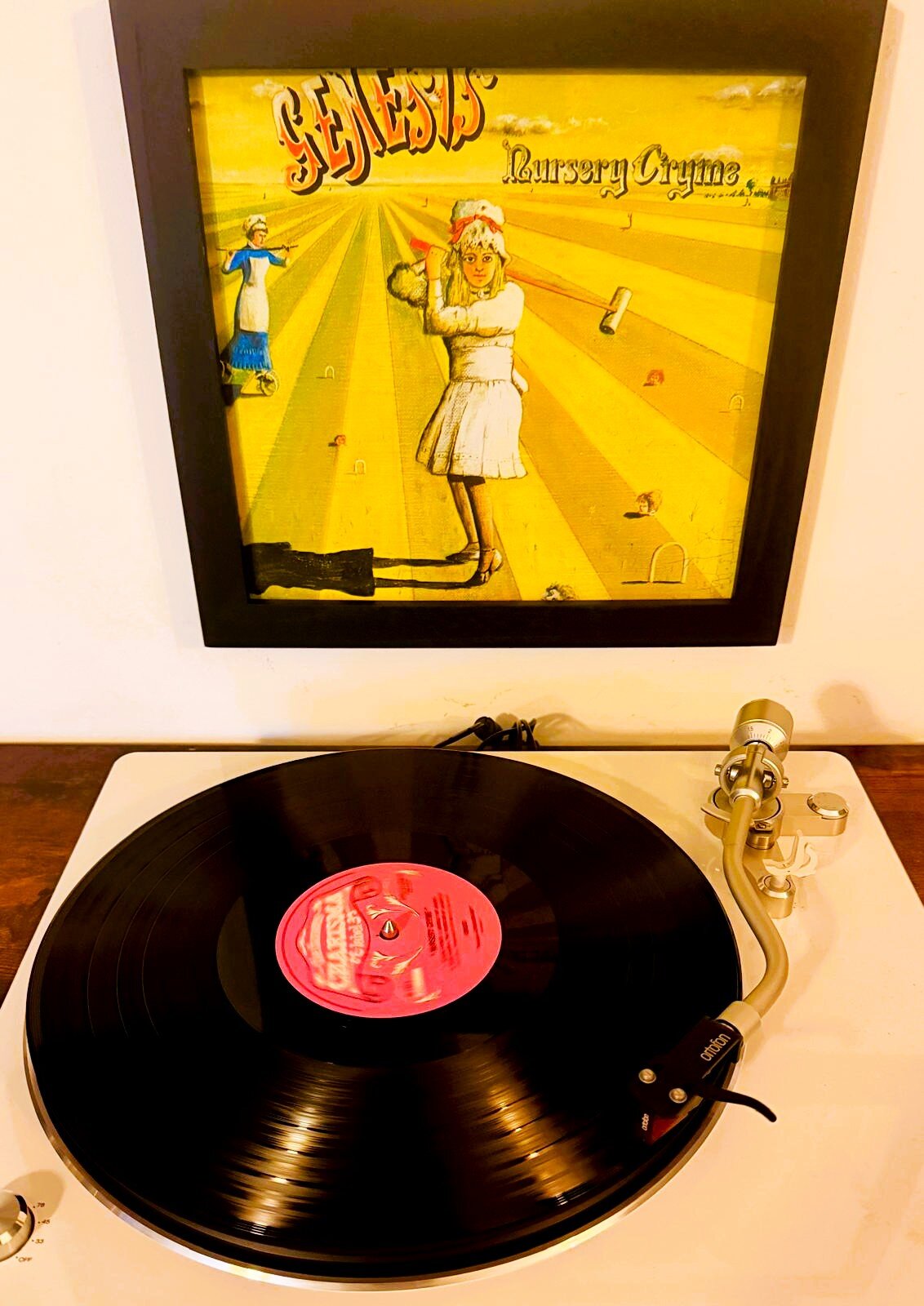
L'artwork di Paul Whitehead riflette perfettamente i concetti surreali e vittoriani e raffigura la bambina di The Musical Box che gioca a croquet con le teste mozzate dei bambini, mentre altri elementi rimandano ai temi delle altre canzoni, come la pianta di Hogweed, il vecchio di Seven Stones e la Venere di Milo (riferimento a The Fountain of Salmacis). La copertina ha un aspetto invecchiato ottenuto con la vernice al miele e crea un'atmosfera da vecchia favola macabra.
All'uscita, l'album passò quasi inosservato nel Regno Unito, entrando in classifica solo nel 1974 ma ottenne un successo immediato nell'Europa continentale, specialmente in Italia, dove i Genesis divennero un fenomeno di culto (che resiste ancora oggi) permettendo alla band di intraprendere i primi grandi tour internazionali.
Oggi il disco è riconosciuto universalmente come una delle pietre miliari del progressive rock. Un disco che non può mancare in una collezione Prog degna di questo nome.
Per questo torno periodicamente ad ascoltarlo, perché per me è il “luogo” dove l’amore per il prog è iniziato, quando avevo 14 anni e il tastierista di una band che cercava un batterista mi diede una cassetta TDK D90 (ormai perduta) per spiegarmi il genere che poi avrei suonato per anni e amato tutta la vita, con i pezzi dei Genesis, di questo album. Mi confrontai quella volta per la prima volta con quel graffio che compare nella voce densa di Péter Gabriel, l’urlo quasi soffocato in partenza ma che alla fine si libera quando dice “why don’t you touch me … now! now! now! now! now!”, mentre Phil fa egregiamente quello che sa fare meglio. La band al completo, il meglio di Steve, Mike e Tony. E così tutto il disco. Un disco spettacolare. Che non è secondo neanche a selling England by the pound e non solo per un valore affettivo: nella mia classifica sono alla pari.
Bello tornare indietro ogni tanto e scoprire che sotto sotto musicalmente sono sempre stato solo un dinosauro dei tempi dispari o forse, data l’evoluzione di quello che ascolto, un camaleonte.
Nota: Tutti i link ai lavori dei musicisti sono nei TAG sotto il titolo dell'articolo o nella pagina "Artisti"
Tracklist
1. The Musical Box (10:24)
2. For Absent Friends (1:44)
3. The Return of the Giant Hogweed (8:10)
4. Seven Stones (5:10)
5. Harold the Barrel (2:55)
6. Harlequin (2:52)
7. The Fountain of Salmacis (7:54)
Durata 39:09
LineUp
- Peter Gabriel - voce solista, flauto, tamburello, grancassa
- Steve Hackett - chitarra elettrica e chitarra a 12 corde
- Tony Banks - organo, Mellotron, pianoforte e pianoforte elettrico, chitarra a 12 corde, cori
- Mike Rutherford - basso, pedali per basso, chitarra a 12 corde, cori
- Phil Collins - batteria, percussioni, voce solista (2) e cori