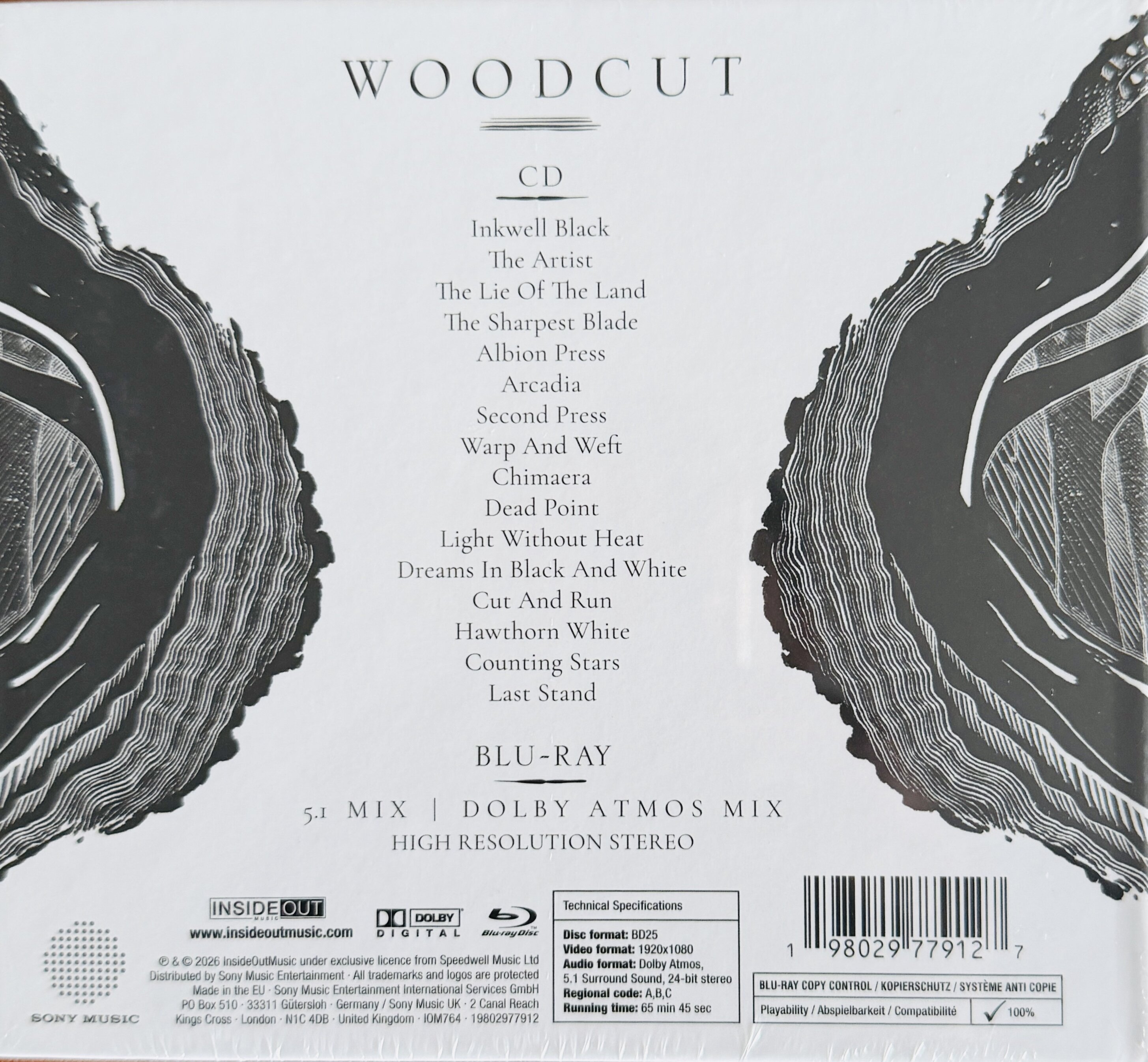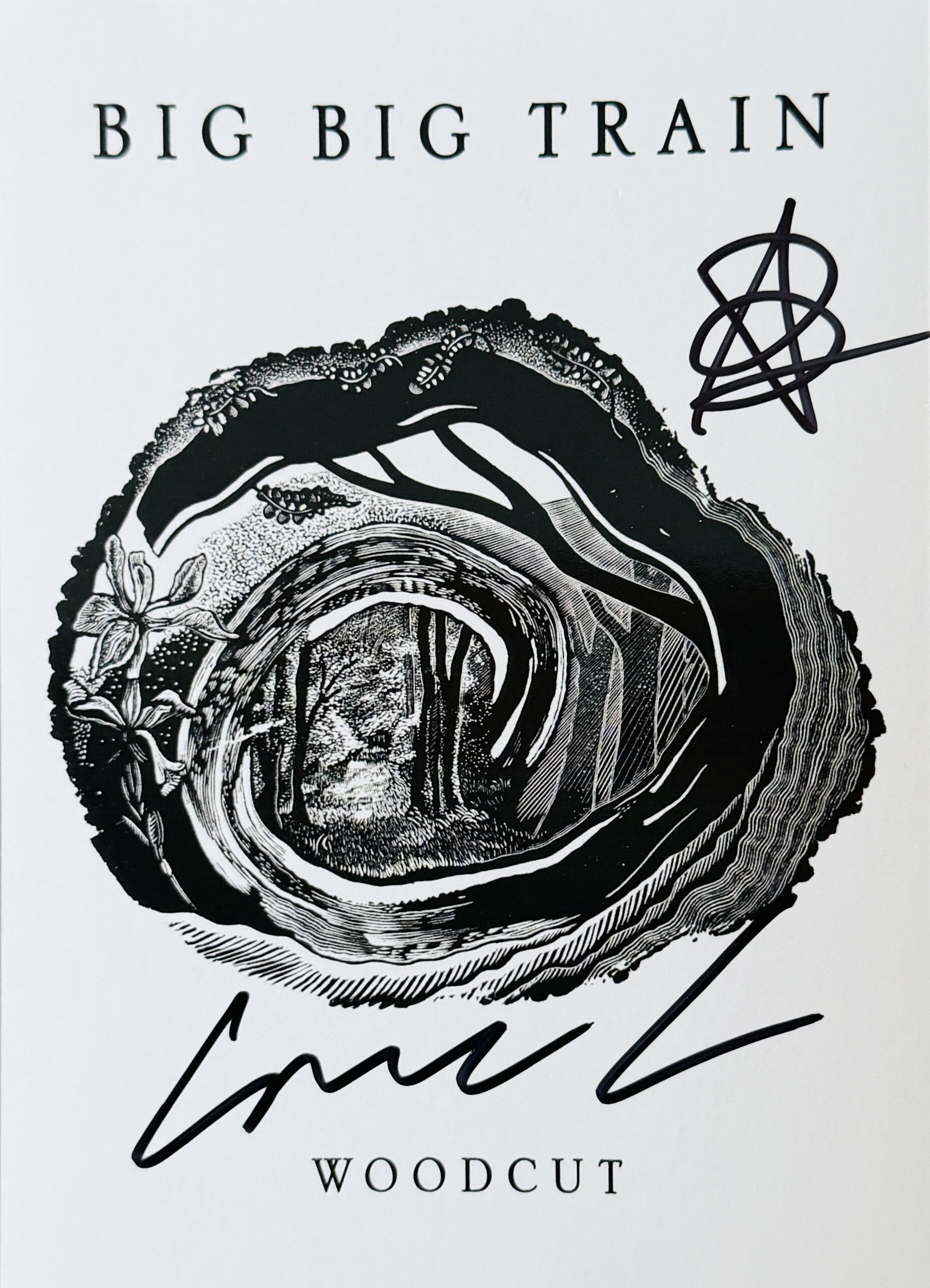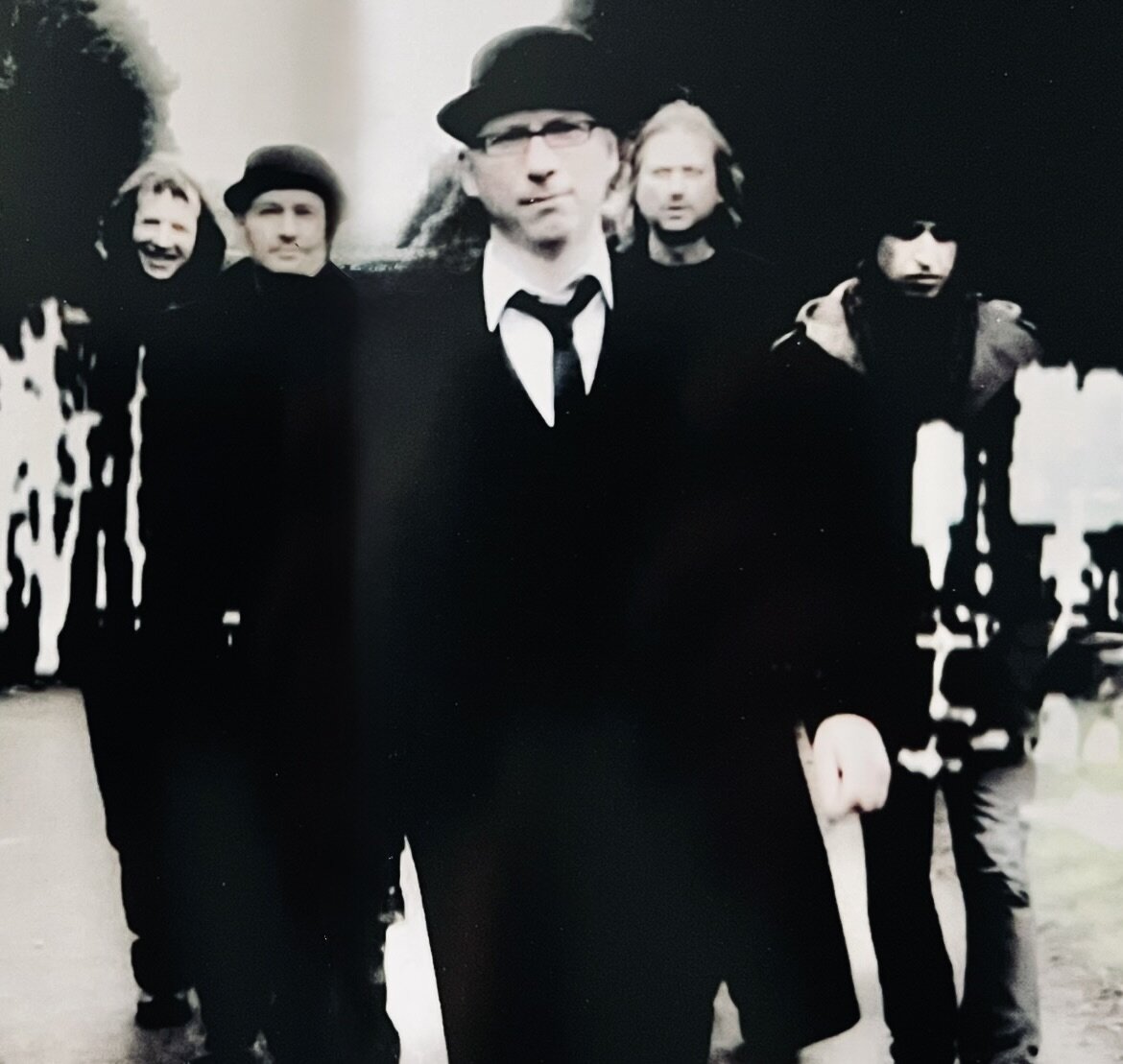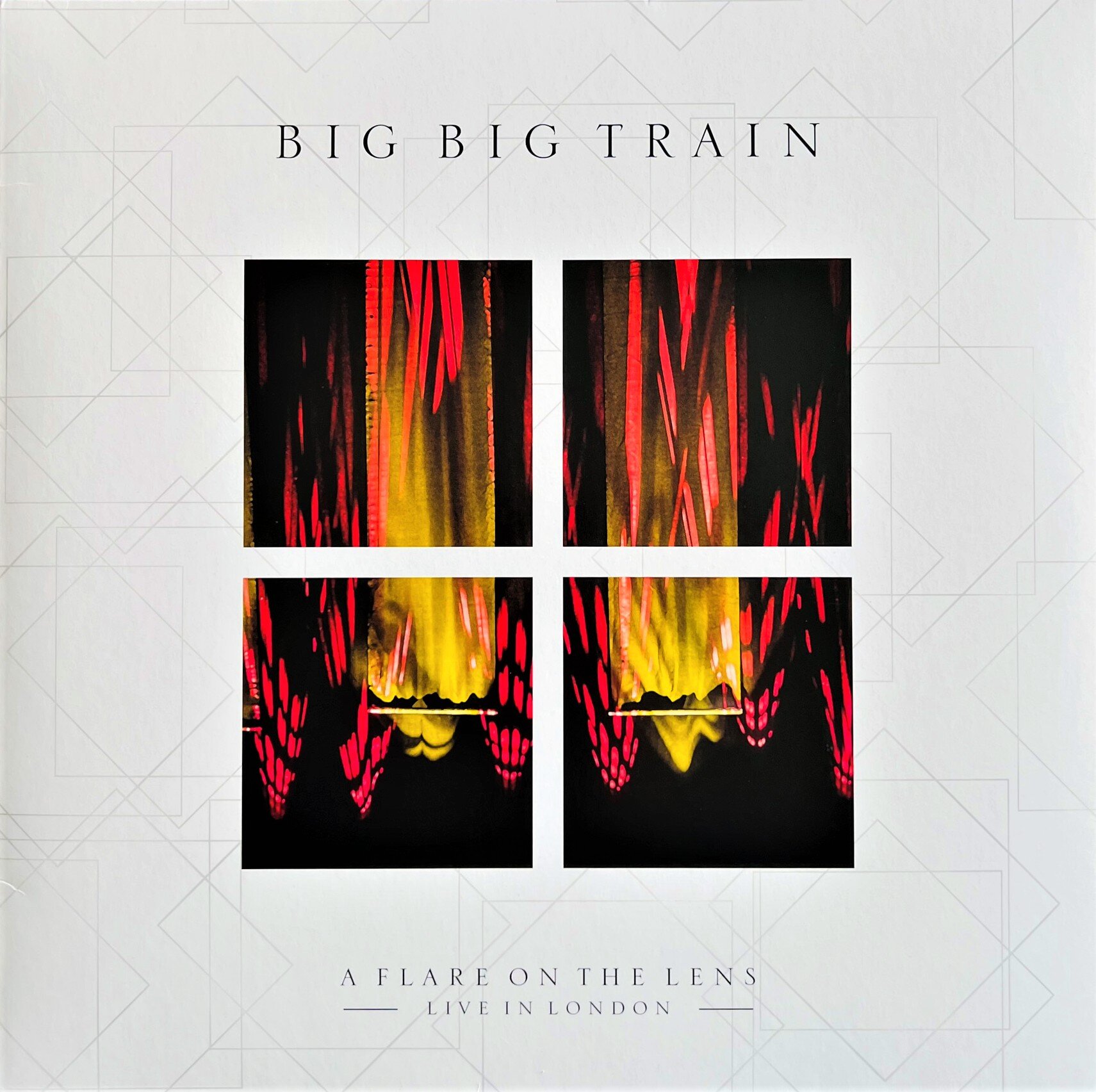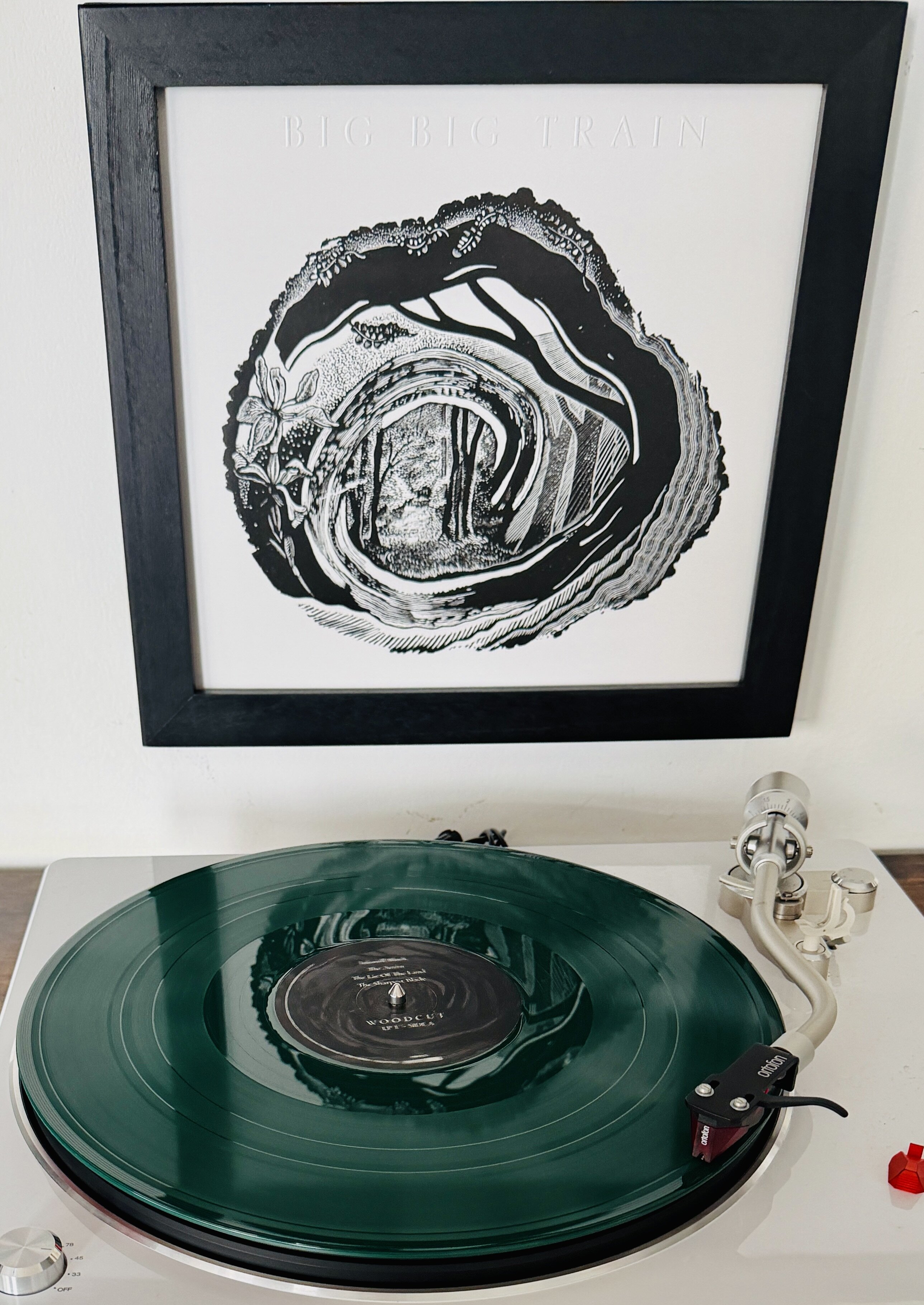
Woodcut dei Big Big Train , del 2026.
Dei Big Big Train, fra i massimi esponenti del progressive rock contemporaneo, ho lungamente parlato in occasione delle recensioni dei loro album e nella scheda a loro dedicata "“I Big Big Train, una storia di amicizia, passione e resilienza”.
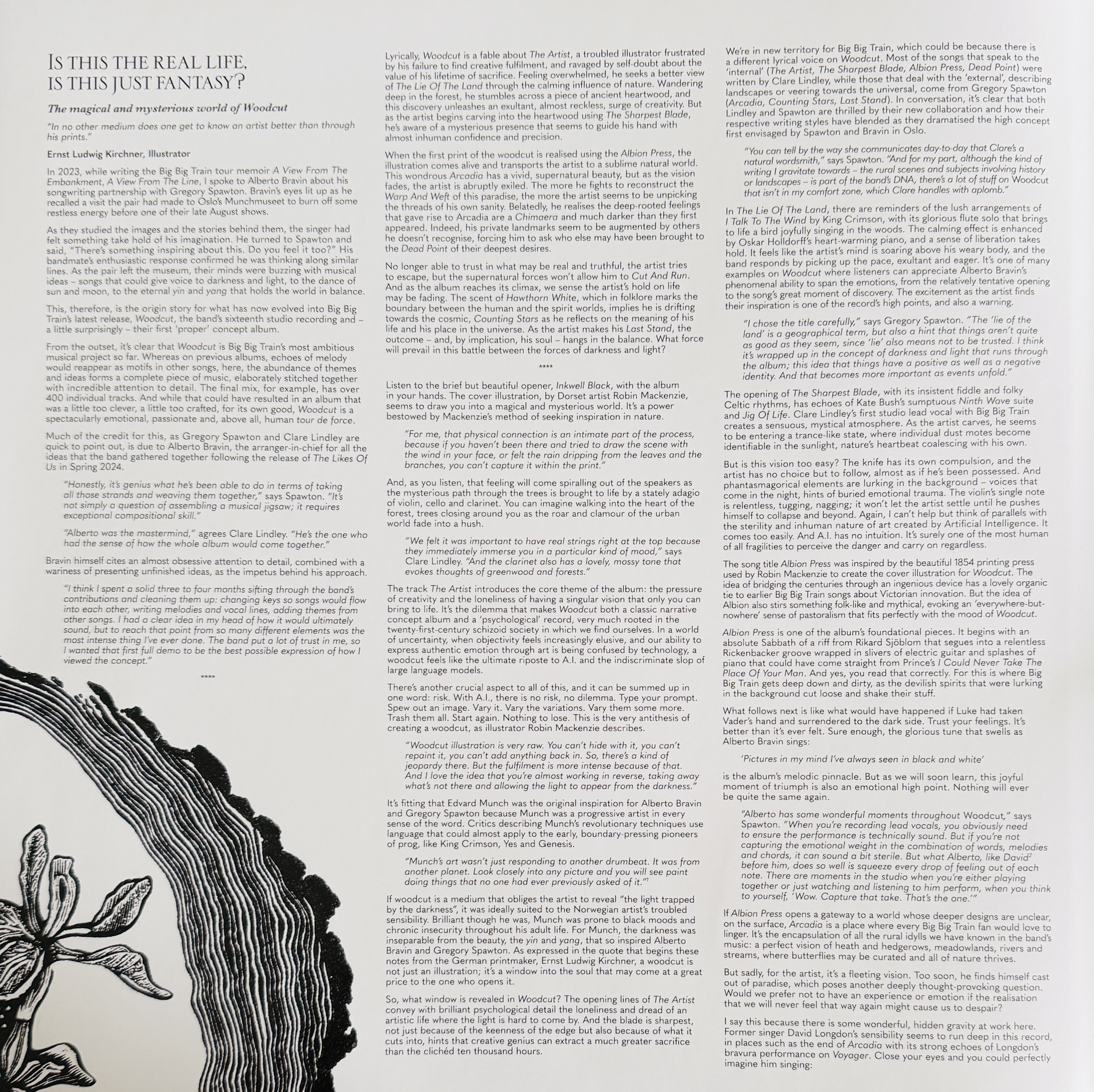
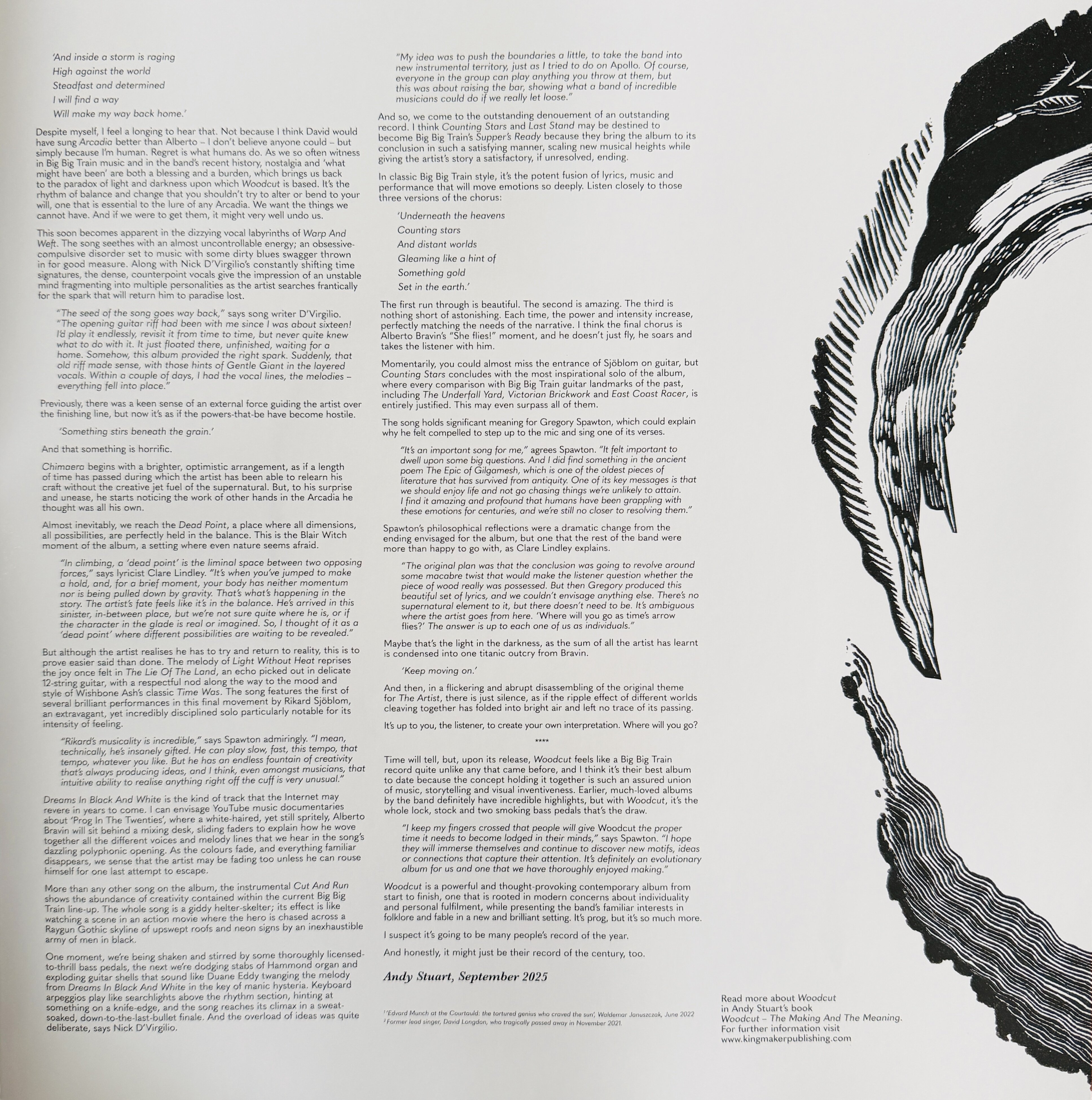
Woodcut è un concept album ispirato alle opere di Edvard Munch. È il loro lavoro più ambizioso, che esplora il contrasto tra oscurità e luce attraverso la storia di un artista tormentato. Alberto Bravin, l’arrangiatore principale, che ha lavorato per fondere le idee della band, creando un’opera complessa e dettagliata.
L’album esplora temi di individualità e realizzazione personale attraverso una narrazione coinvolgente e una fusione unica di musica e inventiva visiva. È caratterizzato da una qualità costante e da momenti di grande intensità emotiva, che toccano profondamente l’ascoltatore ed è secondo me il miglior lavoro della band finora. Un lavoro artisticamente complesso dal punto di vista creativo e concettuale su molte dimensioni.
La formazione presenta un unico cambiamento rispetto al precedente album in studio The Likes of Us (2024) che è l'ingresso in pianta stabile del trombettista Paul Mitchell.
Sebbene Mitchell avesse già collaborato con la band dal vivo durante il tour del 2024, Woodcut segna il suo debutto ufficiale come membro effettivo in una registrazione in studio. Per il resto, la formazione rimane la medesima del disco precedente, consolidando il nuovo corso guidato da Alberto Bravin.
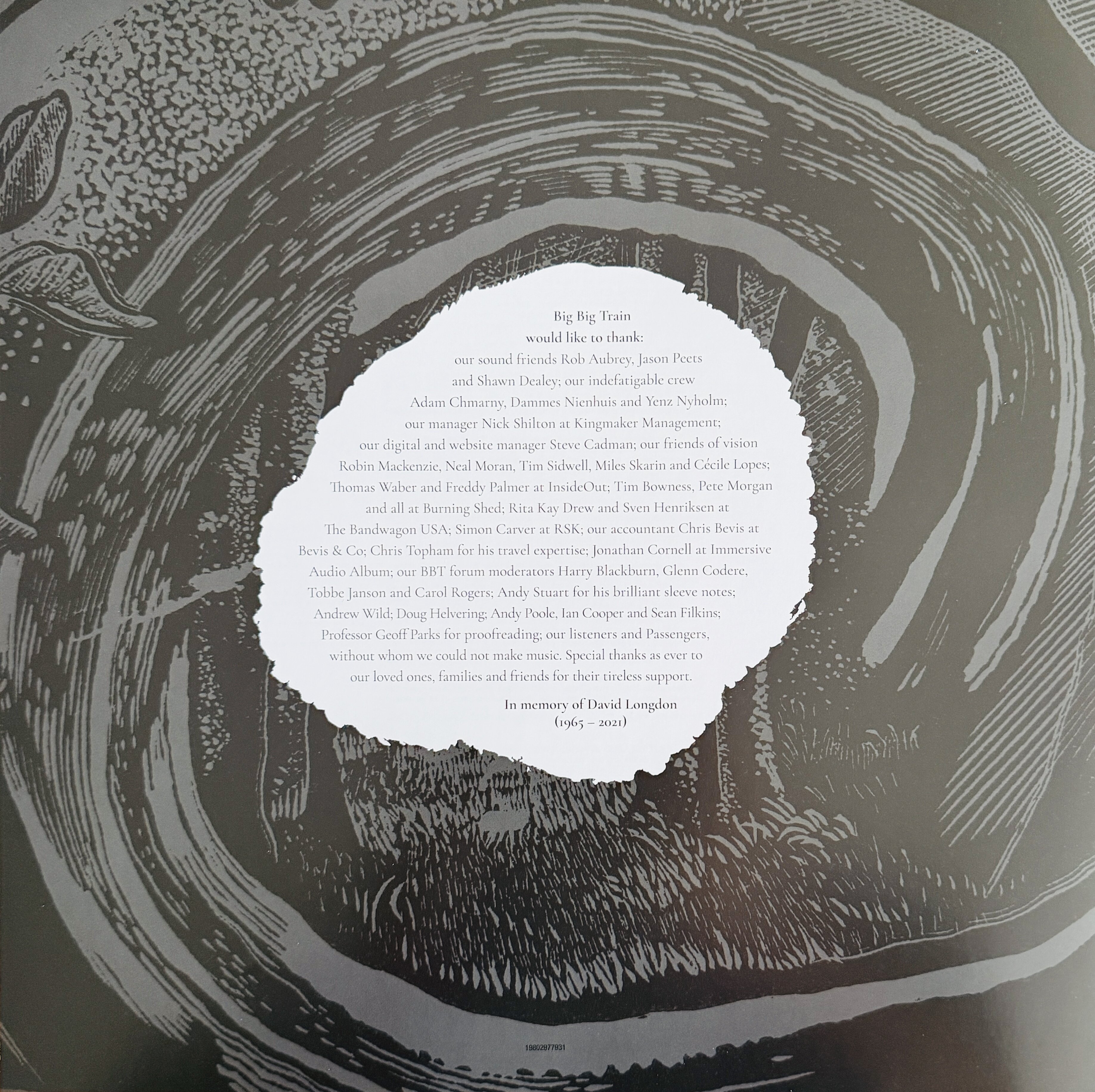
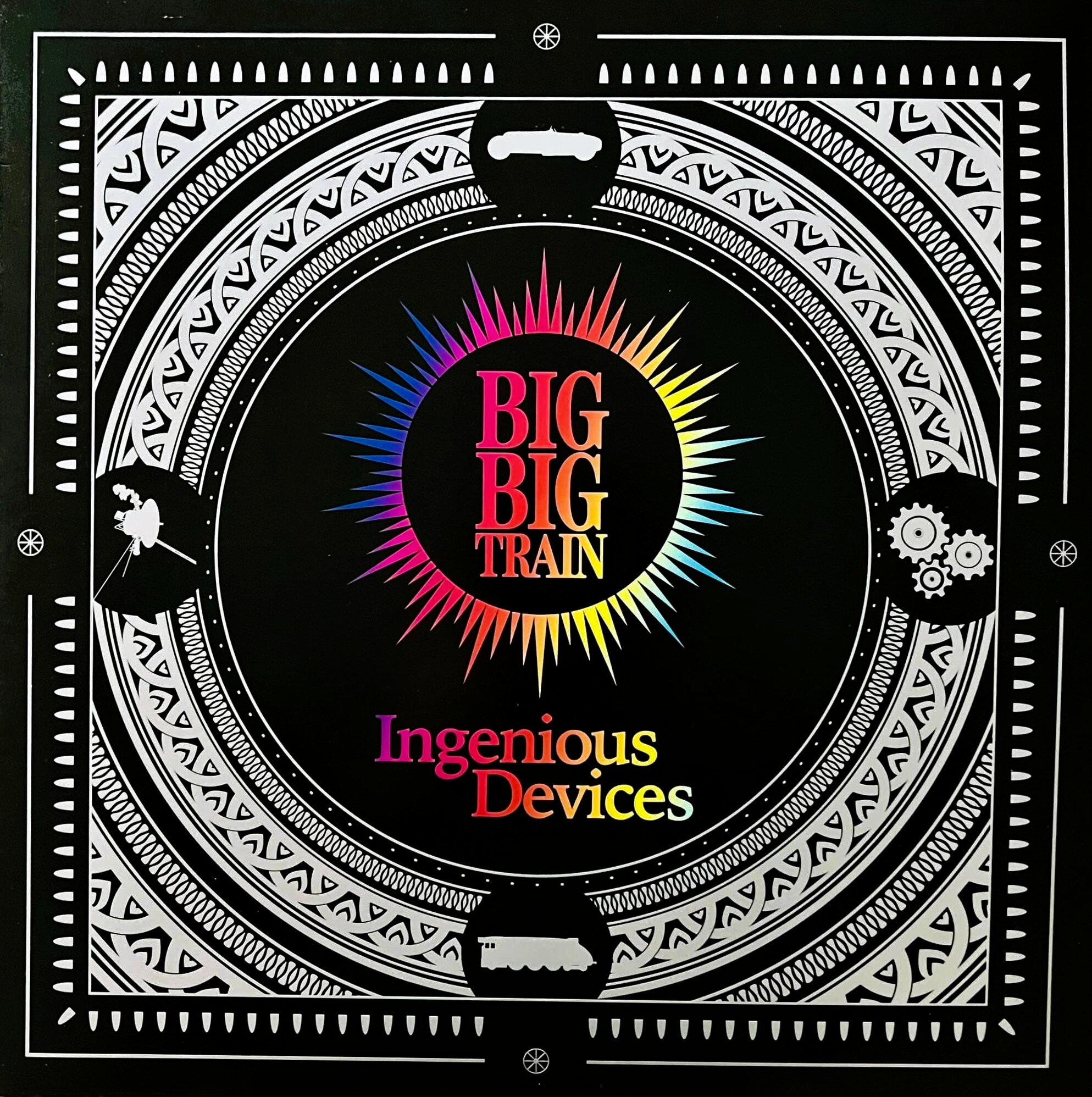
Un lavoro dedicato nelle note di copertina a David Longdon e, pur non essendo un omaggio diretto, è intrinsecamente legato alla sua figura come momento di passaggio e rinascita per la band. Mentre il precedente lavoro “Ingenious Devices” (2023) era stato esplicitamente dedicato alla sua memoria, “Woodcut” rappresenta il primo concept album narrativo completo della band, segnando la piena affermazione di Alberto Bravin come frontman e produttore.
L’album affronta temi come il sacrificio creativo, l’ossessione dell’artista e la linea sottile tra ispirazione e follia. Questi temi risuonano con la storia recente del gruppo, che ha dovuto elaborare il lutto per la scomparsa prematura di Longdon nel 2021 per poter continuare il proprio percorso.
Il titolo e il concept di questo album rendono omaggio al lavoro manuale e alla dedizione dell’artista, rappresentato da un intagliatore di legno. Questo tema è sempre stato importante per Gregory Spawton e rispecchia l’approccio “old-school” della band alla musica progressive. Il sound dell’album riporta alle sonorità del prog anni ’70, con quella forza emotiva che la band sa trasmettere così bene. È un album molto emozionante e coinvolgente.
Pochi giorni fa, durante una riunione di famiglia per un pranzo di Natale rimandato per via di una brutta influenza che aveva preso quasi tutti, mio fratello, che è un vero appassionato di falegnameria, mi spiegava con entusiasmo contagioso, su un balcone soleggiato, la struttura di un tronco d’albero. Sapete, la sezione trasversale di un tronco è una vera meraviglia, una struttura complessa fatta di diversi strati concentrici, ognuno con un ruolo fondamentale per la vita della pianta.
La corteccia, lo strato più esterno, è come una corazza che protegge l’albero dagli agenti atmosferici, dagli sbalzi di temperatura e dai parassiti. Subito sotto la corteccia c’è il libro, uno strato sottile che trasporta la linfa elaborata, ricca di nutrimento, dalle foglie al resto della pianta. Poi c’è il cambio, la zona di crescita dell’albero, un sottile strato di cellule che produce nuovo legno verso l’interno e nuovo libro verso l’esterno, permettendo al tronco di crescere e diventare più grande.
L’alburno, la parte “giovane” del legno, solitamente più chiara, è dove scorre la linfa grezza, composta da acqua e sali minerali, dalle radici alla chioma, come una specie di autostrada per la pianta. Il durame, la parte interna e più vecchia del tronco, è formato da cellule morte, dure e compatte che forniscono il sostegno meccanico principale alla pianta, un po’ come le travi di una casa. È anche la parte più pregiata per la lavorazione del legno, perfetta per creare mobili e oggetti belli e resistenti. Al centro esatto si trova il midollo, il residuo dei primi anni di vita della pianta, con una consistenza spugnosa e spesso poco distinguibile dal durame circostante, come il cuore di un albero.
Nella sezione sono visibili anche gli anelli di crescita, che corrispondono allo sviluppo annuale dell’albero e permettono di determinarne l’età, come un diario segreto che racconta la storia della pianta.
E non so se è solo una mia impressione, ma ascoltando e leggendo i testi di questo album ho trovato un forte legame fra il concept e l’anatomia di un tronco, un legame profondo e che funge da impalcatura metaforica per l’intera narrazione dell’album. Greg Spawton ha strutturato il disco seguendo idealmente il percorso che va dalla corteccia esterna fino al midollo dell’artista, un viaggio affascinante che esplora le diverse sfaccettature della sua personalità e della sua musica.
Immagina un albero, forte e maestoso. La sua corteccia, come una corazza, lo protegge dal mondo esterno, proprio come i primi brani dell’album ci raccontano il nostro rapporto con la città, il bosco, e tutto ciò che ci circonda. E poi c’è il libro, simbolo di nutrimento, che rappresenta quel momento magico in cui l’ispirazione arriva, come una pioggia benefica, e nutre la nostra creatività.
Poi c’è l’alburno, la parte viva e pulsante dell’albero, dove scorre la linfa grezza. È come la fase in cui l’artista è in pieno fermento creativo, con “Albion Press” che cattura proprio l’energia di questo momento. È come se i colori fossero più vividi, la musica più intensa, e la creazione scorresse veloce come la linfa verso le foglie. È il momento in cui si guarda al futuro, con entusiasmo e voglia di crescere.
Ma non tutto è sempre facile. C’è anche il durame, il legno vecchio, duro e senza vita, che fa da sostegno all’albero. È il contesto di canzoni dove l’artista scava nel profondo, come un archeologo, “scolpendo” e “tagliando” le parti più dure e antiche di sé. È come fare un viaggio nella propria memoria, tra le esperienze passate, e trovare la forza per dare stabilità alla propria opera. È un luogo di “inquietudine”, certo, ma anche di grande saggezza.
E poi, al centro dell’albero, c’è il Midollo. È l’essenza dell’artista, il punto di fragilità da cui tutto è partito. È il cuore pulsante dell’album, il luogo dove si trovano le emozioni più profonde.
Gli anelli di Crescita, che troviamo in “Contare le stelle”, sono come le tappe della vita. Ogni anello è una cicatrice, un anno di vita, un trauma o una gioia superata. È come accettare l’”ordine delle cose”, il ciclo delle stagioni, e riconoscere che la nostra vita è fatta di anelli concentrici di esperienze, ognuno con il suo valore.
E infine, il titolo dell’album, “Woodcut”. Incidere il legno, come fare una stampa, significa asportare materia, togliere parti di sé. È un processo delicato, che richiede precisione e sensibilità. Proprio come per creare un capolavoro, l’artista deve “togliere” per arrivare all’essenza, spesso in bianco e nero (come il contrasto tra l’inchiostro e la carta), ma lasciando un’impronta eterna.
Questo album è nato da un’idea davvero interessante di Gregory Spawton e Alberto Bravin, che durante il loro tour europeo del 2023, hanno fatto una visita al Museo Munch di Oslo. Lì, sono rimasti colpiti dalle xilografie di Edvard Munch, un artista che li ha ispirati tantissimo. Il titolo dell’album, “Woodcut”, è venuto fuori proprio leggendo quella parola sotto un’opera, ancora prima che ci fossero musica o testi.
La xilografia, che consiste nel togliere materiale per creare un’immagine in “negativo” da inchiostrare, è diventata il tema centrale del disco. Rappresenta il sacrificio dell’artista e il “dissanguamento” emotivo che serve per creare qualcosa di nuovo: scavare a fondo per far uscire la luce dall’oscurità.
Anche la dualità della stampa (immagine positiva e negativa) si ritrova nella struttura dell’album. Molte canzoni nella prima metà hanno una “gemella” nella seconda, che funziona come una versione “positiva” o “negativa” dell’altra.
Munch, famoso per i suoi temi cupi come l’angoscia e la pazzia, ha influenzato il tono del concept. La storia parla di un “Artista”, un intagliatore ispirato da un pezzo di legno, che crea un’opera così realistica da ritrovarsi catapultato in un mondo parallelo, tra ispirazione e follia.
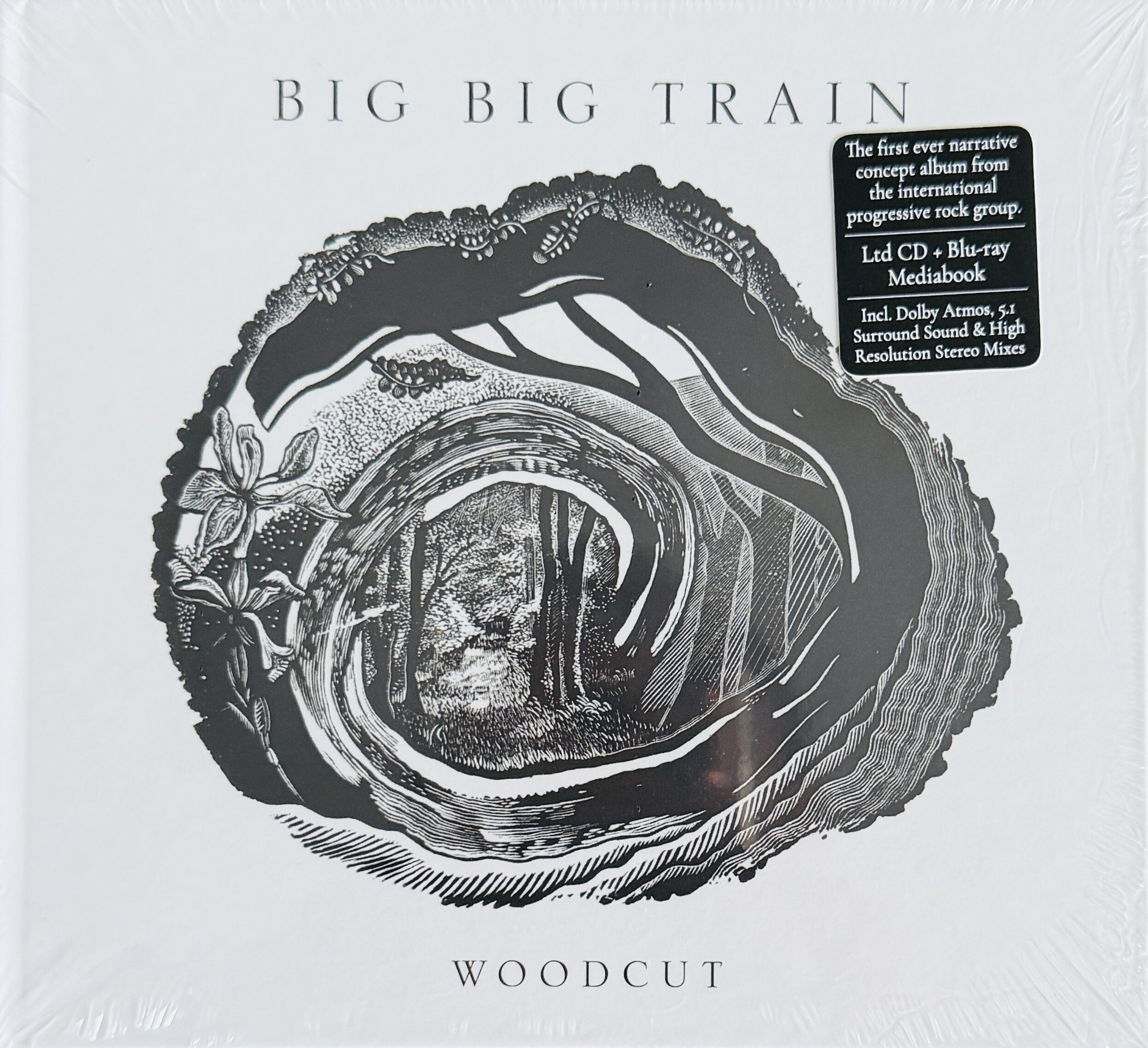
Per omaggiare questa influenza, la band ha deciso di abbandonare le illustrazioni colorate dei dischi precedenti e ha scelto una copertina semplice in bianco e nero, realizzata dall’incisore Robin Mackenzie. Proprio per richiamare la forza delle stampe originali di Munch.
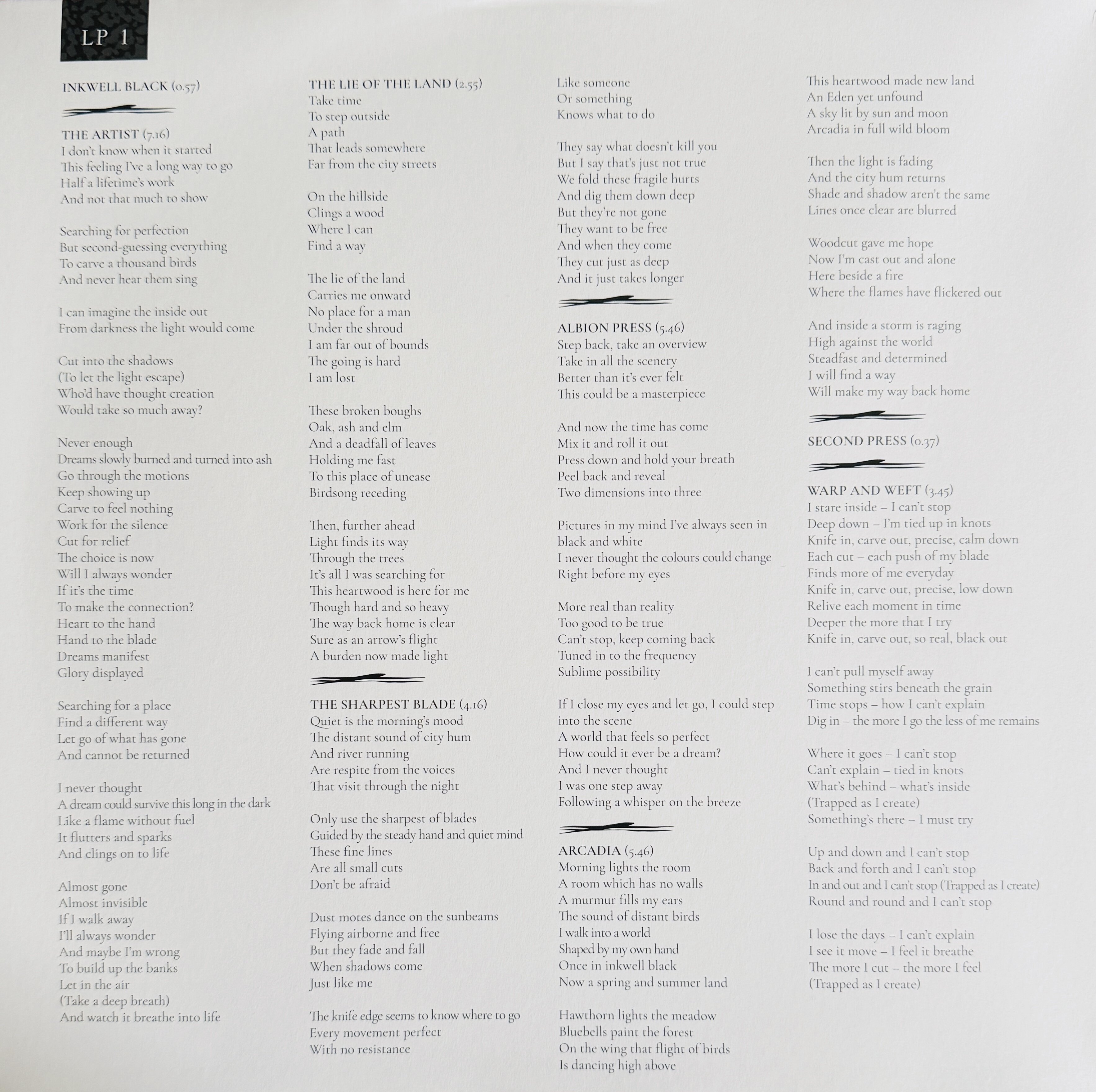
Il primo LP si apre con “Inkwell Black”, un’introduzione cinematografica che ti cattura subito con il suo pianoforte e un’atmosfera sospesa. Questo brano introduce il tema dell’oscurità (l’inchiostro, appunto) che precede la creazione, un’idea che si sviluppa in modo affascinante lungo tutto l’album.
The Artist segna un nuovo capitolo per la band, con Alberto Bravin che brilla in un arrangiamento dinamico che alterna momenti acustici a esplosioni di fiati, elementi distintivi del loro sound.
Un artista intraprende un viaggio introspettivo, lottando per la perfezione e affrontando la creazione e distruzione. Si interroga sul significato del suo lavoro, lasciando intendere rimpianto e possibilità di cambiamento, con un invito a rinascere e trasformarsi.
The Lie Of The Land è un brano ritmico, trainato dal basso di Greg Spawton, che evoca il senso di cammino e ricerca. Il titolo, “La menzogna della terra”, suggerisce un inganno della natura, un’esperienza sensoriale distorta. Il brano narra la storia di un protagonista che cerca di “uscire dalle strade della città” per ritrovare se stesso, tema ricorrente nella poetica di Spawton: il contrasto tra caos urbano e natura inglese, evocata da Quercia, Frassino e Olmo. Il bosco è un “luogo di inquietudine”. Il brano evolve da smarrimento a illuminazione. La “Luce” tra gli alberi rappresenta il superamento dell’ostacolo. Il “legno duro e pesante” diventa sostegno per trovare la strada di casa, che appare “libera” e diretta come il “volo di una freccia”. Quercia, Frassino e Olmo rappresentano inoltre la triade della mitologia arborea britannica: forza, saggezza e soglia tra i mondi. La Luce simboleggia la chiarezza mentale o spirituale dopo il superamento di una prova.
The Sharpest Blade mette in mostra la potenza della band. È una traccia complessa, caratterizzata da cambi di tempo improvvisi e un’interazione grandiosa tra il violino di Clare Lindley e la chitarra elettrica, che ricorda la precisione del taglio dell’incisore.
Un brano che esplora il silenzio, l’introspezione e il peso delle ferite emotive, usando metafore per rappresentare la fugacità della gioia e la persistenza del dolore.
Il lato B apre con Albion Press, una traccia rock più diretta e pesante con un riff di chitarra potente. Il testo celebra l’arte della stampa e la capacità dell’uomo di dare vita a mondi attraverso la tecnica e l’immaginazione. Descrive con precisione il processo fisico della stampa tipografica: “Mescola e stendi”, “Premi e trattieni il respiro”, “Svela e rivela”. L’Albion Press, una celebre pressa da stampa in ferro del XIX secolo, trasforma un’idea bidimensionale in un’opera che sembra tridimensionale e dotata di una propria vitalità.
Il nome “Albion” è l’antico nome poetico della Gran Bretagna. La canzone non si limita a descrivere una macchina, ma celebra l’artigianato britannico e la capacità di tramandare storie, visioni e paesaggi attraverso carta e inchiostro.
Arcadia è un momento di pura bellezza pastorale. Gli arrangiamenti dei fiati e dei legni creano un tappeto sognante che richiama il prog britannico degli anni '70 (stile Genesis era Trespass). Il testo mette in coontrasto un mondo ideale, con una stanza senza pareti e la natura rigogliosa, a una cruda realtà. Il narratore, solo e determinato, affronta una tempesta dopo che la luce svanisce, esplorando temi di creazione, perdita e resilienza.
Second Press è un intermezzo che riprende temi melodici precedenti ma con un arrangiamento più sofisticato e orchestrale.
Warp And Wef è una delle tracce più sperimentali, molto complessa, con poliritmi e intrecci vocali che richiamano i Gentle Giant. Un brano intenso e psicologico, il cui titolo richiama l’arte della tessitura (l’ordito e la trama di un telaio) come metafora di un processo più profondo. Il testo descrive l’atto creativo non come un piacere, ma come una pulsione incontrollabile (“non riesco a fermarmi”). L’artista è letteralmente “intrappolato mentre crea”, suggerendo che l’opera d’arte non è qualcosa di esterno, ma qualcosa che consuma il suo creatore dall'interno. Verso la fine, l’opera sembra prendere vita propria (“lo vedo muoversi”, “lo sento respirare”). Questo è il paradosso finale: l’artista si svuota affinché la sua creazione possa finalmente avere un respiro indipendente.
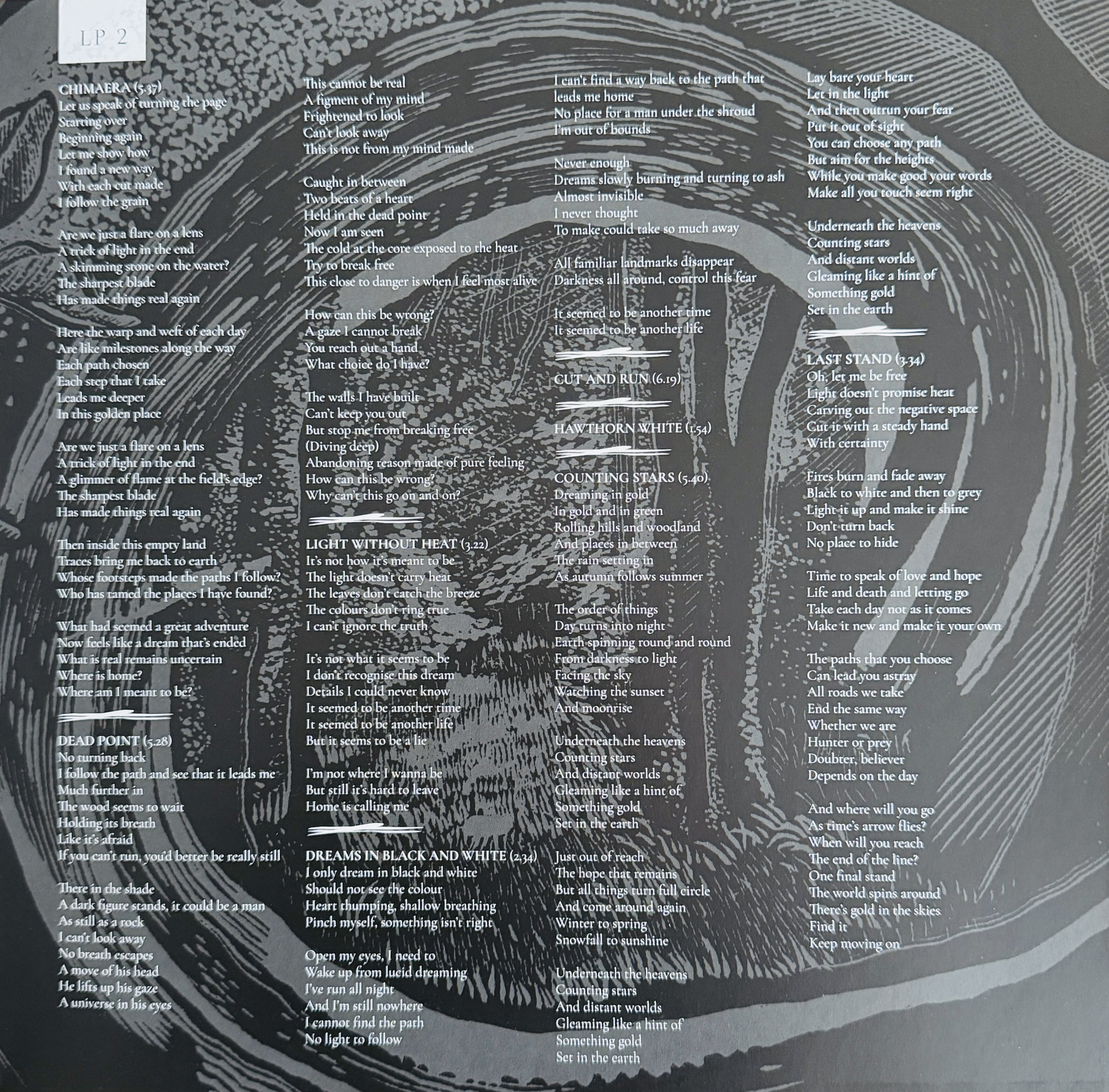
Il secondo LP apre con Chimaera, un brano solare folk-rock con venature malinconiche con una struttura ipnotica, una sorta di miraggio musicale che continua a sfuggire. Il testo esplora temi di rinnovamento e introspezione, paragonando il processo a sfogliare una pagina. L’autore descrive un nuovo approccio, suggerendo che ogni azione segue una direzione precisa, come la grana del legno, verso un obiettivo. L’immagine della “lama più affilata” ricorre, simbolo di chiarezza e nuova percezione della realtà.
Dead Point è un momento di pausa emotiva, un brano scarno, con al centro la voce solista e tastiere atmosferiche che creano un senso di vuoto e di riflessione. Il testo esplora introspezione, paura e l’ignoto attraverso un narratore che incontra una figura scura, suscitando paura e fascino. L’incontro rivela paure e desideri, riflettendo sulla difficoltà di liberarsi dalle paure e controllare il destino.
Light Without Heat è una ballata intensa dove la sezione ritmica di Nick D’Virgilio lascia progressivamente spazio a un crescendo orchestrale finale. Il testo esplora la dissociazione e la delusione di fronte a una realtà perfetta ma priva di anima. Il protagonista si trova in un ambiente simulato, privo di autenticità emotiva, incapace di staccarsi nonostante la consapevolezza della sua inutilità.
Se in Albion Press la creazione sembrava un miracolo, qui ne vediamo il lato oscuro: la creazione di un mondo che, pur essendo "perfetto", risulta gelido e alienante perché privo di calore umano.
Dreams In Black And White è un brano epico dal tono drammatico, caratterizzato da atmosfere "noir" e da un uso spettacolare dei contrasti dinamici per descrivere il sogno lucido del protagonista. L’atto finale del conflitto interiore che culmina nel collasso creativo ed emotivo dell’artista, intrappolato in un incubo claustrofobico. La perdita della visione, il sogno lucido come trappola e lo smarrimento totale rappresentano il prezzo della creazione artistica.
Il Lato B apre con Cut And Run, il brano più energico del disco, un tour de force strumentale dove ogni membro della band ha spazio per assoli virtuosistici e il ritmo è incalzante.
Hawthorn White segna un ritorno alle origini folk della band, con chitarre acustiche e violino a fare da padroni, creando l’atmosfera per la conclusione con una melodia dolce e confortante. Questo breve e delicato brano strumentale presenta un dialogo tra pianoforte, violoncello e violino, in linea con lo stile dei classici del prog britannico. Musicalmente, riprende il tema di “Dreams in Black and White”, rispecchiando lo stato mentale fragile del protagonista.
Counting Stars, è una traccia maestosa che culmina in un coro finale imponente e un assolo lirico di Rikard Sjöblom che sembra letteralmente “puntare alle stelle”. Uno dei brani più toccanti e significativi, rappresenta il culmine emotivo dell’album, un momento di profonda riflessione. Musicalmente, si distingue per un’atmosfera solenne, ariosa e ricca di speranza. Inizia con toni calmi guidati da pianoforte, violino e chitarre acustiche, rallentando il ritmo incalzante delle tracce precedenti grazie alla grandiosa performance vocale di Alberto Bravin.
Nella narrazione di Woodcut, “Counting Stars” ritrae il protagonista, l’Artista, in uno stato d’animo riflessivo. Dopo aver affrontato le sfide e le quasi follie della creazione artistica, trova conforto nella natura. Il testo evoca un ricordo d’infanzia in cui l’artista, sulla cima di una collina al crepuscolo, osservava le stelle accendersi nel cielo. Questa esperienza gli ridona un senso di meraviglia per la vastità e la magnificenza del mondo, spingendolo a tornare in campagna per “contare le stelle” un’ultima volta. Le stelle simboleggiano la speranza e la bellezza che rimangono “appena fuori portata”, ma che lo spingono a continuare a muoversi e a puntare verso l’alto.
Last Stand chiude l’album con un classico progressive rock sinfonico, riprendendo temi melodici precedenti in una suite finale coerente. La sezione di fiati e le armonie vocali stratificate creano un senso di trionfo e grandezza. Alberto Bravin bilancia vulnerabilità e forza, portando la narrazione a un climax emotivo. Il pezzo alterna calma riflessiva a sezioni strumentali imponenti, culminando in un finale orchestrale che sfuma lentamente.
La canzone conclude la storia dell’Artista, che accetta il risultato del suo lavoro dopo aver lottato con ossessione, follia e sacrificio. Il testo riflette sulla continuità di vita e natura, paragonando l’uomo all’albero che fornisce il legno per la xilografia. È un messaggio di resilienza e speranza: l’arte resta quando tutto il resto svanisce.
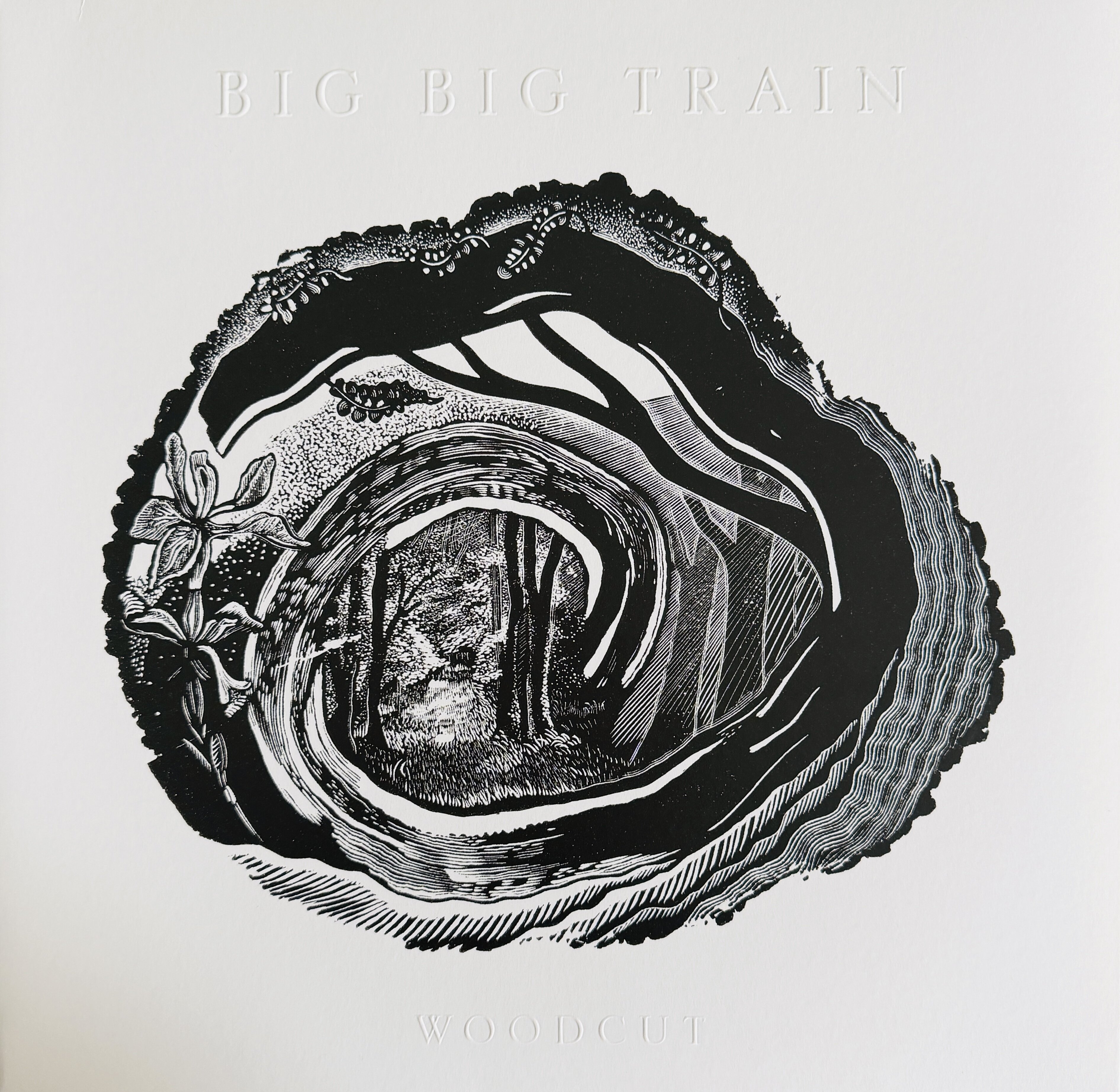
La copertina in bianco e nero, una xilografia vera e propria (non fatta con l’AI), è un omaggio alla ricerca della “bellezza e verità” nell’arte, in contrapposizione alla natura fugace della musica digitale di oggi.
“Woodcut” è un viaggio affascinante nell’anima dell’autore, dove il legno non è solo un materiale, ma il corpo stesso della musica, un modo per esprimere le proprie emozioni e condividere la propria storia con il mondo.
Questo album è un vero gioiello, un mix perfetto tra la complessità del progressive rock e una sensibilità melodica quasi “pop”, con favolosi arrangiamenti orchestrali. Musicalmente, è un viaggio tra momenti acustici delicati e sezioni strumentali più energiche, che creano un’atmosfera davvero coinvolgente ed è anche l’album che dimostra che la band ha trovato la propria strada verso il futuro, onorando il passato con un’opera di altissima complessità e passione. Essenziale nella loro discografia e per il progressive rock contemporaneo.
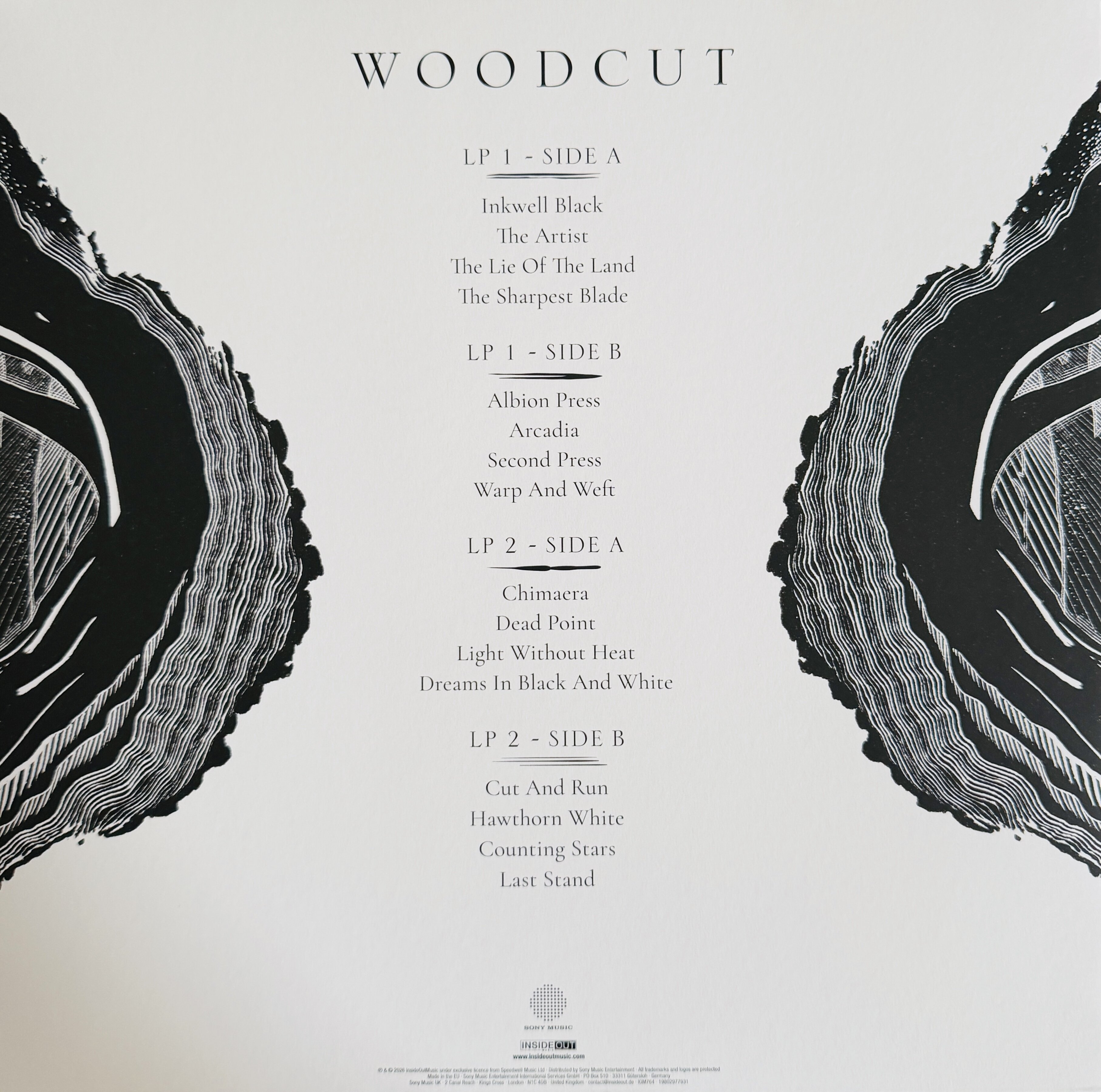
Tracklist
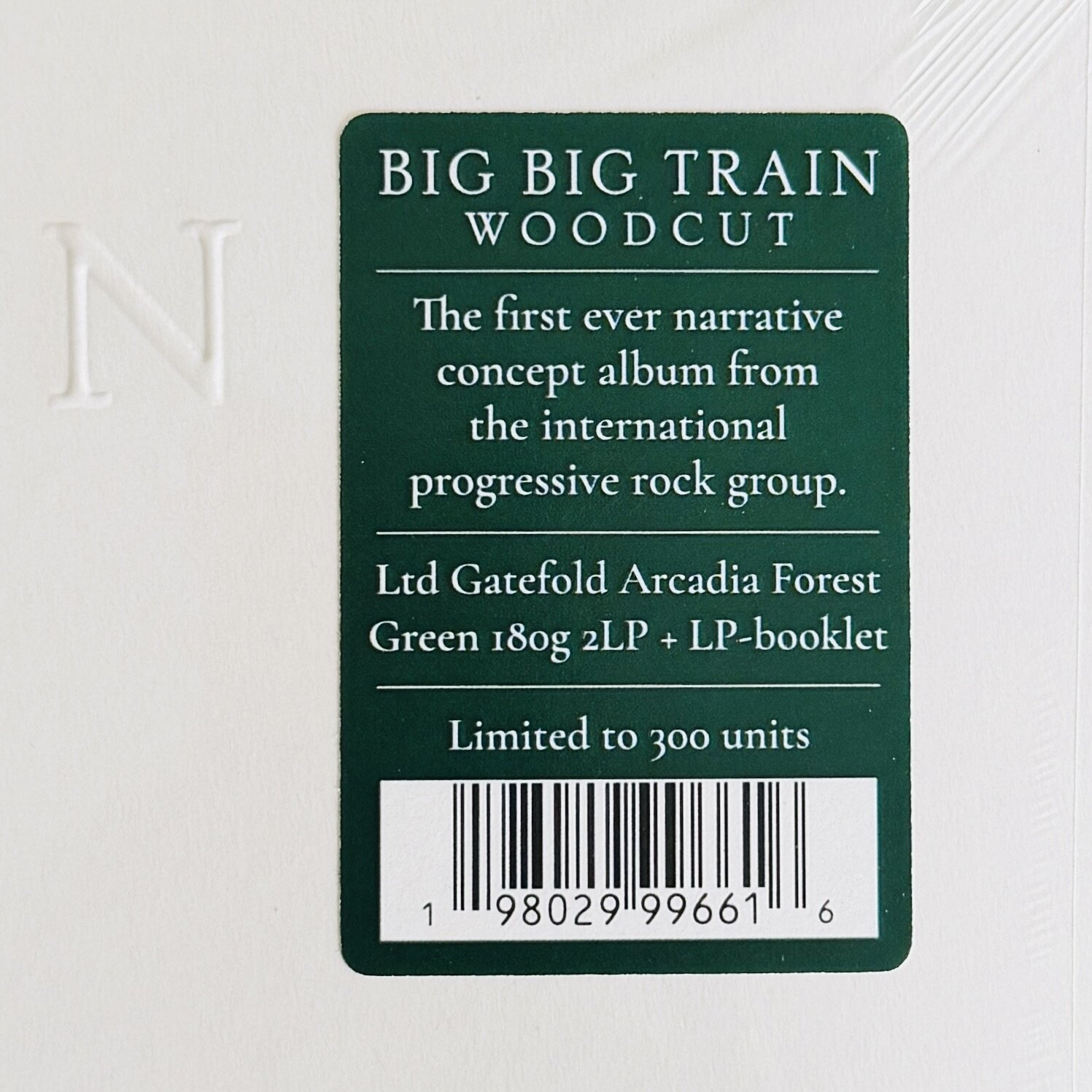
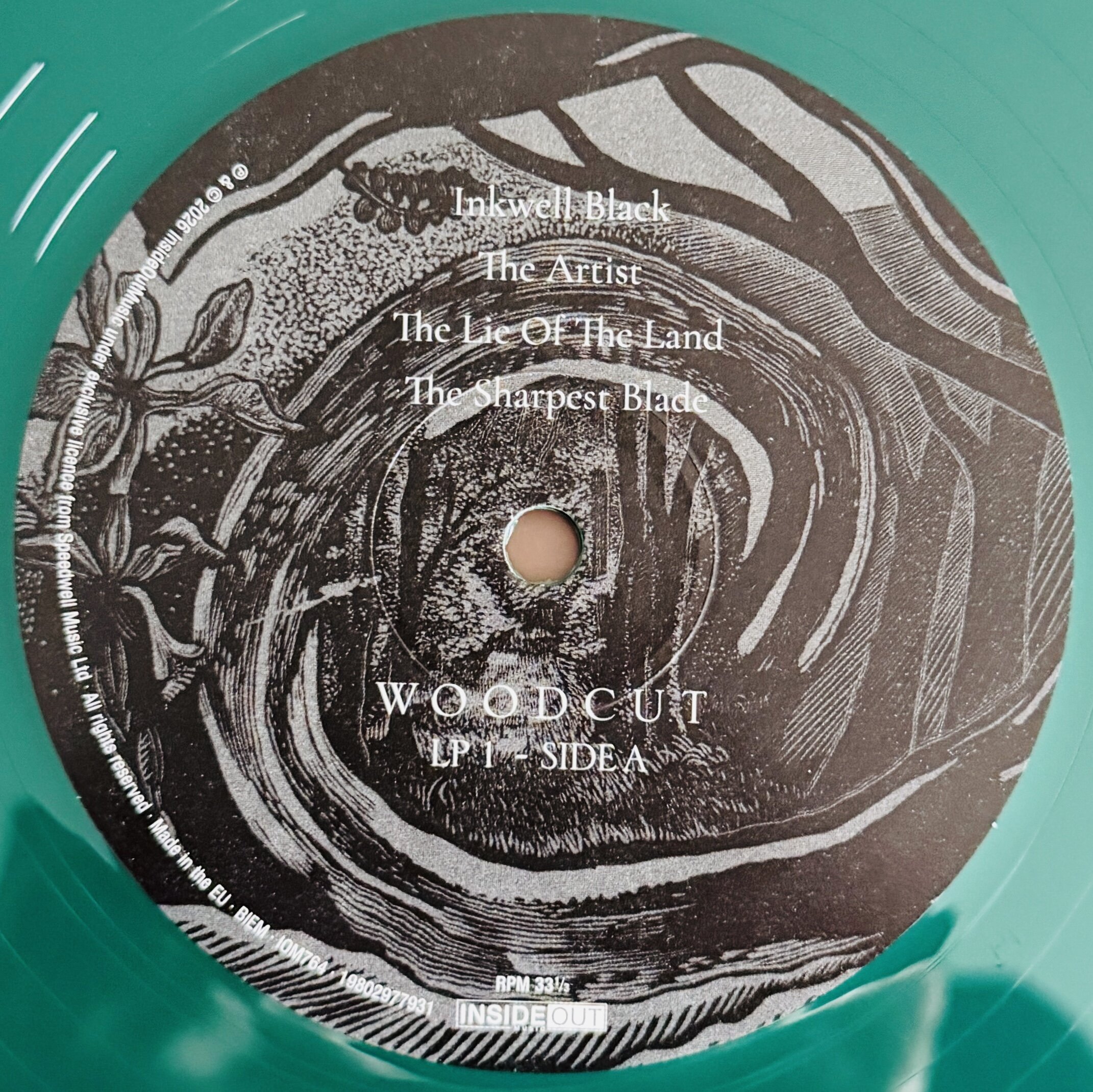
La Tracklist della mia versione LP Ltd Gatefold Arcadia Forest - Green 180g 2LP + LP-booklet - Limited to 300 units
LP 1 - SIDE A
Inkwell Black
The Artist
The Lie Of The Land The Sharpest Blade
LP 1 - SIDE B
Albion Press
Arcadia
Second Press
Warp And Weft
LP 2 - SIDE A
Chimaera
Dead Point
Light Without Heat
Dreams In Black And White
LP 2 - SIDE B
Cut And Run
Hawthorn White
Counting Stars
Questa la versione CD
Ltd CD + Blu-ray – Mediabook - Incl. Dolby Atmos, 5.1 Surround Sound & High Resolution Stereo Mixes
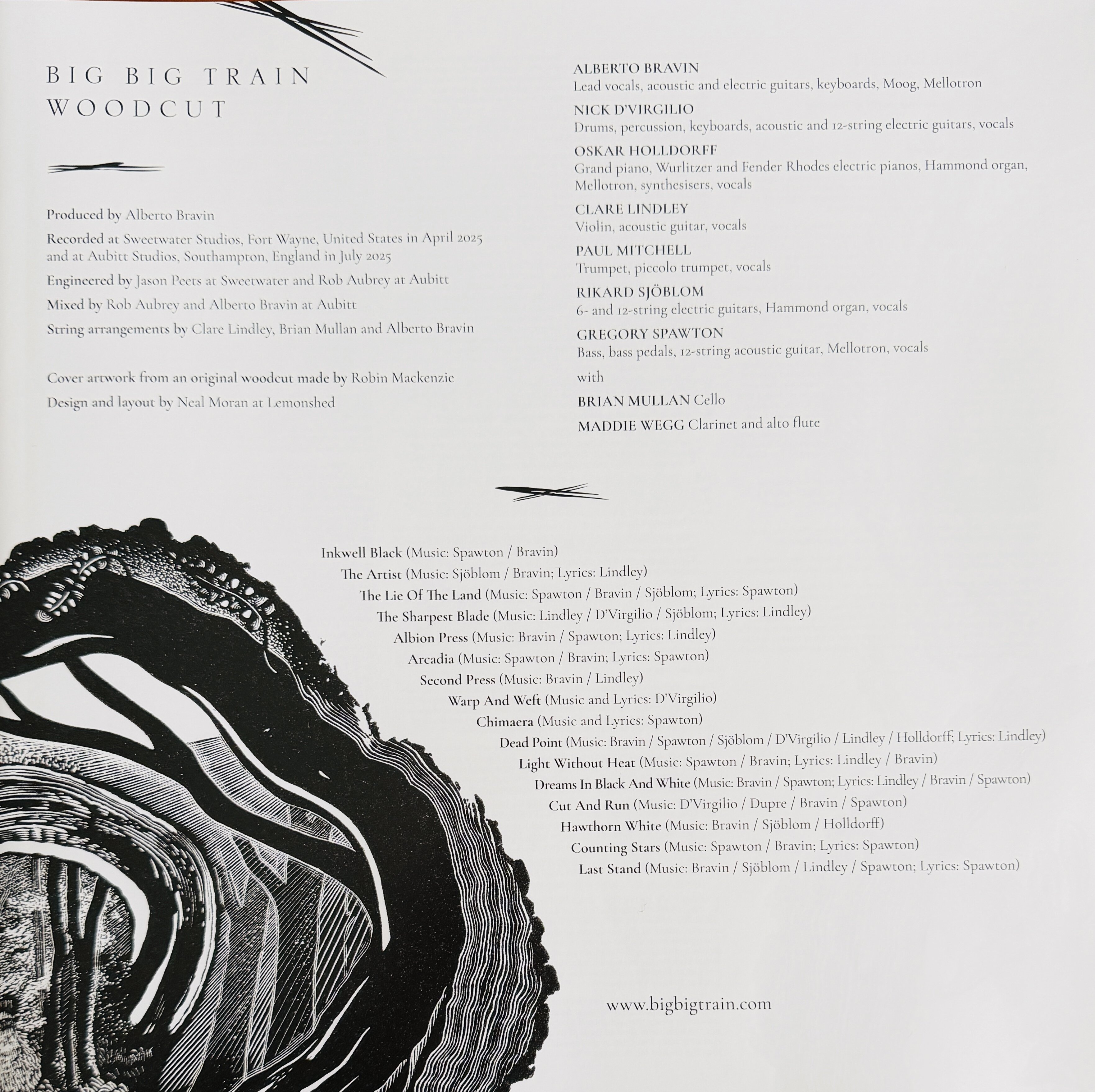
La Lineup e i Crediti
Prodotto da Alberto Bravin
Registrato ai Sweetwater Studios, Fort Wayne, Stati Uniti, nell'aprile 2025 e agli Aubitt Studios, Southampton, Inghilterra, nel luglio 2025
Ingegnerizzato da Jason Pects a Sweetwater e Rob Aubrey ad Aubitt
Mixati da Rob Aubrey e Alberto Bravin ad Aubitt
Arrangiamenti per archi di Clare Lindley, Brian Mullan e Alberto Bravin
Copertina da un woodeut originale realizzato da Robin Mackenzie
Progettazione e layout di Neal Moran presso Lemonshed
ALBERTO BRAVIN : Voce principale, chitarre acustiche ed elettriche, tastiere, Moog, Mellotron
NICK D'VIRGILIO: Batteria, percussioni, tastiere, chitarre acustiche ed elettriche a 12 corde, voce
OSKAR HOLLDORFF: Pianoforte a coda, pianoforti elettrici Wurlitzer e Fender Rhodes, organo Hammond, Mellotron, sintetizzatori, voce
CLARE LINDLEY: Violino, chitarra acustica, voce
PAUL MITCHELL: Tromba, tromba piccolo, voce
RIKARD SJÖBLOM: Chitarre elettriche a 6 e 12 corde, organo Hammond, voce
GREGORY SPAWTON: Basso, pedali di basso, chitarra acustica a 12 corde, Mellotron, voce
Con:
BRIAN MULLAN Violoncello
MADDIE WEGG Clarinetto e flauto alto
I Big Big Train ringraziano collaboratori, amici, familiari e fan per il supporto, con un omaggio speciale a David Longdon.
Link per l'ascolto
Alcuni brani al canale ufficiale della band Big Big Train Band
Nota: Tutti i link ai lavori dei musicisti sono nei TAG sotto il titolo dell'articolo o nella pagina "Artisti"