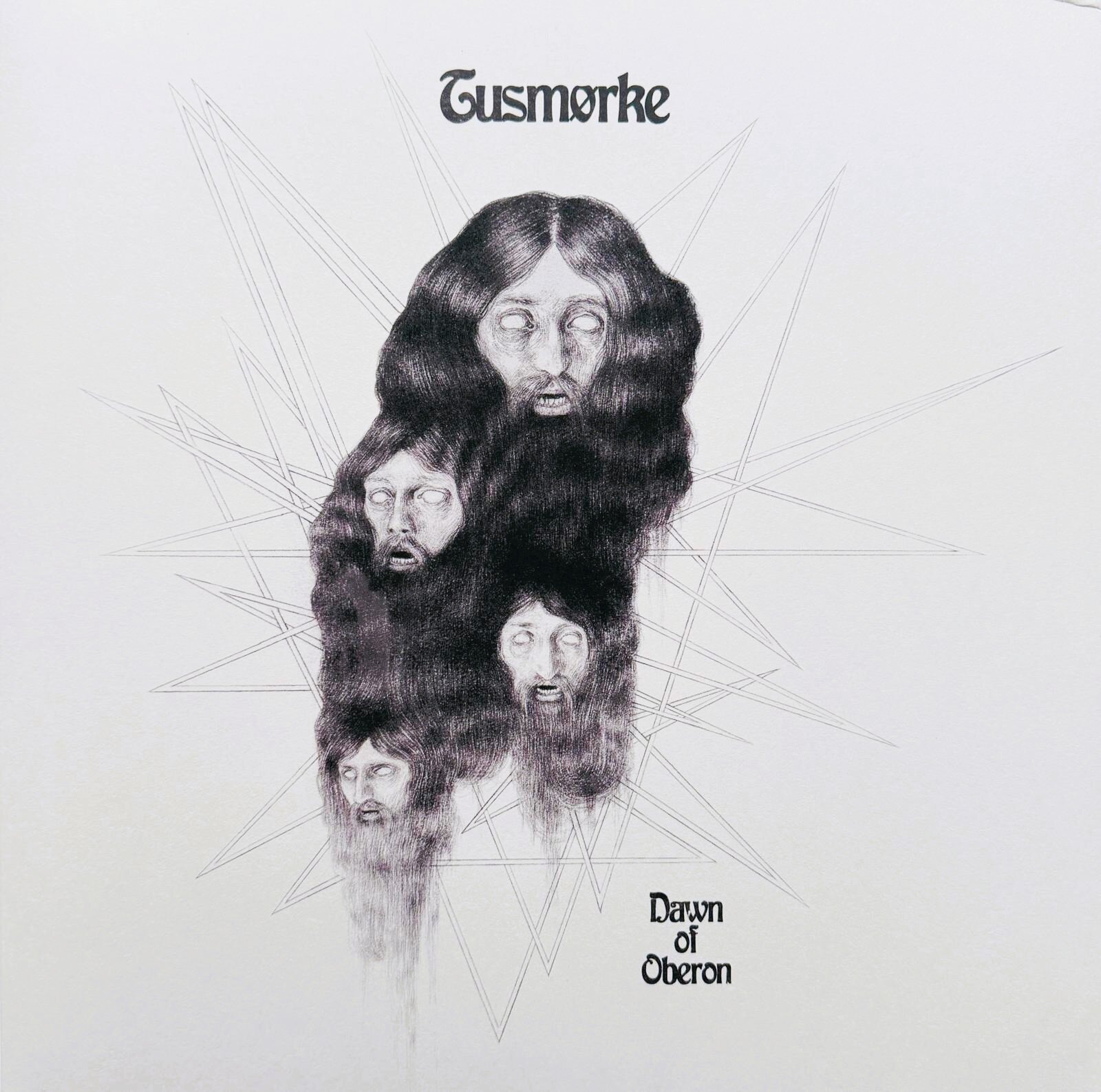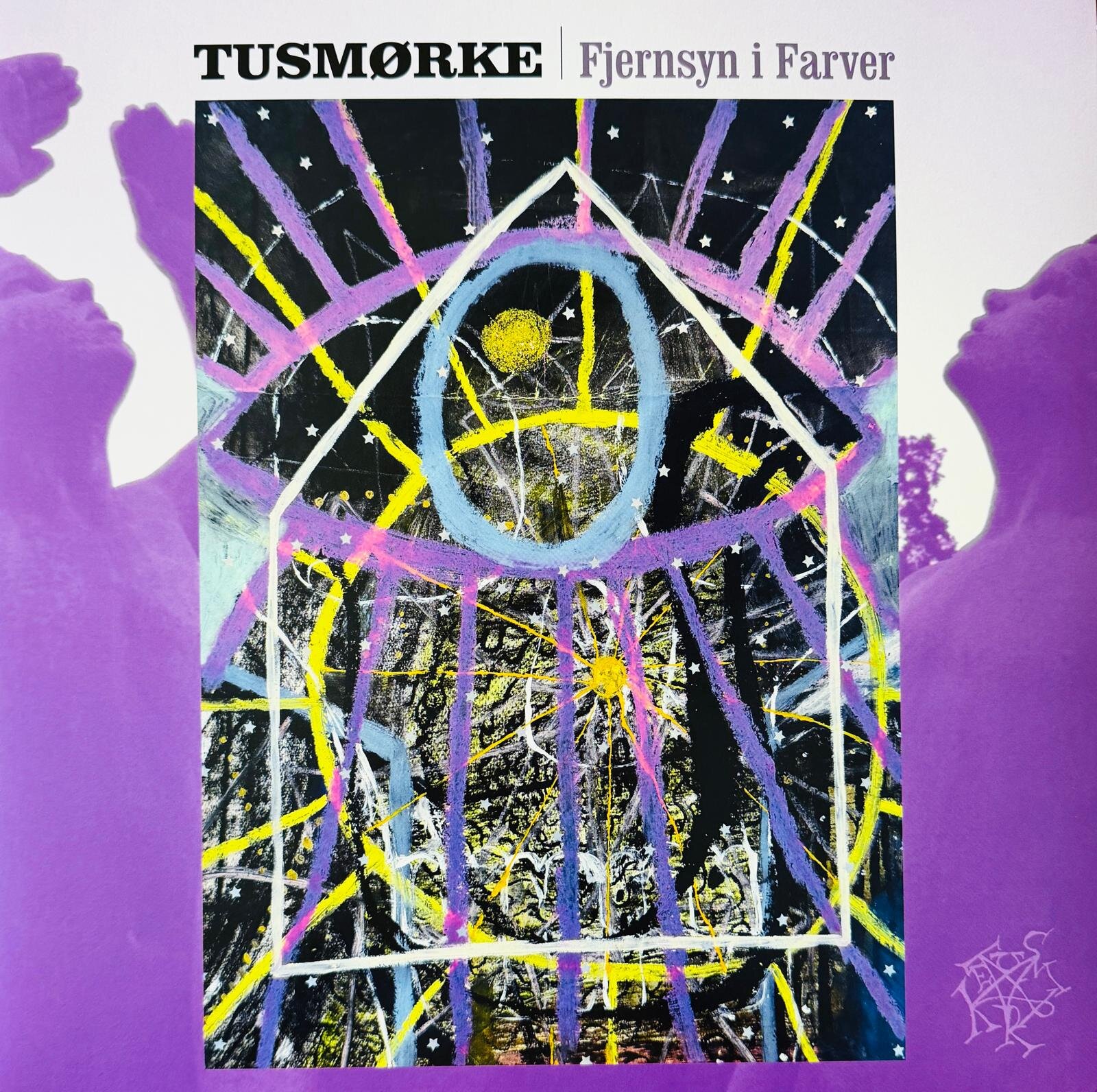

Balderdom by Tusmørke (2026 album)
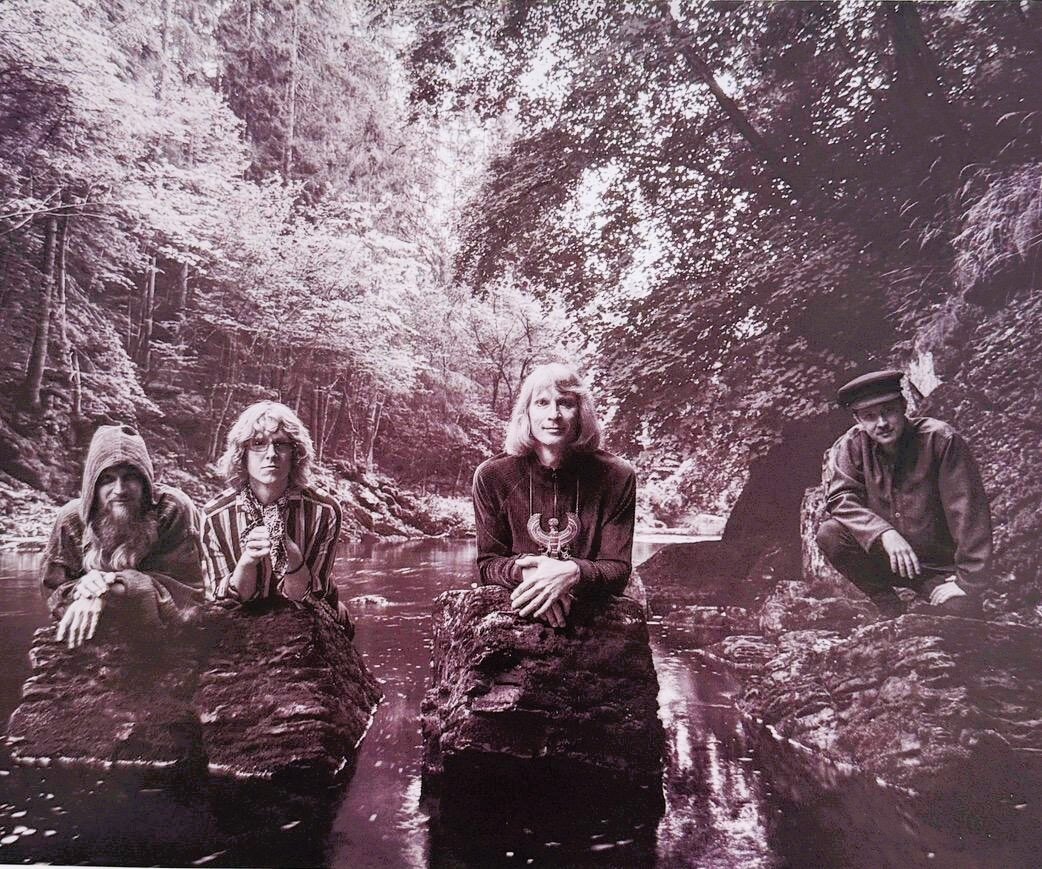
Tusmørke (Norwegian for "twilight") is a Norwegian band formed in the mid-90s (formerly as Les Fleurs du Mal) by brothers Benedikt Momrak ("Benediktator" - bass, vocals) and Kristoffer Momrak ("Krizla" - flute, vocals)
Today they are one of the most active and particular bands of the Norwegian progressive scene, of what I call Northern Prog, capable of combining a magical atmosphere with a strongly cerebral approach, with an eccentric and "primordial" style, mixing 70s psychedelia, pastoral flutes and themes related to local folklore and occultism.
I talked about this extraordinary band in the page dedicated to them in which you will find all the details about the style and the curious pseudonyms they use, but also in the reviews of their albums.
As I did on other occasions I like to take advantage of the beautiful description of the album given by the band itself, in particular in this case by Benediktator (Benedikt Momrak), one of the two founding brothers of the band, who alone gives the idea:
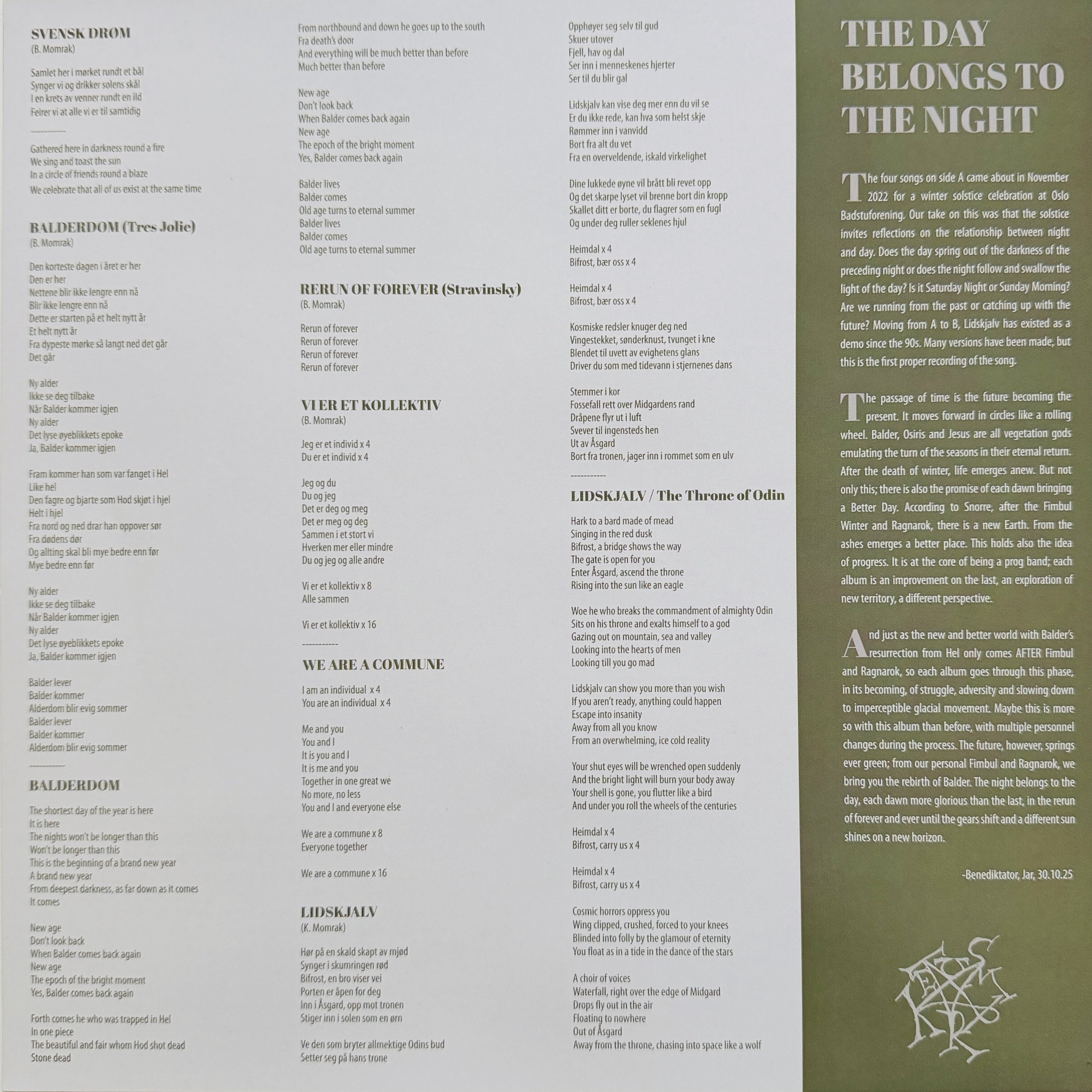
"The day belongs to the night
The four songs on side A came about in November 2022 for a winter solstice celebration at Oslo Badstuforening. Our take on this was that the solstice invites reflections on the relationship between night and day. Does the day spring out of the darkness of the preceding night or does the night follow and swallow the light of the day? Is it Saturday Night or Sunday Morning? Are we running from the past or catching up with the future? Moving from A to B, Lidskjalv has existed as a demo since the 90s. Many versions have been made, but this is the first proper recording of the song.
The passage of time is the future becoming the present. It moves forward in circles like a rolling wheel. Balder, Osiris and Jesus are all vegetation gods emulating the turn of the seasons in their eternal return. After the death of winter, life emerges anew. But not only this; there is also the promise of each dawn bringing a Better Day. According to Snorre, after the Fimbul Winter and Ragnarok, there is a new Earth. From the ashes emerges a better place. This holds also the idea of progress. It is at the core of being a prog band; each album is an improvement on the last, an exploration of new territory, a different perspective.
And just as the new and better world with Balder’s resurrection from Hel only comes AFTER Fimbul and Ragnarok, so each album goes through this phase, in its becoming, of struggle, adversity and slowing down to imperceptible glacial movement. Maybe this is more so with this album than before, with multiple personnel changes during the process. The future, however, springs ever green; from our personal Fimbul and Ragnarok, we bring you the rebirth of Balder. The night belongs to the day, each dawn more glorious than the last, in the rerun of forever and ever until the gears shift and a different sun shines on a new horizon. (Benediktator)!"
The musical genre is a fascinating fusion of folk, psychedelic rock and retro sounds that evoke the 70s. The atmosphere is ritual, obtained by amalgamating elements of the Nordic folk tradition with a ritual and pagan aura, thanks to the use of ethnic instruments and flutes that create a contrast between darkness and pastoral melodies.
The compositions are unpredictable, alternating symphonic sections with moments of more powerful rock. The heavy use of vintage keyboards, Mellotron and Moog synthesizers is particularly evident.
The album explores the cycle of the seasons and the duality between light and shadow. Musically, this manifests itself in tracks that range from catchy, almost "pop" melodies (as in the title track) to long complex instrumental suites, such as the final track "Lidskjalv" which exceeds 20 minutes. The sound is deliberately inspired by classic progressive productions, with powerful basslines and vocals that contribute to a timeless aesthetic.
The instrumentation represents a real tribute to vintage progressive rock, characterized by the use of rare analog instruments and traditional acoustic sounds.
The record is pervaded by vintage keyboards that give that warm and layered sound typical of the 70s.
Mellotron: Essential for spectral string and flute carpets (perceptible in Svensk Drøm).
Mini-Moog: Used for the distinctive monophonic synthesizer solos and synthetic basslines.
Hammond & Rhodes Organ: They form the harmonic and rhythmic basis for the more jazz-rock and psychedelic passages.
Vintage Polyphonic Synthesizers: Used to create spatial effects in the more dilated sections of the Lidskjalv suite.
The folk imprint is ensured by a wide range of wind instruments, often played by Krizla:
Flutes (Traverso and Dolce): A distinctive element of the band, often intertwined in complex harmonies.
Hohner instruments: Thanks to the contribution of Selve Kraften-Hohner, there are mouth harmonicas and melodic sounds, which add a popular flavor to the songs.
The Rhythm Section and the Strings:
Rickenbacker Bass: Benediktator's bass has a distorted and very present sound (like Chris Squire of Yes), who is often solo.
Electric and Acoustic Guitars: They range from delicate arpeggios in English folk style to psychedelic explosions loaded with fuzz and delay.
Drums: Brennesle uses a very dry and natural sounding set, typical of early 70s prog recordings, avoiding excessive reverberations.
The Voices
In addition to the beautiful lead vocals, the album makes extensive use of vocal harmonies and the collaboration with the Oslo Badstukor, which adds a majestic and almost liturgical choral aura.
The album has the magnificent and classic structure of a classic prog record: four tracks on side A and a monumental suite on side B.
On side A The cycle of the seasons, with the first four tracks originally created for a celebration of the winter solstice in Oslo, exploring the dualism between light and dark.
"Svensk Drøm" opens the album with an atmosphere reminiscent of that of a pagan ritual consumed in the darkness of a Norwegian forest, with an almost tribal rhythm and the incessant pace, splendid Mellotron, disturbing and at the same time relaxing, great choirs.
"Balderdom (Tres Jolie)" has a catchy melody with upbeat flutes and a chorus that sounds like a parody. A sunny and rhythmic song. In some atmospheres it recalls the Canterbury style.
In the song "Rerun of Forever (Stravinsky)" there is a lot of experimentation and a pinch of Zeuhl in some manic repetitions, but also a space rock atmosphere and that sense of absurdity that we find magnificent in Gong. The choirs here are just great. The finish is a condensation of taste and refinement.
"Vi er et kollektiv" has an engaging and exciting pace, psychedelic guitars and refined flutes. Symphonic prog of great value, a song that you would never want to end. Superlative rhythm section. Voices of great intensity. Guitar solo immediately flanked by vocalizations and an overall crescendo of all the instruments, almost epic, without losing the ethereal atmosphere and emotional involvement. Great piece.
On the B-side the splendid final suite, "Lidskjalv" with its almost 21 minutes which, although there was a demo since the 90s, sees in this album its first official recording. After a relaxed start and an almost soft jazz rhythm, folk enters with its winds and strings that repeat a turn that seems to come from the past, with the theatrical and credible voice and the mood of an original medieval ballad. The work on the keyboards and the interplay with the rhythm section are splendid even when the tempo rises in speed and the climate becomes more tense. Changes of time and atmosphere follow one another in an almost archaic and solemn atmosphere. There is also room for almost improvised free sections in which winds and mellotrons and keyboards give way to virtuosity.
Tusmørke confirm themselves as the true heirs of Scandinavian "Northern Prog" with an album that represents a triumphant comeback. It is not a simple revival of 70s prog, but with an analog sound, far from the excessively (sometimes) clean modern productions, they have managed to bring the dark atmospheres of the Scandinavian land into an international dimension. The theatricality of the voices combined with the great technical complexity that has its apotheosis in the beautiful Lidskjalv suite is beautiful.
Truly excellent album that is listened to for its melodic beauty and its complexity that give a listening that is at the same time exciting, engaging and refined.
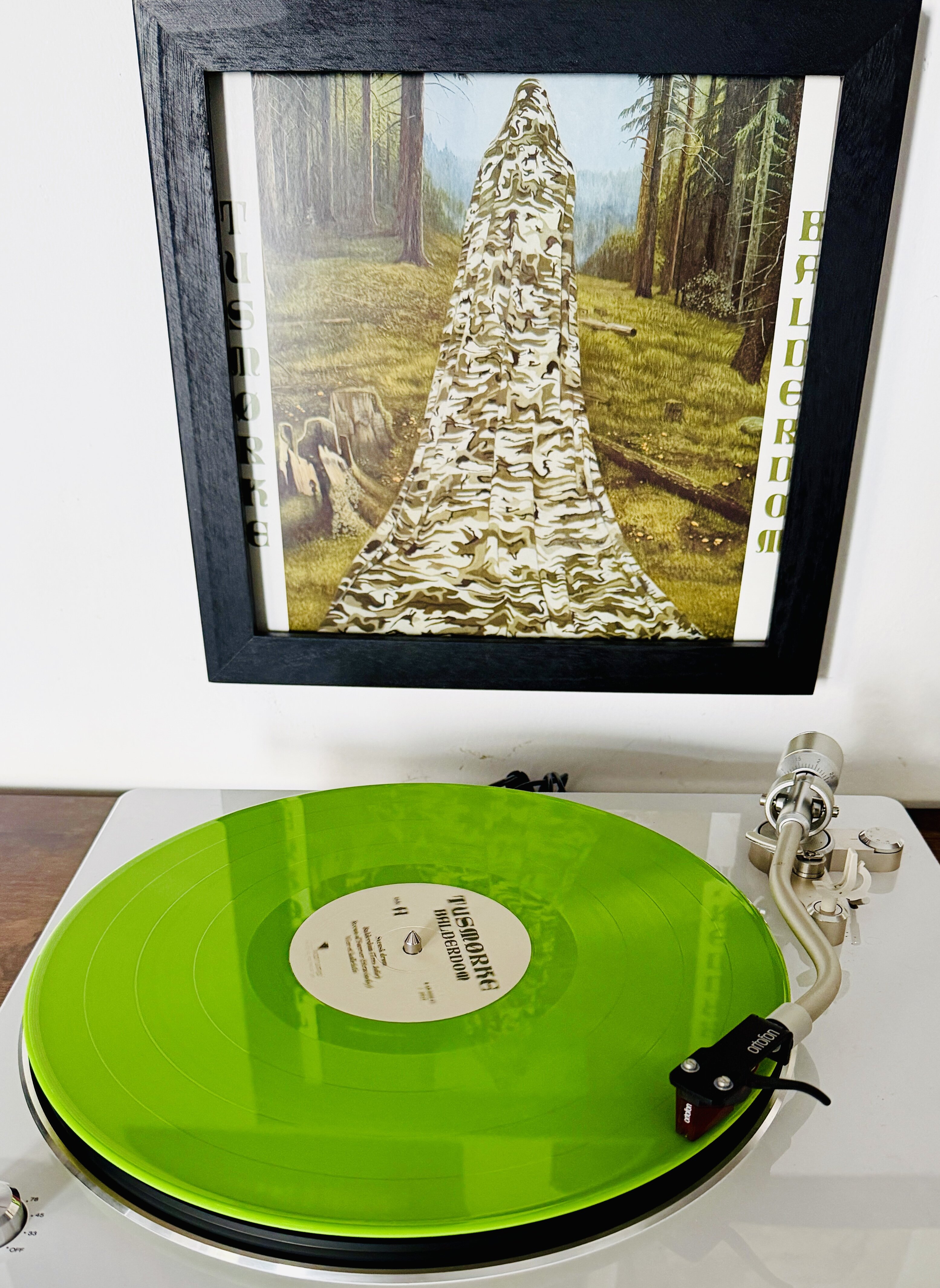
My Version
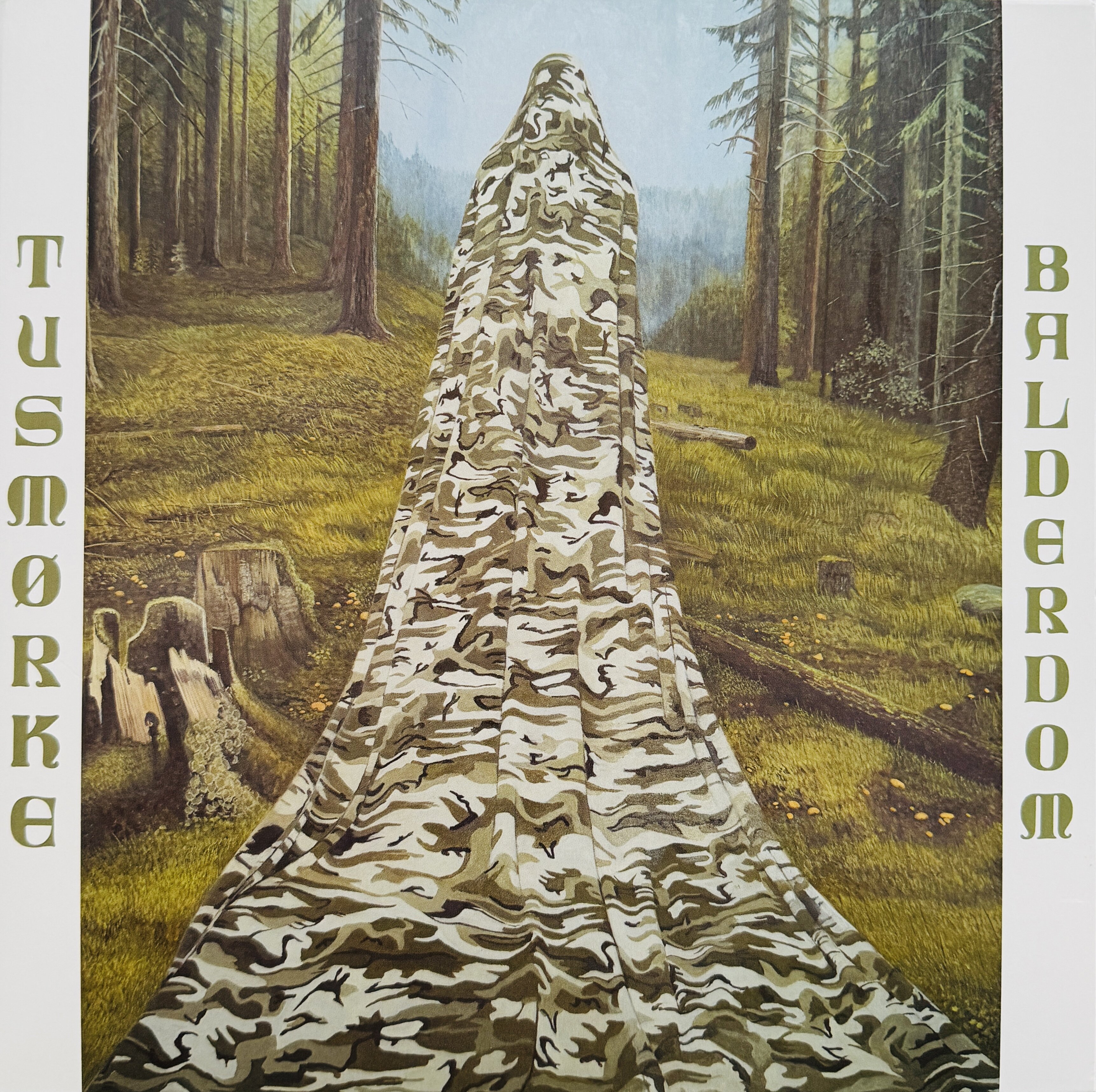
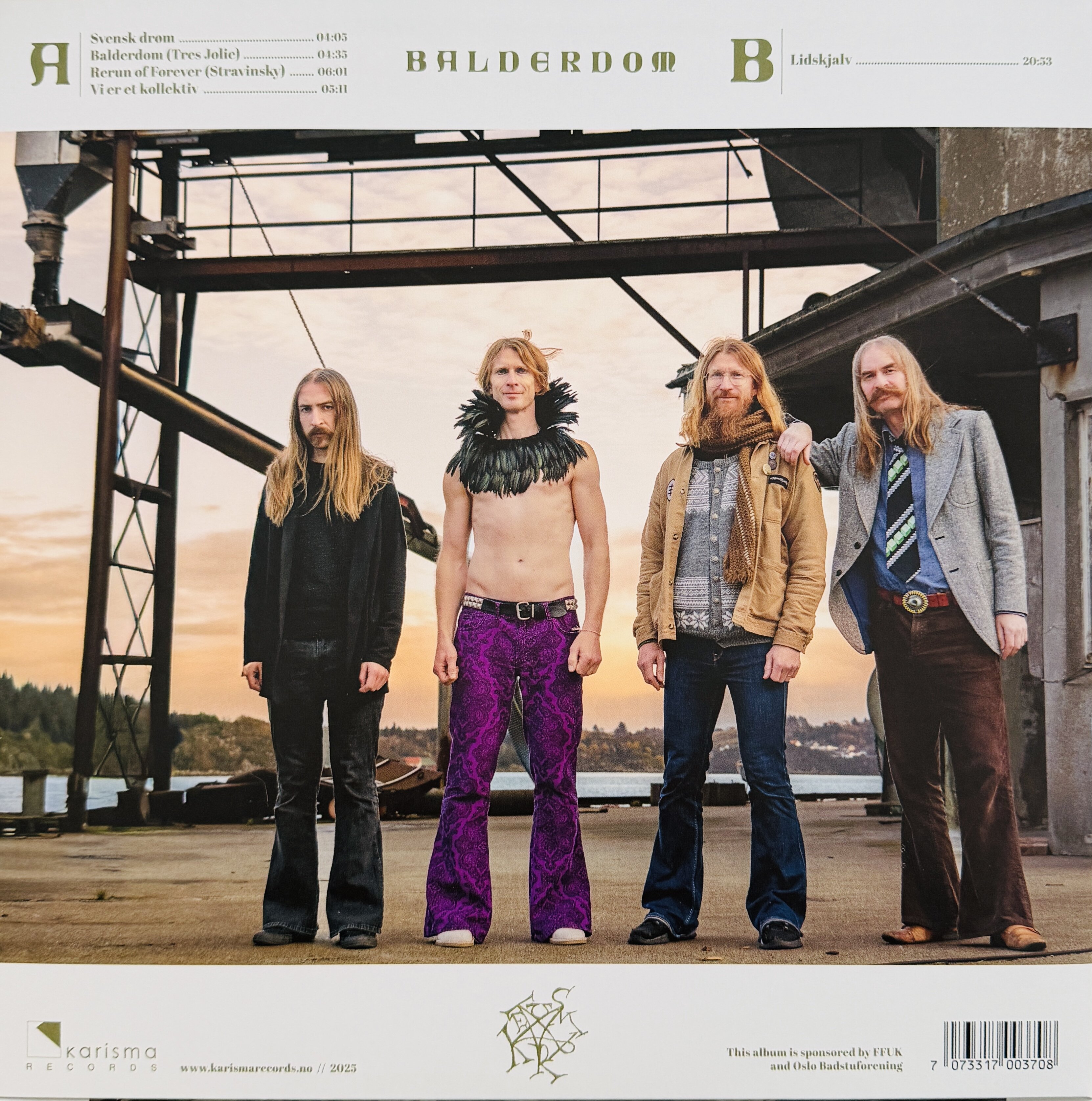
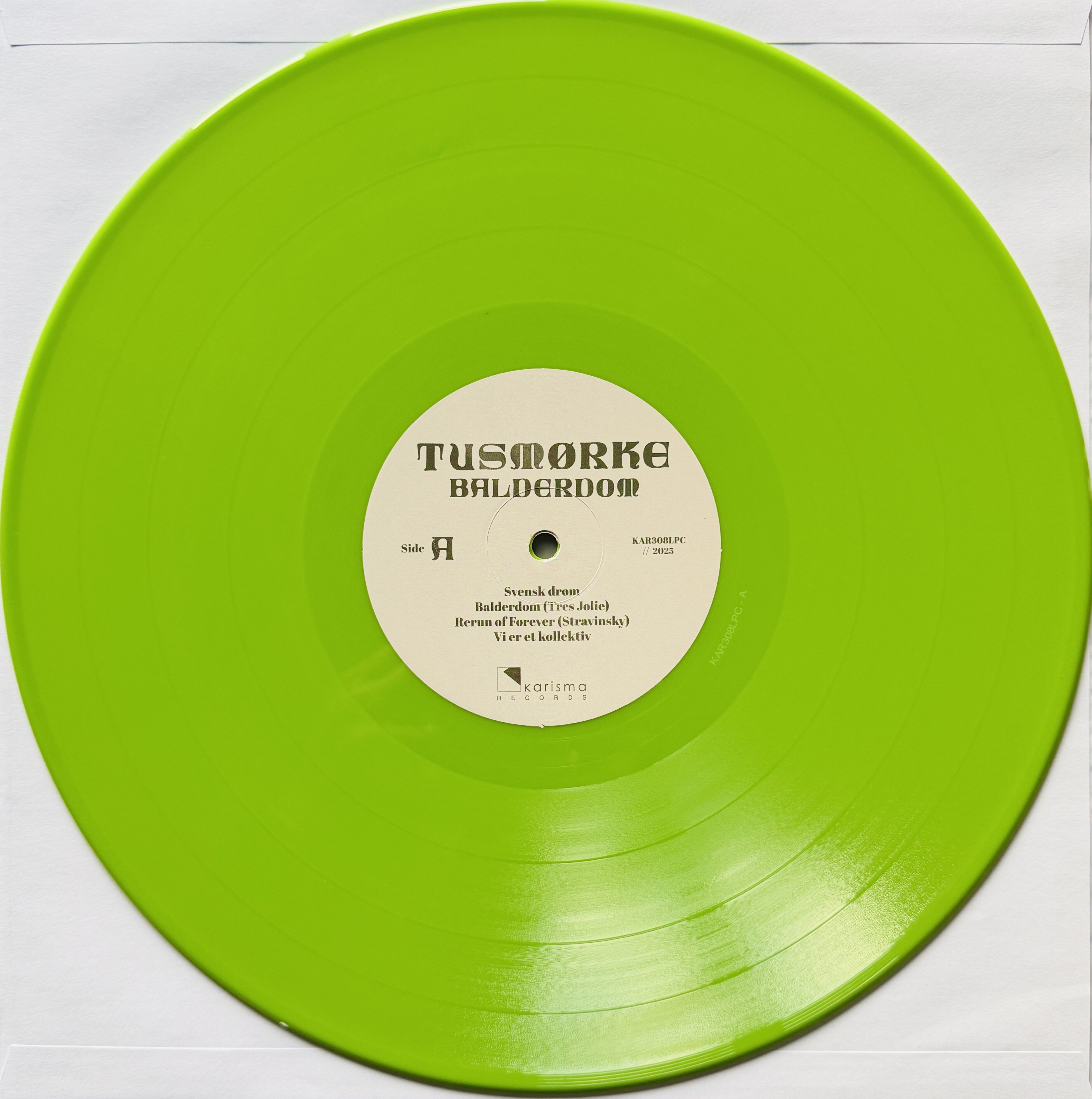
Label: Karisma Records – KAR308LPC
Format: Vinyl, LP, Album, Limited Edition, Green, 180g
Country: Norway
Release date: Mar 20, 2026
Limited to 500 copies worldwide
Tracklist
1. Svensk drøm 04:05
2. Balderdom (Tres Jolie) 04:35
3. Rerun of Forever (Stravinsky) 06:01
4. Vi er et kollektiv 05:11
5. Lidskjalv 20:53
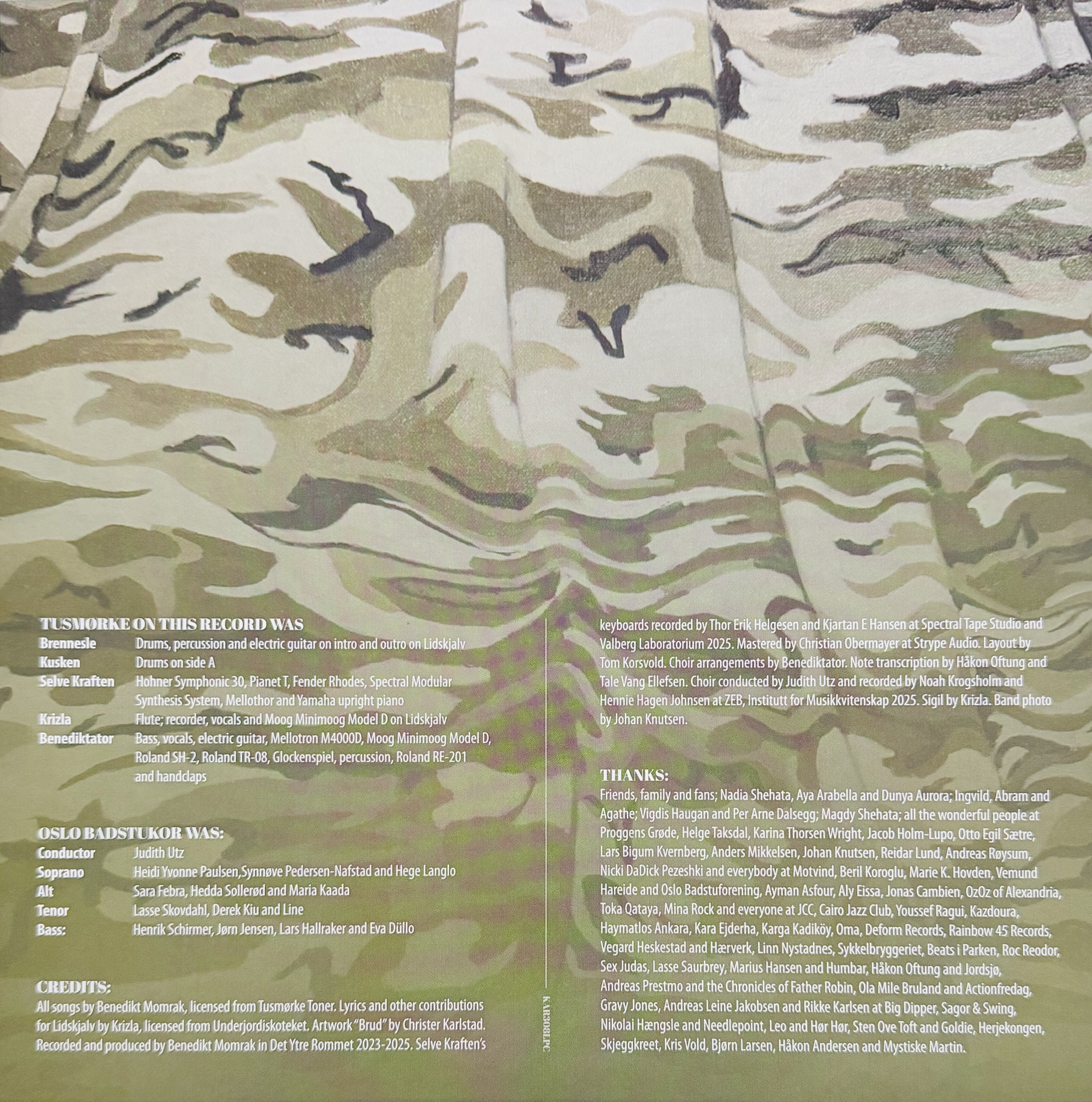
LineUp
Brennesle (Martin Mæhle) - Drums, percussion and electric guitar in the intro and outro on Lidskjalv
Kusken (Filip Ramberg) - Drums on the A-side
Selve Kraften-Hohner (Selve Kraften), Symphonic 30, Pianet T, Fender Rhodes, Spectral Modular Synthesis System, Mellothor and Yamaha
Krizla upright piano (Kristoffer Momrak)- Flute; recorder, vocals and Moog Minimoog Model D on Lidskjalv
Benediktator (Benedikt Momrak): Bass, vocals, electric guitar, Mellotron M4000D, Moog Minimoog Model D, Roland SH-2, Roland TR-08, Glockenspiel, percussion, Roland RE-201 and clapping
Oslo Badstukor (the "Oslo Sauna Choir" is a Norwegian vocal ensemble that collaborates with the band:
Conductor: Judith Utz
Soprano: Heidi Yvonne Paulsen, Synnøve Pedersen-Nafstad and Hege Langlo
Alto: Sara Febra, Hedda Sollerød and Maria Kaada
Tenor: Lasse Skovdahl, Derek Kiu and Bass Line
: Henrik Schirmer, Jørn Jensen, Lars Hallraker and Eva Düllo
Link for listening:
directly on these official platforms:
1. Bandcamp: Full Streaming & Digital Purchase
2. YouTube Music: Playlist dell'album
3. Apple Music: Artist & Albums Page
4. Spotify: Search for "Tusmørke - Balderdom" in the app for the free/premium streaming version.
Note: All links to the musicians' works are in the TAGS under the article title or on the "Artists"