| Canterbury Scene | Crossover Prog | Eclectic Prog | Extreme Prog Metal | Folk Rock | Heavy Prog | Jazz-Rock Fusion | Krautrock | Neo Prog | NON PROG | Northern Prog | Post Metal | Post Rock | Prog Related | Progressive Electronic | Progressive Metal | Psychedelic Rock | Rock Progressivo Italiano | Space Rock | Symphonic Rock | Zeuhl |
Progressive Rock World


662 Reviews - 379 Artists - 93 Detailed biographical profiles - 26 Prog Meteors - 22 Progressive Rock Subgenres
Gentle Giant, The Masters of Counterpoint
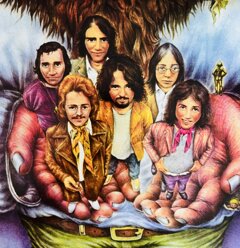
Gentle Giant were one of the most representative groups of British progressive rock in the 1970s, releasing at least five "Essential" albums, which are among the top 100 albums of this genre, particularly the subgenre of Eclectic Prog. This subgenre, derived from progressive rock, focuses on artists who pushed the boundaries of prog by blending influences in a broad, less "traditional" way than symphonic prog or the sound of the Canterbury scene. They are its finest representatives, along with King Crimson and Van Der Graaf Generator, and are therefore in excellent company.
It's a genre that requires great technical and compositional skills, which Gentle Giant were supremely gifted in, with their ability to manage both complexity and sophistication: all the band members were multi-instrumentalists.
The band's stated goal was to "expand the boundaries of contemporary popular music, at the risk of becoming a very unpopular band" and that risk ultimately materialized: they didn't have great commercial success. Their music was complex even by the standards of the most advanced progressive rock, influenced by a wide range of genres, including folk, soul, jazz, and classical. Unlike other contemporary bands, their classical influences touched on medieval, baroque, and modern chamber music, and the music wasn't predominantly or solely instrumental, but featured a lot of vocals, with lyrics inspired by the members' personal experiences and philosophy.
History tells us that Gentle Giant was a British progressive rock band formed in 1970 by brothers Derek, Ray, and Phil Shulman. They initially formed as Simon Dupree and the Big Sound, an R&B group comprised of the three brothers. In 1970, they changed their name to Gentle Giant, adding multi-instrumentalist Kerry Minnear, guitarist Gary Green, and several drummers, including John Weathers.
In 1970, they released their self-titled debut album, which I consider to be on par with their later masterpieces, featuring a harmony and perfect synergy between the instruments and vocals, with songs all unmatched in compositional beauty and execution. Many don't consider it that way, and that's understandable, but I don't think anyone can argue with the fact that it's a must-have.
Their first absolute masterpiece of progressive rock followed, 1971's Acquiring the Taste, now a classic with an iconic and provocative cover art and complex yet captivating compositions, counterpoints and counterpoints, unusual tempos and dissonances, and splendid arrangements featuring new ideas, expressed with great refinement.
Three Friends arrived in 1972 (an album only slightly inferior to their others of the same era, but still excellent), the year of a lineup change: drummer Martin Smith was replaced by the very young Malcolm Mortimore. Martin Smith left the band due to friction and disagreements with brothers Ray and Phil Shulman, and although Smith was the only member (besides the brothers) from their previous band, the relationship frayed during the transition to Gentle Giant's more experimental sound, but also due to technical and creative limitations. In several interviews, the band members mentioned that they wanted more technically gifted musicians to support the growing complexity of their music. During that period, Gentle Giant were supporting Jethro Tull in Europe, and after the tour, they began recording Three Friends, their first American-produced concept album.
In 1972, another drummer change occurred due to an accident involving Mortimore, and with a tour looming, Gentle Giant found his replacement in John Weathers, who remained with the band permanently after the tour, permanently replacing Mortimore. During the American tour, they supported Yes, Black Sabbath, Eagle, and Jethro Tull, while during their European tour (with fifteen dates in Italy alone), their support act was Demetrio Stratos' Area.
But 1972 continued to amaze, releasing another essential masterpiece of progressive rock: Octopus, the band's most mature album to date. It was followed by an American tour, at the end of which Phil Shulman suddenly decided to leave the band. Phil was the eldest of the Shulman brothers and the only one with a wife and three young children at the time. The long absence from home due to international touring was making family life difficult, causing his wife to feel increasingly lonely. After leaving the group, Phil decided to abandon the music industry entirely and returned to live in Portsmouth, where he worked first as a teacher and later in retail. His departure was a critical moment that cast doubt on the group's future, but the remaining members decided to continue.
It's important to remember that Phil Shulman was "THE Gentle Giant" as the conceptual mind behind the group's birth. It was Phil who introduced the reference to the works of François Rabelais (Gargantua and Pantagruel), from which the band's name and the themes of famous songs such as "Pantagruel's Nativity" (a masterpiece on Acquiring the Taste) derive. Phil was the band's leader and mentor, ten years older than brothers Derek and Ray, and was the group's point of reference. He was the one who guided the transition from the pop of their previous bands to the cultured and complex music of Gentle Giant. Phil also wrote the lyrics and developed the concepts. In addition to being a multi-instrumentalist (he played saxophone, trumpet, flute, clarinet, and more), Phil was the conceptual architect of key albums. He also owes the essence of their name: The band's name reflected the duality of their music (delicate yet powerful), an idea their manager suggested and one Phil fully embraced—a band capable of playing both "gentle" (acoustic, medieval) and "giant" (rock, complex).
Gentle Giant continued to churn out masterpieces after his departure in 1973, but many believe they lost something, the introspective and literary component that Phil brought, as is only right and normal when a personality and musician of his stature leaves any band.
A hard blow, but followed by a reaction worthy of true artists. Gentle Giant found the strength to continue, and in 1973 they recorded In a Glass House, their creative peak in my opinion. This too was a six-song concept album, which incredibly was never released in the United States because the record company wasn't convinced of its commercial potential.
This was the band's peak period, and over the next two years they released two more absolute masterpieces:
- The Power and the Glory, from 1974, pure '70s progressive rock, a concept album centered on the story of an undefined monarch, followed by a tour of Europe and North America, with some dates opening for Frank Zappa and Return to Forever by Chick Corea..
- Free Hand, from 1975, their most commercially successful album. Another masterpiece.
But something was changing: 1976 marked the beginning of the prog crisis, and various bands like Genesis, Yes, and Van der Graaf Generator were suffering from the punk influence that was beginning to dominate the music scene.
In 1976, they released Interview, a departure from their previous prog roots, and later released The Missing Piece and Giant for a Day, albums in which the band abandoned prog in favor of a more pop sound. After the release of Civilian, in 1980, the group concluded its artistic output, a true epic of creativity and pure art.
The band members have always rejected the idea of a commercial reunion, leaving their catalog as a finished and "untouchable" work. Derek Shulman said in May 2025 that the band didn't want to become a parody of themselves, preferring to keep their legacy tied to the peak of their creative output in the 1970s.
Gentle Giant's artistic legacy is one of the most profound and influential in progressive rock, despite the group never achieving the mass commercial success of their contemporaries. They were masters of counterpoint and complexity, advocates of extreme multi-instrumentality, mastered polyphonic structures, and excelled in rhythmic experimentation.
The Discography and the Reviews
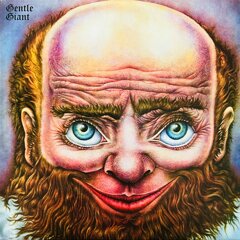
Gentle Giant - 1970
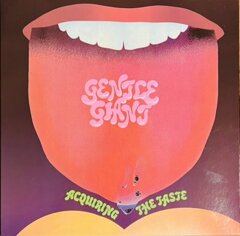
Acquiring the Taste - 1971
Three Friends - 1972
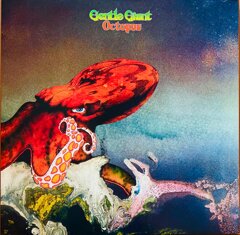
Octopus - 1972
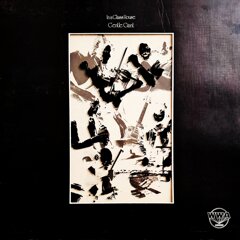
In a Glass House - 1973
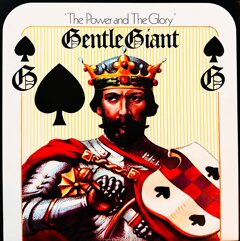
The Power and the Glory - 1974
Free Hand - 1975 - Coming Soon
Interview - 1976 - Coming Soon
The Missing Piece - 1977 - Coming Soon
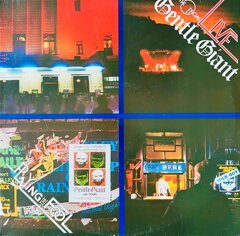
Playing the Fool - The Official Live - 1977
Giant for a Day - 1978 - Coming Soon
Civilian - 1980 - Coming Soon
Nota: i link alle pagine degli artisti e band qui citati e i loro i loro album sono disponibili nella pagina "Artisti" o usare il TAG Gentle Giant