| Canterbury Scene | Crossover Prog | Eclectic Prog | Extreme Prog Metal | Folk Rock | Heavy Prog | Jazz-Rock Fusion | Krautrock | Neo Prog | NON PROG | Northern Prog | Post Metal | Post Rock | Prog Related | Progressive Electronic | Progressive Metal | Psychedelic Rock | Rock Progressivo Italiano | Space Rock | Symphonic Rock | Zeuhl |
Progressive Rock World


657 Reviews - 374 Artists - 93 Detailed biographical profiles - 26 Prog Meteors - 22 Progressive Rock Subgenres
The Mahavishnu Orchestra's impact on the international and Italian music scene
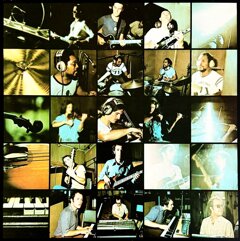
The Mahavishnu Orchestra was one of the most influential jazz fusion bands, founded in New York in 1971 by British guitarist John McLaughlin.
The name "Mahavishnu" was suggested to McLaughlin by his spiritual guru, Sri Chinmoy. Indian philosophy permeates the group's lyrics and song titles.
Their style is a fusion of psychedelic rock, jazz improvisation, and the complexity of Indian classical music, featuring complex rhythms in odd time signatures and extreme technical virtuosity, particularly in solo duels between guitar and violin or keyboards.
The first lineup (from 1971 to 1973), the classic lineup, included John McLaughlin (guitar), Billy Cobham (drums), Jan Hammer (keyboards), Jerry Goodman (violin), and Rick Laird (bass). It was during this period that the band produced the masterpieces The Inner Mounting Flame (1971) and Birds of Fire (1973).
The second lineup (from 1974 to 1976), after the original group disbanded due to internal tensions, McLaughlin formed a new version with violinist Jean-Luc Ponty, Narada Michael Walden (drums), Ralphe Armstrong (bass), and Gayle Moran (keyboards/vocals). This phase was characterized by symphonic collaborations, such as the album Apocalypse (1974), recorded with the London Symphony Orchestra.
From 1984 to 1987, McLaughlin reformed the group with new members (including Bill Evans on saxophone and Jonas Hellborg on bass), evolving the sound toward electronic sounds supported by the Synclavier system.
The Mahavishnu Orchestra's musical legacy is represented by their redefinition of the concept of technical virtuosity in modern music. Their work is one of the fundamental pillars of jazz fusion, which they pioneered with their remarkable ability to blend the power of psychedelic rock with the complexity of jazz improvisation and the depth of Indian classical rhythms.
They introduced the use of complex odd time signatures and an interplay between instruments (electric violin, keyboards, guitar, and drums) characterized by unprecedented speed and precision, becoming a benchmark for virtuosity.
Their influence on many genres is evident. In Progressive Rock, legendary bands like Yes, King Crimson and Rush have cited the Mahavishnu Orchestra as a source of inspiration, but their influence extends to punk (Greg Ginn of Black Flag) and modern metal (bands like The Mars Volta, Opeth, The Dillinger Escape Plan, and Black Midi), and of course to modern jazz, influencing contemporary bands like Weather Report and Return to Forever, as well as modern musicians like pianist Tigran Hamasyan.
Their openness to world music was guided by spiritual aspects; through collaboration with guru Sri Chinmoy and the integration of Indian scales, they paved the way for "ethnic music" and McLaughlin's subsequent acoustic evolution with Shakti.
The influence on the Italian music scene of the 1970s was also significant, sparking the transition from symphonic progressive rock to a more technical jazz-rock/fusion. This influence was evident on bands like Arti e Mestieri, the Italian group that most closely reflects the Mahavishnu aesthetic, as seen on their debut album, Tilt (1974). Giovanni Vigliar's virtuosic violin playing recalls the style of Jerry Goodman, while drummer Furio Chirico adopts a hyper-technical approach inspired by Billy Cobham.
Perigeo also had a significant impact, and although their sound was more Mediterranean, they drew on their ability to blend jazz improvisation with the power of rock.
Even PFM (Premiata Forneria Marconi) was influenced by this. After the departure of violinist Mauro Pagani, PFM moved toward a jazz-fusion sound with the album Jet Lag (1977), featuring the song "Meridiani," which clearly shows the influence of Mahavishnu's compositions, with a focus on pure instrumental technique.
And finally, the great Area, more oriented toward radical experimentation and free jazz, shared with Mahavishnu the adoption of complex odd time signatures and the use of unconventional scales, elements that Patrizio Fariselli and Demetrio Stratos integrated into their compositions.
Their albums The Inner Mounting Flame (1971) and Birds of Fire (1973) are essential milestones for anyone approaching the study of fusion guitar and modern composition.
The Discography and the Reviews
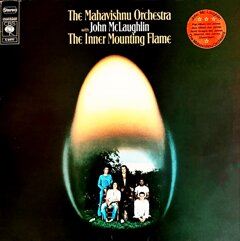
The Inner Mounting Flame - 1971 - ESSENZIALE
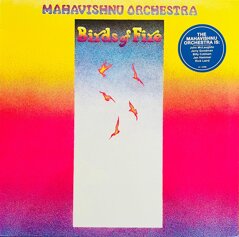
Birds of Fire - 1973 - ESSENZIALE
Apocalypse - 1974 - Coming Soon
Visions of the Emerald Beyond - 1975 - Coming Soon
Inner Worlds - 1976 - Coming Soon
Mahavishnu - 1984 - Coming Soon
John McLaughlin & Mahavishnu: Adventures In Radioland - 1986 - Coming Soon
The Lost Trident Sessions - 1999 - Coming Soon
Note: the links to the pages of the artists and bands mentioned here and their albums are available on the"Artists" page or using the TAG Mahavishnu Orchestra