.jpeg "whatsapp-image-2025-08-29-at-18.37.38-(5).jpeg")
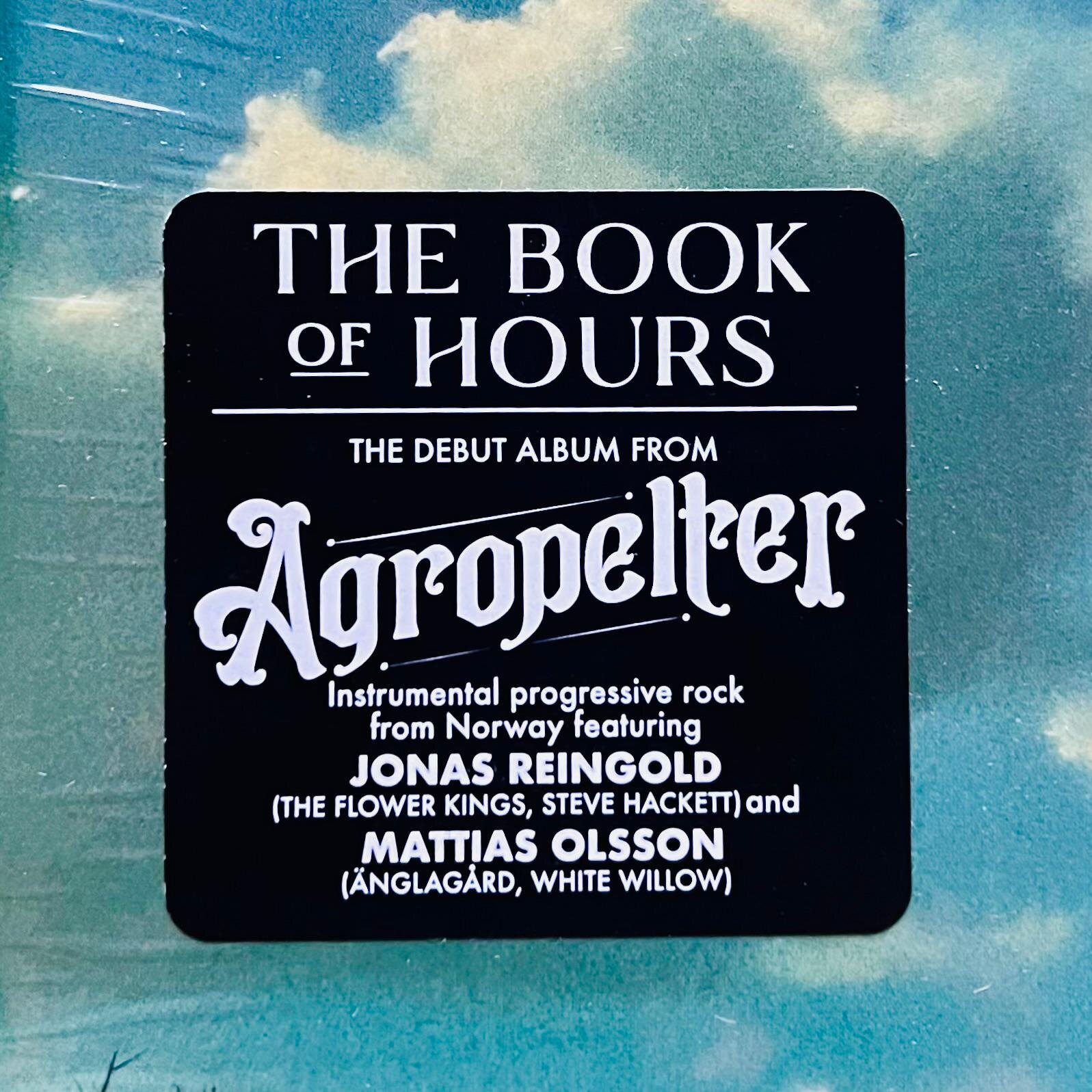
The Book of Hours, the excellent debut album by Norwegian band Agropelter, was released in July 2025.
I listened to it twice in a row, both in its entirety, to appreciate its nuances and because I immediately liked it; the album itself practically demanded it. It's such an exceptional album that I'm already considering it among the top five symphonic rock releases of 2025, my favorite genre.
A completely instrumental album with clear, strong, and valuable classical influences, a truly impressive lineup with some absolute highlights, a progressive rock that hails from Norway but lacks the typical dark, melancholic atmosphere of Scandinavia. The compositions range from electrifying and energetic to sweet, passionate, and romantic, with levels of quality and intensity consistently top-notch throughout. The lineup is exceptional in every respect, along with the compositions.
The band's biography is as follows, taken from their official website: (https://agropeltermusic.com/)
"Agropelter is a Norwegian progressive rock project. It is the creative outlet of Kay Olsen, a promising newcomer in the burgeoning Norwegian prog scene. The music draws inspiration from classic prog groups like Genesis, Camel, King Crimson, and Eloy, as well as classical composers Rachmaninoff, Beethoven, Bach, Vangelis, and Terje Rypdal.
The debut album features Mellotron, Hammond organs, harpsichord, ARP and Moog synthesizers, and bass pedals. Kay Olsen played all guitars, bass, Hammond and church organs, and solo keyboards.
Also contributing:
Jonas Reingold (Steve Hackett, The Flower Kings) on fretless bass.
Mattias Olsson (Änglagård, White Willow, Molesome) on percussion, Mellotron, Overdubs and atmospheres.
Andreas Sjøen (Umpfel, VÅDE, Sean Ashe) on drums, along with numerous classical musicians playing strings and wind instruments.
The album is mixed and mastered by Jacob Holm-Lupo (White Willow, Donner, Solstein) at Dude Ranch Studios."
From this reading alone, we see something very, very interesting:
This is the project of a multi-instrumentalist with great compositional and performance skills, especially on keyboards and organ, which contain some exceptional parts. Kay Olsen, who relies on some great collaborators, two of whom stand out (without taking anything away from the others): the great Jonas Reingold on bass (Steve Hackett, The Flower Kings) and Mattias Olsson of the immense Änglagård and also of White Willow. The mixer also comes from White Willow with Jacob Holm Lupo.
The other musicians on strings and wind instruments are excellent, but special mention goes to Jordi Castella's extraordinary piano, a central instrument throughout the album, and to Andreas Skorpe's drums, a discovery for me, but absolutely magnificent.
Beyond the illustrious influences in both the worlds of prog and classical music, we read that this is "Norwegian progressive rock": perhaps someone besides me is starting to identify this as a genre in itself, what I've repeatedly defined in countless posts as Northern Prog.
The album consists of seven tracks, four of which comprise a title rack divided into four parts, with a total running time of over 30 minutes, spanning the last track on side A and the entire side B. The three tracks at the beginning of the album are shorter, bringing the total running time to about 45 minutes.
Flute of Peril features beautiful flutes and keyboards in the opening section, then gives way to a splendid synergy between keyboards and beautiful guitar. A bucolic, almost pastoral song, short but very, very beautiful, without drums, slow and engaging. Beautiful.
"Levitator" begins with a very ambient feel, with keyboards providing a beautiful introduction. The piece then builds in intensity with a modern prog style and psychedelic passages. The keyboards, which are then doubled by guitars, are captivating, making the song rhythmic and very enjoyable overall. The guitar solo is beautiful. An ambient section with keyboards and a nice drum beat heralds a truly beautiful keyboard solo that intertwines with beautiful guitar counter-beats, until the organ arrives, imposing and majestic, closing the song, fading into electronic synth sounds. This is also a beautiful song.
"Burial Mound" begins with a slow, sustained keyboard opening. The light drums play on this long base of sounds with hints, touches, and fleeting interventions, and then a stunning bass solo begins, melodic and intense, moving between long sounds and fast chords. This mood dominates the song. The drums and bass are the absolute stars. A great piece.
The first part of the suite, The Book of Hours Part I, begins with piano, strings, and wind instruments, performed with absolute excellence in an operatic manner. The keyboards then unleash a carpet of sounds that transforms the piece, giving it a truly prog feel. Powerful drums and bass create a syncopated rhythm, over which the keyboards create a fantastic melodic solo. The atmosphere and tempo changes are beautiful. The bass in this, as in the other pieces, is absolutely fantastic. The piece accelerates into a rock-like ride, and the guitar also becomes rhythmic with a pressing turn in the epic moment of the piece. The keyboard solo is beautiful, followed by the guitar solo. The variations are tastefully followed by the drums, which once again take center stage, along with the bass. This section grows increasingly intense until, under the light rain and thunderstorm, the magical piano returns: a beautiful performance, intense, passionate, engaging, rich in nuance, which grows and becomes increasingly passionate and powerful, showcasing exceptional piano skills. The prog phase then resumes, a triumph of everything I (we?) love: a tense intro on keyboards and drums, followed by a fantastic keyboard solo over a compelling, insistent, energizing rhythmic base, and then it changes again. When the drums lighten, the synth traces a loop while the bass begins a new, beautiful solo over the carpet of sounds. The complexity and beauty blending with the fearless, monstrous bass are astonishing. The piano returns with a haunting turn and the beautiful strings, a prominent cello part, the deep timpani, and the choral closing of this splendid piece. ABSOLUTE TOP.
The Book of Hours Part II opens Side B with intense freshness, with a rhythm that has something exotic, an aspect emphasized by all the instruments, something Arabian, in a concert of keyboards, piano, strings, and winds. The composition is beautiful, so passionate is it that it manages to move and excite. More compelling and atmospheric sections alternate. The solos change, the very long guitar one growing as the song grows. The synth loop that accompanies the entire piece is beautiful, as is the metronomic bass, with drums always precise. A superb composition.
In The Book of Hours Part III, the piano briefly returns between the end of Part II and the opening of Part III. The drums and bass set a powerful tempo, over which the keyboards, playing the same theme that runs throughout the suite, deliver a stunning solo. Another variation, again marked by a piano solo, is followed by the keyboards for a sort of classical piano interlude enriched by the modernity of the synths. The guitar is added, replacing the keyboards in the reworking of the theme with the piano. Now it's time for the keyboards and organ, which open the next section, in which the drums and bass return. The epic phase of the piece returns. Great emphasis, great growth, great energy once again, and a great guitar solo. This piece excels in its alternating vistuosity, and there's a beautiful drum interlude that marks the boundary between this energetic phase and the next, which features a return of piano, winds, and strings, and the splendid harpsichord with incursions of drums and guitar. The suite continues with grandeur.
The Book of Hours Part IV reinterprets the same central theme of the entire suite with different nuances, a more linear rhythm for the great art of the piece, and a very long section in which the splendid guitar takes center stage. It feels like a symphonic rock jam; the nuances and changes are meticulous, accurate, and precise, played with varying emphasis and taste. The album closes with a splendid organ that lingers for many interminable seconds...
The artwork is worthy of the album, but darker than the record itself, which instead has a sunny and energetic atmosphere.
I recently read in one of the comments that modern prog has nothing left to say, and I tried to refute this thesis by proposing some names and styles. Well, this album is reconfirmation that prog is more alive than ever today, and with absolutely remarkable quality and strength. And it is, I must say, thanks to this project, Kay Olsen's Agropelter and her fantastic collaborators.
This album is a MUST-have for your collection, in my opinion.
Tracks
1. Flute of Peril (2:24)
2. Levitator (5:49)
3. Burial Mound (3:22)
4. The Book of Hours Part I (11:07)
5. The Book of Hours Part II (6:21)
6. The Book of Hours Part III (6:48)
7. The Book of Hours Part IV (9:03)
Running Time: 44:54
The Lineup
- Kay Olsen - Guitars, lead keyboards, church organ, bass
Featuring:
- Andreas Skorpe - drums
- Mattias Olsson - percussion, overdubs, mellotron, ambience
- Jonas Reingold - fretless bass
- Jordi Castella - grand piano
- Eli Mine - harpsichord
- Norlene M - cello
- Eileen Antu - double bass
- Luis Vilca - alto flute
- Hannah Danets - flute
- Zhivago - bassoon
- Edgar Asmar - duduk
.jpeg "whatsapp-image-2025-08-29-at-18.37.38-(1).jpeg")
.jpeg "whatsapp-image-2025-08-29-at-18.37.38-(4).jpeg")
.jpeg "whatsapp-image-2025-08-29-at-18.37.38-(3).jpeg")
.jpeg "whatsapp-image-2025-08-29-at-18.37.38-(2).jpeg")