
.jpeg "whatsapp-image-2025-10-17-at-15.17.33-(6).jpeg")
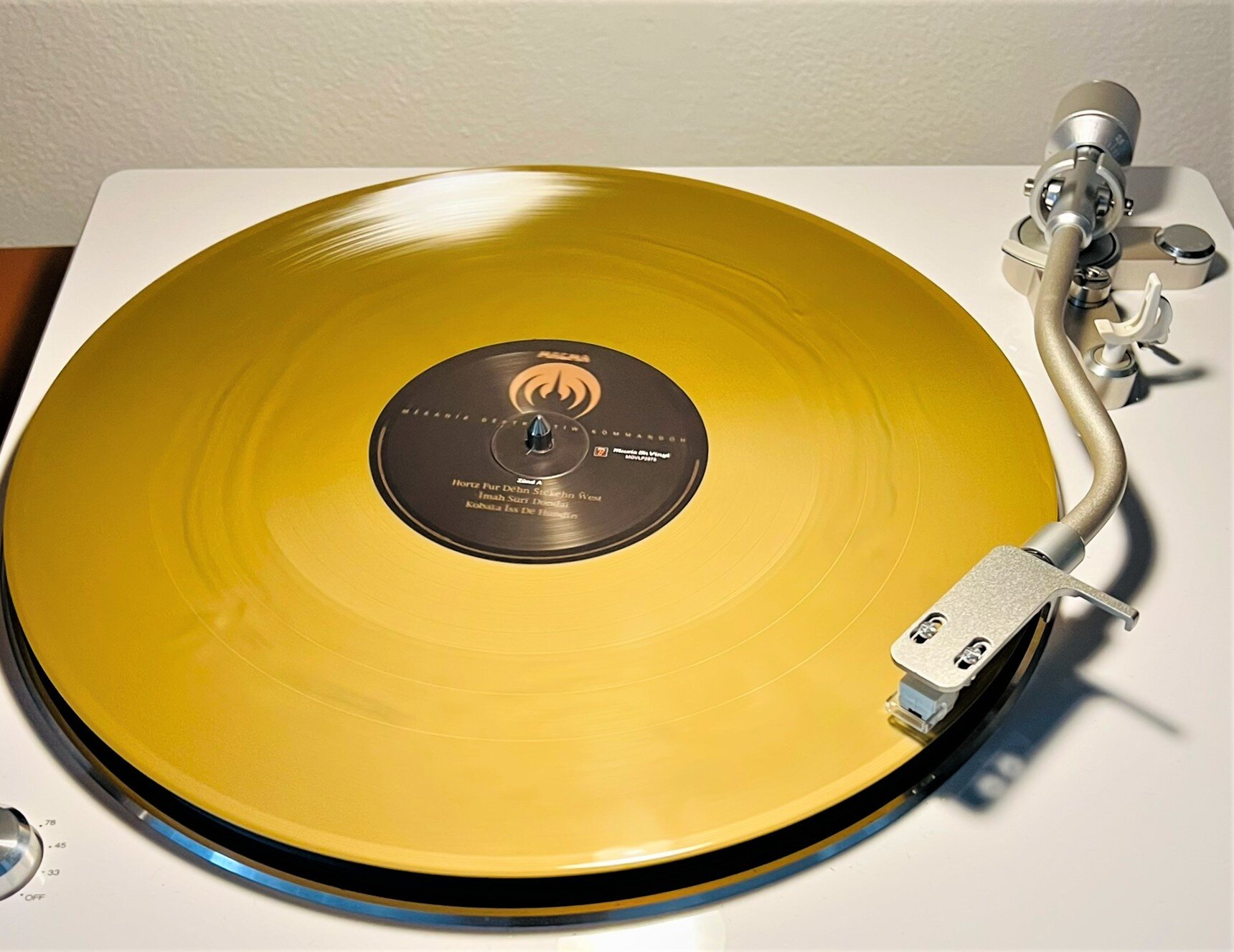
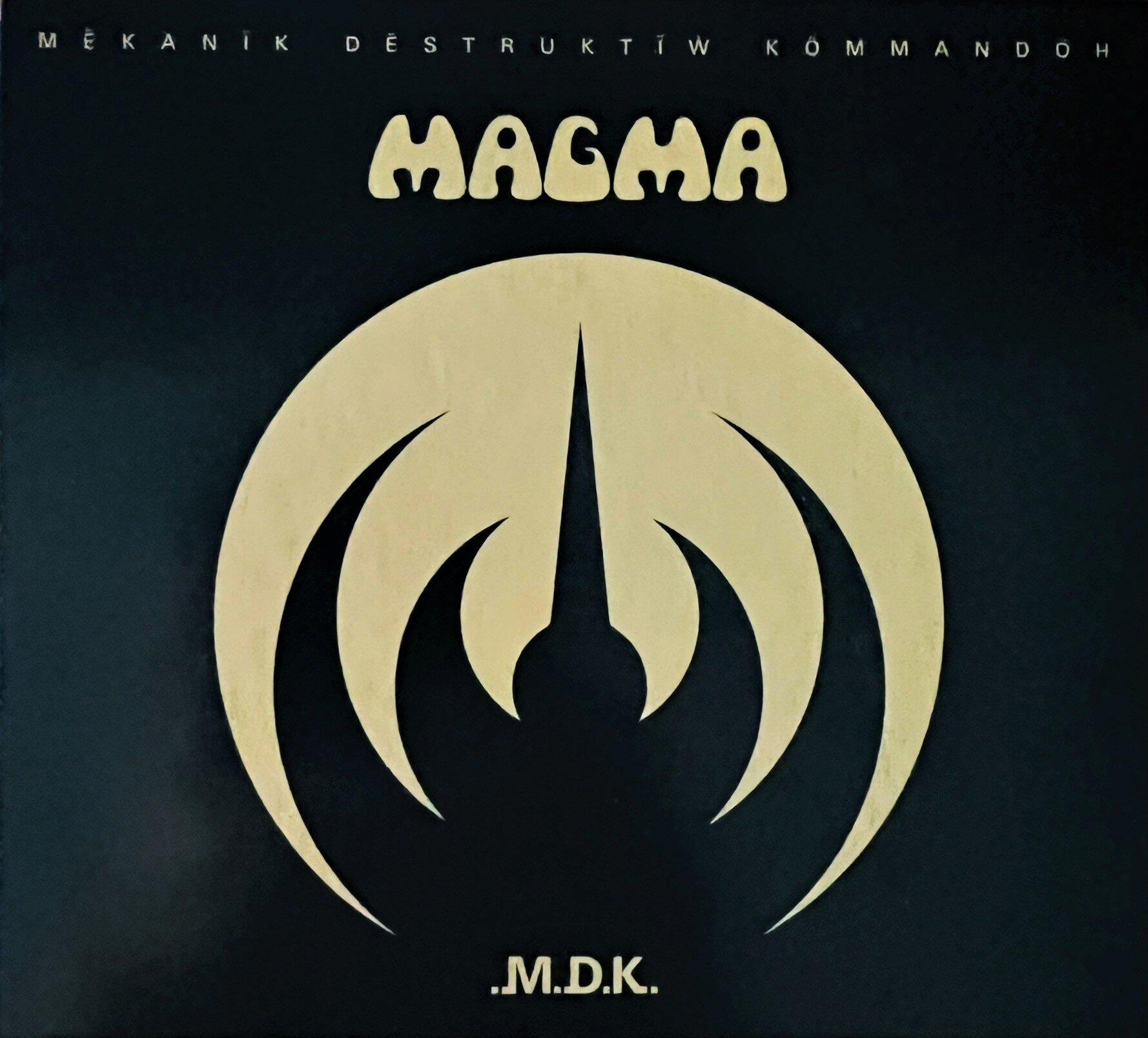
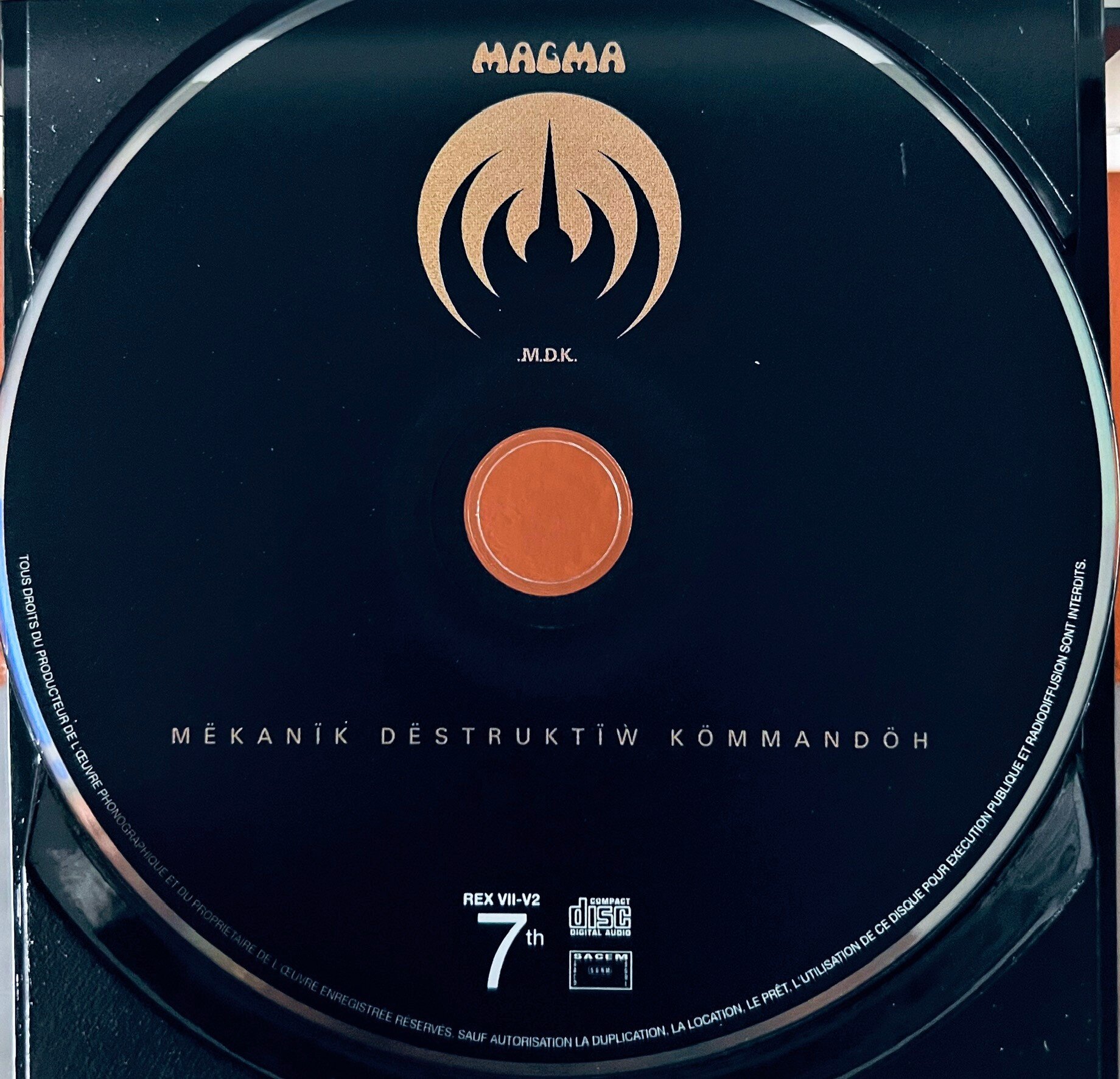
Magma's masterpiece, "Mekanïk Destruktïw Kommandöh," released in 1973, is arguably Magma's most famous album, although they weren't a commercially successful band at the time. It is an innovative and intense album in the Zeuhl genre, a subgenre of progressive rock, characterized by a unique conceptual narrative, complex compositions, and an unconventional sound. It features a challenging and highly specific style that is not easy to listen to. This album is the quintessential example of the Zeuhl genre, representing its dark, operatic, and often relentless style.
It is also a seminal album, "Essenziale," in progressive rock in general and the definitive Zeuhl album. Its sustained intensity, complex structures, and five-piece female choir make for a deeply immersive and unique listening experience, blending jazz and rock with classical influences such as Stravinsky and Orff, and avant-garde elements.
This album, like all the others by this band, is sung entirely in Kobaian, an artificial language invented by Christian Vander, drummer and founder of the group. He conceived of Kobaian as a kind of universal language, an imaginary extraterrestrial language spoken by the population of the fictional planet Kobaïa. Almost all of Vander's compositions are sung in this language, which isn't a series of meaningless sounds, but a real language with its own syntax, grammar, and dictionary.
The narrative of this album centers on Christian Vander's visions of what he believes to be a bad future for Earth. It tells the story of the prophet Nebehr Güdahtt, who tells the Earthlings that if they want to save their lives, they must leave Earth and settle on the planet Kobaïa. The people don't believe him and begin to march against him. But slowly, some begin to believe him and begin to march with him.
Although the album is divided into tracks, the album feels like a single composition, with each track flowing into the next.
Some notes on the tracks:
- “Hortz Fur Dëhn Štekëhn Ẁešt” is the opening track, which develops in the band's distinctive style and begins the album's cosmic and mythical narrative through powerful vocals and a dramatic instrumental backing.
- “Ïma Sürï Dondaï” is a challenging and complex piece with a rhythmically complex and dense structure, intense vocal delivery, and a dramatic, orchestral atmosphere.
- “Kobaïa Iss Dëh Hündïn” features spectacular bass lines and a driving groove.
- "Da Zeuhl ẁortz Mëkanïk" is a masterpiece, pure zeuhl with a powerful melody and a mystical atmosphere.
- "Nebehr Gudahtt" offers an impressive, ecstatic and hysterical vocal performance.
- "Mekanïk Kommandöh," the powerful and monumental title track, conveys the epic sense of the narrative.
- "Kreühn Köhrmahn Ïss Dëh Hündin" is an exceptional piece, with an intense and powerful atmosphere, orchestral arrangements, and raw, operatic vocals.
This album expresses both Genius and Madness. The genius evident in the surreal nature of the narrative, the creation of a new language, the complexity of the song structures and sound. The madness evident for precisely the same reasons. The result is a monumental, conceptual work that undoubtedly required enormous effort, much thought, and study.
A brain-twisting, complex, experimental, and not easy-listening album for true enthusiasts, perhaps the most representative example of music that is simultaneously beautiful, extreme, and innovative.
An absolute masterpiece.
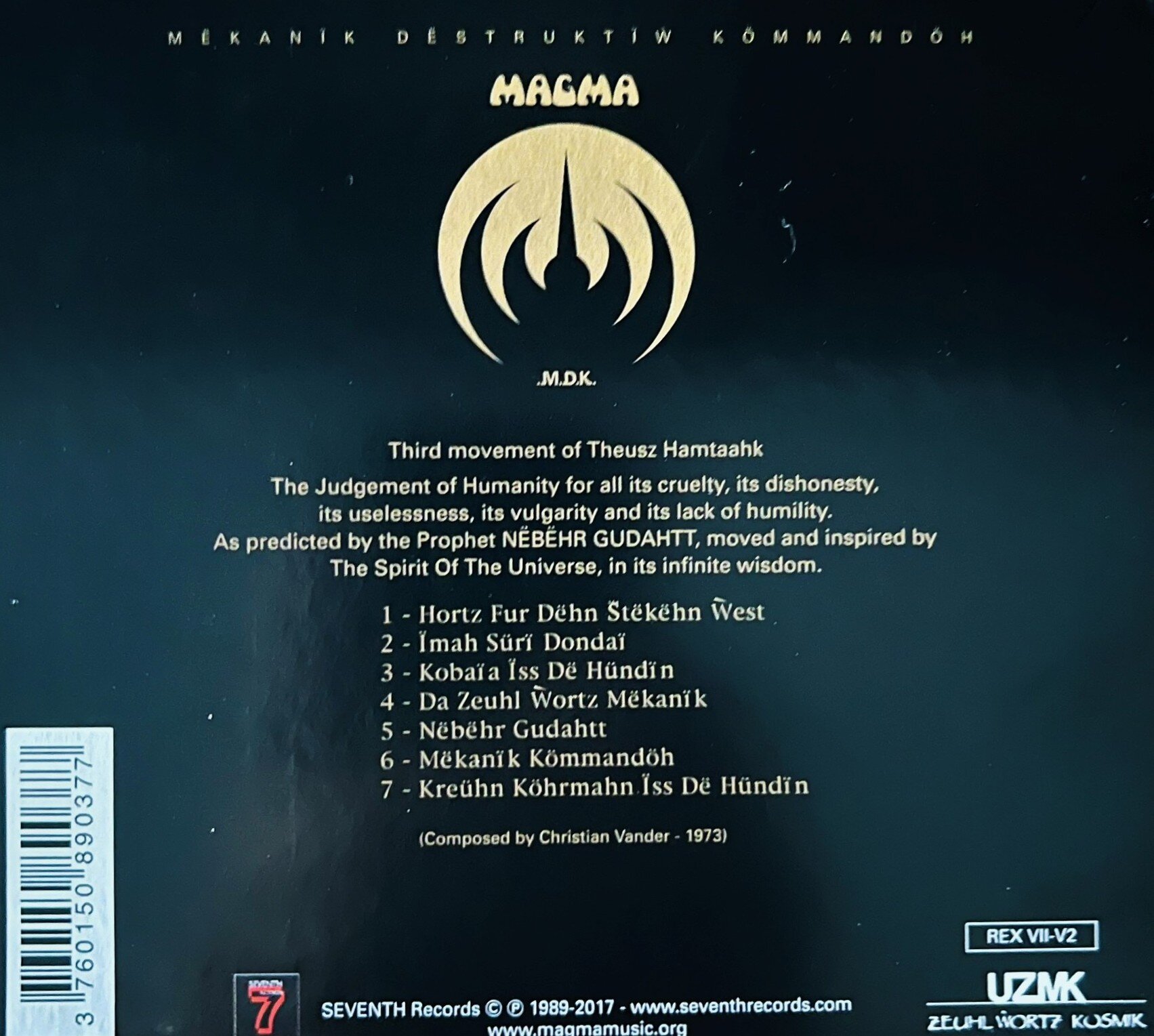
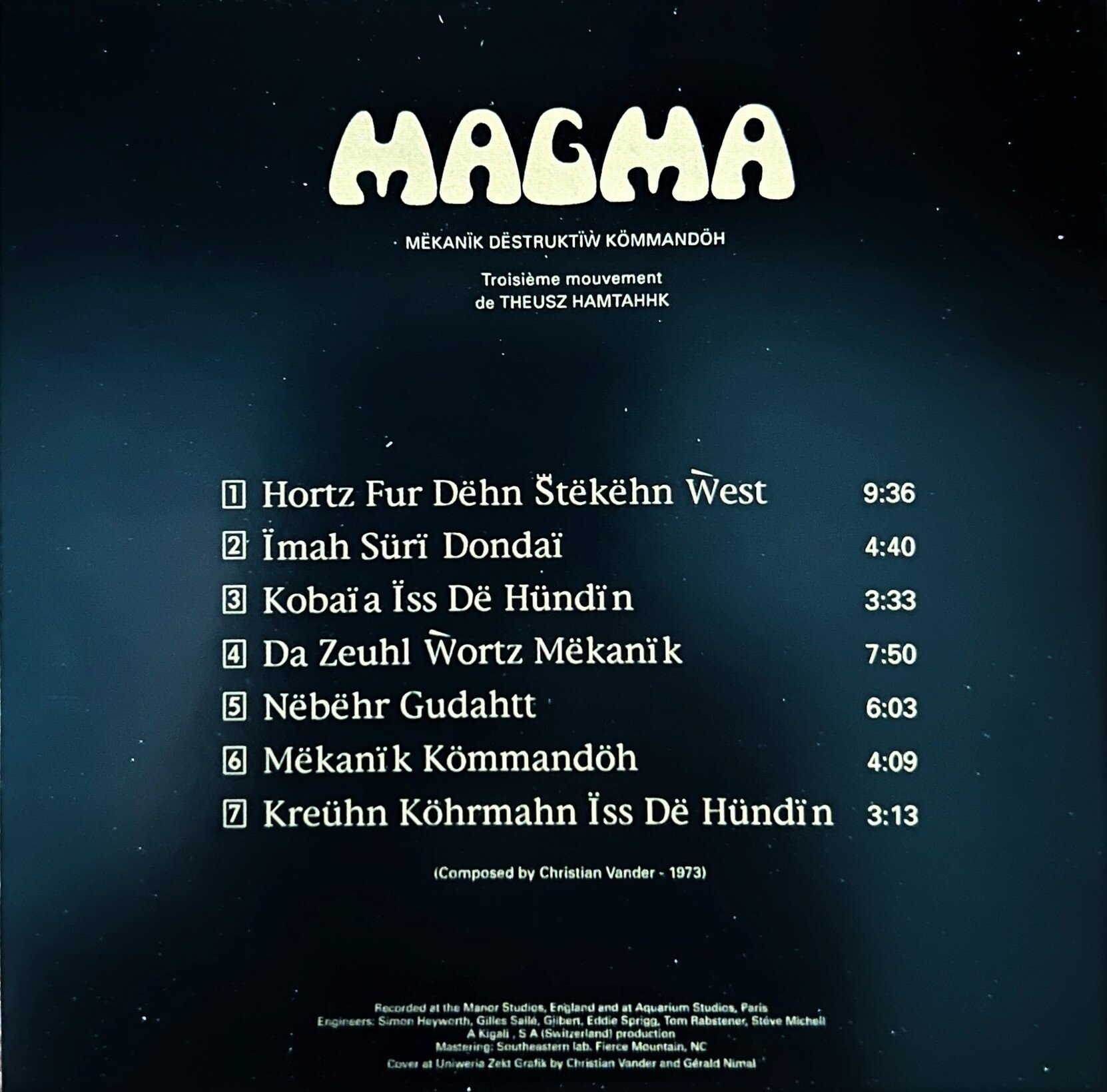
Tracklist
1. Hortz Fur Dëhn Stekëhn Ẁest (9:34)
2. Ïma Sürï Dondaï (4:28)
3. Kobaïa Is De Hündïn (3:35)
4. Da Zeuhl Ẁortz Mëkanïk (7:48)
5. Nebëhr Gudahtt (6:00)
6. Mëkanïk Kömmandöh (4:08)
7. Kreühn Köhrmahn Iss De Hündïn (3:14)
Duration 38:47
LineUp
- Christian Vander - drums and percussion, organ, vocals
- Klaus Blasquiz - vocals, percussion
- Jannik Top/bass
- Teddy Lasry - brass, flute, conductor
- Jean-Luc Manderlier - piano, organ
- Claude Olmos - guitar
- René Garber - bass clarinet, vocals
- Doris Reihnardt, Evelyne Razymovski, Michèle Saulnier, Muriel Streisfeld, Stella Vander - choir
Note: All links to the musicians' works are in the TAGS under the article title or on the "Artists" page
.jpeg "whatsapp-image-2025-10-17-at-15.17.33-(5).jpeg")
.jpeg "whatsapp-image-2025-10-17-at-15.17.33-(8).jpeg")
.jpeg "whatsapp-image-2025-10-17-at-15.17.33-(9).jpeg")
.jpeg "whatsapp-image-2025-10-17-at-15.17.33-(7).jpeg")