.jpeg "The Road of Bones by IQ")


.jpeg "Subterranea by IQ")
.jpeg "Lateralus by TOOL")


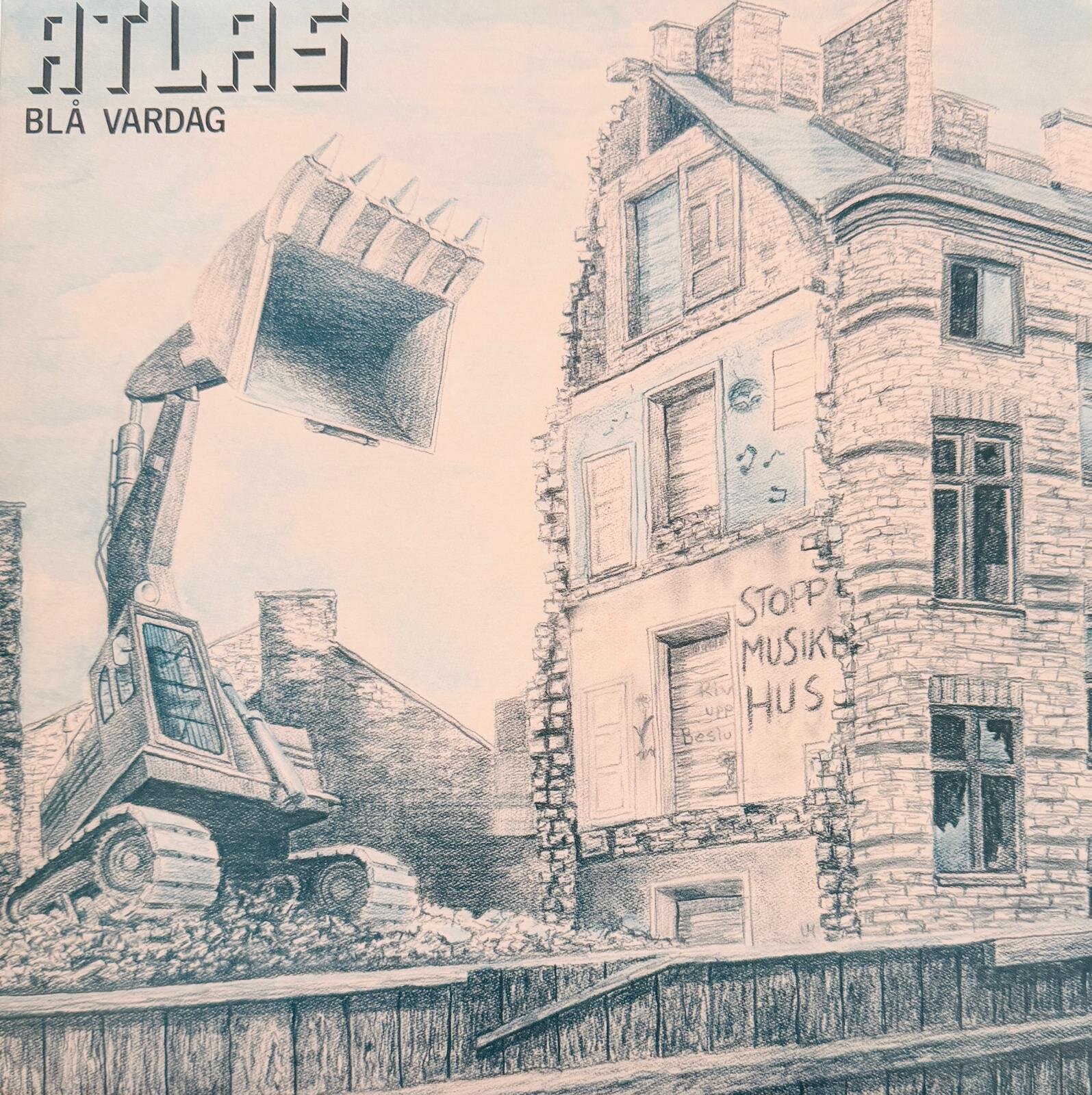
Blå Vardag by Atlas, 1979 album.
Atlas is a Swedish band that released only one album, "Blå Vardag," in 1979, before disbanding in 1980. The lineup included Björn Ekborn and Erik Björn Nielsen on keyboards, Micke Pinotti on drums, Uffe Hedlund on bass, and Janne Persson on guitar. After the breakup, the band (except for Ekborn) continued as a project called Mosaik, releasing a self-titled album in 1982. The various members pursued other musical activities with different groups. The band's sound was based on the use of dual keyboards and a fusion of symphonic rock with fusion influences and complex instrumental compositions that at times contain reminiscences of the Canterbury sound.
Blå Vardag (Swedish for "Blue Monday" or "Grey Day") is their only self-produced album, now a classic among progressive rock fans. It embodies the Swedish prog sound of the 1970s, but with an unexpectedly sunny vibe.
The album contains five completely instrumental tracks, complex compositions with great synergy between the two keyboardists, their organs, synthesizers, and mellotron. The overall mood is positive, with a light-hearted atmosphere.
It's a gem of progressive rock from Scandinavia, but far from the melancholic atmospheres that typically characterize bands from this cold northern European region. The compositions are beautiful, and there's plenty of melody and harmony.
- Elisabiten opens the album with a jazz-fusion vibe, featuring dual keyboards (piano, organ, and synthesizers) and a stripped-down rhythm that gradually builds in intensity. The melody and complexity are beautiful in this great composition.
- På Gata is a long track, about 14 minutes long, with moods that shift from sunny and jazzy to darker and more emotionally intense. The keyboard parts, featuring the Mellotron and Clavinet, are impressive.
- Blå Vardag opens side B with an experimental sound, impressive keyboard work and essential rhythms. The song slowly builds to an ethereal, psychedelic atmosphere, closer to the dark Scandinavian sound. The double keyboard passages, featuring the Mellotron, Moog, Hammond organ, and electric piano, are beautiful. A beautiful piece.
- Gånglåt stands out with its dramatic tempo changes and spectacular technical execution, featuring a strong guitar part. The mood is serene, calm, and sunny, with splendid electric piano work and a great guitar solo.
- Den Vita Tranans Väg is a song with a dreamy atmosphere, dark tones, punchier guitars, and excellent synths and organ, along with the ever-present Mellotron.
An overall sunny and positive atmosphere, a symphonic rock with jazz-rock influences, perhaps out of time for its late '70s nature. Had it been released six or seven years earlier, in my opinion, it would have had much greater commercial success. Listening to it today, it takes me right back to the early '70s, both for the complexity of the songs and the atmospheres, which range from epic, sometimes pressing, sometimes serene, and sometimes interlocutory, always of great intensity. The key musicians are the keyboardists and the guitarist, with the large rhythm section doing an excellent job, but not overly virtuosic.
An album unknown to many, but absolutely recommended for fans of instrumental symphonic progressive rock. A gem worth rediscovering.
Highly recommended album!
This album is a true Progressive Rock METEOR. Visit the PROG METEOR section for more information.
Note: All links to the musicians' works are in the TAGS under the article title or on the "Artists" page.
Tracklist
1. Elisabiten (7:12)
2. På Gata (14:10)
3. Blå Vardag (6:56)
4. Gånglåt (2:52)
5. Den Vita Tranans Väg (7:18)
Duration 38:28
LineUp
- Janne Persson - guitar, conga, cymbals, flute, and Mellotron (6)
- Björn Ekborn - organ, piano, synth, clavinet, Mellotron, Rhodes
- Erik Björn Nielsen - synth, Mellotron, Rhodes, organ, piano
- Uffe Hedlund - bass, bass pedals, guitar
- Micke Pinotti - drums
.jpeg "whatsapp-image-2025-11-20-at-14.14.30-(1).jpeg")
.jpeg "whatsapp-image-2025-11-20-at-14.14.30-(2).jpeg")
.jpeg "whatsapp-image-2025-11-20-at-14.14.30-(3).jpeg")
.jpeg "whatsapp-image-2025-11-20-at-14.14.30-(5).jpeg")