
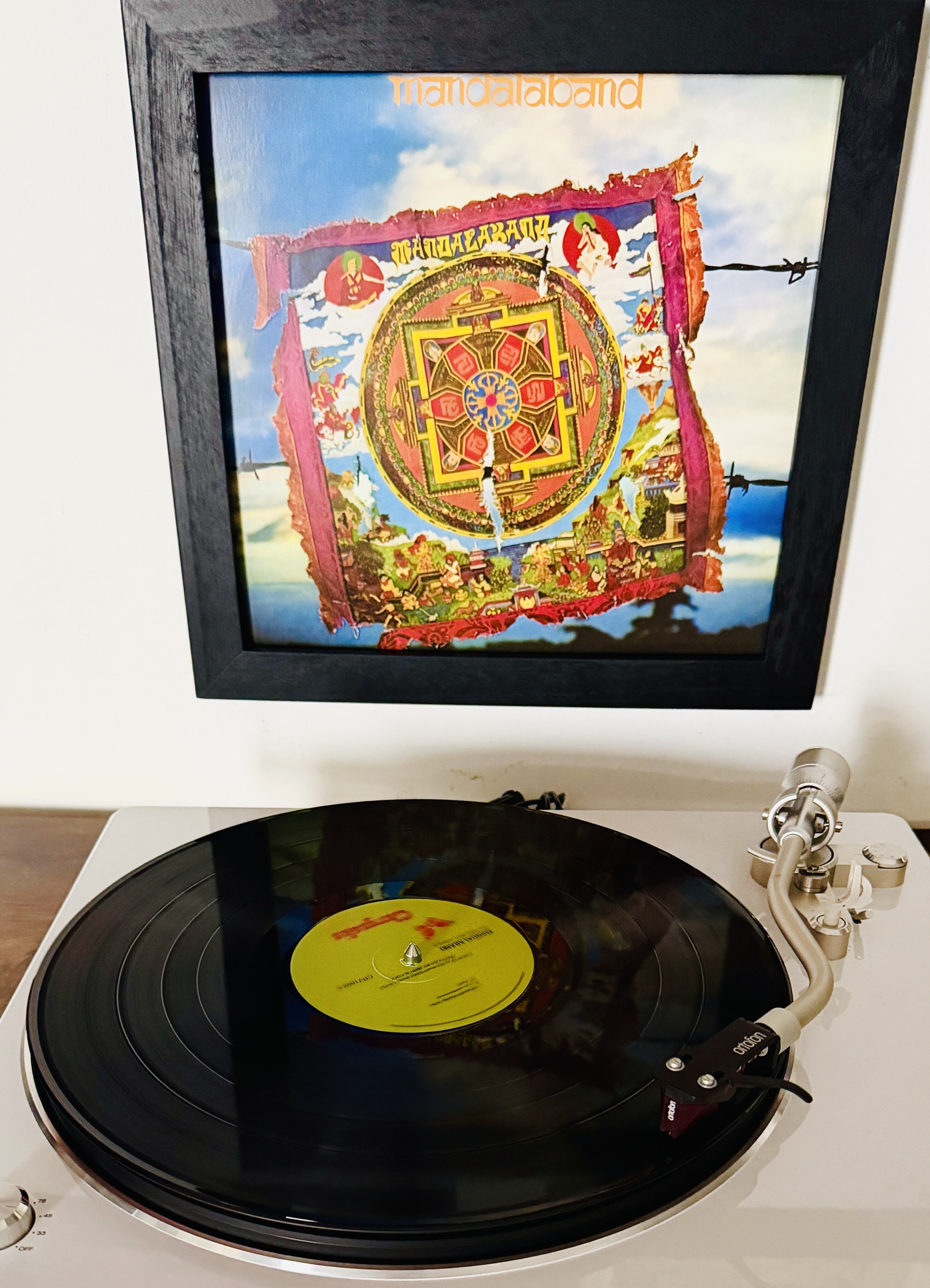
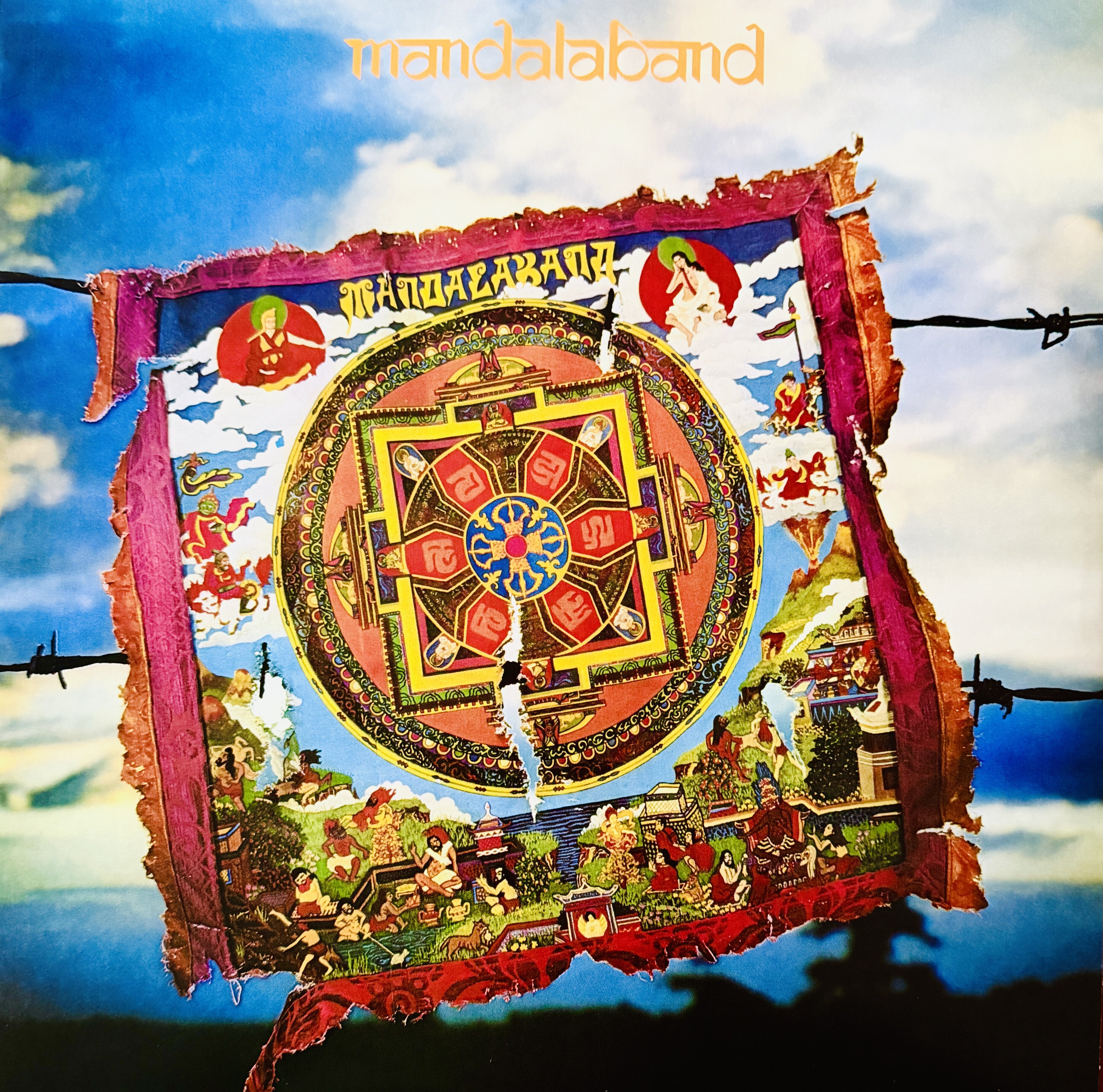
Mandalaband by Mandalaband, a 1975 album.
The Mandalaband are an English progressive rock band formed in 1974 by composer and sound engineer David Rohl.
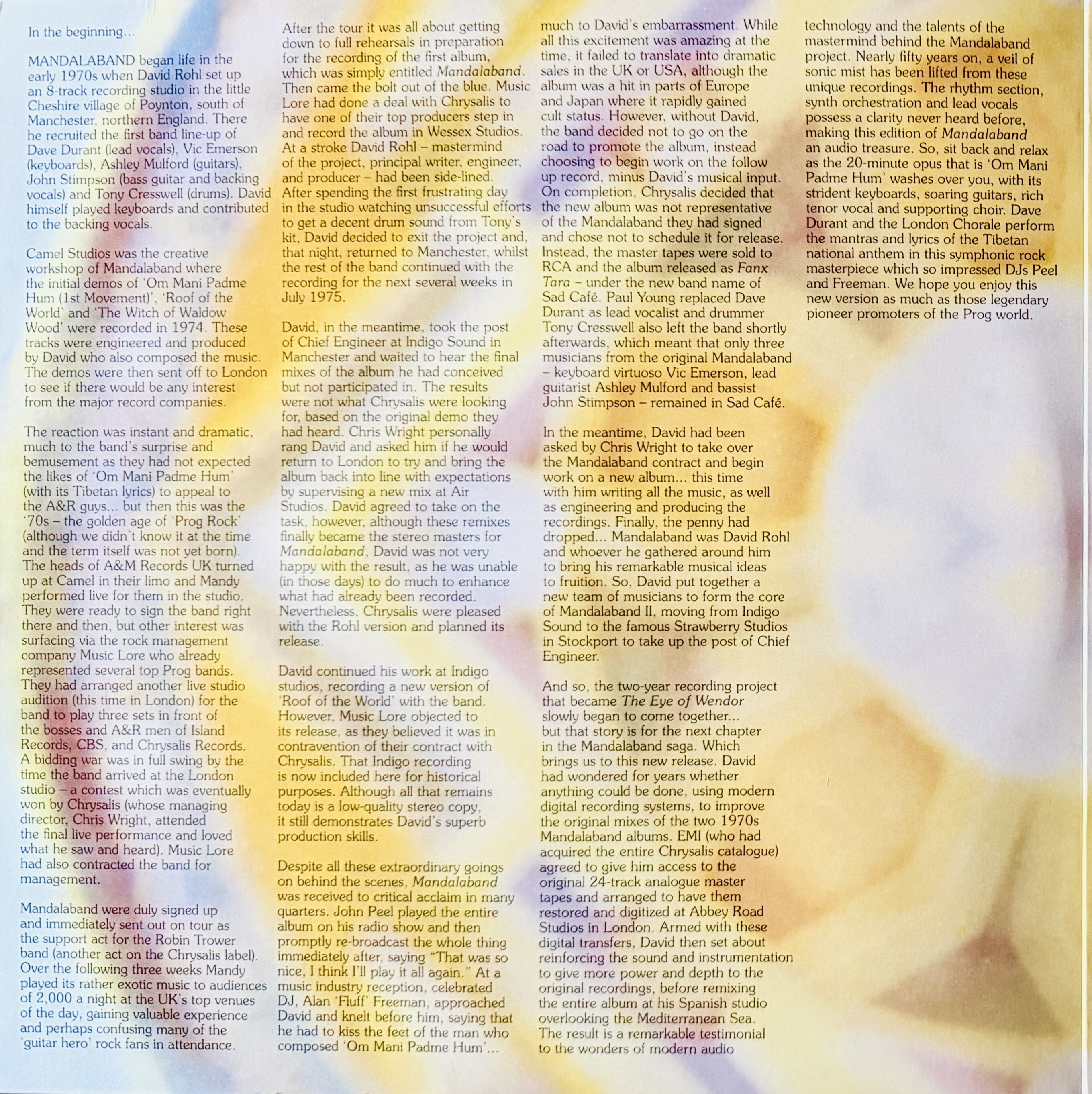
The original lineup, in 1975, consisted of David Rohl, Vic Emerson on keyboards, Ashley Mulford on guitar, John Stimpson on bass and Tony Cresswell on drums. That same year, they released their debut album, Mandalaband, on Chrysalis Records. The album centered on the suite “Om Mani Padme Hum”, inspired by Tibetan culture. Shortly after the record came out, the band members, except for Rohl, split to form Sad Café with singer Paul Young. Rohl later continued using the project name to create an ambitious rock work titled The Eye of Wendor: Prophecies (1978).
The name “Mandalaband” comes from the Sanskrit word “Mandala”, meaning circle or sacred geometric diagram. The visual and philosophical idea of the mandala, symbol of the universe and the path to enlightenment, underpins the cyclical and solemn structure of Mandalaband’s music.
Mandalaband wrote mainly in English, but are known for using Eastern and ancient languages in their concept albums, depending on the themes addressed. For example, their first album features the 20-minute suite “Om Mani Padme Hum”, which uses the Buddhist mantra of the same name. Although technically in Sanskrit, the mantra is closely tied to Tibetan culture, the album’s central theme. Some reviews at the time rightly called the work “rock sung in the Tibetan language”. The use of these languages reflects founder David Rohl’s interest in history and mythology.
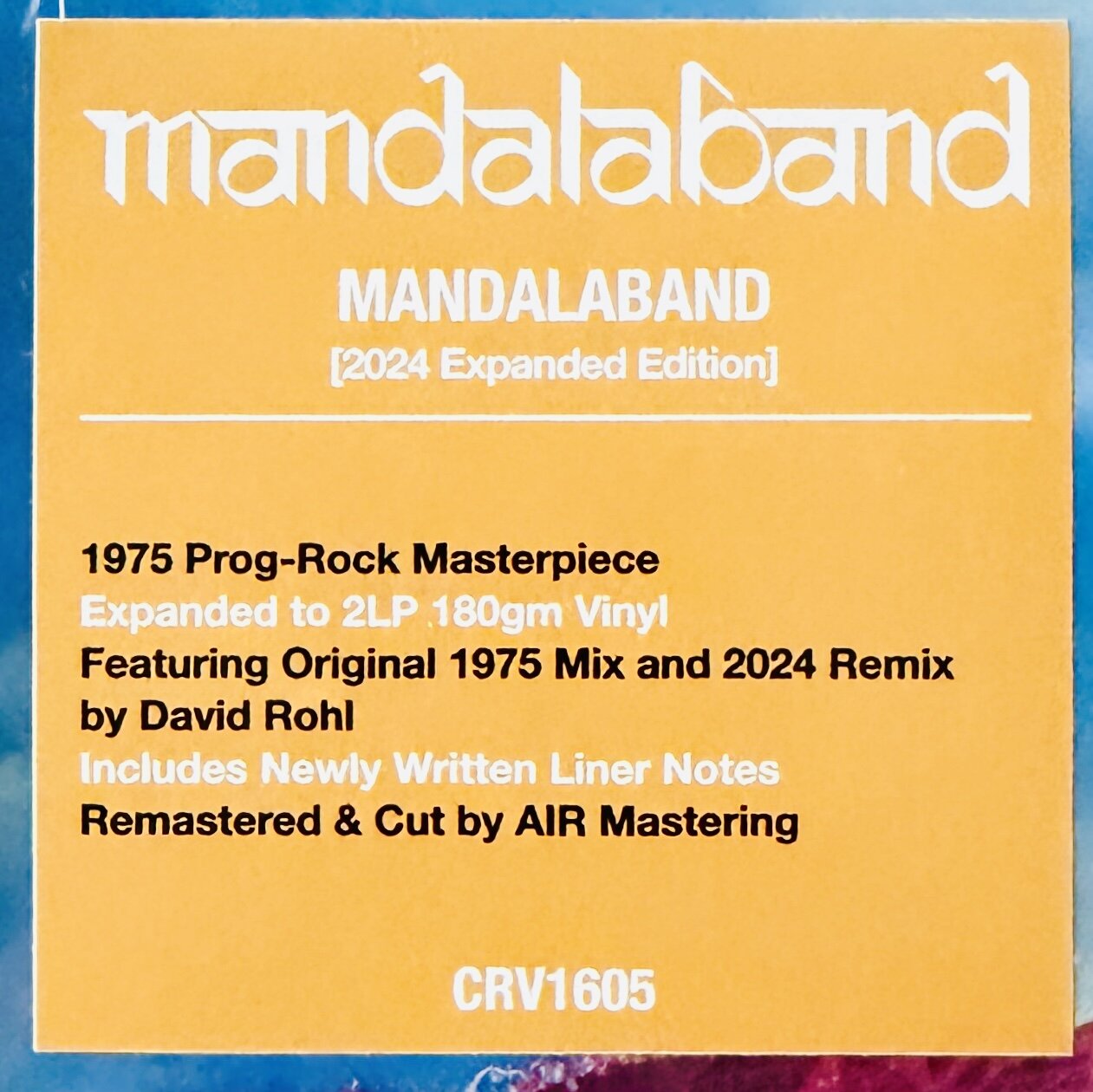
The debut album released in 1975, often called Mandalaband I, is an ambitious and unique work in the progressive rock world for its fusion of symphonic rock and Tibetan spiritual themes. This review focuses on the new edition of the original 1975 album, expanded to two 180-gram vinyl LPs including the original 1975 mix and a 2024 remix made by David Rohl himself.
The album is mainly built on two key elements: the suite “Om Mani Padme Hum”, a 20-minute track that forms its philosophical core and whose lyrics do not follow a traditional linear story, but instead create an atmosphere of prayer and collective meditation through the use of majestic choral chants. This work is an artistic response to the Chinese occupation of Tibet that began in the 1950s. David Rohl wanted to pay tribute to the monks’ spiritual resistance and to the figure of the fourteenth Dalai Lama, who at the time had been in exile for about 15 years.
The rest of the album (the whole B side) focuses on the theme of Determination, celebrating the inner strength needed to preserve one’s culture and identity in the face of oppression. Another important theme is the majesty of the Himalayas, elevated to a symbol of spiritual purity beyond the reach of invaders.
“Om Mani Padme Hum” is the 20-minute Epic Suite inspired by Tibetan Buddhism. A “wall of sound” blending rock and classical music. It begins with meditative themes that explode into majestic choral arrangements. Split into 4 movements, the new mix balances choir and rock section better, making percussion and synthesizers more punchy. Rohl removed the excessive ’75 compression. The London Chorale sounds three-dimensional. The transitions between movements are smoother and Vic Emerson’s synths have crystal-clear definition. Tony Cresswell’s drums stand out, revealing dynamic nuances (ghost notes and cymbals) previously imperceptible, making the suite less static and more rock.
“Determination” is an energetic progressive Hard Rock track, driven by a pressing riff that showcases the band’s technical side. John Stimpson’s bass, more forward in the new mix, gives the piece an almost “heavy” push. A tour de force for the rhythm section, highlighting the chemistry that would lead to the birth of Sad Café.
“Song For A King” is a melodic symphonic Ballad, epic yet melancholic, with a very expressive lead guitar and an orchestral arrangement that grows in intensity. Dave Durant’s vocal part has been cleaned up, removing the era’s artificial reverbs for a more natural sound. Ashley Mulford’s lead guitar is outstanding, with cleaner sustain in the new mix, lifting the track to higher emotional levels.
“Roof Of The World” celebrates the majesty of the Tibetan mountains with the grand atmosphere of Vic Emerson’s keyboards, evoking the altitude and spirituality of the place. In the new mix, synth brass and Mellotron are re-balanced so they don’t overpower the voice, and the ending is more defined, enhancing Emerson’s work.
“Looking In” is the shortest and most introspective track on the original album, marked by an intimate, almost blues/jazz feel, and a relaxed, dreamy mood. Ashley Mulford’s guitar stands out for its clarity and melody.
Looking In (CBS Studios Chrysalis Live Audition) is the bonus track: a live-in-studio take, raw but very moving, in my view the best piece on the record.
An unreleased archive track that, unlike the original version, shows the musicians’ live power and a more intense Durant vocal. It seems it was the audition tape recorded for the label.
This band’s Symphonic Progressive Rock is powerful and majestic, with a solemn, orchestral sound enriched by an imposing choral presence. The heavy use of the London Chorale evokes the atmosphere of a requiem mass or an opera, giving the music a sacred, cinematic aura.
Vic Emerson, the undisputed star, plays a wide collection of keyboards from the era, including Mellotron, Moog and organ. His style recalls Rick Wakeman of Yes, alternating orchestral textures with technical, fast solos.
Despite dealing with spiritual themes, the rhythm base is energetic, almost Hard Rock. This creates a contrast between the “lightness” of the Eastern themes and the firm drive of 1970s British rock.
Ashley Mulford stands out for a clean, dreamy style, with long, saturated notes that recall Genesis or Camel, balancing the aggressiveness of the synthesizers.
A band with a short history, but with this album it has rightfully earned a place in progressive rock history. Excellent!
My Version
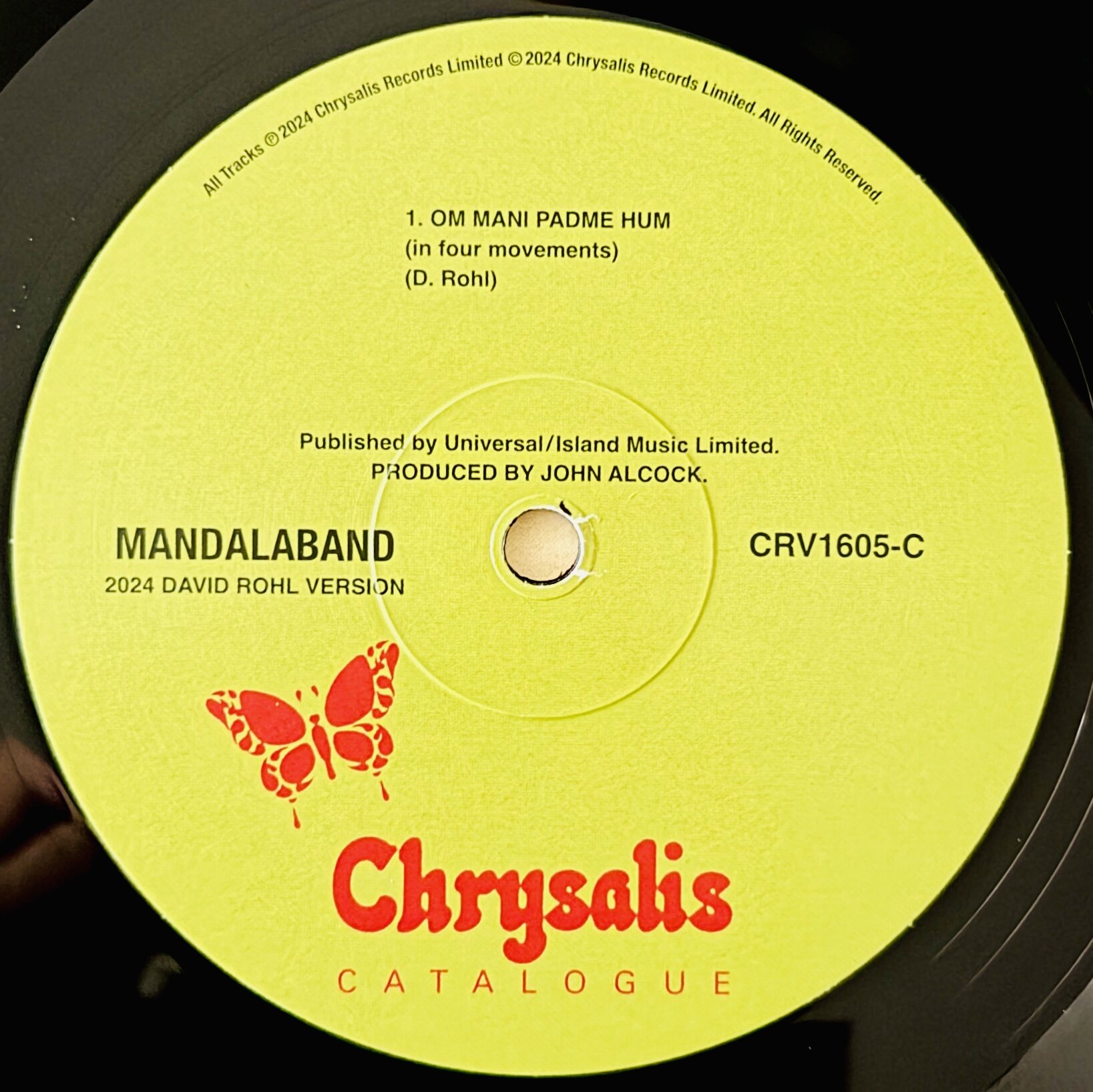
Label: Chrysalis Records Ltd. – CRV1605
Format: 2 x Vinyl, LP, Album, Stereo
Country: Czech Republic & Slovakia
Released: 8 Feb 2024
Tracklist
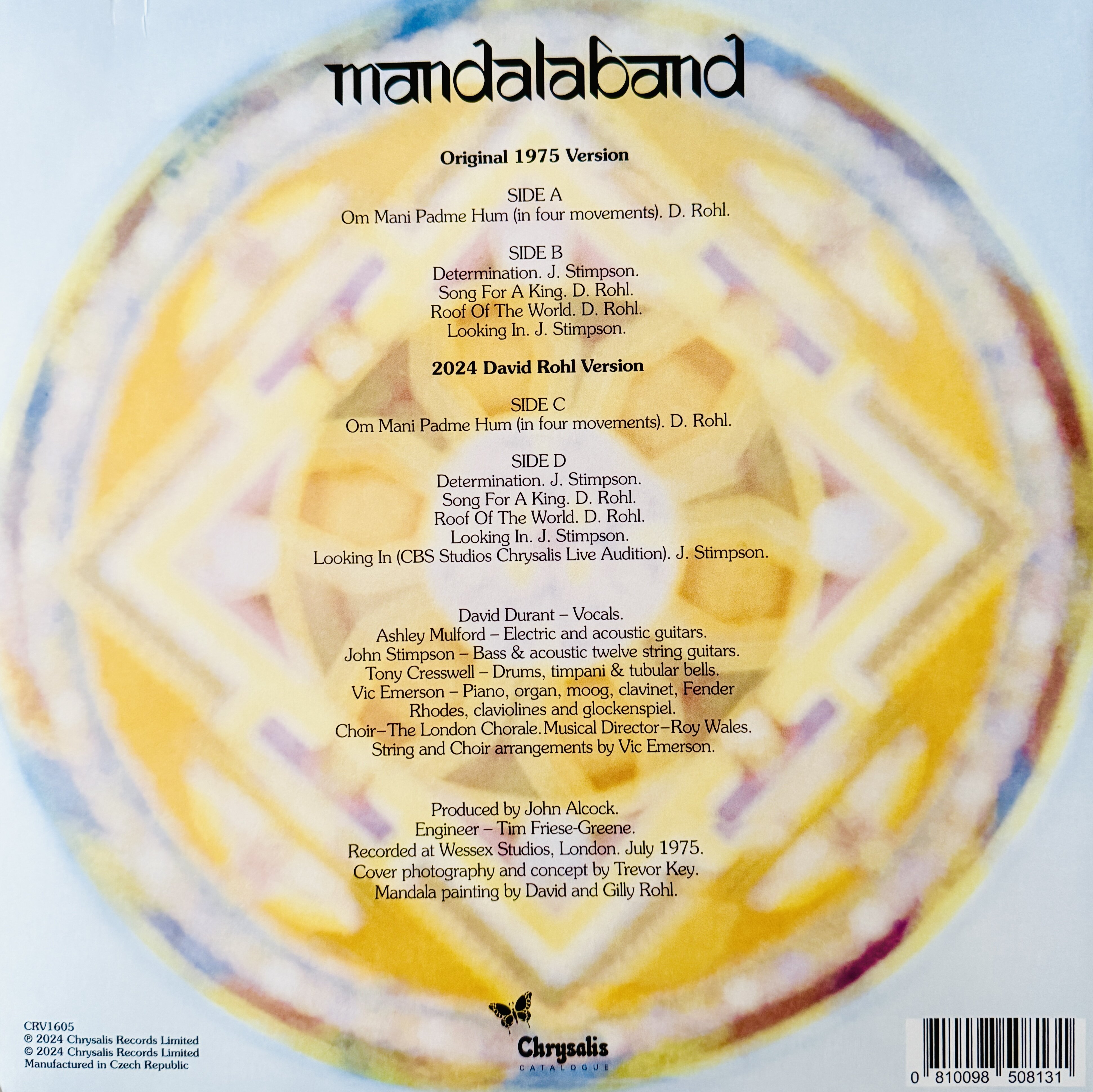
C1 Om Mani Padme Hum (In Four Movements) - 2024 David Rohl Version 19:22
D1 Determination - 2024 David Rohl Version 5:48
D2 Song For A King - 2024 David Rohl Version 5:18
D3 Roof Of The World - 2024 David Rohl Version 4:28
D4 Looking In - 2024 David Rohl Version 4:39
D5 Looking In (CBS Studios Chrysalis Live Audition) 4:48
LineUp
Bass – John Stimpson
Choir – The London Chorale
Drums – Tony Cresswell
Engineer – Tim Friese-Greene
Guitar – Ashley Mulford
Keyboards – Vic Emerson
Mixed by – Bill Price, David Rohl
Producer – John Alcock
Vocals – David Durant
Listening links on the main streaming platforms at the following links:
- Spotify: The full album with all 8 original tracks.
- Apple Music: Available to stream and download on the official album page.
- SoundCloud: On the band’s official profile there are excerpts and demos, including the first part of Om Mani Padme Hum.
.jpeg "img_1510-(1).jpeg")
.jpeg "img_1510-(2).jpeg")
Note: All links to the musicians’ works are in the TAGS under the article title or on the "Artists"