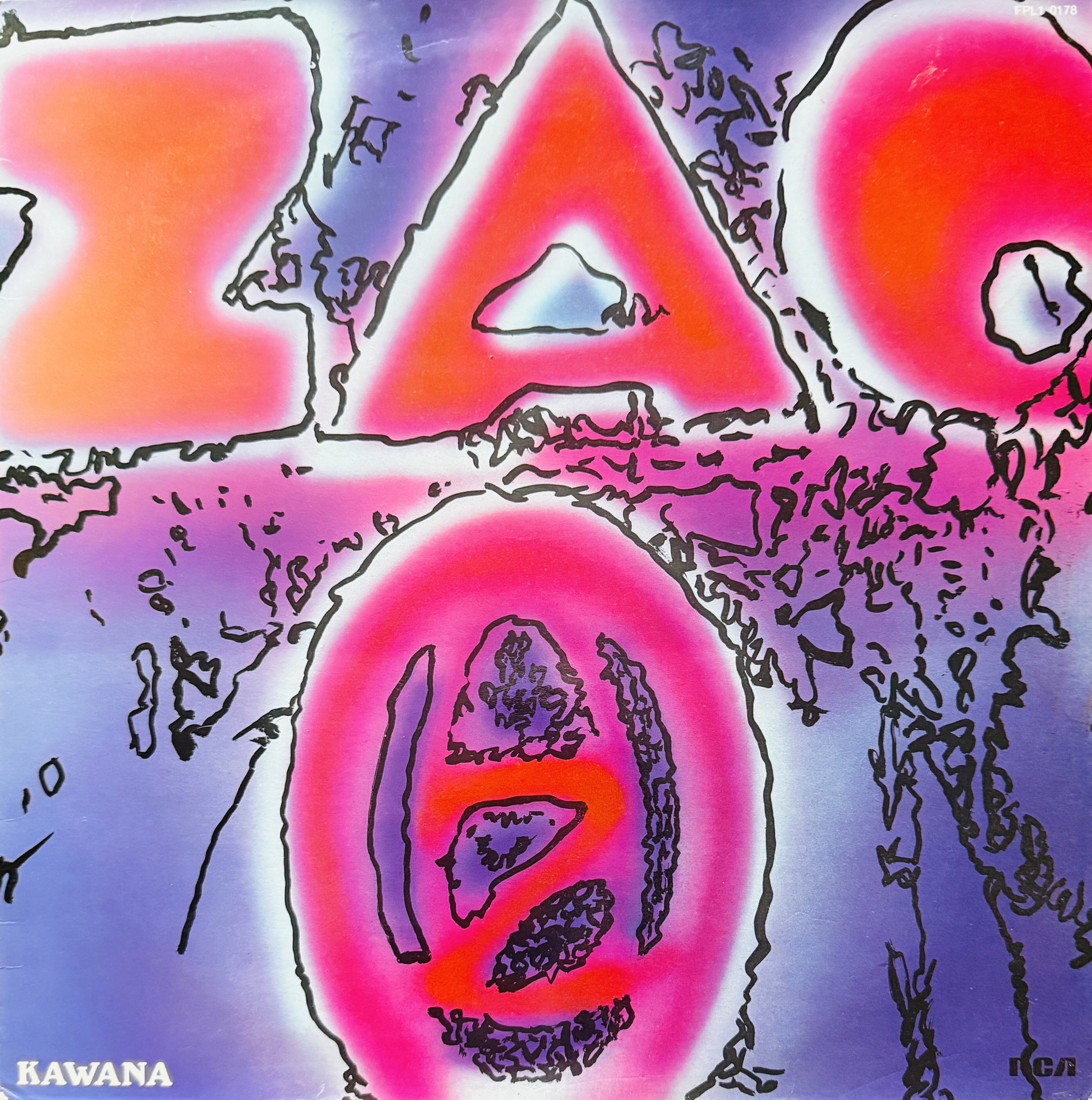
Kawana by ZAO, a 1976 album.
Kawana, Zao's fourth album, released in 1976, marks the culmination and, at the same time, the decisive turning point in the career and discography of the French zeuhl/jazz-rock group.
Founded in 1971 by saxophonist Yochk'o Seffer and pianist François "Faton" Cahen, both veterans of the first legendary line-up of Magma, Zao began with a zeuhl sound (the dark and hypnotic avant-garde genre created by Magma) enriched by ethnic influences and abstract vocal lyrics.
Over time, they moved towards more instrumental sounds, approaching American and European jazz-rock fusion. They were among the most important and innovative groups of the French avant-progressive and jazz-rock scene of the 70s.
The name "Zao" means "one who lives" or "born again" in Hebrew, representing the artistic rebirth of the founders. Unlike Magma, Zao toned down the apocalyptic atmosphere, integrating strong jazz-fusion influences, elements of Eastern European ethnic music and an abstract and wordless vocal style.
After releasing four seminal albums (Z.H.R.L., Osiris, Shekina and Kawana), Zao disbanded in the late 1970s, only to reunite occasionally in the 1990s and 2000s for concerts and new recordings.
The formation of Zao has seen several very talented musicians from the French music scene alternate.
Yochk'o Seffer (Saxophones, Clarinets, Vocals): Originally from Hungary, Seffer has enriched the band with the sounds of Eastern European folk and contemporary classical music. Multi-instrumentalist and sculptor, his style on the sax (especially soprano) was powerful and experimental. He left the group in 1976. Seffer was one of the founding members of Magma's first two historic albums (Kobaïa and 1001° Centigrades) and participated in the side project Univeria Zekt. During his time with Zao, he played with the free-jazz quartet Perception. After leaving the band in 1976, he founded Neffesh Music, a project entirely dedicated to avant-garde Zeuhl.
François "Faton" Cahen (Piano, Keyboards): Co-founder and harmonic mind of the group. His work on acoustic piano and synthesizers ranged from classical jazz to electric fusion. After Zao, he had a prolific solo and acoustic jazz career, before his passing in 2011. Together with Seffer, he was the harmonic mind of the very first phase of the mother band. He has actively collaborated with the French and European jazz scene. In the 80s and 90s, he devoted himself mainly to acoustic piano and solo composition in jazz and contemporary settings.
Didier Lockwood (violin): Joining the band at a very young age for the 1976 album Kawana, Lockwood later became one of the most famous jazz violinists in the world, considered the spiritual heir of Jean-Luc Ponty and Stéphane Grappelli. He passed away in 2018. Lockwood was discovered at a very young age by Christian Vander, playing in Magma live in the mid-70s before being hired by Zao for the album Kawana. He has collaborated intensively with the Uzeb (historic Canadian fusion band) and with great names in world jazz such as Billy Cobham. He has become one of the most famous jazz violinists in the world.
Mauricia Platon (Vocals): Extraordinary singer present in the first albums. His style did not include lyrics, but acrobatic vocalizations, screams and lyrical improvisations that defined the primordial sound of the band. He did not come from traditional rock bands, but he brought to Zao a lyrical and improvisational approach completely detached from the use of words, fundamental for the first albums Z=7L and Osiris.
Jean-My Truong (drums): Zao's rhythmic engine. His style combined the power of progressive rock with the flexibility of jazz and funk, ensuring the complex rhythmic structure on which soloists improvised. Truong was not part of the original Magma; he came from the lively Parisian free-jazz scene of the early 70s, through Perception, a group he shared with Seffer. Over the course of his career, he has become a highly regarded jazz and fusion session musician, later collaborating with several French acoustic ensembles.
Gérard Prévost (Bass): Solid and versatile bassist, capable of sustaining the odd time signatures and tight bass lines typical of the Zeuhl genre and fusion. Joining in 1975 to replace original bassist Joël Dugrenot, Prévost guaranteed that jumping funk-fusion groove that characterizes the second phase of the band. He continued to play in Zao's later developments (such as the 1977 album Typhareth) and in several fusion formations beyond the Alps.
In September 1976, the band went to the Adam Studio in Roissy-en-Brie to record Kawana. The album was enthusiastically received, becoming their most famous work, but ironically it also marked the sunset of their golden age. As soon as he left, in fact, the strong artistic differences led Seffer to leave the band to devote himself to a solo career. Soon after, Lockwood and drummer Jean-My Truong also left the project, depriving Zao of their initial creative strength.
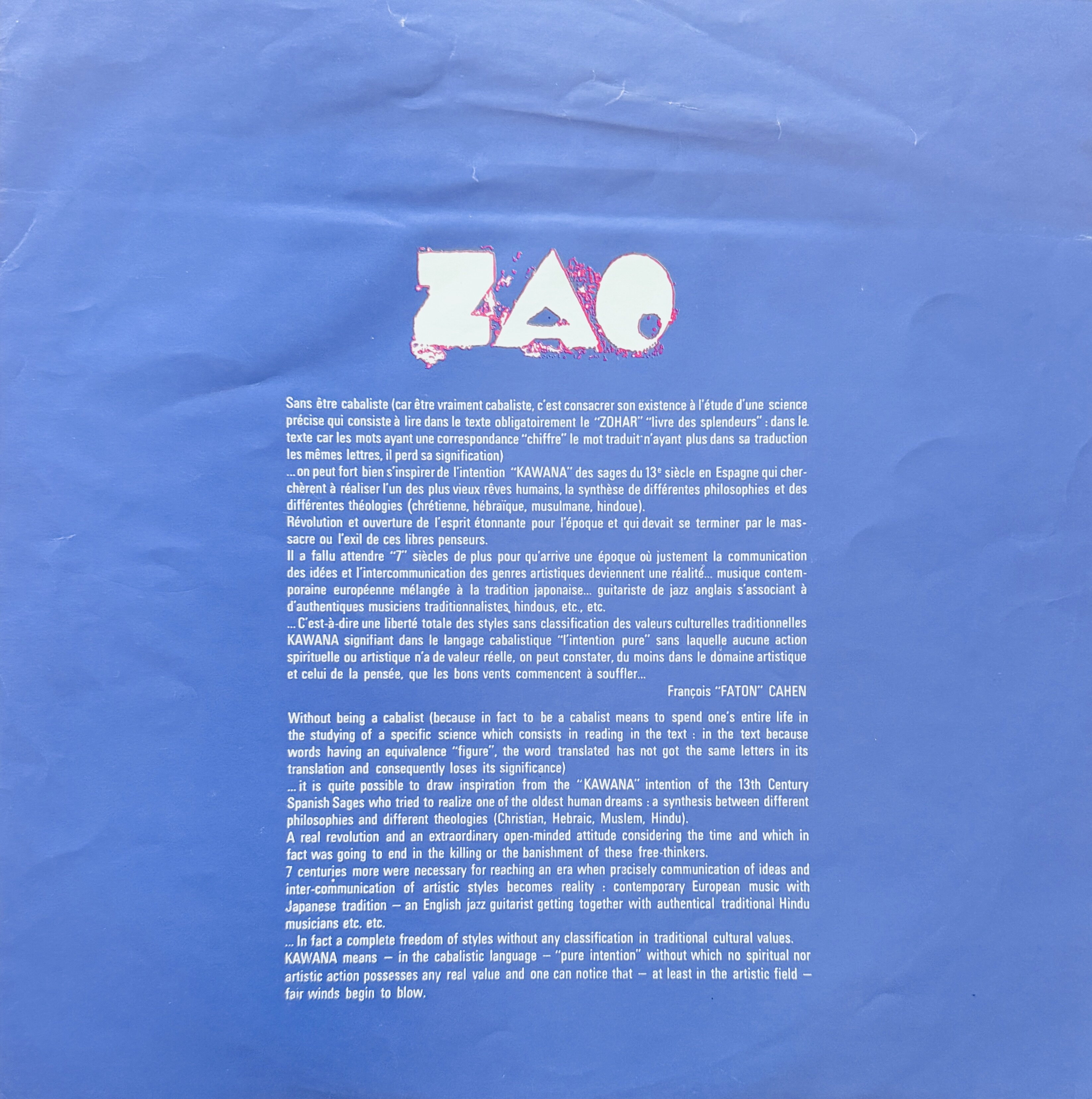
Kawana represents a philosophical, spiritual and musical leap in quality compared to the beginnings of Zao and the world of Magma. The title, "Kawana," comes from the Hebrew word "Kavanah," which means "intention," "direction of the heart," or "sincere concentration." In the Jewish tradition, the Kavanah is the state of mind necessary to pray or perform a sacred action: it is not enough to repeat a ritual, it is necessary to have mindfulness and purity of soul. For Zao, this meant devoting themselves completely to musical creation and improvisation, lived as a spiritual group experience.
Unlike Magma, with their all-encompassing, dark and apocalyptic vision (the story of Kobaïa and the invented language), Zao with Kawana go in the opposite direction: sunnier, more open and positive atmospheres. Structured texts are abandoned. The voice (if there is one) and the instruments do not tell a story, but evoke emotions. The music itself becomes the message, without the need for mythologies.
Another fundamental point of Kawana is the union of different worlds. Thanks to Yochk'o Seffer, the album blends the rigor and complexity of European progressive rock, the freedom of American jazz-rock, the roots of Eastern European folk music (especially Hungarian melodies), which can be clearly heard in the saxophone and violin phrasing.
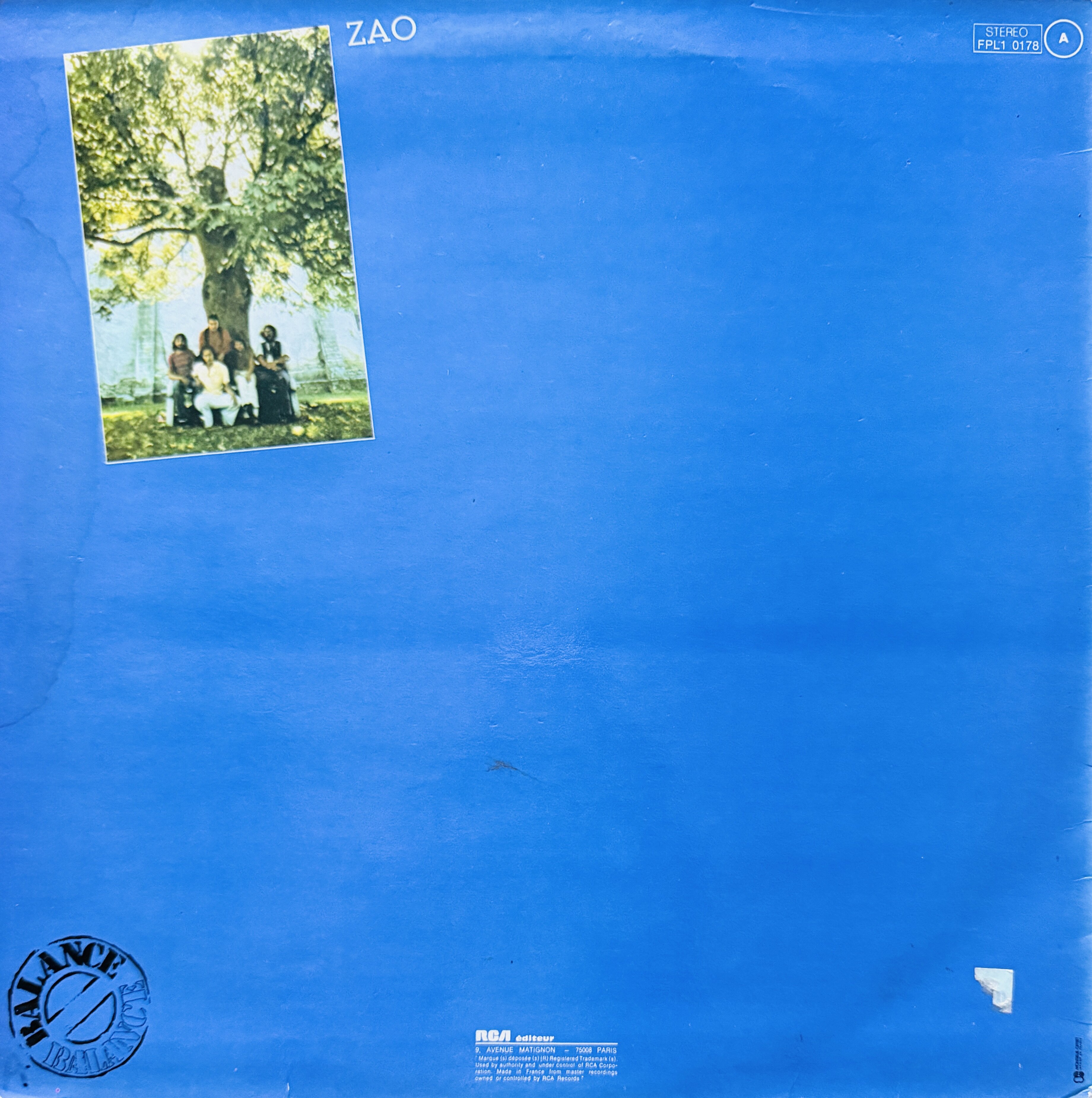
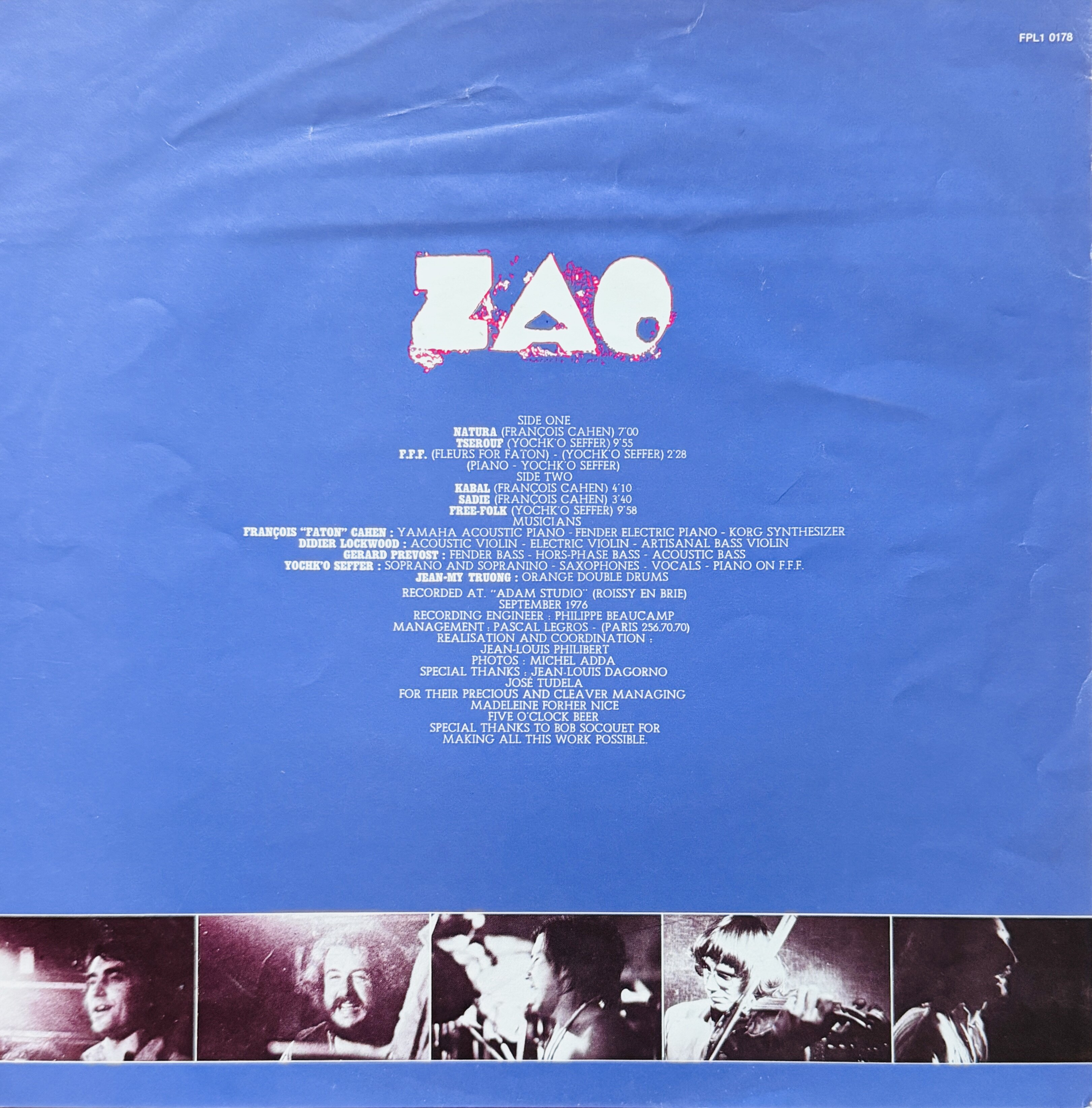
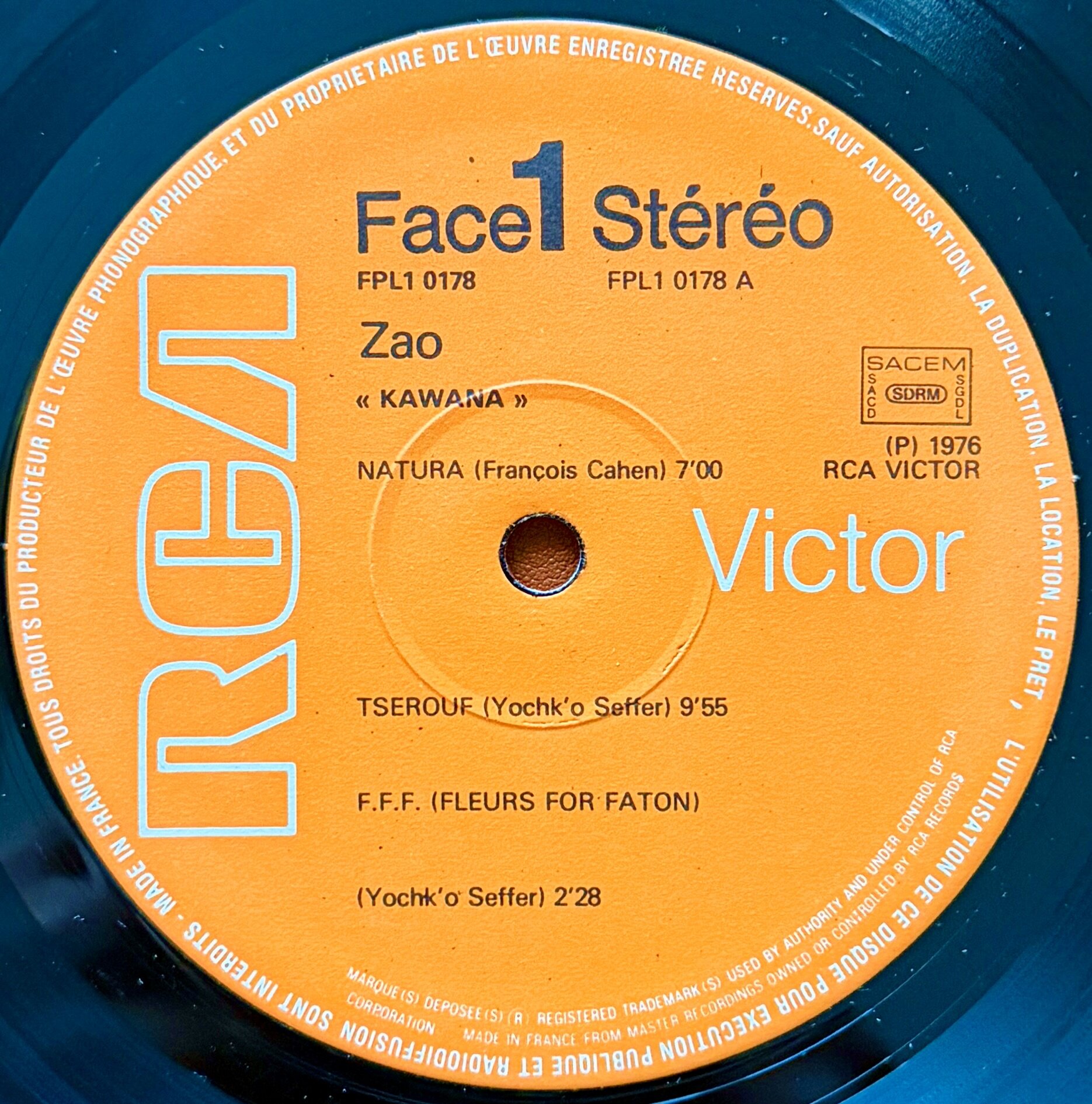
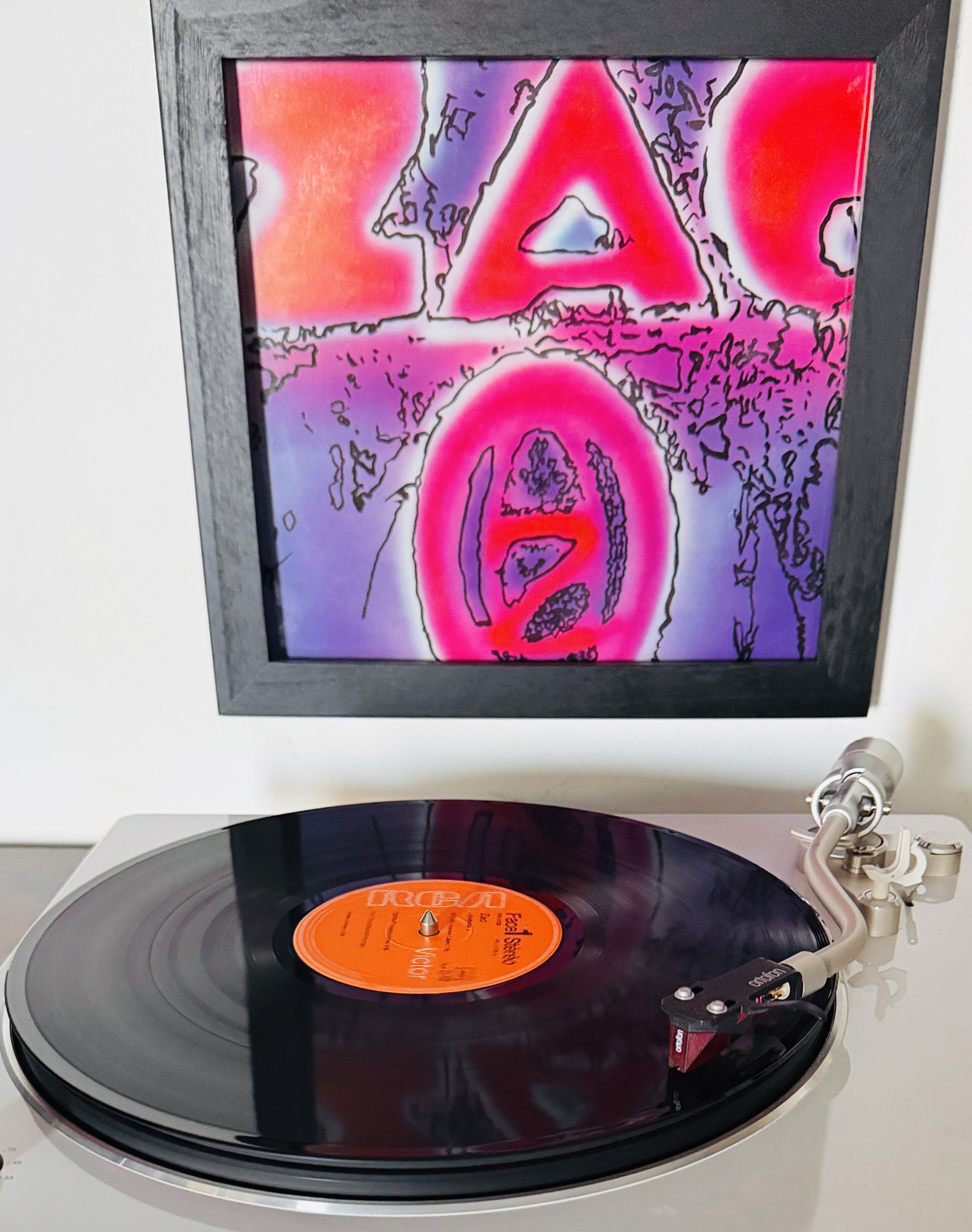
My version is the FPL1 0178, the first, historic original vinyl pressing released in 1976 by RCA Victor in France.
With "Natura", the track that opens the album, the band immediately marks a stylistic change of course, leaving behind the dark roughness of the Zeuhl. The beginning is characterized by a sunny piano full of life, accompanied by a funk and snappy bass line. When Seffer's sopranino saxophone enters the scene, the melody becomes airy and almost pastoral, evoking the grandiose atmospheres of the first phase of Pat Metheny Group or Weather Report. In short, a piece that blends melodic grace and a pressing rhythm.
"Tserouf" stands out as one of the most majestic tracks on the album, a jazz-rock fusion song with a fast-paced rhythm and funk soul, reminiscent of the American masterpieces of the Mahavishnu Orchestra or the electric period of Miles Davis. Truong and Prévost, in the rhythm section, perform at extraordinary levels. The interweaving between Seffer's saxophones and the electric violin of the young Didier Lockwood is tight and full of tension, with virtuosic exchanges at dazzling speeds.
Side A closes with "F.F.F. (Fleurs For Faton)", an intimate acoustic interlude, a tribute by Seffer to his colleague Cahen, nicknamed "Faton". This piece unfolds like a refined chamber study, with piano, acoustic violin and double bass intertwined in a delicate harmony. The sounds evoke the French Impressionist classical music of Debussy or Ravel, testifying to the solid academic training of the musicians.
"Kabal" opens the B-side with a tight and syncopated rhythm, introduced by drums and keyboards that start off like a rocket. The song takes up the essence of the Magma of the past, but with a more defined and electric sound. Halfway through the piece, the tempo becomes slower, giving way to a hypnotic atmosphere created by synthesizers, before the entire ensemble explodes in a collective explosion, culminating in an exceptional sax solo.
"Sadie" is the quietest and most nuanced piece of the album, with a medium-low tempo that highlights the poetic side of Didier Lockwood. The violin traces smooth and velvety melodic lines, hovering over a subtle but decisive groove of bass and drums. It is an atmospheric piece that foreshadows the style that Lockwood will refine in his future jazz-fusion solo career with Jean-Luc Ponty.
"Free Folk", the epic suite that concludes the vinyl, perfectly embodies the essence of the album and acts as a bridge between Zao's past and future. The song begins with a Zeuhl atmosphere, characterized by spooky and abstract vocalizations that emerge from the mix. Subsequently, it turns into an extended instrumental jam with ethnic and folk influences, from which it takes its title. In the second part, the song accelerates with a frenetic pace, during which Lockwood delivers one of his most powerful and distorted violin solos ever, dragging the band towards a triumphant and energy-charged finale.
Kawana is Zao's most balanced and mature album. Unlike previous works, the dark and obsessive atmospheres typical of the zeuhl are attenuated, giving life to a technical and luminous fusion that evokes bands such as Weather Report, the Mahavishnu Orchestra and the sound of Jean-Luc Ponty. The sound is defined by intricate and dynamic interweaving between Seffer's saxophone, Cahen's keyboards and Lockwood's lightning-fast violin solos, all supported by an impeccable rhythm and funk section. Great album. Absolutely recommended!
My Version
Label: RCA Victor – FPL1 0178
Format: Vinyl, LP, Album, Stereo
Country: France
Release: 1976
Tracklist
1. Natura (7:06)
2. Tserouf (8:53)
3. F.F.F (Fleurs For Faton) (2:29)
4. Kabal (4:08)
5. Sadie (3:37)
6. Free Folk (10:39)
LineUp
- François Cahen - Yamaha acoustic piano, Fender electric piano, Korg synthesizer
- Didier Lockwood - acoustic and electric violin, handcrafted bass violin
- Gérard Prévost - Fender bass, hors phase double bass, acoustic bass-
Yochk'o Seffer - soprano and soprano saxophones, vocals, piano (3)
- Jean-My Truong - orange double drums
Listening link on the main streaming platforms at the following links:
Bandcamp: Through the official MUSEA RECORDS page on Bandcamp you can stream and buy individual songs in digital format.
Note: All links to the musicians’ works are in the TAGS under the article title or on the "Artists"