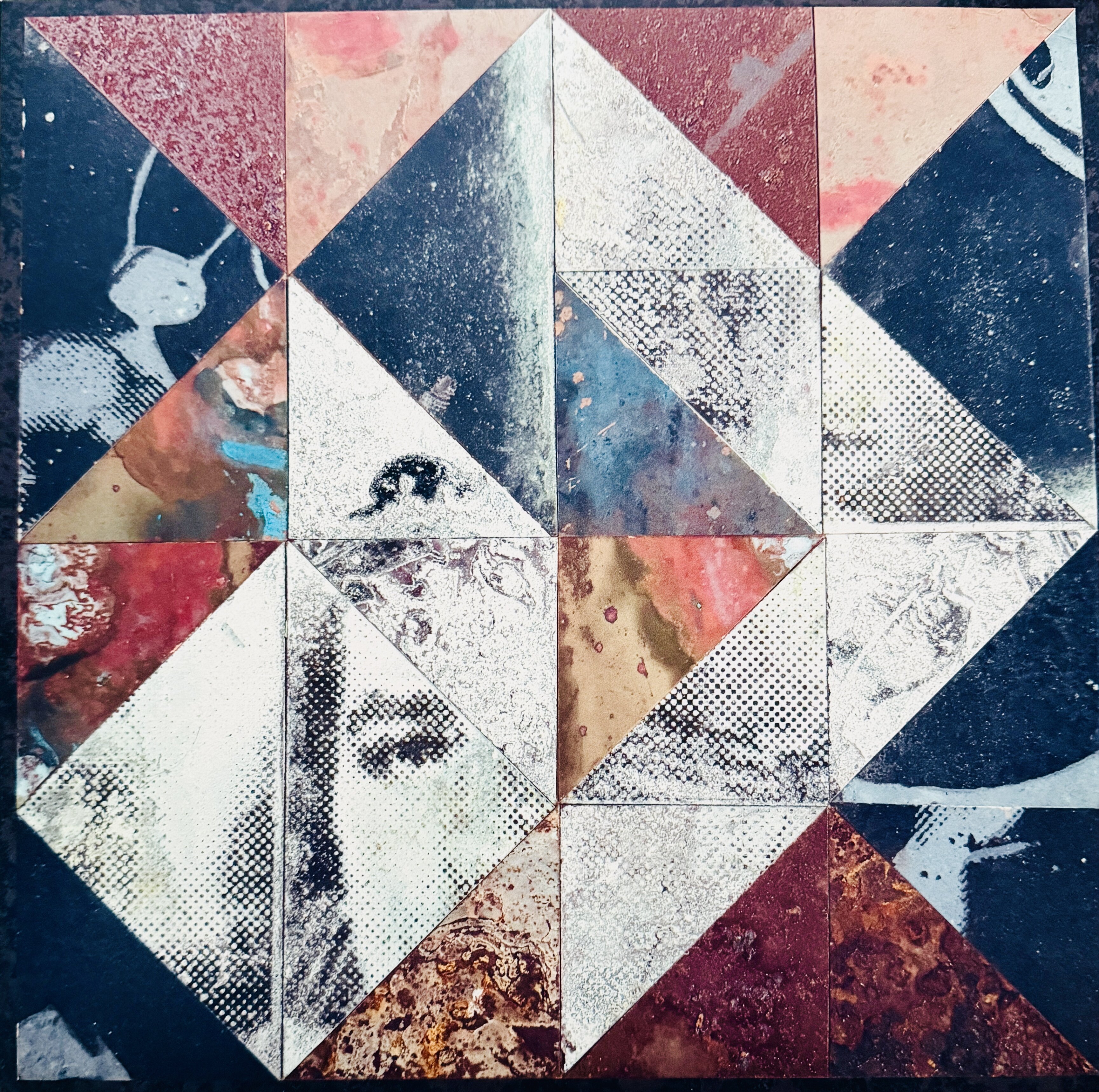

Londinium by Archive, a 1996 album.
On the occasion of the review of their debut album, let's see the history of the band, which I have already talked about with the article dedicated to their splendid 2026 album Glass Minds.
The Archive are not the usual band, but a British musical collective born in London in 1994. Their story is a continuous journey of sound experimentation, with a line-up that is always on the move. At the helm of this creative project, from the very beginning, are the two founding members and brilliant minds: Darius Keeler and Danny Griffiths.
Darius Keeler and Danny Griffiths crossed paths in the early nineties in the London hardcore/breakbeat scene. Together with singer Roya Arab and rapper Rosko John, they formed Archive, releasing their trip-hop album Londinium in 1996. After some internal disagreements, the band changed their voice, welcoming Suzanne Wooder for the pop-melodic Take My Head in 1999, an album that the founders later preferred not to remember.
With the arrival of Irishman Craig Walker on vocals, the Archive embarked on a new musical path. They left aside some of the electronics to embrace progressive and psychedelic rock, with a touch of Pink Floyd.
It was the golden age of iconic albums such as 2002's You All Look The Same To Me and the famous 16-minute suite Again. After Walker's farewell, Keeler and Griffiths decided to no longer rely on a single frontman, transforming Archive into a multifaceted collective. They simultaneously recruited several singers and musicians to create monumental arrangements, releasing impressive works such as Controlling Crowds in 2009 and Call To Arms & Angels in 2022. Curiously, despite being British, the Archives have always had greater commercial success in France, Poland and the rest of Europe than in their homeland.
The Nucleo Fisso is a musical collective with a group of historical collaborators. At the helm is Darius Keeler, the keyboardist, pianist, programmer and main composer. He is the brain behind the orchestral structures and hypnotic crescendos that characterize the group's music. Darius has always collaborated with Danny Griffiths, co-founder and wizard of synthesizers, samples, sound effects and bass lines. Danny handles the complex and fascinating electronic part of their songs.
The collective boasts several main voices. Dave Pen, part of the group since 2004, is a multi-instrumentalist and singer with a scratchy and rock voice that gives life to the most energetic and intense songs. Pollard Berrier, who arrived in 2006, is an American singer and guitarist (former member of Bauchklang) who brings a melodic, intense and theatrical voice. Maria Q, chorister and long-time vocalist since 2002, adds a warm, ethereal and distinctly soulful note to the music of the collective. Holly Martin, who joined on a permanent basis in 2012, has become the leading female voice of the latest albums thanks to her powerful, scratchy and magnetic timbre.
The rhythm section is composed of Steve "Smiley" Barnard, the group's fundamental drummer since 2001, who supports their long and epic live shows, and Jonathan Noyce, exceptional bassist (former member of Jethro Tull) who has been taking care of the deep electric bass lines since 2006.
Archive's musical style is extremely complex and difficult to label, as the band has rejected the boundaries of a single genre to embrace a totally fluid approach. Over the course of more than thirty years of career, their music has evolved through three macro-pillars, combined with each other in a unique way.
The music of this band is a mix of genres. They start from Trip-Hop and Downtempo, present since the early days with "Londinium" and which they have never completely abandoned. Think slow, hypnotic hip-hop beats, plenty of samples, deep bass, nocturnal atmospheres, and a dash of urban melancholy. Then, starting from the 2000s, they approached Progressive and Post-Rock, taking inspiration from Pink Floyd. Their songs are often real suites that exceed 10 or 15 minutes, with non-linear structures, powerful electric guitars and instrumental crescendos that explode into epic and exciting finales. Avant-garde electronics and Synthpop are the basis of their music. They use analog synthesizers, drum machines, digital distortions and elements of industrial and ambient music, creating an interesting contrast between the warmth of the voices and the coldness of the technology.
Their music is visual and orchestral, it almost sounds like the soundtrack of a dystopian movie. Thanks to the dramatic use of strings and synths, they are able to create powerful mental images. Many of their most famous songs start with a piano turn, guitar or an endlessly repeated electronic beat. This loop is slowly enriched with instruments and voices for minutes and minutes, creating an incredible emotional tension before the final explosion. And since they are a collective, their style changes depending on the singer. They go from shrill and angry rap to soulful and ethereal ballads, up to the most biting alternative rock, often intertwining multiple voices in the same song. The lyrics and atmospheres often speak of social alienation, paranoia, government control, obsession and emotional breakdown, making their music as fascinating as it is a little dark.
Archive is a band that creates dark and cinematic music, and their lyrics and concepts perfectly reflect this style. Instead of the usual love songs, they often make complex concept albums that explore human psychology, politics, and modern society.
One of the main themes they address is dystopia, particularly social control and loss of privacy. Their saga of Controlling Crowds (Parts I-III and Part IV of 2009) is a prime example, where they explore government control, the manipulation of the masses through technology and the subjugation of the individual to power. It is a critique of contemporary society, which depicts a future (or a present) in which the human being is trapped in a cold and alienating system.
Another recurring theme is that of human relationships, often seen at the moment of their collapse or end. The Archive tell stories of broken hearts, resentment, lies, betrayal, emotional dependence, and the inability to let go of the past.
Mental health is another topic they address sensitively. The band delves deep into the human psyche, dealing with depression, isolation, anxiety, panic and the feeling of going crazy. Their lyrics describe the daily struggle against one's thoughts and the search for a way out of a mental labyrinth, offering a psychological introspection that allows the listener to identify with moments of maximum vulnerability.
Finally, their origins and trip-hop period influence the themes of the city, the night and urban melancholy. They tell of the nightlife in large metropolises (such as their London in London), the sense of loneliness that one feels despite being in the midst of millions of people, and the street stories lived among concrete buildings and fog.
Londinium, the debut album released in 1996, is a true hidden gem of nineties trip-hop. The title, which recalls the ancient Roman name of London, is a prelude to a dark and introspective sound portrait of the British capital. Despite its artistic impact, the band broke up shortly after the release of the album due to internal tensions, making Londinium an unrepeatable unicum in their subsequent prog-rock discography. This masterful album fits into the Bristol trip-hop vein, along with giants such as Massive Attack, but stands out for a strong cinematic and avant-garde component. It is dominated by deep bass lines, elegant string samples and hip-hop downtempo rhythms that paint nocturnal, foggy and melancholic cityscapes. The music alternates moments of reflective quiet with peaks of dramatic tension, creating a truly engaging atmosphere. The real strength of Londinium is the contrast between the two voices. Roya Arab offers an ethereal, warm and confidential interpretation that floats over the melodies, while Rosko John adds a touch of reality with his rhythmic, deep and poetic rap, which anchors the record to the road. Together, they create a unique and unforgettable sound experience.
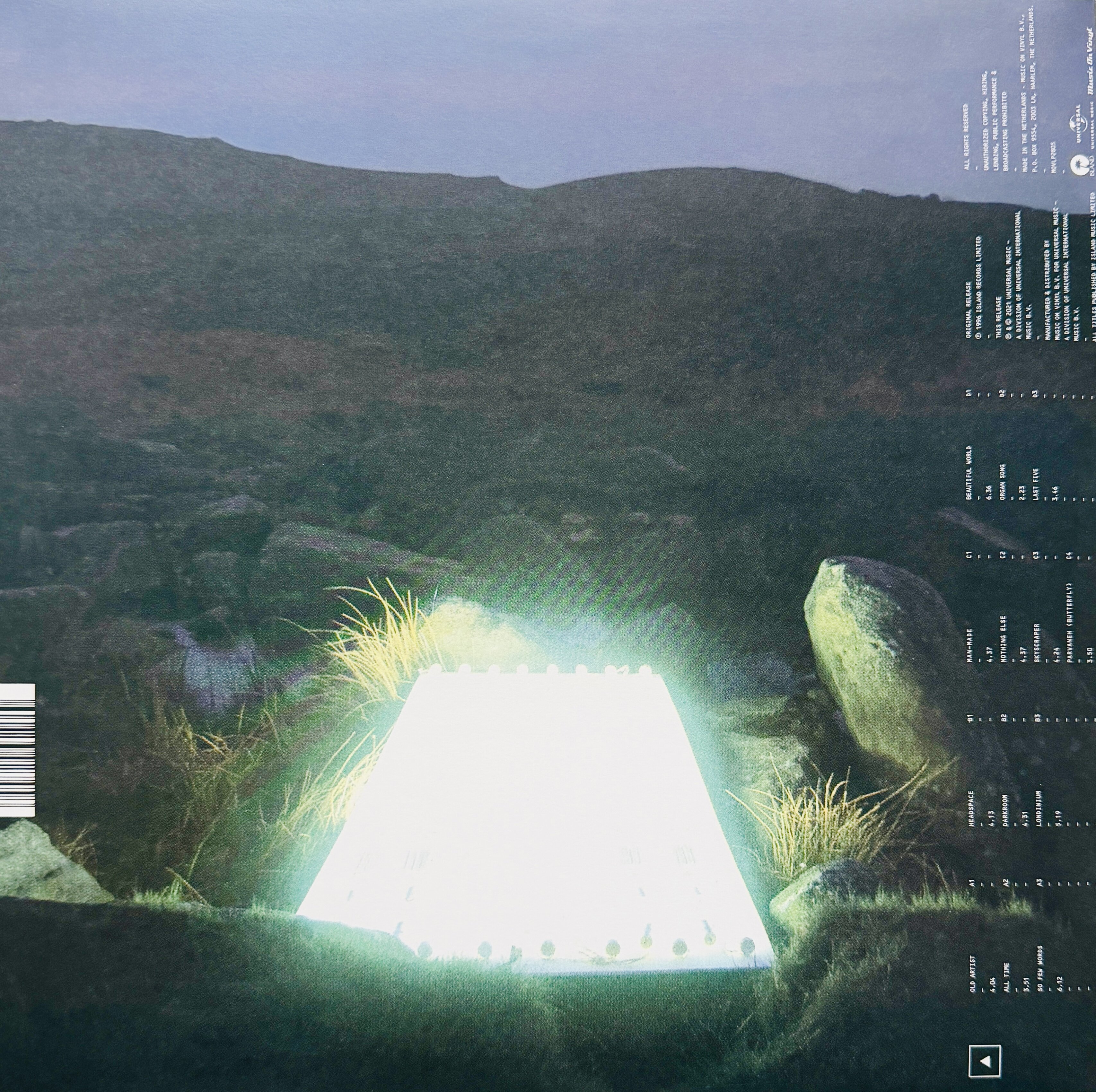
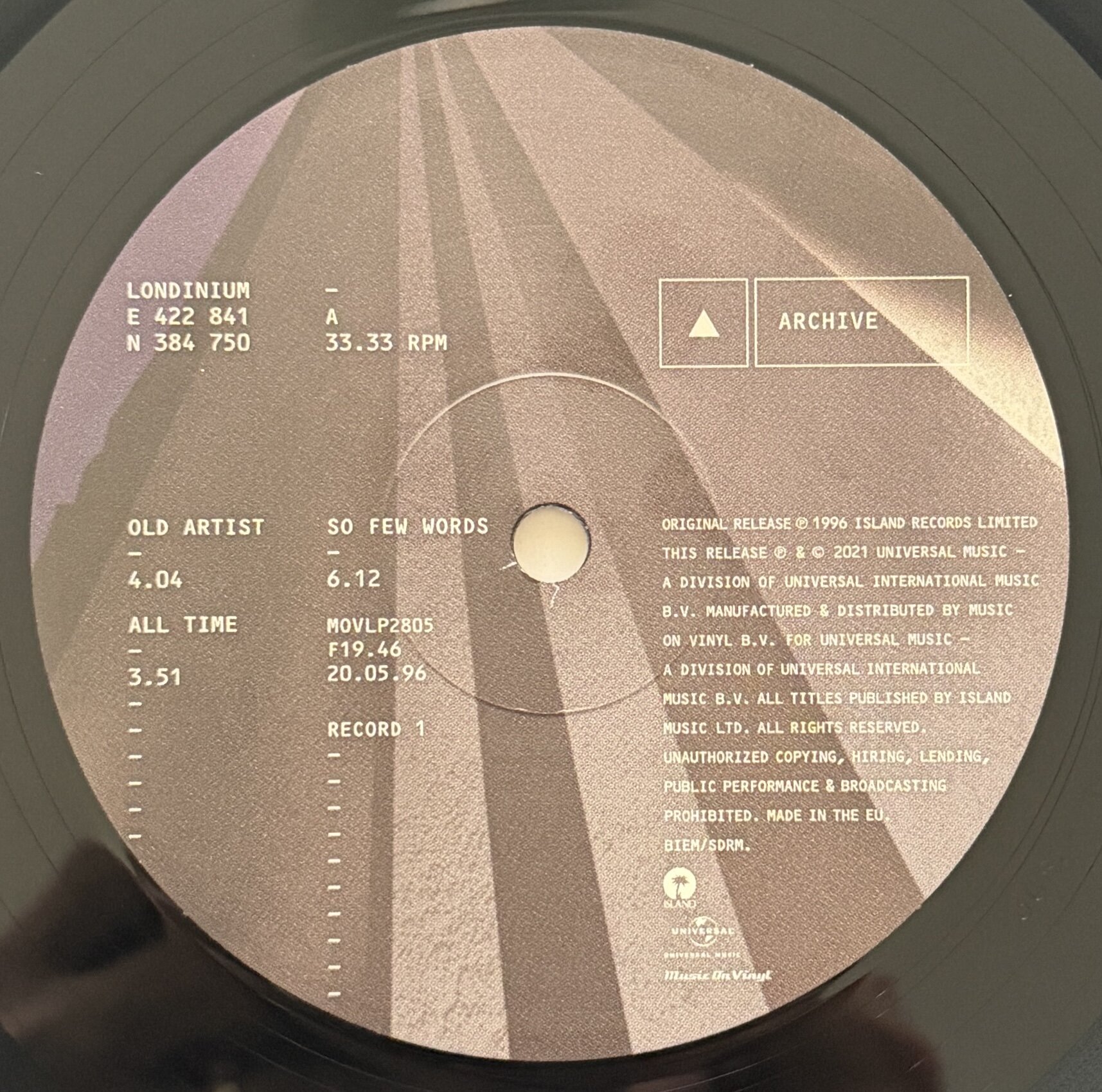
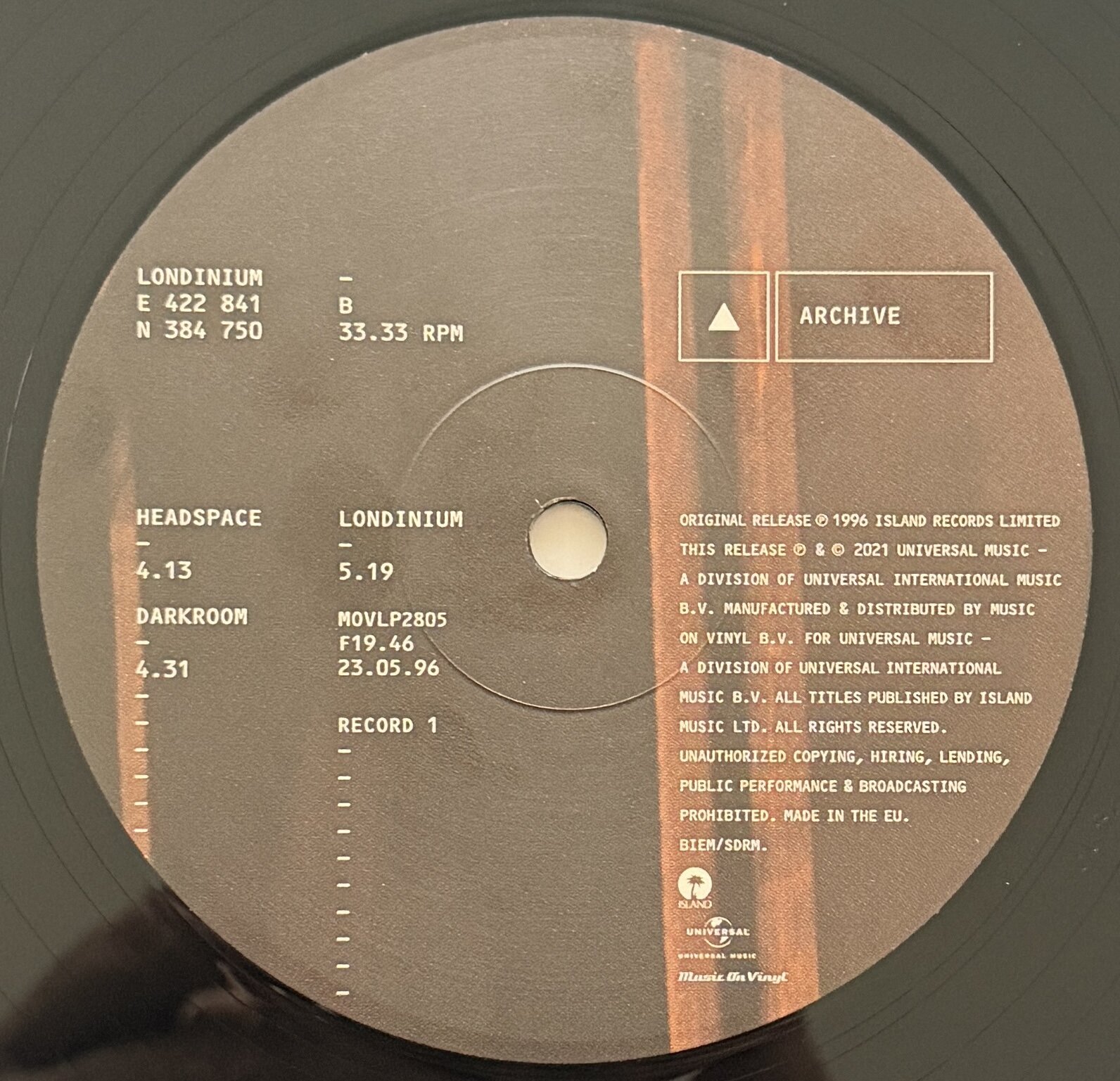
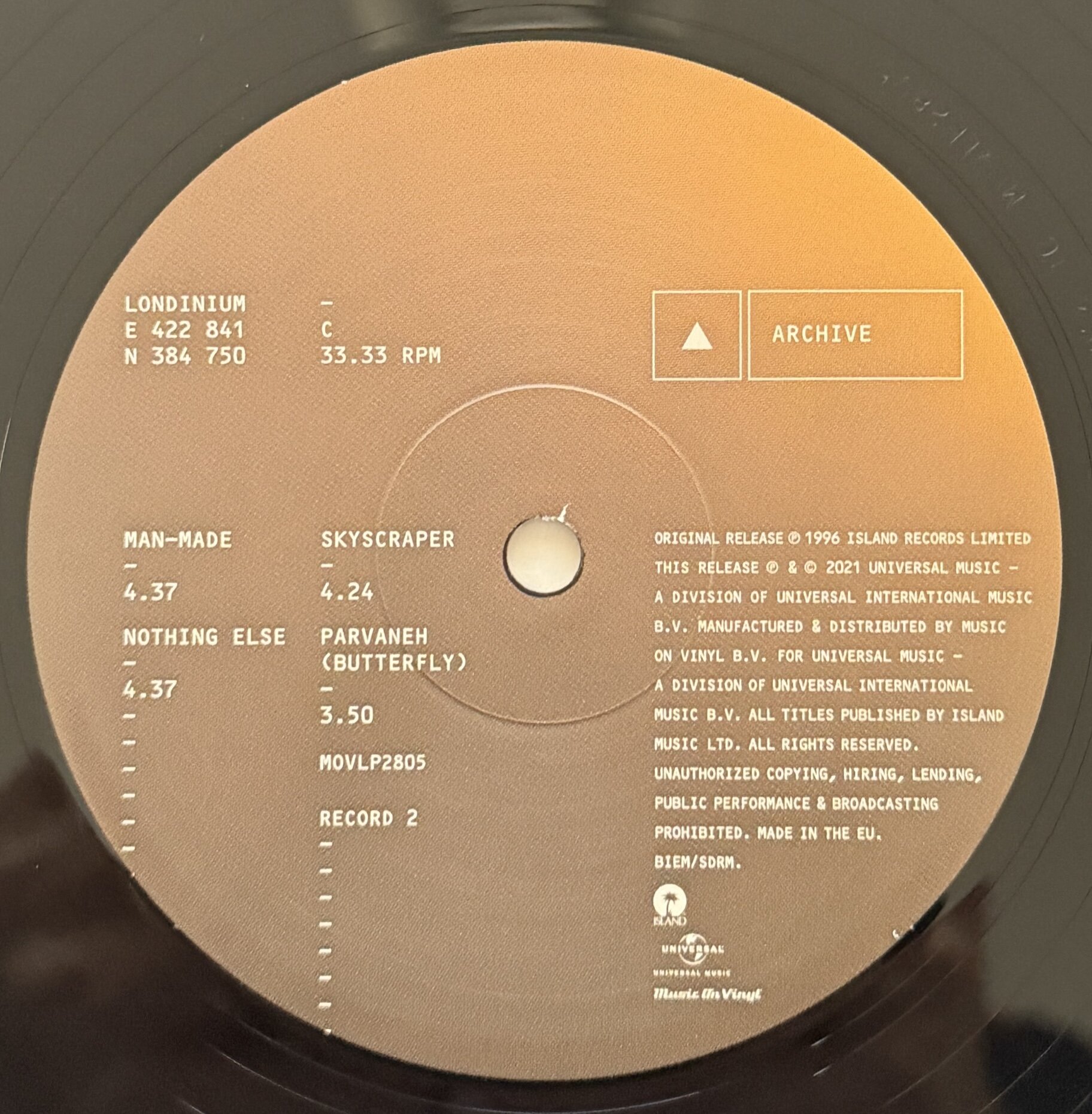
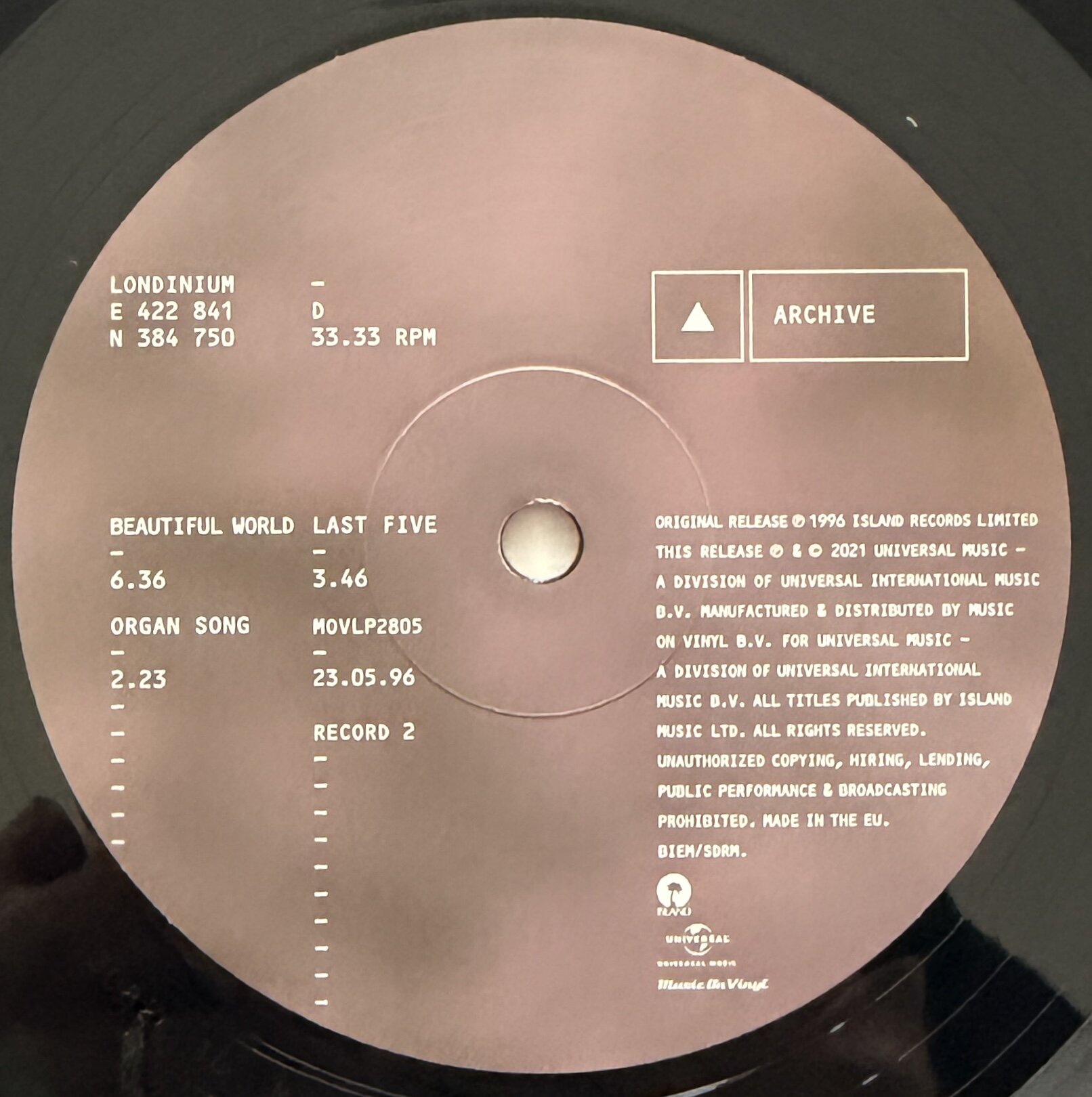
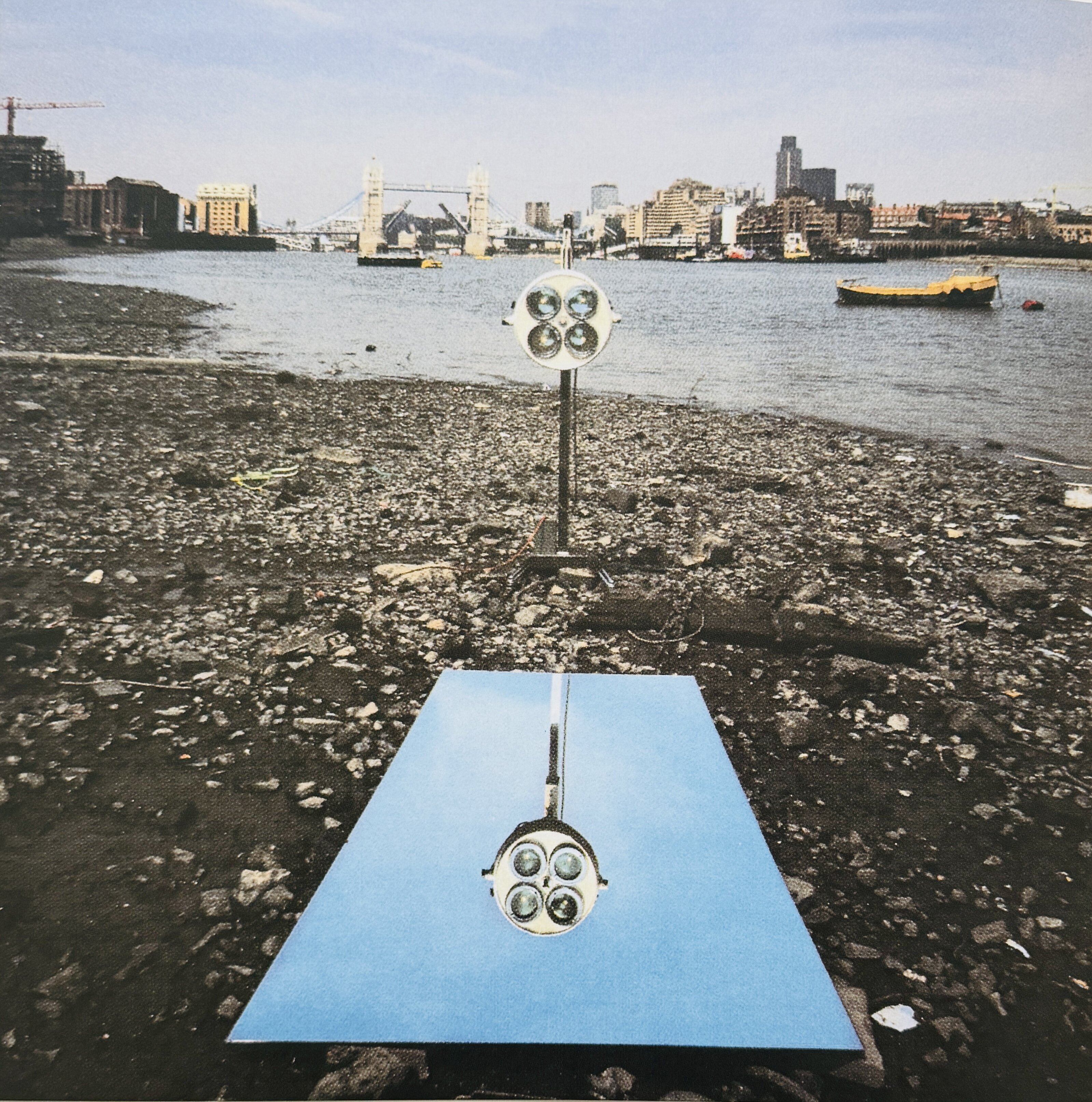
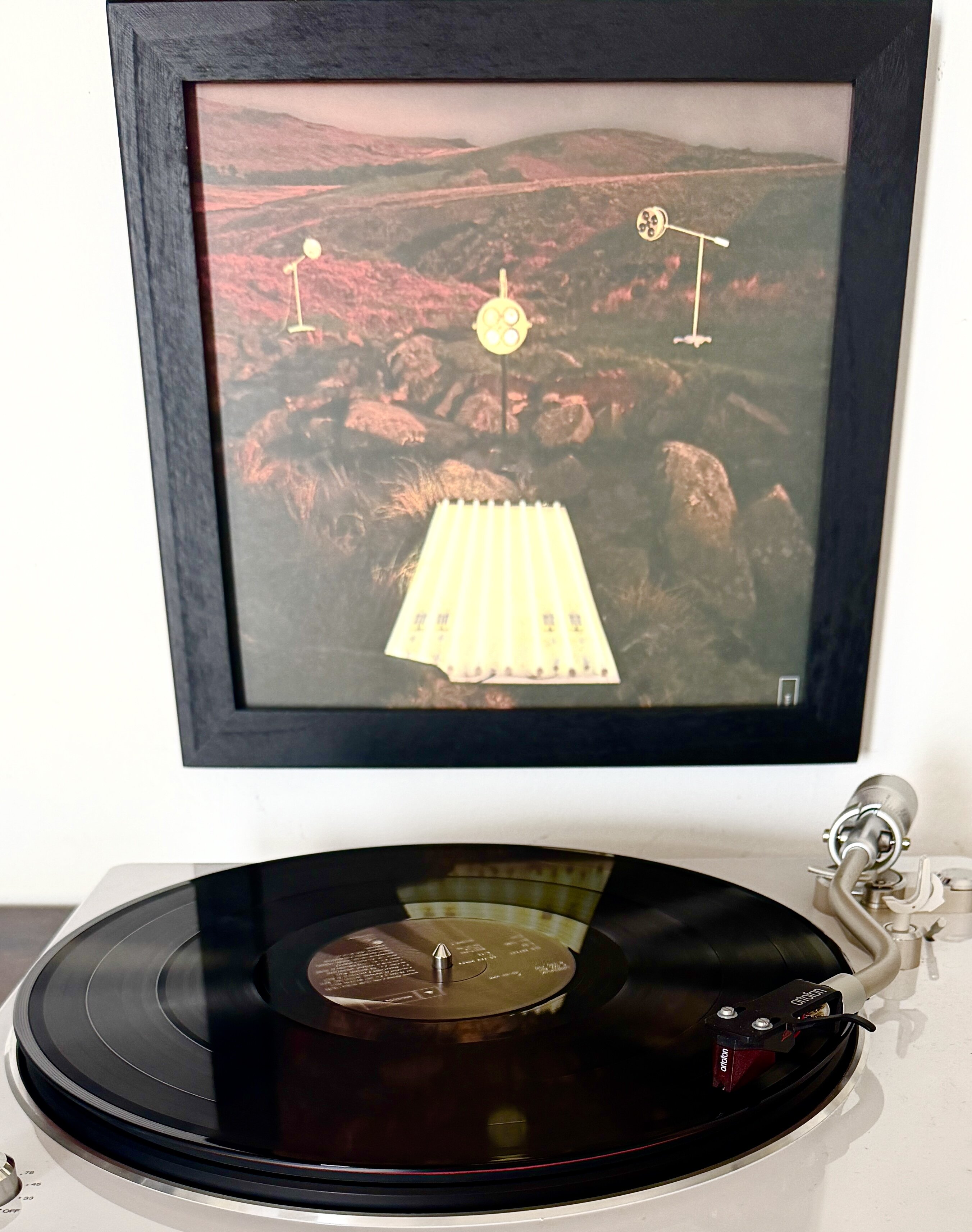
I have the double vinyl reissue MOVLP2805 of Music On Vinyl.
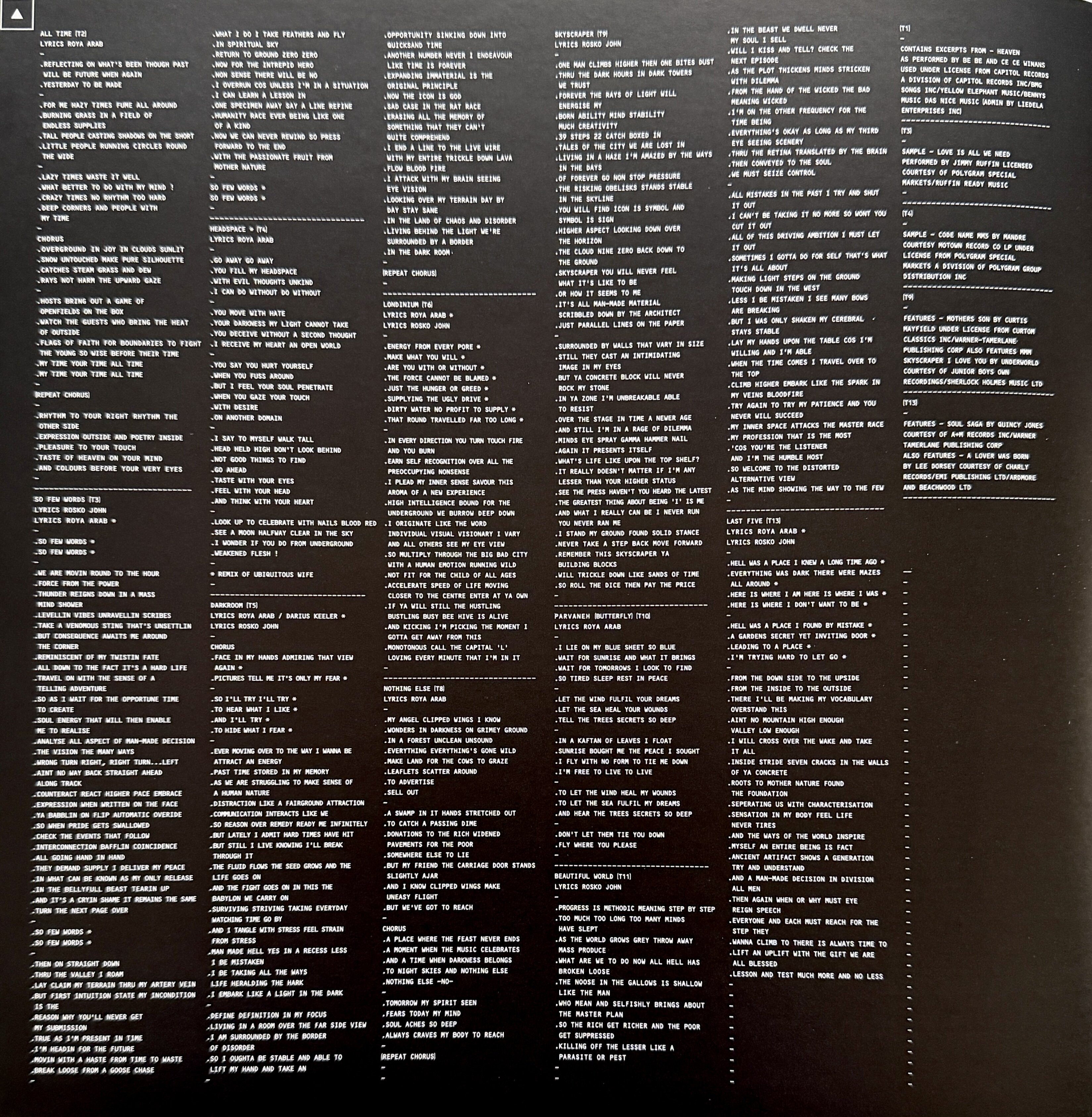
"Old Artist" is a piece that blends cinematic trip-hop with typical hip-hop scratching and symphonic openings. The founders, Darius Keeler and Danny Griffiths, build the sound by manipulating samples, including one from Heaven by Be & Ce Ce Winans. Ali Keeler's violin adds a dramatic touch that is intertwined with electronic beats. The contrast between the urban rhythmic rigidity and the melancholic warmth of the strings is truly remarkable.
"All Time" is a mix of downtempo, jazz and ambient. Roya Arab's hypnotic and intimate voice is intertwined with Pete Barraclough's dreamy flute, while Keeler's essential programming leaves room for music to breathe. The smooth and gentle transition that acts as a bridge to decidedly darker atmospheres is exceptional.
"So Few Words" is a large and lyrical trip-hop orchestral piece. A choral piece of great depth, where Matheu Martin's additional drums merge with Julia Palmer's cello. Roya Arab delivers one of her most intense vocal performances, based on a sample of Jimmy Ruffin (Love Is All We Need). The orchestral instrumental coda, with an epic crescendo of strings, will become a trademark of future Archive.
"Headspace" is a syncopated and scratchy piece of hip-hop alternative. Karl Hyde (Underworld) is present on bass and guitar, infusing an energetic and physical groove. Rosko John's tight and dark flow fits perfectly on the electronic patterns, enriched by Barraclough's flute. Karl Hyde's distorted bassline, which guides the track from start to finish, is just amazing.
"Darkroom" is a claustrophobic trip-hop piece, with darkwave and industrial hues. Karl Hyde's ghostly guitar dialogues with Danny Griffiths' somber synthesizers. Rosko John declaims the lyrics with a deep, almost whispered recitation, alternating with the ethereal vocalizations of Roya Arab. The deconstructed chorus and oppressive atmosphere, reminiscent of Massive Attack's productions of Mezzanine, are TOP.
"Londinium" is a trip-hop manifesto, a perfect fusion of rap, electronic and classical music, the track that most represents the album. Rosko John and Roya Arab weave the voices into a perfect "beauty and the beast" dynamic. Karl Hyde's guitar and Ali Keeler's violin create a dramatic and unstoppable rhythmic progression. The finale is explosive, the tight rap blends with a magnificent explosion of strings and delays.
"Man-Made" is an instrumental Electronic/Ambient piece, with strong IDM influences. Producer duo Keeler-Griffiths is at the helm. Ali Keeler's solo violin serves as the narrator over a carpet of broken beats and synthetic glitches. The absence of lyrics enhances the band's compositional skills.
"Nothing Else" is an intimate and confidential piece of Downtempo. Roya Arab returns as the absolute protagonist at the microphone, on a minimal piano-drums arrangement by Darius Keeler. The raw emotional fragility conveyed by Arab's vocal interpretation is simply fantastic.
"Skyscraper" is progressive Trip-hop, influenced by early techno. Griffiths and Keeler showcase their musical culture, introducing an explicit sampling of Mmm Skyscraper... I Love You by Underworld and sampling Curtis Mayfield's Mother's Son. Rosko John's flow becomes aggressive and sharp. The fit between the warmth of Mayfield's soul sampling and the coldness of the techno bass drum is perfect.
"Parvaneh (Butterfly)" is a piece of ethnic electronica, mystical and floating. Roya Arab explores Middle Eastern vocals, accompanied by the hypnotic synthetic textures created by Danny Griffiths. The atmosphere is rarefied and breaks the urban tension of the record, introducing spiritual elements.
"Beautiful World" is a wide-ranging melodic trip-hop with gospel/soul influences. A sumptuous arrangement, enriched by Steve Taylor's guitars and the additional voices of Jane Wall and Siobhan Sian, which support Rosko John's deep and detached solo singing. The choral and airy chorus is fantastic, one of the rare moments of lyrical light within the album.
"Organ Song" is a neoclassical and avant-garde piece. Jane Hanna intervenes on French horn, while Ali Keeler performs the violin line. Pete Barraclough moves to acoustic guitar to accompany an evocative church organ programmed by Darius Keeler. Total stylistic break with electronic rhythms, in favor of a purely acoustic and chamber moment.
"Last Five / Untitled (Hidden Track)" is a piece of orchestral post-rock (Last Five) followed by experimental ambient (Untitled). Last Five combines Barraclough's flute with the band's backbone electronic structure. After about 39 seconds of silence, the hidden track Untitled develops, dominated by Julia Palmer's enveloping cello and the singular triangle played by guest Anita Hill. A sample of Quincy Jones' Soul Saga is also used. The silent transition that the ghost-track introduces is brilliant, closing the album with a sense of exquisitely London nocturnal isolation.
Londinium is an ambitious, dark and underrated trip-hop record from the 90s. The Archive here surpass themselves, inserting an orchestral-cinematographic component and a progressive hip-hop that anticipate post-rock. It is the only album that features Roya Arab and Rosko John along with founders Keeler and Griffiths. A magical union that the band has never replicated in subsequent works. Absolutely recommended.
My Version
Label: Music On Vinyl – MOVLP2805, Island Records – MOVLP2805
Format: 2 x Vinyl, LP, Album, Reissue
Country: Europe
Release date: Feb 26, 2021
Tracklist
A1 Old Artist 4:04
A2 All Time 3:51
A3 So Few Words 6:12
B1 Headspace 4:13
B2 Darkroom 4:31
B3 Londinium 5:19
C1 Man-Made 4:37
C2 Nothing Else 4:37
C3 Skyscraper 4:24
C4 Parvaneh (Butterfly) 3:50
D1 Beautiful World 6:36
D2 Organ Song 2:23
D3.1 Last Five 3:46
D3.2 (silence) 0:40
D3.3 Untitled
LineUp
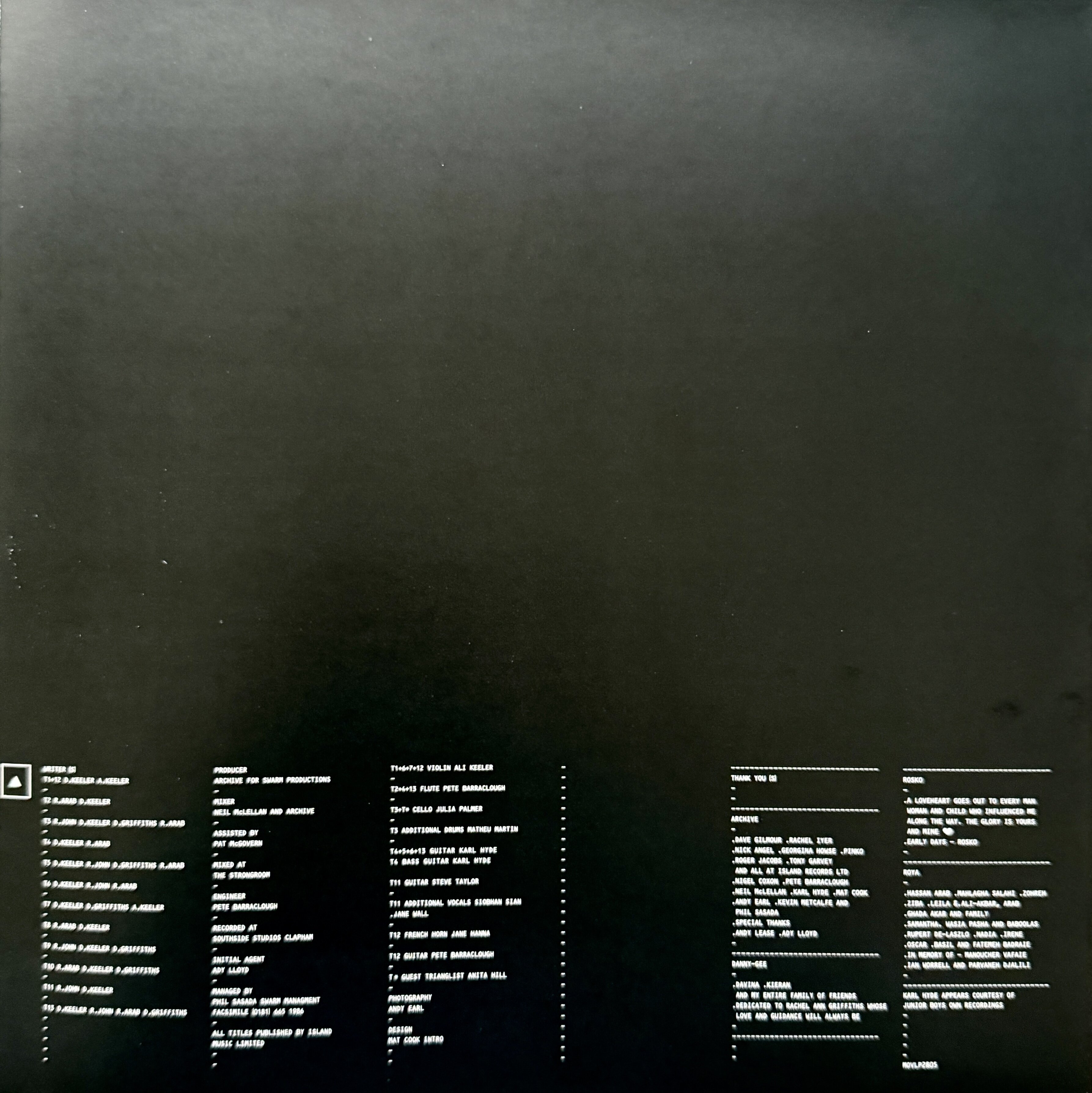
Bass Guitar – Karl Hyde (tracce: B1)
Cello – Julia Palmer (tracce: A3, D3.3)
Drums [Additional] – Matheu Martin (tracce: A3)
Flute – Pete Barraclough (tracce: A2, B1, D3.1)
French Horn – Jane Hanna (tracce: D2)
Guitar – Karl Hyde (tracce: B1 to B3, D3.1), Pete Barraclough (tracce: D2), Steve Taylor (tracce: D1)
Keyboards [Uncredited], Effects [Sound Effects Uncredited] – Danny Griffiths
Keyboards [Uncredited], Programmed By [Uncredited] – Darius Keeler
Rap [Uncredited] – Rosko John
Triangle [Guest Trianglist] – Anita Hill (tracce: D3.3)
Violin – Ali Keeler (tracce: A1, B3,C1,D2)
Vocals [Additional] – Jane Wall (tracce: D1), Siobhan Sian (tracce: D1)
Vocals [Uncredited] – Roya Arab
Listening link on the main streaming platforms at the following links:
Spotify: You can listen to the full tracklist directly on the official album Londinium on Spotify.
Apple Music: The album is available in high audio quality on the page dedicated to Londinium on Apple Music.
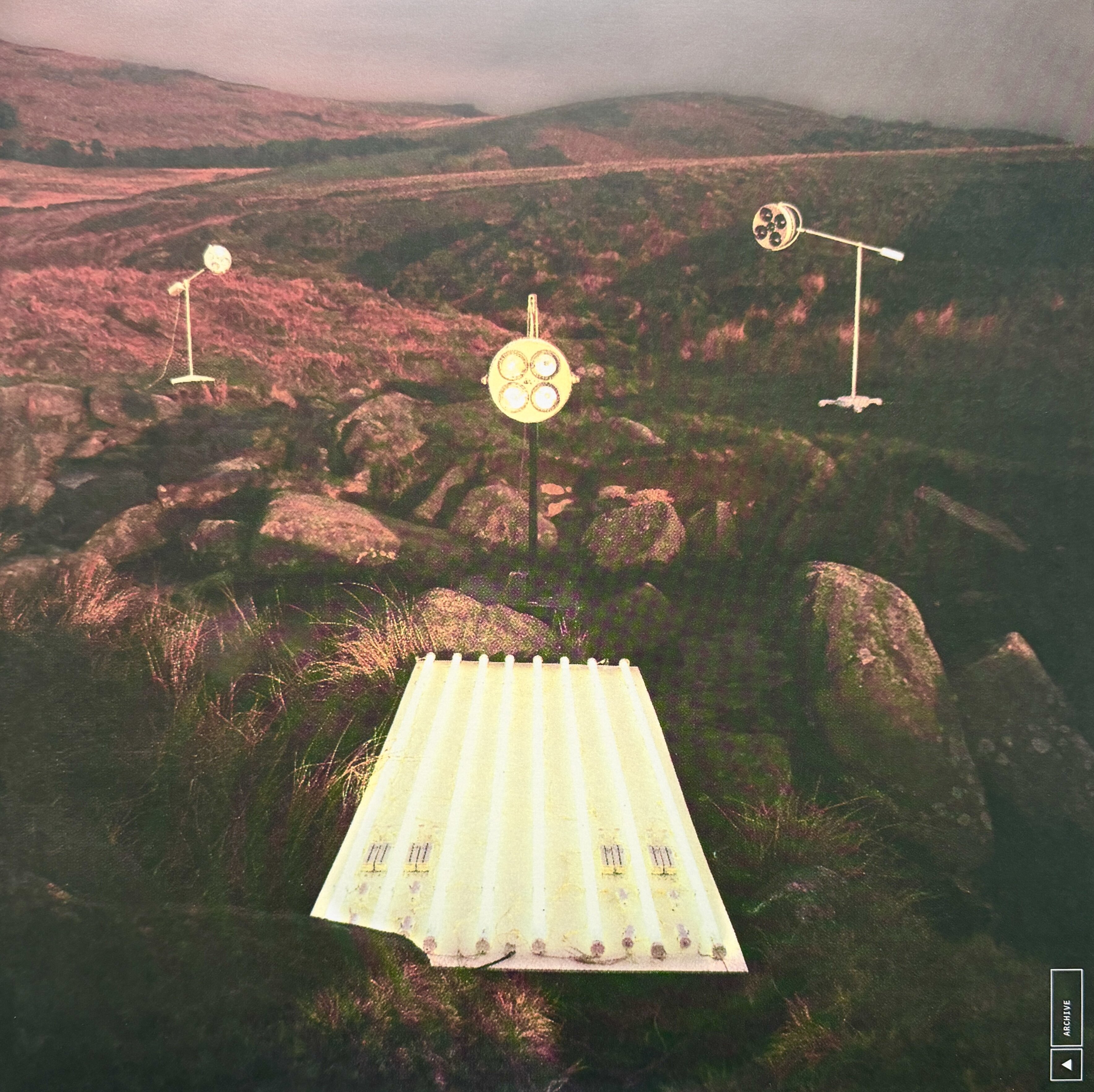
Note: All links to the musicians’ works are in the TAGS under the article title or on the "Artists"