

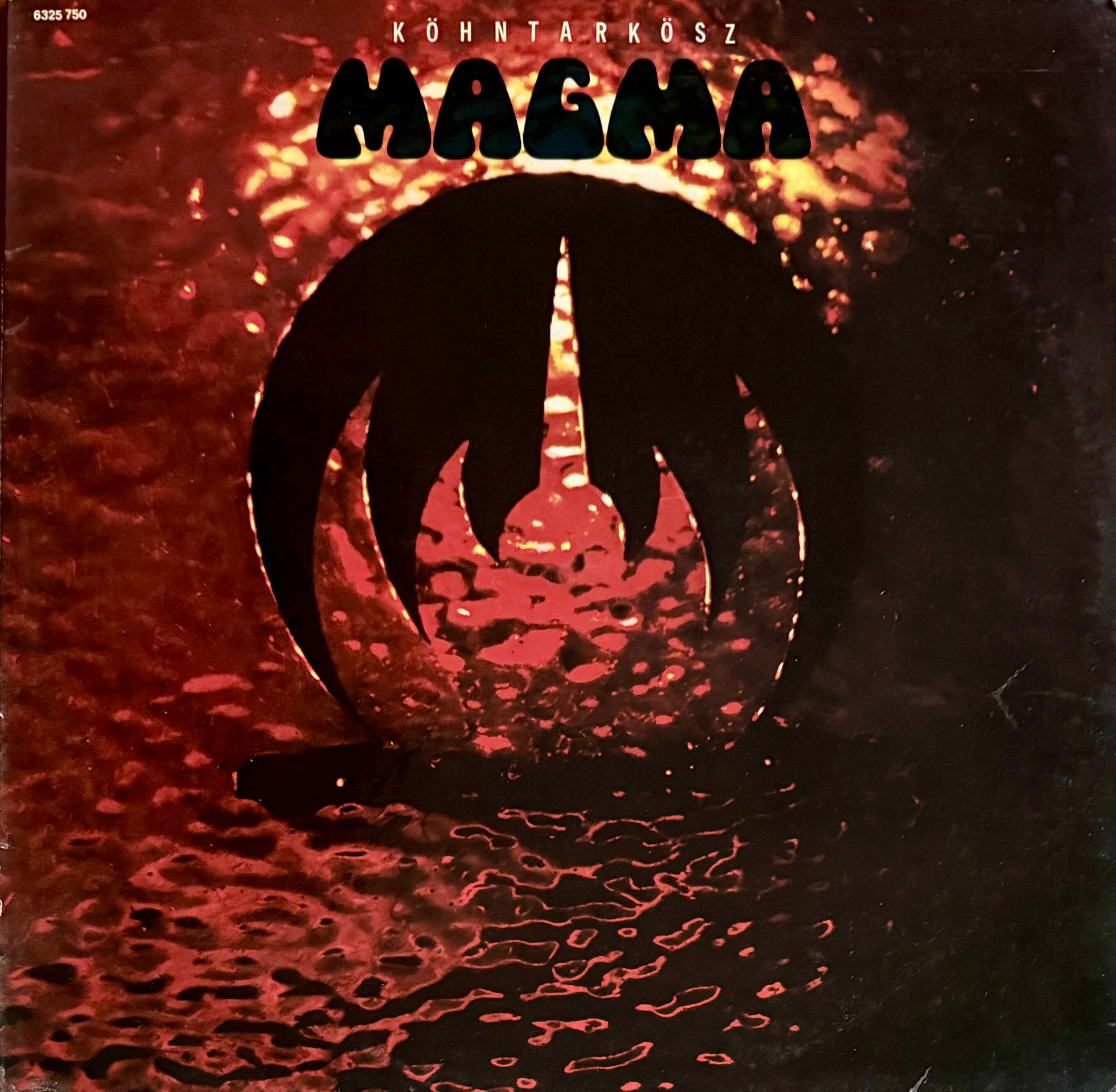
Köhntarkösz by Magma, a 1974 album.
The album is part of the sci‑fi universe of Magma created by drummer and leader Christian Vander. The lyrics are sung in Kobaïan, a language invented by Vander to tell the story of the planet Kobaïa. This is the second chapter of the Ëmëhntëhtt-Rê Trilogy, also known as the Köhntarkösz Trilogy.
It’s a crazy musical story, an epic conceptual saga, one of the greatest in avant‑garde music. Christian Vander conceived it in the early Seventies, and it took more than 35 years to finish it and release it all in the studio.
This trilogy, on a narrative and spiritual level, takes a break from the usual Earth–Kobaïa space trips to dive into a powerful mystical metaphor tied to ancient Egypt and reincarnation. Everything revolves around two characters far apart in time: the Egyptian pharaoh Ëmëhntëhtt-Rê and the archaeologist Köhntarkösz.
The Saga:
Long ago, the wise pharaoh and great priest of Ptah, Ëmëhntëhtt-Rê, was close to uncovering the secret of immortality and cosmic knowledge. But just before performing the final spiritual rite, he is brutally killed by dark forces afraid of his power. His prophecy and his mission are cut short.
Centuries later, the explorer Köhntarkösz (which is both his name and his spiritual title), guided by mysterious inner forces, finds the pharaoh’s hidden tomb. As soon as he enters the tomb and touches the king’s remains, he has a dreamlike, shattering vision. The spirit of Ëmëhntëhtt-Rê awakens, takes possession of Köhntarkösz’s body and telepathically transfers to him all the knowledge he had gathered before dying. Thus, the pharaoh is reborn in the present to complete his interrupted mission.
Even though the story follows a precise order, Magma released the records in a fragmented way between 1974 and 2009.
K.A (Köhntarkösz Anteria), released in 2004, is the first chapter of the story. Composed almost entirely in 1973 but recorded only thirty years later, the album tells the past life, greatness, and tragic spiritual youth of Ëmëhntëhtt-Rê before he was killed. Musically it’s bright, choral and energetic, and it’s the perfect link between the style of MDK and the shadows of the next chapter.
Köhntarkös, released in 1974, is the beating heart of the work, capturing the magical moment of the archaeological discovery and the overwhelming impact of the possession. As said before, the music is deliberately dark, obsessive and oppressive to mirror Köhntarkösz’s mind as it is taken over by the pharaoh’s ancient spirit.
Ëmëhntëhtt-Rê, released in 2009, is the third and final chapter, the perfect conclusion. Even though the final suite had been written and performed live in small pieces as early as 1975, Vander found the definitive studio version only in 2009. The album tells the ruler’s final awakening in his new body, the fulfillment of the prophecy, and the attainment of cosmic immortality.
Christian Vander created this trilogy with a sci‑fi and Kobaïan setting, but also as a deep reflection on genetic and spiritual memory. According to the philosophy of Zeuhl, physical death cannot erase true knowledge. The great souls of the past float in the ether, waiting for a “receiver” pure enough (or tormented enough) to inherit their path and carry it through.
Köhntarkösz, Magma’s fourth album, is a true jewel of French progressive rock and a pillar of the Zeuhl genre. Released on Philips Records after the monumental Mëkanïk Dëstruktïw Kömmandöh (1973), it marks an important turning point for the band. Forget the horns and the sunny choral glow of the previous record: here we are plunged into hypnotic, dark atmospheres dominated by obsessive keyboards.
Köhntarkösz is the beating heart of the trilogy of the same name. The story tells of an archaeologist, Köhntarkösz, who discovers the tomb of the ancient Egyptian/Kobaïan pharaoh Ëmëhntëhtt-Rê. Touching the pharaoh’s remains, the protagonist receives a telepathic bolt of insight, inheriting the king’s supreme knowledge, after he was murdered in the past. The album musically depicts this spiritual shock, the transformation, and the awakening of dormant cosmic forces.
In this period the figure of bassist Jannick Top stands out. His heavy, distorted, powerful style radically changes Magma’s sound, shifting the focus from orchestral jazz‑rock to a funereal, geometric minimalism.
The album is dominated by the long title track split into two parts, with short experimental episodes on side two:
Köhntarkösz (Part I) (15:22) starts slowly, mysterious and creeping. It builds a geometric, martial tension driven by the Fender Rhodes piano and Jannick Top’s massive bass, growing in intensity note by note.
With Köhntarkösz (Part II) (15:55) we reach the peak of mystical ecstasy and revelation. The rhythm becomes at times frantic, enriched by disorienting synth solos and a dramatic choir that bursts into a cathartic, liberating finale.
Enneelt (02:04) is a short instrumental interlude, dark and jagged. Written by Jannick Top, it serves as a transition fragment charged with tension.
Ork Alarm (03:45) is a deeply unsettling avant‑garde piece. Dominated by distorted cello and claustrophobic vocal wails, it amplifies the sense of cosmic threat.
The innovative use of synths and organs creates sci‑fi sound textures suspended in the void, far from the clichés of English symphonic prog of the time.
Köhntarkösz is uncompromising art, one of the absolute masterpieces of Seventies avant‑garde music. Vander on drums and Top on bass form one of the most powerful rhythm sections in rock history. Time doesn’t float: it asserts itself like a military march from other worlds. It’s a record with a dark allure that can make you uneasy. It fuses the solemnity of contemporary classical music with the freedom of free jazz.
It’s not an easy record to listen to. The obsessive repetitiveness of the riffs and the absence of traditional melodies or understandable lyrics can put off those looking for a light listen. If MDK is the total, theatrical work, Köhntarkösz is Magma’s psychological and esoteric soul. An absolute masterpiece for those who love the most experimental, dark, cerebral progressive rock, with no commercial compromises.
My Version
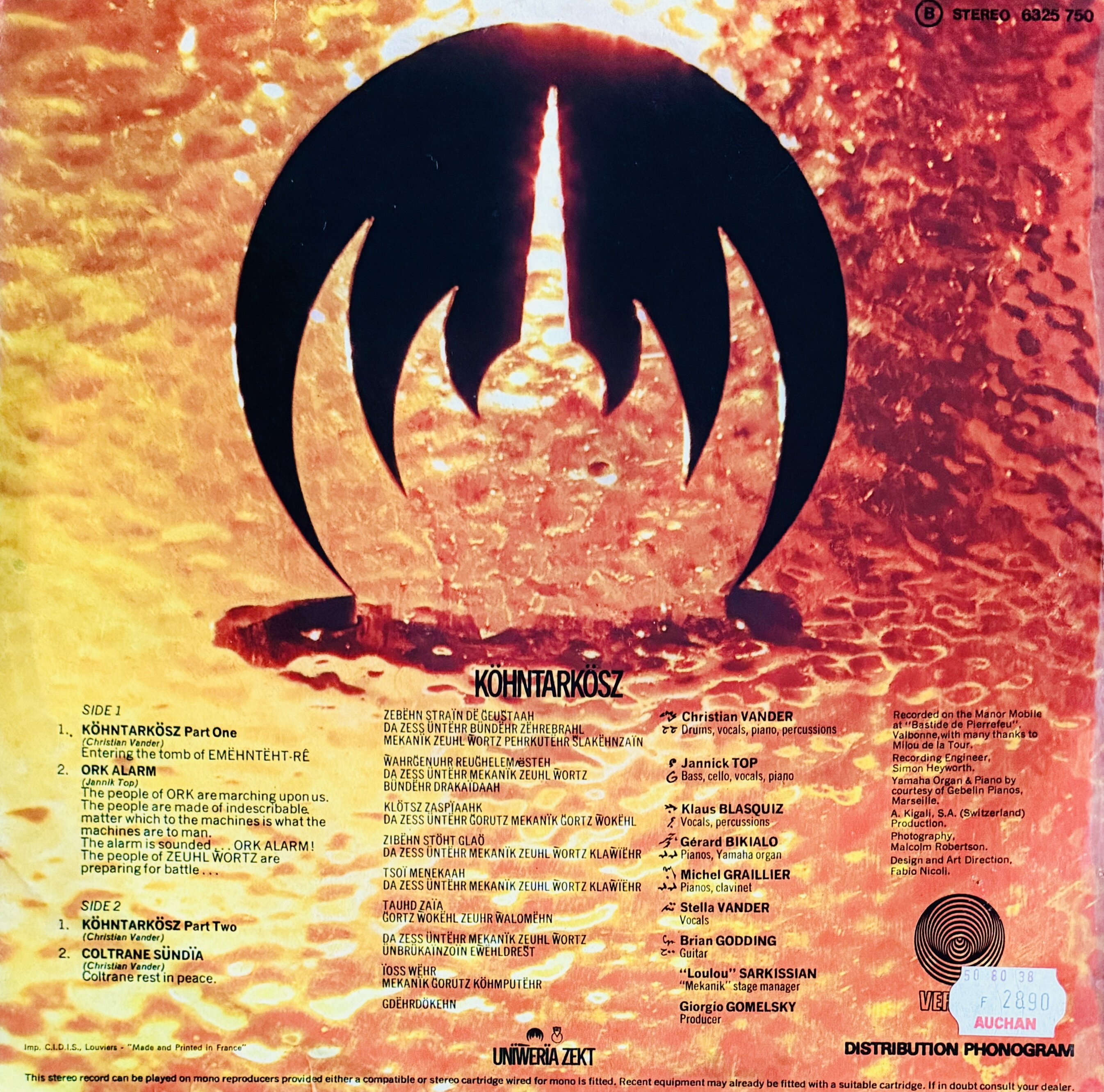
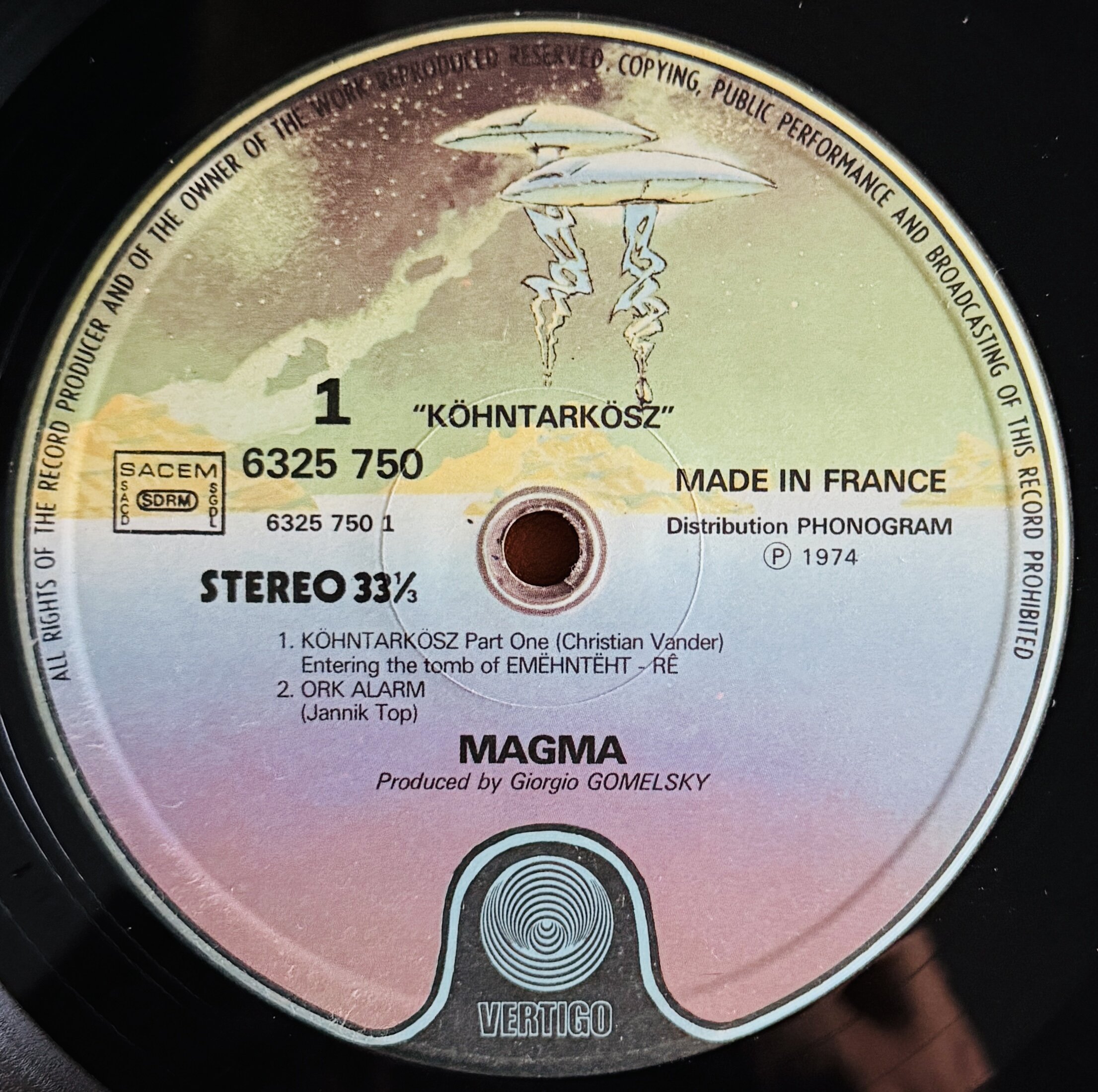
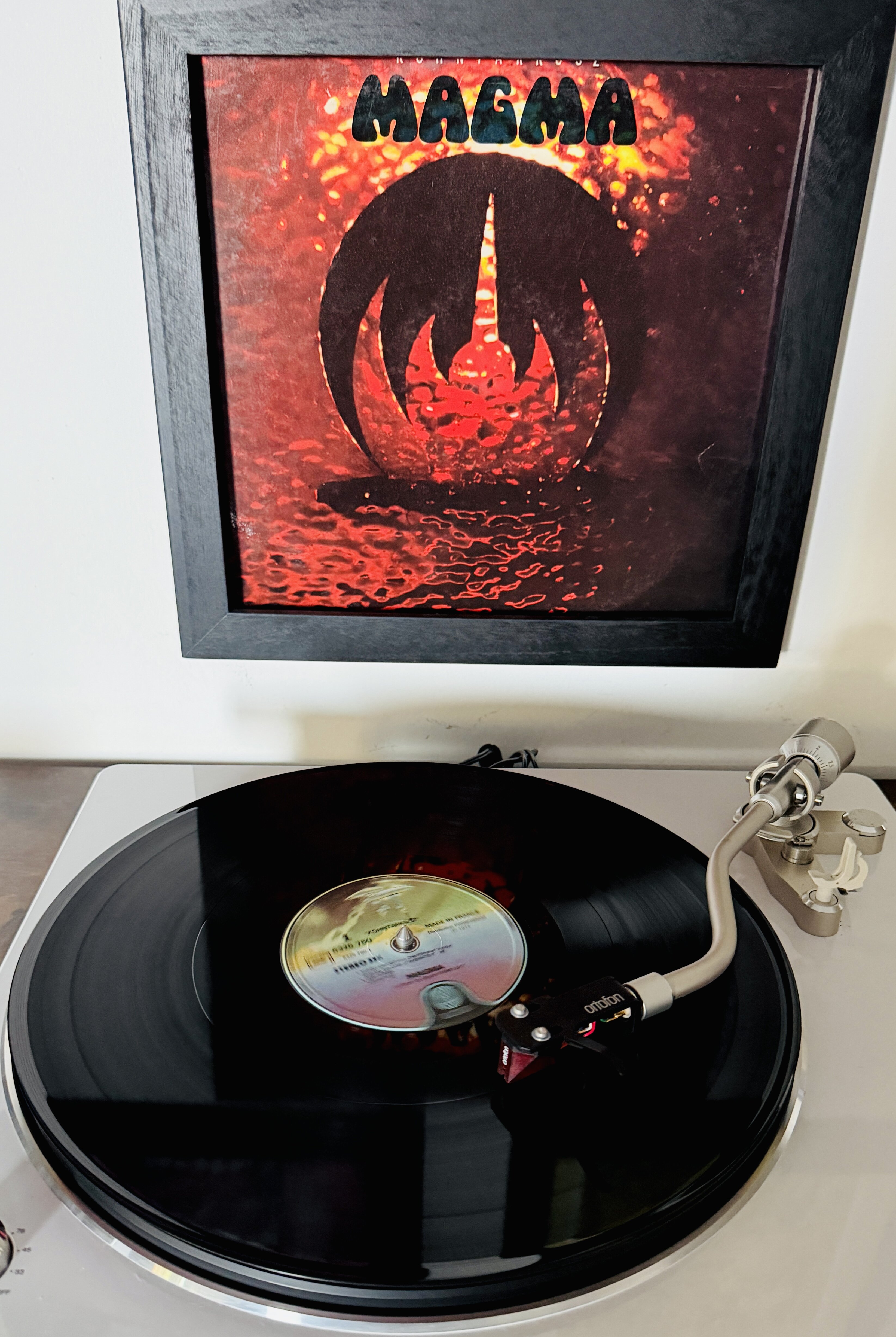
Label: Vertigo – 6325 750
Format: Vinyl, LP, Album
Country: France
Released: 1974
Tracklist
A1 Köhntarkösz (Part One) 15:24
A2 Ork Alarm 5:27
B1 Köhntarkösz (Part Two) 15:59
B2 Coltrane Sündïa 4:11
LineUp
Bass, Cello, Vocals, Piano – Jannick Top, Wahrgenuhr Reugehlem Esteh
Drums, Vocals, Piano, Percussion – Christian Vander, Zebëhn Straïn Dë Geustaah
Guitar – Brian Godding
Piano, Clavinet – Michel Graillier, Tsoï Menekaah
Piano, Electric Organ [Yamaha Organ] – Gérard Bikialo, Zibëhn Stöht Glaö
Vocals – Stella Vander, Tauhd Zaïa
Vocals, Percussion – Klaus Blasquiz, Klötsz Zaspïaahk
Listening links on the main streaming platforms at the following links:
Listen to the album on Spotify
Find the record on Apple Music
Buy and listen in high definition on Bandcamp
Find digital editions and downloads on Qobuz
Note: All links to the musicians' works are in the TAGS under the article title or on the page "Artists"
.jpeg "Mekanïk Destruktïw Kommandöh by Magma")