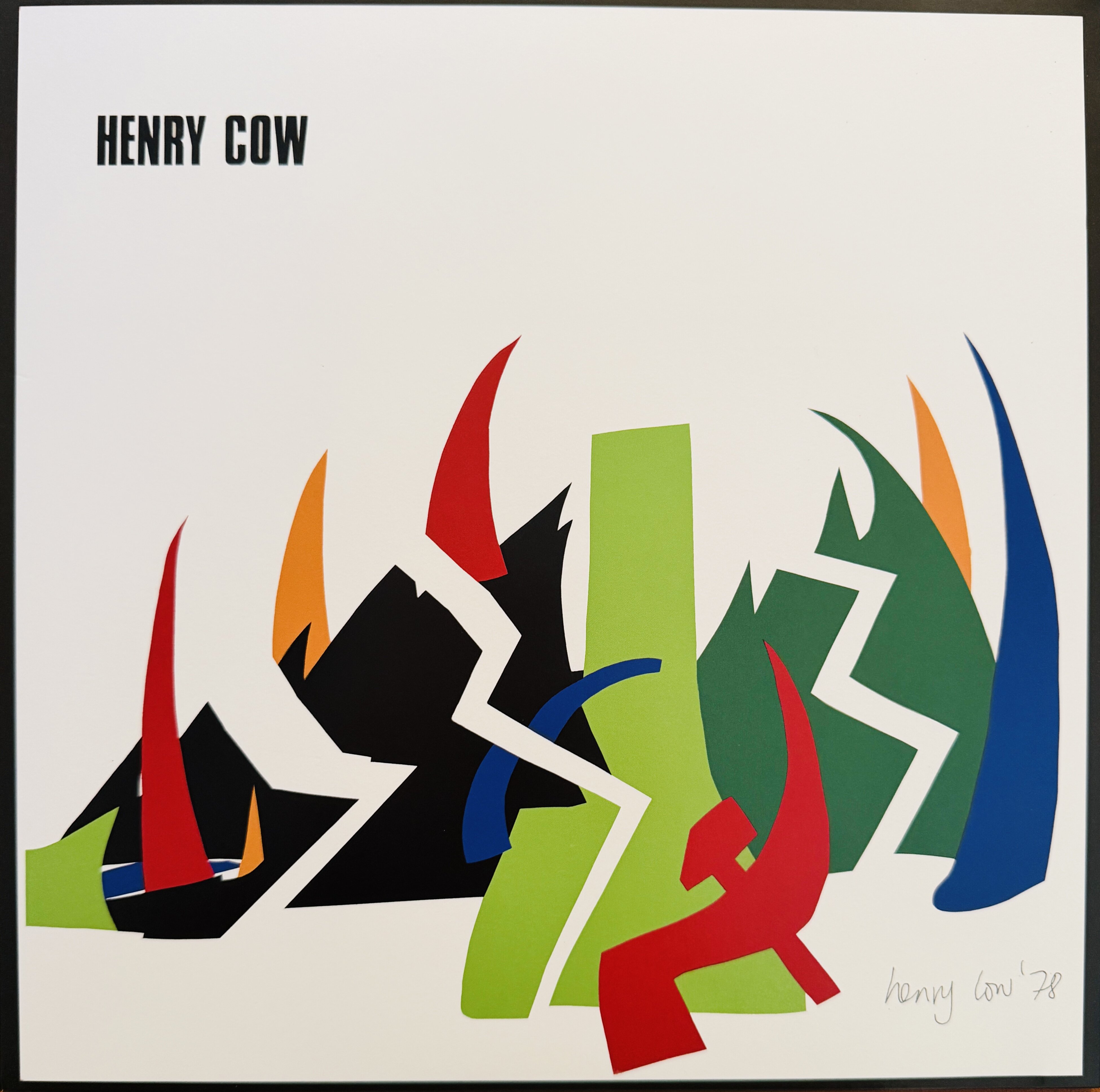
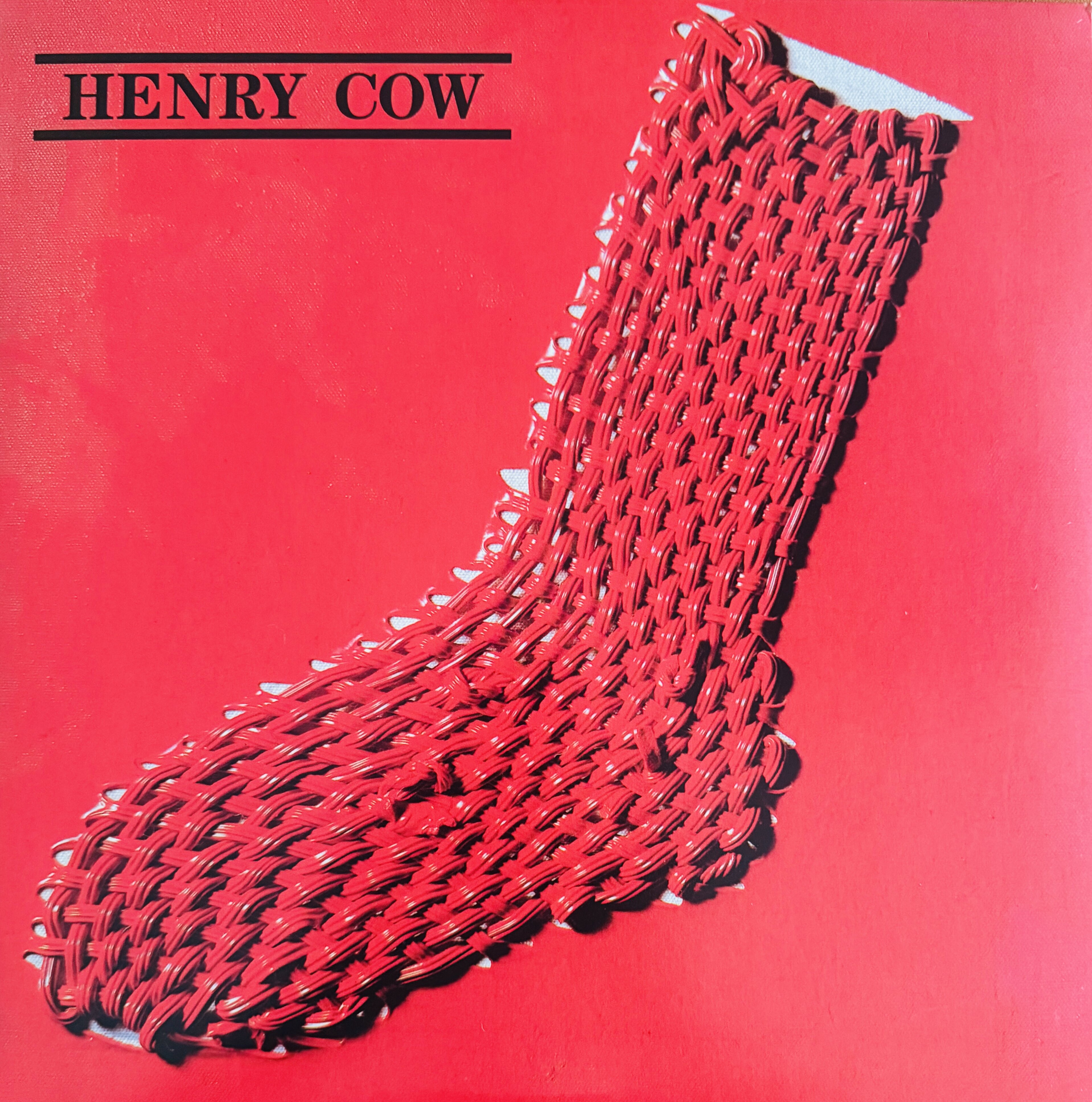
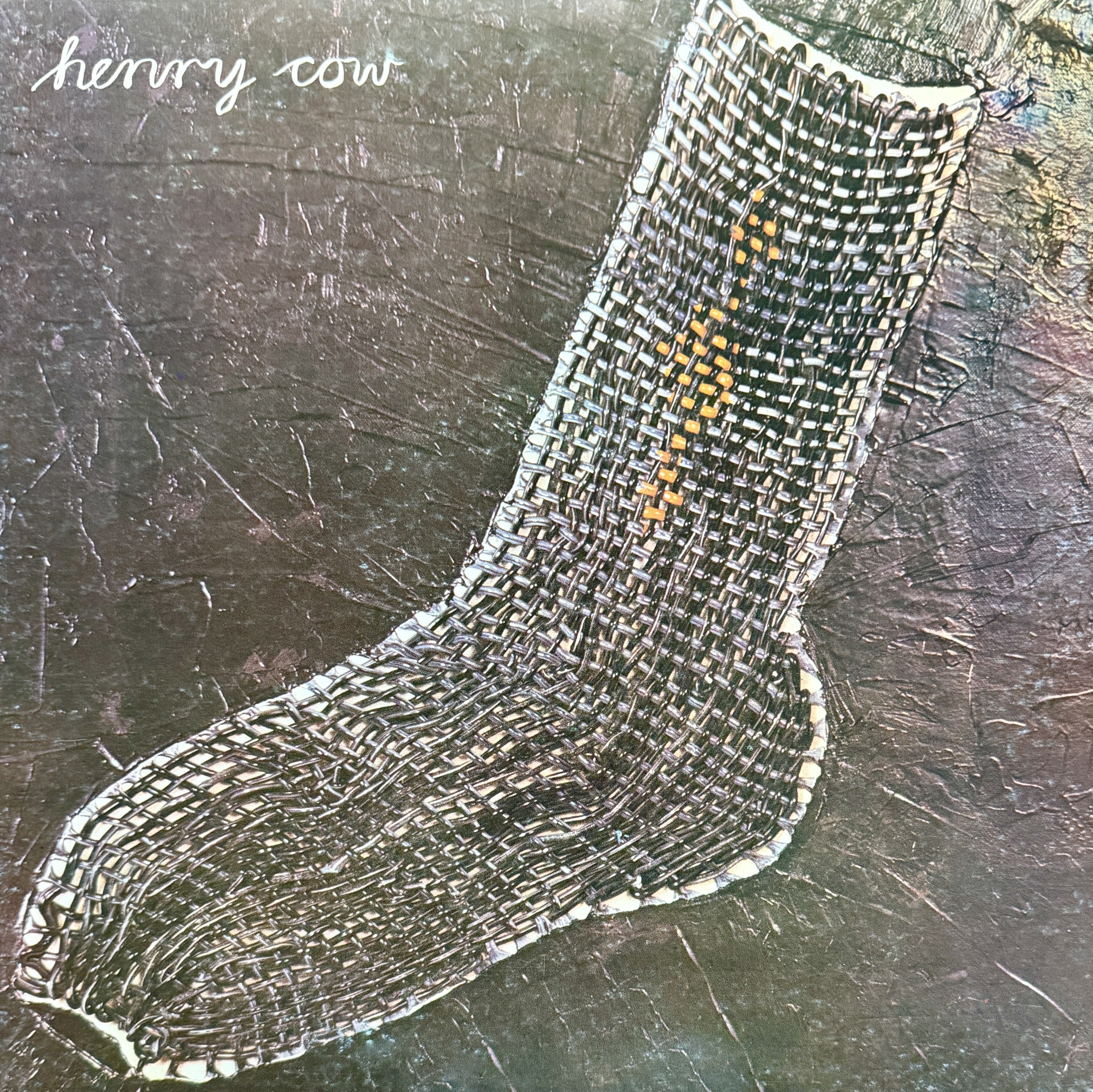
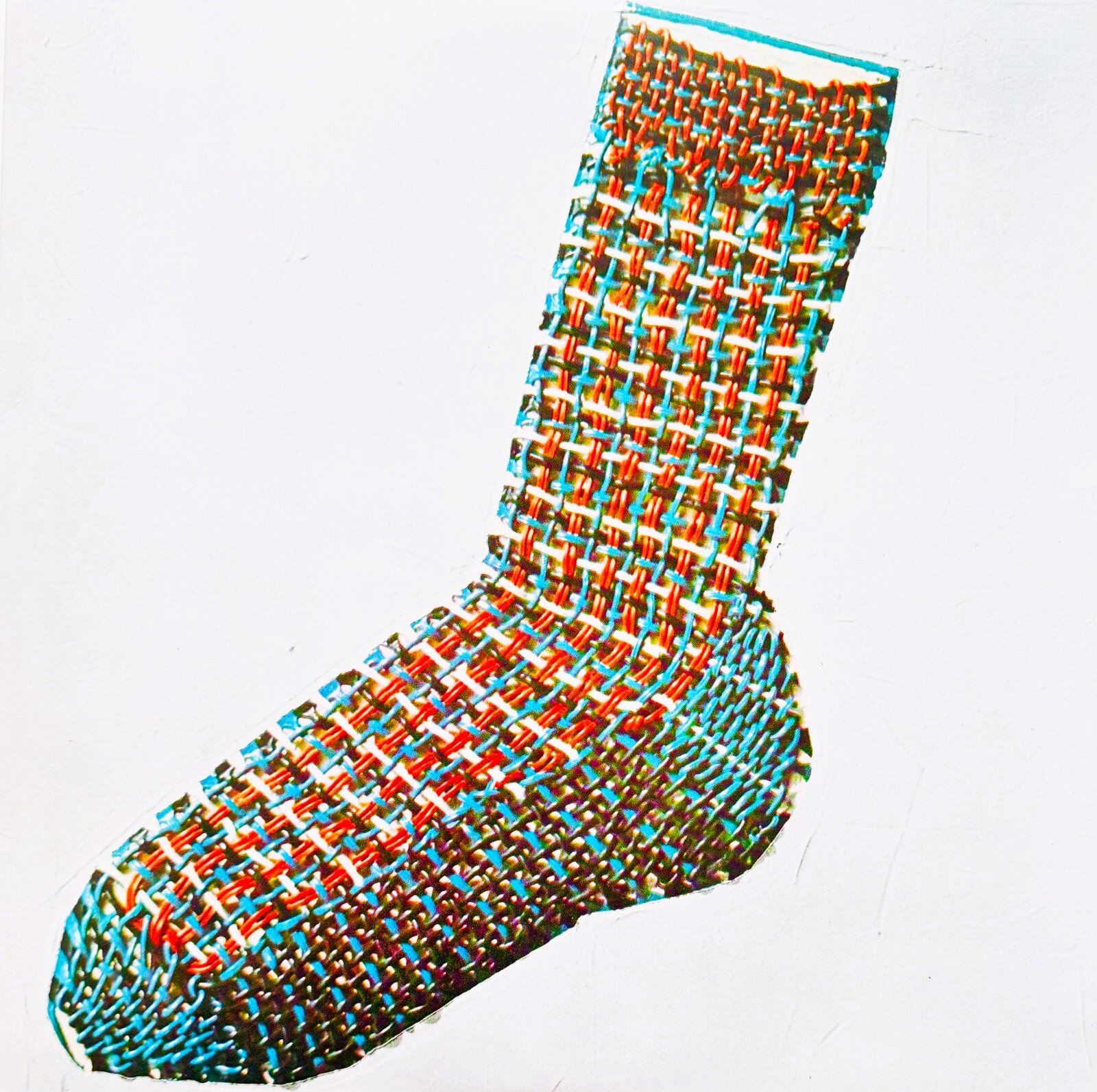
Western Culture Henry Cow’s 1979 album.
Western Culture, the fifth and final album by Henry Cow, the band’s musical and spiritual farewell, released after they had split up. It is clearly a cornerstone of Rock In Opposition (RIO) and avant-prog worldwide.
The making of Western Culture is tied to the end of Henry Cow, due to a deep artistic split.
In January 1978, the band went into a studio in Switzerland to record the fifth album, but there were major disagreements over the tracks: much of the material, with lyrics by Chris Cutler and Fred Frith, didn’t appeal to part of the group because it wasn’t considered in line with the Henry Cow style.
To solve the problem, the same tracks were used for a new project, Art Bears, with the album Hopes and Fears.
This compromise still marked the official end of Henry Cow. Right after the recordings, the musicians went their separate ways. The album stayed “in the vault” for a year, then came out in 1979.
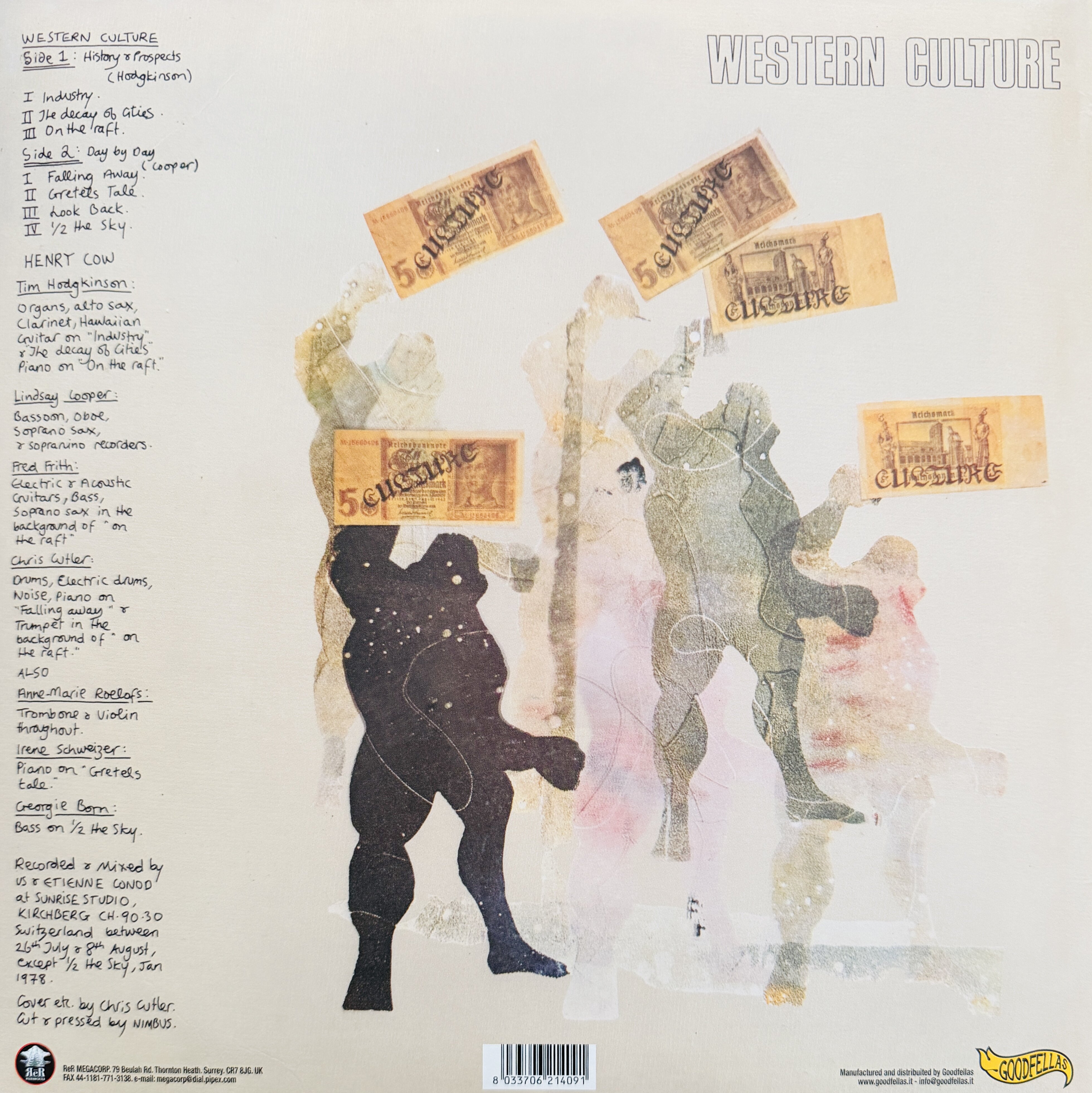
In the band were Tim Hodgkinson on organ, alto sax and clarinet, Lindsay Cooper on bassoon, oboe and soprano sax, Fred Frith on guitars and bass, Chris Cutler on drums, percussion and noises, and Anne-Marie Roelofs on trombone and violin, a regular guest during the summer sessions.
The title “Western Culture” (in Italian “Cultura Occidentale”) wasn’t chosen by chance, but represents Henry Cow’s political, philosophical and artistic manifesto in the last months of their career. Henry Cow were, as is well known, an openly Marxist, far-left group. For them, “Western Culture” wasn’t something to celebrate, but a system in deep moral, economic and social crisis.
The album aims to be the soundtrack to the decline of the capitalist West, as can be seen from the titles of the Side A tracks (written by Tim Hodgkinson), which in fact tell a story:
“Industry” (Industry): factory alienation and mass production.
“The Decay of Cities” (The decay of cities): rampant urbanization and the decline of Western urban centers.
“On the Ground” (On the ground): the final collapse of this model.
In March 1978, a few months before recording the album, Henry Cow organized in London the first Rock In Opposition festival. The movement brought together European bands united by two things: opposition to the commercial record industry and opposition to American and British cultural hegemony in rock.
With the title “Western Culture”, the band mocked and critically reflected on how the industrialized West colonized global culture, turning art into a simple commodity. The title is therefore an intellectual paradox. If on the one hand the group criticized Western society, on the other the music on this record is deeply tied to the European 20th-century art-music tradition. The compositions by Lindsay Cooper and Tim Hodgkinson, in fact, blend rock with contemporary classical music, avant-garde music and European jazz, rejecting American blues-rock clichés. It is therefore, in every respect, an analysis of Western culture made from within its own musical tradition.
Western Culture, unlike the previous works, is a completely instrumental album. With the departure of singer Dagmar Krause from the group, the band had the freedom to explore mathematical scores of incredible complexity.
This album represents the peak and the perfect definition of the Avant-Prog (avant-garde progressive) genre and Rock In Opposition (RIO). It’s an instrumental record, with a structure so complex that it breaks down every boundary between rock and 20th-century art music.
It is one of the first and most important examples of “chamber rock”. The classic rock rhythm section (guitar, bass, drums) doesn’t play the usual riffs or grooves, but interacts on equal terms with orchestral wind instruments, especially Lindsay Cooper’s bassoon and oboe. The result is an acoustic, dense and rigorous sound, far removed from the psychedelic rock or symphonic prog of the time.
The musical compositions reject the classic “verse-chorus” structure and the free jazz improvisation (free-jazz) that characterized their early albums. Here everything is meticulously written and orchestrated. The band uses continuous odd and asymmetric time signatures, polyrhythm, with Chris Cutler’s drums often playing meters different from the melodic instruments, dissonances and atonality, directly influenced by contemporary classical music (especially composers like Igor Stravinsky, Béla Bartók and Arnold Schönberg’s Second Viennese School).
The absence of a lead voice highlights the personalities of the two main composers, creating two distinct but complementary atmospheres:
Tim Hodgkinson’s side (Industrial atmospheres): Tracks like Industry introduce dark, abrasive and almost proto-industrial sounds. The use of distorted organs, noise guitars and violent dynamics evokes the noise and alienation of factories.
Lindsay Cooper, with her avant-garde lyricism, gives us tracks like “Gretel’s Tale”, where her writing becomes more geometric, academic and theatrical. Even if at times atonal, the music oozes a strong melodic sensibility, fragmented and intense, perfect for avant-garde cinema or expressionist theatre.
Sunrise Studios in Switzerland becomes a true musical instrument in the band’s hands. Thanks to the genius of sound engineer Etienne Conod, editing techniques, overdubs and tape manipulation are experimented with, creating a complex and fascinating sonic mosaic, almost impossible to replicate live.
“Industry”, the album’s opening track, is a true masterpiece composed by Tim Hodgkinson. In my view it’s the highlight of the record and one of Henry Cow’s best works. This piece brilliantly captures the ruthlessness, repetitiveness and alienation of factory work in Western capitalist society. The track begins with a sharp, dissonant screech of electric organ, followed immediately by Chris Cutler’s mathematical drum patterns. Violins and winds interlock like industrial gears that grind and fuse, while Fred Frith’s guitar adds cutting, abrasive flashes. In the last fifty seconds, the track builds an incredible tension and sonic violence, bursting into a liberating free-rock delirium before stopping abruptly, leaving a sense of emptiness and shock.
Western Culture is, in my view, Henry Cow’s true masterpiece and one of the most important avant-garde records ever, which, years later, continues to be a fundamental album: while much of progressive in 1978/1979 already seemed overtaken by the arrival of punk and new wave, Western Culture still sounds incredibly modern today. Its harsh atmospheres, broken rhythms and industrial sonorities anticipated by years the more intellectual post-punk, math-rock and 1990s industrial music.
While many historic bands were breaking up after a period of creative decline, Henry Cow split at the top, at the height of their powers. Despite the strong internal tensions that were pushing them toward a break, they managed to turn that anger and frustration into a work of impressive clarity and rigor.
If their previous records still contained elements of jazz improvisation or 1970s-style psychedelia, Western Culture abandoned them to create a completely new formula. It’s the album that defined the Avant-Prog genre, showing that instruments can dialogue with classical winds without falling into the pompous clichés of classic symphonic prog.
It’s not an easy record. The absence of lyrics, catchy melodies and the constant use of dissonance require an active, very focused listen. But for those who want to explore the most refined and revolutionary edges of music, it’s an indispensable monumental work. Essential.
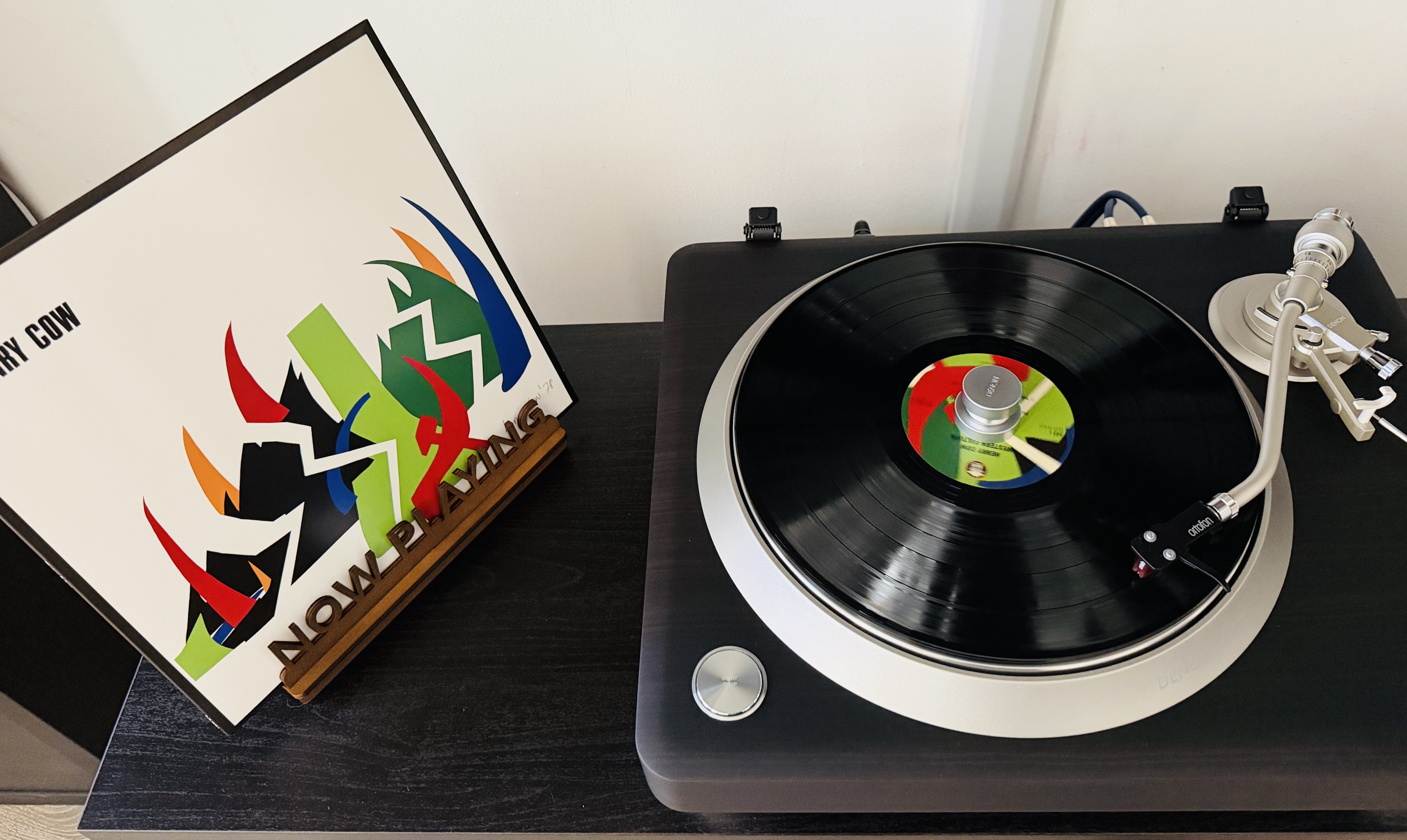
My Version
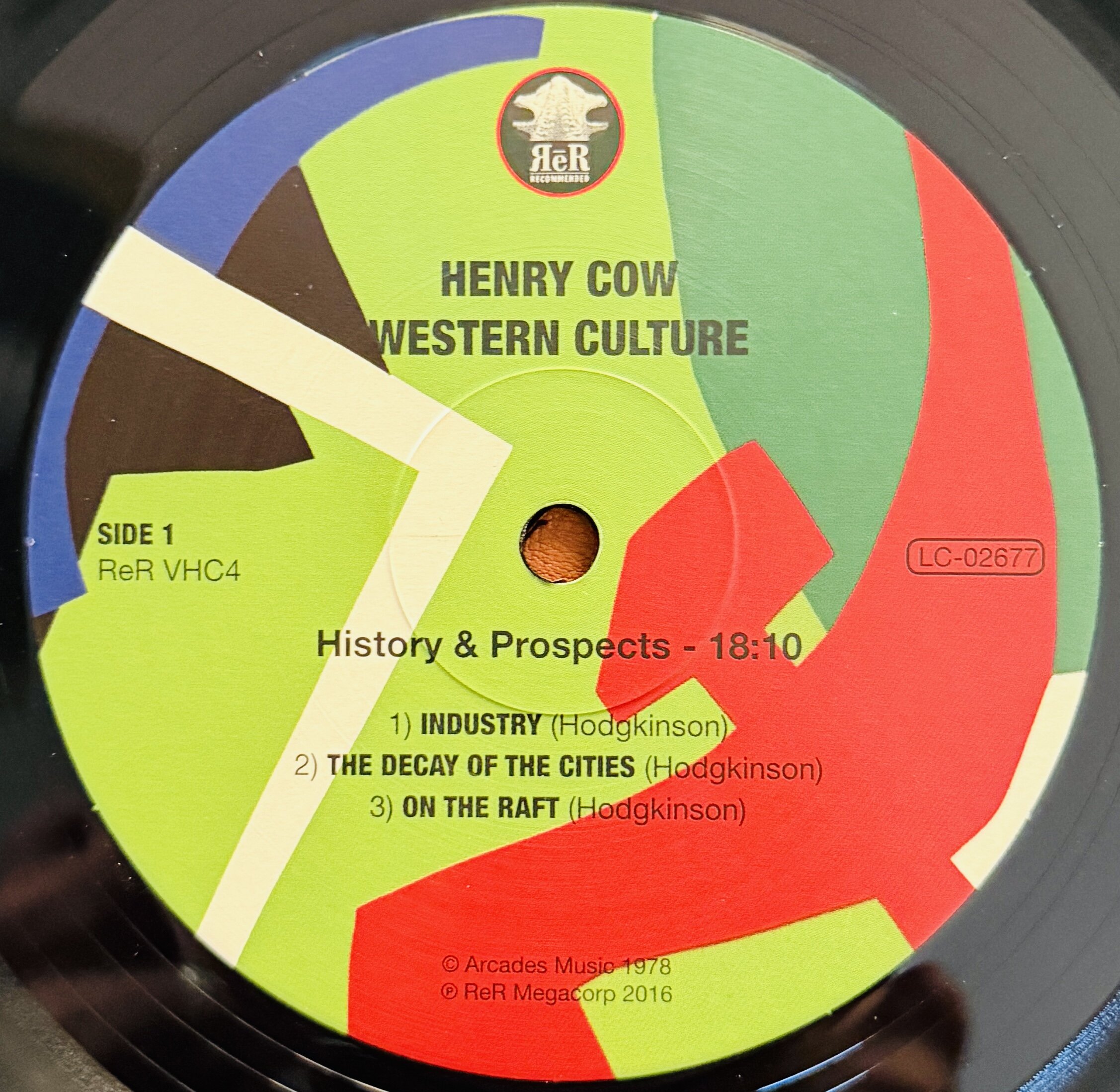
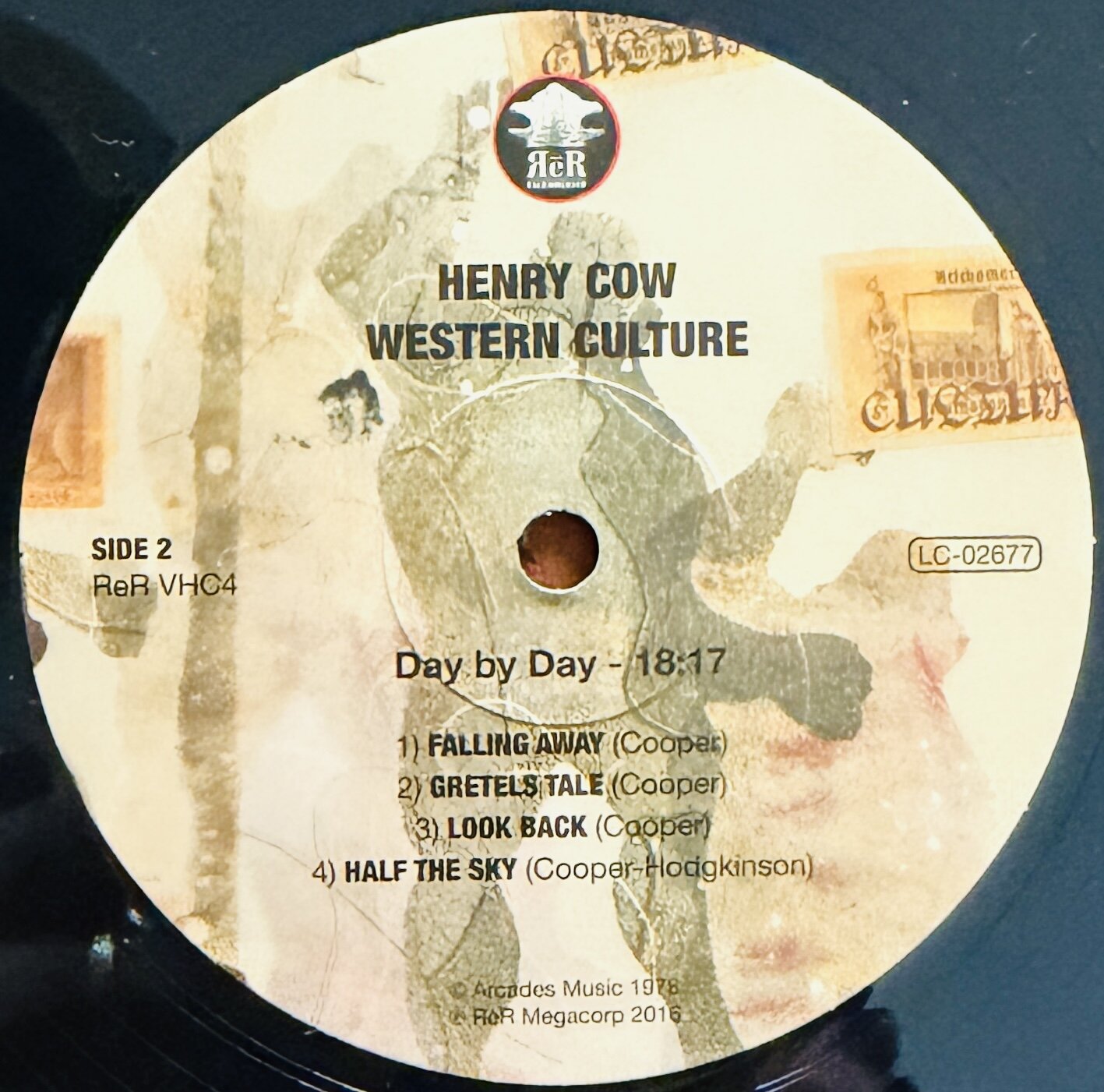
Label: ReR Megacorp – ReR VHC4
Format: Vinyl, LP, Album, Limited Edition, Misprint, Reissue, Remastered, 180g
Country: UK
Released: 23 Jun 2016
Tracklist
History & Prospects
A1 Industry 6:57
A2 The Decay Of Cities 6:56
A3 On The Raft 4:01
Day By Day
A4 Falling Away 7:39
B1 Gretel's Tale 3:58
B2 Look Back 1:20
B3 1/2 The Sky 5:07
Lineup
Bassoon, Oboe, Soprano Saxophone, Recorder [Sopranino Recorders] – Lindsay Cooper
Drums, Electronic Drums [Electric Drums], Noises [Noise], Cover [Etc.] – Chris Cutler
Electric Guitar, Acoustic Guitar, Bass, Banjo – Fred Frith
Guest [Also], Trombone, Violin – Anne-Marie Roelofs
Organ [Organs], Alto Saxophone, Clarinet – Tim Hodgkinson