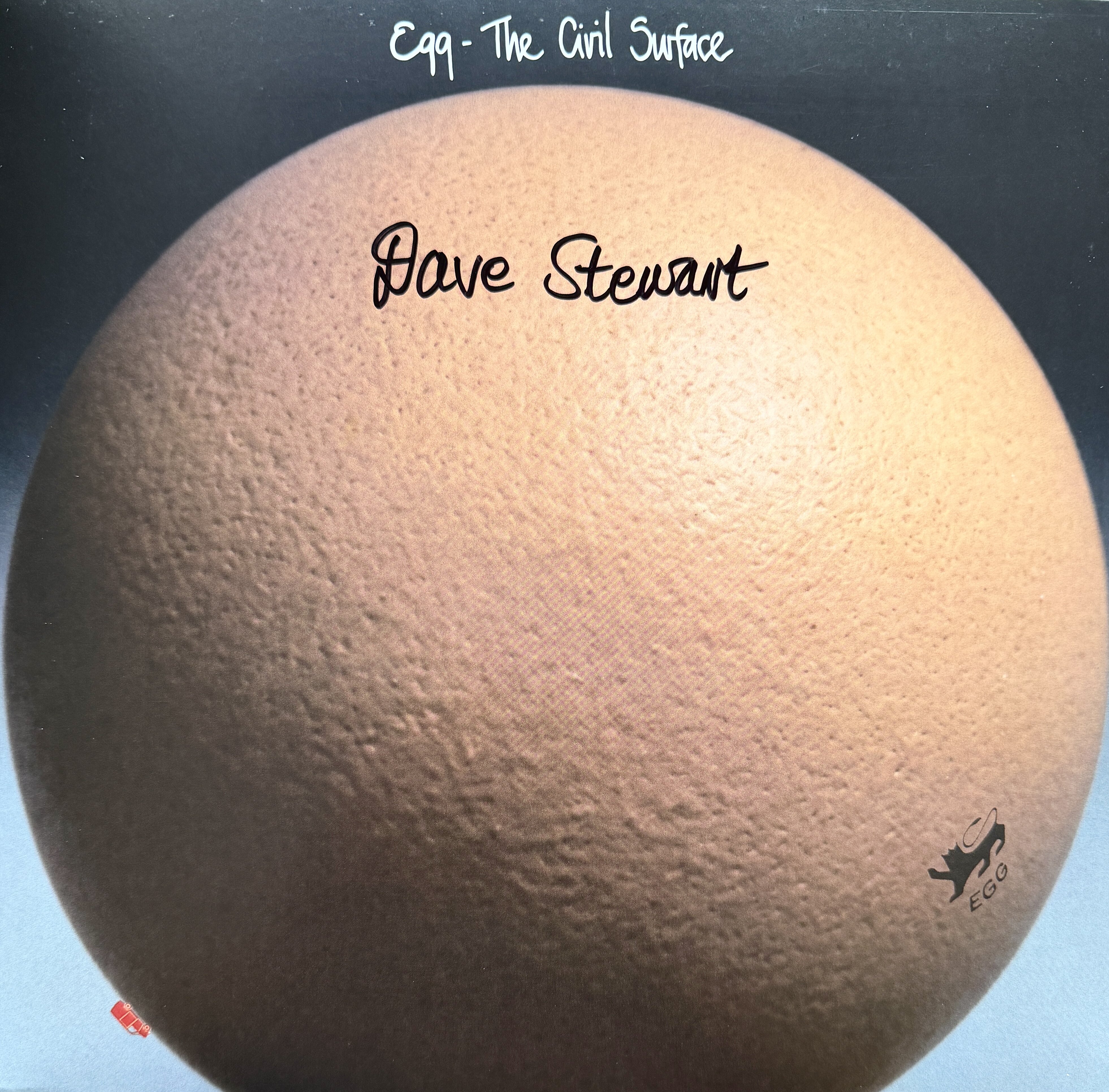
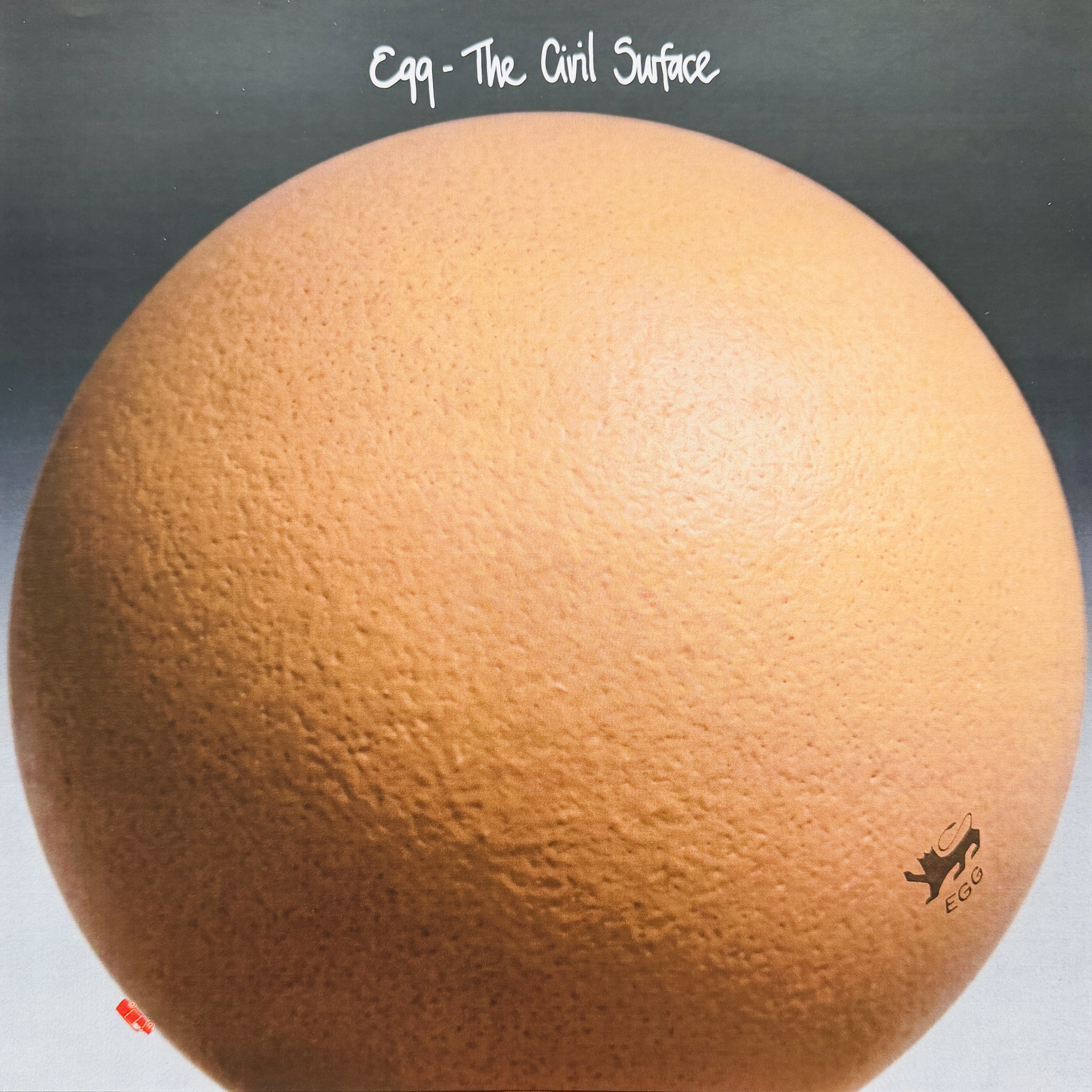
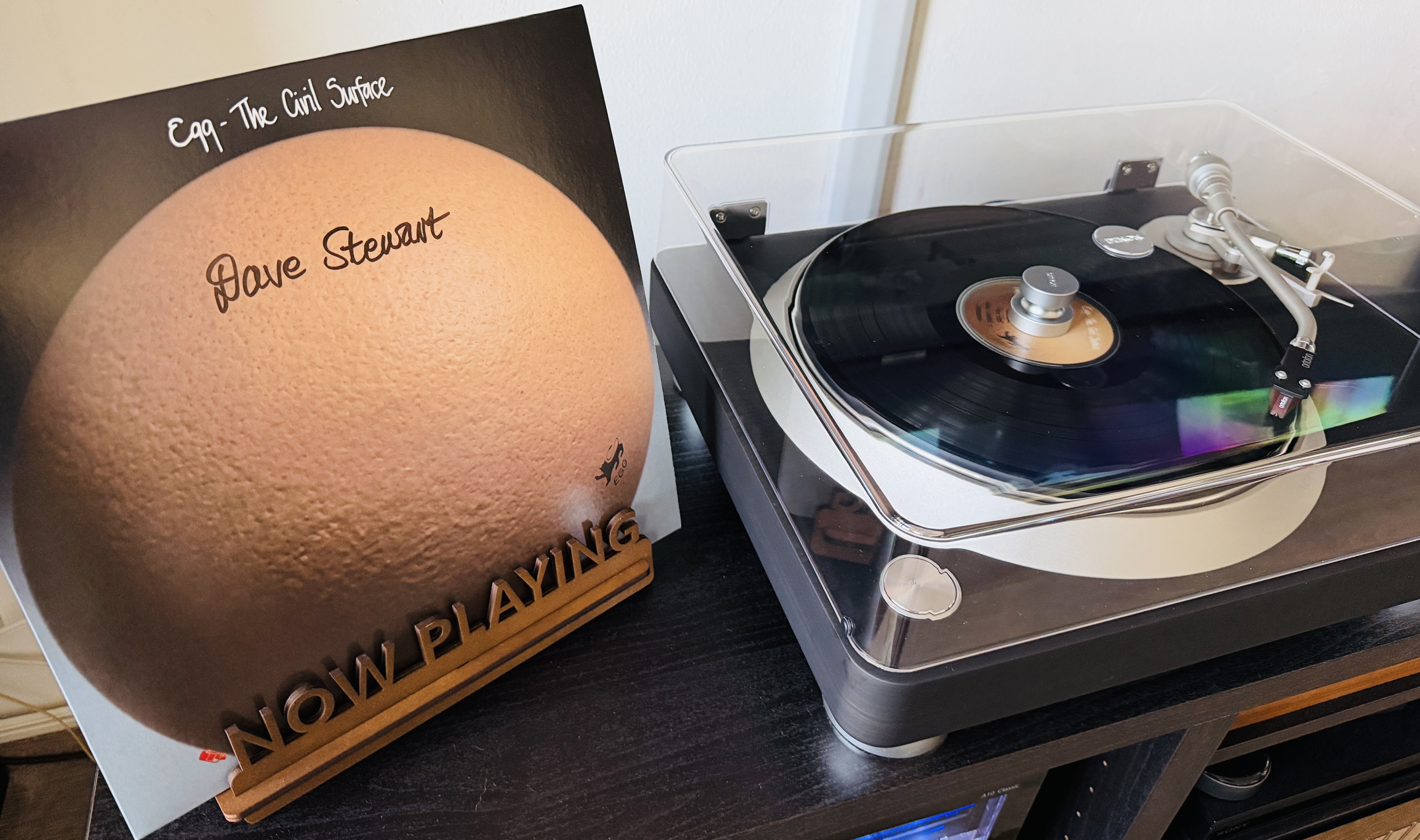
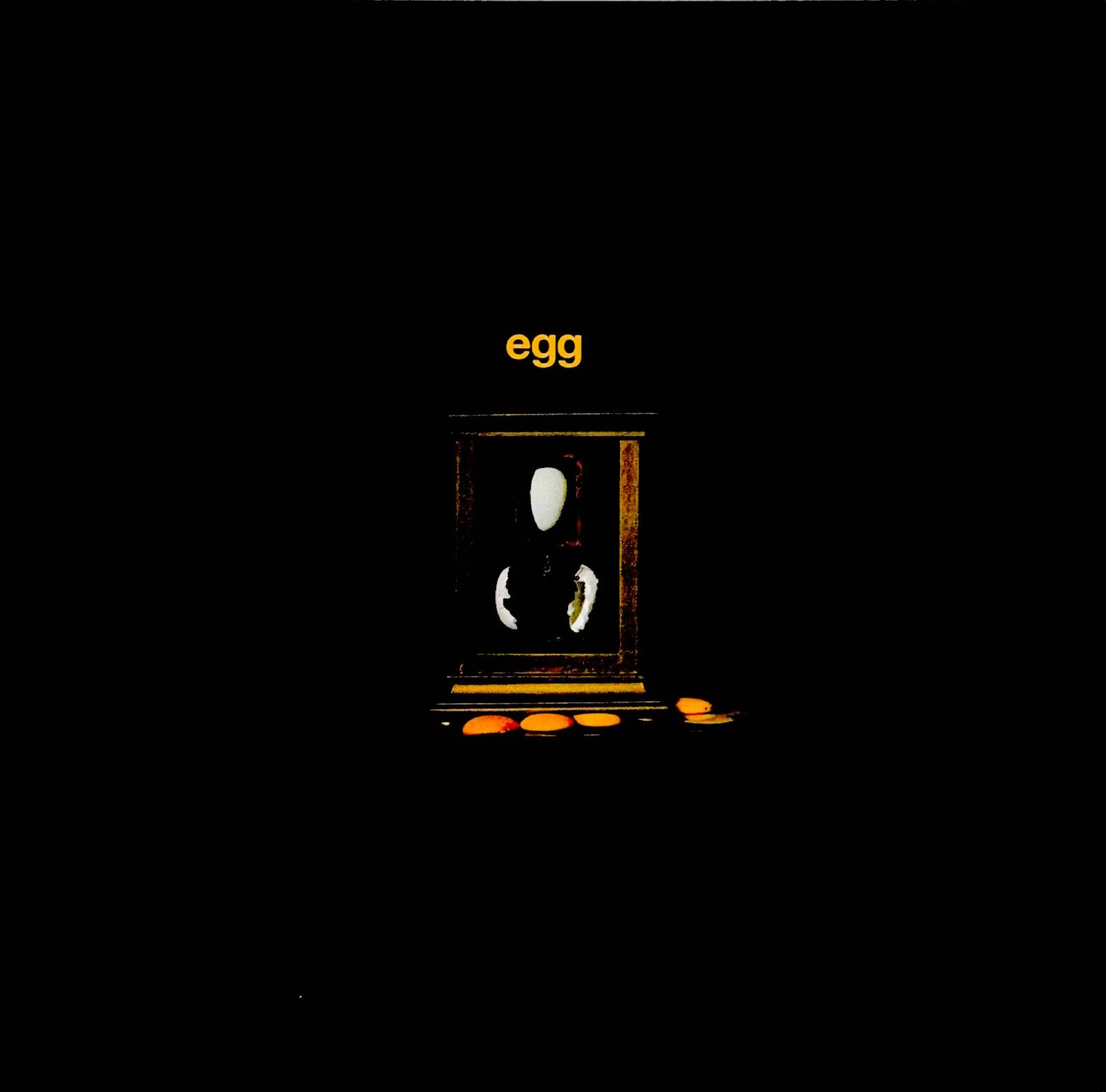
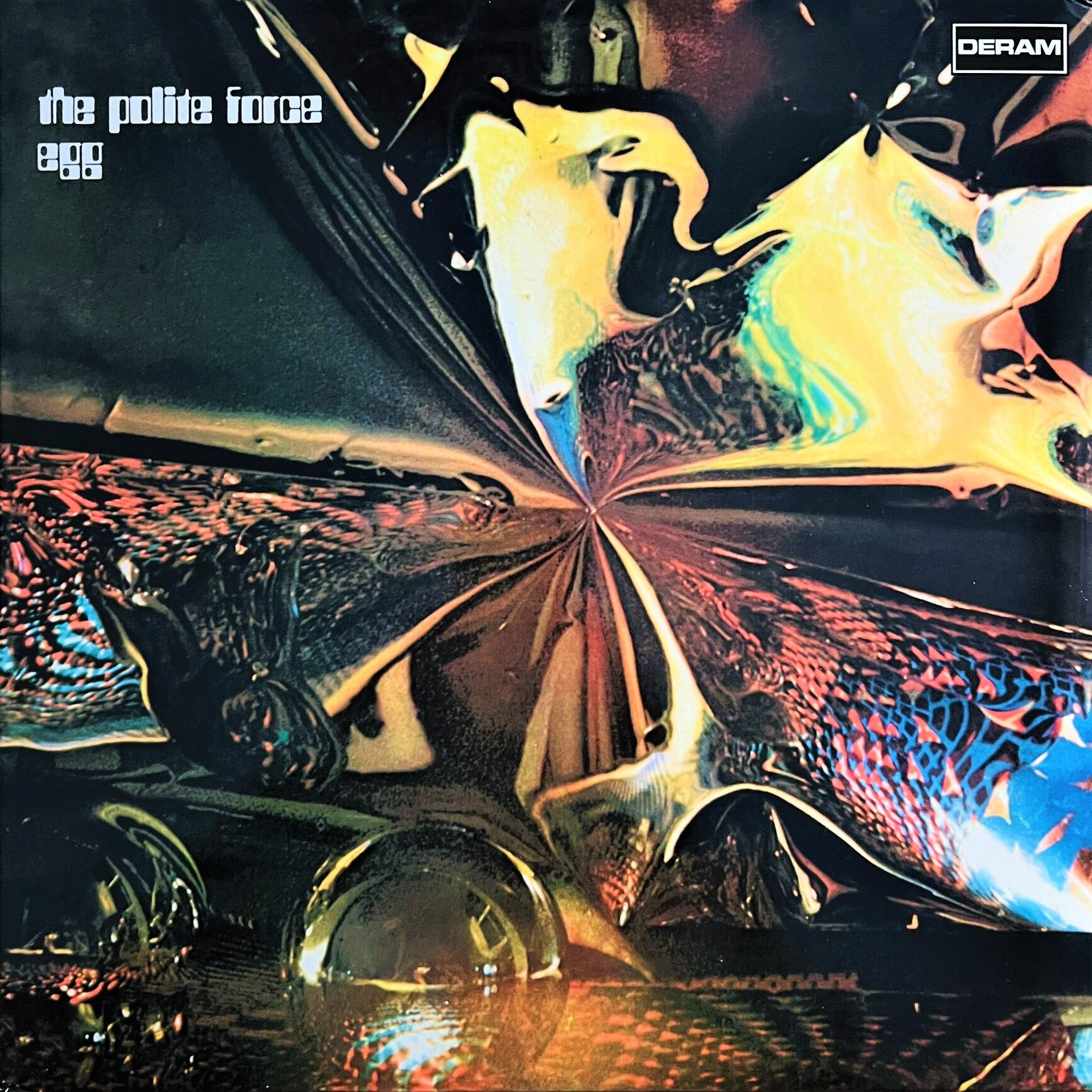
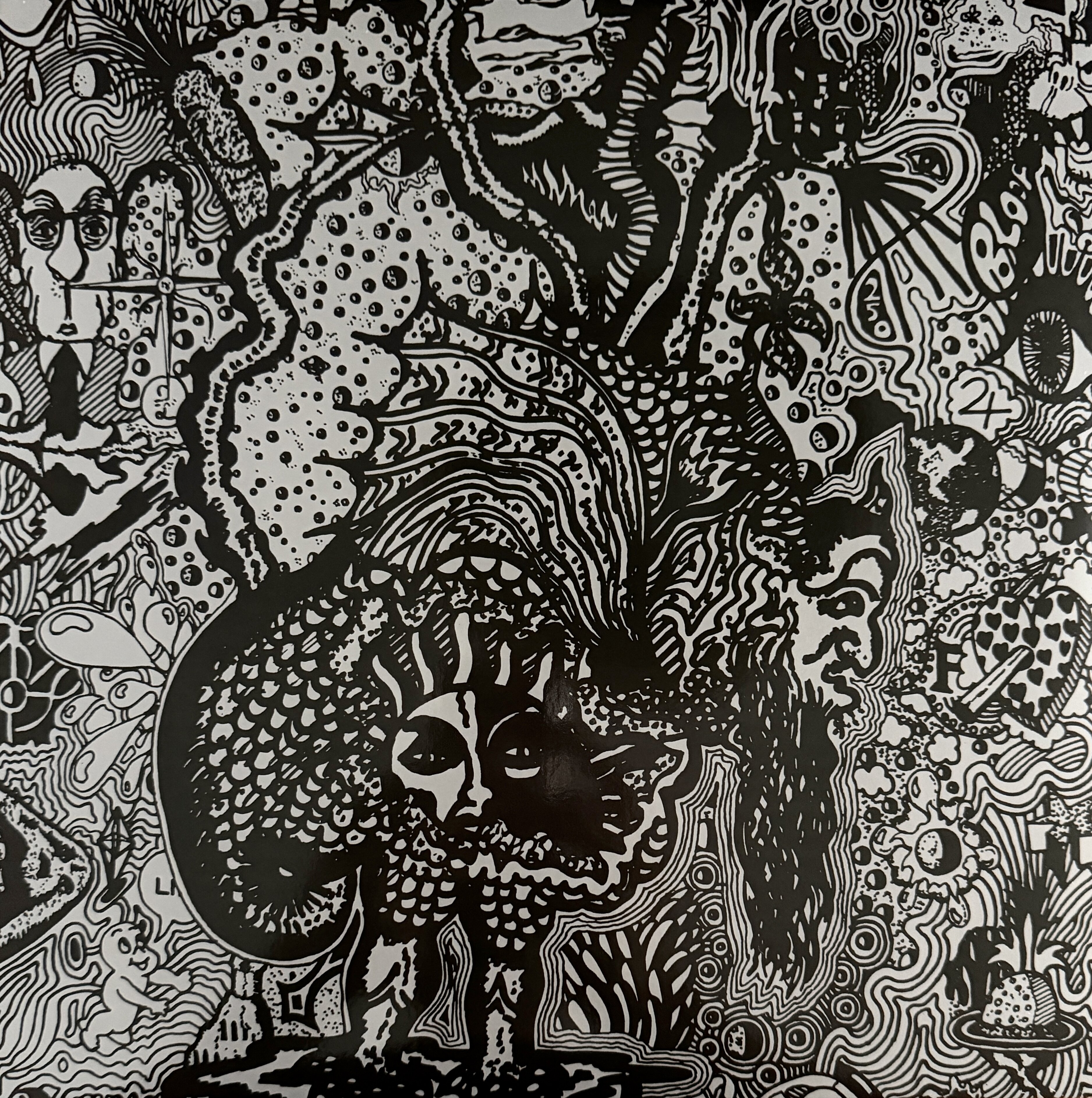
The Civil Surface by Egg, a 1974 album.
The Civil Surface, the third and final studio album by Egg, at the height of the Canterbury Scene. The genesis of this record is rather unusual: it was made after the band split up, as a real “farewell” so the earlier material wouldn’t go unheard.
After releasing Egg (in 1970) and The Polite Force (in 1971) with Decca Records, the trio struggled to find enough gigs to make a living and, as a result, decided to split up in July 1972. At the time of the breakup, bassist and main composer Mont Campbell had already written almost a whole album of complex avant-garde music, which, however, had never been recorded.
In 1974, the newly formed label Caroline Records, a Virgin sub-label, offered the band the chance to record one last LP. Keyboardist Dave Stewart, who at the time was already busy with Hatfield and the North, temporarily reunited the trio solely to go into the studio.
The lineup features distinguished guests, alongside the three founding members of Egg, Dave Stewart, Mont Campbell and Clive Brooks, who had originally formed in Uriel, together with Steve Hillage. After Egg split in 1972, each took a different path before this brief reunion.
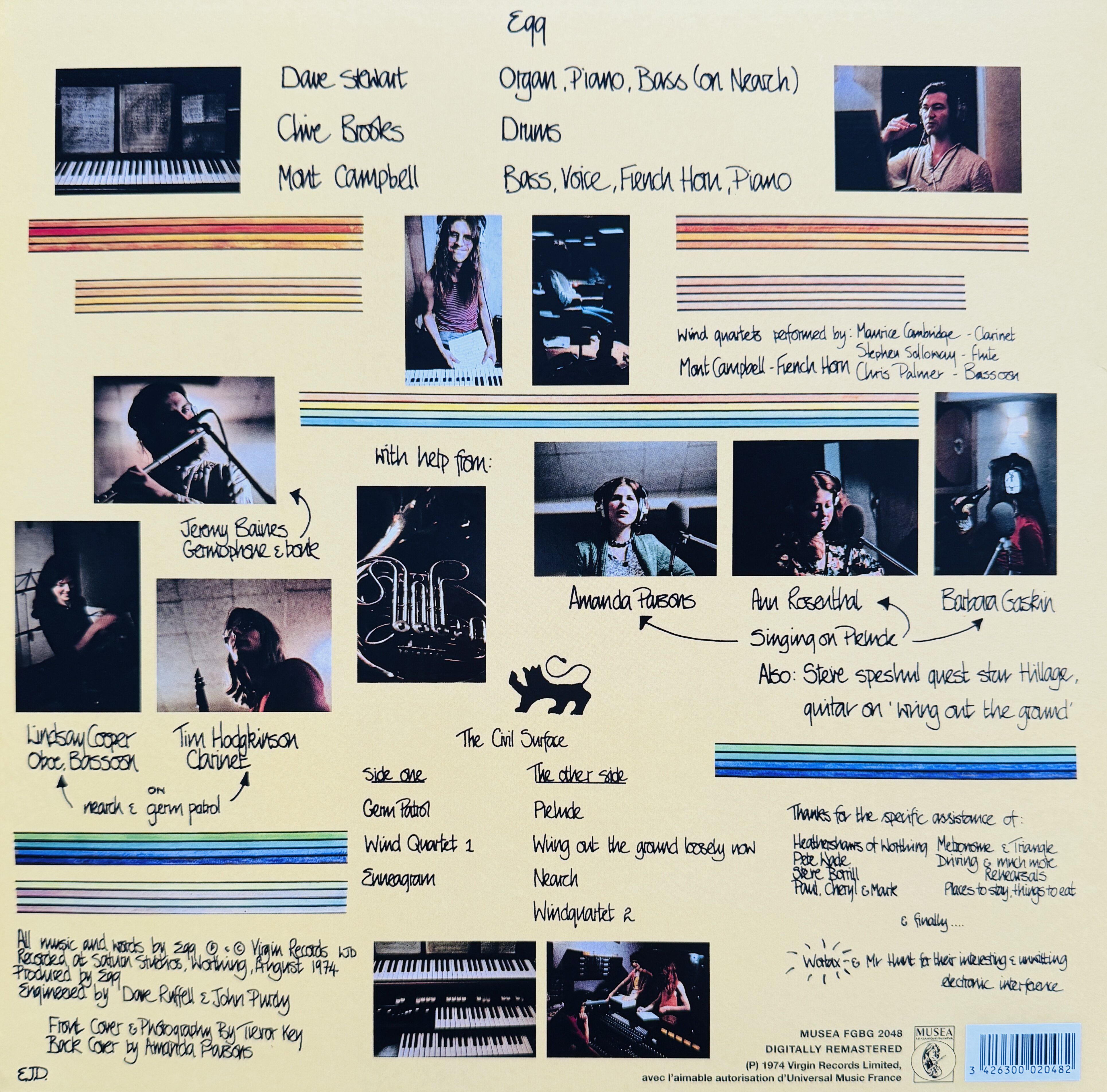
Here’s the lineup:
Dave Stewart (Keyboards), known from bands such as Hatfield and the North, Uriel / Arzachel, National Health and Bruford.
Mont Campbell (Bass, vocals, French horn), known from bands such as Uriel / Arzachel and National Health (for a very short period).
Clive Brooks (Drums), known from bands such as Uriel / Arzachel and The Groundhogs, a blues-rock band he joined right after Egg’s first breakup.
The album’s guests represent the best of the Canterbury movement and British Rock in Opposition (RIO) of the time:
Steve Hillage (Guitar on “Wring Out The Ground”), who played in Gong, Khan and Uriel / Arzachel, where he was the original guitarist alongside the three Egg members.
Lindsay Cooper (Bassoon, oboe), from bands such as Henry Cow, Comus, National Health and Feminist Improvising Group.
Tim Hodgkinson (Clarinet), co-founder of Henry Cow together with Chris Cutler.
The Northettes (Amanda Parsons, Barbara Gaskin, Ann Rosenthal - Choirs), from Hatfield and the North; the vocal trio was created specifically to complete that band’s sound. Barbara Gaskin later worked extensively with Dave Stewart in the ’80s.
Chris Palmer (Bassoon on the wind-quartet pieces), from the Ottawa Music Company, a large rock-orchestral collective founded by Dave Stewart and Chris Cutler.
Maurice Cambridge (Clarinet), Stephen Solloway (Flute), classically trained and avant-garde musicians, linked to Mont Campbell’s academic circle and the Ottawa Music Company.
The title “The Civil Surface” (which we could translate as “The civil surface”) contains a mix of irony typical of the Canterbury scene, social critique, and a touch of musical aesthetics.
There’s the metaphor of the social façade. It refers to the tidy, polite, bureaucratic and seemingly calm side of British civil society. Beneath this formal, controlled surface, however, lie tensions, chaos, complex emotions and a bit of anarchy.
This contrast is also reflected in the album’s music. At first, the pieces seem to follow rigid structures, almost classical counterpoint (like the wind quartets) and mathematical precision. But under this “civil surface”, impossible odd meters, avant-garde dissonances and total experimental freedom burst out.
There’s Egg’s surreal humor. The band always loved conceptual wordplay and irony tied to everyday life. The title plays precisely on the contrast between the extreme complexity of their music and a name that evokes the greyest, most ordinary normality.
The Civil Surface represents a peak of avant-prog and the Canterbury Scene, uniquely blending the complexity of contemporary art music with the energy of rock-jazz.
The album alternates rock-jazz tracks with chamber-music compositions. “Wind Quartet 1” and “Wind Quartet 2”, for example, are entirely instrumental, for winds (bassoon, clarinet, flute, French horn), and follow an academic style recalling 20th-century composers like Stravinsky or Hindemith, with no rock element at all.
The music, driven by bassist Mont Campbell’s mathematical scores, rejects conventional rock structures. It is marked by overlays of different meters (for instance, 7/4 against 5/4) and a strict use of counterpoint: bass and keyboard lines interlock following classical rules of fugue and dovetailing, rather than the usual backing-and-solo dynamic.
Stewart’s Hammond organ and synthesizers (Moog and oscillators) dominate the rock instrumental core. His style stands out for limited blues usage, favoring modal scales, jazz-rock progressions and saturated organ distortions typical of the Canterbury “fuzz-organ” sound.
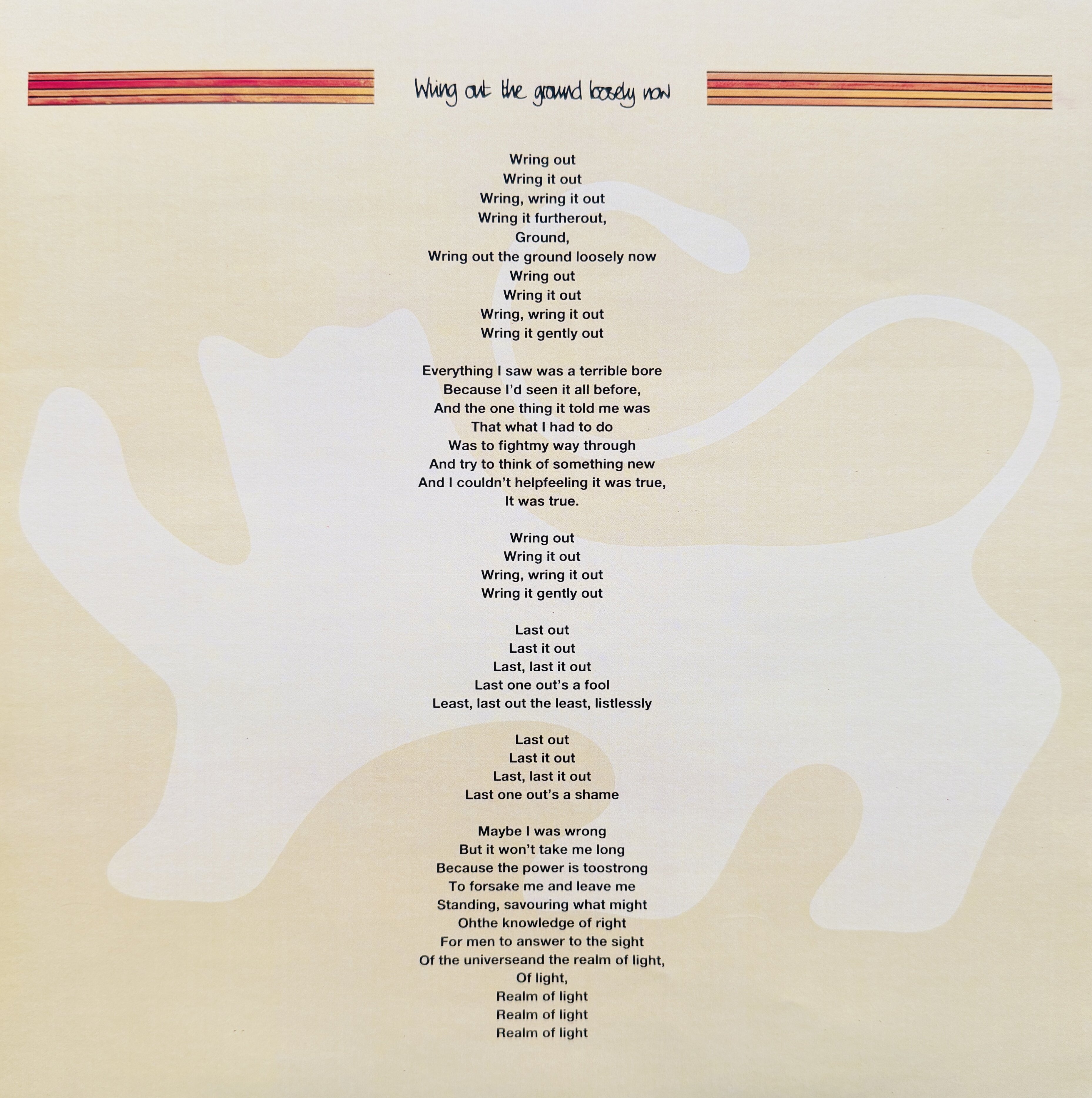
The album is almost entirely instrumental. The only sung track, “Wring Out The Ground (Loosely Now)”, uses the voice in two different ways: Mont Campbell sings in a detached, almost theatrical tone typical of British style at the time, while the vocal trio The Northettes enters with abstract vocalizations, used as orchestral color.
The album’s style sits between Hatfield and the North’s geometric jazz-rock and Henry Cow’s dissonant avant-garde, a fascinating chapter of English prog.
The album’s peak is undoubtedly “Enneagram”, an instrumental track of over nine minutes that, in my view, is a milestone of the Canterbury Scene. “Enneagram” is a composition based on the odd 9/8 meter, divided in unpredictable ways (for example, 2+2+2+3 or 3+3+3). Clive Brooks on drums keeps a sci-fi pulse, while Campbell’s bass and Stewart’s synths chase each other in geometric counterpoint. The central section slows down, introducing a dark, dissonant atmosphere that blends the complexity of 20th-century classical music with a rock rhythm section. A piece that embodies Egg’s philosophy: cerebral, technically and performatively monstrous, yet with a strong dramatic and expressive charge, never slipping into showboating.
The Civil Surface is a true masterpiece of progressive rock, one of the highest and most coherent moments of the Canterbury Scene.
Even though it came out after Egg had split, it doesn’t feel like a collection of random leftovers at all. On the contrary, it shows the band’s full maturity, managing to combine youthful fresh ideas with the refined technique they had gained over the years.
The album’s real strength is balance. It brings the complexity of modern classical music (Stravinsky, Hindemith) into rock without sounding pretentious. Even the toughest pieces keep an overwhelming rock energy and drive, balanced by typically British irony and moments of pure melodic beauty (thanks to the Northettes and Steve Hillage).
It’s not an easy record and it demands effort and attention, but for anyone wanting to discover the smartest, most geometric and experimental side of 1970s progressive rock, The Civil Surface is an essential listen and a timeless work of art. Essential.
My Copy
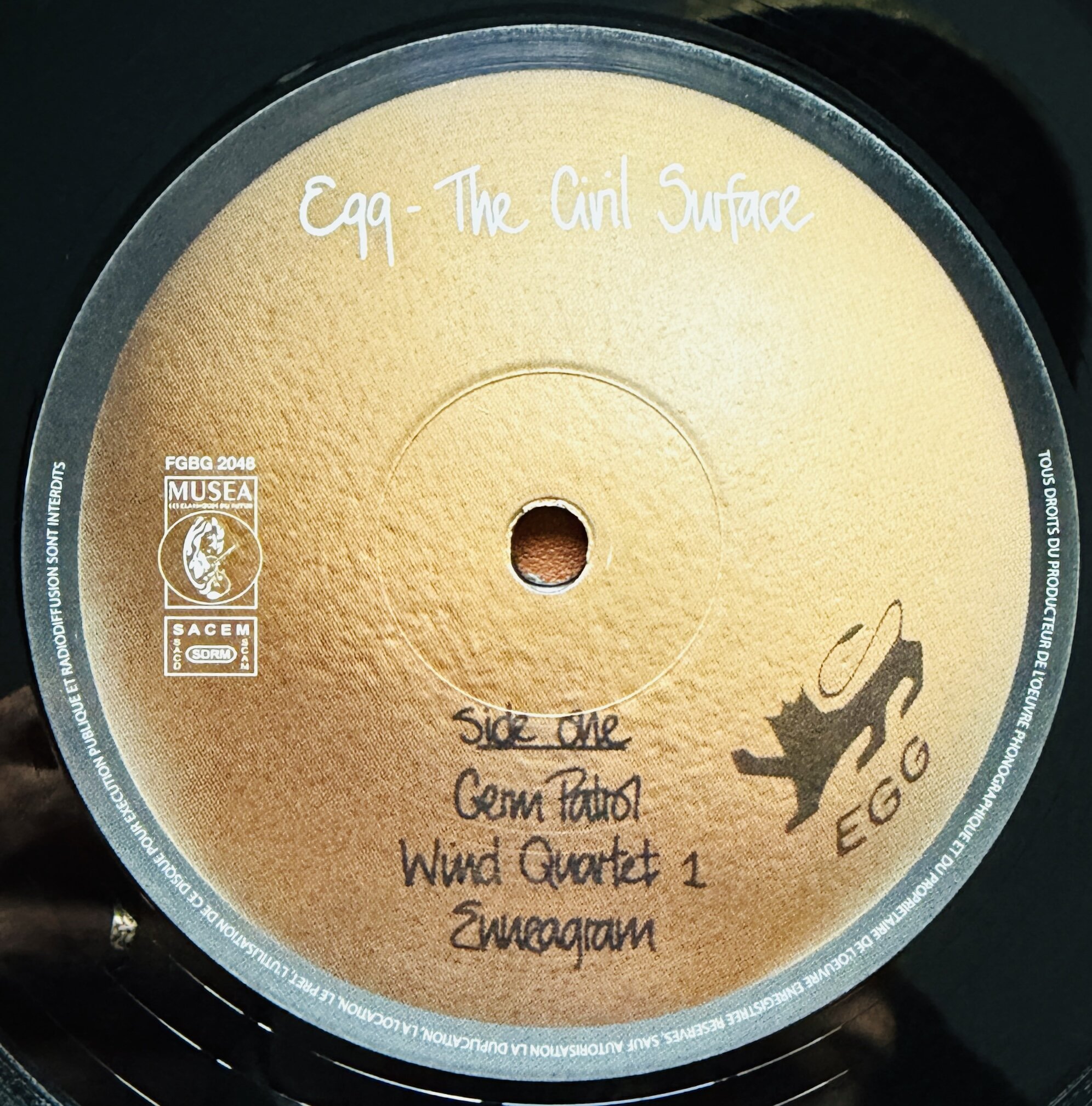
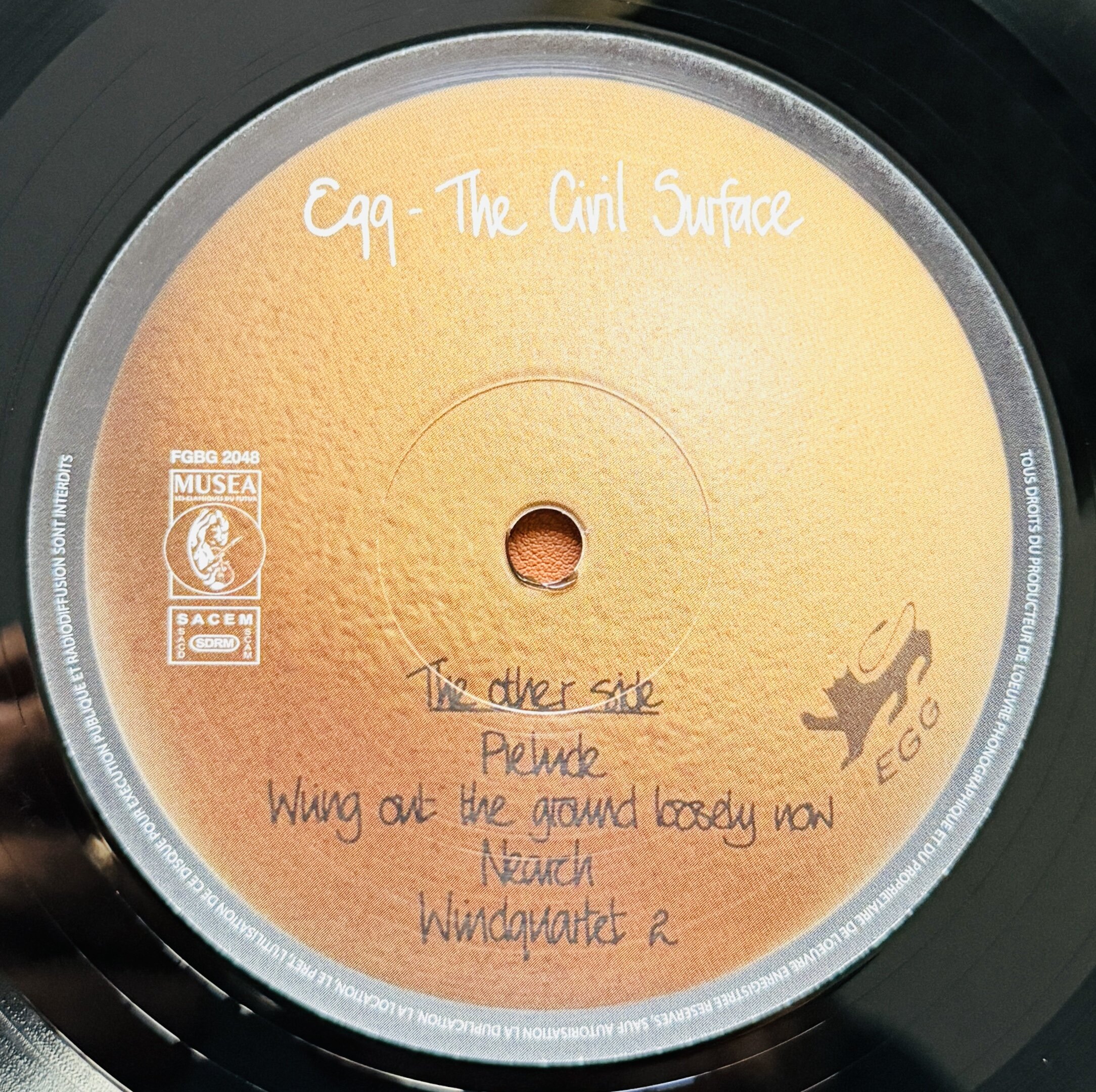
Label: Musea – FGBG 2048
Format: Vinyl, LP, Album, Reissue, Stereo
Country: France
Released: 3 Jul 2026
Tracklist
A1 Germ Patrol 8:31
A2 Wind Quartet I 2:20
A3 Enneagram 9:07
B1 Prelude 4:17
B2 Wring Out The Ground (Loosely Now) 8:11
B3 Nearch 3:22
B4 Wind Quartet II 4:48
Lineup
Dave Stewart – Organ, piano, and bass guitar (on track 6)
Mont Campbell – Bass guitar, vocals, piano, and French horn (on tracks 2 & 7)
Clive Brooks – Drums
With
Steve Hillage – Guitar (on track 5)
Lindsay Cooper – Oboe and bassoon
Tim Hodgkinson – Clarinet
Jeremy Baines – Flute and germophone
Amanda Parsons – Vocals
Ann Rosenthal – Vocals
Barbara Gaskin – Vocals
Maurice Cambridge – Clarinet
Stephen Solloway – Flute
Chris Palmer – Bassoon